Meniere's disease
Objectives
 Definition of Meniere's disease
 Epidemiology
 Aetiology
 Pathophysiology
 sign and symptoms
 Diagnosis
 Prevention
 Complications
 Treatment
Introduction
Prosper Meniere (18 June 1799 – 7 February 1862) was a French doctor who first
identified that the inner ear could be the source of a condition combining
vertigo, hearing loss and tinnitus, which is now known as Meniere's disease (MD).
Meniere's disease usually affects only one ear. Meniere's disease can occur at any
age, but it usually starts between young and middle-aged adulthood.
Definition of Meniere's disease
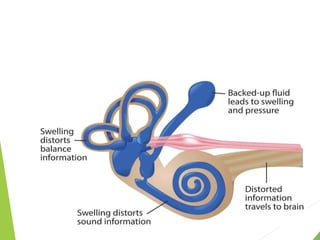
Meniere's disease is a disorder of the inner ear. In a person with Meniere's
disease, the inner ear undergoes changes suggestive of raised pressure — a
phenomenon due to an overabundance of inner ear fluid. The end result is
characterized hearing loss and balance disturbances.
Epidemiology
 The worldwide incidence of Meniere's disease is approximately 12 out of every
1,000 people. Perhaps 100,000 patients develop Meniere's disease every year.
 MD is regarded as a disease of middle age. The mean age of onset of MD peaks
at 40–50 years.
Aetiology
 The cause of Meniere's disease is unknown. Symptoms of Meniere's disease appear
to be the result of an abnormal amount of fluid (endolymph) in the inner ear.
 Factors that affect the fluid, which might contribute to Meniere's disease, include:
 Improper fluid drainage, perhaps because of a blockage or anatomic abnormality
 Abnormal immune response
 Viral infection
Pathophysiology
MD is a complex, heterogeneous disorder in which numerous
underlying factors interact, including anatomical variations in the temporal
bone,and genetics,
Endolymphatic hydrops;
• EH is characterized by an accumulation of fluid (endolymph), leading to an
expansion of the endolymphatic space.
 • The progression of Meniere’s disease is associated with the advancement of EH.
 Over production of endolymph (Endolymph is the fluid contained in the
membranous labyrinth of the inner ear. )
 Excessive accumulation in inner ear
 Increase pressure
 Rupture of membrane
 Permanent loss auditory & vestibular function
Sign and symptoms
 Recurring episodes of vertigo. You have a spinning sensation that starts and
stops spontaneously. Episodes of vertigo occur without warning and usually
last 20 minutes to several hours, but not more than 24 hours. Severe vertigo
can cause nausea.
 Hearing loss. Hearing loss in Meniere's disease may come and go, particularly
early on. Eventually, most people have some permanent hearing loss.
 Ringing in the ear (tinnitus). Tinnitus is the perception of a ringing, buzzing,
whistling or hissing sound in your ear.
 Feeling of fullness in the ear. People with Meniere's disease often feel
pressure in an affected ear (aural fullness).
Diagnosis
 History
 Pattern of symptoms Association between hearing loss,
 tinnitus, and vertigo
 Physical examination
 Otoscopic examination
 Rinne (usually indicates that air conduction
 remains better than bone conduction) & weber
 test(Assess the bone conduction of sound
 with Tuning fork).
Prevention
 Reduce salt in your diet.
 Avoid alcohol and caffeine
 Avoid exposure to loud noises.
 Manage stress.
 Use caution at home and on the job to avoid falling or having an accident if
you feel dizzy.
Complications
 Injury due to falls.
 Anxiety regarding symptoms.
 Accidents due to vertigo spells.
 Disability due to unpredictable vertigo.
 Progressive imbalance and deafness.
Treatment
 Medical Treatment
 Vestibular suppressants (eg, meclizine)
 Diuretics (eg, hydrochlorothiazide) actually decrease the fluid
 pressure load in the inner ear.
 Antiemetic eg. Trimethobenzamide 250 mg TDS
 Anti-inflammatory (steroids)
Nursing management
 Risk for injury R/T altered mobility &
 vertigo.
 Altered auditory sensory perception R/T
 altered state of the ear.
 Anxiety R/t threat to changes health
 status.
 Body image disturb R/T vertigo.
Reference
 www.slideshare.com
 www.myoclinic.org
Meniere's disease.pptx                  ..

Meniere's disease.pptx ..

  • 1.
  • 2.
    Objectives  Definition ofMeniere's disease  Epidemiology  Aetiology  Pathophysiology  sign and symptoms  Diagnosis  Prevention  Complications  Treatment
  • 3.
    Introduction Prosper Meniere (18June 1799 – 7 February 1862) was a French doctor who first identified that the inner ear could be the source of a condition combining vertigo, hearing loss and tinnitus, which is now known as Meniere's disease (MD). Meniere's disease usually affects only one ear. Meniere's disease can occur at any age, but it usually starts between young and middle-aged adulthood.
  • 4.
    Definition of Meniere'sdisease Meniere's disease is a disorder of the inner ear. In a person with Meniere's disease, the inner ear undergoes changes suggestive of raised pressure — a phenomenon due to an overabundance of inner ear fluid. The end result is characterized hearing loss and balance disturbances.
  • 6.
    Epidemiology  The worldwideincidence of Meniere's disease is approximately 12 out of every 1,000 people. Perhaps 100,000 patients develop Meniere's disease every year.  MD is regarded as a disease of middle age. The mean age of onset of MD peaks at 40–50 years.
  • 7.
    Aetiology  The causeof Meniere's disease is unknown. Symptoms of Meniere's disease appear to be the result of an abnormal amount of fluid (endolymph) in the inner ear.  Factors that affect the fluid, which might contribute to Meniere's disease, include:  Improper fluid drainage, perhaps because of a blockage or anatomic abnormality  Abnormal immune response  Viral infection
  • 8.
    Pathophysiology MD is acomplex, heterogeneous disorder in which numerous underlying factors interact, including anatomical variations in the temporal bone,and genetics, Endolymphatic hydrops; • EH is characterized by an accumulation of fluid (endolymph), leading to an expansion of the endolymphatic space.
  • 9.
     • Theprogression of Meniere’s disease is associated with the advancement of EH.  Over production of endolymph (Endolymph is the fluid contained in the membranous labyrinth of the inner ear. )  Excessive accumulation in inner ear  Increase pressure  Rupture of membrane  Permanent loss auditory & vestibular function
  • 10.
    Sign and symptoms Recurring episodes of vertigo. You have a spinning sensation that starts and stops spontaneously. Episodes of vertigo occur without warning and usually last 20 minutes to several hours, but not more than 24 hours. Severe vertigo can cause nausea.  Hearing loss. Hearing loss in Meniere's disease may come and go, particularly early on. Eventually, most people have some permanent hearing loss.  Ringing in the ear (tinnitus). Tinnitus is the perception of a ringing, buzzing, whistling or hissing sound in your ear.  Feeling of fullness in the ear. People with Meniere's disease often feel pressure in an affected ear (aural fullness).
  • 11.
    Diagnosis  History  Patternof symptoms Association between hearing loss,  tinnitus, and vertigo  Physical examination  Otoscopic examination  Rinne (usually indicates that air conduction  remains better than bone conduction) & weber  test(Assess the bone conduction of sound  with Tuning fork).
  • 12.
    Prevention  Reduce saltin your diet.  Avoid alcohol and caffeine  Avoid exposure to loud noises.  Manage stress.  Use caution at home and on the job to avoid falling or having an accident if you feel dizzy.
  • 13.
    Complications  Injury dueto falls.  Anxiety regarding symptoms.  Accidents due to vertigo spells.  Disability due to unpredictable vertigo.  Progressive imbalance and deafness.
  • 14.
    Treatment  Medical Treatment Vestibular suppressants (eg, meclizine)  Diuretics (eg, hydrochlorothiazide) actually decrease the fluid  pressure load in the inner ear.  Antiemetic eg. Trimethobenzamide 250 mg TDS  Anti-inflammatory (steroids)
  • 15.
    Nursing management  Riskfor injury R/T altered mobility &  vertigo.  Altered auditory sensory perception R/T  altered state of the ear.  Anxiety R/t threat to changes health  status.  Body image disturb R/T vertigo.
  • 16.