Media Communication Strategy: A
Comprehensive Guide to Structured,
Effective Messaging
Introduction to Media Communication Strategy
A media communication strategy defines how messages take shape, move across media
channels, and reach audiences with clarity and intent. It establishes a structured framework that
aligns messaging, audience understanding, timing, and platforms into one cohesive system. In
modern communication environments, strategic media planning strengthens message
consistency, audience connection, and long-term credibility.
This article explores the fundamentals of media communication strategy, explaining how
structured planning, audience alignment, and integrated channels create effective and
meaningful communication outcomes.
Understanding Media Communication Strategy
Media communication strategy represents a planned approach to shaping and distributing
information through media platforms. It focuses on message clarity, narrative structure, and
channel coordination. Rather than isolated communication efforts, a strategy creates a unified
direction that supports understanding and recognition.
A strong media communication strategy:
●​ Shapes messages with purpose​
●​ Aligns communication with audience expectations​
●​ Strengthens consistency across platforms​
●​ Supports long-term communication goals​
This structured approach ensures that every message contributes to a larger narrative.
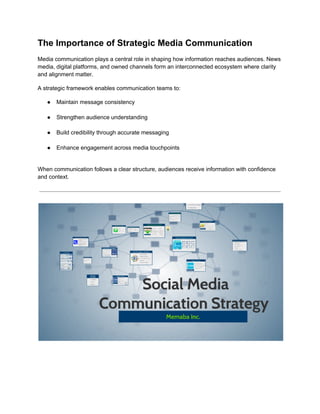
The Importance of Strategic Media Communication
Media communication plays a central role in shaping how information reaches audiences. News
media, digital platforms, and owned channels form an interconnected ecosystem where clarity
and alignment matter.
A strategic framework enables communication teams to:
●​ Maintain message consistency​
●​ Strengthen audience understanding​
●​ Build credibility through accurate messaging​
●​ Enhance engagement across media touchpoints​
When communication follows a clear structure, audiences receive information with confidence
and context.
Core Objectives of a Media Communication Strategy
Every media communication strategy begins with clearly defined objectives. These objectives
guide planning, execution, and evaluation.
Key Strategic Objectives
●​ Establish message clarity and direction​
●​ Create consistent narratives across channels​
●​ Strengthen audience awareness and understanding​
●​ Align communication with organizational purpose​
●​ Support sustainable communication practices​
Each objective contributes to a cohesive and focused communication framework.
Audience Analysis and Strategic Alignment
Audience understanding forms the foundation of effective media communication. Strategic
planning centers on identifying who receives the message and how the message resonates.
Audience Segmentation
Audience segmentation organizes groups based on shared characteristics such as:
●​ Demographic attributes​
●​ Professional interests​
●​ Media consumption behavior​
●​ Content format preferences​
This structure enables tailored messaging that aligns with audience expectations.
Audience-Centered Messaging
Audience-centered messaging reflects relevance and value. When communication aligns with
audience needs, messages gain stronger attention and engagement.
Message Development and Content Structure
Message development defines what communication conveys and how information flows. A
structured message framework supports clarity and consistency.
Core Message Framework
An effective message framework includes:
●​ Central message that defines the main idea​
●​ Supporting points that expand context​
●​ Verified information that strengthens credibility​
This structure ensures that communication remains focused and easy to understand.
Narrative Consistency
Consistent narratives strengthen recognition. Repeated themes and aligned messaging across
platforms support familiarity and trust over time.
Media Channel Selection and Integration
Channel selection plays a vital role in media communication strategy. Different platforms serve
different audience behaviors and content formats.
Types of Media Channels
●​ Earned media such as editorial coverage​
●​ Owned media including websites and publications​
●​ Shared media through social platforms​
Each channel supports a specific communication function within the strategy.
Integrated Media Approach
An integrated approach ensures messages align across channels while adapting tone and
format. This coordination strengthens message recall and audience understanding.
Content Planning and Communication Timing
Strategic timing enhances message visibility and relevance. Content planning aligns
communication with audience activity and media cycles.
Editorial Planning
Editorial planning organizes content themes, schedules, and formats. This structure supports
consistent communication flow and strategic pacing.
Contextual Communication
Contextual communication connects messages to relevant moments, trends, or industry
conversations. This alignment increases audience interest and engagement.
Digital Media and Online Communication Strategy
Digital platforms play a significant role in modern media communication strategies. They enable
direct interaction, measurable engagement, and ongoing dialogue.
Digital Content Strategy
Digital communication focuses on:
●​ Informative articles and resources​
●​ Visual storytelling formats​
●​ Interactive audience engagement​
This approach supports continuous communication and audience participation.
Search Visibility and Content Structure
Search-friendly content uses structured headings, relevant keywords, and informative depth.
This structure enhances discoverability while maintaining readability.
Visual Communication in Media Strategy
Visual elements strengthen message comprehension and retention. Visual communication
complements written content and supports diverse learning styles.
Visual Content Formats
●​ Infographics for data clarity​
●​ Short videos for storytelling​
●​ Visual charts for information structure​
Consistent visual alignment supports recognition and message coherence.
Measurement and Strategic Evaluation
Measurement evaluates how effectively a media communication strategy meets its objectives.
Performance analysis guides ongoing refinement.
Key Evaluation Metrics
●​ Message reach and visibility​
●​ Audience engagement levels​
●​ Consistency across channels​
●​ Content relevance and clarity​
These insights support informed decision-making and strategic enhancement.
Continuous Optimization
Ongoing evaluation strengthens communication quality. Insights guide message refinement,
content planning, and channel alignment.
Governance and Communication Alignment
Governance frameworks support consistency and clarity across communication teams.
Communication Guidelines
Clear guidelines define tone, messaging structure, and content standards. This alignment
ensures consistent communication across platforms and teams.
Collaborative Communication
Cross-functional collaboration strengthens message accuracy and alignment with organizational
goals.
Ethical Standards in Media Communication
Ethical standards form the foundation of credible media communication strategies. Responsible
communication strengthens trust and long-term audience relationships.
Accuracy and Transparency
Accurate information supports credibility. Verification processes ensure communication remains
reliable and clear.
Respectful Messaging
Respectful messaging considers audience perspectives and cultural contexts, supporting
inclusive and meaningful communication.
The Long-Term Value of Media Communication Strategy
A media communication strategy creates a structured foundation for sustainable communication
success. Through audience alignment, message clarity, integrated channels, and ethical
standards, organizations shape meaningful communication experiences.
Understanding and applying strategic media communication principles strengthens professional
skills, enhances audience engagement, and supports consistent message delivery across
evolving media environments.

Media Communication Strategy_ A Comprehensive Guide to Structured, Effective Messaging.pdf

  • 1.
    Media Communication Strategy:A Comprehensive Guide to Structured, Effective Messaging Introduction to Media Communication Strategy A media communication strategy defines how messages take shape, move across media channels, and reach audiences with clarity and intent. It establishes a structured framework that aligns messaging, audience understanding, timing, and platforms into one cohesive system. In modern communication environments, strategic media planning strengthens message consistency, audience connection, and long-term credibility. This article explores the fundamentals of media communication strategy, explaining how structured planning, audience alignment, and integrated channels create effective and meaningful communication outcomes. Understanding Media Communication Strategy Media communication strategy represents a planned approach to shaping and distributing information through media platforms. It focuses on message clarity, narrative structure, and channel coordination. Rather than isolated communication efforts, a strategy creates a unified direction that supports understanding and recognition. A strong media communication strategy: ●​ Shapes messages with purpose​ ●​ Aligns communication with audience expectations​ ●​ Strengthens consistency across platforms​ ●​ Supports long-term communication goals​ This structured approach ensures that every message contributes to a larger narrative.
  • 2.
    The Importance ofStrategic Media Communication Media communication plays a central role in shaping how information reaches audiences. News media, digital platforms, and owned channels form an interconnected ecosystem where clarity and alignment matter. A strategic framework enables communication teams to: ●​ Maintain message consistency​ ●​ Strengthen audience understanding​ ●​ Build credibility through accurate messaging​ ●​ Enhance engagement across media touchpoints​ When communication follows a clear structure, audiences receive information with confidence and context.
  • 3.
    Core Objectives ofa Media Communication Strategy Every media communication strategy begins with clearly defined objectives. These objectives guide planning, execution, and evaluation. Key Strategic Objectives ●​ Establish message clarity and direction​ ●​ Create consistent narratives across channels​ ●​ Strengthen audience awareness and understanding​ ●​ Align communication with organizational purpose​ ●​ Support sustainable communication practices​ Each objective contributes to a cohesive and focused communication framework. Audience Analysis and Strategic Alignment Audience understanding forms the foundation of effective media communication. Strategic planning centers on identifying who receives the message and how the message resonates. Audience Segmentation Audience segmentation organizes groups based on shared characteristics such as: ●​ Demographic attributes​ ●​ Professional interests​ ●​ Media consumption behavior​ ●​ Content format preferences​ This structure enables tailored messaging that aligns with audience expectations. Audience-Centered Messaging
  • 4.
    Audience-centered messaging reflectsrelevance and value. When communication aligns with audience needs, messages gain stronger attention and engagement. Message Development and Content Structure Message development defines what communication conveys and how information flows. A structured message framework supports clarity and consistency. Core Message Framework An effective message framework includes: ●​ Central message that defines the main idea​ ●​ Supporting points that expand context​ ●​ Verified information that strengthens credibility​ This structure ensures that communication remains focused and easy to understand. Narrative Consistency Consistent narratives strengthen recognition. Repeated themes and aligned messaging across platforms support familiarity and trust over time. Media Channel Selection and Integration Channel selection plays a vital role in media communication strategy. Different platforms serve different audience behaviors and content formats. Types of Media Channels ●​ Earned media such as editorial coverage​ ●​ Owned media including websites and publications​ ●​ Shared media through social platforms​
  • 5.
    Each channel supportsa specific communication function within the strategy. Integrated Media Approach An integrated approach ensures messages align across channels while adapting tone and format. This coordination strengthens message recall and audience understanding. Content Planning and Communication Timing Strategic timing enhances message visibility and relevance. Content planning aligns communication with audience activity and media cycles. Editorial Planning Editorial planning organizes content themes, schedules, and formats. This structure supports consistent communication flow and strategic pacing. Contextual Communication Contextual communication connects messages to relevant moments, trends, or industry conversations. This alignment increases audience interest and engagement. Digital Media and Online Communication Strategy Digital platforms play a significant role in modern media communication strategies. They enable direct interaction, measurable engagement, and ongoing dialogue. Digital Content Strategy Digital communication focuses on: ●​ Informative articles and resources​ ●​ Visual storytelling formats​ ●​ Interactive audience engagement​ This approach supports continuous communication and audience participation.
  • 6.
    Search Visibility andContent Structure Search-friendly content uses structured headings, relevant keywords, and informative depth. This structure enhances discoverability while maintaining readability. Visual Communication in Media Strategy Visual elements strengthen message comprehension and retention. Visual communication complements written content and supports diverse learning styles. Visual Content Formats ●​ Infographics for data clarity​ ●​ Short videos for storytelling​ ●​ Visual charts for information structure​ Consistent visual alignment supports recognition and message coherence. Measurement and Strategic Evaluation Measurement evaluates how effectively a media communication strategy meets its objectives. Performance analysis guides ongoing refinement. Key Evaluation Metrics ●​ Message reach and visibility​ ●​ Audience engagement levels​ ●​ Consistency across channels​ ●​ Content relevance and clarity​ These insights support informed decision-making and strategic enhancement. Continuous Optimization
  • 7.
    Ongoing evaluation strengthenscommunication quality. Insights guide message refinement, content planning, and channel alignment. Governance and Communication Alignment Governance frameworks support consistency and clarity across communication teams. Communication Guidelines Clear guidelines define tone, messaging structure, and content standards. This alignment ensures consistent communication across platforms and teams. Collaborative Communication Cross-functional collaboration strengthens message accuracy and alignment with organizational goals. Ethical Standards in Media Communication Ethical standards form the foundation of credible media communication strategies. Responsible communication strengthens trust and long-term audience relationships. Accuracy and Transparency Accurate information supports credibility. Verification processes ensure communication remains reliable and clear. Respectful Messaging Respectful messaging considers audience perspectives and cultural contexts, supporting inclusive and meaningful communication. The Long-Term Value of Media Communication Strategy A media communication strategy creates a structured foundation for sustainable communication success. Through audience alignment, message clarity, integrated channels, and ethical standards, organizations shape meaningful communication experiences.
  • 8.
    Understanding and applyingstrategic media communication principles strengthens professional skills, enhances audience engagement, and supports consistent message delivery across evolving media environments.