Presented by : Presented to :
Meghana J Dr. Prasanna sir
VHK2041 Dept. of livestock
farm complex
VCH,
INTRODUCTION
 Mechanization of livestock means
replacing the traditional method of raising of
fodder and management of livestock with
machines instead of humans.
 The farm mechanization movement in
India has been one of the most significant
events in the last few years in terms of socio-
economic development.
WHY MECHANIZATION
OF LIVESTOCK IS
REQUIRED
Saving of labour and cost.
Saving of time.
Ensuring accuracy.
Relieving monotony.
Improvement in quality.
Better control.
Improvement in prestige for the organisation.
HOW TO DO
MECHANIZATION OF
LIVESTOCK FARM
It can be done in two main fields
» Production of fodder.
» Management of livestock
farm.
MECHANIZATION IN
PRODUCTION OF FODDER
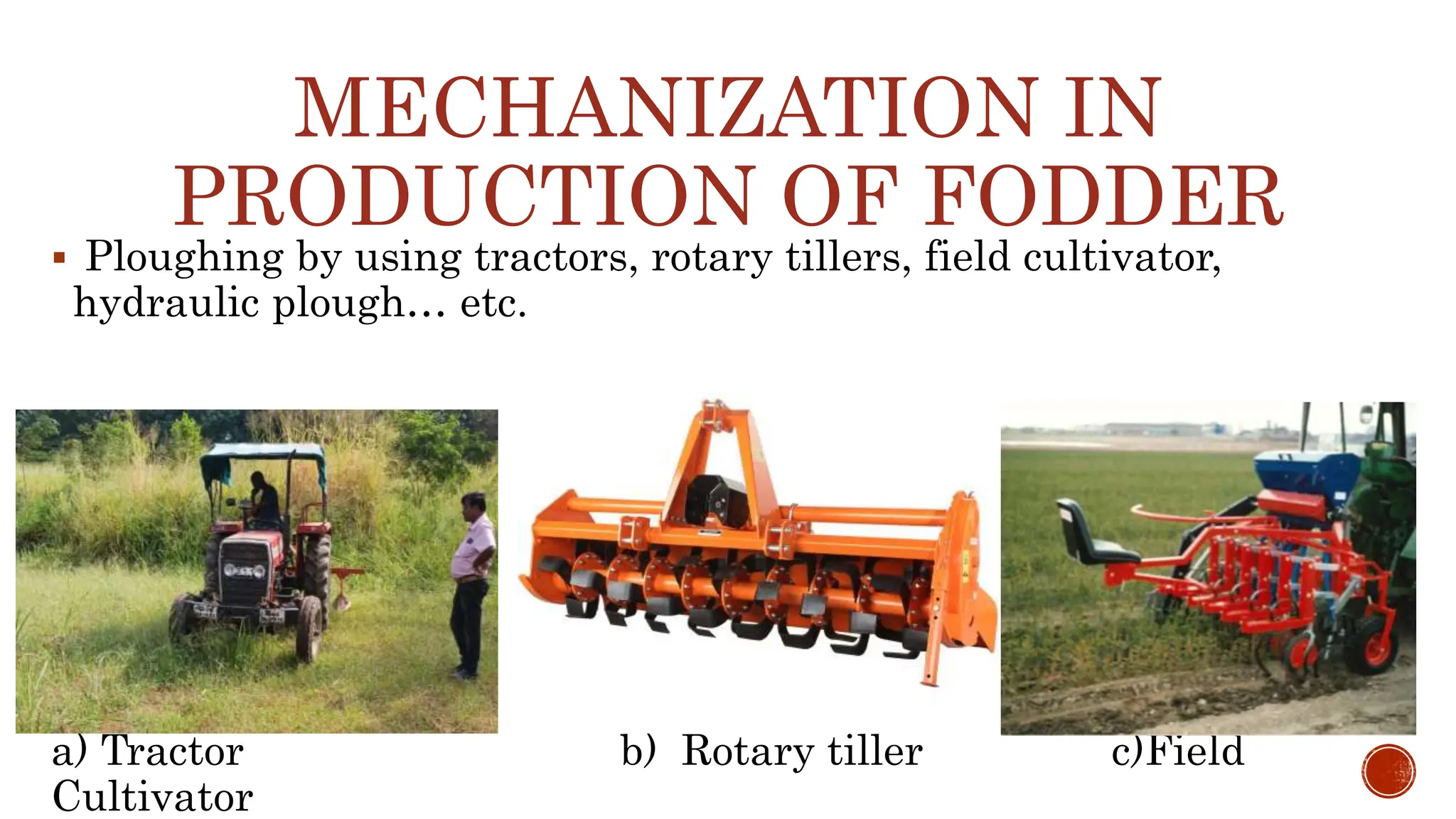
 Ploughing by using tractors, rotary tillers, field cultivator,
hydraulic plough… etc.
a) Tractor b) Rotary tiller c)Field
Cultivator
 Sowing by using seed driller sowing the seeds and cycle
weeder for removing the weeds in fodder field.
a) Seed weeder B) Cycle weeder
 Irrigation by using automated irrigation equipments like drip
irrigation kits, irrigation tubes, sprinkler heads, irrigation system
controllers etc..
a) Drip irrigation B) sprinkler
heads
c) Irrigation system controller
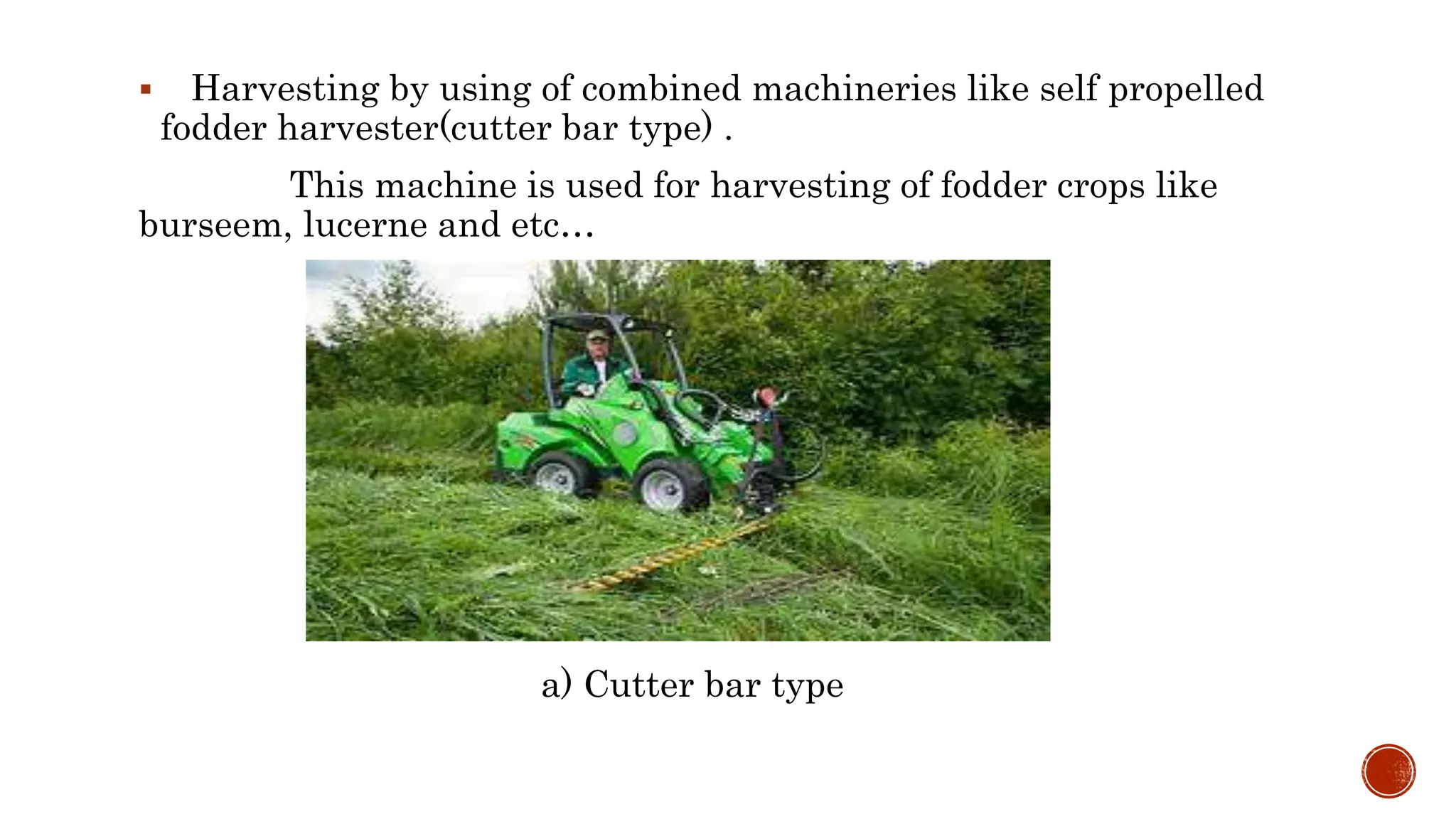
 Harvesting by using of combined machineries like self propelled
fodder harvester(cutter bar type) .
This machine is used for harvesting of fodder crops like
burseem, lucerne and etc…
a) Cutter bar type
 In our livestock farm we can use chaff cutter for cutting
the fodder for silage making.
a) Chaff cutter
MECHANIZATION IN
LIVESTOCK
MANAGEMENT
1. Feeding system
2. Milking automation
3. Manure management
4. Livestock monitoring
5. Fencing and Security
6. Data management
7. Climate control
8. Breeding technologies
9. Robotic assistance
10. Health and safety measures
FEEDING SYSTEM
 Implement automated feeding systems to ensure a consistent
and timely supply of feed. This may include conveyor belts, robotic
feeding systems, or automated feed dispensers.
a) automated feeders b) conveyor belt feeder
MILKING AUTOMATION
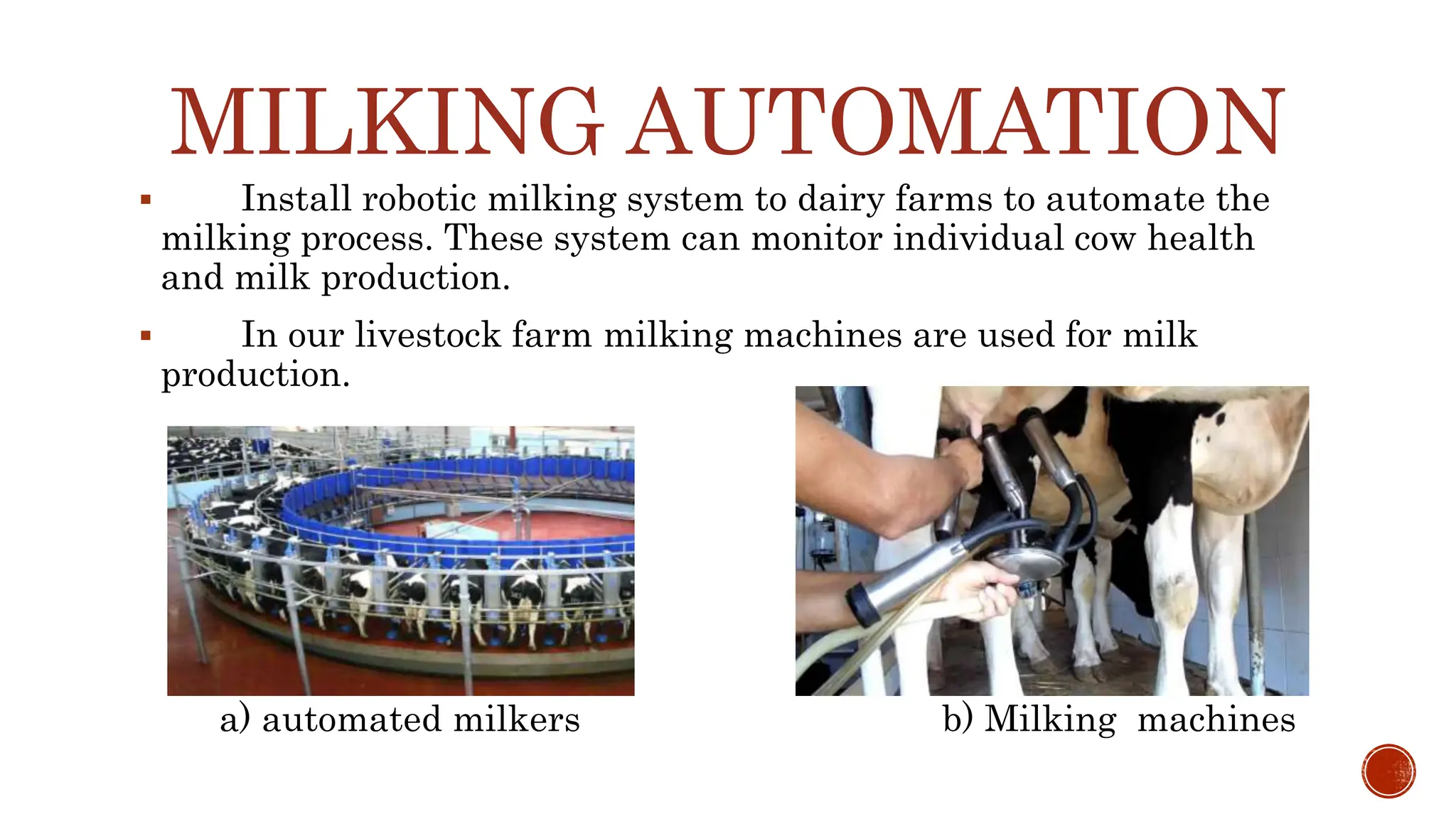
 Install robotic milking system to dairy farms to automate the
milking process. These system can monitor individual cow health
and milk production.
 In our livestock farm milking machines are used for milk
production.
a) automated milkers b) Milking machines
MANURE MANAGEMENT
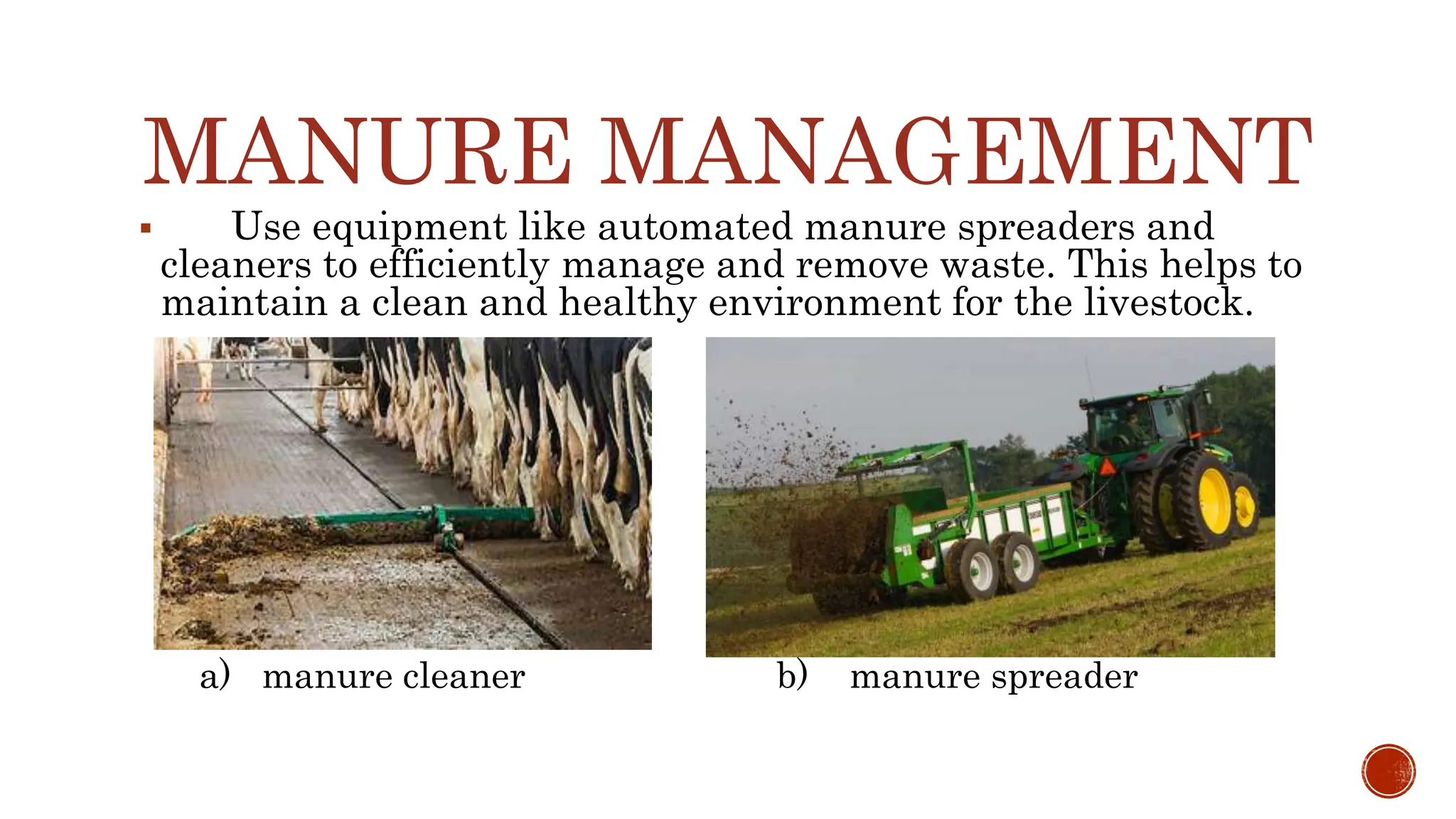
 Use equipment like automated manure spreaders and
cleaners to efficiently manage and remove waste. This helps to
maintain a clean and healthy environment for the livestock.
a) manure cleaner b) manure spreader
LIVESTOCK
MONITORING
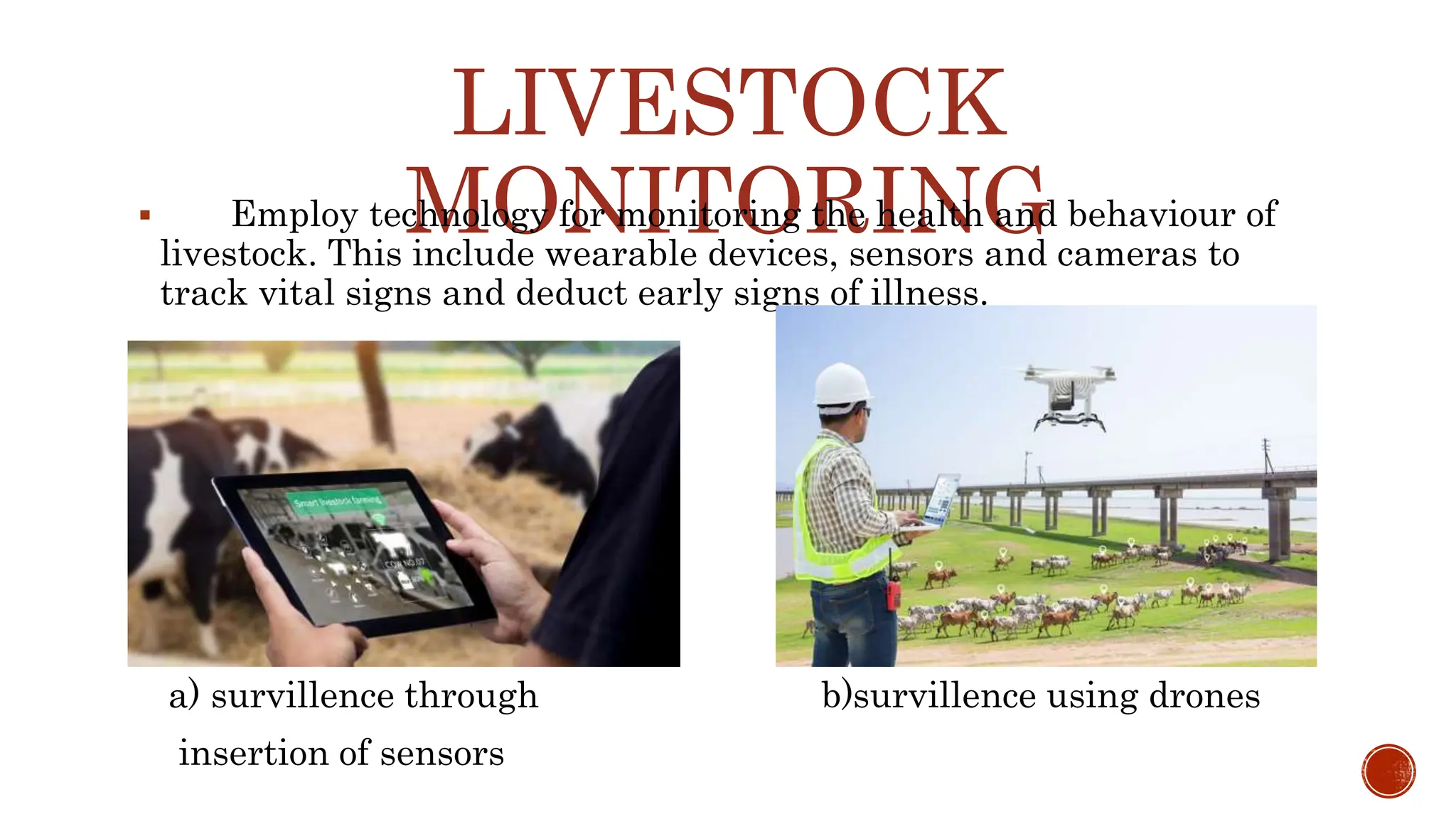
 Employ technology for monitoring the health and behaviour of
livestock. This include wearable devices, sensors and cameras to
track vital signs and deduct early signs of illness.
a) survillence through b)survillence using drones
insertion of sensors
FENCING AND
SECURITY
 Utilize automated or remote controlled fencing systems to
manage grazing areas and enhance security. This can include
electric fences with remote monitoring capabilities.
electric fencing of grazing area and remote controlled
DATA MANAGEMENT
 Adopt farm management software to keep track of livestock
records, feeding schedule, health data and breeding information. This
can aid in decision making and performance analysis.
data maintenance using computers
CLIMATE CONTROL
 Implement automated climate control systems in barns or housing
facilities to regulate temperature humility and ventilation. This is
crucial for well being of livestock.
 This can be mainly seen in developed countries.
BREEDING
TECHNOLOGIES
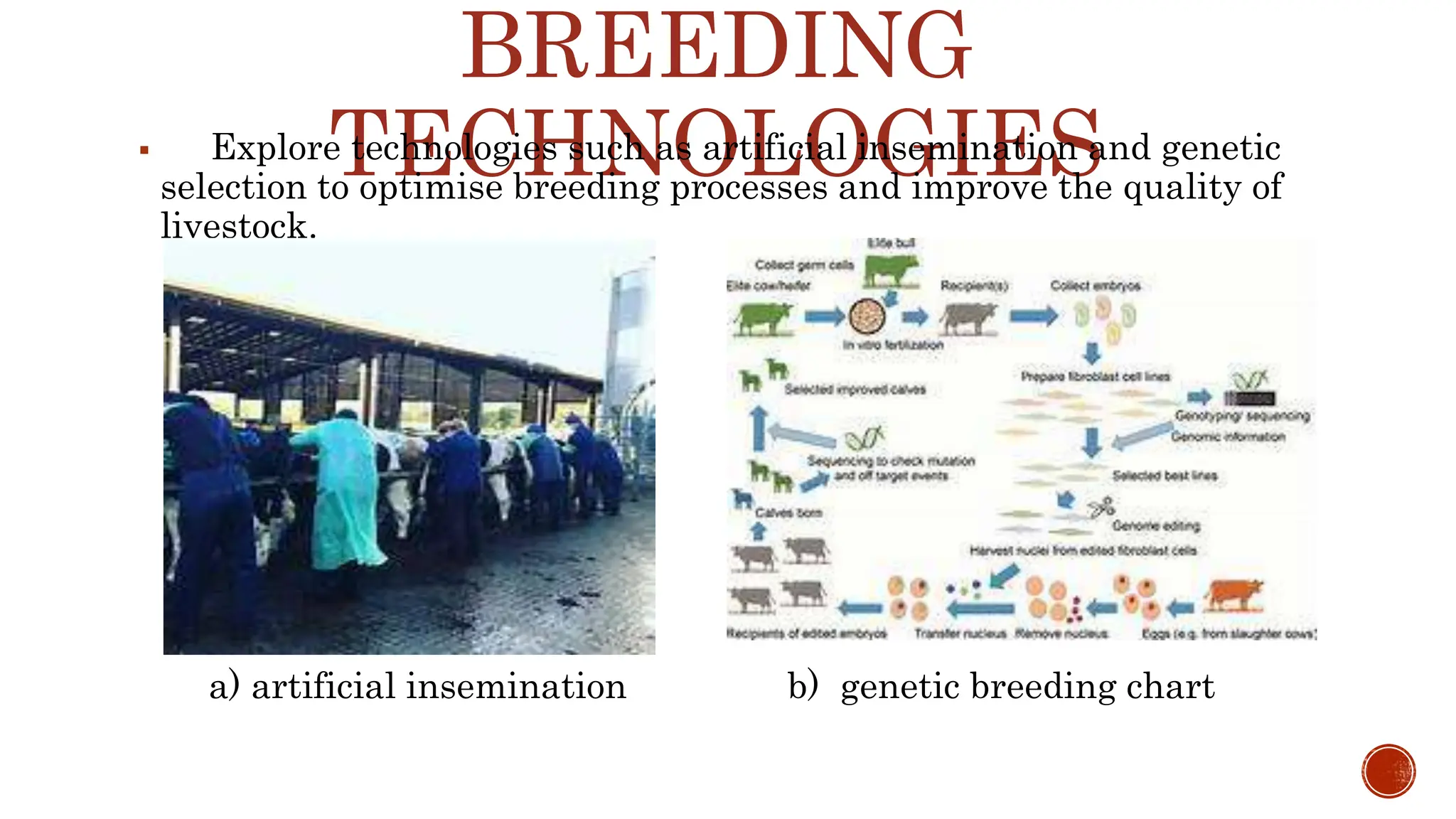
 Explore technologies such as artificial insemination and genetic
selection to optimise breeding processes and improve the quality of
livestock.
a) artificial insemination b) genetic breeding chart
ROBOTIC ASSISTANCE
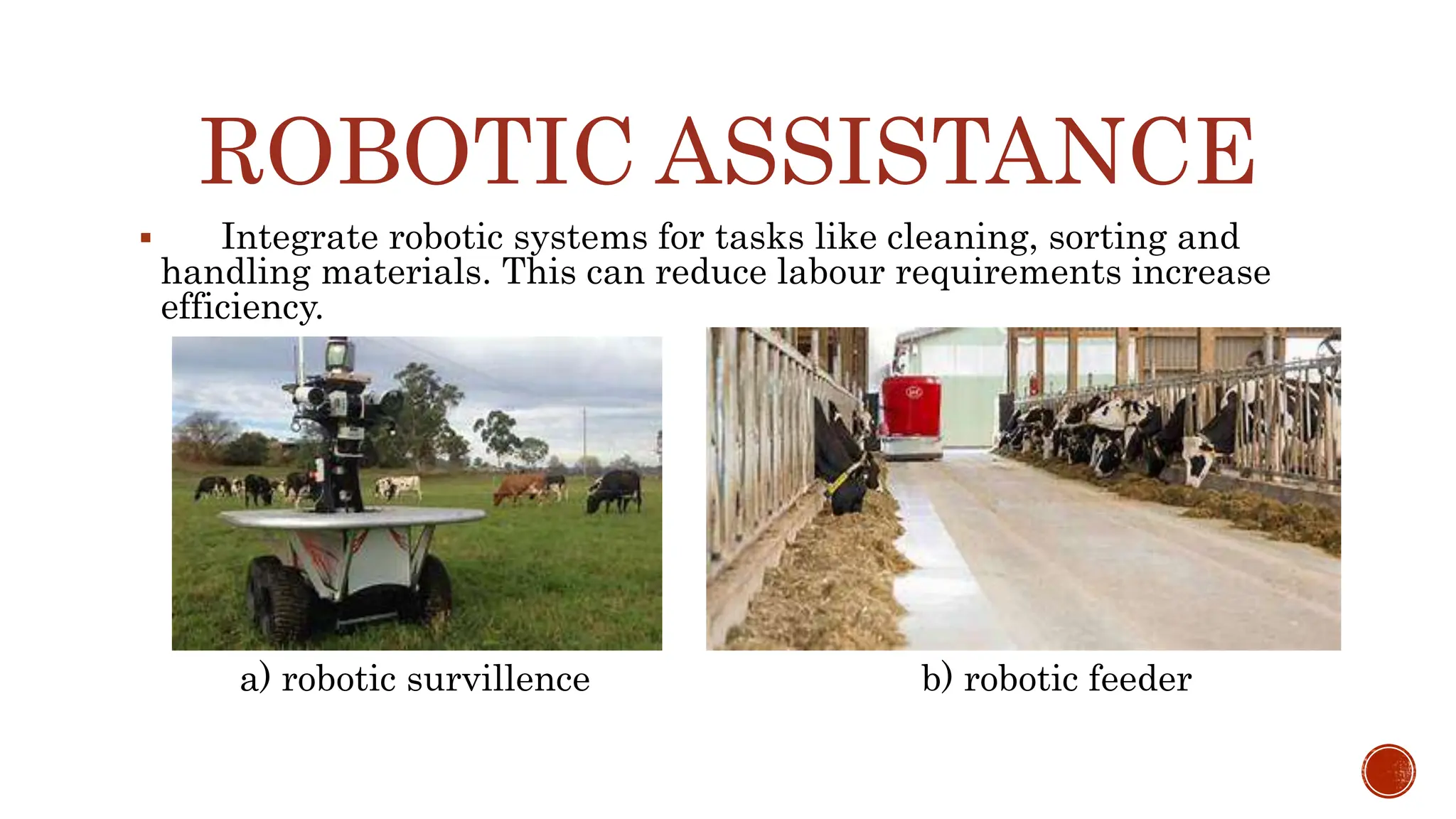
 Integrate robotic systems for tasks like cleaning, sorting and
handling materials. This can reduce labour requirements increase
efficiency.
a) robotic survillence b) robotic feeder
HEALTH AND SAFETY
MEASURES
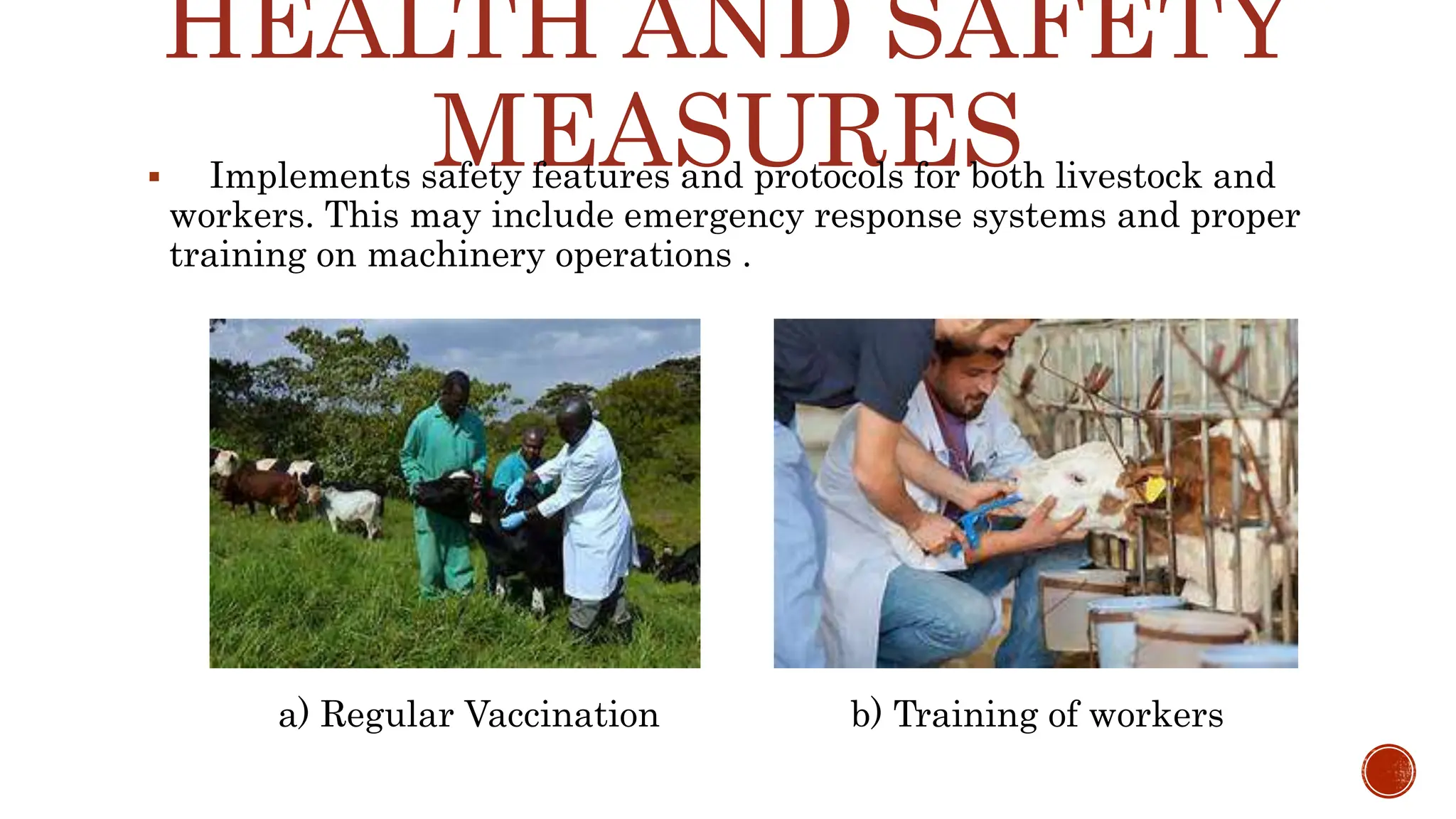
 Implements safety features and protocols for both livestock and
workers. This may include emergency response systems and proper
training on machinery operations .
a) Regular Vaccination b) Training of workers
CONCLUSION
 The extent of mechanization depends
on the scale and type of livestock farm
 Its essential to consider the specific
needs of farm and gradually introduce
technologies based on feasibility and
economic viability.

Mechanization in livestock farms.pptx

  • 1.
    Presented by :Presented to : Meghana J Dr. Prasanna sir VHK2041 Dept. of livestock farm complex VCH,
  • 2.
    INTRODUCTION  Mechanization oflivestock means replacing the traditional method of raising of fodder and management of livestock with machines instead of humans.  The farm mechanization movement in India has been one of the most significant events in the last few years in terms of socio- economic development.
  • 3.
    WHY MECHANIZATION OF LIVESTOCKIS REQUIRED Saving of labour and cost. Saving of time. Ensuring accuracy. Relieving monotony. Improvement in quality. Better control. Improvement in prestige for the organisation.
  • 4.
    HOW TO DO MECHANIZATIONOF LIVESTOCK FARM It can be done in two main fields » Production of fodder. » Management of livestock farm.
  • 5.
    MECHANIZATION IN PRODUCTION OFFODDER  Ploughing by using tractors, rotary tillers, field cultivator, hydraulic plough… etc. a) Tractor b) Rotary tiller c)Field Cultivator
  • 6.
     Sowing byusing seed driller sowing the seeds and cycle weeder for removing the weeds in fodder field. a) Seed weeder B) Cycle weeder
  • 7.
     Irrigation byusing automated irrigation equipments like drip irrigation kits, irrigation tubes, sprinkler heads, irrigation system controllers etc.. a) Drip irrigation B) sprinkler heads c) Irrigation system controller
  • 8.
     Harvesting byusing of combined machineries like self propelled fodder harvester(cutter bar type) . This machine is used for harvesting of fodder crops like burseem, lucerne and etc… a) Cutter bar type
  • 9.
     In ourlivestock farm we can use chaff cutter for cutting the fodder for silage making. a) Chaff cutter
  • 10.
    MECHANIZATION IN LIVESTOCK MANAGEMENT 1. Feedingsystem 2. Milking automation 3. Manure management 4. Livestock monitoring 5. Fencing and Security 6. Data management 7. Climate control 8. Breeding technologies 9. Robotic assistance 10. Health and safety measures
  • 11.
    FEEDING SYSTEM  Implementautomated feeding systems to ensure a consistent and timely supply of feed. This may include conveyor belts, robotic feeding systems, or automated feed dispensers. a) automated feeders b) conveyor belt feeder
  • 12.
    MILKING AUTOMATION  Installrobotic milking system to dairy farms to automate the milking process. These system can monitor individual cow health and milk production.  In our livestock farm milking machines are used for milk production. a) automated milkers b) Milking machines
  • 13.
    MANURE MANAGEMENT  Useequipment like automated manure spreaders and cleaners to efficiently manage and remove waste. This helps to maintain a clean and healthy environment for the livestock. a) manure cleaner b) manure spreader
  • 14.
    LIVESTOCK MONITORING  Employ technologyfor monitoring the health and behaviour of livestock. This include wearable devices, sensors and cameras to track vital signs and deduct early signs of illness. a) survillence through b)survillence using drones insertion of sensors
  • 15.
    FENCING AND SECURITY  Utilizeautomated or remote controlled fencing systems to manage grazing areas and enhance security. This can include electric fences with remote monitoring capabilities. electric fencing of grazing area and remote controlled
  • 16.
    DATA MANAGEMENT  Adoptfarm management software to keep track of livestock records, feeding schedule, health data and breeding information. This can aid in decision making and performance analysis. data maintenance using computers
  • 17.
    CLIMATE CONTROL  Implementautomated climate control systems in barns or housing facilities to regulate temperature humility and ventilation. This is crucial for well being of livestock.  This can be mainly seen in developed countries.
  • 18.
    BREEDING TECHNOLOGIES  Explore technologiessuch as artificial insemination and genetic selection to optimise breeding processes and improve the quality of livestock. a) artificial insemination b) genetic breeding chart
  • 19.
    ROBOTIC ASSISTANCE  Integraterobotic systems for tasks like cleaning, sorting and handling materials. This can reduce labour requirements increase efficiency. a) robotic survillence b) robotic feeder
  • 20.
    HEALTH AND SAFETY MEASURES Implements safety features and protocols for both livestock and workers. This may include emergency response systems and proper training on machinery operations . a) Regular Vaccination b) Training of workers
  • 21.
    CONCLUSION  The extentof mechanization depends on the scale and type of livestock farm  Its essential to consider the specific needs of farm and gradually introduce technologies based on feasibility and economic viability.