


Community College Consortium for Open Educational Resources Open Textbook Project Meeting Thursday, May 1, 2008, 10 am – 3 pm Krause Center for Innovation
Goals of Meeting Host the membership meeting of the Community College Consortium for Open Educational Resources Discuss Community College  Open Textbook Project Review OER Faculty  Survey results Identify next steps
AGENDA Brian Page, 1999,  Pics4Learning Concluding Remarks  2:50 CCCOER Next Steps  Identification of Campus OER Champions Building Faculty Engagement & Investment Training Needs Identifying Discipline Experts Growing the Consortium 1:30 Open Textbook Development & Adoption 12:30 Working Lunch 11:45 Connexions Statistics Open Textbook Project 11:10 Break 11:00 CCCOER Survey Results  10:45 CCCOER & CCOT: Progress to Date &  Goals  10:25 Hewlett Foundation Update 10:15 Welcome and Introductions 10:00
The William and Flora Hewlett Foundation Catherine M. Casserly, Ph.D.  Director  Open Educational Resources Vic Vuchic  Associate Program Officer  Open Educational Resources
Community College Consortium for Open Educational Resources Goal Identify, create and/or repurpose existing OER as Open Textbooks and make them available for use by community college students and faculty  Objective Seeking the support of faculty to identify, review, evaluate, and make available high quality, accessible and culturally relevant model Open Textbooks Established in July 2007 by the  Foothill-De Anza Community College District   Representatives from over 20 colleges attended the first CCCOER information  meeting on  July 17, 2007
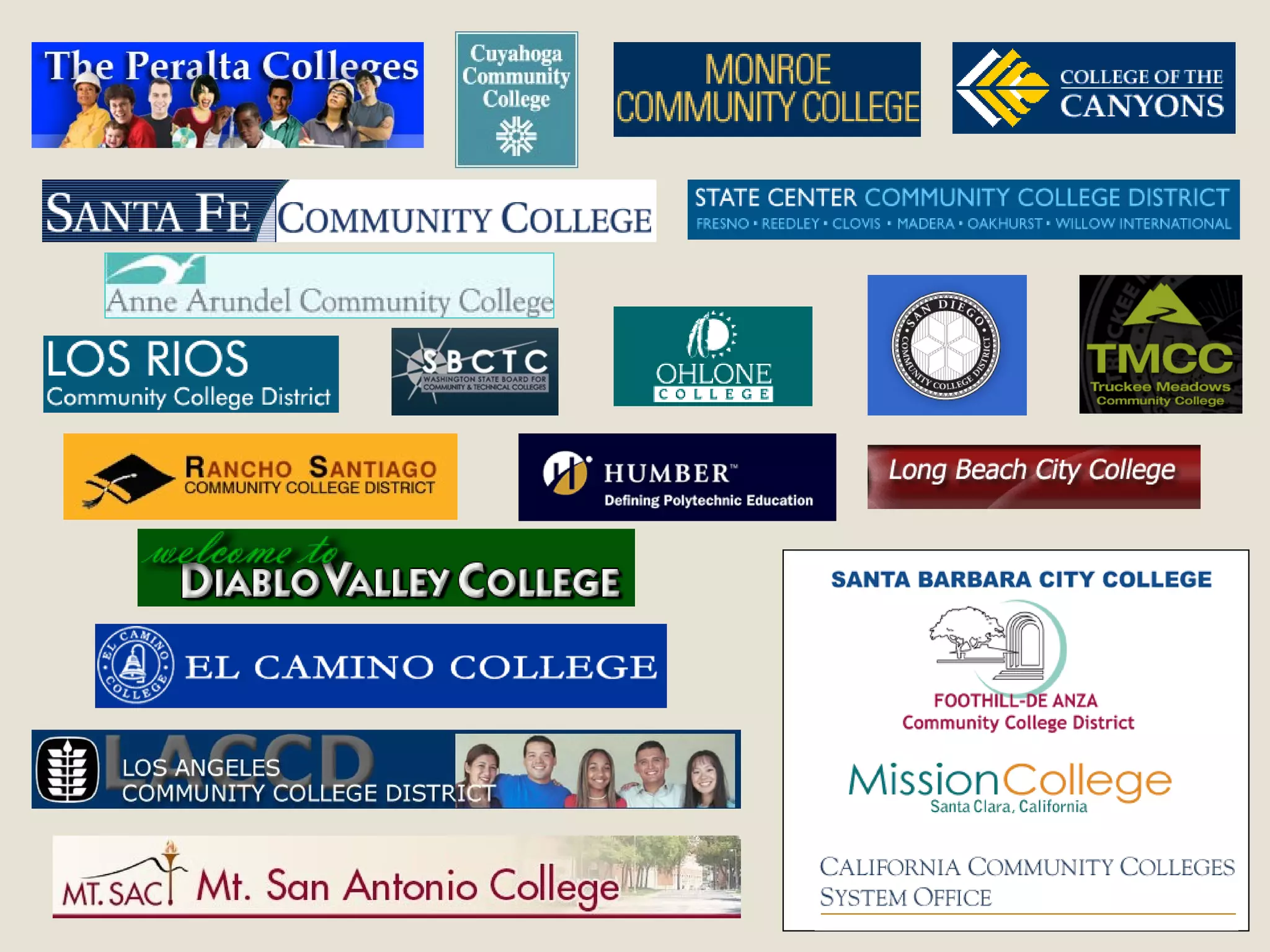
CCCOER: Progress to Date Membership  64 colleges CA, MD, NY, WA, NV, Ontario Website –  cccoer.wordpress.com OER Survey of 1,203 faculty  Collaboration Textbook Summit Student PIRG Connexions Monterey Institute for Technology and Education Institute for the Study of Knowledge Management in Education Flat World Knowledge  Developed faculty self-paced tutorial and credit course about OER Available online via Connexions and ETUDES NG  Co-hosted Open Textbook Meeting in Jan 2008 OER presentations at state and national professional meetings  and colleges; participation in California Textbook Summit
 
Community College Open Textbook Project Hewlett Foundation Grant Feasibility study to provide high quality, accessible and culturally relevant open textbooks for community college students and faculty through the CCCOER and other academic, noncommercial and commercial partners
Community College Open Textbook Project  Goal Identify, organize, and support the production and use of high quality, accessible and culturally relevant Open Textbooks for community college students
Community College Open Textbook Project  Goals Increase the scope and membership of CCCOER Centralize critical Open Textbook information for use by community colleges  Document a workflow model for producing and maintaining Open Textbooks Design and conduct research studies about the benefits of Open Textbooks  Develop a business plan to increase sustainability
 
Workflow Summary Locate, collect and develop open content Vet the content Quality Depth, breadth, cultural relevancy, authority of source, etc. Technical Accessibility, interoperability, etc. Prepare open content for CC use Customize, organize, localize, convert for accessibility, interoperability Provide publication and dissemination options
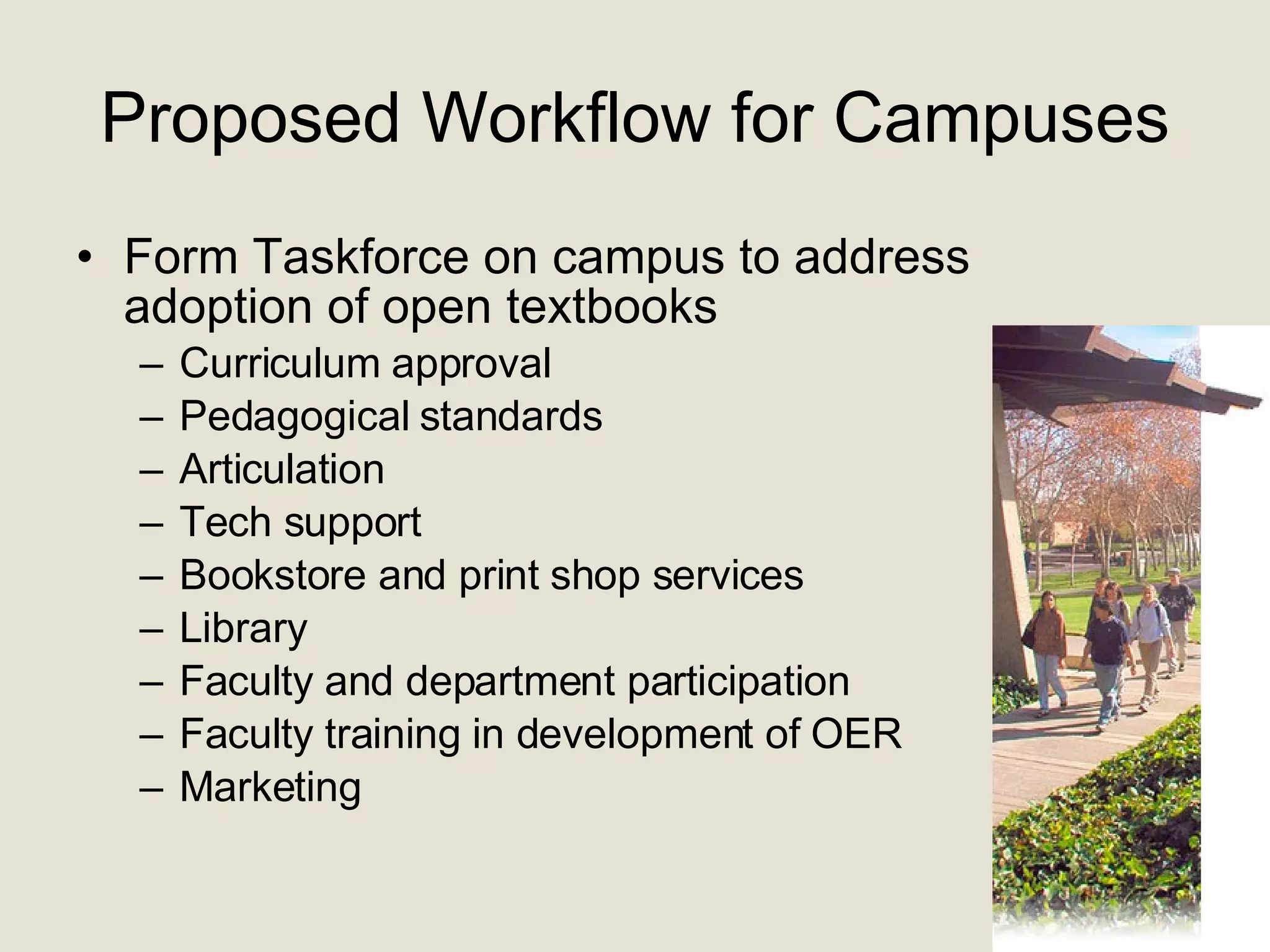
Proposed Workflow for Campuses Form Taskforce on campus to address  adoption of open textbooks Curriculum approval Pedagogical standards Articulation Tech support Bookstore and print shop services  Library Faculty and department participation Faculty training in development of OER Marketing
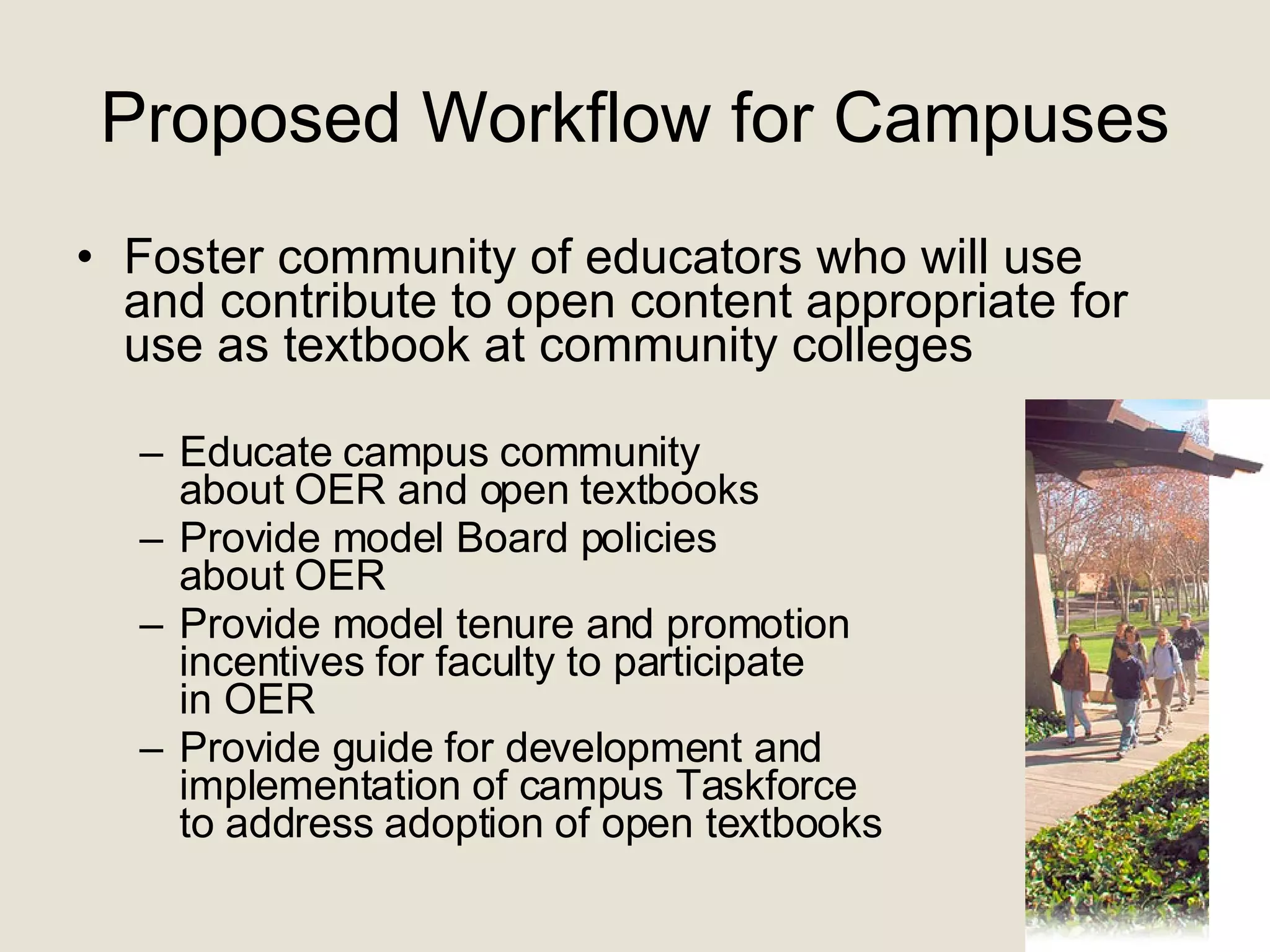
Proposed Workflow for Campuses Foster community of educators who will use and contribute to open content appropriate for use as textbook at community colleges Educate campus community  about OER and open textbooks Provide model Board policies  about OER Provide model tenure and promotion incentives for faculty to participate  in OER Provide guide for development and  implementation of campus Taskforce  to address adoption of open textbooks
What Sustainability and Business Models are most viable for the Community College Open Textbook Project?
Sustainability Unique sustainability challenges of open educational resource projects   Must find ways to sustain Production and sharing of open educational resources Use and reuse of their open educational resources by end users
Sustainability Explore the viability of institutional and/or student use fees Examine the relationship and cost-models for Connexion’s digital university press and the campus Bookstores and Printshops as point-of-purchase centers for Open Textbooks Identify sources of operating support from states, institutions, foundations and other complementary organizations
“ Sustainability is more than funding models.”  ~ S. Downes ~ Quality processes Technical Openness, access and licenses Staffing Workflow Maintenance
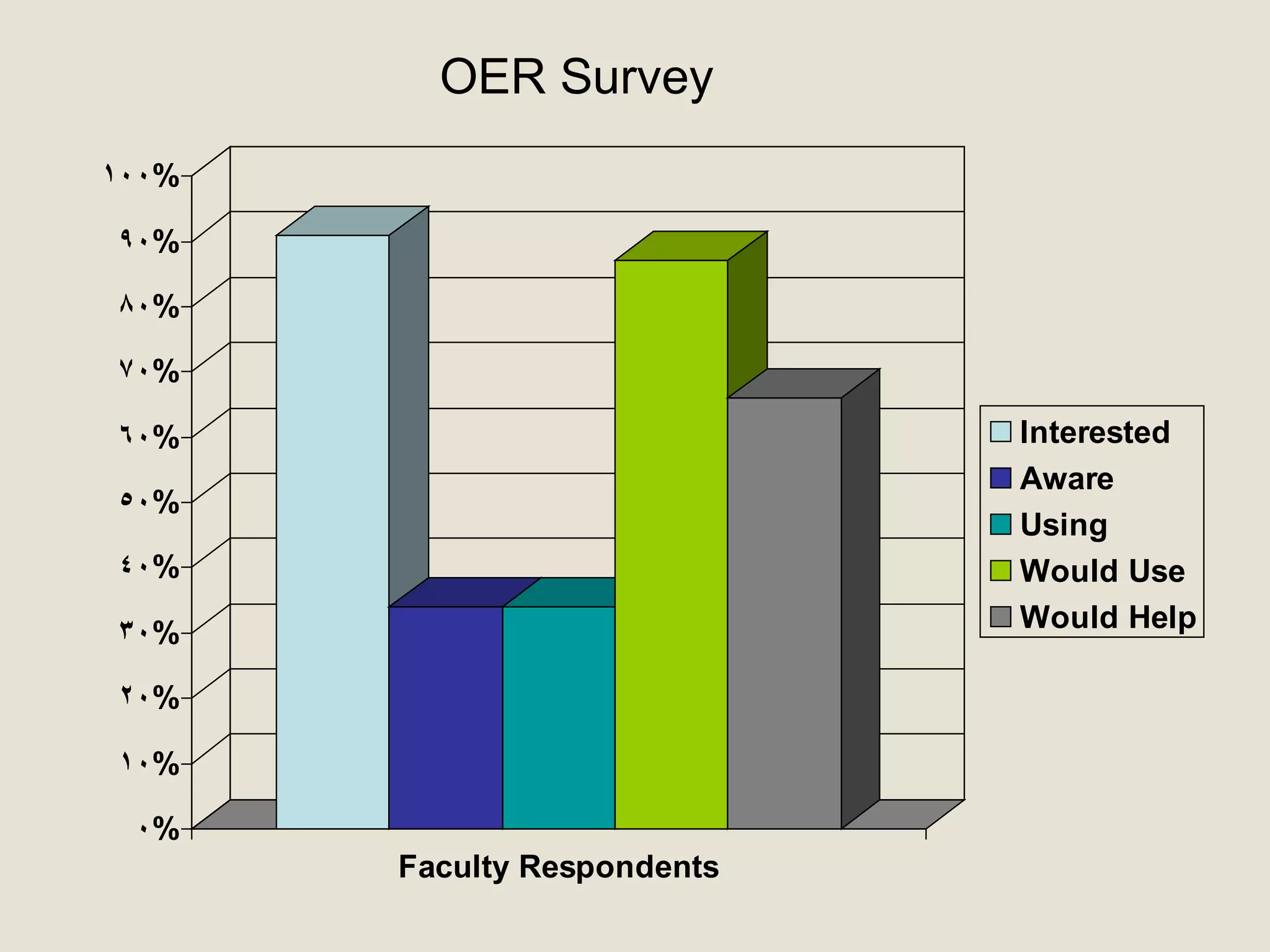
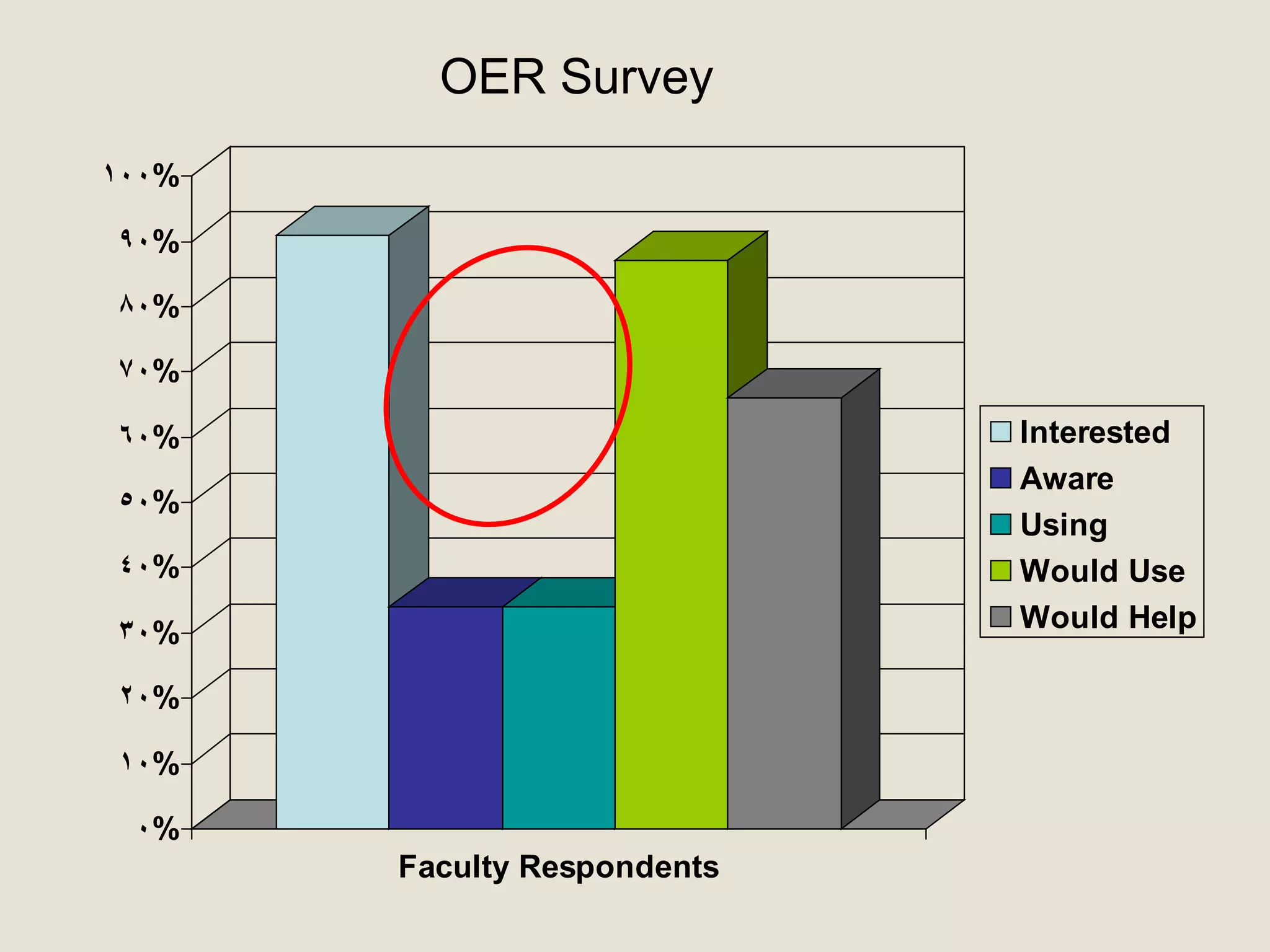
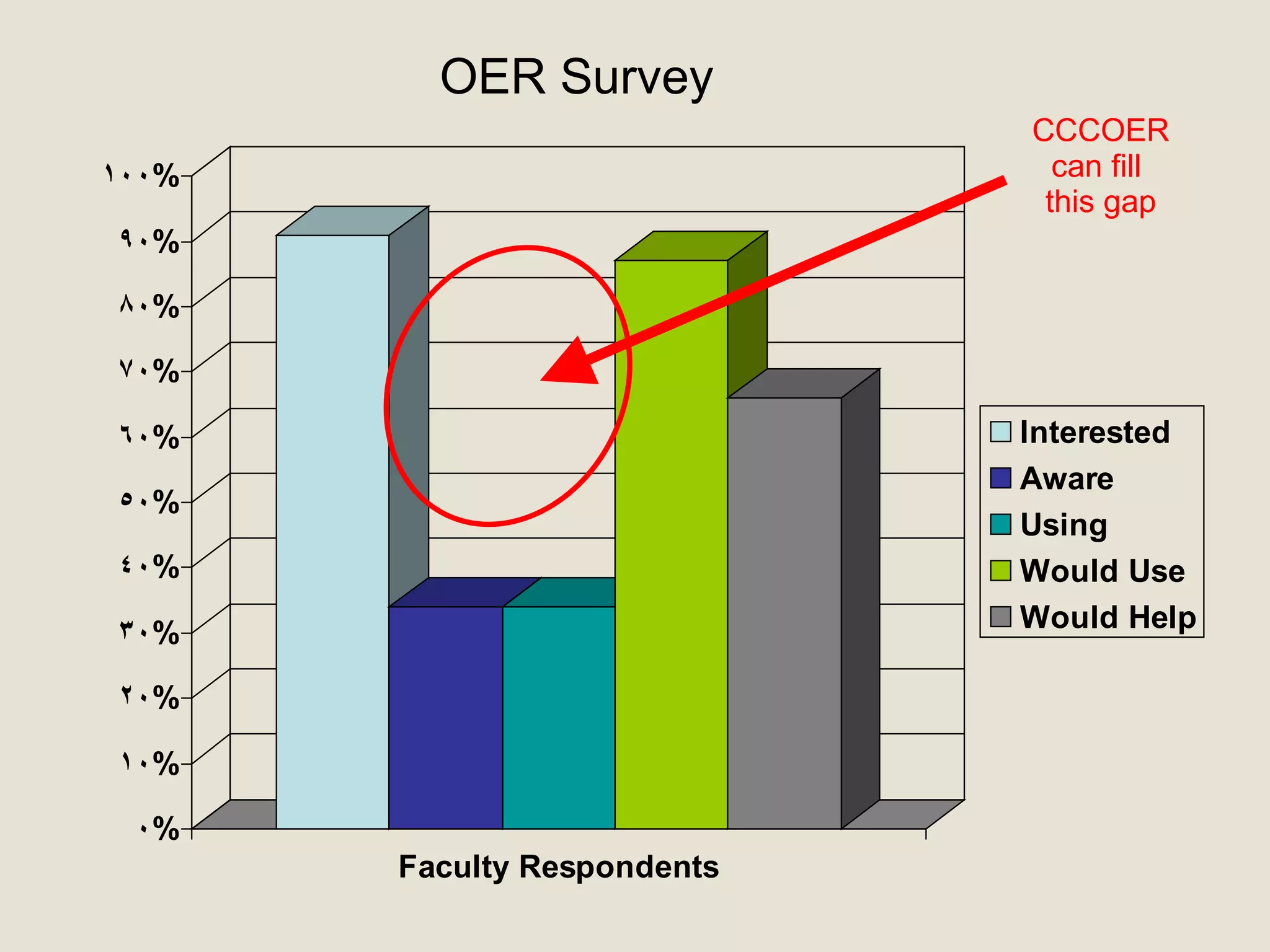
CCCOER Survey Results 1,203 faculty respondents 12 Districts and 28 colleges 66% full-time Represent wide range of  disciplines 91% indicated interest in using OER materials in their classes 34% said they were aware of  OER materials in their field
CCCOER Survey Results 34% already using OER materials in their classes Greatest type of OER use reported Journals and journal articles Reference works and materials Newspaper articles Images 87% likely or very likely to use OER materials  if such materials were readily accessible 66% interested in helping to produce or identify  OER materials Support needed for faculty to develop of OER Training Guidelines and/or templates Paid compensation or stipend Website repository of OER materials
OER Survey
OER Survey
CCCOER can fill  this gap OER Survey
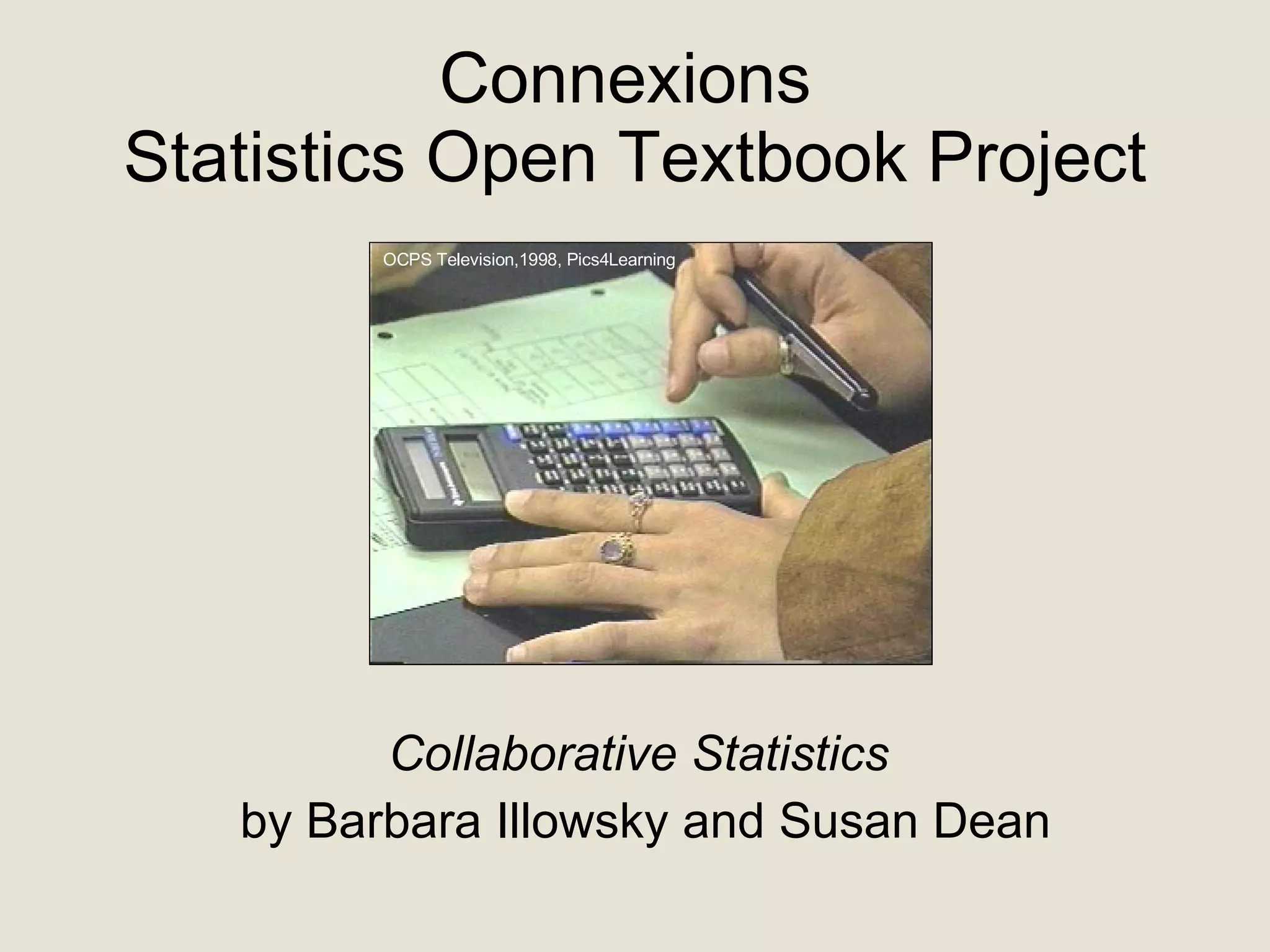
Connexions  Statistics Open Textbook Project Collaborative Statistics   by Barbara Illowsky and Susan Dean OCPS Television,1998, Pics4Learning
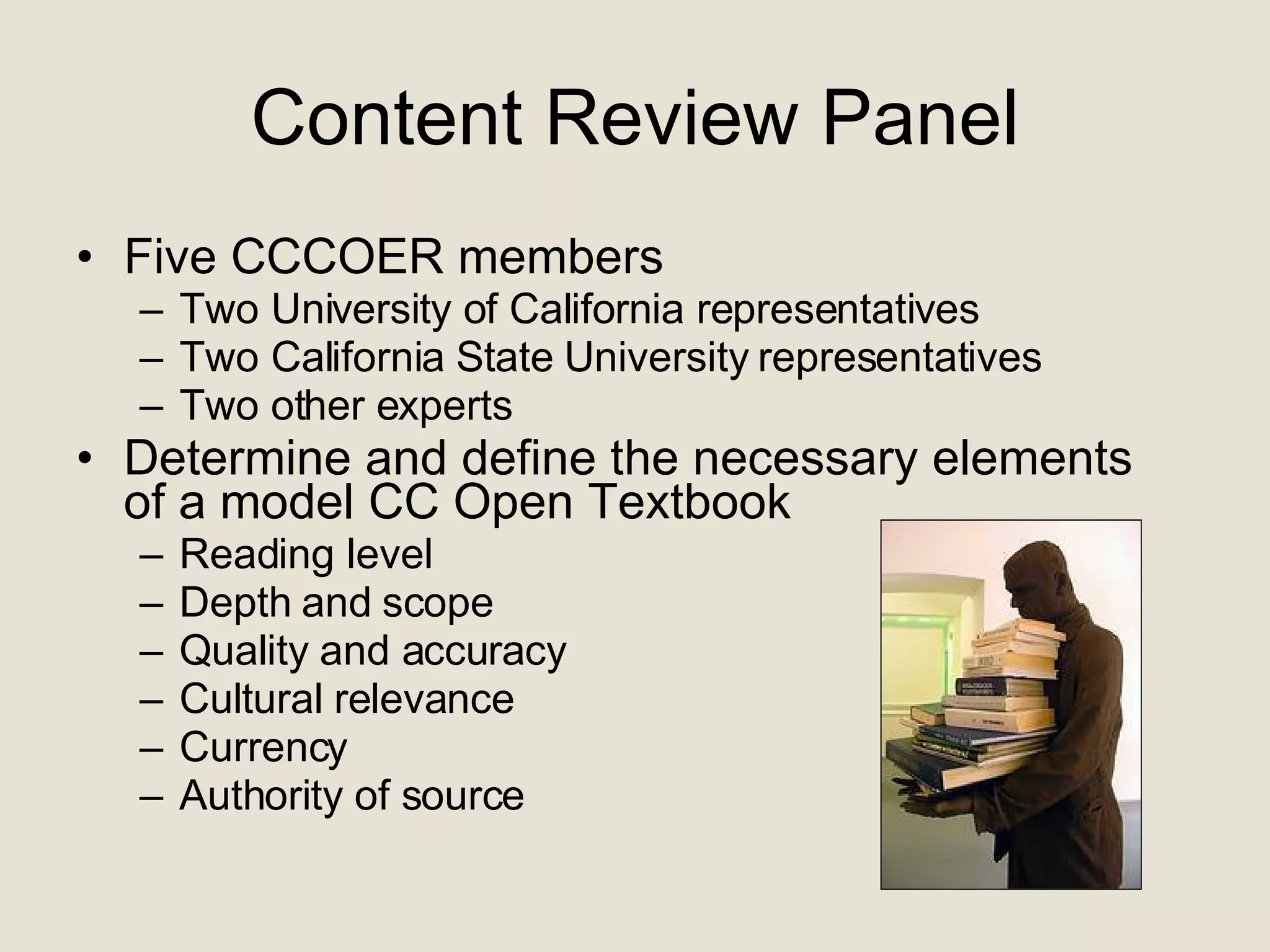
Content Review Panel Five CCCOER members  Two University of California representatives Two California State University representatives Two other experts  Determine and define the necessary elements of a model CC Open Textbook Reading level Depth and scope  Quality and accuracy Cultural relevance Currency Authority of source
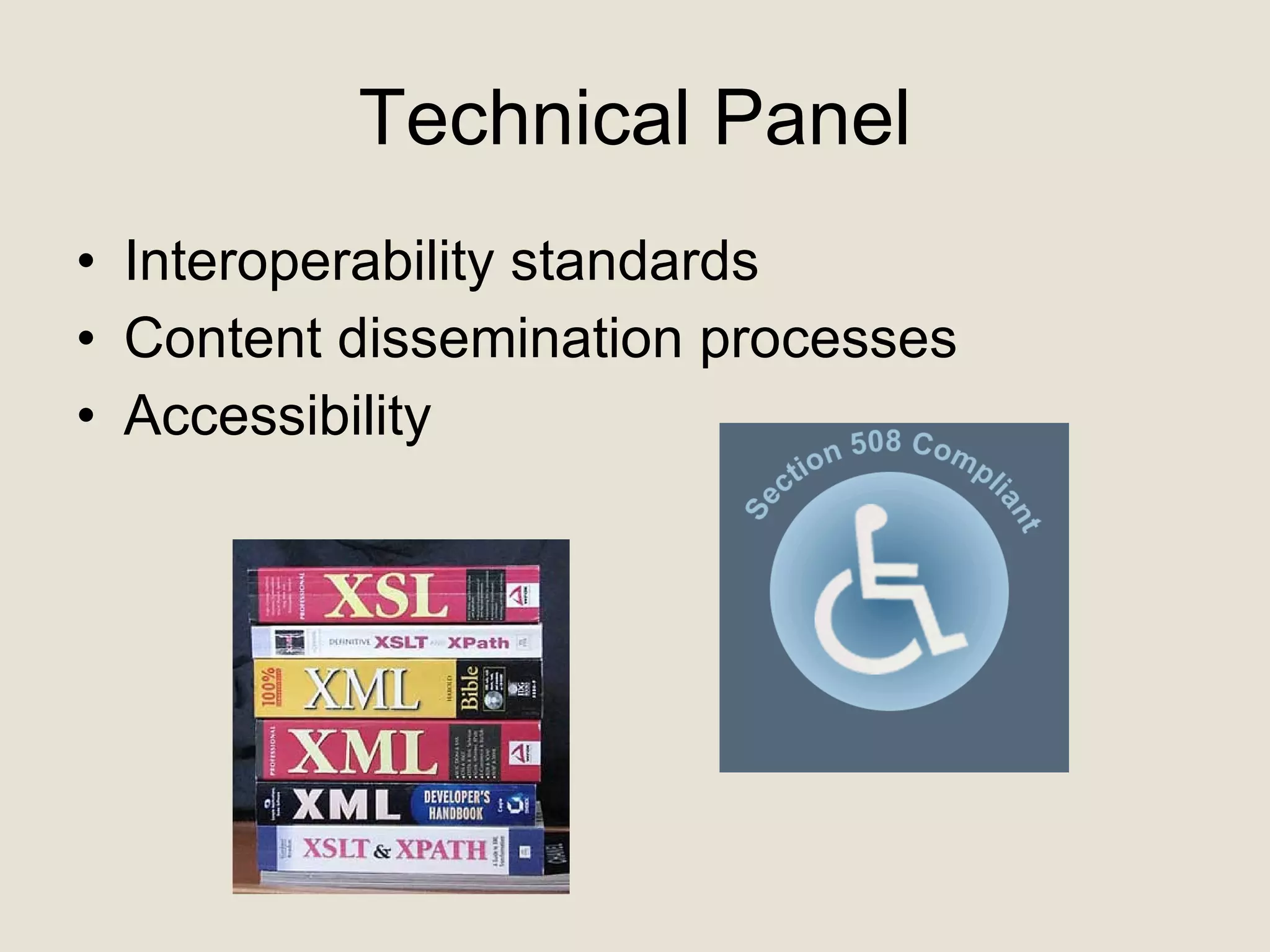
Technical Panel Interoperability standards Content dissemination processes Accessibility
Working Lunch K. Hedges, 2007, Pics4Learning
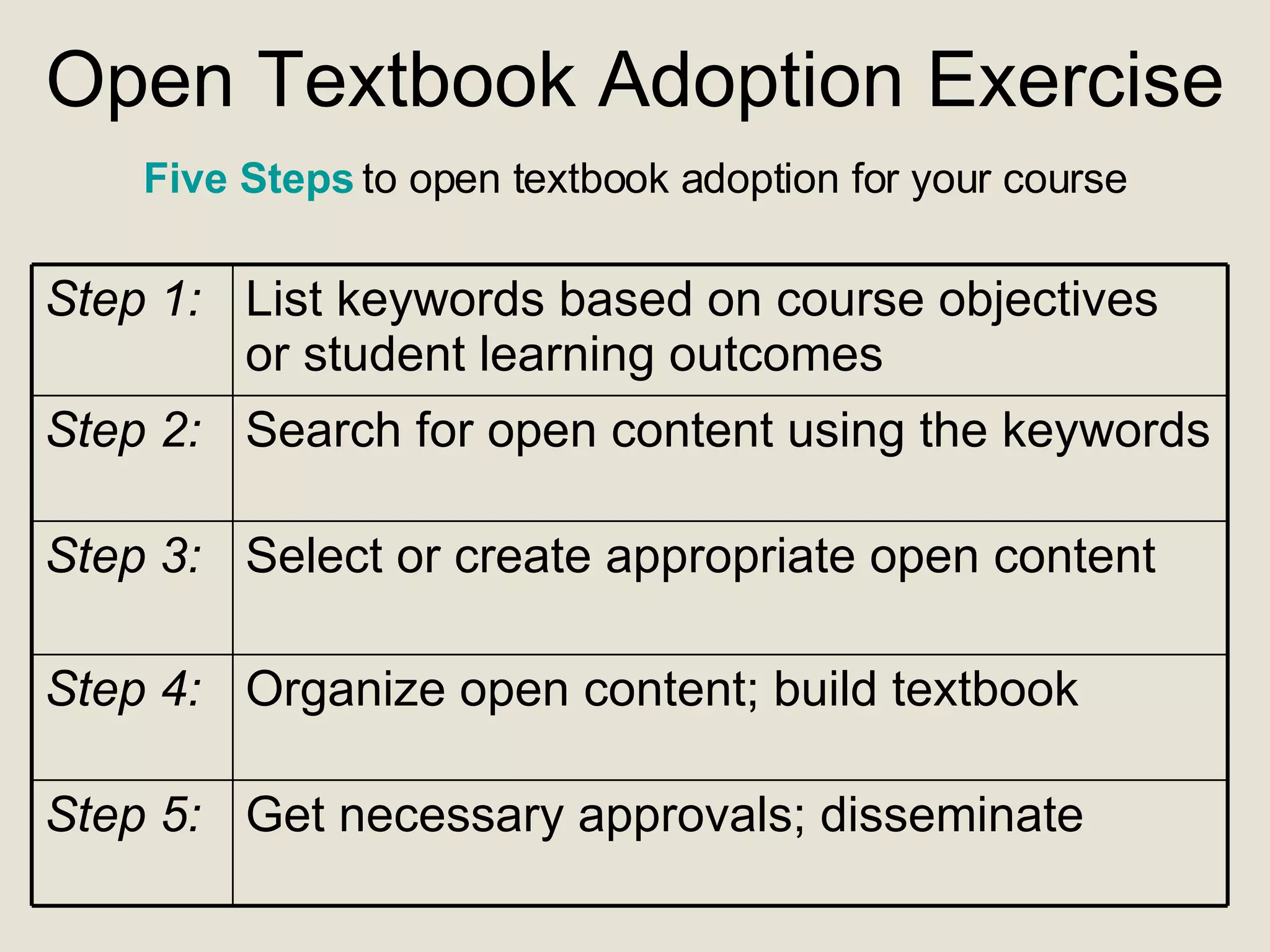
Open Textbook Adoption Exercise Five Steps  to open textbook adoption for your course Get necessary approvals; disseminate Step 5:   Organize open content; build textbook Step 4: Select or create appropriate open content Step 3: Search for open content using the keywords Step 2: List keywords based on course objectives or student learning outcomes Step 1:
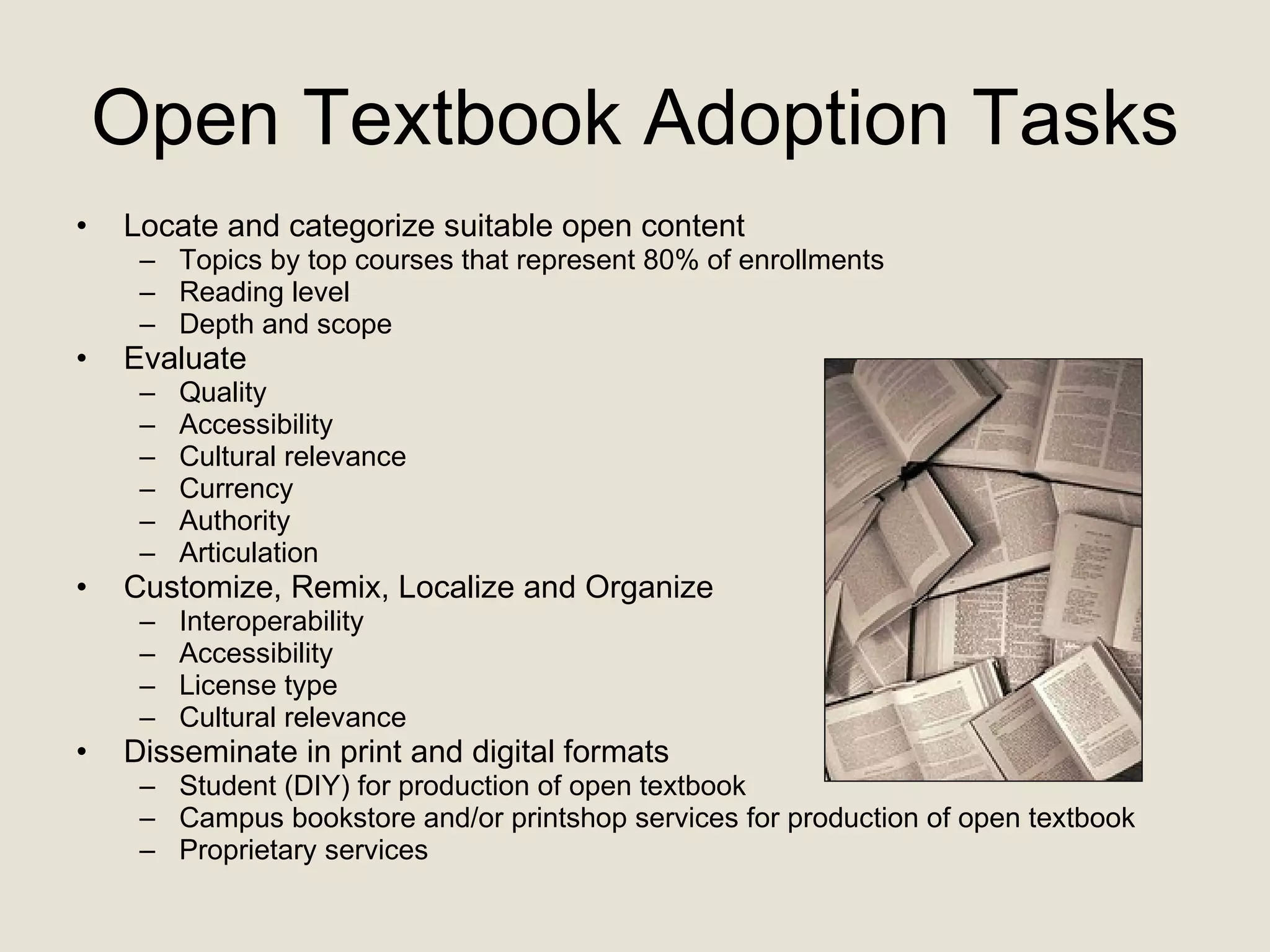
Open Textbook Adoption Tasks Locate and categorize suitable open content Topics by top courses that represent 80% of enrollments Reading level Depth and scope  Evaluate Quality Accessibility Cultural relevance Currency Authority Articulation Customize, Remix, Localize and Organize Interoperability Accessibility License type Cultural relevance Disseminate in print and digital formats  Student (DIY) for production of open textbook Campus bookstore and/or printshop services for production of open textbook Proprietary services
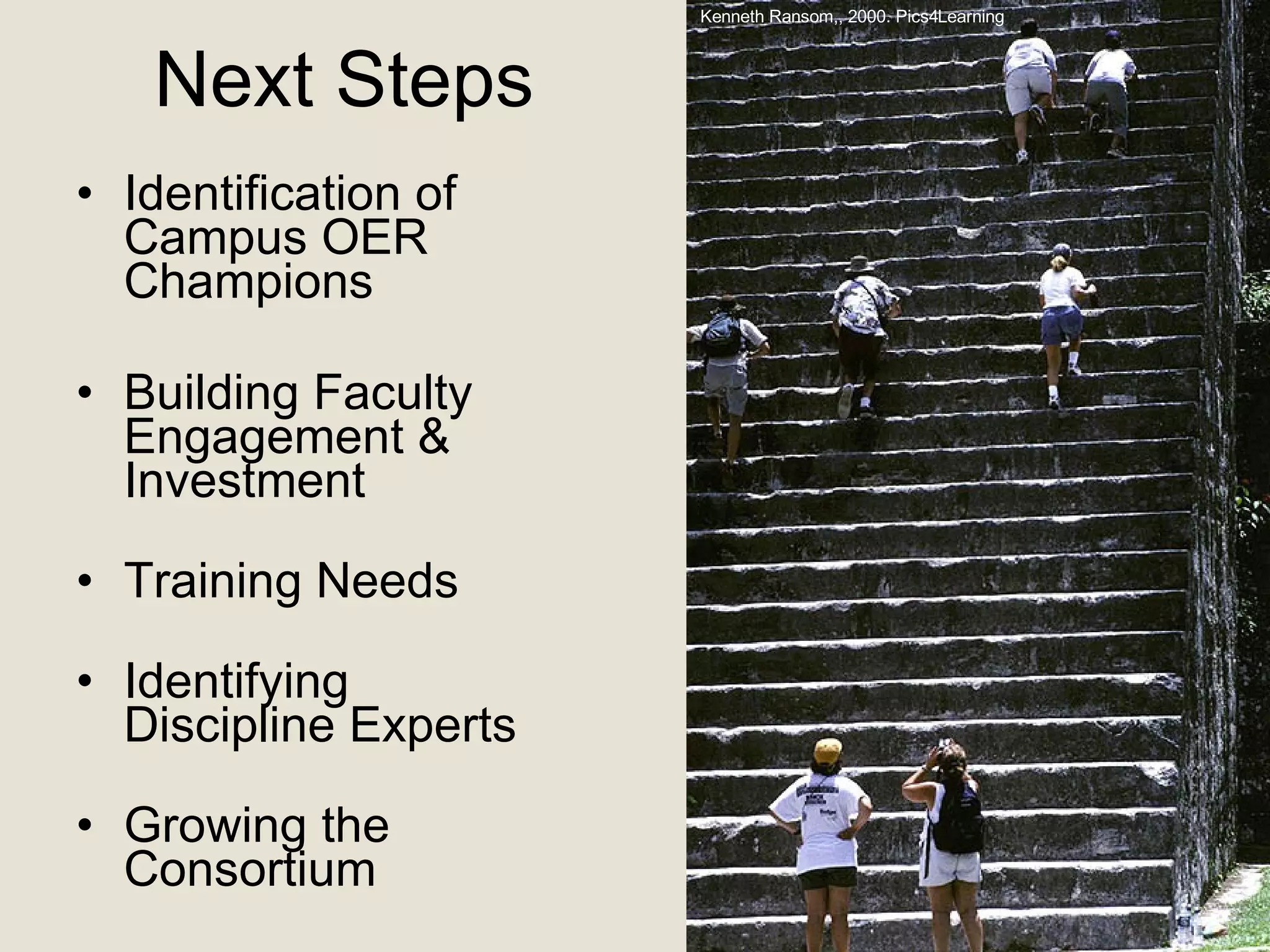
Next Steps Identification of  Campus OER  Champions Building Faculty  Engagement &  Investment Training Needs Identifying  Discipline Experts Growing the  Consortium Kenneth Ransom,, 2000. Pics4Learning
Concluding Remarks Brian Page,1985, Pics4Learning

May01 Presentation Final

  • 1.
    Community College Consortiumfor Open Educational Resources Open Textbook Project Meeting Thursday, May 1, 2008, 10 am – 3 pm Krause Center for Innovation
  • 2.
    Goals of MeetingHost the membership meeting of the Community College Consortium for Open Educational Resources Discuss Community College Open Textbook Project Review OER Faculty Survey results Identify next steps
  • 3.
    AGENDA Brian Page,1999, Pics4Learning Concluding Remarks 2:50 CCCOER Next Steps Identification of Campus OER Champions Building Faculty Engagement & Investment Training Needs Identifying Discipline Experts Growing the Consortium 1:30 Open Textbook Development & Adoption 12:30 Working Lunch 11:45 Connexions Statistics Open Textbook Project 11:10 Break 11:00 CCCOER Survey Results 10:45 CCCOER & CCOT: Progress to Date & Goals 10:25 Hewlett Foundation Update 10:15 Welcome and Introductions 10:00
  • 4.
    The William andFlora Hewlett Foundation Catherine M. Casserly, Ph.D. Director Open Educational Resources Vic Vuchic Associate Program Officer Open Educational Resources
  • 5.
    Community College Consortiumfor Open Educational Resources Goal Identify, create and/or repurpose existing OER as Open Textbooks and make them available for use by community college students and faculty Objective Seeking the support of faculty to identify, review, evaluate, and make available high quality, accessible and culturally relevant model Open Textbooks Established in July 2007 by the Foothill-De Anza Community College District Representatives from over 20 colleges attended the first CCCOER information meeting on July 17, 2007
  • 6.
    CCCOER: Progress toDate Membership 64 colleges CA, MD, NY, WA, NV, Ontario Website – cccoer.wordpress.com OER Survey of 1,203 faculty Collaboration Textbook Summit Student PIRG Connexions Monterey Institute for Technology and Education Institute for the Study of Knowledge Management in Education Flat World Knowledge Developed faculty self-paced tutorial and credit course about OER Available online via Connexions and ETUDES NG Co-hosted Open Textbook Meeting in Jan 2008 OER presentations at state and national professional meetings and colleges; participation in California Textbook Summit
  • 7.
  • 8.
    Community College OpenTextbook Project Hewlett Foundation Grant Feasibility study to provide high quality, accessible and culturally relevant open textbooks for community college students and faculty through the CCCOER and other academic, noncommercial and commercial partners
  • 9.
    Community College OpenTextbook Project Goal Identify, organize, and support the production and use of high quality, accessible and culturally relevant Open Textbooks for community college students
  • 10.
    Community College OpenTextbook Project Goals Increase the scope and membership of CCCOER Centralize critical Open Textbook information for use by community colleges Document a workflow model for producing and maintaining Open Textbooks Design and conduct research studies about the benefits of Open Textbooks Develop a business plan to increase sustainability
  • 11.
  • 12.
    Workflow Summary Locate,collect and develop open content Vet the content Quality Depth, breadth, cultural relevancy, authority of source, etc. Technical Accessibility, interoperability, etc. Prepare open content for CC use Customize, organize, localize, convert for accessibility, interoperability Provide publication and dissemination options
  • 13.
    Proposed Workflow forCampuses Form Taskforce on campus to address adoption of open textbooks Curriculum approval Pedagogical standards Articulation Tech support Bookstore and print shop services Library Faculty and department participation Faculty training in development of OER Marketing
  • 14.
    Proposed Workflow forCampuses Foster community of educators who will use and contribute to open content appropriate for use as textbook at community colleges Educate campus community about OER and open textbooks Provide model Board policies about OER Provide model tenure and promotion incentives for faculty to participate in OER Provide guide for development and implementation of campus Taskforce to address adoption of open textbooks
  • 15.
    What Sustainability andBusiness Models are most viable for the Community College Open Textbook Project?
  • 16.
    Sustainability Unique sustainabilitychallenges of open educational resource projects Must find ways to sustain Production and sharing of open educational resources Use and reuse of their open educational resources by end users
  • 17.
    Sustainability Explore theviability of institutional and/or student use fees Examine the relationship and cost-models for Connexion’s digital university press and the campus Bookstores and Printshops as point-of-purchase centers for Open Textbooks Identify sources of operating support from states, institutions, foundations and other complementary organizations
  • 18.
    “ Sustainability ismore than funding models.” ~ S. Downes ~ Quality processes Technical Openness, access and licenses Staffing Workflow Maintenance
  • 19.
    CCCOER Survey Results1,203 faculty respondents 12 Districts and 28 colleges 66% full-time Represent wide range of disciplines 91% indicated interest in using OER materials in their classes 34% said they were aware of OER materials in their field
  • 20.
    CCCOER Survey Results34% already using OER materials in their classes Greatest type of OER use reported Journals and journal articles Reference works and materials Newspaper articles Images 87% likely or very likely to use OER materials if such materials were readily accessible 66% interested in helping to produce or identify OER materials Support needed for faculty to develop of OER Training Guidelines and/or templates Paid compensation or stipend Website repository of OER materials
  • 21.
  • 22.
  • 23.
    CCCOER can fill this gap OER Survey
  • 24.
    Connexions StatisticsOpen Textbook Project Collaborative Statistics by Barbara Illowsky and Susan Dean OCPS Television,1998, Pics4Learning
  • 25.
    Content Review PanelFive CCCOER members Two University of California representatives Two California State University representatives Two other experts Determine and define the necessary elements of a model CC Open Textbook Reading level Depth and scope Quality and accuracy Cultural relevance Currency Authority of source
  • 26.
    Technical Panel Interoperabilitystandards Content dissemination processes Accessibility
  • 27.
    Working Lunch K.Hedges, 2007, Pics4Learning
  • 28.
    Open Textbook AdoptionExercise Five Steps to open textbook adoption for your course Get necessary approvals; disseminate Step 5:   Organize open content; build textbook Step 4: Select or create appropriate open content Step 3: Search for open content using the keywords Step 2: List keywords based on course objectives or student learning outcomes Step 1:
  • 29.
    Open Textbook AdoptionTasks Locate and categorize suitable open content Topics by top courses that represent 80% of enrollments Reading level Depth and scope Evaluate Quality Accessibility Cultural relevance Currency Authority Articulation Customize, Remix, Localize and Organize Interoperability Accessibility License type Cultural relevance Disseminate in print and digital formats Student (DIY) for production of open textbook Campus bookstore and/or printshop services for production of open textbook Proprietary services
  • 30.
    Next Steps Identificationof Campus OER Champions Building Faculty Engagement & Investment Training Needs Identifying Discipline Experts Growing the Consortium Kenneth Ransom,, 2000. Pics4Learning
  • 31.
    Concluding Remarks BrianPage,1985, Pics4Learning