Chapter 2
The Properties of Matter
Section 1: Matter
pp. 38-43
Properties of all objects:
 They take up space
 They have mass
 Mass is how much there is of an
object. It is related to how much
something weighs, but mass and
weight are two different things.
Objects that take up space
and have mass are called
matter.
All matter is made up of
lots of tiny particles that
are too small to be seen by
the eye.
So, what are some
examples of matter?
 People
 Trees
 Computers
 Air
 Water
 Houses
 Cars
 Paper
 Pencils
 EVERYTHING
Physical Properties
 Physical properties refer to the
characteristics of an object that can
be seen without changing how that
object looks.
 Some examples of physical
properties are:
 Shape
 Volume
 Movement of particles
 Spacing of particles
Physical Properties
 When we describe matter, we use the
physical properties to talk about the
states of matter.
 For example, if I was describing a
solid I would say that ALL solids have
a definite shape and a definite
volume.
 Notice I didn’t say that they are hard. I didn’t
say that because not ALL solids are hard.
Think about your hair. Is it hard?
Solids
 Ways to describe solids:
 ALL solids have a definite shape
 ALL solids have a definite volume
 The particles in ALL solids are packed
closely together
 The particles in ALL solids vibrate in
place.
Finding Volume of a Solid
 There are two ways to find the
volume of a solid. You must
determine the type of the solid
before you can find the volume.
 The two types of solids are
rectangular solids and irregular
solids.
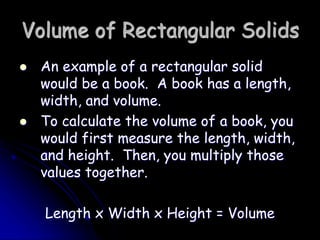
Volume of Rectangular Solids
 An example of a rectangular solid
would be a book. A book has a length,
width, and volume.
 To calculate the volume of a book, you
would first measure the length, width,
and height. Then, you multiply those
values together.
Length x Width x Height = Volume
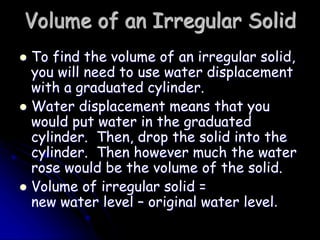
Volume of an Irregular Solid
 To find the volume of an irregular solid,
you will need to use water displacement
with a graduated cylinder.
 Water displacement means that you
would put water in the graduated
cylinder. Then, drop the solid into the
cylinder. Then however much the water
rose would be the volume of the solid.
 Volume of irregular solid =
new water level – original water level.
Liquids
 Ways to describe liquids:
 ALL liquids have a definite volume
 ALL liquids take the shape of the
container they are placed in.
 The particles in liquids are relatively
spread out.
 The particles move apart from each
other and flow from place to place
Finding Volume of a Liquid
 To find the volume of a liquid, scientists
use a tool called a graduated cylinder.
 A graduated cylinder is similar to a
measuring cup in that it shows
measurements in increments on the
outside of the container.
Gases
 Ways to describe gases:
 ALL gases have no definite volume.
 ALL gases take the shape of their
container, filling all of the available
space.
 The particles in a gas are spread out
in the available space.
 The particles move easily through the
available space.

Matter G7.ppt

  • 1.
    Chapter 2 The Propertiesof Matter Section 1: Matter pp. 38-43
  • 2.
    Properties of allobjects:  They take up space  They have mass  Mass is how much there is of an object. It is related to how much something weighs, but mass and weight are two different things.
  • 3.
    Objects that takeup space and have mass are called matter. All matter is made up of lots of tiny particles that are too small to be seen by the eye.
  • 4.
    So, what aresome examples of matter?  People  Trees  Computers  Air  Water  Houses  Cars  Paper  Pencils  EVERYTHING
  • 5.
    Physical Properties  Physicalproperties refer to the characteristics of an object that can be seen without changing how that object looks.  Some examples of physical properties are:  Shape  Volume  Movement of particles  Spacing of particles
  • 6.
    Physical Properties  Whenwe describe matter, we use the physical properties to talk about the states of matter.  For example, if I was describing a solid I would say that ALL solids have a definite shape and a definite volume.  Notice I didn’t say that they are hard. I didn’t say that because not ALL solids are hard. Think about your hair. Is it hard?
  • 8.
    Solids  Ways todescribe solids:  ALL solids have a definite shape  ALL solids have a definite volume  The particles in ALL solids are packed closely together  The particles in ALL solids vibrate in place.
  • 9.
    Finding Volume ofa Solid  There are two ways to find the volume of a solid. You must determine the type of the solid before you can find the volume.  The two types of solids are rectangular solids and irregular solids.
  • 10.
    Volume of RectangularSolids  An example of a rectangular solid would be a book. A book has a length, width, and volume.  To calculate the volume of a book, you would first measure the length, width, and height. Then, you multiply those values together. Length x Width x Height = Volume
  • 11.
    Volume of anIrregular Solid  To find the volume of an irregular solid, you will need to use water displacement with a graduated cylinder.  Water displacement means that you would put water in the graduated cylinder. Then, drop the solid into the cylinder. Then however much the water rose would be the volume of the solid.  Volume of irregular solid = new water level – original water level.
  • 12.
    Liquids  Ways todescribe liquids:  ALL liquids have a definite volume  ALL liquids take the shape of the container they are placed in.  The particles in liquids are relatively spread out.  The particles move apart from each other and flow from place to place
  • 14.
    Finding Volume ofa Liquid  To find the volume of a liquid, scientists use a tool called a graduated cylinder.  A graduated cylinder is similar to a measuring cup in that it shows measurements in increments on the outside of the container.
  • 15.
    Gases  Ways todescribe gases:  ALL gases have no definite volume.  ALL gases take the shape of their container, filling all of the available space.  The particles in a gas are spread out in the available space.  The particles move easily through the available space.