QUALITIES OF
SUCCESSFUL
ENTREPRENEURS IN
THE FIELD OF ICT
LEARNING OBJECTIVES
1.discuss the qualities of successful
entrepreneurs.
2.identify famous successful
entrepreneurs locally and
internationally; and
3.create a graphic organizer of the
different qualities of successful Filipino
entrepreneurs.
SHORT
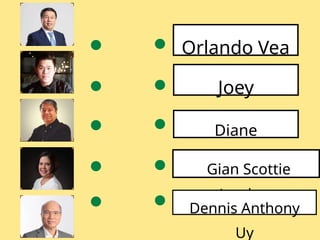
REVIEW Match the name
tag with the said
pictures.
Orlando Vea
Joey
Gurango
Diane
Eustaquio
Gian Scottie
Javelona
Dennis Anthony
Uy
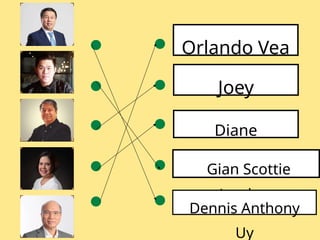
Orlando Vea
Joey
Gurango
Diane
Eustaquio
Gian Scottie
Javelona
Dennis Anthony
Uy
VOCABULAR
Y
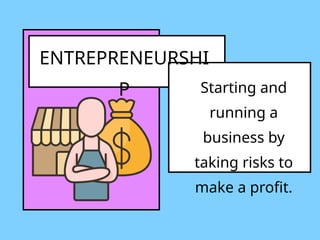
ENTREPRENEURSHI
P Starting and
running a
business by
taking risks to
make a profit.
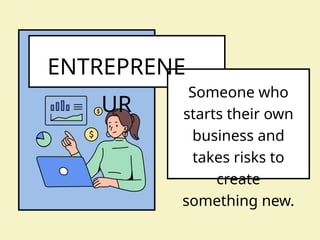
ENTREPRENE
UR
Someone who
starts their own
business and
takes risks to
create
something new.
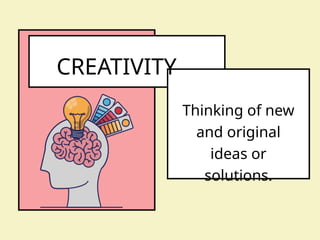
CREATIVITY
Thinking of new
and original
ideas or
solutions.
RISK-TAKING-
Being brave
enough to try
new things, even
if they might not
work out.
OPEN-
MINDEDNESS
Being open to
new ideas and
willing to learn
from others.
PASSION
Having a strong
love and
excitement for
something, like
running a
business.
QUALITIES OF
SUCCESSFUL
ENTREPRENEURS IN
THE FIELD OF ICT
CREATIVITY: Successful
entrepreneurs are
good at thinking of
new and different
ideas to solve
problems and
make their
business stand
out.
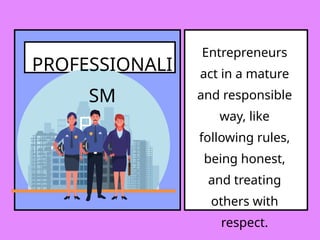
PROFESSIONALI
SM
Entrepreneurs
act in a mature
and responsible
way, like
following rules,
being honest,
and treating
others with
respect.
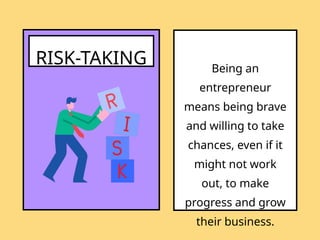
RISK-TAKING Being an
entrepreneur
means being brave
and willing to take
chances, even if it
might not work
out, to make
progress and grow
their business.
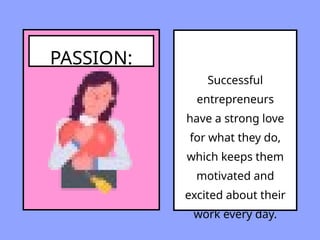
PASSION:
Successful
entrepreneurs
have a strong love
for what they do,
which keeps them
motivated and
excited about their
work every day.
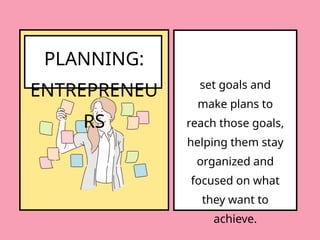
PLANNING:
ENTREPRENEU
RS
set goals and
make plans to
reach those goals,
helping them stay
organized and
focused on what
they want to
achieve.
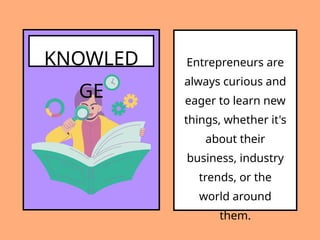
KNOWLED
GE
Entrepreneurs are
always curious and
eager to learn new
things, whether it's
about their
business, industry
trends, or the
world around
them.
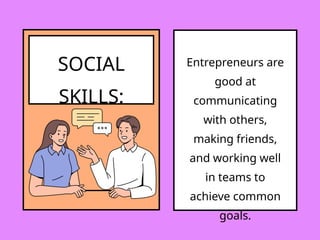
SOCIAL
SKILLS:
Entrepreneurs are
good at
communicating
with others,
making friends,
and working well
in teams to
achieve common
goals.
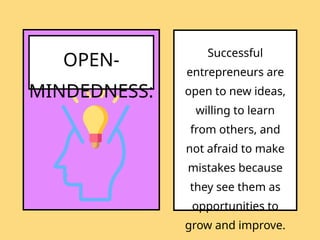
OPEN-
MINDEDNESS:
Successful
entrepreneurs are
open to new ideas,
willing to learn
from others, and
not afraid to make
mistakes because
they see them as
opportunities to
grow and improve.
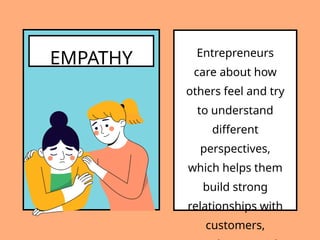
EMPATHY Entrepreneurs
care about how
others feel and try
to understand
different
perspectives,
which helps them
build strong
relationships with
customers,
VALUE
CUSTOMERS
Successful
entrepreneurs
focus on providing
excellent products
or services that
meet the needs of
their customers,
making sure they
are happy and
satisfied with what
ANSWER THE
FOLLOWING
QUESTIONS
What are the qualities of a
successful entrepreneur?
ANSWER THE
FOLLOWING
QUESTIONS
What qualities are present
to Filipino entrepreneurs
you know?
• In what situations or instances can you
determine that entrepreneurs have
the said qualities?
ANSWER THE
FOLLOWING
• Why should an entrepreneur possess
the said qualities?
• Why should a future entrepreneur like
you develop the said qualities of
successful Filipino entrepreneurs?
ANSWER THE
FOLLOWING
ACTIVITY
Choose one
technopreneur. and
identify the
entrepreneurs’
qualities. Explain
why these qualities
help them to
succeed.
LESSON ACTIVITY
Learning Activity Sheet No. 1 and 2
Day 2
OCCUPATIONAL
SAFETY AND HEALTH
(OHS) STANDARDS IN
ICT
ENTREPRENEURSHI
P Starting and
running a
business by
taking risks to
make a profit.
HAZARD SAFETY
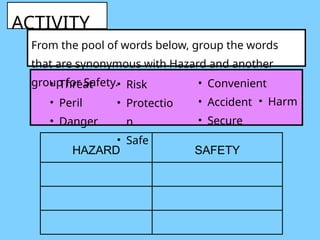
ACTIVITY
• Threat
• Peril
• Danger
From the pool of words below, group the words
that are synonymous with Hazard and another
group for Safety.• Risk
• Protectio
n
• Safe
• Convenient
• Accident
• Secure
• Harm
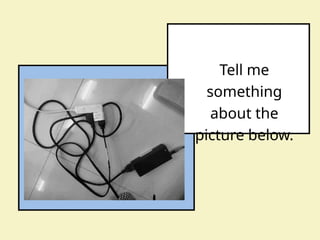
Tell me
something
about the
picture below.
HAZARD
is anything that
could hurt you
or someone
else.
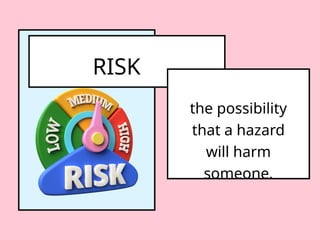
EXAMPLE
• frayed
electrical
cords
• boxes stacked
precariously
• noisy
machinery
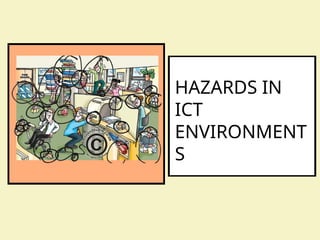
RISK
the possibility
that a hazard
will harm
someone.
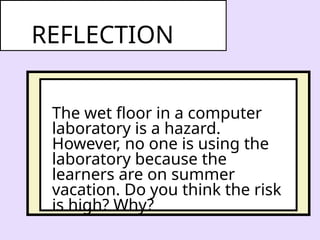
HAZARDS IN
ICT
ENVIRONMENT
S
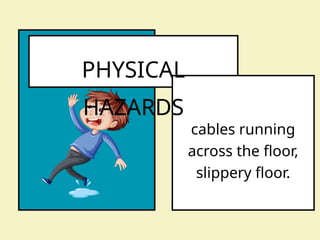
PHYSICAL
HAZARDS
cables running
across the floor,
slippery floor.
MECHANICAL
HAZARDS-
computer
chassis
CHEMICAL HAZARDS
display cleaning
chemicals,
keyboard
cleaning
chemicals,
compressed gas
dirt and dust
removers, and
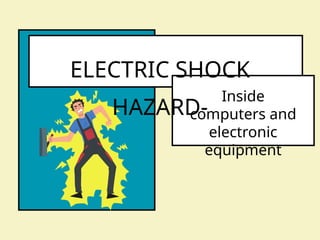
ELECTRIC SHOCK
HAZARD-
Inside
computers and
electronic
equipment
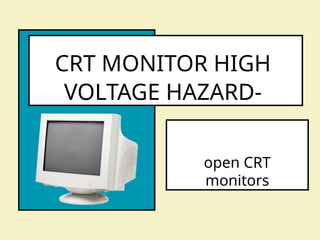
CRT MONITOR HIGH
VOLTAGE HAZARD-
open CRT
monitors
5S IN ORGANIZING ICT
ENVIRONMENTS:
SEIRI Sorting/Putting
things in order
(Remove/discard
what is not needed
so that there are
fewer hazards and
less clutter to
interfere with
work. Only keep
what is needed.)
SEITON
Orderliness/Proper
Arrangement
(Place things in
such a way that
they can be easily
reached whenever
they are needed.
There must be a
place for
everything, and
SEISO
Clean/cleanliness.
(Keep workplace
and things clean
and polished; no
trash or dirt in the
workplace)
SEIKETSU
Standardize/Purity
(Maintain
cleanliness after
cleaning,
consistently-
perpetual
cleaning. Such
cleaning is part of
everyone’s work.)
SHITSUKE
Sustaining/
discipline/
commitment
(Maintain
standards and
keep the facility in
safe and efficient
order day after
day, year after
BENEFITS OF 5S
METHODOLOGY
1.Improved productivity
2. Reduced waste
3.Enhanced safety
4.Increased employee
satisfaction
5.Improved customer
satisfaction
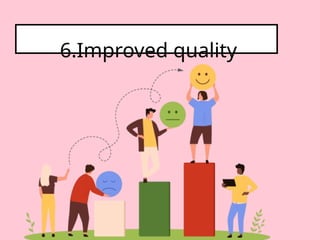
6.Improved quality
7. Reduced costs
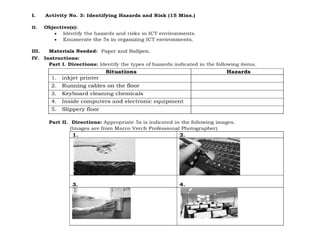
ACTIVITY NO. 3:
Identifying Hazards and Risk and
Enumerate the 5s in organizing ICT
environments.
Learner’s Activity Sheet #3
Day 3
SAFETY PRECAUTIONS WHEN
WORKING IN ICT ENVIRONMENTS
Fire Safety Guidelines
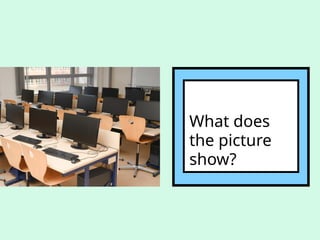
What does
the picture
show?
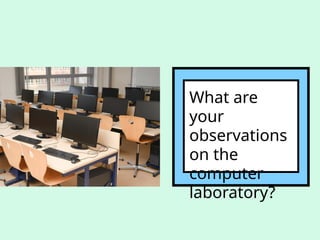
What are
your
observations
on the
computer
laboratory?
THE 3 MAJOR OBJECTIVES OF
FOLLOWING SAFETY GUIDELINES
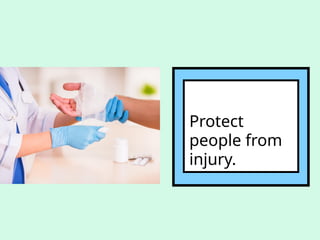
Protect
people from
injury.
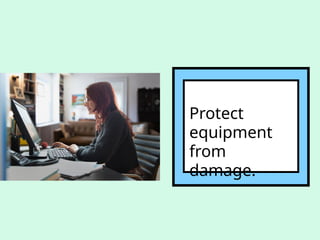
Protect
equipment
from
damage.
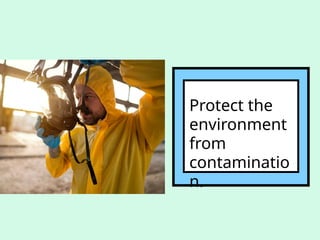
Protect the
environment
from
contaminatio
n.
Protect the
environment
from
contaminatio
n.
SAFETY PRECAUTIONS WHEN
WORKING IN THE COMPUTER
LABORATORY:
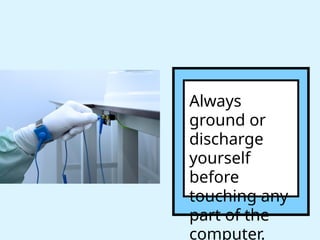
Always
ground or
discharge
yourself
before
touching any
part of the
computer.
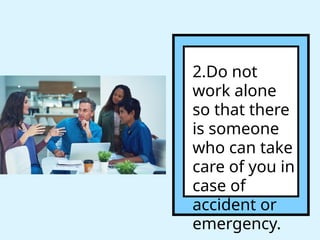
2.Do not
work alone
so that there
is someone
who can take
care of you in
case of
accident or
emergency.
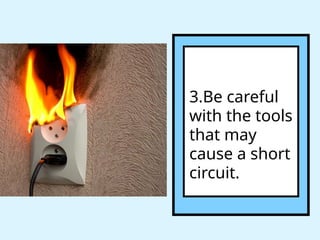
3.Be careful
with the tools
that may
cause a short
circuit.
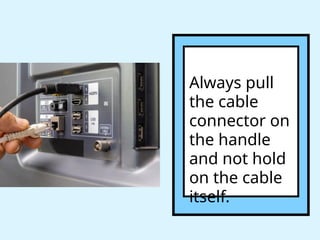
Always pull
the cable
connector on
the handle
and not hold
on the cable
itself.
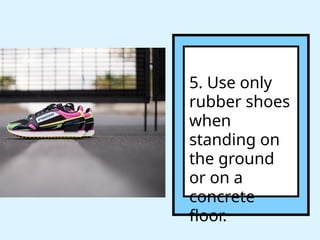
5. Use only
rubber shoes
when
standing on
the ground
or on a
concrete
floor.
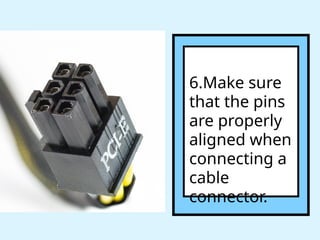
6.Make sure
that the pins
are properly
aligned when
connecting a
cable
connector.
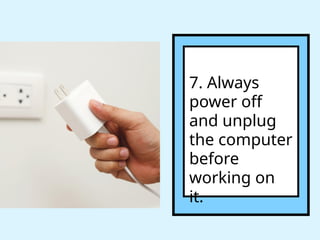
7. Always
power off
and unplug
the computer
before
working on
it.
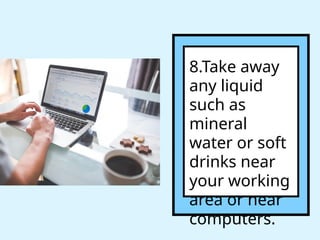
8.Take away
any liquid
such as
mineral
water or soft
drinks near
your working
area or near
computers.
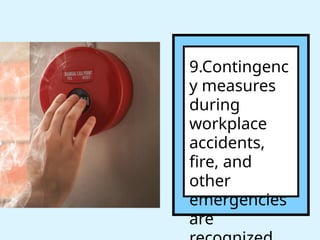
9.Contingenc
y measures
during
workplace
accidents,
fire, and
other
emergencies
are
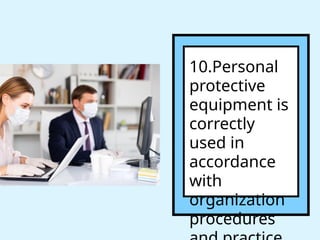
10.Personal
protective
equipment is
correctly
used in
accordance
with
organization
procedures
11.Hazard/
risks in the
workplace
and their
correspondin
g indicators
are identified
to minimize
or eliminate
risk to co‐
workers,
workplace,
and
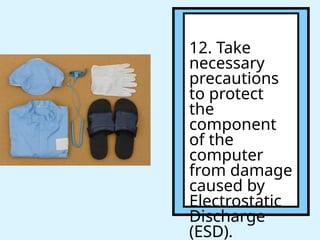
12. Take
necessary
precautions
to protect
the
component
of the
computer
from damage
caused by
Electrostatic
Discharge
(ESD).
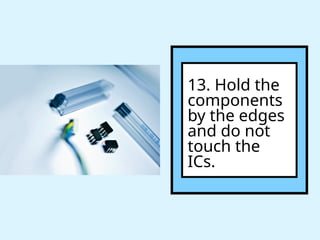
13. Hold the
components
by the edges
and do not
touch the
ICs.
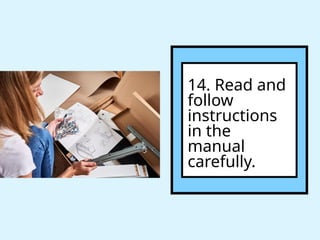
14. Read and
follow
instructions
in the
manual
carefully.
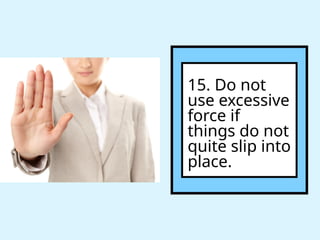
15. Do not
use excessive
force if
things do not
quite slip into
place.
Day 4
FIRE SAFETY
GUIDELINES
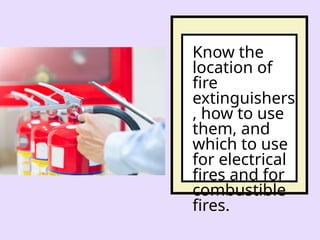
Know the
location of
fire
extinguishers
, how to use
them, and
which to use
for electrical
fires and for
combustible
fires.
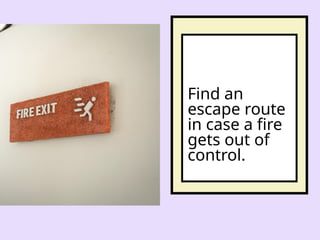
Find an
escape route
in case a fire
gets out of
control.
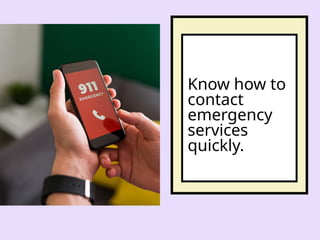
Know how to
contact
emergency
services
quickly.
Keep the
workspace
clean.
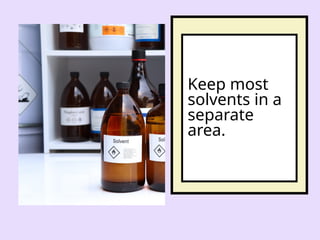
Keep most
solvents in a
separate
area.
1.Why is it strictly prohibited
to plug electrical
appliances like computers
if the hands are wet?
QUESTIONS?
2. What is an emergency exit?
QUESTIONS?
Refer to Learning Activity
Sheet #5
LESSON ACTIVITY
Day 5
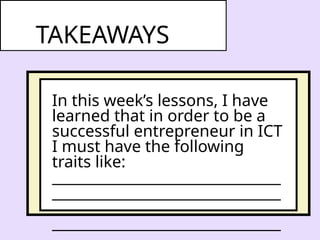
In this week’s lessons, I have
learned that in order to be a
successful entrepreneur in ICT
I must have the following
traits like:
________________________________
________________________________
________________________________
________________________________
TAKEAWAYS
The wet floor in a computer
laboratory is a hazard.
However, no one is using the
laboratory because the
learners are on summer
vacation. Do you think the risk
is high? Why?
REFLECTION
Suppose you are the owner of
a computer shop, and you
notice that the wires are
hanging loosely. How would
you resolve this problem?
REFLECTION
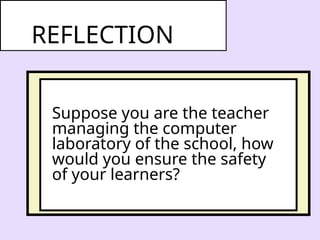
Suppose you are the teacher
managing the computer
laboratory of the school, how
would you ensure the safety
of your learners?
REFLECTION
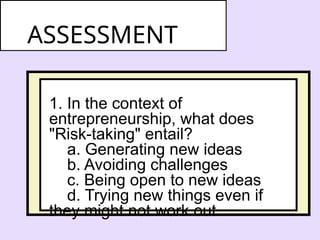
1. In the context of
entrepreneurship, what does
"Risk-taking" entail?
a. Generating new ideas
b. Avoiding challenges
c. Being open to new ideas
d. Trying new things even if
they might not work out
ASSESSMENT
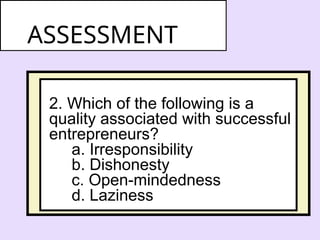
2. Which of the following is a
quality associated with successful
entrepreneurs?
a. Irresponsibility
b. Dishonesty
c. Open-mindedness
d. Laziness
ASSESSMENT
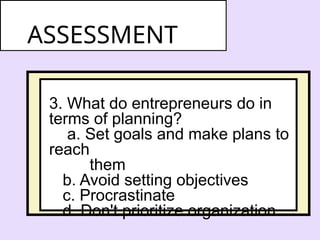
3. What do entrepreneurs do in
terms of planning?
a. Set goals and make plans to
reach
them
b. Avoid setting objectives
c. Procrastinate
d. Don't prioritize organization
ASSESSMENT
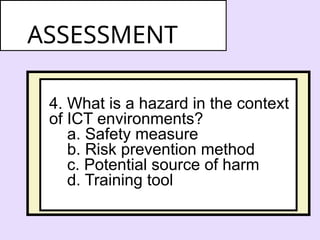
4. What is a hazard in the context
of ICT environments?
a. Safety measure
b. Risk prevention method
c. Potential source of harm
d. Training tool
ASSESSMENT
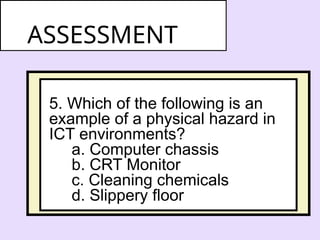
5. Which of the following is an
example of a physical hazard in
ICT environments?
a. Computer chassis
b. CRT Monitor
c. Cleaning chemicals
d. Slippery floor
ASSESSMENT
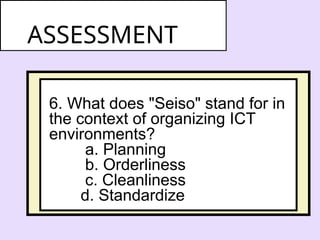
6. What does "Seiso" stand for in
the context of organizing ICT
environments?
a. Planning
b. Orderliness
c. Cleanliness
d. Standardize
ASSESSMENT
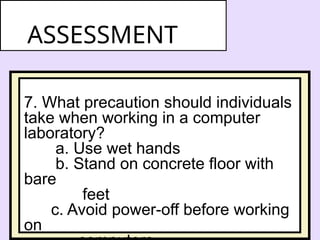
7. What precaution should individuals
take when working in a computer
laboratory?
a. Use wet hands
b. Stand on concrete floor with
bare
feet
c. Avoid power-off before working
on
ASSESSMENT
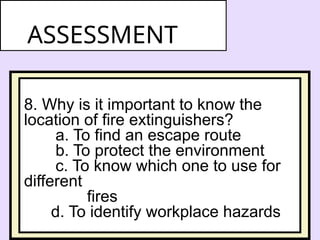
8. Why is it important to know the
location of fire extinguishers?
a. To find an escape route
b. To protect the environment
c. To know which one to use for
different
fires
d. To identify workplace hazards
ASSESSMENT
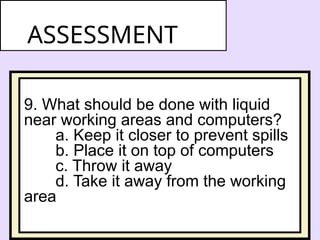
9. What should be done with liquid
near working areas and computers?
a. Keep it closer to prevent spills
b. Place it on top of computers
c. Throw it away
d. Take it away from the working
area
ASSESSMENT
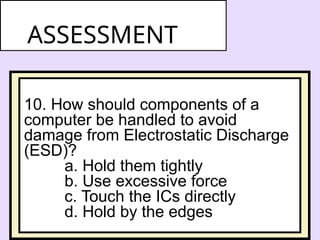
10. How should components of a
computer be handled to avoid
damage from Electrostatic Discharge
(ESD)?
a. Hold them tightly
b. Use excessive force
c. Touch the ICs directly
d. Hold by the edges
ASSESSMENT

Matatag Curriculum Information Technology Communication G7