Mastering Productivity
with the Pomodoro
Technique
Introduction to the Pomodoro Technique
Overview
The Pomodoro Technique is a time management method designed to enhance personal productivity by
breaking work into intervals, traditionally 25 minutes in length, separated by short breaks.
Origins
Developed by Francesco Cirillo in the late 1980s, the technique was named after the Italian word for
"tomato," inspired by the tomato-shaped kitchen timer Cirillo used during university.
Aim
The primary goal of the Pomodoro Technique is to improve focus and efficiency in everyday tasks,
allowing individuals to manage their time better and reduce mental fatigue.
The Concept Behind the
Pomodoro Technique
Time Management Principle: The Pomodoro
Technique is based on the idea that the brain works
best in short bursts of focused activity, followed by
brief rest periods.
● Focused Work: Each work session, known as
a "Pomodoro," encourages deep
concentration on a single task.
● Short Breaks: The breaks help to refresh the
mind, prevent burnout, and maintain high
levels of productivity throughout the day.
● Key Concept: This technique emphasizes the
balance between work and rest, fostering a
sustainable approach to productivity.
How the Pomodoro Technique
Works
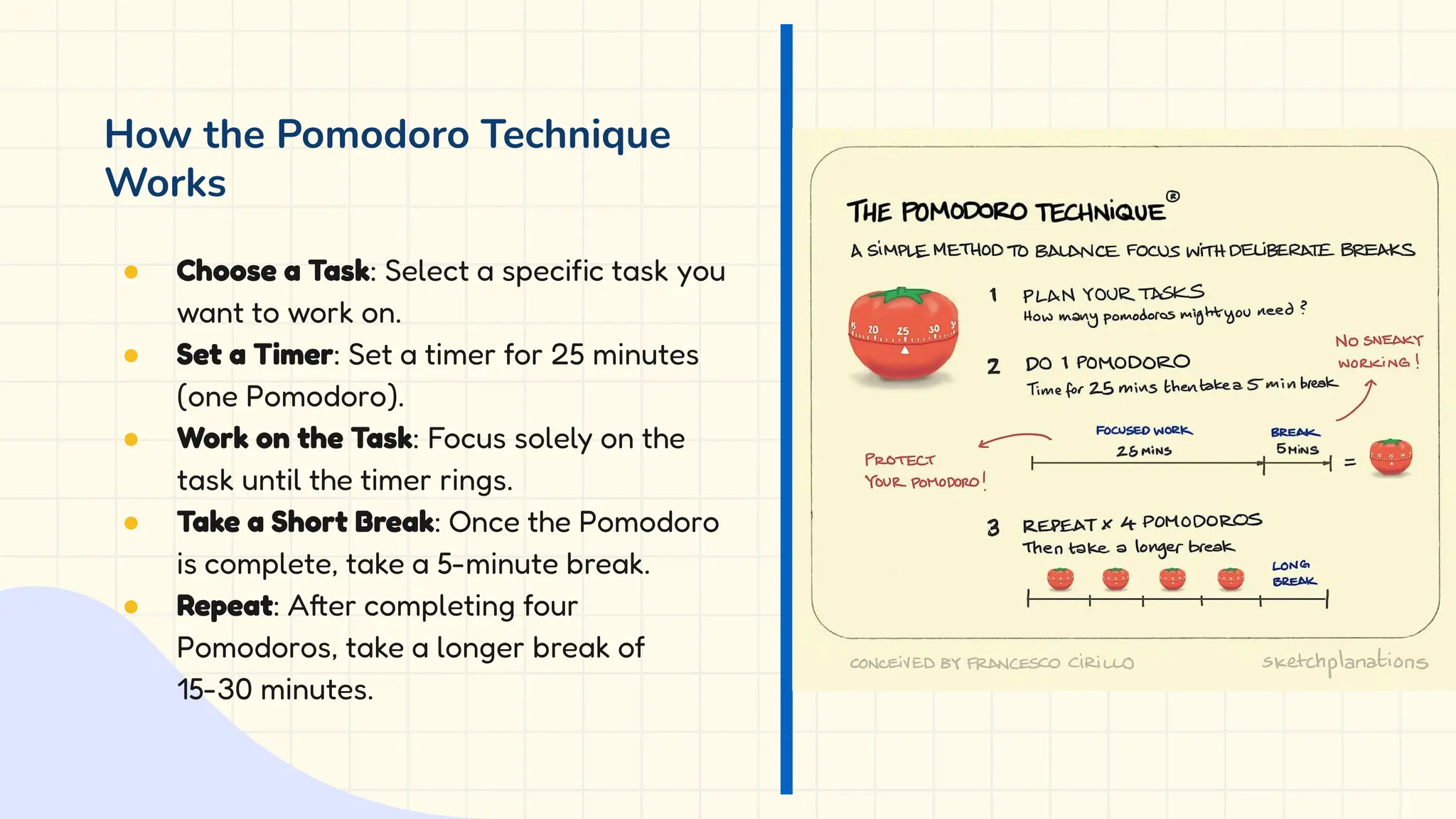
● Choose a Task: Select a specific task you
want to work on.
● Set a Timer: Set a timer for 25 minutes
(one Pomodoro).
● Work on the Task: Focus solely on the
task until the timer rings.
● Take a Short Break: Once the Pomodoro
is complete, take a 5-minute break.
● Repeat: After completing four
Pomodoros, take a longer break of
15-30 minutes.
Historical Background of the
Technique
Origins: The Pomodoro Technique was created by
Francesco Cirillo in the late 1980s as a method to
enhance personal productivity while studying.
● Initial Use: Cirillo initially used the technique
for his own studies, eventually sharing it with
peers.
● Publication: The method gained popularity
after Cirillo published a book titled "The
Pomodoro Technique," detailing its benefits
and applications.
● Evolution: Since its inception, the technique
has been adapted and embraced by
professionals, students, and businesses
worldwide.
Benefits of Using the Pomodoro
Technique
● Improved Focus: By working in short bursts,
individuals can concentrate better on tasks.
● Better Time Management: The structured
intervals help in planning and allocating time
effectively.
● Reduced Mental Fatigue: Regular breaks
prevent burnout and maintain energy levels.
● Increased Motivation: Completing Pomodoros
provides a sense of accomplishment and
encourages continued work.
Additional Benefits: Enhanced creativity and
problem-solving abilities. Greater awareness of time
spent on tasks.
Setting Up Your Pomodoro
Environment
● Minimize Distractions: Choose a quiet space and
limit interruptions.
● Organize Your Workspace: Keep your desk tidy
and have all necessary materials at hand.
● Use Tools: Consider using timers or apps
specifically designed for the Pomodoro
Technique.
Creating a Productive Atmosphere: Comfortable
Setup: Ensure your chair and desk are ergonomically
set up. Ambient Conditions: Adjust lighting and
temperature for comfort.
Tools to Implement the
Pomodoro Technique
● Focus Booster: A user-friendly app that
allows you to set Pomodoros and track
productivity.
● Tomato Timer: A simple online timer
specifically designed for the Pomodoro
Technique.
● Forest: An app that helps you focus by
planting virtual trees as you work.
Benefits of Using Tools: These applications can
help you stay accountable, visualize progress,
and maintain focus throughout your work
sessions.
Addressing Common Challenges
While the Pomodoro Technique is
effective, users may face common
challenges such as distractions from
external factors or internal thoughts
that disrupt focus, and rigid work
habits that make it difficult to adapt
to structured intervals.
To address these challenges, consider
minimizing interruptions by using
noise-canceling headphones or
communicating your focused work
periods to others. Additionally, maintain
flexibility by adjusting the length of
Pomodoros and breaks to better fit your
work style.
Identification of Potential Obstacles Solutions to Overcome Challenges
Adapting the Pomodoro
Technique to Your Needs
Customization Suggestions
The Pomodoro Technique can be tailored
to fit individual preferences and work
styles.
Variations
Adjusting Intervals: Experiment with
longer or shorter work sessions (e.g., 30
minutes of work followed by a 10-minute
break). Flexible Breaks: Take longer
breaks after completing particularly
challenging tasks.
Real-Life Success Stories
Numerous individuals and organizations
have successfully implemented the
Pomodoro Technique to enhance
productivity. For example, many students
report improved focus and better grades by
using the technique for studying.
Businesses have adopted the Pomodoro
Technique to increase team productivity
and reduce burnout among employees.
These success stories highlight the
versatility and effectiveness of the
technique in diverse settings.
Case Studies and Examples Impact on Businesses
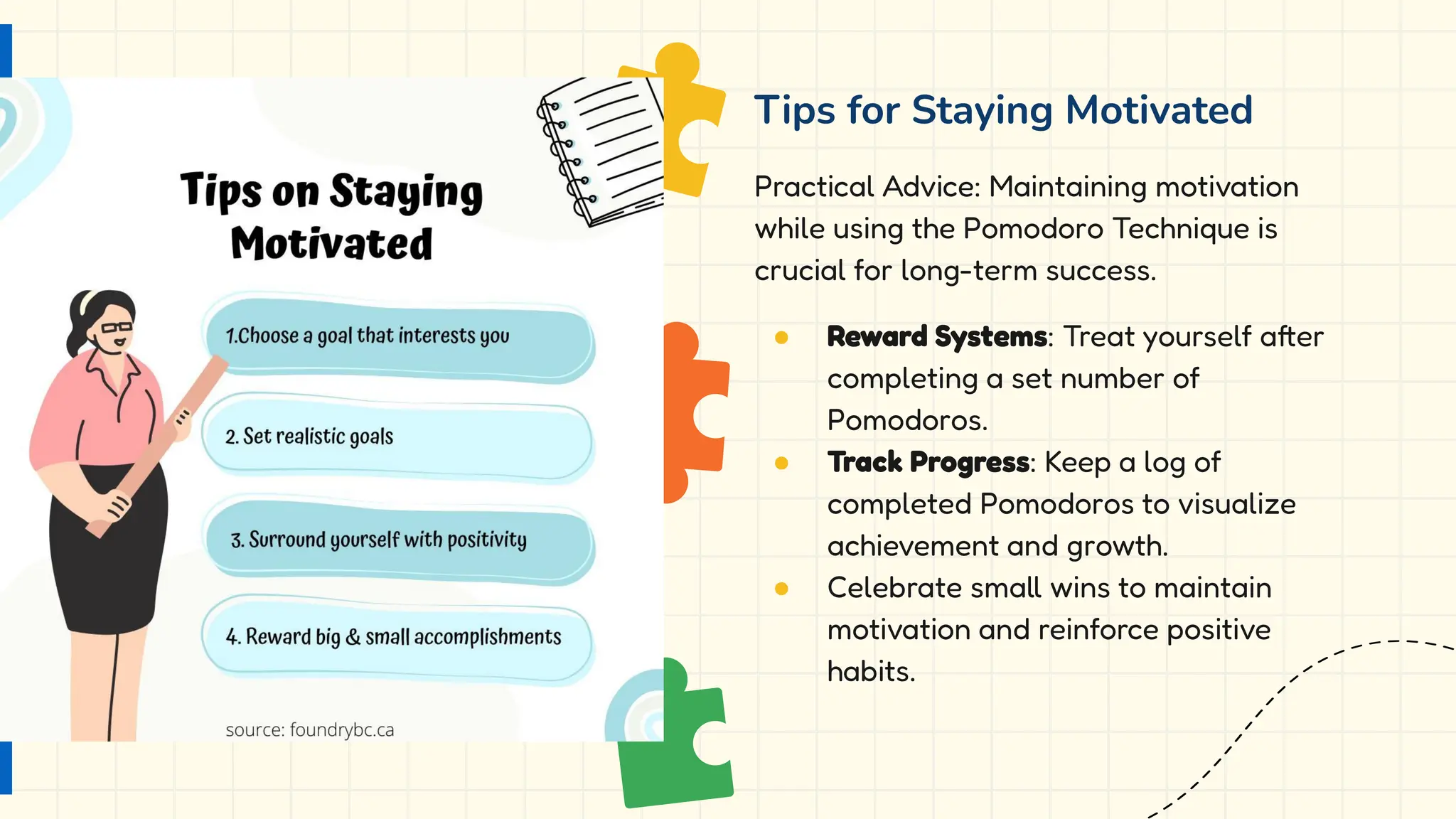
Tips for Staying Motivated
Practical Advice: Maintaining motivation
while using the Pomodoro Technique is
crucial for long-term success.
● Reward Systems: Treat yourself after
completing a set number of
Pomodoros.
● Track Progress: Keep a log of
completed Pomodoros to visualize
achievement and growth.
● Celebrate small wins to maintain
motivation and reinforce positive
habits.
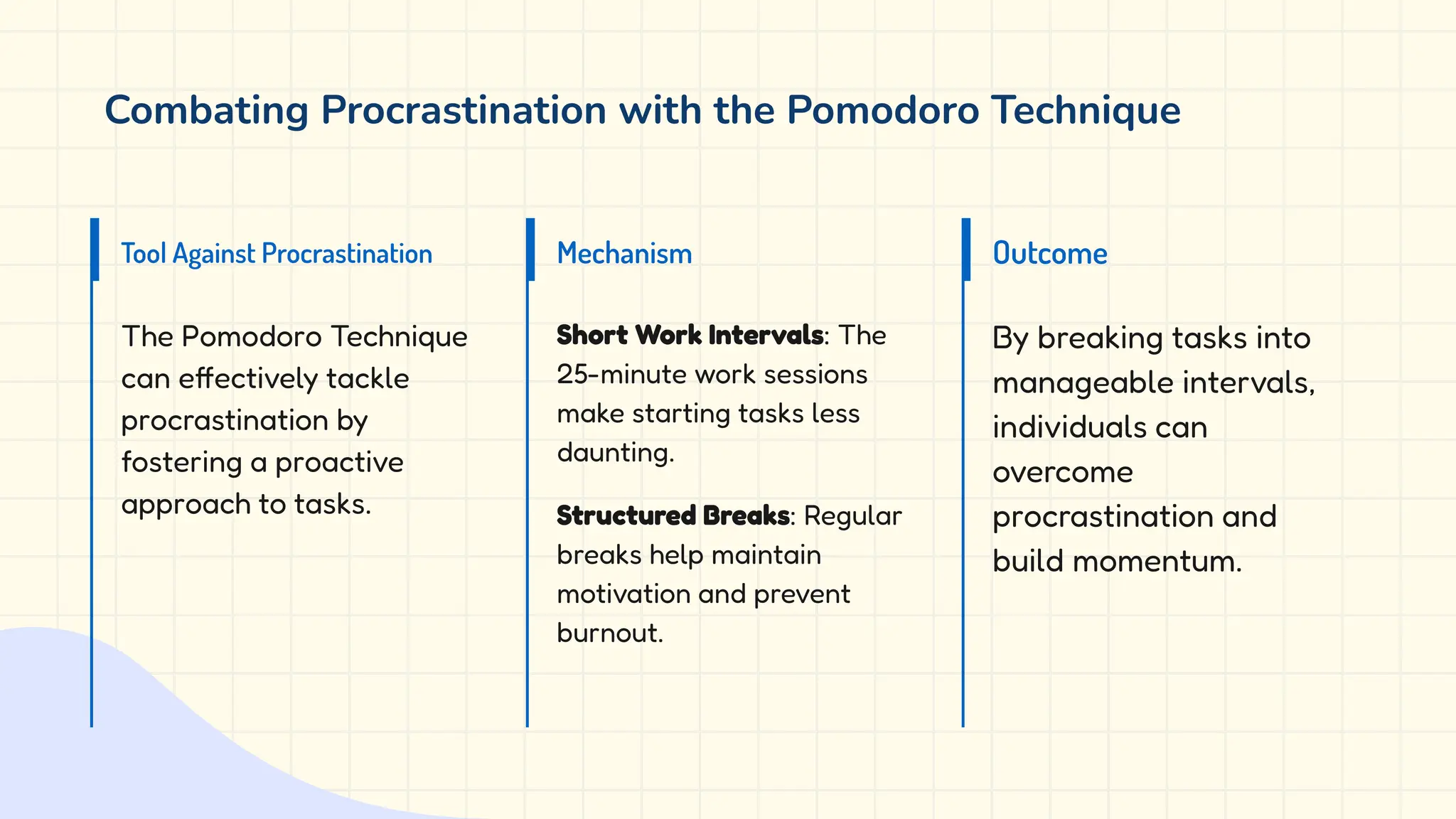
Combating Procrastination with the Pomodoro Technique
The Pomodoro Technique
can effectively tackle
procrastination by
fostering a proactive
approach to tasks.
Tool Against Procrastination
Short Work Intervals: The
25-minute work sessions
make starting tasks less
daunting.
Structured Breaks: Regular
breaks help maintain
motivation and prevent
burnout.
Mechanism
By breaking tasks into
manageable intervals,
individuals can
overcome
procrastination and
build momentum.
Outcome
Integrating the Pomodoro
Technique with Other Time
Management Methods
Blending Techniques
The Pomodoro Technique can be combined
with other productivity frameworks for
enhanced effectiveness.
Examples of Integration
Getting Things Done (GTD): Use the
Pomodoro Technique to tackle tasks
identified in your GTD system. Time Blocking:
Allocate specific Pomodoros to different
blocks of time dedicated to various projects.
The Science Behind Time
Management
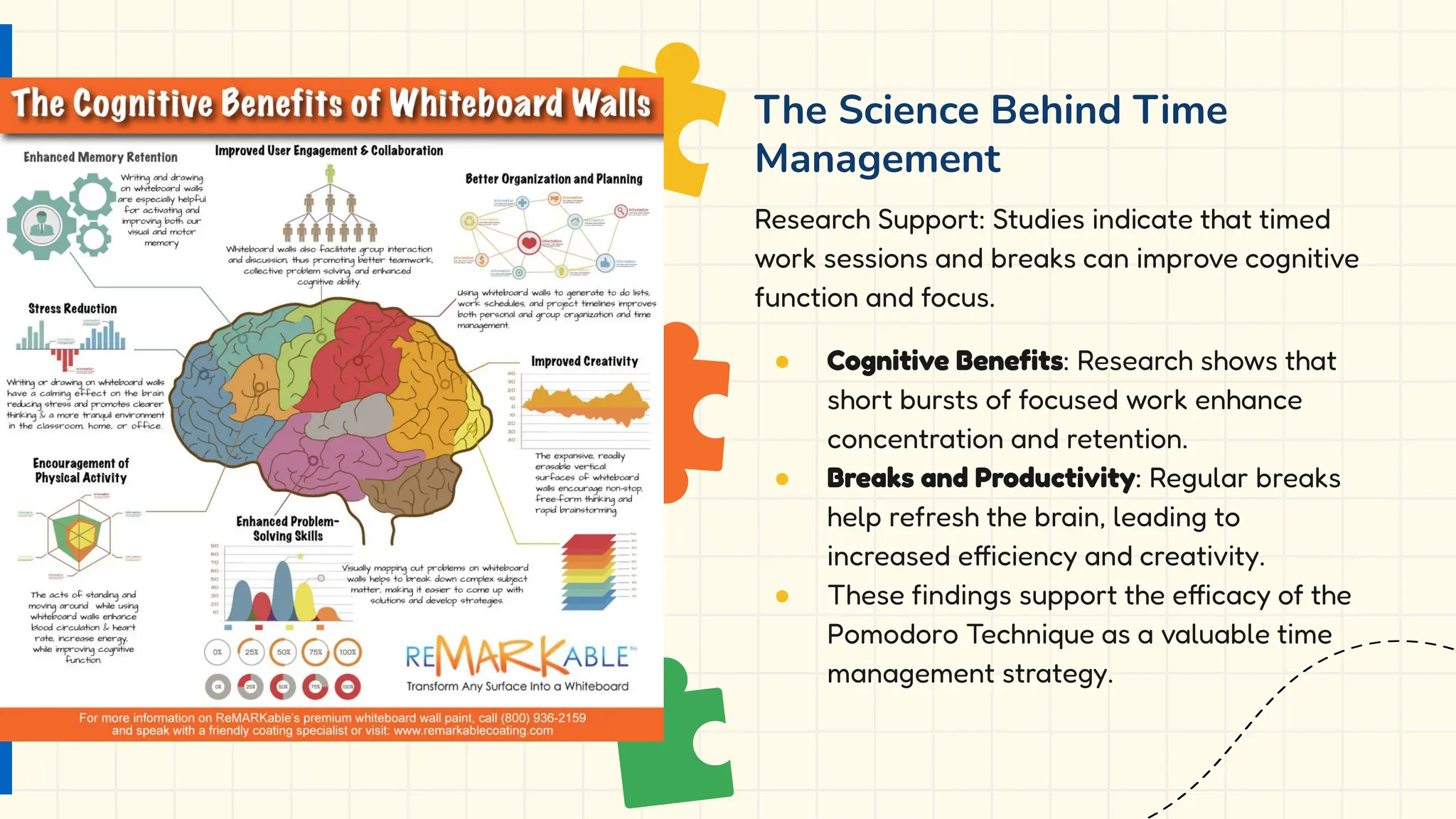
Research Support: Studies indicate that timed
work sessions and breaks can improve cognitive
function and focus.
● Cognitive Benefits: Research shows that
short bursts of focused work enhance
concentration and retention.
● Breaks and Productivity: Regular breaks
help refresh the brain, leading to
increased efficiency and creativity.
● These findings support the efficacy of the
Pomodoro Technique as a valuable time
management strategy.
Conclusion: Mastering Productivity
Summary of Key Takeaways:
● The Pomodoro Technique is an effective time management method that
enhances productivity through structured work intervals and breaks.
● Its benefits include improved focus, better time management, reduced mental
fatigue, and increased motivation.
● By mastering the Pomodoro Technique, individuals can significantly improve their
productivity and achieve their personal and professional goals.
Further Reading and Resources
"The Pomodoro Technique: The Life-Changing Time-Management System" by Francesco
Cirillo "Deep Work: Rules for Focused Success in a Distracted World" by Cal Newport
MindTools: A comprehensive guide to the Pomodoro Technique. Todoist Blog: Tips for using
the Pomodoro Technique effectively. These materials provide further insights and strategies
for mastering productivity.
Recommended Books
Articles and Online Resources
CHECK OUT OUR PLANNER

Mastering Productivity with the Pomodoro Technique.pdf

  • 1.
  • 2.
    Introduction to thePomodoro Technique Overview The Pomodoro Technique is a time management method designed to enhance personal productivity by breaking work into intervals, traditionally 25 minutes in length, separated by short breaks. Origins Developed by Francesco Cirillo in the late 1980s, the technique was named after the Italian word for "tomato," inspired by the tomato-shaped kitchen timer Cirillo used during university. Aim The primary goal of the Pomodoro Technique is to improve focus and efficiency in everyday tasks, allowing individuals to manage their time better and reduce mental fatigue.
  • 3.
    The Concept Behindthe Pomodoro Technique Time Management Principle: The Pomodoro Technique is based on the idea that the brain works best in short bursts of focused activity, followed by brief rest periods. ● Focused Work: Each work session, known as a "Pomodoro," encourages deep concentration on a single task. ● Short Breaks: The breaks help to refresh the mind, prevent burnout, and maintain high levels of productivity throughout the day. ● Key Concept: This technique emphasizes the balance between work and rest, fostering a sustainable approach to productivity.
  • 4.
    How the PomodoroTechnique Works ● Choose a Task: Select a specific task you want to work on. ● Set a Timer: Set a timer for 25 minutes (one Pomodoro). ● Work on the Task: Focus solely on the task until the timer rings. ● Take a Short Break: Once the Pomodoro is complete, take a 5-minute break. ● Repeat: After completing four Pomodoros, take a longer break of 15-30 minutes.
  • 5.
    Historical Background ofthe Technique Origins: The Pomodoro Technique was created by Francesco Cirillo in the late 1980s as a method to enhance personal productivity while studying. ● Initial Use: Cirillo initially used the technique for his own studies, eventually sharing it with peers. ● Publication: The method gained popularity after Cirillo published a book titled "The Pomodoro Technique," detailing its benefits and applications. ● Evolution: Since its inception, the technique has been adapted and embraced by professionals, students, and businesses worldwide.
  • 6.
    Benefits of Usingthe Pomodoro Technique ● Improved Focus: By working in short bursts, individuals can concentrate better on tasks. ● Better Time Management: The structured intervals help in planning and allocating time effectively. ● Reduced Mental Fatigue: Regular breaks prevent burnout and maintain energy levels. ● Increased Motivation: Completing Pomodoros provides a sense of accomplishment and encourages continued work. Additional Benefits: Enhanced creativity and problem-solving abilities. Greater awareness of time spent on tasks.
  • 7.
    Setting Up YourPomodoro Environment ● Minimize Distractions: Choose a quiet space and limit interruptions. ● Organize Your Workspace: Keep your desk tidy and have all necessary materials at hand. ● Use Tools: Consider using timers or apps specifically designed for the Pomodoro Technique. Creating a Productive Atmosphere: Comfortable Setup: Ensure your chair and desk are ergonomically set up. Ambient Conditions: Adjust lighting and temperature for comfort.
  • 8.
    Tools to Implementthe Pomodoro Technique ● Focus Booster: A user-friendly app that allows you to set Pomodoros and track productivity. ● Tomato Timer: A simple online timer specifically designed for the Pomodoro Technique. ● Forest: An app that helps you focus by planting virtual trees as you work. Benefits of Using Tools: These applications can help you stay accountable, visualize progress, and maintain focus throughout your work sessions.
  • 9.
    Addressing Common Challenges Whilethe Pomodoro Technique is effective, users may face common challenges such as distractions from external factors or internal thoughts that disrupt focus, and rigid work habits that make it difficult to adapt to structured intervals. To address these challenges, consider minimizing interruptions by using noise-canceling headphones or communicating your focused work periods to others. Additionally, maintain flexibility by adjusting the length of Pomodoros and breaks to better fit your work style. Identification of Potential Obstacles Solutions to Overcome Challenges
  • 10.
    Adapting the Pomodoro Techniqueto Your Needs Customization Suggestions The Pomodoro Technique can be tailored to fit individual preferences and work styles. Variations Adjusting Intervals: Experiment with longer or shorter work sessions (e.g., 30 minutes of work followed by a 10-minute break). Flexible Breaks: Take longer breaks after completing particularly challenging tasks.
  • 11.
    Real-Life Success Stories Numerousindividuals and organizations have successfully implemented the Pomodoro Technique to enhance productivity. For example, many students report improved focus and better grades by using the technique for studying. Businesses have adopted the Pomodoro Technique to increase team productivity and reduce burnout among employees. These success stories highlight the versatility and effectiveness of the technique in diverse settings. Case Studies and Examples Impact on Businesses
  • 12.
    Tips for StayingMotivated Practical Advice: Maintaining motivation while using the Pomodoro Technique is crucial for long-term success. ● Reward Systems: Treat yourself after completing a set number of Pomodoros. ● Track Progress: Keep a log of completed Pomodoros to visualize achievement and growth. ● Celebrate small wins to maintain motivation and reinforce positive habits.
  • 13.
    Combating Procrastination withthe Pomodoro Technique The Pomodoro Technique can effectively tackle procrastination by fostering a proactive approach to tasks. Tool Against Procrastination Short Work Intervals: The 25-minute work sessions make starting tasks less daunting. Structured Breaks: Regular breaks help maintain motivation and prevent burnout. Mechanism By breaking tasks into manageable intervals, individuals can overcome procrastination and build momentum. Outcome
  • 14.
    Integrating the Pomodoro Techniquewith Other Time Management Methods Blending Techniques The Pomodoro Technique can be combined with other productivity frameworks for enhanced effectiveness. Examples of Integration Getting Things Done (GTD): Use the Pomodoro Technique to tackle tasks identified in your GTD system. Time Blocking: Allocate specific Pomodoros to different blocks of time dedicated to various projects.
  • 15.
    The Science BehindTime Management Research Support: Studies indicate that timed work sessions and breaks can improve cognitive function and focus. ● Cognitive Benefits: Research shows that short bursts of focused work enhance concentration and retention. ● Breaks and Productivity: Regular breaks help refresh the brain, leading to increased efficiency and creativity. ● These findings support the efficacy of the Pomodoro Technique as a valuable time management strategy.
  • 16.
    Conclusion: Mastering Productivity Summaryof Key Takeaways: ● The Pomodoro Technique is an effective time management method that enhances productivity through structured work intervals and breaks. ● Its benefits include improved focus, better time management, reduced mental fatigue, and increased motivation. ● By mastering the Pomodoro Technique, individuals can significantly improve their productivity and achieve their personal and professional goals.
  • 17.
    Further Reading andResources "The Pomodoro Technique: The Life-Changing Time-Management System" by Francesco Cirillo "Deep Work: Rules for Focused Success in a Distracted World" by Cal Newport MindTools: A comprehensive guide to the Pomodoro Technique. Todoist Blog: Tips for using the Pomodoro Technique effectively. These materials provide further insights and strategies for mastering productivity. Recommended Books Articles and Online Resources CHECK OUT OUR PLANNER