Privileged Access Management
(PAM): Cloud Infrastructure and
Entitlements Management: Powering
Modern Business
Cloud infrastructure and entitlements management are critical for modern businesses. They
enable scalable, flexible computing while ensuring security and compliance. This presentation
explores key concepts, benefits, and best practices for effective cloud management.
Bert Blevins
https://bertblevins.com/
01.07.2024
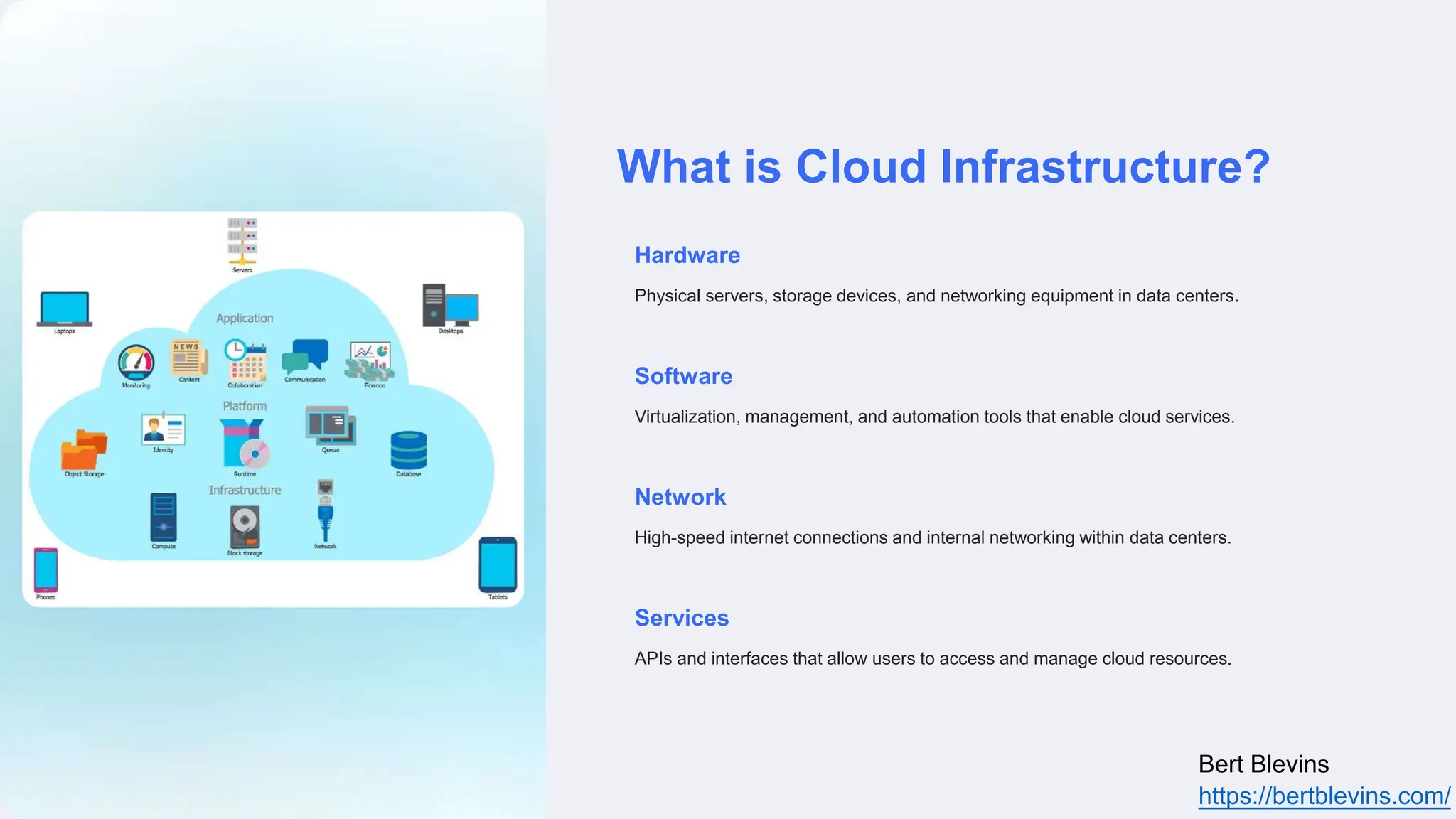
What is Cloud Infrastructure?
Hardware
Physical servers, storage devices, and networking equipment in data centers.
Software
Virtualization, management, and automation tools that enable cloud services.
Network
High-speed internet connections and internal networking within data centers.
Services
APIs and interfaces that allow users to access and manage cloud resources.
Bert Blevins
https://bertblevins.com/
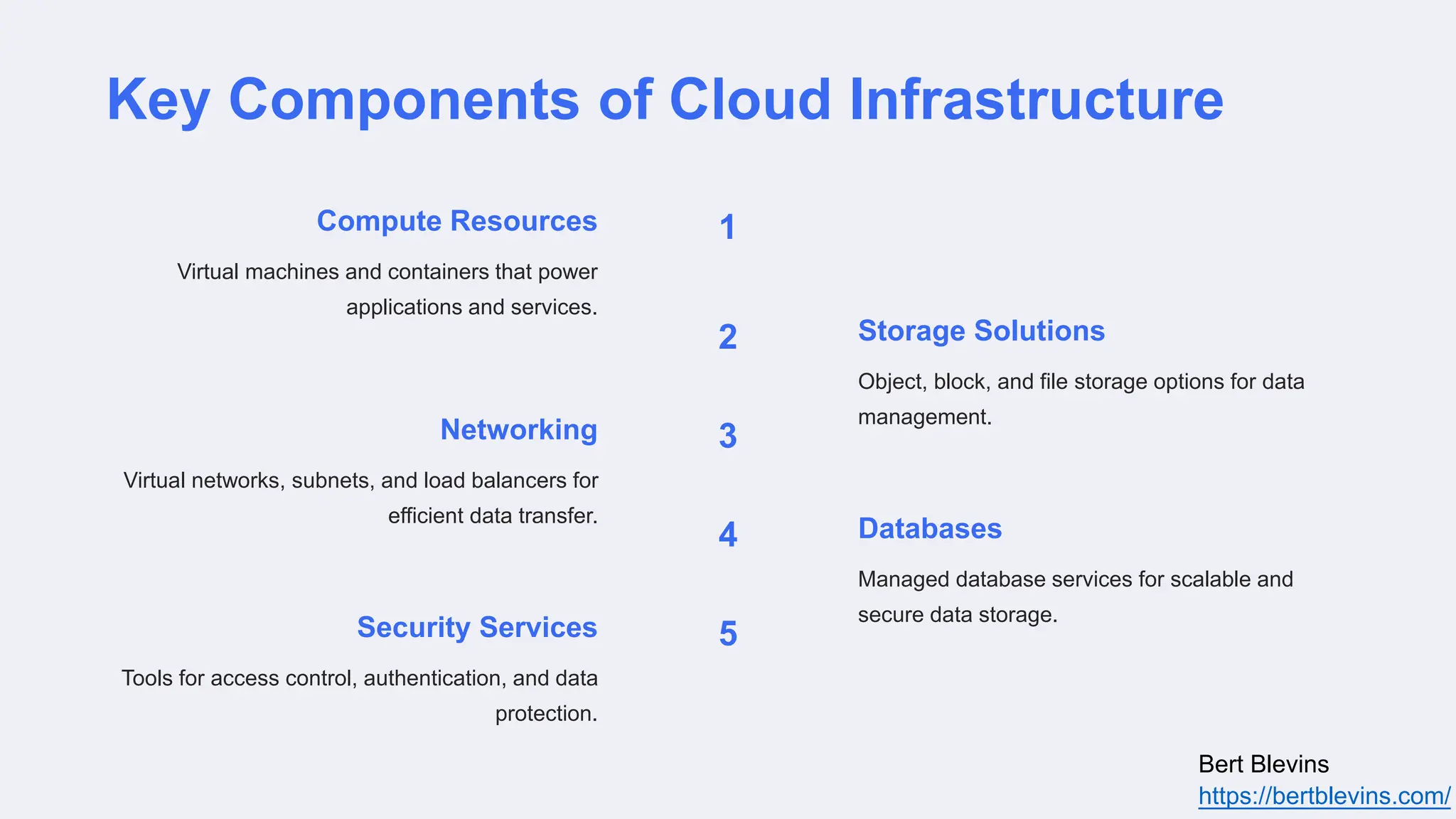
Key Components of Cloud Infrastructure
1
Compute Resources
Virtual machines and containers that power
applications and services.
2 Storage Solutions
Object, block, and file storage options for data
management.
3
Networking
Virtual networks, subnets, and load balancers for
efficient data transfer.
4 Databases
Managed database services for scalable and
secure data storage.
5
Security Services
Tools for access control, authentication, and data
protection.
Bert Blevins
https://bertblevins.com/
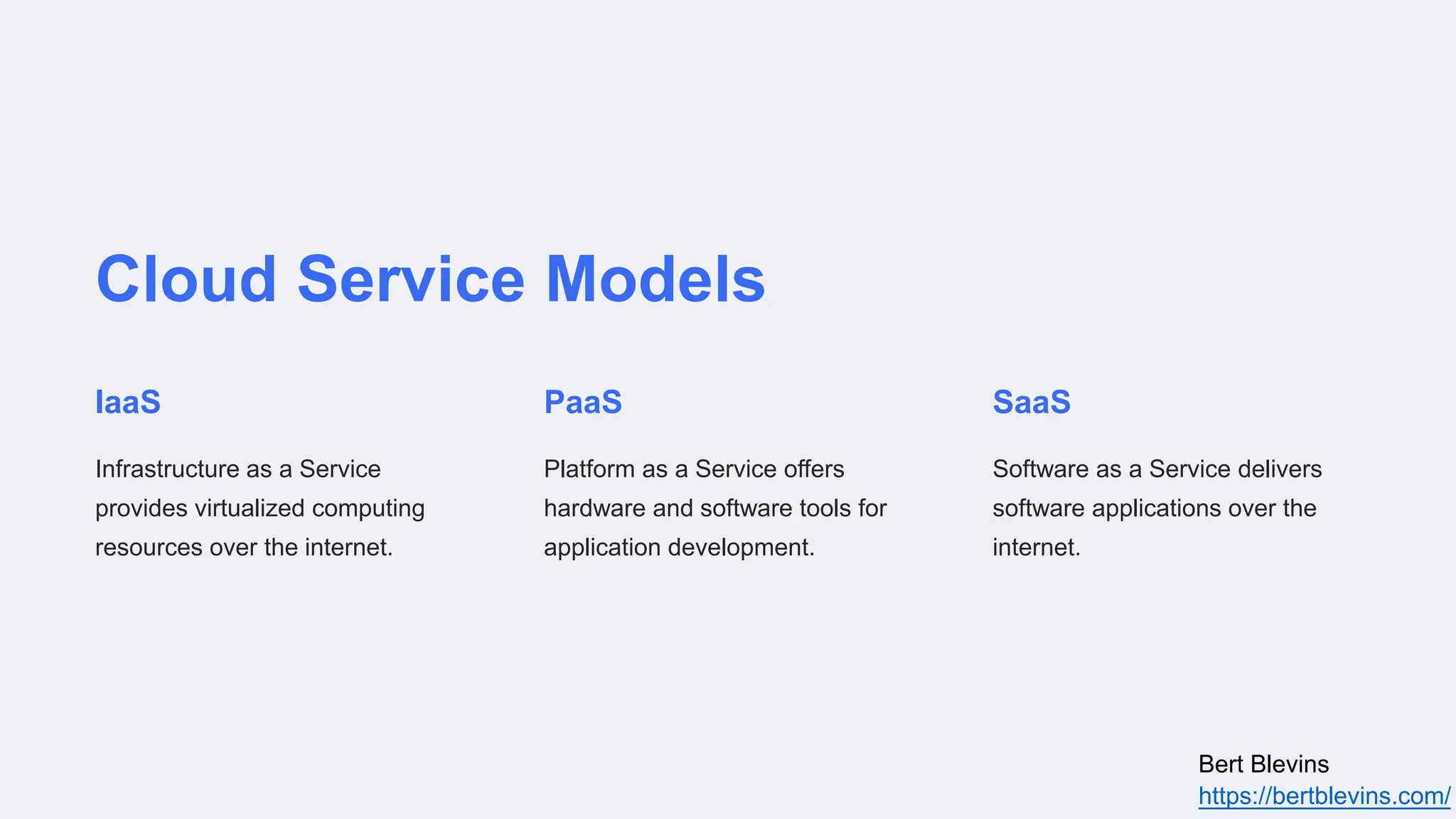
Cloud Service Models
IaaS
Infrastructure as a Service
provides virtualized computing
resources over the internet.
PaaS
Platform as a Service offers
hardware and software tools for
application development.
SaaS
Software as a Service delivers
software applications over the
internet.
Bert Blevins
https://bertblevins.com/
Benefits of Cloud
Infrastructure
1 Scalability
Easily scale resources up or down based on demand.
2 Cost-Effectiveness
Pay-as-you-go model reduces upfront infrastructure costs.
3 Flexibility
Access resources from anywhere with an internet connection.
4 Innovation
Rapidly deploy new technologies and services.
Bert Blevins
https://bertblevins.com/
What is Cloud
Entitlements
Management?
Cloud entitlements management involves controlling access rights
and permissions in cloud environments. It ensures that only
authorized entities can access specific resources. This process is
crucial for maintaining security and compliance in cloud
infrastructures.
Bert Blevins
https://bertblevins.com/
Importance of Cloud Entitlements
Management
Security
Protects against unauthorized access and potential data breaches.
Compliance
Ensures adherence to industry regulations and standards.
Efficiency
Streamlines access management processes, saving time and resources.
Cost Control
Optimizes resource allocation based on actual usage and entitlements.
Bert Blevins
https://bertblevins.com/
Key Elements of Cloud
Entitlements Management
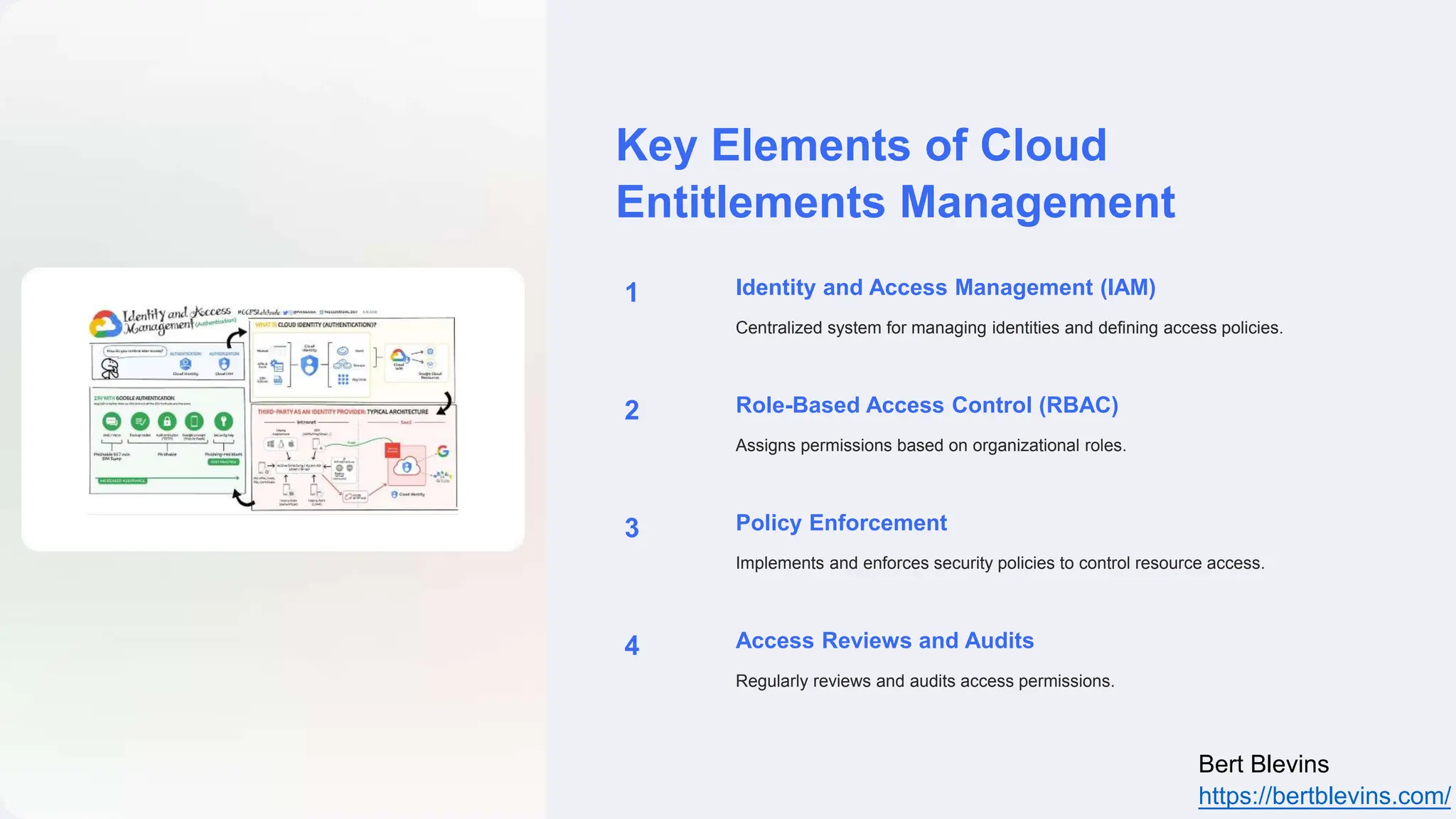
1 Identity and Access Management (IAM)
Centralized system for managing identities and defining access policies.
2 Role-Based Access Control (RBAC)
Assigns permissions based on organizational roles.
3 Policy Enforcement
Implements and enforces security policies to control resource access.
4 Access Reviews and Audits
Regularly reviews and audits access permissions.
Bert Blevins
https://bertblevins.com/
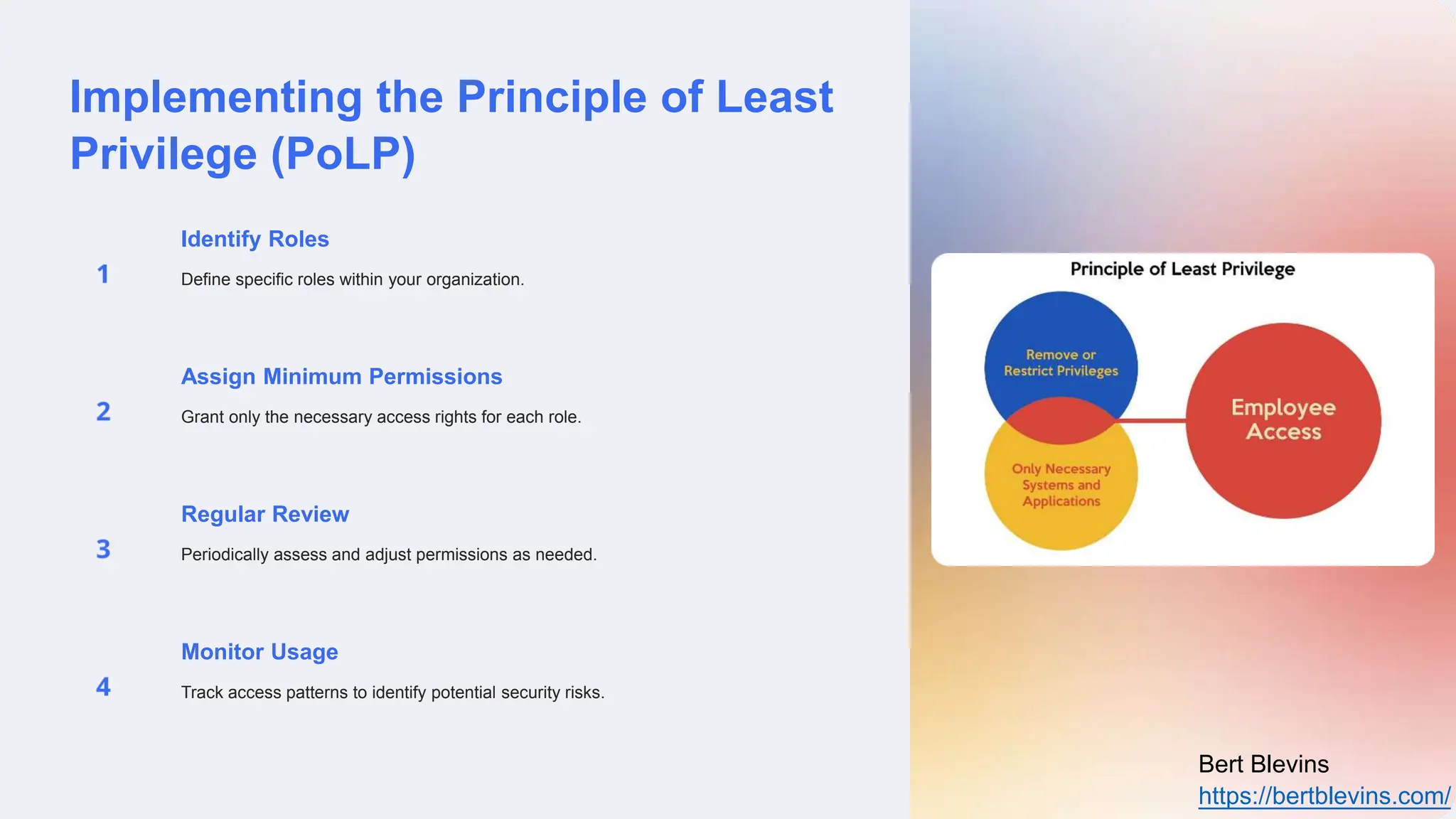
Implementing the Principle of Least
Privilege (PoLP)
Identify Roles
Define specific roles within your organization.
Assign Minimum Permissions
Grant only the necessary access rights for each role.
Regular Review
Periodically assess and adjust permissions as needed.
Monitor Usage
Track access patterns to identify potential security risks.
Bert Blevins
https://bertblevins.com/
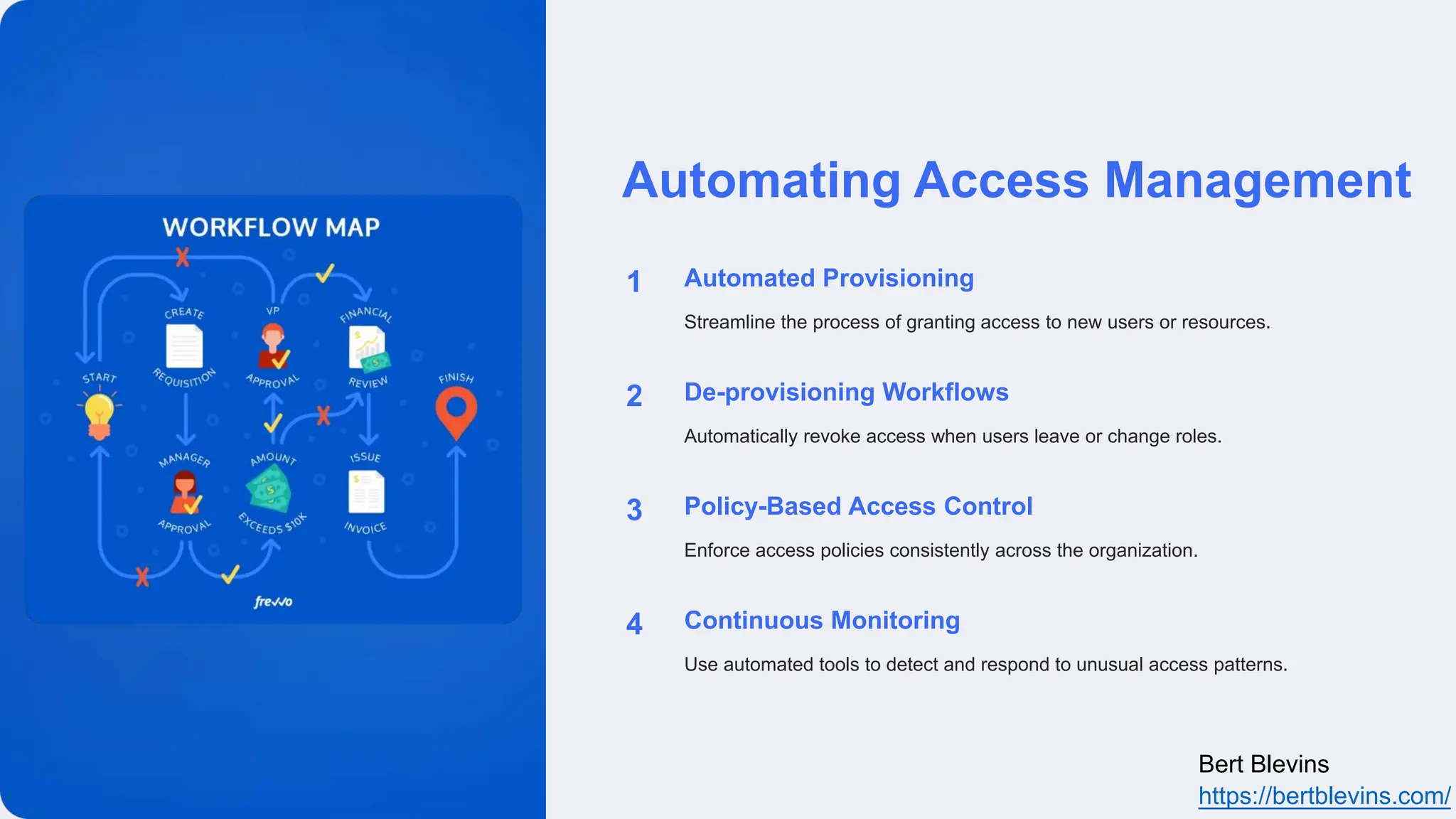
Automating Access Management
1 Automated Provisioning
Streamline the process of granting access to new users or resources.
2 De-provisioning Workflows
Automatically revoke access when users leave or change roles.
3 Policy-Based Access Control
Enforce access policies consistently across the organization.
4 Continuous Monitoring
Use automated tools to detect and respond to unusual access patterns.
Bert Blevins
https://bertblevins.com/
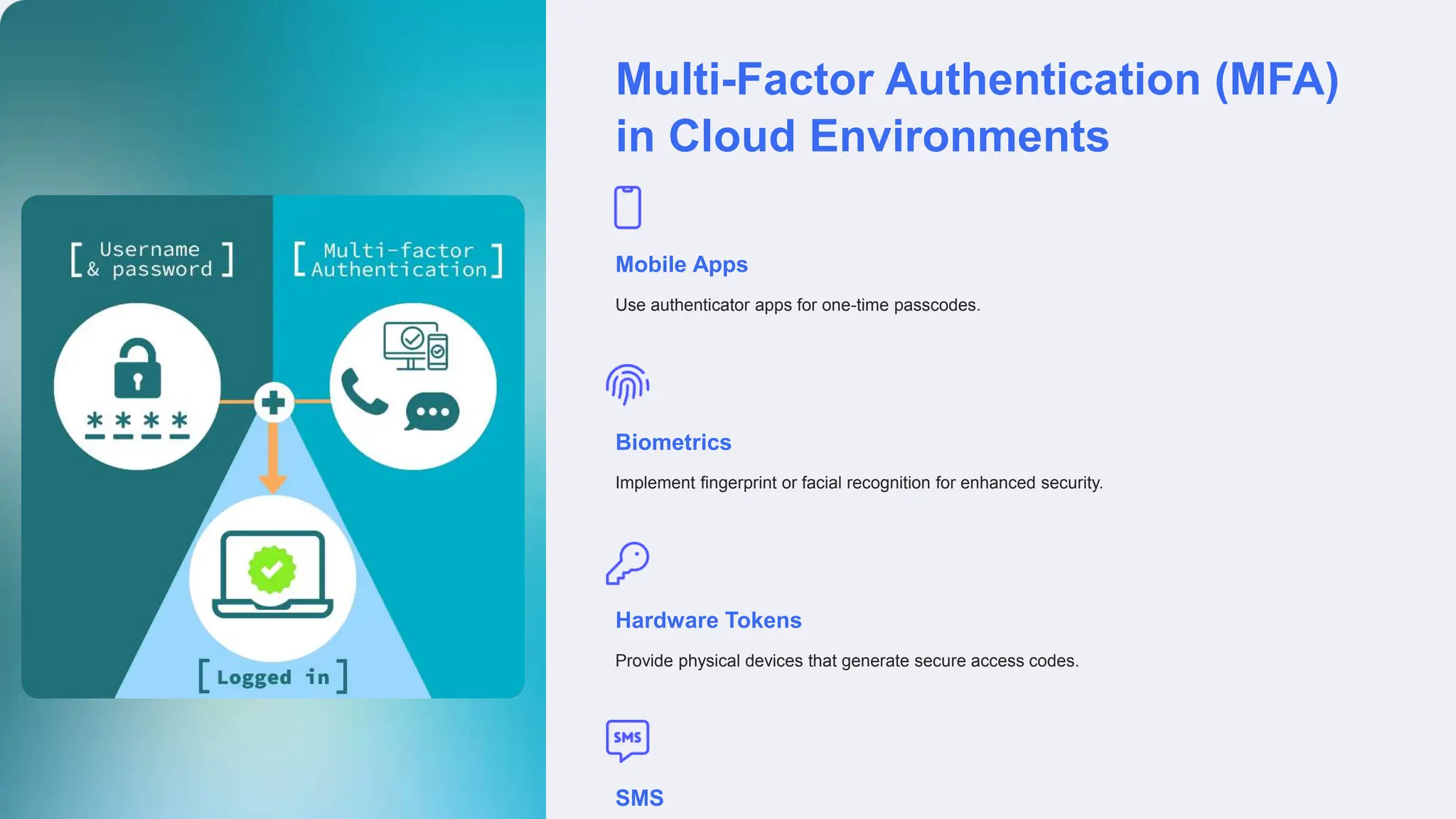
Multi-Factor Authentication (MFA)
in Cloud Environments
Mobile Apps
Use authenticator apps for one-time passcodes.
Biometrics
Implement fingerprint or facial recognition for enhanced security.
Hardware Tokens
Provide physical devices that generate secure access codes.
SMS
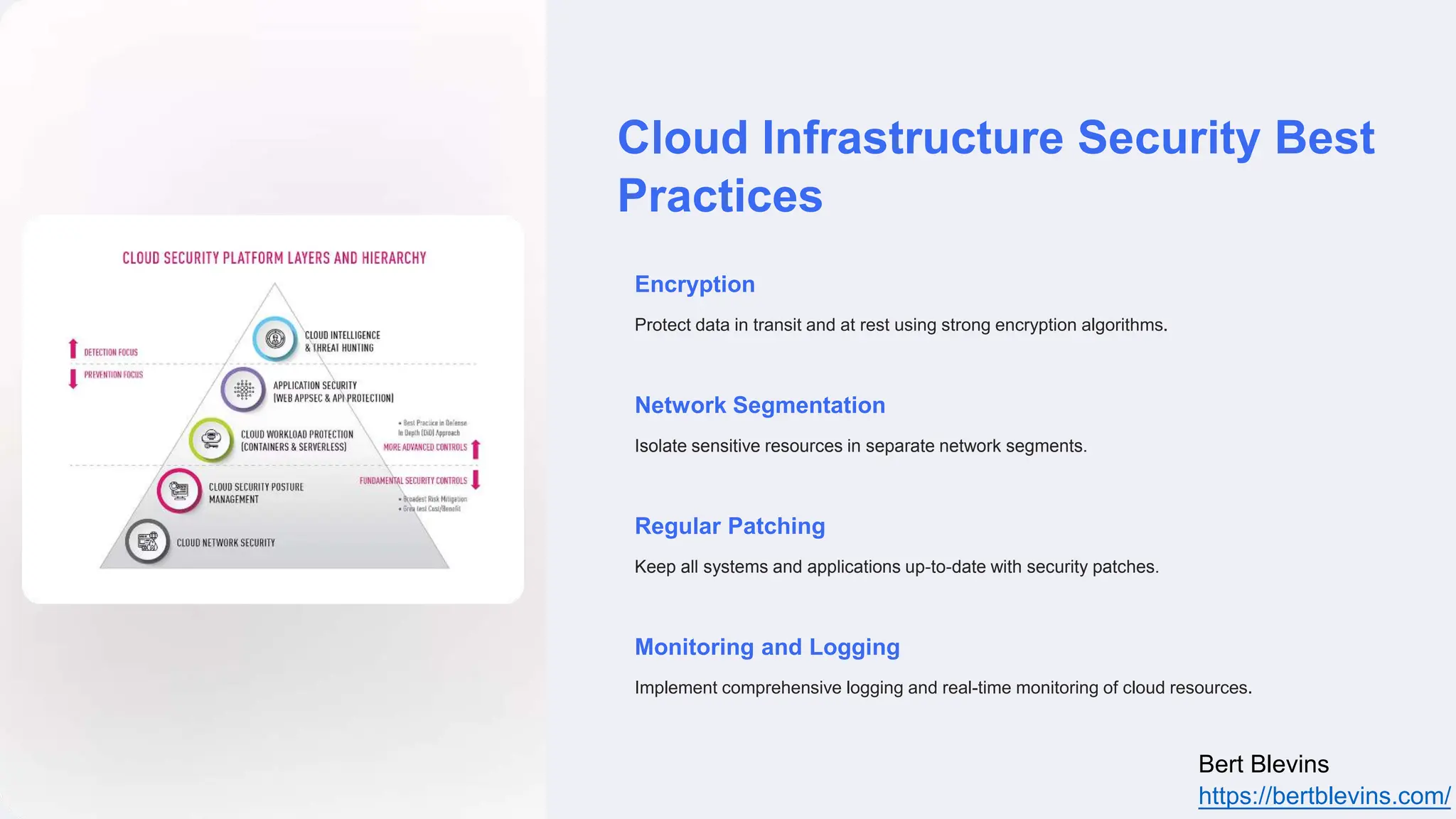
Cloud Infrastructure Security Best
Practices
Encryption
Protect data in transit and at rest using strong encryption algorithms.
Network Segmentation
Isolate sensitive resources in separate network segments.
Regular Patching
Keep all systems and applications up-to-date with security patches.
Monitoring and Logging
Implement comprehensive logging and real-time monitoring of cloud resources.
Bert Blevins
https://bertblevins.com/
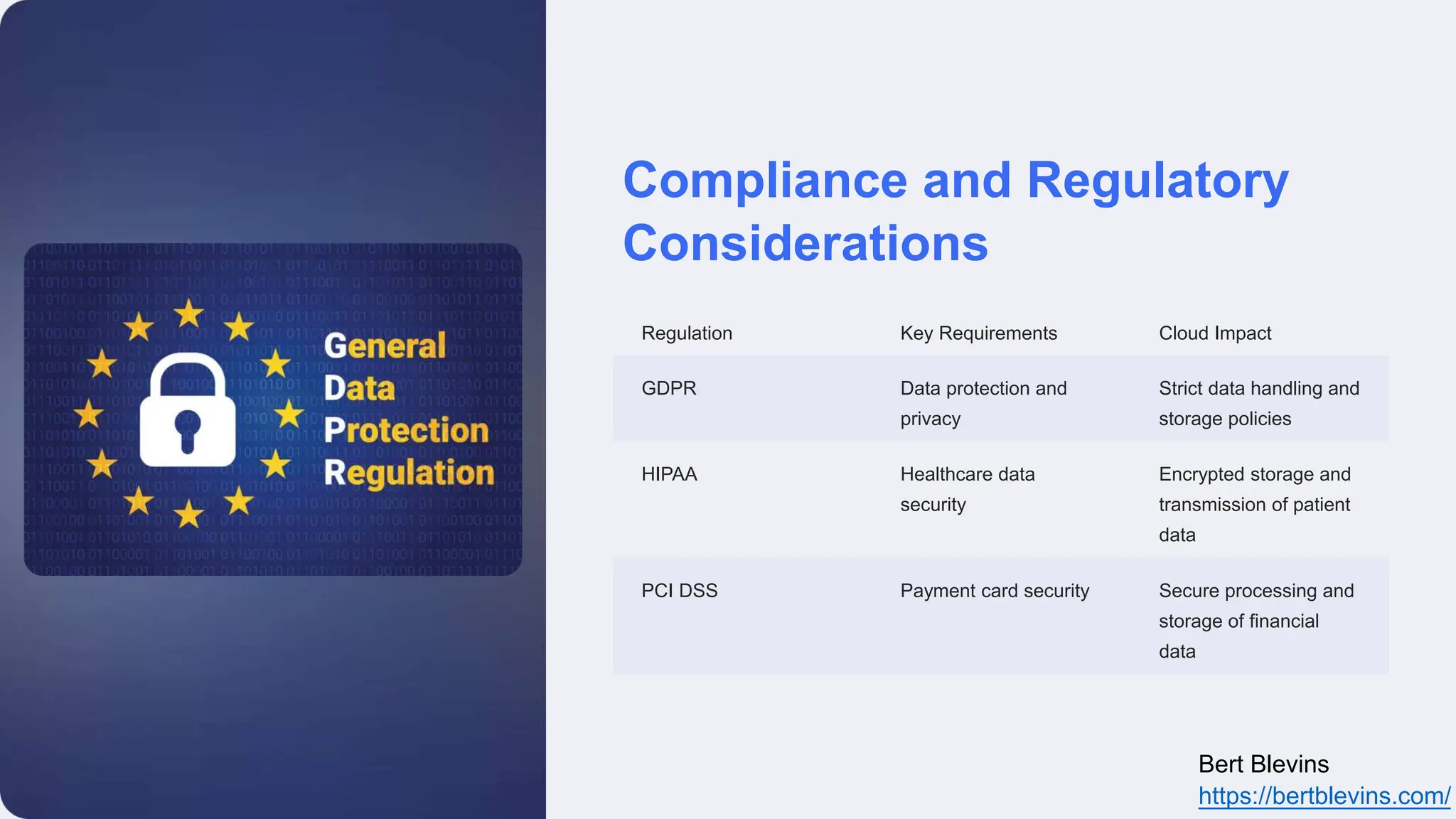
Compliance and Regulatory
Considerations
Regulation Key Requirements Cloud Impact
GDPR Data protection and
privacy
Strict data handling and
storage policies
HIPAA Healthcare data
security
Encrypted storage and
transmission of patient
data
PCI DSS Payment card security Secure processing and
storage of financial
data
Bert Blevins
https://bertblevins.com/
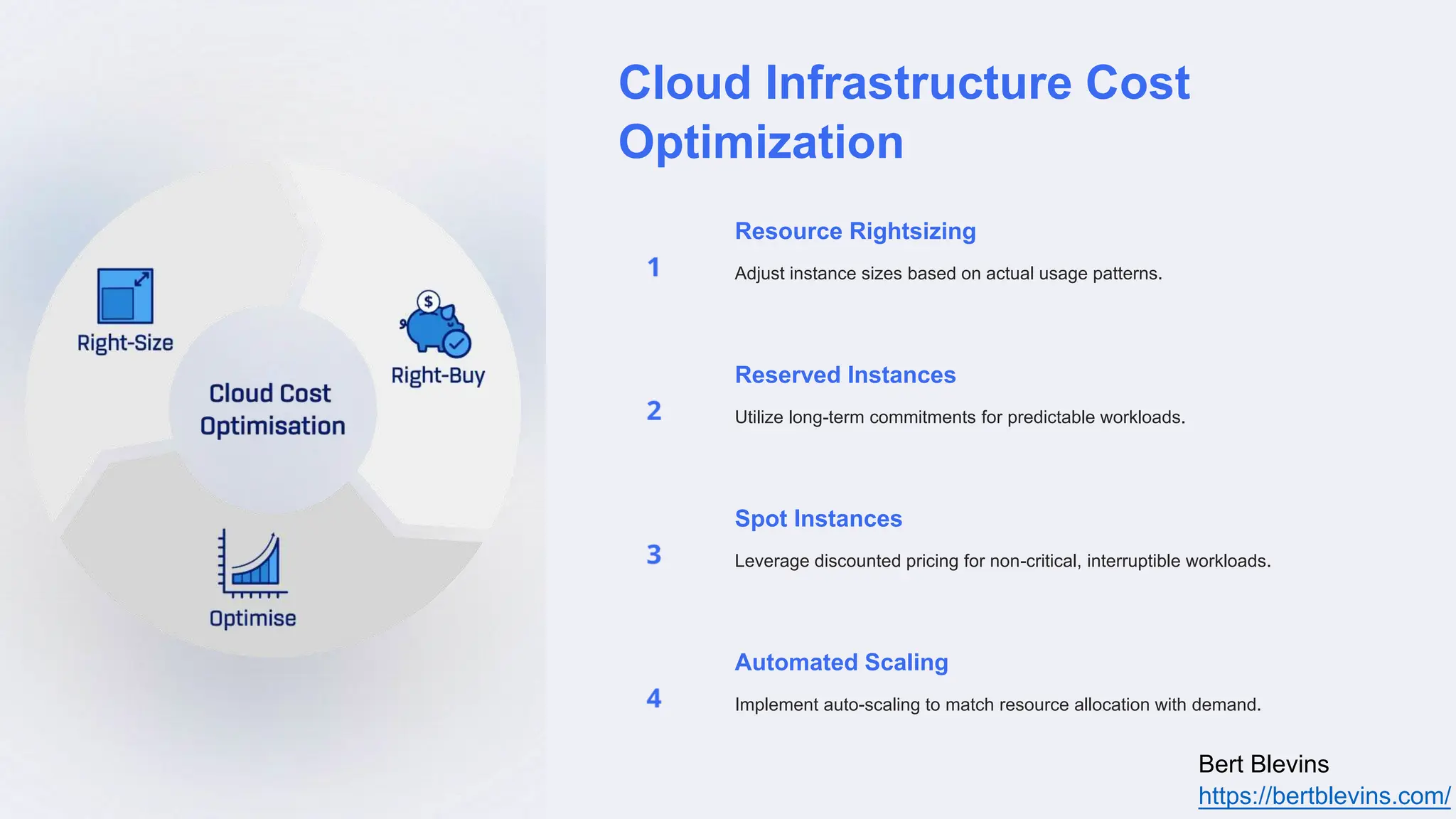
Cloud Infrastructure Cost
Optimization
Resource Rightsizing
Adjust instance sizes based on actual usage patterns.
Reserved Instances
Utilize long-term commitments for predictable workloads.
Spot Instances
Leverage discounted pricing for non-critical, interruptible workloads.
Automated Scaling
Implement auto-scaling to match resource allocation with demand.
Bert Blevins
https://bertblevins.com/
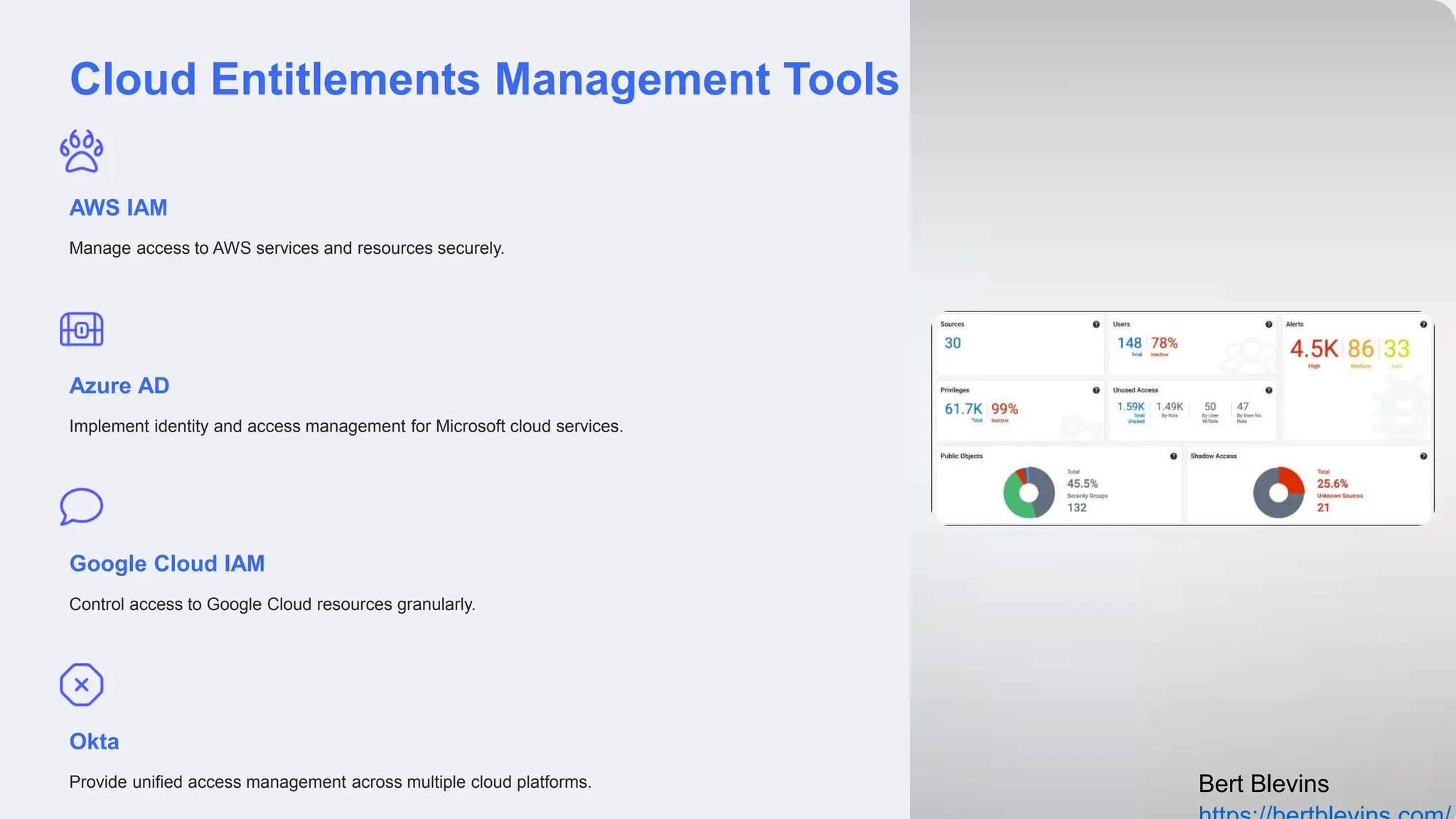
Cloud Entitlements Management Tools
AWS IAM
Manage access to AWS services and resources securely.
Azure AD
Implement identity and access management for Microsoft cloud services.
Google Cloud IAM
Control access to Google Cloud resources granularly.
Okta
Provide unified access management across multiple cloud platforms. Bert Blevins
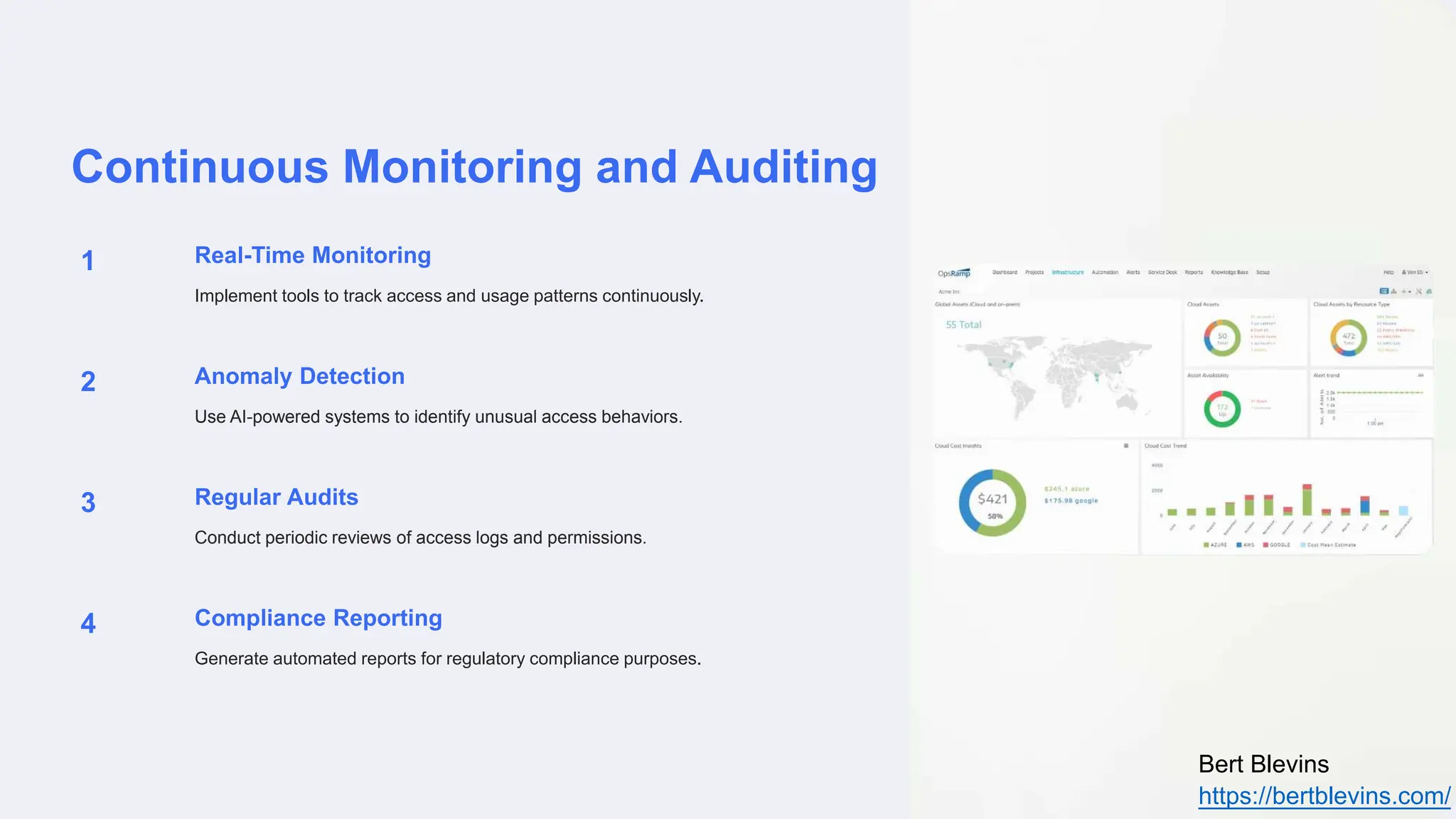
Continuous Monitoring and Auditing
1 Real-Time Monitoring
Implement tools to track access and usage patterns continuously.
2 Anomaly Detection
Use AI-powered systems to identify unusual access behaviors.
3 Regular Audits
Conduct periodic reviews of access logs and permissions.
4 Compliance Reporting
Generate automated reports for regulatory compliance purposes.
Bert Blevins
https://bertblevins.com/
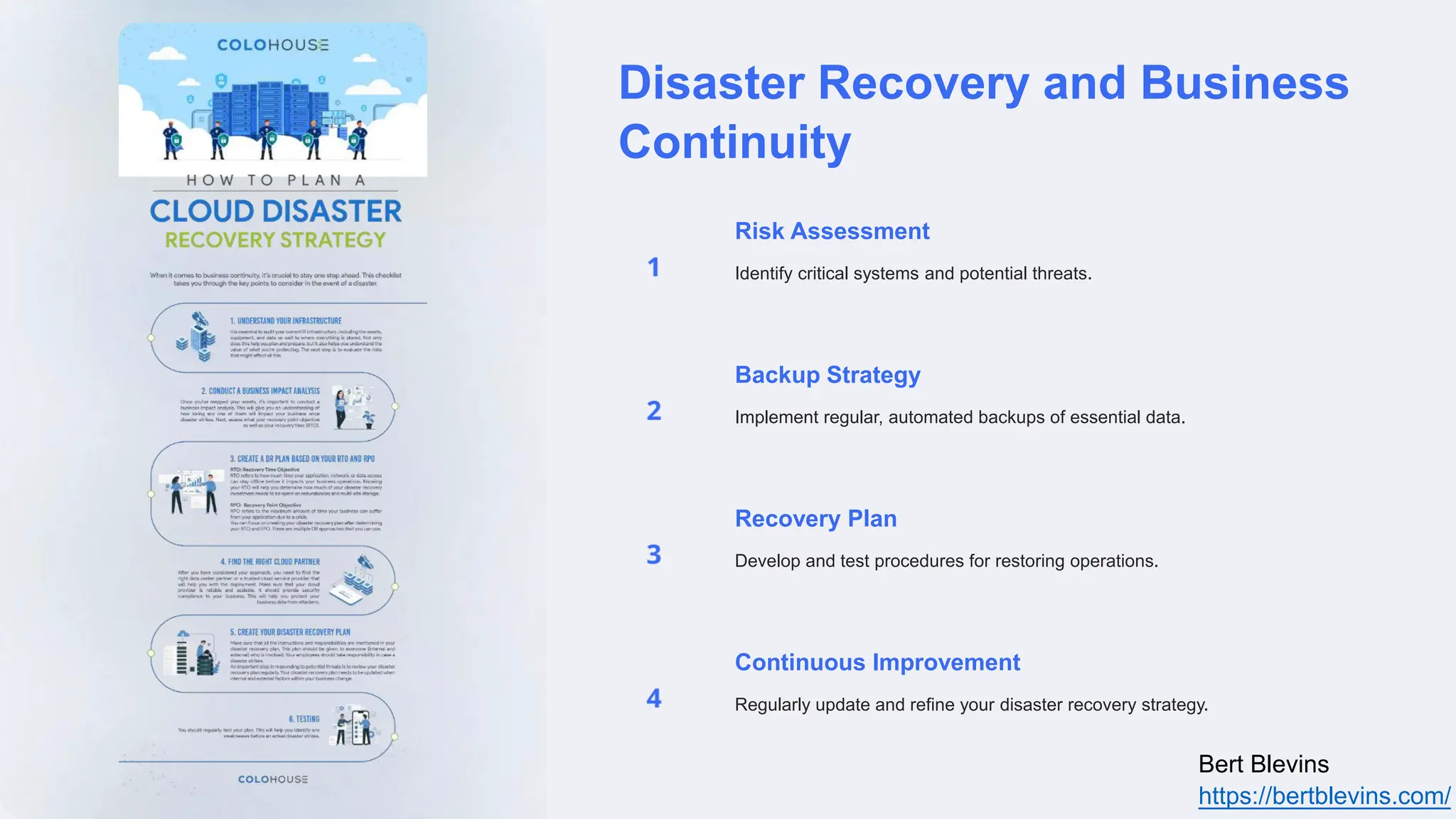
Disaster Recovery and Business
Continuity
Risk Assessment
Identify critical systems and potential threats.
Backup Strategy
Implement regular, automated backups of essential data.
Recovery Plan
Develop and test procedures for restoring operations.
Continuous Improvement
Regularly update and refine your disaster recovery strategy.
Bert Blevins
https://bertblevins.com/
Cloud Infrastructure Scaling Strategies
Vertical Scaling
Increase or decrease the power
of existing resources.
Horizontal Scaling
Add or remove instances to
match workload demands.
Auto-Scaling
Automatically adjust resources
based on predefined metrics.
Bert Blevins
https://bertblevins.com/
Cloud Infrastructure Migration Best Practices
1
Assessment
Evaluate current infrastructure and migration
goals.
2 Planning
Develop a detailed migration strategy and
timeline.
3
Testing
Conduct thorough testing in a staging
environment.
4 Migration
Execute the migration with minimal disruption.
5
Optimization
Refine and optimize post-migration performance.
Bert Blevins
https://bertblevins.com/
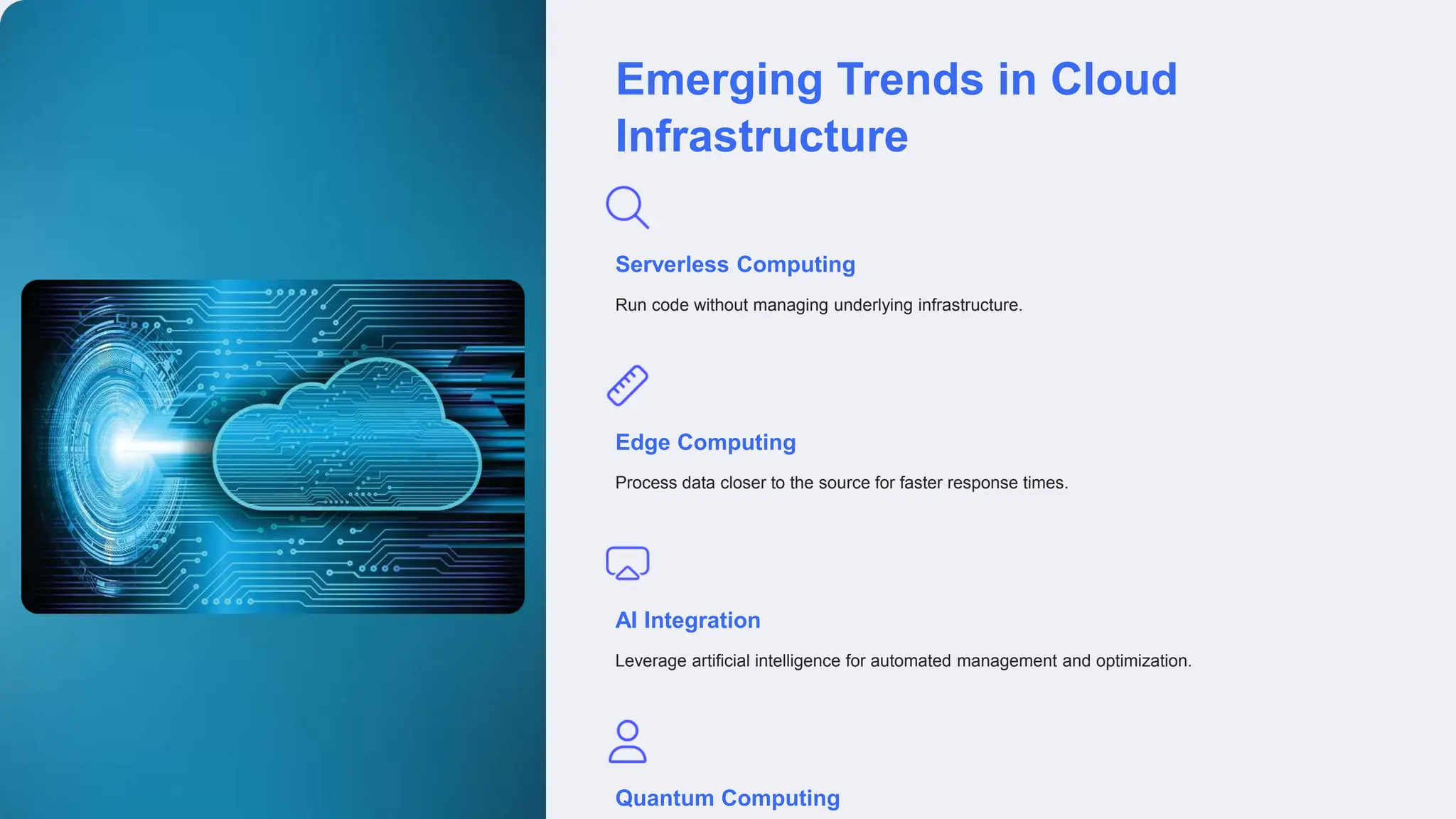
Emerging Trends in Cloud
Infrastructure
Serverless Computing
Run code without managing underlying infrastructure.
Edge Computing
Process data closer to the source for faster response times.
AI Integration
Leverage artificial intelligence for automated management and optimization.
Quantum Computing
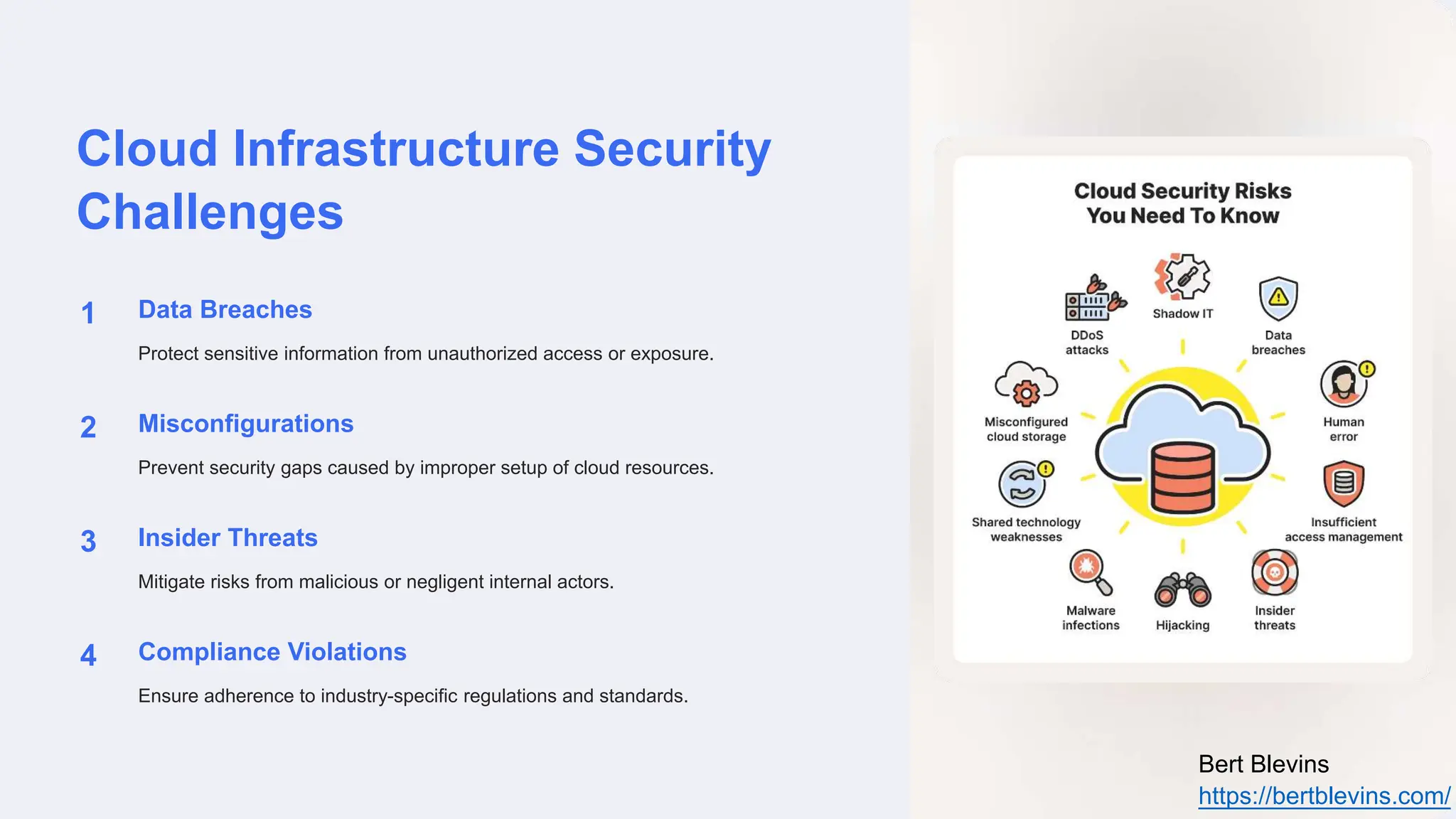
Cloud Infrastructure Security
Challenges
1 Data Breaches
Protect sensitive information from unauthorized access or exposure.
2 Misconfigurations
Prevent security gaps caused by improper setup of cloud resources.
3 Insider Threats
Mitigate risks from malicious or negligent internal actors.
4 Compliance Violations
Ensure adherence to industry-specific regulations and standards.
Bert Blevins
https://bertblevins.com/
Future of Cloud Infrastructure and
Entitlements Management
Zero Trust Security
Implement continuous authentication and authorization for all users and devices.
Blockchain Integration
Utilize distributed ledger technology for enhanced security and transparency.
Automated Compliance
Leverage AI to ensure real-time compliance with evolving regulations.
Quantum-Safe Encryption
Prepare for post-quantum cryptography to protect against future threats.
Bert Blevins
https://bertblevins.com/
About the Presenter
Phone
832-281-0330
Email
info@incgpt.com
LinkedIn
https://www.linkedin.com
/in/bertblevins/
Qualifications
Bachelor's Degree in
Advertising, Master of
Business Administration
Bert Blevins is a passionate and experienced professional who is constantly seeking knowledge and professional
development. With a diverse educational background and numerous certifications, Bert is dedicated to making a
positive impact in the field of server security and privilege management.
Bert Blevins
https://bertblevins.com/

Mastering Cloud Infrastructure and Entitlements Management

  • 1.
    Privileged Access Management (PAM):Cloud Infrastructure and Entitlements Management: Powering Modern Business Cloud infrastructure and entitlements management are critical for modern businesses. They enable scalable, flexible computing while ensuring security and compliance. This presentation explores key concepts, benefits, and best practices for effective cloud management. Bert Blevins https://bertblevins.com/ 01.07.2024
  • 2.
    What is CloudInfrastructure? Hardware Physical servers, storage devices, and networking equipment in data centers. Software Virtualization, management, and automation tools that enable cloud services. Network High-speed internet connections and internal networking within data centers. Services APIs and interfaces that allow users to access and manage cloud resources. Bert Blevins https://bertblevins.com/
  • 3.
    Key Components ofCloud Infrastructure 1 Compute Resources Virtual machines and containers that power applications and services. 2 Storage Solutions Object, block, and file storage options for data management. 3 Networking Virtual networks, subnets, and load balancers for efficient data transfer. 4 Databases Managed database services for scalable and secure data storage. 5 Security Services Tools for access control, authentication, and data protection. Bert Blevins https://bertblevins.com/
  • 4.
    Cloud Service Models IaaS Infrastructureas a Service provides virtualized computing resources over the internet. PaaS Platform as a Service offers hardware and software tools for application development. SaaS Software as a Service delivers software applications over the internet. Bert Blevins https://bertblevins.com/
  • 5.
    Benefits of Cloud Infrastructure 1Scalability Easily scale resources up or down based on demand. 2 Cost-Effectiveness Pay-as-you-go model reduces upfront infrastructure costs. 3 Flexibility Access resources from anywhere with an internet connection. 4 Innovation Rapidly deploy new technologies and services. Bert Blevins https://bertblevins.com/
  • 6.
    What is Cloud Entitlements Management? Cloudentitlements management involves controlling access rights and permissions in cloud environments. It ensures that only authorized entities can access specific resources. This process is crucial for maintaining security and compliance in cloud infrastructures. Bert Blevins https://bertblevins.com/
  • 7.
    Importance of CloudEntitlements Management Security Protects against unauthorized access and potential data breaches. Compliance Ensures adherence to industry regulations and standards. Efficiency Streamlines access management processes, saving time and resources. Cost Control Optimizes resource allocation based on actual usage and entitlements. Bert Blevins https://bertblevins.com/
  • 8.
    Key Elements ofCloud Entitlements Management 1 Identity and Access Management (IAM) Centralized system for managing identities and defining access policies. 2 Role-Based Access Control (RBAC) Assigns permissions based on organizational roles. 3 Policy Enforcement Implements and enforces security policies to control resource access. 4 Access Reviews and Audits Regularly reviews and audits access permissions. Bert Blevins https://bertblevins.com/
  • 9.
    Implementing the Principleof Least Privilege (PoLP) Identify Roles Define specific roles within your organization. Assign Minimum Permissions Grant only the necessary access rights for each role. Regular Review Periodically assess and adjust permissions as needed. Monitor Usage Track access patterns to identify potential security risks. Bert Blevins https://bertblevins.com/
  • 10.
    Automating Access Management 1Automated Provisioning Streamline the process of granting access to new users or resources. 2 De-provisioning Workflows Automatically revoke access when users leave or change roles. 3 Policy-Based Access Control Enforce access policies consistently across the organization. 4 Continuous Monitoring Use automated tools to detect and respond to unusual access patterns. Bert Blevins https://bertblevins.com/
  • 11.
    Multi-Factor Authentication (MFA) inCloud Environments Mobile Apps Use authenticator apps for one-time passcodes. Biometrics Implement fingerprint or facial recognition for enhanced security. Hardware Tokens Provide physical devices that generate secure access codes. SMS
  • 12.
    Cloud Infrastructure SecurityBest Practices Encryption Protect data in transit and at rest using strong encryption algorithms. Network Segmentation Isolate sensitive resources in separate network segments. Regular Patching Keep all systems and applications up-to-date with security patches. Monitoring and Logging Implement comprehensive logging and real-time monitoring of cloud resources. Bert Blevins https://bertblevins.com/
  • 13.
    Compliance and Regulatory Considerations RegulationKey Requirements Cloud Impact GDPR Data protection and privacy Strict data handling and storage policies HIPAA Healthcare data security Encrypted storage and transmission of patient data PCI DSS Payment card security Secure processing and storage of financial data Bert Blevins https://bertblevins.com/
  • 14.
    Cloud Infrastructure Cost Optimization ResourceRightsizing Adjust instance sizes based on actual usage patterns. Reserved Instances Utilize long-term commitments for predictable workloads. Spot Instances Leverage discounted pricing for non-critical, interruptible workloads. Automated Scaling Implement auto-scaling to match resource allocation with demand. Bert Blevins https://bertblevins.com/
  • 15.
    Cloud Entitlements ManagementTools AWS IAM Manage access to AWS services and resources securely. Azure AD Implement identity and access management for Microsoft cloud services. Google Cloud IAM Control access to Google Cloud resources granularly. Okta Provide unified access management across multiple cloud platforms. Bert Blevins
  • 16.
    Continuous Monitoring andAuditing 1 Real-Time Monitoring Implement tools to track access and usage patterns continuously. 2 Anomaly Detection Use AI-powered systems to identify unusual access behaviors. 3 Regular Audits Conduct periodic reviews of access logs and permissions. 4 Compliance Reporting Generate automated reports for regulatory compliance purposes. Bert Blevins https://bertblevins.com/
  • 17.
    Disaster Recovery andBusiness Continuity Risk Assessment Identify critical systems and potential threats. Backup Strategy Implement regular, automated backups of essential data. Recovery Plan Develop and test procedures for restoring operations. Continuous Improvement Regularly update and refine your disaster recovery strategy. Bert Blevins https://bertblevins.com/
  • 18.
    Cloud Infrastructure ScalingStrategies Vertical Scaling Increase or decrease the power of existing resources. Horizontal Scaling Add or remove instances to match workload demands. Auto-Scaling Automatically adjust resources based on predefined metrics. Bert Blevins https://bertblevins.com/
  • 19.
    Cloud Infrastructure MigrationBest Practices 1 Assessment Evaluate current infrastructure and migration goals. 2 Planning Develop a detailed migration strategy and timeline. 3 Testing Conduct thorough testing in a staging environment. 4 Migration Execute the migration with minimal disruption. 5 Optimization Refine and optimize post-migration performance. Bert Blevins https://bertblevins.com/
  • 20.
    Emerging Trends inCloud Infrastructure Serverless Computing Run code without managing underlying infrastructure. Edge Computing Process data closer to the source for faster response times. AI Integration Leverage artificial intelligence for automated management and optimization. Quantum Computing
  • 21.
    Cloud Infrastructure Security Challenges 1Data Breaches Protect sensitive information from unauthorized access or exposure. 2 Misconfigurations Prevent security gaps caused by improper setup of cloud resources. 3 Insider Threats Mitigate risks from malicious or negligent internal actors. 4 Compliance Violations Ensure adherence to industry-specific regulations and standards. Bert Blevins https://bertblevins.com/
  • 22.
    Future of CloudInfrastructure and Entitlements Management Zero Trust Security Implement continuous authentication and authorization for all users and devices. Blockchain Integration Utilize distributed ledger technology for enhanced security and transparency. Automated Compliance Leverage AI to ensure real-time compliance with evolving regulations. Quantum-Safe Encryption Prepare for post-quantum cryptography to protect against future threats. Bert Blevins https://bertblevins.com/
  • 23.
    About the Presenter Phone 832-281-0330 Email info@incgpt.com LinkedIn https://www.linkedin.com /in/bertblevins/ Qualifications Bachelor'sDegree in Advertising, Master of Business Administration Bert Blevins is a passionate and experienced professional who is constantly seeking knowledge and professional development. With a diverse educational background and numerous certifications, Bert is dedicated to making a positive impact in the field of server security and privilege management. Bert Blevins https://bertblevins.com/