The Photography of
Camera Phones:
How camera phones have changed
out perception of the photograph
By Caitlin McGarrell
43629482
MAS110
“To take a photograph is to participate in another person’s
mortality, vulnerability, mutability. Precisely by slicing out this
moment and freezing it, all photographs testify to time’s relentless
melt” – Susan Sontag (2006)
At the beginning of photography, only the wealthy and
important could take photographs, and only the wealthy
and important could choose what photographs were
shared with the public. After the development of
technology and the evolution of photography, taking and
sharing photos is no longer limited to the wealthy. Susan
Sontag wrote that photography was a cultural practice,
and an evaluation of the world, and as our culture
becomes more individualised, so too does our view of
photography.
What different meanings can we find in a comparison of a
formal digital photograph and a photo taken with a
camera phone?
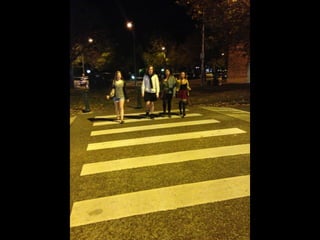
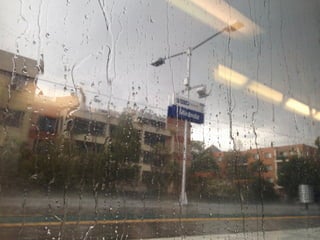
The element of the “everyday” is prominent. The photos
taken with a camera phone are not usually socially
significant, yet the personal and immediate qualities
prevent the deletion of certain camera phone
photographs.
These qualities provide a “Punctum” by creating a deeply
personal & emotional reaction.
Figure 1. Untitled 2014
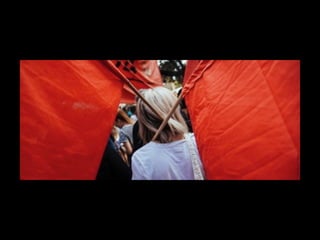
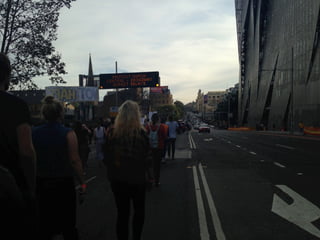
Photography is even more so a social right - with the
camera phone, everyone becomes a photographer.
This provides a new means of which to report events,
provide more sides to a story, and more freedom.
These photographs compare the formal and objective
view of a political event, with a more immediate and
personal one, one that provides a subjective point of view.
Figure 2. Enough is Enough 2014
Figure 3. The future 2014
“Camera phones capture the more fleeting
and unexpected moments of surprise,
beauty and adoration in the
everyday” (Goggin 2012)
v  Duckworth, K. (Photographer). 2014. Untitled
(Photograph). 8 February, 2014. from https://
www.facebook.com/LDParties?fref=photo
v  Szilvasi, A. (Photographer). 2014. Enough is Enough
(Photograph). 18 May, 2014. from http://
www.dailymail.co.uk/news/article-2631714/Enough-Tens-
thousands-disgruntled-Australians-walked-city-streets-
opposition-Federal-Governments-budget-cuts.html 
v  Szilvasi, A. (Photographer). 2014. The future (Photograph).
18 May, 2014. from
http://www.dailymail.co.uk/news/article-2631714/
Enough-Tens-thousands-disgruntled-Australians-walked-
city-streets-opposition-Federal-Governments-budget-
cuts.html
Photographs
Academic Sources
v  Goggin, G. (2012). Cell Phone Culture : Mobile Technology in
Everyday Life, e-book, accessed 04 June 2014, <http://
mqu.eblib.com.au/patron/FullRecord.aspx?p=1020245>.
v  Ito, M., Okabe, D., Matsuda, M. (2005). Personal, portable,
pedestrian: mobile phones in Japanese life/ edited by Mizuko Ito,
Daisuke Okabe, and Misa Matsuda. Cambridge, Mass: MIT
Press.
v  Kolb, L. (2008). Toys to tools: connecting student cell phones to
education. Eugene Or.: International Society for Technology
in Education.
v  Lillie, J. (2012). Nokia’s MMS: A cultural analysis of
mobile picture messaging. New Media & Society, 14(1), 80-97.
doi:10.1177/1461444811410400
v  Pink, S. (2012). Emplaced cartographies: reconceptualising camera
phone practices in an age of locative media. Media International
Australia Incorporating Culture & Policy, 1(145), 145-156. Retrieved
from http://multisearch.mq.edu.au/primo_library/libweb/action/
display.do?
tabs=detailsTab&ct=display&fn=search&doc=TN_informit9925120
88778630&indx=1&recIds=TN_informit992512088778630&recIdxs
=0&elementId=0&renderMode=poppedOut&displayMode=full&frb
rVersion=&dscnt=0&frbg=&scp.scps=scope%3A%28%22MQ
%22%29%2Cscope%3A%28MQ_VOYAGER+%29%2Cscope%3A
%28reserve%29%2Cscope%3A%28exam
%29%2Cprimo_central_multiple_fe&tab=books_more&dstmp=1402
546570485&srt=rank&mode=Basic&&dum=true&tb=t&vl(freeText
0)=Emplaced%20cartographies%3A%20reconceptualising
%20camera%20phone%20practices%20in%20an%20age%20of
%20locative%20media&vid=MQ
v  Sontag, S. (2006). In Plato’s Cave. On Photography (pp. 3-24). New
York, Farrar: Straus and Giroux. Retrieved from http://
ishare.mq.edu.au/prod/integ/gen/90143de0-8475-49cc-954e-
e8698acfbd2e/1/
v  Villi, M. (2010). Visual mobile communication: Camera phone photo
messages as ritual communication and mediated presence. Finland: ws
Bookwell Ltd. Retrieved from http://ishare.mq.edu.au/prod/file/
4516051d-1414-4b91-91b2-a23b4b58eead/1/v0487.pdf

MAS110 photo essay 43629482

  • 1.
    The Photography of CameraPhones: How camera phones have changed out perception of the photograph By Caitlin McGarrell 43629482 MAS110
  • 2.
    “To take aphotograph is to participate in another person’s mortality, vulnerability, mutability. Precisely by slicing out this moment and freezing it, all photographs testify to time’s relentless melt” – Susan Sontag (2006) At the beginning of photography, only the wealthy and important could take photographs, and only the wealthy and important could choose what photographs were shared with the public. After the development of technology and the evolution of photography, taking and sharing photos is no longer limited to the wealthy. Susan Sontag wrote that photography was a cultural practice, and an evaluation of the world, and as our culture becomes more individualised, so too does our view of photography. What different meanings can we find in a comparison of a formal digital photograph and a photo taken with a camera phone?
  • 7.
    The element ofthe “everyday” is prominent. The photos taken with a camera phone are not usually socially significant, yet the personal and immediate qualities prevent the deletion of certain camera phone photographs. These qualities provide a “Punctum” by creating a deeply personal & emotional reaction.
  • 12.
  • 16.
    Photography is evenmore so a social right - with the camera phone, everyone becomes a photographer. This provides a new means of which to report events, provide more sides to a story, and more freedom. These photographs compare the formal and objective view of a political event, with a more immediate and personal one, one that provides a subjective point of view.
  • 19.
    Figure 2. Enoughis Enough 2014
  • 21.
    Figure 3. Thefuture 2014
  • 25.
    “Camera phones capturethe more fleeting and unexpected moments of surprise, beauty and adoration in the everyday” (Goggin 2012)
  • 39.
    v  Duckworth, K.(Photographer). 2014. Untitled (Photograph). 8 February, 2014. from https:// www.facebook.com/LDParties?fref=photo v  Szilvasi, A. (Photographer). 2014. Enough is Enough (Photograph). 18 May, 2014. from http:// www.dailymail.co.uk/news/article-2631714/Enough-Tens- thousands-disgruntled-Australians-walked-city-streets- opposition-Federal-Governments-budget-cuts.html  v  Szilvasi, A. (Photographer). 2014. The future (Photograph). 18 May, 2014. from http://www.dailymail.co.uk/news/article-2631714/ Enough-Tens-thousands-disgruntled-Australians-walked- city-streets-opposition-Federal-Governments-budget- cuts.html Photographs
  • 40.
    Academic Sources v  Goggin,G. (2012). Cell Phone Culture : Mobile Technology in Everyday Life, e-book, accessed 04 June 2014, <http:// mqu.eblib.com.au/patron/FullRecord.aspx?p=1020245>. v  Ito, M., Okabe, D., Matsuda, M. (2005). Personal, portable, pedestrian: mobile phones in Japanese life/ edited by Mizuko Ito, Daisuke Okabe, and Misa Matsuda. Cambridge, Mass: MIT Press. v  Kolb, L. (2008). Toys to tools: connecting student cell phones to education. Eugene Or.: International Society for Technology in Education. v  Lillie, J. (2012). Nokia’s MMS: A cultural analysis of mobile picture messaging. New Media & Society, 14(1), 80-97. doi:10.1177/1461444811410400
  • 41.
    v  Pink, S.(2012). Emplaced cartographies: reconceptualising camera phone practices in an age of locative media. Media International Australia Incorporating Culture & Policy, 1(145), 145-156. Retrieved from http://multisearch.mq.edu.au/primo_library/libweb/action/ display.do? tabs=detailsTab&ct=display&fn=search&doc=TN_informit9925120 88778630&indx=1&recIds=TN_informit992512088778630&recIdxs =0&elementId=0&renderMode=poppedOut&displayMode=full&frb rVersion=&dscnt=0&frbg=&scp.scps=scope%3A%28%22MQ %22%29%2Cscope%3A%28MQ_VOYAGER+%29%2Cscope%3A %28reserve%29%2Cscope%3A%28exam %29%2Cprimo_central_multiple_fe&tab=books_more&dstmp=1402 546570485&srt=rank&mode=Basic&&dum=true&tb=t&vl(freeText 0)=Emplaced%20cartographies%3A%20reconceptualising %20camera%20phone%20practices%20in%20an%20age%20of %20locative%20media&vid=MQ v  Sontag, S. (2006). In Plato’s Cave. On Photography (pp. 3-24). New York, Farrar: Straus and Giroux. Retrieved from http:// ishare.mq.edu.au/prod/integ/gen/90143de0-8475-49cc-954e- e8698acfbd2e/1/ v  Villi, M. (2010). Visual mobile communication: Camera phone photo messages as ritual communication and mediated presence. Finland: ws Bookwell Ltd. Retrieved from http://ishare.mq.edu.au/prod/file/ 4516051d-1414-4b91-91b2-a23b4b58eead/1/v0487.pdf