MAREK’S DISEASE
DEFINITION
Marek’s disease (MD) is a herpesvirus-
induced neoplastic
disease of chickens characterized by
infiltration of various
nerve trunks and/or organs with
pleomorphic lymphoid cells.
OCCURRENCE
Marek’s disease is important primarily in chickens
The disease most
commonly occurs in young, sexually
immature chickens 2-7 months old
Why it is called Marek
• A report in 1907 by a Hungarian
veterinarian, Josef Marek, of paresis in
roosters is the first description of the
• disease now called MD.
sudden increase in mortality in the late 1950s
and 1960s
accelerated research. Reliable experimental
transmission
was achieved in 1962 and the causative
herpesvirus was isolated and identified in 1967.
Vaccines became available
for use in the United States by 1970
EPIDEMIOLOGY
Infected chickens shed virus containing
feather follicle dander
dander containing infectious
enveloped virus particles is the most important means
of transmission.
CLINICAL SIGNS
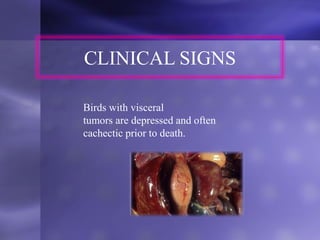
Birds with visceral
tumors are depressed and often
cachectic prior to death.
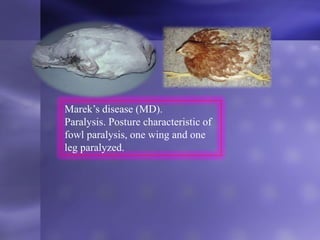
Marek’s disease (MD).
Paralysis. Posture characteristic of
fowl paralysis, one wing and one
leg paralyzed.
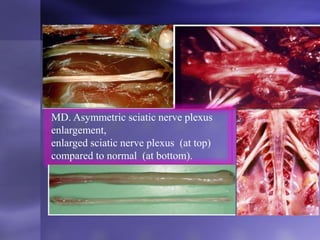
MD. Asymmetric sciatic nerve plexus
enlargement,
enlarged sciatic nerve plexus (at top)
compared to normal (at bottom).
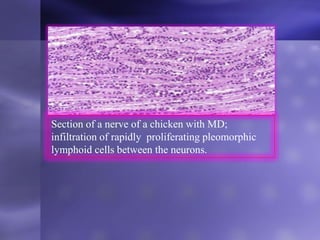
Section of a nerve of a chicken with MD;
infiltration of rapidly proliferating pleomorphic
lymphoid cells between the neurons.
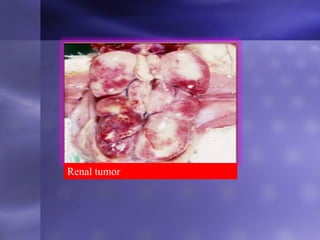
Renal tumor
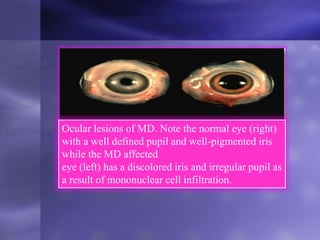
Ocular lesions of MD. Note the normal eye (right)
with a well defined pupil and well-pigmented iris
while the MD affected
eye (left) has a discolored iris and irregular pupil as
a result of mononuclear cell infiltration.
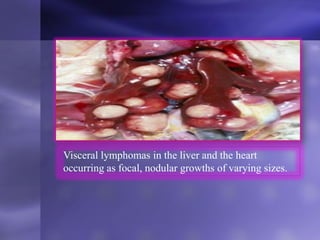
Visceral lymphomas in the liver and the heart
occurring as focal, nodular growths of varying sizes.
LESIONS
• yellowing and loss of cross-striations of peripheral nerves
• enlargement of feather follicles with reddening
• Visceral tumors are the most frequent lesions,
• but combinations of lesion patterns are common.
Microscopically the lymphomas are characterized by
a mixture of pleomorphic lymphocytes
DIAGNOSIS
1. A diagnosis can usually be made after careful
consideration of the history the ages of the
birds affected
CONTROL
1. Commercial flocks are usually
immunized via injection at 18 days
of embryonation or at hatching.
The most common vaccines consist of turkey
herpesvirus (HVT), a serotype 3 virus as a cell
associated preparation, or a bivalent vaccine
consisting of turkey herpesvirus
and
a serotype 2 virus (SB-1 or 301 B). Attenuated
serotype 1 vaccines (CVI988, RM1 and
648A80) are also used
immunity is usually life-long. Appearance of the
disease at older ages has been attributed to
immunodepression due to environmental stress or
infection with the very virulent pathotype.

Marekes.pdf

  • 1.
    MAREK’S DISEASE DEFINITION Marek’s disease(MD) is a herpesvirus- induced neoplastic disease of chickens characterized by infiltration of various nerve trunks and/or organs with pleomorphic lymphoid cells.
  • 2.
    OCCURRENCE Marek’s disease isimportant primarily in chickens The disease most commonly occurs in young, sexually immature chickens 2-7 months old
  • 3.
    Why it iscalled Marek • A report in 1907 by a Hungarian veterinarian, Josef Marek, of paresis in roosters is the first description of the • disease now called MD.
  • 4.
    sudden increase inmortality in the late 1950s and 1960s accelerated research. Reliable experimental transmission was achieved in 1962 and the causative herpesvirus was isolated and identified in 1967. Vaccines became available for use in the United States by 1970
  • 5.
    EPIDEMIOLOGY Infected chickens shedvirus containing feather follicle dander dander containing infectious enveloped virus particles is the most important means of transmission.
  • 6.
    CLINICAL SIGNS Birds withvisceral tumors are depressed and often cachectic prior to death.
  • 7.
    Marek’s disease (MD). Paralysis.Posture characteristic of fowl paralysis, one wing and one leg paralyzed.
  • 8.
    MD. Asymmetric sciaticnerve plexus enlargement, enlarged sciatic nerve plexus (at top) compared to normal (at bottom).
  • 9.
    Section of anerve of a chicken with MD; infiltration of rapidly proliferating pleomorphic lymphoid cells between the neurons.
  • 10.
  • 11.
    Ocular lesions ofMD. Note the normal eye (right) with a well defined pupil and well-pigmented iris while the MD affected eye (left) has a discolored iris and irregular pupil as a result of mononuclear cell infiltration.
  • 12.
    Visceral lymphomas inthe liver and the heart occurring as focal, nodular growths of varying sizes.
  • 13.
    LESIONS • yellowing andloss of cross-striations of peripheral nerves • enlargement of feather follicles with reddening • Visceral tumors are the most frequent lesions, • but combinations of lesion patterns are common.
  • 14.
    Microscopically the lymphomasare characterized by a mixture of pleomorphic lymphocytes
  • 15.
    DIAGNOSIS 1. A diagnosiscan usually be made after careful consideration of the history the ages of the birds affected
  • 16.
    CONTROL 1. Commercial flocksare usually immunized via injection at 18 days of embryonation or at hatching.
  • 17.
    The most commonvaccines consist of turkey herpesvirus (HVT), a serotype 3 virus as a cell associated preparation, or a bivalent vaccine consisting of turkey herpesvirus and a serotype 2 virus (SB-1 or 301 B). Attenuated serotype 1 vaccines (CVI988, RM1 and 648A80) are also used
  • 18.
    immunity is usuallylife-long. Appearance of the disease at older ages has been attributed to immunodepression due to environmental stress or infection with the very virulent pathotype.