Managing Performance In Construction Leonhard E Bernold Simaan M Abourizkauth
Managing Performance In Construction Leonhard E Bernold Simaan M Abourizkauth
Managing Performance In Construction Leonhard E Bernold Simaan M Abourizkauth
Managing Performance In Construction Leonhard E Bernold Simaan M Abourizkauth
Managing Performance In Construction Leonhard E Bernold Simaan M Abourizkauth
1.
Managing Performance InConstruction Leonhard E
Bernold Simaan M Abourizkauth download
https://ebookbell.com/product/managing-performance-in-
construction-leonhard-e-bernold-simaan-m-abourizkauth-4307618
Explore and download more ebooks at ebookbell.com
2.
Here are somerecommended products that we believe you will be
interested in. You can click the link to download.
Managing In Construction Supply Chains And Markets Reactive And
Proactive Options For Improving Performance And Relationship
Menagement Townsend
https://ebookbell.com/product/managing-in-construction-supply-chains-
and-markets-reactive-and-proactive-options-for-improving-performance-
and-relationship-menagement-townsend-5309844
Managing Performance In The Public Sector 1st H De Bruijin
https://ebookbell.com/product/managing-performance-in-the-public-
sector-1st-h-de-bruijin-2014822
Managing Performance In Turbulent Times Analytics And Insight 1st
Edition Neely
https://ebookbell.com/product/managing-performance-in-turbulent-times-
analytics-and-insight-1st-edition-neely-5310712
Competitive Branding Strategies Managing Performance In Emerging
Markets 1st Ed 2019 Rajagopal
https://ebookbell.com/product/competitive-branding-strategies-
managing-performance-in-emerging-markets-1st-
ed-2019-rajagopal-10798386
3.
Managing Traffic PerformanceIn Converged Networks 20th International
Teletraffic Congress Itc20 2007 Ottawa Canada June 1721 2007
Proceedings 1st Edition R Srikant Auth
https://ebookbell.com/product/managing-traffic-performance-in-
converged-networks-20th-international-teletraffic-congress-
itc20-2007-ottawa-canada-june-1721-2007-proceedings-1st-edition-r-
srikant-auth-1226986
Managing And Measuring Performance In Public And Nonprofit
Organizations An Integrated Approach 2nd Edition Theodore H Poister
https://ebookbell.com/product/managing-and-measuring-performance-in-
public-and-nonprofit-organizations-an-integrated-approach-2nd-edition-
theodore-h-poister-4751136
Managing The Unexpected Assuring High Performance In An Age Of
Complexity Karl E Weick
https://ebookbell.com/product/managing-the-unexpected-assuring-high-
performance-in-an-age-of-complexity-karl-e-weick-24005240
Managing The Unexpected Sustained Performance In A Complex World 3rd
Edition Sutcliffe
https://ebookbell.com/product/managing-the-unexpected-sustained-
performance-in-a-complex-world-3rd-edition-sutcliffe-5310718
Performance Improvement In Hospitals And Health Systems Managing
Analytics And Quality In Healthcare 2nd Edition 2nd Edition James R
Langabeer Ii
https://ebookbell.com/product/performance-improvement-in-hospitals-
and-health-systems-managing-analytics-and-quality-in-healthcare-2nd-
edition-2nd-edition-james-r-langabeer-ii-6991990
This book isprinted on acid-free paper.
1
Copyright # 2010 by John Wiley Sons, Inc. All rights reserved
Published by John Wiley Sons, Inc., Hoboken, New Jersey
Published simultaneously in Canada
No part of this publication may be reproduced, stored in a retrieval system, or transmitted in any form or by any means,
electronic, mechanical, photocopying, recording, scanning, or otherwise, except as permitted under Section 107 or 108 of
the 1976 United States Copyright Act, without either the prior written permission of the Publisher, or authorization through
payment of the appropriate per-copy fee to the Copyright Clearance Center, 222 Rosewood Drive, Danvers, MA 01923,
(978) 750-8400, fax (978) 646-8600, or on the web at www.copyright.com. Requests to the Publisher for permission
should be addressed to the Permissions Department, John Wiley Sons, Inc., 111 River Street, Hoboken, NJ 07030, (201)
748-6011, fax (201) 748-6008, or online at www.wiley.com/go/permissions.
Limit of Liability/Disclaimer of Warranty: While the publisher and the author have used their best efforts in preparing this
book, they make no representations or warranties with respect to the accuracy or completeness of the contents of this book
and specifically disclaim any implied warranties of merchantability or fitness for a particular purpose. No warranty may be
created or extended by sales representatives or written sales materials. The advice and strategies contained herein may not be
suitable for your situation. You should consult with a professional where appropriate. Neither the publisher nor the author
shall be liable for any loss of profit or any other commercial damages, including but not limited to special, incidental,
consequential, or other damages.
For general information about our other products and services, please contact our Customer Care Department within the
United States at (800) 762-2974, outside the United States at (317) 572-3993 or fax (317) 572-4002.
Wiley also publishes its books in a variety of electronic formats. Some content that appears in print may not be available in
electronic books. For more information about Wiley products, visit our web site at www.wiley.com.
Library of Congress Cataloging-in-Publication Data:
Bernold, Leonhard E. (Leonhard Emil), 1952-
Managing performance in construction / Leonhard E. Bernold and Simaan M.
AbouRizk.
p. cm.
Includes index.
ISBN 978-0-470-17164-6 (cloth)
1. Construction industry–Personnel management. 2. Labor productivity. I. AbouRizk, S. M. II. Title.
HD9715.A2B483 2010
338.4076240285–dc22
2009045968
Printed in the United States of America
10 9 8 7 6 5 4 3 2 1
8.
We would liketo dedicate this book
to our families for their continued love and support.
Our gratitude goes to our wives Marilyn and Marleine and
to our five beautiful daughters Elizabeth, Sarah, Hala,
Jenna and Deema
9.
Contents
Preface xiii
Chapter 1Indicators of an Industry in Transition 1
1.1 Breaking Interoperability Barriers 1
1.2 Construction Becomes Sustainable 2
1.3 E-Construction Management 3
1.4 Linking Up to Smart Construction Equipment 5
1.5 Highly Successful Engineering Managers 5
Chapter Review 8
Bibliography 9
Chapter 2 Productivity in the Spotlight 13
2.1 Measuring National Productivity 13
2.2 Basic Relationships Affecting Productivity 15
2.3 Factors Related to Process Productivity 17
2.3.1 Necessary Work Resources 17
2.3.2 Job Fitness 19
2.3.3 Where the Rubber Meets the Road: The Process 19
2.3.4 Value-Added and No-Value-Added Outputs 24
2.3.5 Control Mechanisms for Keeping Processes on Target 26
2.4 Taxonomy of Work Time 32
2.5 Gauging Construction Process Efficiency 37
2.5.1 Scientific Measurements of Individuals at Work 38
2.5.2 Measuring Value-Added Work 41
vii
10.
2.5.3 The ContinuousTime Study 43
2.5.4 Work Sampling 47
2.5.5 Sensor-Based Work Measurement 51
2.6 Identifying Critical Impact Factors 53
2.6.1 Understanding the Cause of Inefficiency 53
2.6.2 Functions for Corrective Interventions 57
2.6.3 Critical Success Factors 58
2.6.4 Bipolar Success Factor Analysis 62
Summary 62
Chapter Review 66
Bibliography 70
Chapter 3 Cornerstones of Efficient Site Operation 75
3.1 Return of the Master-Builder 75
3.1.1 Separating Design from Construction Expertise 76
3.1.2 The Rise of Constructability Expertise 77
3.1.3 The Emergence of Intelligent Building Data Models 79
3.2 Planning the Supply, and Resupply, of the Construction Process 79
3.2.1 Modeling the Construction Input Supply Chain 80
3.3 Top-Down Frameworks for Managing Projects 83
3.3.1 Organizational Structures That Facilitate Integration 84
3.3.2 Sequencing the Plan, Start to Finish 86
3.4 Bottom-Up Quantitative Planning 87
3.4.1 Defining the Process Model 88
3.4.2 Computing Process Production 88
3.4.3 Optimizing the Process 97
3.5 Process Synchronization in the Supply Chain 101
3.5.1 Costly Two-Way Ripples in the Supply Chain 101
3.5.2 Just-in-Sequence Material Supply 103
Chapter Review 114
Bibliography 117
Chapter 4 Introduction to Simulation and Its Use in Modeling Production Systems 121
4.1 Building Simulation Models 127
Chapter Review 139
Chapter 5 A Case Study: Applying Simulation to Tunnel Construction 143
5.1 Project Background 143
5.2 Preparation Work: Understanding the Construction Process 145
5.2.1 Shaft Construction 146
viii Contents
11.
5.2.2 Tunnel Construction147
5.3 Developing the Simulation Model 153
5.3.1 Assumptions and Input 153
5.3.2 Simulation Model 156
5.4 Running the Model and Deriving Results 164
5.5 Analyzing the Operation 165
Chapter Review 168
Chapter 6 Competencies That Drive the Company 173
6.1 Generic Work Competencies for the Twenty-First Century 174
6.2 Managerial Competencies of Productive Organizations 175
6.2.1 Hierarchical Structure of Construction Companies 175
6.2.2 Diverse Expectations of a Precast Plant Manager 178
6.2.3 Core Competencies of a Precast Plant Manager 182
6.3 Gaining Competency through Learning and Training 187
6.3.1 The Learning Organization (LO) 188
6.3.2 Taxonomies for Learning and Training 189
6.3.3 Teaching and Learning around the Circle 194
6.3.4 The Learning Curve 196
6.3.5 The Relearning Curve 200
6.4 Job-Oriented Training and Competency Development 204
6.4.1 Personal Learning Strengths Dictate Progress 204
6.4.2 Designing a Confidence-Building Process 206
6.5 Becoming a Learning Organization (LO) 209
Chapter Review 214
Bibliography 216
Chapter 7 Productivity in a Healthy and Safe Work Environment 223
7.1 Two Health Stresses that Affect Productivity 223
7.2 The Engine That Drives—and Limits—Human Work 225
7.2.1 A Look Into the ‘‘Boiler Room’’ 225
7.2.2 Calculating Sustainable Energy Use 227
7.3 Ergonomics in Construction 230
7.3.1 Biomechanics 231
7.3.2 The Endangered Human Spine 233
7.3.3 Hand-Arm and Whole-Body Vibrations 236
7.3.4 Factors Leading to Hearing Loss 239
7.3.5 Impact of Heat and Cold Stress on Productivity 243
7.4 A Modern Debilitating Disease: Job Stress 247
7.4.1 Modeling Stressors 248
7.4.2 The Coping Mechanism 249
Contents ix
12.
7.5 The SilentEpidemic: Workplace Harassment 250
7.5.1 What Are Mobbing and Bullying? 250
7.5.2 The Common Pattern of Mobbing 251
7.5.3 What Should Employers Do—and Not Do? 253
7.5.4 Sexual Harassment 254
Chapter Review 256
Bibliography 258
Chapter 8 The Complexity of Human Motivation 263
8.1 Background 263
8.2 Behavioral Aspects of the Human Mind 264
8.3 Intrinsic versus Extrinsic Motivation 266
8.4 Maslow's Needs-Based Motivators 266
8.5 Vroom's Expectancy Theory 267
8.6 Herzberg's Two-Factor Theory 274
8.7 Measuring Job Satisfaction 276
8.8 Job Enrichment 278
8.8.1 Enrichment Schemes 280
8.8.2 Designing a Job Enrichment Program 281
Chapter Review 282
Bibliography 283
Chapter 9 Performance Factors of Leaders and Teams 285
9.1 Is a Manager Also a Leader? 286
9.2 Theories about Effective Leadership 290
9.2.1 The Managerial Grid Model 290
9.2.2 Theory X and Theory Y 291
9.2.3 Fiedler's Contingency Model 292
9.2.4 Burns's Transactional and Transformational
Leadership Models 295
9.2.5 Hersey-Blanchard Situational Theory 296
9.2.6 Managers with Emotional Intelligence 298
9.3 Power and Problems of Teamwork 302
9.3.1 Team Dynamics 302
9.3.2 Important Team Characteristics 304
9.3.3 Life Cycle of a Working Team 305
9.3.4 Group Dynamics 308
9.3.5 Team Building 311
9.3.6 Planning an Effective Team 313
9.3.7 Launching the Team 317
9.3.8 Tools Used by High-Performance Teams 319
x Contents
13.
9.4 Basics aboutCreativity 326
9.4.1 Convergent Thinking 326
9.4.2 Divergent Thinking 327
9.4.3 Left-Brain/Right-Brain Collaboration 328
9.4.4 Attributes of a Creative Individual 329
9.4.5 Exercises to Break-Down Blockers of Creative Thinking 330
Chapter Review 331
Bibliography 334
Chapter 10 Communication: The Nerve System of Construction 339
10.1 Engineering Drawings: The Ancient Communications Medium 340
10.1.1 The Evolution of Models and Blueprints 340
10.1.2 Will It Work? 345
10.1.3 The Internet Revolution 347
10.1.4 Costly Gaps in Electronic Communications 348
10.1.5 On the Communication Trail 351
10.2 Communication Strategies Employed by Organizations 356
10.2.1 Main Functions of Communication 356
10.2.2 Communication as the Enabler of Managerial Functions 356
10.2.3 Strengths and Weaknesses of Various
Communication Media 359
10.2.4 The Effect of Distance on Media Selection 361
10.2.5 Matching Media to Meeting Objectives 361
10.2.6 Local Communication Patterns 365
10.3 Logistics of Project Information 369
10.3.1 Interorganizational Information Flow 370
10.3.2 Information Flow on the Project Net 373
10.3.3 Traditional Communication Patterns 374
10.3.4 Agent-Based, Ubiquitous On-Site Communications 377
10.3.5 Improvements in and Opportunities for Wireless
Communication 381
Chapter Review 386
Bibliography 388
Chapter 11 Performance Management 395
11.1 Historical Recap of Key Management Concepts 395
11.2 From Measuring to Managing Performance 398
11.3 A Corporation's Balanced Scorecard 400
11.4 Performance Management of the Supply Chain 407
11.4.1 Defining Appropriate Performance Measures 408
11.4.2 Framework for Managing Supply Performance 412
Contents xi
14.
11.5 Performance Managementat the Task Level 414
11.5.1 Improvement through Motion Studies 414
11.5.2 Improvement through Intervention Ergonomics 420
Chapter Review 423
Bibliography 425
Appendix 427
Glossary 463
Index 483
xii Contents
15.
Preface
I hear andI forget. I see and I remember. I do and I understand.
——Confucius
Addition for construction managers: I think and I innovate.
In 2005, we were offered the opportunity to write this book to present the state-
of-practice and knowledge related to the wide range of performance aspects in the
construction field. From the outset we felt that a book of this sort should engage
the students on many different levels in order to provide a rich set of learning expe-
riences that support one another. For example, we include process simulation soft-
ware, to provide an opportunity for students and practitioners to gain hands-on
experience with modeling and learn how to rapidly evaluate different construction
methods and supply-chain configurations. Other important features in the book
are pedagogical support of the teaching and learning process, and a companion
website, with a wide selection of additional material and supports.
1.1 TAPESTRY OF LEARNING
Deep learning is a complex process, whereby the teacher is both the enabler and
facilitator. Einstein once said that one does not understand something until one
can explain it to one’s grandmother. Obviously, he had more in mind than just
parroting what was presented in class. Why would someone’s grandmother even
be interested in hearing about theories or mathematical formulas? The answer is,
only if it is relevant to her and builds on what she already knows. Furthermore, it
must be translated into language that she understands.
A textbook does not have to be dry and sterile. This one engages the reader in
a conversation, with the intent of stimulating interaction with the teacher. It pres-
ents small problems leading the student to follow the thoughts of an experienced
engineer, in the same way an apprentice looks over the shoulder of his or her mas-
ter. Equally important, each reader is recognized as having unique learning
xiii
16.
strengths, as illustratedby David Kolb’s learning model, shown at the top of Fig-
ure P.1. Various methods and techniques are employed in each chapter to enable
all readers to apply their individual learning strengths.
What is the feeling one gets when one really understands new material (before
explaining it to grandmother)? One understands the theory behind it, knows how
to apply it to solve problems, knows why it is important, and, finally, has an in-
stinctive feeling what would happen if critical variables were changed. In fact, one
has visited all four quadrants of Kolb’s circle, while scaling Bloom’s learning pyra-
mid (bottom of Figure P.1), beginning with memorizing the facts and ending up
being able to apply the new knowledge creatively. The teacher is considered the
coach, who leads the students through the process of acquiring knowledge via a
personal and guided inquiry into the subject. In particular, students will be in-
spired to tap into their creative and innovative capabilities, and find many opportu-
nities to practice and, ideally, earn well-deserved credits toward their final grades.
The vast majority of engineering students receive very little education related
to the historical accomplishments that led to the construction technologies they
see almost every day. To fill this vacuum, we add short sidebars to the main text
when appropriate in order to provide interesting stories and to encourage an
extended inquiry. In the same vein, we ‘‘assign’’ homework and short classroom
exercises, which require students to collect, analyze, and evaluate data as additional
means for building bridges to the new knowledge they are acquiring. Students can
assess how well they understand what they have learned, and detect where their
weaknesses are. These activities ensure that students are in control of the learning
process, and take an active role. Finally, this book offers a unique opportunity for
the teacher to foster reflective learning through journaling
Applying
Analyzing
Evaluating
Remembering
Bloom’s Taxonomy of Cognition
David Kolb’s Learning Model
Understanding
Creating-
Innovating
Abstract
Concrete
Active
Reflective
Type 4
(What if?)
Type 1
(Why?)
Type 2
(What?)
Type 3
(How?)
Figure P.1 David Kolb’s Learning Model (top); Bloom’s Taxonomy of Cognition (bottom)
xiv Preface
17.
There is nodoubt that the most prominent engineer ‘‘journaler’’ lived and
worked in the sixteenth century. Who does not admire Leonardo da Vinci’s
sketches of lifting cranes and flying machines, and the text and calculations that
accompany them explaining how and why the proposed system would work.
Many of the skills that students practice while journaling are among those sug-
gested by the Accreditation Board for Engineering and Technology (ABET): com-
munication, analytic skills, information literacy, lifelong learning, knowledge of
contemporary issues, holistic approach to engineering problems, and reflective
thinking about professional issues. One of the most satisfying experiences for a
teacher is to observe students struggling during a semester, then see them present
their journals at its end with pride and a smile, and say, ‘‘This was the toughest
Generic Structure of a Class Journal
A. Executive Summary
B. Table of Contents
C. Weekly Journal Entries. Address the following five topics:
1. Weekly review:
What happened in class?
What did we have to do?
2. Personal discussion. Reflections about each main subject of the week:
Why are the new principles and methods important?
How does the new material relate to what I already know?
What are real-world problems that I can solve now?
What helped me most to understand?
3. Special journaling questions relating to the chapter (assigned by the
professor)
4. New terms: the meaning of 10 new (to me) terms in construction
5. My favorite sketch/figure/picture that communicates most effectively.
D. Supplementary Materials:
Personal observations
Evaluations
Poems
Newspaper articles
PowerPoint presentations
Websites
Other
Preface xv
18.
thing I didin school, but it will help this class experience guide my future profes-
sional life.’’
1.2 BOOK CONTENTS
The material in Managing Productivity in Construction is presented using two in-
tegrated media: the traditional textbook and the supporting website, the latter
which offers additional supplementary materials for students to explore, if they
wish.
Some of the chapters contain features called header problem and/or worked-
out problem, positioned at ‘‘pressure points.’’ Both features are nontraditional, in
that they are embedded in real-world situations that can occur during a construc-
tion project. Rather than providing straightforward solutions, they guide readers
through problem-solving exercises, requiring them to make assumptions and collect
and analyze data; the problems conclude with a discussion of the results, adding a
qualitative component and final recommendations to make to a ‘‘virtual boss.’’
Each chapter ends with a chapter review and bibliography. The chapter review
includes three components: (1) journal questions, (2) traditional homework prob-
lems, and (3) open-ended problem. The journal questions are tailored to each
chapter and can be selected by the teacher to amplify the generic outline of a
journal.
Managing Performance in Construction covers a wide spectrum of topics in 11
chapters, beginning with the concept of productivity measurements and process
modeling. Here is a quick overview of the chapters:
Chapter 1, ‘‘Indicators of an Industry in Transition,’’ identifies some of
the early indicators of an industry in transition. A major change in the way we de-
sign, plan, and even control construction projects will be caused by the industry-
wide adoption of the Building Information Modeling (BIM) system. This thrust
will be accompanied by the further growth of e-construction management, which
will eventually digitally link construction equipment in real time to a project’s web-
site. Another major impact on the industry is the drive toward sustainable and
ecoefficient construction.
Chapter 2, ‘‘Productivity in the Spotlight,’’ describes the many different
ways productivity is measured. It details the concept of process productivity in
construction, while highlighting the causes of nonproductive work. This chapter
also presents the seven types of muda, Japanese for ‘‘waste,’’ or ‘‘wasteful activ-
ity,’’ a very effective concept first introduced by Taiichi Ohno, Toyota’s chief engi-
neer. In short, a plan has little meaning if it is not accompanied by a method to
control the process to meet it. Thus, the chapter introduces scientific methods to
measure how well construction is progressing on the most critical level: the pro-
duction process. Finally, it offers various methods useful in identifying the factors
leading to high, as well as poor, productivity.
xvi Preface
19.
Chapter 3, ‘‘Cornerstonesof Efficient Site Operation,’’ begins by quoting
the thirty-fourth president of the United States, Dwight D. Eisenhower: ‘‘Plans
are nothing; planning is everything.’’ This chapter strives to live up to this premise,
one that has been uttered by many others.
The disappearance of the medieval Master-Builder who constructed those gi-
gantic cathedrals in Europe caused a long list of problems for construction profes-
sionals, key of which was the loss of construction expertise during the design
phase. This chapter reviews the emergence of constructability as a critical issue of
securing efficiency during construction. It goes on to present the Work Break-
down Structure (WBS) and Organizational Breakdown Structure (OBS) as key ele-
ments of integrating the various participants in a project. Finally, Chapter 3 works
through several examples that demonstrate how construction processes are tightly
linked to the efficiency of the supply chain. Real-world construction examples also
are used, to illustrate the importance of planning and implementing highly effi-
cient procedures.
Chapter 4, ‘‘Introduction to Simulation and Its Use in Modeling Pro-
duction Systems,’’ takes as its premise that as the twenty-first century advances,
there will be no physical labs, that most experimentation will take place using
computer simulation. Experimenting in the real world is often too expensive and
impractical, especially in construction. In this chapter, we introduce readers to a
new generation of computer simulation systems that facilitate experimenting
with complex construction operations with relative ease. Specifically, we intro-
duce Simphony and its simulation templates and show how they can be used in
modeling construction systems in general and construction operations in partic-
ular. Once a model is built, we can then experiment with it for the purpose of
understanding its production structure, its bottlenecks, and the means of
improving its productivity.
Chapter 5, ‘‘A Case Study: Applying Simulation in Tunnel Construc-
tion,’’ assesses, models, and simulates a real-life project. The purpose here is to
give the reader as near as possible an actual experience of building large-scale mod-
els of complex systems. To that end, we introduce a project that we developed
during a consulting assignment, involving the installation of a large water main
inside a tunnel over a stretch of approximately 500 meters. The operation we
model includes construction of the shafts and the tunnel and the installation of the
pipe inside it. We simplify the modeling strategy in this chapter to suit the broad
range of readers, then on the website provide the full models so that the advanced
reader can further investigate their features.
Chapter 6, ‘‘Competencies That Drive the Company,’’ examines the pres-
ent thinking around the competencies successful workers and managers need to
develop. The knowledge and skills necessary today have gone far beyond what was
thought sufficient just 30 years ago. The chapter describes how core competences
depend, as never before, on the personal and continued initiative of the individual,
one who makes lifelong learning a key element of his or her development.
Preface xvii
20.
A second sectionin chapter 6 presents modern methods for assessing the per-
formance of a manager and explains how to turn the evaluation into a tool of con-
stant improvement.
Chapter 7, ‘‘Productivity in a Healthy and Safe Work Environment,’’ dis-
cusses the many physical and the emotional strains that impact both on-site work-
ers and managers in their offices. Ulcers and insomnia are as destructive to the
performance of workers as accidents and overexertion on the construction site.
Along with the more traditionally known detrimental effects of working in the
open environment, such as extremes in temperature and humidity, the health risks
of noise and vibration from tools and equipment will also be reviewed. The mecha-
nisms leading to the epidemic of back injuries in the industry also are presented.
The chapter closes with a look at the increasingly destructive forces of the nu-
merous on-the-job stressors—harassment for example, which, when allowed to
smolder, costs companies large sums of money. In some cases, targeted individuals
and their families are bullied into an abyss from which many never return. A major
part of this interesting topic is dedicated to skills training and the learning curve,
brought to life via problems and exercises.
Chapter 8, ‘‘The Complexity of Human Motivation,’’ addresses the ques-
tion of what motivates people to do certain things, a topic of study for over 3,000
years. One of the first who formulized needs-based motivation of humans was the
American psychologist Abraham Maslow, closely followed by Yale business profes-
sor Victor Vroom and the psychologist Frederick Hertzberg. The theories of each
of these men are discussed, and some are applied to solve a problem faced by indi-
viduals. Modern efforts to improve job satisfaction, such as job enrichment, are
also appraised.
Chapter 9, ‘‘Performance Factors of Leaders and Teams,’’ considers the
question: ‘‘Is a manager also a leader?’’ Warren Bennis, an American pioneer in
leadership studies, once wrote: ‘‘The manager asks how and when; the leader asks
what and why!’’ This would imply the answer to the question is no. This chapter
looks at the differences between the manager and the leader before delving into
some of the known leadership models. The need for leaders to possess emotional
intelligence is emphasized; then the focus shifts to the behavior patterns of groups,
since a group leader must have special competencies to be successful. Finally, a
Worked-Out Problem highlights some of the key issues that commonly emerge
when groups are brought together to address a complex issue.
Chapter 10, ‘‘Communication: The Nerve System of Construction,’’ is
dedicated to examining communication from several different perspectives. Mis-
communication has started wars, and lack of effective communication has been
cited in many sources as the single most important barrier to overcome to improve
productivity in construction.
The chapter begins with an overview of the long and fascinating history of the
blueprint, which can be traced back more than 4,000 years. Next, the theory of
two-way communication applied to the use of the Internet in construction is pre-
sented. This is followed by a discussion of the special needs of construction, and
xviii Preface
21.
their relationships todifferent established methods and technologies. The chapter
ends with a review of the remarkable opportunities offered today by agent-based
communication, balanced by a look at the perils of face-to-face group discussions,
addressed using theory and examples.
Chapter 11, ‘‘Performance Management,’’ concludes Managing Perform-
ance in Construction by pulling together all the main topics discussed in the book.
It makes the case for moving from a productivity-only focus to measuring business
success to assessing performance. Here, performance function is defined as consist-
ing of two factors: productivity and effectiveness. It emphasizes that the short-
term focus on the output of the operation neglects the fact that the business
consists of many other components, which need to be aligned to the long-term
business objects. Thus, the performance of the purchasing department running
the supply chain is as critical to the success of the company as the financial depart-
ment securing critical loans at ‘‘effective’’ conditions. The Balanced Scorecard
method is used to demonstrate how to utilize a companywide performance assess-
ment as a basis for continuous improvement. The chapter ends with a top-to-
bottom review of supply-chain management as one of the keys to improving future
construction performance.
Preface xix
22.
C h ap t e r 1
Indicators of an Industry in Transition
Adam Smith (1723–1790) was once hailing the great opportunities offered by the
division of labor. This mechanistic view of work has since been matched with views
that stress the needs and goals of humans within a social organization. In many
ways, the human relations movement has brought laborers and management closer
together. Many of the expected changes in the future will bring employees even
closer together, through so far un-mined communication technologies and elec-
tronics. Many construction equipment companies around the world are already
putting the ‘‘smart’’ communication infrastructure into their equipment that will
radically change the way they manage construction projects in the future. For
the first time ever, construction managers will know at every second how well the
project is performing; more, they will able to supervise the site from anywhere in
the world.
1.1 BREAKING INTEROPERABILITY BARRIERS
The Building Information Modeling (BIM) system, a parametric and
object-oriented approach to drawing buildings, is being embraced by architects
and design engineers. BIM is more than detailed 3D modeling: It attaches func-
tions and features to each object, to identify it as a unique element in relationship
to its surroundings. For example, the function attached to a door might be its abil-
ity to swing around the hinge point; and its feature would include the make,
weight, color, and so on. BIM allows designers and builders to identify all attrib-
utes of a building element, such as windows, HVAC ducts or elevators, and makes
it easy to conduct interference and constructability checks.
The potential savings in time—to design, distribute the drawings electroni-
cally, and switch smoothly between different software packages (e.g., structural
analysis)—has captured the attention of many change agents inside large Architec-
tural-Engineering-Construction (AEC) companies. Even more, the structural steel
suppliers in the United States have been on the forefront in taking advantage of
1
Managing Performance in Construction
Leonhard E. Bernold Simaan M. AbouRizk
Copyright 02010 by John Wiley Sons, Inc. All rights reserved
23.
creating interoperable softwaresystems. Tests demonstrated how last-minute
design changes can be transmitted electronically from a design software directly to
the fabricators shop equipment. This ability is unprecedented in the construction
industry and gives designers and fabricators many opportunities to reduce costs,
while ensuring that project objectives are met. This is just the beginning; we can
expect more radical changes in the future in the way we bid, supply, and generally
manage construction projects. These changes will encourage the industry to adopt
an ontology that will become commonplace, not only between architects and
construction engineers in the United States, but those around the world. The edu-
cation of architects and engineers could even be organized around one of the pri-
mary strengths of BIM: collaboration. In fact, its support of cross-organizational
and global collaboration among project participants is expected to become a major
benefit for the industry.
1.2 CONSTRUCTION BECOMES SUSTAINABLE
According to the World Business Council for Sustainable Development
(WBCSD), critical aspects of ecoefficiency are:
Reduction in the material intensity of goods or services
Reduction in the energy intensity of goods or services
Less dispersion of toxic materials
Improved recyclability
Maximum use of renewable resources
Greater durability of products
Increased service intensity of goods and services
Like BIM, ecoefficiency is changing the way we construct, as we seek to pro-
duce sustainable, ecofriendly structures. Sustainable buildings are achieved
through integrated building design, an approach to design and construction that
involves the participation of owners, contractors, suppliers, building users, and
design professionals. Notably, the U.S. Green Building Council (USGBC) has, to
date, certified more than 20,000 projects using its Leadership in Energy and
Environmental Design (LEED) rating system, introduced in 1998. The nonprofit
organization promotes buildings that are environmentally responsible, profitable,
and healthy places to live and work. LEED awards points for relative efficiency im-
provements in the use of energy, water, and materials. But LEED covers only the
final building, so a special standard has since been added: LEED for New Con-
struction and Major Renovation (LEED-NC). It focuses on safeguarding and con-
serving water, energy, and the atmosphere, while eliminating the creation of
material waste. Green building points can be earned, for example, by recycling old
building materials or breaking up concrete on-site to create a permeable ground
2 Chapter 1 Indicators of an Industry in Transition
24.
for rainwater topass through. Replacing cement with fly-ash, or reducing the
amount of cement, also earns points for producing less CO2.
Low-Impact Development (LID) is also generating a lot of interest, as it
addresses one of the main problems facing the United States, the dry-pumping of
aquifers, combined with evaporation of large amounts of water. This innovative
stormwater management approach uses rainfall as a major resource, rather than a
nuisance. It creates opportunities for the rainwater to infiltrate the local ground, to
be filtered and stored, instead of being piped away.
Maintaining a sustainable earth means ensuring that the next generation will
take over a world in much the same state and with the same amount of resources
as in the previous generation. Two building materials that meet this goal extremely
well are wood and bamboo. Using wood as a building material will resurrect an old
and almost-lost craft, lead to innovation in wood structural design, and reduce the
cost of timber by creating global economic incentives to plant different kinds of
trees for economic benefits.
Construction and demolition (CD) waste contributes 25 percent of the to-
tal waste stream in the United States, and many landfills have already reached ca-
pacity. Instituting stricter new regulations, raising public awareness, and opening
new landfills are not always options, or will become expensive to sustain. There-
fore, reducing and recycling CD waste has become paramount. One new con-
cept calls for mining old landfills to recover and recycle decades of CD waste.
These developments are additional signs that construction will continue
to change.
1.3 E-CONSTRUCTION MANAGEMENT
E-business, e-collaboration, e-communication, and wireless communication have
made major inroads into many industries. E-business refers to electronic or Inter-
net-based commerce, supply-chain management, customer relations, and compa-
nywide communications. The resulting benefits are faster interactions, better
prices and delivery terms, and better support from suppliers, who are able to
reduce their administrative burden and human error. Although construction is
lagging behind in seeing the increased efficiencies and savings that are being
reaped by users in other industries, this will undoubtedly change. The benefits of a
matured technology that is able to survive the rough construction environment is
something the construction cannot afford to pass up.
Similarly, Internet-based project collaboration services have seen steady
growth. They offer functions such as team directories, file sharing, document
archiving, task management, project scheduling, and current budget status, all
accessible by authorized personnel 24/7. These services will further develop
to include virtual, live project-site meetings. An inspector on-site will be able
to show a problem with his wireless mobile network camera as engineers and
suppliers, all connected to the Internet, all review the video and the relevant
drawings simultaneously. Internet phone services will provide the audio, to
E-Construction Management 3
25.
enable brainstorming ona shared whiteboard. These services are all about sav-
ing significant amount of time solving a real problem, eliminating weeks of
waiting for an answer to a Request for Information (RFI).
Another indicator of future changes was a survey made in 2007 of 300 con-
struction managers from three countries—the United States, South Korea, and
Finland—about their beliefs regarding where Web-based wireless communication
could provide important benefits. While there were significant differences in their
responses, as shown in Figure 1.1, there were also some interesting commonalities.
In general, the 100 American managers, located in different regions of the
country, were more optimistic about the use of Web-based communications than
their counterparts in Finland and South Korea. Indicated by the labels A, B, C, and
D are areas where one or two country representatives have the highest expecta-
tions. We point out, however, that A, B, and D are those areas where these services
are already being heavily used, and thus are most familiar to the respondents. We
already discussed how BIM will facilitate the rapid growth of those same areas.
New areas include construction safety as automated sensor systems protect the
workers from exposure to hazardous environments. Finally, the American manag-
ers thought that Web cameras could change the way laborers are trained, provide
automatic ‘‘as-it-was-built’’ updates, and support virtual site meetings.
Figure 1.1 Opportunities for Using Web-Based and Wireless Communication
4 Chapter 1 Indicators of an Industry in Transition
26.
1.4 LINKING UPTO SMART CONSTRUCTION EQUIPMENT
Change is progressing in the way construction professionals manage, maintain,
and protect their equipment. Combining ‘‘smart’’ agent-based software, global
positioning systems (GPS), and wireless satellites and local communication sys-
tems, vast networks have been created to track and receive information from sen-
sors built into equipment.
Geofencing is one very useful application of what is referred to as telematics.
With this application, a contractor is able to install a virtual fence around a con-
struction site, which is being monitored by GPS and local positioning tools. Every
time a person, vehicle, piece of equipment, or anything else equipped with a hid-
den or open tag crosses the virtual fence, the incident is automatically recorded, or
an alarm notification is sent to an ‘‘agent’’—such as the local police station. Wire-
less sensors or tags, such as smart radio frequency identifica-
tion (RFID) tags, can be integrated into the system to collect
data or to send a warning. Thus, for example, equipment
rental agencies will be able to automatically track how their
units are being treated, and protect them from being operated
by an untrained or unauthorized person.
A related change has begun in the way operators run doz-
ers, graders, or scrapers. After equipment manufacturers
switched to electronic controls and differential GPS or laser-
based systems, real-time 3-D position data of cutting blades
are generated electronically. These sophisticated equipment
still require human operators, but this, too, will change over
time. Having the ability to send commands to hydraulic actua-
tors electronically opens the door for full automation. In other
words, for suitable tasks, such as directing the blade of a dozer
or grader, the human operator is being replaced with a
‘‘smart’’ and fast-reacting automatic controller. A computer
calculates the discrepancy (DZ(x,y)) to the desired contour
and sends signals to the hydraulic cylinders, which move the
blade into the desired position, while the human operator
focuses on steering the equipment safely and quickly.
1.5 HIGHLY SUCCESSFUL ENGINEERING
MANAGERS
Managers in engineering and construction spend, on average,
60 percent of their time on managerial tasks and 35 percent on
engineering-related work. Further, the majority of the mana-
gerial time is spent addressing human resources issues, which
requires what is referred to as ‘‘soft leadership skills’’ or ‘‘emo-
tional intelligence.’’ Ever since David McGregor published
How Global Positioning
Systems Work
A global positioning system
(GPS) is made up of three
parts: (1) 24 satellites, which
orbit the Earth every 12 hours
on almost the same track;
(2) control and monitoring sta-
tions on Earth; and (3) GPS
receivers owned by users. GPS
satellites broadcast signals
from space that are picked up
and identified by GPS receiv-
ers. Each GPS receiver then
provides a three-dimensional
location (latitude, longitude,
and altitude), plus the time.
Due to ionospheric and tropo-
spheric distortions of the sig-
nals, however, errors may be
introduced into the calculation
of coordinates of the target
receiver. To correct most of
these inaccuracies, differential
GPS uses the location of a
known reference station to
constantly recalibrate the
coordinates.
Source: www.gps.gov
Highly Successful Engineering Managers 5
27.
The Human Sideof Enterprise in 1960, in which he introduced his Theory X and Y,
managers and employees have started to move away from X toward Y. This change
was accelerated by research results that showed that successful managers depend
85 percent on emotional intelligence and 15 percent on technical skills and knowl-
edge. It was also found that 80 percent of managers who fail do so because they
lack soft leadership skills. This parallels observations by successful engineer manag-
ers, who state that they use only 5 percent of what they learned in college, but had
to acquire 85 percent of what they really needed on their own—a large part of
which was learning to work with people.
Organizations wishing to systematically improve their performance must
expand their knowledge base. In this regard, change is underway in the way knowl-
edge gain is fostered. The main driver of this development is the highly successful
360-degree appraisal, or feedback method, for managers (‘‘360 degrees’’ refers to
the full circle that surrounds an individual working inside a company). It is used to
identify, early, key skills that are lacking in an aspiring manager. When an appraisal
is done, feedback is solicited organizationwide—from subordinates, peers, and
supervisors—and includes a self-assessment. The results are used to direct skills
training and continuing education.
Soft skills that are typically needing development in today’s engineers are:
Synergistic thinking
Interpersonal communication
People development—coaching
Leadership
Motivation
Workplace conflict resolution
Teamwork collaboration
Change management
Stress management
A Story of Whats and Whys
Michelle Brink couldn’t believe her eyes as she looked at her computer
screen, which displayed the results of several what-if runs she had made with
her new process simulation software. She was looking at a possible produc-
tivity increase between 20 to 30 percent in laying block and brick, compared
to the present method. And the necessary change to achieve it was so minor.
Michelle received a BS in civil engineering three years ago, and has been
working for Prime Value Builder, Inc. (PVB) a major developer of single-family
homes and town houses. For the first year she worked in scheduling, and
6 Chapter 1 Indicators of an Industry in Transition
28.
then spent ayear and a half in estimating, where she received excellent
360-degree performance evaluations. Aspiring to become a construction
manager, she was promoted to assistant to Jerry Foresight, a reliable ‘‘old
hand’’ in the company.
PVB’s human resources department had been following her career and
decided to manage her further growth in the company. First, she was recom-
mended for a continuing education course, called Kaizen management,
offered by a major management consultant company. Michelle had never
heard of Kaizen management, and so had no clue what to expect. The HR
people cautioned her that the course would be tough but that afterward she
would be well informed and well prepared to advance her career.
From the first minute she was intrigued as the course first covered the
history of management theories, concepts she had heard about but never
fully understood. But what most fascinated her was the period following
World War II with the rapid introduction, in quick succession, of new manage-
ment concepts such as the Work Breakdown Structure (WBS) and the Criti-
cal Path Method of scheduling, or the Gantt chart. But she was most
impressed by what the Japanese car company Toyota had implemented to
improve the quality of its cars while at the same time increasing productivity
and reducing costs. What was ironic was that the foundation for the ‘‘mira-
cle’’ Japanese management system had been laid by an American, by the
name of W. Edward Deming. He had taught them the basics and they listened
while he was dismissed by US companies for many years.
The previous day, the class had covered the concept of Just-in-Time (JIT),
which Michelle thought was less interesting than what she learned in the
second half of the class, which was dedicated to Just-in-Sequence (JIS) deliv-
ery. The key to JIS, a very simple concept, was not just that deliveries were
coming to the plant on time but that they also were organized in a first-
in-first-out (FIFO) manner, meaning that the parts that were needed first
were in front or on top of the containers or pallets. This was in direct opposi-
tion to the method used to store luggage in airplanes, which operate on a
first-in-last-out (FILO) basis.
Later they were introduced to computer simulations of processes. The
class was shown how to change delivery times, to account for rush hour,
switching JIS off and on, and so on. Then they could watch on the screen as
the effects of the changes took place, in terms of production time and
productivity.
What struck Michelle was the realization that when ordering brick and
block, for example, she currently worried only about ‘‘getting it there’’ before
the subcontractor arrived. But by ordering with JIS in mind, that is telling the
supplier to put it right where it was needed on the construction site—the
blocks could be delivered inside the footprint next to the foundations, or the
bricks along the outside wall. Of course, this must be timed so that the bricks
(continued )
Highly Successful Engineering Managers 7
29.
CHAPTER REVIEW
Journaling Questions
1.Draw up a list of all the concepts and ideas that you do not understand
from reading Michelle’s story.
2. How will the drive toward sustainable construction affect the way we man-
age projects?
3. Sketch the communication network for a virtual site meeting to solve a
problem detected by a quality control inspector. It should involve the
structural engineer, the steel manufacturer, and the architect, each in his or
and blocks were delivered after the foundations had been poured, at which
point Michelle realized that a major problem would be communicating the
correct locations to the supplier—or, more importantly, to the truck driver
delivering the bricks and blocks. She also realized she would have to factor
in that their supplier used trucks with long-reach hydraulic crane booms.
To solve these problems, she thought back to a case study they had
worked on in class. The delivery trucks in the case study used telematics.
Once at the correct address, the driver simply accessed a website that di-
rected him, via a live video feed, from the entrance of the site to his destina-
tion, using direction arrows overlaid on the screen. The driver was able tosee
exactly where to turn and which door to back up to. In fact, the door opened
just as he pulled up, and the forklift driver was already there, ready to unload.
They were expecting him, since the telematics system had announced when
he was entering town.
But Michelle did not anticipate that the supplier was using telematics
and PVB did not have a wireless camera on-site. So she considered alterna-
tives she might use. How about colored stakes? The day before delivery, she
would put up the stakes at the locations where she needed the operator to
unload cubes of bricks or blocks. She would also calculate how many were
needed, and space the cubes appropriately. And, she thought, ‘‘If I tell them
at the plant to attach coordinating colored paper to the cubes, there is no
way the driver will get confused. This has to work!’’
Michelle also remembered another lesson emphasized in the Kaizen
class: performance measurements as the necessary basis for managing im-
provements. This motivated her to design a time-and-motion study, to com-
pare performance at a traditionally organized site versus a JIS site. Probably,
she thought, she would be able to enlist two of the summer interns to con-
duct the study, after she trained them how to do it. What an exciting learning
experience would this be for them while, at the same time, establishing valu-
able data to the company.
8 Chapter 1 Indicators of an Industry in Transition
30.
her respective officesin New York, Detroit, and Baltimore, and the steel
erector foreman and inspector, who are both on-site in Nashville.
BIBLIOGRAPHY
AEC3, Information Delivery Manual, Thatcham, UK, October 2009. www.aec3
.com/2/2_04.htm.
Alsamsam, I., L. Lemay, and M. G. Van Geem. Sustainable High-Performance
Concrete Buildings. J. Structures Congress 2008: Crossing Borders, ASCE,
2008.
Anderson, L. L., Jr., R. D. Douglass, and B. C. Kaub. Successful Partnering
Program on a Megaproject. J. Leadership and Management in Engineering,
July 2006.
Antony, J., R. Narain, and R. C. Yadav. Productivity Gains from Flexible
Manufacturing—Experiences from India. Inter. J. Productivity and
Performance Mgmt, vol. 53, no. 2, 2004.
Arslan, G., and S. Kivrak. E-Business Transformation Stages for Construction
Companies. Proc. Computing in Engineering, ASCE, 2007.
Baker, D. The New Economy Does Not Lurk in the Statistical Discrepancy. Chal-
lenge, vol. 41, no. 4, 1998.
Beaudreau, B. C. Engineering and Economic Growth. Structural Change and
Economic Dynamics, vol. 16, no. 2, 2005.
Bernold, L. E. Automatic As-Built Generation with Utility Trenchers. J. Constr.
Eng. and Mgmt., vol. 131, no. 6, 2005.
— Spatial Integration in Construction. J. Constr. Eng. and Mgmt., vol. 128,
no. 5, 2002.
Bosworth, D., S. Massini, and M. Nakayama. Quality Change and Productivity
Improvement in the Japanese Economy. Japan and the World Economy, vol.
17, no. 1, 2005.
Buchanan, J. Let Us Understand Adam Smith. J. History of Economic Thought,
vol. 30, no. 1, 2008.
Coleman, G. S., and J. W. Jun. Interoperability and the Construction Process.
American Institute of Steel Construction, Inc. (AISC), Chicago, IL, 2004;
www.aisc.org.
Crane, A. Rethinking Construction: 2002. Rethinking Construction Ltd, London,
UK, June 2002.
Denzer, A. S., and K. E. Hedges. From CAD to BIM: Educational Strategies for
the Coming Paradigm Shift. Proc. Building Integration Solutions, Architec-
tural Eng. Institute, ASCE, 2008.
Bibliography 9
31.
Dickson, M., andR. Harris. Timber Engineered for C21 Architecture. Proc.
Structures Congress 2008: Crossing Borders, ASCE, 2008.
Earles, A., D. Rapp, J. Clary, and J. Lopitz. Breaking Down the Barriers to Low-
Impact Development in Colorado. Proc. World Environmental and Water
Resources Congress 2009, Great Rivers, CO, ASCE, 2009.
East, E. W. An Overview of the U.S. National Building Information Model
Standard, Proc. Computing in Engineering, ASCE, 2007.
Egan, J. Rethinking Construction. Report of the Construction Task Force to
the Deputy Prime Minister, Department of Trade and Industry, London,
1998.
FIATECH. Capital Projects Technology Roadmapping Initiative, V2.0. Austin, TX,
2001; www.fiatech.org.
Froese, T., and S. Staub-French. A Unified Approach to Project Management.
Proc. Info. Technology Conf. 2003, ASCE, 2003.
Goodrum, P. M., C. T. Haas, and R. W. Glover. The Divergence in Aggregate and
Activity Estimates of U.S. Construction Productivity. Construction Manage-
ment and Economics, vol. 20, no. 5, 2002.
Gwartney, J. D., R. G. Holcombe, and R. A. Lawson. Economic Freedom, Insti-
tutional Quality, and Cross-Country Differences in Income and Growth. Cato
Journal, vol. 24, no. 3, 2004.
Halfawy, M., and T. Froese. Building Integrated Architecture/Engineering/Con-
struction Systems Using Smart Objects: Methodology and Implementation.
J. Comp. in Civil Engineering, April 2005.
Hanna, A., and K. T. Sullivan. Impact of Overtime on Construction Labor Pro-
ductivity. Cost Engineering, vol. 46, no. 4, 2004.
Hedges, K. E., and A. S.Denzer. Visualizing Energy: How BIM Influences Design
Choices. Proc. of the 2007 Int. Design Engineering Technical Conf. and
Computers, ASME, 2007.
Hersh, A., and C. Weller. Does Manufacturing Matter? Challenge, vol. 46, no. 2,
2003.
International Standards Organization (ISO). Building Construction—Organiza-
tion of Information about Construction Works, Part 3: Framework for
Object-Oriented Information. ISO/FDIS 12006-3, 2007; www.iso.org/iso/
en/CatalogueDetail.
Issa, R. R., D. Fukai, and M. O. Danso-Amoako. Evaluation of Computer Ana-
tomic Modeling for Analyzing Pre-Construction Problems. Proc. Construc-
tion Research Congress 2003, ASCE, 2003.
Johnson, D. Selection and Implementation of Web-based Project Management
and Technical Collaboration Systems for Port Development Use. Proc. Ports
Conf. 2004, ASCE, 2004.
10 Chapter 1 Indicators of an Industry in Transition
32.
Jorgenson, D. W.,M. S. Ho, and K. Stiroh. U. S. Economy: Will the Productivity
Resurgence Continue? Business Economics, January 2006.
Kepke, J., K. Wright, and W. Williamson. Water Resource Management Chal-
lenge: Botany Case Study in Sydney, Australia. Proc. World Environmental
and Water Resources Congress 2008, ASCE, 2008.
Kuran, M. S., and T. Tugcu. A Survey on Emerging Broadband Wireless Access
Technologies. J. Computer Networks, vol. 51, no. 11, 2007.
Liberatore, M. J., A. Hatchuel, B. Weil, and A. C. Stylianou. An Organizational
Change Perspective on the Value of Modeling. European J. Operational
Research, vol. 125, no. 1, 2000.
McCormick, M., C. Swan, D. Matson, D. M. Gute, and J. Durant. Expanding the
College Classroom: Developing Engineering Skills through International
Service-Learning Projects. Proc. World Environmental and Water Resources
Congress, ASCE, 2008.
McLeod, R. Human Factors Assessment Model Validation Study. Health and
Safety Executive, Sudbury, Suffolk, UK, 2004.
Metcalfe, J. S., J. Foster, and R. Ramlogan. Adaptive Economic Growth.
Cambridge J. of Economics, vol. 30, no. 1, 2006.
Michael, L. Modernising Construction. Report by the Comptroller and Auditor
General, National Audit Office, London, December 2000.
Mirsky, R., and A. D. Songer. Beyond Sustainability: The Contractor’s Role in
Regenerative System Design. Proc. Constr. Res. Congress, April 5-7, Seattle,
WA, 2009.
Pheng, L. S. Managing Building Projects in Ancient China: A Comparison With
Modern-Day Project Management Principles and Practices. J. Management
History, vol. 13, no. 2, 2007.
Powell, C. Who Did What: Division of Labour among Construction-Related
Firms. Proc. of the First Int. Congress on Construction History, Madrid,
Spain, January 20–24, 2003.
Rapp, R. R. Evolution, Not Revolution. J. Management in Engineering, July,
2001.
Rojas, E. M., and P. Aramvareekul. Labor Productivity Drivers and Opportunities
in the Construction Industry. J. Mgmt. in Engineering, vol. 19, no. 2, 2003.
ShahramTaj, S., and L. Berro. Application of Constrained Management and Lean
Manufacturing in Developing Best Practices for Productivity Improvement in
an Auto-Assembly Plant. Int. J. Productivity and Performance Mgmt.,
vol. 55, no. 3/4, 2006.
Smith, L., J. Smith, and H. Li. The Propagation of Rework Benchmark Metrics for
Construction. International Journal of Quality Reliability Management,
vol. 16, no. 7, 1999.
Bibliography 11
33.
Steindel, C., andK. J. Stiroh. Productivity: What Is It, and Why Do We Care
About It? Business Economics, October 2001.
Van der Zee, D. J. Modeling Control in Manufacturing Simulation. Proc. of the
2003 Winter Simulation Conference, New Orleans, LA, 2003.
Williams, T., L. Bernold, and H. Lu. Adoption Patterns of Advanced Information
Technologies in the Construction Industries of the United States and Korea.
J. Constr. Engrg. and Mgmt., vol. 133, no. 10, 2007.
Winsor, T. A.,Genre and Activity Systems: The Role of Documentation in Main-
taining and Changing Engineering Activity Systems, written communication,
Sage Publications, 2003; www.sagepublications.com.
Zollinger, W. R., and T. T. Calvey. Is Noncritical Progress Critical? AACE Inter-
national Transactions, CDR. 18, AACE, 2004.
12 Chapter 1 Indicators of an Industry in Transition
34.
C h ap t e r 2
Productivity in the Spotlight
Productivity isn’t everything, but in the long run it is almost everything. A country’s
ability to improve its standard of living over time depends almost entirely on its
ability to raise its output per worker.
——Paul Krugman, The Age of Diminishing Expectations (1994)
Productivity is a ratio of output over input that indicates the efficiency of a produc-
tive system, be it a three-person crew building a brick wall, the masonry industry of
a country, or an entire nation producing many different products. While the first
relates to the efficiency of laborers producing specific goods, the latter relates to
the economic performance of a country.
2.1 MEASURING NATIONAL PRODUCTIVITY
As Paul Krugman states, productivity growth within a nation or region is a crucial
requirement in raising the living standard of its citizens. Productivity growth
means that more value is added by productive enterprises, so that more income
(profit) is available for distribution. Labor productivity is typi-
cally measured as a ratio of output per labor hour and the most
widely known measure of productivity is gross domestic prod-
uct (GDP) per hour worked.
National productivity measures are often used to compare
the economic performance that nations need, to generate eco-
nomic growth. Figure 2.1 presents such a comparison from
2007 measured in U.S. dollars. National productivity im-
provements depend on many factors, which interact with each
other and may be heavily dominated by one industry sector,
especially in small countries. The technological and managerial
aptitudes of a country, both fostered by a highly educated
Gross Domestic Product
GDP is equal to the total
expenditures for all final goods
and services produced within a
country during a given year.
GDP ¼ private consumption
þ gross investment
þ government spending
þ ðexports importsÞ
13
Managing Performance in Construction
Leonhard E. Bernold Simaan M. AbouRizk
Copyright 02010 by John Wiley Sons, Inc. All rights reserved
35.
workforce, are criticalto fostering constant improvements that drive increases in
national productivity. Over time, other factors, such as innovation, the develop-
ment of human resources through continued education, and incentives from
stronger industry sectors, promote the increase in productivity. Ultimately, gov-
ernmental policies, institutional as well as cultural factors determine a nation’s suc-
cess in improving productivity.
The U.S. Bureau of Labor Statistics (BLS) produces two different types of
productivity data. As defined on the BLS website, (www.bls.gov/bls/productivity.
htm): ‘‘Productivity and related cost measures are designed for use in economic
80
70
60
50
40
30
20
10
0
Luxemburg
Norway
Ireland
Belgium
Netherlands
France
United States
Germany
Sweden
Austria
United Kingdom
Australia
Finland
Denmark
Switzerland
Canada
Spain
Italy
Japan
Iceland
Greece
New Zealand
Slovak Republic
Portugal
Hungary
Czech Republic
South Korea
Turkey
Poland
Mexico
Productivity GDP $ /Hr Worked
Figure 2.1 Productivity in Gross Domestic Product (GDP) per Hour Worked, Measured in
U.S. Dollars
14 Chapter 2 Productivity in the Spotlight
36.
analysis and publicand private policy planning. The data are used to forecast and
analyze changes in prices, wages, and technology.’’
The BLS cites two primary types of productivity statistics:
Resource productivity measures output per hour of one resource.
Example 1:
Labor Based Productivity ¼ Number of Value-Add Units Produced
Number of Laborers Utilized Hours Worked
Example 2:
Equipment Based Productivity ¼ Number of Value-Add Units Produced
Number of Equipment Utilized
Hours Worked
Multifactor productivity measures output per unit of combined inputs,
which consist of labor and capital and, in some cases, intermediate inputs
such as fuel.
Example 3:
Cost Based Productivity ¼ Number of Value-Add Units Produced
Cost of All Resources Hour Hours Used
Instead of using only one input value as a divisor, the costs of all resources are
added up.
By definition, the output can vary widely. It may be an entire building, only
the steel structure, or only one floor. As we focus our attention on the construc-
tion process that produces all the elements of a building, consuming costly re-
sources, it is necessary to understand the mechanism of a productive process.
While there are many other definitions of productivity, it is important to recognize
that there are layers around the core process of transforming an input into an out-
put using a set of resources. Figure 2.2 illustrates four levels for defining produc-
tivity in construction.
2.2 BASIC RELATIONSHIPS AFFECTING PRODUCTIVITY
Business success in a capitalist system depends not only on a high quality product
but also on a constant increase in productivity to stay competitive. This rule cer-
tainly applies to construction. Thus, construction companies constantly review
their methods and technologies with the goal of finding ways to generate greater
value-added outputs with fewer resources. Figure 2.3 depicts several strategies for
improving productivity through changes that can take place on a construction site.
Basic Relationships Affecting Productivity 15
37.
In the figure,for simplification, productivities appear as slopes that pass
through the origin of a two-axis plot, with the inputs on the x-axis and the outputs
along the y-axis. Both A and B represent labor productivity, with B at a steeper
slope to indicate a higher level of productivity. Changes 1 and 3, both the conse-
quence of an increase in efficiency, start at an assumed initial productivity PI.
Change1 results in a reduction in inputs needed for the same number of outputs,
while change 3 indicates a drastic increase in outputs produced with the same
amount of resources. While change 2 also results in a reduction of inputs, it really
is an example of substituting resources but not necessarily of improved overall
productivity.
Line D plots the productivity of equipment that can’t function without
some labor hours, at a minimum its operator. If we assume that B represents
production without the use of equipment, change 2 characterizes a situation
where labor hours are substituted with equipment hours, resulting in a further
increase in labor productivity. Similarly, change 4 is the consequence of substi-
tuting bulk material, such as concrete, with prefabricated elements, such as pre-
cast panels. As depicted in Figure 2.3, this second type of substitution results in
lower bulk material and, at the same time, lower labor hours. In a final tally,
some of those labor hours will not totally disappear; they will be taken up by
the precast plant producing the panels.
Value-
Source(s)
Process
Resources
Input
Input
Transfor-
mation
Process
By-
Products
Output
Cost
Hourly Cost of
Resource (x)
Total Cost of
Resources/hr
Process
Production
Accounting
Economic-Supply and Demand
1
2
3
4
Income/Input (Income/mgmt-hr)
Value Added/Input ($/equip.-hr)
Output/Cost (yd3/
/$)
Output/Input (yd3
/operator-hr)
4
3
2
1
Productivity Measures
Revenue for
Value-Added
Output
Price
Output Value
– Input Value
Value-Add
Value-Added
Products
Figure 2.2 A Layered Display of Productivity Calculations for Construction
16 Chapter 2 Productivity in the Spotlight
38.
2.3 FACTORS RELATEDTO PROCESS PRODUCTIVITY
So far, we have taken a mainly mechanistic view of productivity, without consider-
ing all those factors that enter the function as variables and coefficients. As we all
know, a multitude of factors impact our personal efficiency during the day, as stu-
dents, employees, parents, and so on. Similarly, productivity in construction is af-
fected by a myriad of issues, including the quality of tools, availability of up-to-date
information, and the detail of planning. Figure 2.4 offers a model that encom-
passes the most critical factors.
2.3.1 Necessary Work Resources
A key function of management is to allocate scarce resources in such a way that the
business objectives can be reached in the most efficient manner. One can only ad-
mire the management skills of the Egyptian pyramid builders who organized more
Change 1 = Improved productivity leads to lower labor hours for the same output
Change 2 = Substitution of some labor hours with equipment hours
Change 3 = Improved productivity leads to more increased output for same input
Change 4 = Substitution of bulk with prefabricated elements requires less labor hours
= Output/Labor Hours
= Output/Labor Hours
A
B
= Output/Prefabricated Material
= Output/Equipment Hours
C
D
= Labor hrs with Substitution
= Labor hrs
1
2
4
Output
Units
Input Units
A
B
C
Units of
Output
1 Unit of
Input
Labor
Productivity
D
Person Hours
Equipment Hours
Management Hours
Bulk Material
Energy
Prefabricated Units
Waste
Money
1
4
3
Production
Resources
2
Initial
Productivity
(PI)
2
2 4
4
Figure 2.3 Plotting Changes in Productivity and the Effects of Resource Substitution
Factors Related to Process Productivity 17
39.
than 10,000 workersand other resources in such a way that large stone blocks
were cut precisely, transported over long distances, and assembled with a high level
of accuracy. All that was done without large equipment, computers, or telephone.
Figure 2.4 lists 12 resource groups that are commonly deployed today to cre-
ate value-added products, including management. Humans are considered a com-
pany’s most critical asset because they possess the skills and the knowledge that is
vital to turning ideas and visions into drawings, and drawings into complex physi-
cal structures that provide the desired functions.
It is important to recognize the changing focus among various resource alloca-
tion techniques used during project scheduling versus those used during process
management. The Project Management Institute’s (PMI) Project Management
Body of Knowledge (PMBOK) focuses on five higher-level phases: (1) initiating,
(2) planning, (3) executing, (4) controlling and monitoring, and (5) closing.
While the goal of project management is to establish an efficient supply chain, as-
sure sufficient cash flow to acquire necessary resources, and match human re-
sources to project needs. It is the goal of construction process management to
orchestrate a transformative Input-Output (I/O) system able to construct a value-
added product with the least amount of waste, on time, and at a cost budgeted by
the project management. Many have compared this complex task to a juggling act.
What is not immediately apparent here is the existence of a third dimension:
technology. Often, the technology called for is dictated by the work to be done
(e.g., excavate a trench) and the cost of deploying a key resource. For example, in
a developed country, a large excavator may be easily rented for a short period of
1) Work in Progress (WIP0,…)
2) Value-Source Material
3) Operators-Technicians
4) Individual Laborer
5) Work-Crew,Team
6) Management
7) Non-Consumable Material
8) Powered Equipment
9) Tools and Gears
10) Information-Plans
11) Workspace
12) Time Allotment
Quality-Logistics
Quality-Logistics
Competence, Motivation
Competence, Motivation
Competence, Spirit
Competence, Motivation
Quality-Logistics
Condition, adequacy
Working State, Adequacy
Quality, Completeness
Efficient-Clean -Light
Sufficiency
Resources Fitness Attributes Evaluations
Outcome
2) No-Value-Adding
- Phys. Waste, Scrap
- Time Waste, Waiting
- Damages, Defects
- Broken, Dirty Tools,..
- Excessive Noise
- Fumes, Dust,
- Non-Consumables
- Overrun of Time
- Injury, Accidents
Quality
Req. Post-Process
Reusable, Recycle
Cost, Ripple Delay
Repairs, Delays
Delays, Repairs
Hearing, Complaint
Toxicity, Concentra.
Breathing, Cleanup
Criticality (CPM)
Severity, Replace
1) Value-Adding WIP1
B) Transformation
of and by
Resources
A) Preparation
Start-Up
D) Close-Down
Clean-Up
C) Monitoring
(Quality,Time,
Force, Pressure..)
CONTROL
OUTPUTS
INPUTS PROCESS
Feed-Forward-Information Feed-Back-Information
Real-Time
Building Codes - Regulations – Environment – Culture – Supply Chain
Project Conditions
Adjustments
Figure 2.4 Construction Process Model with Productivity-Related Factors and Relations
18 Chapter 2 Productivity in the Spotlight
40.
time, whereas ina developing country the low cost of labor makes the use of
smaller, simpler machinery, combined with hand-operated carts, a cheaper and
more dependable option.
As indicated in Figure 2.4, in order to construct a value-added building seg-
ment, a set of resources needs to be made available. The role of the construction
manager is, first, to determine the specifics of each resource—for example, the size
of a truck crane—that will be capable of performing the required operation safely
and effectively. Second, the needed resources have to be procured and possibly
assembled by a specific date and time, to carry out the operation as planned. At
this time, the condition and quality of the resources that were pulled together will
dictate the efficiency of the work and, with it, the productivity of construction.
2.3.2 Job Fitness
Let’s assume that an old HVAC unit on a flat roof of a highrise building needs to
be replaced. Simply renting a truck crane that will reach the roof to hoist the old
and the new HVAC can lead to a ‘‘disastrous’’ outcome. For example, a critical
resource not only needs to fit the situational conditions of a specific job but also
match the constraints of other resources. Suppose a truck crane has just arrived
when the operator recognizes the surrounding make it impossible to install the
crane very close to the building. After measuring, it is found that the required 15
meter reach from the roof’s edge necessitates a flexible jib; but the crane has only a
fixed jib. Further, the weight of the HVAC unit would exceed the safe lifting ca-
pacity of the crane, given the desired reach. Even using a bigger crane would re-
quire that the unit be disassembled into two halves of about equal weight.
The second column in Figure 2.4, ‘‘Fitness Attributes,’’ aligns with the 12 re-
sources in column 1 and presents examples of terms describing attributes such as qua-
lity, competence, condition, and completeness. In later chapters of this book we will
revisit this list many times and come to appreciate its importance to productivity.
It is important to be aware of an issue that is equally important: the need for
synergy between resources. In other words, it is not enough that the resources fit
the work to be done; they also must match each other. Take for example, a first-
class piece of new equipment that is operated by an average operator who has never
worked with this type of machine. In addition, the condition of the job does not
precisely match the equipment. Because of these two mismatches, this top-level
production equipment will be able to function only at an average or below-average
productivity level.
2.3.3 Where the Rubber Meets the Road: The Process
Preparation and Start-up
The focal point of this phase is the effort required to deploy all the resources so
that the process can begin. Following the process plan, tools and gears (e.g.,
Factors Related to Process Productivity 19
41.
concrete vibrators andpower generators) have to be moved to the workfront. La-
borers must be instructed about the planned progress of the work; truck drivers
need direction for real-time delivery; and so on. Finally, the construction manager
must inspect the preparations to eliminate any miscommunications. Once this is
complete, the start-up process may begin.
Similar to the way that a dry river slowly fills up after a rainstorm, the first
‘‘trickles’’ of material, or work in progress (WIP), that reach the work site will
turn into a continuous flow, which, if planned properly, will keep all resources pro-
ductively involved.
Transformation
This stage may be compared to the Paris to Dakar Rally, an annual off-road auto-
mobile race, in which participants speed along highways, climb sand dunes, cross
mud streams, and battle camel grass, rocks, and sandy desserts. Many things can go
wrong bringing a race car to a halt or severely slow its progress. A loose stone
could hit the windshield; a sharp stone might slice a tire; or a dust particle could
get into the fuel injector and block the fuel supply—to name just a few. Experi-
enced racers are prepared to either avoid those perils, through preventive devices,
or to fix a problem on the fly. Let’s find out how we can apply such ‘‘winning’’
strategies to construction.
Figure 2.6 adds a new dimension to the input/output (I/O) concept that we
have been discussing: namely the repetitive process cycle. The world, humans, and
animals—all experience many cycles that move things perpetually forward. For exam-
ple, the yearly cycle of spring, summer, fall, and winter, invoke an agricultural cycle
to produce the food necessary for humans to survive. Similarly, the great variety in
size and weight of the pieces needed to construct a steel structure make it impossible
to install everything in one crane lift; thus, a crane must cycle back and forth be-
tween the pickup and assembly locations. As Figure 2.6 illustrates, the continuous
nature of the process requires that all the needed resources be available without in-
terruption. It is apparent that there exist many opportunities for the process to be
disrupted, such as changing conditions, human error, or lack of information.
Manufacturing was the first industry that recognized the cumulative impact of
small interruptions in production lines—especially car manufacturing, which
Equipment
Operator
Job
Conditions
Level of
Match
Figure 2.5 Moderate Resource Synergy
20 Chapter 2 Productivity in the Spotlight
42.
experienced major growthafter World War II. Japan, following its devastation at the
end of the war, was driven to become a major player on the global market by export-
ing high-quality cars produced by a workforce eager to restart their lives. One name
in particular became well known all over the world: Taiichi Ohno, chief engineer at
Toyota. Ohno devised a production system that later was called lean manufacturing,
Built on the concept of seven muda (Japanese for ‘‘waste’’) he developed a strategy
to reduce or eliminate the effects of these seven muda, thereby improving productiv-
ity and quality.
Given that construction methods and circumstances differ significantly between
various product manufacturing processes, the principles of Lean Manufacturing had
to be translated for use in the construction industry. Consider, for example, that
overproduction of a product, such as cars, is not an issue in construction. However,
digging a pit or trench too deep at a project site could be considered a case of ‘‘over-
production’’, as it will require corrective backfilling. Another difference in construc-
tion is that, with some exceptions like precasting or rebar fabrication, it does not
have fixed workstations, such as automated milling or welding machines. Similar to
a Navy ship at sea, the construction workfront and its tools, equipment, and labor
are constantly moving. Thus, the transportation of materials and parts has to con-
stantly update its delivery plan to eliminate shipments to the wrong location. This
makes the staging of process material an ongoing topic in regard to avoiding muda/
waste. The same holds true for inefficient processing. The constant changing of proj-
ect conditions—including worksite location, weather and soil conditions—adds sig-
nificant complexity to the process of managing resources to fit changing situations.
The construction industry has one of the highest incidence of workplace acci-
dents. Many times, defects in tools and gears (e.g., slings and ropes) not only lead
to damages of machinery or WIP, they also lead to injuries and even deaths, caused
by falling loads, electrocution, broken ladders, or toppling equipment.
Value-Add Output
Non-Value-Add
Construction Site
WIP-Products
Equipment
Operators
Laborers
Tools-Gears
Information
Work Space
Time Allotment
Value-Add Mat.
Process
Cycle
Figure 2.6 Flow Model of Repetitive Construction Process
Factors Related to Process Productivity 21
43.
Table 2.1 presentsexamples for each of the seven muda in construction in-
cluding potential causes. Add at least one of your own examples to each muda
box. We also encourage you to fill in remedies that come to mind at this point, in
the rightmost column. We will pick up this issue again, later in the book.
Monitoring
Visual supervision of the construction process, to ensure its execution accord-
ing to plan, is increasingly supported by electronic technologies. Some of the
emerging methods are built into the machinery, such as slurry wall drills, while
others can be attached to equipment, such as a GPS or data logger. The goals
of each system vary, but the general objective of electronic monitoring is to
improve productivity mostly through the prevention of poor quality, idleness,
and accidents. Figure 2.7 illustrates three simple examples of electronic sensors
that are being deployed to monitor operations in construction.
Taiichi Ohno—February 1912-May 1990
Toyota’s chief engineer, Taiichi Ohno, is considered the father of the Toyota
Production System (TPS), also known as lean manufacturing. He defined seven
types of waste (muda) to describe those activities that add cost but no value.
The Seven Muda
1. Overproduction: Products are manufactured before needed ‘‘just in case,’’
creating costly inventory.
2. Excess inventory: Any raw material, work in progress (WIP), or finished good
that is not moving requires capital, storage space, and additional handling.
3. Unnecessary motions: Workers have to use extra time and effort to perform,
thus becoming fatigued.
4. Idle waiting: People or equipment waiting for other resources to be supplied
wastes valuable time.
5. Unnecessary transportation: Poor work-floor layouts require extra handling
of parts and materials, increasing risk of damages and nonproductive time.
6. Inefficient processing: Lack of adequate machinery, sufficient training, and
up-to-date standards.
7. Defects, breakdowns, injuries: Missed quality targets and equipment
malfunctions result in rework, generate scrap, and slow down the entire
operation, unless a costly spare inventory is maintained. Accidents and
injuries not only disrupt the workflow but may cause pain and suffering for
the employees.
22 Chapter 2 Productivity in the Spotlight
44.
Table 2.1 Ohno’sSeven Construction Muda
Muda Examples Possible Causes Remedies
1. Overproduction Digging trench too deep
Casting too many pipes
Concrete
Overdrilling shaft
Surveying error
Mistake in design
Seasonal needs
Miscalculation
2. Excess Inventory Rebar
Precast elements
Formwork
Steel
Equipment
Seasonal needs
Price fluctuations
Business cycles
Buy versus rent
Tax advantages
3. Unnecessary Motions Hand-lifting mortar
Hand-digging dense soil
Carrying heavy rebar
Chipping concrete
Pushing cart in mud
Lack of proper
equipment
Lack of appropriate tools
Material too heavy
No housekeeping
Insufficient training
4. Idle Waiting Crane unloading slow
Trucks waiting to be loaded
Asphalt paver waiting to be resupplied
Concrete crew waiting to for the next
bucket
Drill rig operator waiting for air
compressor
Lack of efficient tools
and gears
Traffic fluctuations
Lack of supply trucks
Natural part of
technology
Lack of preparation
5. Unnecessary
Transportation
Carrying bricks to mason
Lifting sheetrock pieces
Restaging rebar
Storage of precast on-site, instead of
direct installation
Lack of capital
Lack of planning
Delay in construction
Change in plans
Unavailable resource
6. Inefficient Processing Repair of chipped, cracked concrete
Retightening of bolts
Grouting of cast-in-place concrete piles
Equipment not fit to job
Insufficient protection
Lack of experience
Faulty measurement
Careless drilling
Lack of planning
Insufficient information
7. Defects, Breakdowns,
Injuries
Vibrator breakdown
Accident on-site
Damage of buried utility
Collapse of crane
Missing inserts
Misaligned joints
Preinspection not done
Ignoring safety rules
Lack of preventive
maintenance
Lack of quality control
No subsurface
engineering
Poor operator training
Factors Related to Process Productivity 23
45.
Closedown and Cleanup
Analogousto the start-up phase, the closedown/cleanup process does not termi-
nate abruptly. Step by step, the tasks comprising the process ‘‘empty out’’ of work,
until the last part or piece reaches the workfront. Laborers at the end of the supply
chain, one by one, clean their ‘‘workstations’’ and return to storage the tools and
gear they no longer need. Often at this stage, measures are needed to protect the
new value-added outputs from environmental effects, such as rain, wind, or freez-
ing. For example, fresh concrete or sloped earth have to be covered; or wall forms
need to be braced against severe wind, and concrete pumps must be emptied be-
fore the concrete starts to set inside the pipes.
Again and again, studies show that good housekeeping on a construction site
is the key to a safe and highly productive operation. As a consequence, this last
phase of the process plays a critical role in achieving the required quality and,
equally important, for the performance level of the subsequent processes.
2.3.4 Value-Added and No-Value-Added Outputs
To illustrate how value-added WIPs and by-products evolve into a final product,
Figure 2.8 presents the floor and wall systems of a common platform for a single-
family house built in the United States.
Three value-added process outputs can be recognized here:
A) Foundation, with footing and beam support
B) First floor with box sill, beam, joists, and plywood subfloor
C) Walls made of soleplate, studs, and top plate.
Each process depends on the completion of a preceding operation, a se-
quence that can be easily drawn as an arrow diagram, as shown in Figure 2.9.
Given that each process depends on the completion of the previous one, the
actual duration of each becomes important. If one of the processes gets delayed
due to poor productivity, the subsequent one(s) will have to be postponed. For
example, a delay in the carrying out process A causes it to take longer than
planned. As a direct consequence, the concrete curing starts later by the length of
b) Time Logger c) Level Sensor
a) Pressure Sensor
Figure 2.7 Process Monitoring Devices Used in Construction
24 Chapter 2 Productivity in the Spotlight
46.
the delay; asa result, the start time of process B is also moved back. Even a short-
ening of the time to construct the base floor is not enough to catch up to the
planned start time of process C. As floor construction and framing processes will
continue, the small delays in framing the walls will add up to days, rather than
hours. The example highlights another interesting effect: some process tasks, such
as concrete curing, may only require one basic resource, time.
The types of muda produced by the three processes A), B) and C) are varied,
and caused by different problems:
Several tools used by framers, such as circular saw and nail guns, are
extremely loud, and are dangerous if not used with proper safety protection
(e.g., glasses).
Scrap pieces of wood result when, for example, the studs for the walls are
too long, or the plywood sizes don’t fit exactly to the floor’s dimensions.
Excavation for Footing
and Beam Support
A) Pouring Concrete for
Footing and Beam Support
B) Construction
of First Floor
C) Framing
of Walls
Construction
of Floor 2
Start
of A)
Duration
of A)
Concrete
Curing
Start of B) Start
of C)
End
of C)
Duration
of B)
Duration
of C)
Project
Time
Planned
Actual
Delay of A) Delay of C)
Shortening of B)
Inspection
Inspection
Actual
Start of A)
Figure 2.9 Critical Sequencing for Value-Added Processes
Concrete Strip
Footing
Wall
Studs
Floor Joist
Soleplate
Double Top Plate
Box-Sill
Floor
Beam
Sub-Floor
Beam
Support
Broken
Nails
Split
Studs
Scrap
Lumber
Concrete Spill?
Leftover
Short Cut
Studs
a) Noise Tools b) Poor Quality, Mistakes, and Scrap b) Value-Add Elements for the House
Figure 2.8 Process Outputs for Building Structure
Factors Related to Process Productivity 25
47.
Other physical wasteoccurs when the framer makes an error by cutting a
piece too short, or when a stack of lumber contains pieces that are split
through. Bent nails must either be pulled back out or hammered into the
wood and then be supplemented by a second full-length nail. An oversupply
of concrete, due to incorrect volume calculations, is dumped on the ground.
2.3.5 Control Mechanisms for Keeping Processes on Target
Highway traffic acts like a production process in that the inputs—cars, buses, and
trucks of various sizes, and their drivers’ qualifications—enter the road at a start-up
ramp. Several rules and regulations apply, with the sole goal of ensuring that the
inputs will exit the highway safely, when the ‘‘value-added’’ location is reached.
Most countries enforce a maximum speed for vehicles, which is controlled by each
driver or operator, either by means of an accelerator foot pedal or by setting an
automatic speed controller. As everyone who has ever traveled in a car knows those
official speed limits are treated by many drivers more as recommendations than
laws, which, when broken, can have consequences.
To address this, South Korea installed speed control cameras at conspicuous
overhead cross-beam across the highways. Approximately 1 kilometer before the
location of the next camera the audio of the GPS system announces how much
above the speed limit the car is traveling. Every car, bus, or truck slows down to
reach the speed limit exactly at the location of the camera. Of course, most pick up
speed immediately afterward.
What can we learn from this observation? Naturally, the
central theme is the control of a process (driving on the high-
way) to meet a desired outcome (reaching the correct exit),
with and without providing information (warnings from the
GPS). Let’s go back in history to learn about the origin of the
first process control system.
James Watt is considered the first to build a successful pro-
portional feedback control mechanism, for the steam engines
being manufactured by his company in England in the late
1780s. He knew that if he could control the amount of steam
that was entering the engines, it would be possible to keep the
pistons at a constant speed.
Figure 2.10 sketches Watt’s invention, the fly-ball governor
(i.e., speed limiter). As the engine speeds up, a connected gear
increases its rate of rotation, from v1 ¼ 30 RPM to v2 ¼ 60
RPM, which in turn rotates a vertical spindle faster and faster,
thus increasing the centrifugal force from F1 to F2. This in-
crease pushes the steel balls of mass, m, outward, which is trans-
lated into a rotational motion by the lever and center pin. Then,
via a mechanical two-pin link and an additional lever, this mo-
tion eventually activates the throttle valve built into the pipe
James Watt (1736–1819)
James Watt was a Scottish in-
ventor and mechanical engineer,
who became an enthusiastic
hands-on inventor. Similar to
Isaac Newton, he became a
gifted craftsman and was capa-
ble of performing systematic
scientific measurements that
quantified the improvements he
came up with. Together with his
business partner, Matthew Boul-
ton, Watts installed many steam
engines to pump water out of
mines. But it was his centrifugal
governor or speed controller,
that opened the door for steam
engines to become the funda-
mental device to power the In-
dustrial Revolution.
26 Chapter 2 Productivity in the Spotlight
48.
that supplies steamto the engine. As shown, the valve is able to change from wide
open in 1, leaving the steam to pass freely through the pipe, to totally closed in 3.
The amount of steam that is allowed to enter the cylinder is continuously reg-
ulated by the rotating disc inside the valve, called the butterfly valve. If, for exam-
ple, the desired speed is 60 RPM, the control motion shown in Figure 2.11 will be
automatically executed in a proportional manner.
F = mg
F = mg ω1 = 30 RPM
Disc
Valve
Open
F1
F3
F2
m
ω3 = 90 RPM
Disc
Valve
Closed
m
James Watts built the first modern
feedback controller that kept the speed
of a steam engine steady. A set of
revolving steel balls attached to a two
link arm regulated the amount of steam
admitted by opening and closing a
valve. Applying the principle of
proportional control created a near
constant speed whatever the steam
pressure.
m m
F = mrω2
= Centrifugal Force
ω = Rate of rotation
ω = f (Engine Speed)
ω1 ω2 ω3
r1 r2 r3
F1 F2 F3
m
Radius r1
1
F = mg
ω2 = 60 RPM
m
m
2
3
Figure 2.10 Principles of the First Proportional Process Control Mechanism (1789)
Valve
Disc
Angle
β
a) Feedback Control Logic for Steam Engine
Control
Function
Controller
Inputs
Measurement
Process Output
Feedback
Adjustments
Planned
Output
Steam Quantity Q
Open
Closed
Q = f(β, Disc)
Gear Ratio
ω
Driving Spindle
2
2 1
1
= Desired
Output
Measurement
Logic
Function
Input
b) I/O Process Integrated with Feedback Control
Figure 2.11 Modeling the Main Features of Process Control
Factors Related to Process Productivity 27
49.
When planning construction,it is essential to have a performance target in
mind, whether it is the production rate of a backhoe excavator or the framing
crew, or the time each process task should take. Rarely, however, is the target
met, for doing so depends on the accurate prediction of all the conditions and
behavior of all the input factors. Clearly, this is impossible. So what is the con-
struction manager to do? Should he just ‘‘let it happen’’ and ‘‘back schedule’’
after the project is finished? Or can he use the principles of Watt’s proportional
feedback control?
Principles of Proportional Feedback Control
Watt’s controller builds on four main capabilities that are generic to all process
controls:
1. Capability 1: Measurement of one or several output parameters
2. Capability 2: Real-time feedback of output measurement data to the
controller
3. Capability 3: Generation of directives to adjust the present input flow(s)
so that the present output will shift toward a desired or goal status
4. Capability 4: Modification of input flow parameter(s) based on control
logic.
Figure 2.11 shows two models that illustrate schematically how the four capa-
bilities are integrated to control the speed of an engine. We’ll apply these principles
to the house framing process shown previously in Figure 2.8, where the pouring of
concrete for the foundation is delayed by one or two days. Keep in mind, the time
for concrete curing cannot be shortened, and inspection of the foundation re-
quires open access to observe the condition; that means construction of the first
floor by the carpentry crew has to be delayed, too, and so on down the line.
Capability 1: Two of the earliest measurement needs arose from trade and the
ownership of land. Historically, one of the reasons for establishing the weight and
distance measurement system was to prevent fraud in trading goods and selling
land. Today, a variety of measuring devices and electronic sensors are available that
offer an easy way to turn physical quantities into values that are recognizable by
humans or electronic devices. For example, temperature can be measured either
by using a mercury-filled tube that indicates the rise in temperature, or a thermo-
couple that changes the position of a needle according to the changes in voltage.
Information technologies have also been developed data-acquisition boards with
multiple channels that convert analog voltage into digital readings, called ana-
log-to-digital conversion. This advancement enabled a computer to monitor the
values of a wide range of sensors simultaneously.
In the past, the vast of number of process output parameters and measurements
depended largely on the observation capabilities of humans. Today, a wide range of
28 Chapter 2 Productivity in the Spotlight
50.
electronic sensors supplyreadings with a precision and speed impossible to match by
human sensory capabilities. Take the requirement to measure the performance of
pouring concrete for the footings of a single-family home. What should be meas-
ured: the seconds, minutes, hours, days, or weeks it takes to complete the pour? Or
the mm3
, cm3
, or m3
of concrete that has been poured by a particular time? Or is it
the exact time that the last batch of concrete was poured? Today, it is possible to
assess any of these; but the question is what would provide the most value or the
most valuable information for the purpose of controlling the overall construction?
One important issue to consider is the entire time frame to pour foundation con-
crete for a single-family structure, which may last, at a maximum, four hours—
assuming concrete delivered by trucks and placed via chutes or pumps.
A second issue to consider in selecting the appropriate means of measurement
is its value to the overall control of the processes. In the case of controlling the
building of a house, gaining detailed knowledge of how much concrete is poured
every minute is not very valuable. Much more important would be to know the
quality of concrete, the start and end times of unloading a concrete truck, and the
start and end times of the entire operation. This information is essential in passing
the quality tests, detecting time delays, and the required curing time. In other
words, the most important measurements for the case at hand are the character-
istics of the concrete and the completion times. The first data set can be taken
from the delivery certification and from proper sensors or on-site tests (slump
test), the second from the times when concrete trucks arrive and leave the site, and
the third from the time when the last vibrator is turned off. All three values are
simple to attain and to input to a controller, automatically or by hand.
Capability 2: Real-time feedback of output data to the controlling ‘‘brain’’
requires a communication medium that connects both ends. Today’s electronic or
wireless communication channels provide very effective means to bridge the gap.
And the continued move away from paper-based to electronic communication
offers more opportunities to tap into traditional information flows. One case is
concrete delivery by truck: Each concrete batch arriving on-site is accompanied by
a delivery receipt/bill, providing time, volume, truck number, batch mix, and so
on, which is handed to the site manager for payment. This information will in the
future be in electronic form either as a radio frequency ID (RFID) tag or part of a
telematics system accompanying each vehicle. Thus, while the electronic delivery
receipt provides necessary information about the concrete delivery history, time of
process completion is easily determined from the departure time of the last truck.
In summary, real-time feedback from output to controllers, virtually anywhere
in the world, not only is feasible but also is extremely reliable and cost-efficient.
One note of caution—and this is addressed further in Chapter 10 on communication—
the contractor has to study the need for security and validate the reliability of the
data. A wide range of expert services are available to help develop a safe, company-
controlled network.
Capability 3: The controller’s ‘‘brain’’ is capable of interpreting the feedback
data and determining what to do to correct errors, defined as the discrepancies
Factors Related to Process Productivity 29
51.
between goal andpresent state. Figure 2.11 shows a polynomial function relating
the speed of an engine with an ideal valve opening. Today, this task is handled by
an electronic programmable logic controller (PLC) or a proportional integral de-
rivative (PID) controller, which can easily be reprogrammed. On/off or discrete
controllers are simple non-proportional machines useful where the input can be
either on or off (e.g., light), or where it allows only a limited set of control options
(e.g., stop, slow, fast, very fast).
Regardless of the type of control method used, the first step always is to define
the desired outcome to be used as a setpoint. In the case of the single-house con-
struction, the objective might be straightforward: to stay on schedule.
When will the ‘‘brain’’ conclude that the project is falling behind schedule?
According to Figure 2.9, this occurs by the time concrete pouring begins, as it
starts later than planned.
The second phase in adjusting the input, after goal setting and error detection,
involves defining a logic as the basis for decision making. It is apparent that con-
crete pouring is not a process that can be sped up proportionally; neither can con-
crete curing. Also, an on/off logic would not be helpful. What might be useful is a
discrete way of making decisions based on some simple IF-THEN rules or rule
trees. For example:
IF Actual Start Time Project-Process
Planned Start Time Project-Process
) 1 day; THEN Take Action
Assuming that the concrete pour is delayed at least one day (e.g., due to bad
weather), the controller needs to know what action to take. Again, IF-THEN logic
seems to be most appropriate:
Take Action
IF Project-Process ¼ Concrete Pouring, THEN . . .
IF Project-Process ¼ Construction First Floor, THEN . . .
IF Project-Process ¼ Framing First Floor, THEN . . .
What should be done at each decision point is a function of the available op-
tions and the strategy that management is willing to pursue. For example, one
company might decide that the manager should receive an email reminding him/
her about the delay of the process. Thus, the Take Action rule would state:
IF Project-Process ¼ Concrete Pouring; THEN Send Email to Manager;
Project-Process
Another strategy might be more direct, initiating actions without waiting.
Some possible steps would be to require admixtures or additives so that the con-
crete achieves higher compressive strength early, or the use of a concrete pump to
30 Chapter 2 Productivity in the Spotlight
52.
speed up thepouring process. As both of these actions would cost additional
money, management might choose measures that do not involve the present pro-
cess but rather future activities. For example, typically, carpenters are not allowed
to start work that covers the concrete foundation until it is inspected; but might
they be able to work next to the foundation and prefabricate sections that match
the foundation exactly? Such prefabricated modules could be lifted into place with
a small crane. Changing from sequential to parallel processes, work on the first
floor could begin in on-site prefabrication mode while the concrete is curing. Such
a strategy would result in following rule:
IF Project-Process ¼ Concrete Pouring; THEN Start Construction First
Floor as On-Site Prefab on Planned Start
Capability 4: Finally, a successful controller has to be accompanied by a
mechanism capable of manipulating those input parameters that will modify the
output toward a goal state. James Watt used a lever to open or close a valve built
into the steam pipe, to either slow down or ramp up the engine. Modern speed
controllers in cars work much the same way.
Construction management is still not automated to the point that equipment
will take commands directly from controllers—although it is getting closer. De-
pending on the sophistication level of a company’s IT system, an automated pro-
cess controller will be instructed to print standard reports, send electronic emails,
electronically create and distribute job assignment recommendations, and more.
The Feed-Forward Data Stream
Before closing the discussion of the construction process control model, the sec-
ond information channel to the controller needs to be mentioned: the feed-
forward data stream. This stream originates at the input, rather than the output
side of the process. It is the basis for implementing proactive process management
with the goal to prevent problems the might occur, by eliminating problematic
inputs (e.g., drawings that are not up to date) or by stopping the process to avoid
an impending hazard (e.g., approach of a storm).
2.4 TAXONOMY OF WORK TIME
Work time is not always spent on value-added tasks. In fact, much work is spent on
necessary but no-value-adding tasks, such as preparing of work site, cleaning non-
consumable materials (e.g., concrete formwork), or waiting for a truck to arrive
with the gravel for a road bed. Of course, the less time is spent on no-value-adding
work, the higher its productivity.
Construction is considered a ‘‘one-off’’ industry, in that it never produces two
buildings that are exactly the same; nevertheless, its production functions are
Taxonomy of Work Time 31
53.
related to theapplied technology and the skill of the laborers. For example, build-
ing the shoring for an elevated concrete slab does not vary, whether it is done for
the third or the twenty-third floor. On the other hand, the time needed to assem-
ble it will be a function of the shoring system being employed and how familiar the
laborers are with putting it together (i.e., where they are on the learning curve). In
addition, various adverse conditions may emerge, or delay-causing events may oc-
cur at random.
With this premise in mind, the total time spent on a process, such as installing
the shoring for a concrete floor, can be broadly classified into basic work time and
added time (caused by negative impacts) or into efficient, inefficient, and wasted
time. Figure 2.12 illustrates a framework useful in dissecting the work time of a
laborer, operator, or crew.
Value-Adding Efficient
Work Time
Contributory Efficient
Work Time
Unproductive
Wasted
Work Time
Added
Ineffective/Inefficien
Work Time
Added
Time
Due
to:
Total
Process
Time
a) Adverse Project Conditions
Poor working conditions (weather, geology, regulation,
communication, management culture, etc.)
b) Lack of Skill or Motivation, Fatigue
Poorly skilled laborers, operators, and managers
Slowdown caused by physical or mental fatigue
c) Correct Low Quality Inputs
Material, WIP, equipment, drawings, tools, … require
time for modifications, maintenance, repair, etc.
d) Resource Flow Delay
Incomplete material delivery, unbalanced resources
allocation, disruption of material supply
e) Recover from Avoidable Blunders
Errors, accidents, equipment-tool breakdowns, poor
material staging, miscommunication, etc.
f) Personal Needs
Time to drink water, bathroom, taking a break, etc.
Basic Work Time
Time used by an average experienced/skilled laborer,
operator, or crew exposed to average working condition
utilizing average tools and equipment.
Time Reduction for High Skill
Expert laborers and operators
Personal
Time
Figure 2.12 Framework for Categorizing Labor Hours Spent in Construction
32 Chapter 2 Productivity in the Spotlight
54.
Worked-Out Example Problem2.1: Productivity of Walt Holz’s
Framing Crew
Mr. Walt Holz, president of Production Framers, Inc., feels that some of the
crews he employs are not as productive as they could be. He consulted with
us to randomly pick one of his construction sites and evaluate the perform-
ance of its framing crew. In particular, he wants to know how much time they
are spending on inefficient and unproductive work.
BACKGROUND AND ASSUMPTIONS
Holtz’s concern focuses squarely on the productivity of his framing crews. It
is interesting to note that he does not believe it is not a lack of technology or
the effect of difficult work conditions are the cause of unsatisfactory perform-
ance by his crews.
PREPARING THE SITE OBSERVATIONS
Table 2.2 itemizes the tasks of the carpenters on the job, and categorizes the
time they spend on each.
Taxonomy of Work Time 33
Table 2.2 Defining Carpentry Work
Work Time Task Content
Value-Added 1. Cutting wall studs, laying out bottom/top plates and wall studs,
assembling walls and corner posts, laying out window/door openings,
nailing on sheathing, raising walls into place, and bracing walls
Contributory 2. Carrying (includes picking up and unloading) wall studs, plates,
sheathing, and other lumber pieces within the staging area; and
obtaining tools needed for the operation
3. Measuring and marking the locations of the walls and their window/door
openings on the subfloor, marking top and bottom plates, inspecting the
straightness of wall studs before cutting or assembling them
4. Loading nail guns, and checking the quality of work being performed
5. Receiving/giving instructions and reading drawings containing
instructions communicated to or by supervisors and among crew
members; studying drawings and planning works by foreman
Ineffective 6. Walking empty-handed to and from and within the work area
7. Carrying (including picking up and unloading) materials or tools more
than 35 feet from the work station
8. Searching for material in or outside the staging area
Unproductive 9. Waiting for materials, tools, instructions, prerequisite work, other
crafts, etc.
(continued )
2o
. Aanvatten. NeemWaar dat end (grijp dat touw).
Waauw, b. n. — Voordeelig. De wind is W—. Zie Wieuw.
Wacht, z. n. v. — 1o
. Daad van waken, t. w. voor de veiligheid van ’t schip.
Men moet goede W— aan boord houden. Zijn W— staan (de Wacht op
zijn beurt hebben).
Een ieder staat zijn Wacht,
zegt Vondel, Lof der Zeevaart.
2o
. Kwartier, tijd, dat het waken duurt. Eerste W— (van 8 uur tot
middernacht). HondeW— (van middernacht tot 4 uur). DagW— (van 4
tot 8 uur ’s morgens.) VoormiddagW— (van 8 uur tot den middag.)
NamiddagW— (van den middag tot 4 uur.) PlatvoetW— (van 4 tot 8
uur ’s avonds.) BakboordsW—, StuurboordsW—.
3o
. De personen, die waken. De gandsche W— kwam er aan te pas.
Wachtrol, z. n. v. — Lijst, waarop de indeeling der Wachten is
opgeteekend.
Wachtschip, z. n. o. — 1o
. Schip, dat in den mond van een stroom of haven
ligt, om die te beschermen.
2o. Ontwapend schip, tot berging van rekruten.
Wachtwoord, z. n. o. of Parool. — Afwisselend herkenningswoord, door
den Kommandant gegeven, en aan hen, die op wachten of posten
staan, of die rondes doen, medegedeeld. Het W— gaan halen.
Wadde, z. n. v. — Droogten, ondiepte.
Waden, o. w. — Door ’t water gaan.
Wagenschot, z. n. o. — Dunne beplanking.
57.
Wagenweg, z. n.m. — Op de kaarten van de O. I. Kompagnie waren twee
lijnen afgeteekend, waartusschen de schepen gehouden waren te
zeilen, immers tot door de Linie. Die tusschenruimte werd W—
genoemd.
Wak, z. n. o. — Zwakke stede, open plek in het ijs.
Waken, o. w. — Bovendrijven: wordt gezegd van een rots, klip of ander
voorwerp, dat met het afloopen van het water zichtbaar wordt. Die
bank Waakt met de eb (laat zich zien met de eb). Een W—de boei (een
boei, die aanwijst, waar het anker ligt).
Waker, z. n. m. — 1o
. Windwijzer op een masttop.
2o
. Lont, die brandend gehouden wordt in de lontbalie.
3o
. Ambtenaar, die van wege het Bestuur van ’s Lands middelen aan
boord van een schip wordt gezonden om toe te zien, dat geene
goederen van boord worden afgeleverd, of dat een gedane verzegeling
ongeschonden blijve. Dat schip heeft W—s aan boord gekregen.
Wakker, b. n. — Vlug, bekwaam.
Wie roergang, splisse, en knoopen kan;
Dat is aan boord een wakker man.
Scheeps rijmpjen.
Wakkeren, o. w. — In kracht toenemen. De wind begint te W—. Zie
Aanwakkeren.
De wakkerende wind in ’t Westen
Geeft hun getal der zee ten besten.
Van Haren, de Geuzen.
58.
Wal, z. n.m. — 1o
. Waterkant; vooral een zoodanige, die van hout- of
metselwerk voorzien is. De stads W—len. OpperW— (waar de wind
van de landzijde komt). Lager W— (waar de wind op de kust staat).
Hy zwiert al waar het water wil,
En wort zoo, door een snellen val,
Gedreven tegen lager Wal.
Cats.
2o
. Algemeene benaming voor land. Aan W— gaan. Aan W— blijven
(aan land blijven). Van W— steken (afzeilen, afvaren). Zie Hooger W
—. Vaste W—.
Spreekwijze: Iemand van den W— in de sloot helpen. Zie Sloot.
Ontgaat u de W— hou u aan ’t vlotgras. Zie Vlotgras.
Het raakt kant noch W—. Zie Kant.
Aan lager W— zijn (zich in slechten finantieelen toestand bevinden).
By den W— langs, zoo vaart men zeker (als men zich verdacht houdt
heeft men geen gevaar te vreezen).
De beste loodsen staan aan W— (die buiten de zaak zijn, hebben
doorgaands ’t meest er over te zeggen, weten ’t altijd beter).
Walen, o. w. — Draaien. Een W—de naald (een kompasnaald, die niet dan
langzaam en als aarzelende haar richting neemt).
Daer waelt de lely van ’t kompas,
zegt Vondel in zijn Lijkdicht op zijn kleindochtertjen.
Walengang, z. n. v. — Gang, op groote schepen, die op het koebrugdek
tegen boord het schip rond loopt, als ’t ware rond-waalt, en dient om
59.
den timmerman byeen gevecht de grondschoten te doen stoppen.
Walmgat, z. n. o. — 1o
. Het hol gedeelte, voor aan de schacht van het roer
onder elken vingerling gemaakt, om vrijen doortocht te laten aan die
van den voorsteven.
2o
. Zie Vullinggat.
Wambuis, z. n. o. of Wammes. — Baaitjen.
Spreekwijze: Op zijn Wammes krijgen (er slecht afkomen).
Wamen, o. w. — Den modder op doen wellen, ’t welk by den stroom
geschiedt. Het tij Waamt.
Wan, z. n. o. — 1o
. Lek; lekkaadje.
2o
. Holte in het hout, welke niet kan weggenomen worden zonder het
hout in omtrek te doen verliezen.
3o
. Een yzer, waaraan in ’t midden een lijn is vastgemaakt, dienende
om in het spongat voor ledige vaten te steken en die daarmede op te
hijschen.
Wand, z. n. m. — Binnenzijde van een schip.
Wang, z. n. v. of Schaal. — Zijstuk, klamp, die tegen een mast geslagen
wordt om dien te stutten.
Wangen, b. w. — Met Wangen of schalen voorzien: met klampen
vastzetten.
Wanhout, z. n. o. — Wankantig hout: hout, waarvan de oppervlakte niet
gaaf, maar met Wannen bezet is.
Wankant, z. n. o. — De ruwe zijde van het hout.
60.
Wankantig, b. n.— Zie Wanhout.
Wankoers, z. n. m. — Verkeerde Koers, afwijkende Koers.
Want, z. n. o. — Oorspronkelijk: netwerk, waarvan Vondel, in zijn Lofz. op
de Scheepvaart:
Zoo langhe tot sy ’t Want optrocken met de visch,
en van daar: al het Touwwerk aan boord; Staand en loopend W— (het
vaste en losse touwwerk aan boord). Het W— zwichten (by slecht weer
in geval het tuig los of gerekt is, het W— over en weêr vastrijgen).
Spreekwijze: Zijn staand en loopend W— in orde brengen (zijn
kleeding in orde schikken).
Die geen W— heeft naar het schip, moet te gronde gaan (die geen
vrouw heeft, die hem past).
Te veel W—s overhoop halen (te veel omslag maken).
Hy is vierkant onder zijn staand en loopend W—. (Hy is in alles even
knap, van alle markten thuis).
Wanten, b. w. — Het Want in orde brengen, is niet in gebruik, dan in de
volgende
Spreekwijze: Hy weet van W— (hy verstaat de zaak).
Wanten, z. n. v.— Wollen handschoenen zonder vingers, by de visschers in
gebruik.
Wanthaak, wantknoop, z. n. m. — Zie Haak, Knoop, enz.
Wantslag, z. n. m. — Touwwerk, samengesteld uit touwen, die reeds
afzonderlijk waren gestrengeld geweest.
Wantij, z. n. o. — Draaijing, tegenstroom.
61.
Wanvangst, z. n.v. — Gebrekkige, slechte Vangst, of geheel geen Vangst.
Wanzij, z. n. v. — Zie Wankant.
Wapenbord, z. n. o. of Naambord. — Bord, waarop de naam van het schip
geschreven staat.
Wapperen, o. w. — Heen en weder waaien. De zeilen W—. Hy liet zyn
wimpel W—.
Waring, z. n. v. — Overloop op kleine vaartuigen. Zie Gangwaring.
Warlen, o. w. — Heen en weêr slingeren, draaien. In de War raken,
verwarren. Een W—de zee, (golven die tegen elkander opstaan).
Wartel, z. n. m. — Soort van kleine ketting of haak, draaiende op het end
van een ketting, en waarvan men by ’t spinnen van schiemansgaren
gebruik maakt.
Wartelblok, z. n. o. — Zie Blok.
Wartelhaak, z. n. m. — Taliehaak, waarvan de kop uit een zeer sterke
yzeren plaat bestaat, op welke hy draait, en waarvan de beide zijden
zich sluiten over elkander als een beugel, waarin men een kous
vastklinkt om den strop te ontfangen van het blok, voor ’t welk hy
dienen moet, om de daardoor loopende touwen, uit elkander te houden.
Wasschen, b. w. — Spoelen, schoonmaken. De zee Wiesch het dek schoon,
(de golven sloegen alles van ’t dek, spoelden alles weg).
Wassen, o. w. — Rijzen, opstijgen, aanvoeren. W—d water (water, dat met
den vloed rijst), in tegenstelling van: vallend water. Een W—de maan
(als de maan in omtrek schijnbaar toeneemt).
Water, z. n. o. — Doorschijnende vloeibare zelfstandigheid, die door de
koude stolt, en door de hitte wegdampt. ZeeW—, RivierW—, BronW—,
WelW—, PompW— enz. Zout W— (dat der zee.) Zoet W— (dat
62.
drinkbaar is.) BrakW— (dat met onzuivere bestanddeelen vermengd
is.) Loopend, stroomend W—. Woelend W—. Slecht W— (dat stil is.)
Ondiep W—. Hoog W— (volle vloed.) Stil W— (tusschen vloed en
ebbe.) Laag W— (afloopende ebbe.) W— halen, zich van W— voorzien
(van zoet W—.) In diep W— zijn (in volle zee zijn.) Het W— wast, het
W— valt (het vloeit, het ebt.) Open W— (dat niet bevroren is.) ToeW—,
besloten W— (bevroren water.) VaarW— (watering.) Een schip te W—
brengen (het af laten loopen.) In ’t mv. wordt het voor zee-, rivier- of
stroomvaart, in ’t kort voor al wat zich bevaren laat, genomen. De
breede W—en. De binnenW—en (die binnen de grenzen liggen), ook
voor golven, stroomen.
Hier barst hy (de Nijl) eindlijk uit met neergestorte Wateren.
Antonides Ystroom.
Spreekwijze: Stille W—s hebben diepe gronden (zy die de minste praat
hebben, zijn dikwijls de knapsten).
W— in zijn wijn doen (zich een weinig temperen).
Hy is verdronken eer hy W— gezien had. Zie Verdrinken.
Gods W— over Gods akker laten loopen (fioolen laten zorgen, zich
nergends over bekommeren).
Boven W— zijn (geen vrees voor schade meer hebben).
Tusschen W— en wind zijn (weifelen, geen party kiezen).
In zulke W—s vangt men zulke visschen (van zulk slach van volk moet
men zulke dingen verwachten).
Onder W— zijn (dronken zijn).
Veel W— vuil maken (veel onnoodigen omslag maken).
63.
Het is laagW— aan boord (men heeft gedaan met schaften).
Waar de dijk ’t laagst is, loopt het W— ’t eerst over (rampen treffen
arme lieden ’t eerst).
Die Water deert
Water weert.
Cats.
In die W—en treft men veel N. Wind. (Kruisen zeeroovers).
Waterborden, z. n. o. mv. (veroud.) — Planken, die op het scheepsboord
gezet, en afgenomen kunnen worden.
Waterdicht, b. n. — Ondoordringbaar voor het water. Het eerste vereischte
van een vaartuig is, dat het W— zij.
Waterdracht, z. n. v. — ’t Zelfde als Diepgang. Zie ald.
Wateren, b. w. — Uit het oog verliezen, ten gevolge van de rondte des
aardbols. Een schip W—. Een eiland W—.
Wateren, o. w. — Uit het gezicht verdwijnen. Ziedaar een schip, dat
gedeeltelijk Watert (dat gedeeltelijk in ’t water schijnt weg te zinken,
waarvan men alleen de masten ziet).
Wateren, z. n. o. mv. — Kogels, die in en uit het water springen.
Watergang, z. n. m. — Dikke plank, die aan weêrszijden van het dek is
aangebracht, tot hetwelk zy mede behoort. De W— rust op den
dekbalk, ligt op eenigen afstand uit het boord en strekt zich over de
geheele lengte van het schip uit.
Watergeus, z. n. m. — Zie Geus.
Waterhoos, z. n. v. — Zie Hoos.
64.
Waterkant, z. n.m. — Wal, Kant van het Water.
Waterlanders, z. n. m. mv. — Inwoners van Waterland.
Spreekwijze: Daar komen de Waterlanders, t. w. op den dijk (daar
komen de tranen in de oogen, om dat de Waterlanders niet op den dijk
komen, ten zij er gevaar is).
Waterlegger, z. n. m. — Vat, waarin zoet Water aan boord bewaard wordt.
Waterloopsklos, z. n. m. — Gedeelte van de bevloering der dekbalken, ’t
welk zich op het uiteinde daarvan tegen boord bevindt, en als den rand
van het dek vormt.
Waterlijn, z. n. v. — Zie Kimlijn.
Watermolen, z. n. m. — Molen, dienende om het Water uit een polder te
malen.
Waterruim, z. n. o. — Gedeelte van het Ruim, waarin het Water bewaard
wordt.
Waterpas, b. n. — Horizontaal.
Waterrecht, z. n. o. — Door de zeevarende Mogendheden erkend zeerecht.
Tot hem een kogel heeft vooruit naar God gezonden
Om wraak te vergen voor ’t geschonden Waterrecht.
Brandt, Grafschrift op de Haas.
Waterschip, z. n. o. — Schip, dienende om Water aan te voeren.
Spreekwijze: Het doet er weinig toe al krijgt een W— een gat meer
(om dat er het Water toch weêr inloopt).
Waterschuit, z. n. v. — Schuit, waarmede drinkwater wordt aangevoerd.
65.
Waterspiegel, z. n.m. — 1o
. De oppervlakte van het Water.
2o
. De Watergordel, die een drijvend schip omvangt.
Watertreder, z. n. m. — Dichterlijke naam voor “Schip.”
Gelijck een vogel, als de dagh begint te kriecken,
Ter vlught zich rust en vecht en wackert zijne wiecken,
Zoo doet mijn zeilbaer vlot, mijn Watertreder mee,
Hy spant zijn vleugels uit, en maakt zijn zeilen ree,
zegt Vondel, Lof der Zeevaart.
Watertocht, z. n. m. — Tocht, reis, door ’t Water.
Zoo trotst men Jazons Watertoghten
En zijn vermeetlen heldenlof.
Antonides.
Waterrot, z. n. m. — Bynaam voor een zeevarende.
Waterval, z. n. m. — Water, dat zich van een hoogte nederstort.
Waterverkleuring. — Verandering in de kleuren van het Water, welke op
zee doorgaands wordt waargenomen op sommige breedten of boven
een rif of bank. Het rif is noch door rollers noch door W— kenbaar op
eenigen afstand.
Waterverplaatsing, z. n. v. — De plaats, welke de kiel van een schip in het
water beslaat.
Waterverval, z. n. m. — Verschil van diepte by hoog of laag Water.
Watervloed, z. n. m. — Overstrooming.
66.
Waterzeilen, z. n.o. mv. (veroud.) — Zeilen, die men achter tegen het
schip, tot onder aan het water toe, hing, by het lensen.
Web, z. n. v. — De scheepstimmerlieden noemen een W— scheren,
wanneer zy de latten spijkeren, naar welke het beloop van een schip
moet gemaakt worden.
Wederzee, z. n. v. — ’t Zelfde als Tegenzee. Zie ald.
Weekbak, z. n. m. (veroud.) — Groote bak op den overloop, waar de
varsebalie zijn water in draagt en de spijs in weekt en reinigt.
Weer, z. n. m. — Zie Rietpark.
Weêr of weer, (naarmate men dit woord als samentrekking van weder—
wat niemand ooit zegt—of van geweer, van weeren [waaien],
beschouwt) z. n. o. Luchtgesteldheid. Zwaar W— (storm.) Gemeen W
—, roezemoezig, buiig W—. Het W— klaart op. Het W— is bestendig.
Helder W—. Dik W—. Donker W—. Handzaam W—. Deinzig W—.
NoodW—.
Spreekwijze: Mooi W— en geen haring (het doet zich goed voor; maar
men heeft er niet aan).
W— en wind dienen hem (het gaat hem naar wensch).
Mooi W— spelen (den boel er doorbrassen).
’s Avonds rood, morgen goed W— aan boord.
Weêr aan of weêr an, t. w. Goed zoo: toe maar:
Weer an: riepen de Matroosen:
’t Is een man, oft Mouringh waer,
zingt Huyghens in zijn Scheepvaart op ’t overlijden van Prins
Maurits.
67.
Weergal, z. n.m. — Rood wolkjen, dat doorgaands buiig weer aankondigt.
Weerlicht, z. n. o. — Ontvlamming van elektrieke dampen.
Weêrstroom, z. n. m. — Keerende stroom. Zie Neer.
Weêrvloed, z. n. m. — Keerende vloed.
Weerswijs, b. n. — Die zich verstaat op Weersvoorspellingen.
Wegdrijven, o. w. — Afdrijven, heendrijven. Met den stroom W—. ’t Wordt
ook gezegd van een schip dat niet goed by-de-wind zeilt. Hij drijft te
veel weg (d. i. naar tij toe).
Weger, z. n. m. — Plank of plaat, tegen het binnen-oppervlak der inhouten
geplaatst, in de richting van voren naar achter. KimW— (die door de
uiteinden der vrangen van elk spant heenloopt.) VlakW—-, BuikW—
(die tusschen de KimW—s en de W—s van het zaadhout aangebracht
worden.) TusschenkimW—s (die over de uiteinden der halve vrangen
en de ondereinden der onderbuikstukken liggen.) SteunW—,
BovenkimW— (die boven de KimW—s zijn.) DostW—s (op de dikte
waarvan, in een schuit, de uiteinden der roeibanken gelegd worden).
Wegeren, b. w. — Wegers aanbrengen, een schip van binnen beplanken.
VolW— (geen ruimte tusschen de Wegers laten.) Half vol, met luchten
W— (tusschenruimten openlaten).
Wegering, z. n. v. — Vereeniging van al de Wegers of planken, waarmede
de romp van een schip van binnen is bekleed.
Wegwijzer, z. n. m. — Rat, Duizendbeen. Zie ald. Zoo heet ook een
boeksken voor koffen en smakken die het Katterak en Schagerrak
bevaren.
Wegzeilen, o. w. — Zich zeilende verwijderen.
Weigeren, b. w. — Haperen, nalaten. Het schip Weigert in het wenden.
68.
Weischuit, z. n.v. — Lichte schuit, die over de Weiden heen gedragen kan
worden.
Wel, b. n. — Goed, in orde, gezond. Alles W— aan boord.
Welbezeildheid, z. n. v. — Snelheid, hoedanigheid van zeilen. De schepen
zullen zich naar hun W— rangschikken.
Welboot, z. n. v. — Soort van Hollandsche boot.
Welvaart, z. n. v. — ’s Lands W— is ’t gevolg van ’t Wel-varen der
ingezetenen, en dit weder van de voordeelige Vaarten, die men deed.
Die zoo wel ’t etymologisch als het moreel verband niet inziet, weet
niet, wat de taal is als uitdrukking van het volkswezen.
Welzand, z. n. o. — Land, waaruit het water opwelt of opborrelt en waarin
alles weg zinkt.
Wenden, o. w. — Over een anderen boeg gaan liggen; by- of voor-de-wind
over stag gaan: beweging, welke men aan een schip laat doen, om het
boord, dat vroeger van den wind was, tegen den wind in te brengen.
De vloot Wendt. De Amiraal deed sein, om door een contra marsch te
W—.
Wenken, b. w. (veroud.) — 1o
. Het eerste windvangen der zeilen als een
schip overstag wendt.
2o
. Los gooien. In ’t komm. Wenk aan voor! (gooi de boelijns van het
voormarszeil en voorbramzeil en fok los).
Werf, z. n. v. — Ruimte of werkplaats, bestemd tot aanbouw van
vaartuigen. ScheepstimmerW—, GeschutsW—.
Werfbrief, z. n. m. — Register of bewijs van verbintenis, waarby iemand
dienst heeft genomen.
69.
Werfhuis, z. n.o. — Huis, waar volk voor de dienst geworven wordt, en
dat doorgaands door het uitsteken van een vlag onderscheiden wordt.
Werfofficier, z. n. m. — Officier, met het aannemen van volk belast.
Werk, z. n. o. — Gepluisd touwwerk, dienende om de naden en voegen der
planken te breeuwen.
Werken, o. w. of Kraken. — Wordt het schip gezegd te doen, wanneer zijn
onderscheiden deelen ten gevolge van de beweging der zee hoorbaar
tegen elkander wrijven. Men zegt ook van masten of raas, dat zy W—,
wanneer hun gekraak aanduidt, dat zy in stevigheid beginnen te
verminderen. In ’t algemeen beduidt het het hevig slingeren en
stampen van het schip.
Werp, z. n. o. — By een woord gevoegd, duidt aan, dat men iets uitbrengt
om zich te verhalen of uit te werken. Een W—anker, een W—tros. Zie
Anker, Tros, enz. W— wordt ook wel by verkorting voor Werpanker
gebezigd. Een W— uitbrengen.
Werpanker, z. n. o. — Anker, dat uitgevoerd wordt om een schip daarby
voort te halen.
Werpen, b. w. — of Uitwerpen, Een schip, door behulp van ankers of
trossen, uitwerken: komm. Werp (Werp het dieplood uit).
Werplijn, werptros, enz. — Zie Lijn, Tros, enz.
Werrie, z. n. v. — Engelsch roeivaartuigjen.
Wervelwind, z. n. m. — Dwarrelwind; draaiende Wind, die met hevigheid
waait.
’t Gegter der Wervelwinden
Die eik en ceder knakken,
Rukt broederlijke takken,
Scheurt teere hartevrinden,
70.
In ’t stormgewoelvan een.
Bilderdijk.
Werven, b. w. — Aannemen, in dienst nemen. Manschappen W—,
Matrozen W—.
Werver. Die het volk tot de dienst ten oorlog aanbrengt. De matrozen
noemen zulk een: zielverkooper.
West, bw. — Ten Westen, uit het Westen, aan den Westkant. De wind is W
— (waait uit het Westen.) Wy zagen een schip W— van ons af.
West, (de) z. n. v. — De Westindische Koloniën. Hy vaart op de W—. Hy
heeft zijn fortuin in de W— gemaakt.
Westelijk, b. n. — Wat zich ten Westen bevindt.
Westelijken, o. w. — Zich naar het Westen begeven. De wind begint te W
—.
Westen, (het) — Het Westelijk land.
Westen, (ten) b. w. — Aan de Westzijde. Zie West.
Westergang, z. n. m. — Gang, die, zich langs den spiegel van stuur- naar
bakboord uitstrekkende, aan de eene zijde door den spiegel en aan de
andere door een leuning bepaald wordt.
Westerkim, z. n. v. — De gezichteinder ten Westen. Zie Westkim.
Westerzon, z. n. v. — Avondzon.
Westewind, z. n. m. — Wind, die uit het Westen waait.
Westkim, z. n. v. — ’t Zelfde als Westerkim.
Hy had den avond en de Westkim reeds gewonnen
71.
Vondel, Faeton.
West tennoorden, west ten zuiden. — Windstreken. Zie Windstreken.
Westwaart, b. w. — Naar de Westzijde toe. Wy zeilen W— (het Westen in).
Westzijde, z. n. v. — De zijde, in het Westen gelegen.
Wevelingen, z. n. v. mv. — Touwtjens, tusschen de hoofdtouwen
gespannen, en den bootsgezellen dienende om naar de mars en
bramzaling te klimmen.
Weven, b. w. — De Wevelingen scheren.
Wiegen, b. w. — De scheepstimmerlieden noemen een schip W—, wanneer
zij het, by ’t afloopen, los wrikken en aan ’t glijden helpen.
Wiel, z. n. o. — Het rad van een rampaard.
Wieling, z. n. v. — Draaikolk.
Wat Wieling dan, wat golving spoelt en drijft
En slingert u, onwetend waar gy blijft?
Bilderdijk.
Wieltros, z. n. m. — Dunne troslijn.
Wier, z. n. o. — Zeegras, dat, gedroogd, tot het maken van dijken gebezigd
wordt. Zie Dijk.
Een hand vol zeewier dreef door ’t nat,
Ten spel van wind en golven,
Nu, ’t moedig hoofd om hoog gebeurd,
En dan, in ’t schuim bedolven.
Bilderdijk.
72.
Van dit grasheeft het eiland Wieringen zijn naam.
Spreekwijze: Hy kijkt of hy Wieringen in wou (hy kijkt zuur: om dat de
doortocht tusschen Wieringen en den vasten wal smal is).
Men moet soms hard prangen om Wieringen te krijgen (men heeft veel
gevaar door te staan eer men in veilige haven komt: men moet soms
hard werken aleer men tot rust komt).
Wieuw, b. n. (veroud.) — Ongunstig. De wind is W— (het tegendeel van
Waauw).
Wig, z. n. v. — Prisma van hout of yzer, dienende om hout te splijten, of
eenig voorwerp te schoren.
Wik, b. n. — Ter naauwer nood.
Spreekwijze: Het is W— of Wak (het is zus of zoo). Zie Wak.
Wikken. Bezien, doelen.
En driemaal wikte van zijn oortip, driemaal mikte:
Zóó vreeselijk, dat zelfs de hemelschutter schrikte.
Vondel, Faeton.
Spreekwijze: Men moet W— en wegen. (Men moet bezien en
overleggen).
Wildebras, z. n. m. — Zie Bras.
Willen, z. n. m. mv. — 1o
. Enden dik touw, die, in de plaats van een
wrijfhout, voor den boeg van een klein vaartuig gehangen worden.
2o
. Platte schijven van platting gemaakt, die over het buitenboord van
de sloepen gehangen worden tegen het stooten.
73.
Wimpel, z. n.m. — Lange, smalle strook vlaggedoek, meestal in twee
punten uitloopende. Koninklijke W— (die alleen van den grooten mast
der oorlogsvaartuigen geheschen wordt en de kleur der vlag heeft.) De
W—, boven de vlag van top gevoerd, dient tot teeken, dat de hoogste
macht, de Koning of diens vertegenwoordiger, aan boord is.
Kommandeur van den breeden W— (tytel van een Hoofdofficier in
rang volgende op den Schout-by-Nacht). Met Vlaggen en W—s liep het
schip de haven binnen.
Een gloeiend paviljoen
Van Wimpels, geschakeert tot een triomffestoen,
Verlicht door duizenden van vieren, langs de stangen
En marssen vastgehecht, terwijl kortouw en slangen
Matroos verquikten met hun dreunende muzijk.
Antonides, IJstroom.
Spreekwijze: Hy wint het met Vlaggen en W—s. Zie Vlag.
Wimpelman, z. n. m. — Scheepsjongen, die op den Wimpel moet toezien.
Wimpelstok, z. n. m. — Stok of standert van den Wimpel.
Wind, z. n. m. — Beweging van de dampkringslucht. Sterke W—, Scherpe
W—, Koude W—, Harde W—,
Boghtig yzer kan men rechten;
Maar geen harden Wint bevechten.
Cats.
ZeeW— (die uit zee waait.) LandW— (die van de landzijde komt.) By-
de-W— (als de W— voorlijker dan dwars inkomt.) Voor-de-W— (van
achteren inkomende W—.) Bezeilde W— (dien men voor zijn koers
behoeft.) De W— op het zeil (tegen-W—.) De W— in het zeil
(voordeelige W—.) Onder den W— van iemand zijn (te lijwaart van
74.
hem zijn.) Slechtby-de-W— zeilen (lafwindig zijn.) W— en stroom
mede hebben. Naar den W— zeilen. Door de W— gaan (wenden.) De
W— is Wieuw: De W— is Waauw. Zie Wieuw, Waauw. Boven den W—
zijn, beneden den W— zijn (te loef of te lijwaart zijn.) De W— is op en
neêr (er is geen W—.) Geen W— overgeven (van elk zuchtjen gebruik
maken).
Spreekwijzen: Het gaat hem voor-de-W— (het gaat hem voorspoedig).
Er waait geen W— of hy is iemand dienstig (elke zaak heeft hare goede
zijde).
Hy ziet in den W— (hy geeft acht op hetgeen gebeuren kan). Zoo
schrijft Hooft: “Hoewel de ontsteltenissen, die ’t genaaken onzer
ellenden beteekenen, van heeden nocht gisteren begost zijn, zoo
hebben wy ’t al een wyle laaten heenen gaan op toeverlaat, dat de
Mooghenste Heeren en Staaten der Gewesten in den wind zouden zien,
en uwe Hoogheit het opsteekend en nu over ’t hooft hangend onweeder
aanwijzen.”
Iemand den W— afnemen (hem van zijn voordeel berooven). Zoo zegt
Hooft: “Dit was de wegh, om dien van Guise, die door den twist in ’t
geloove hunnen aanhang stijfden, t’onderscheppen ende den windt af
te neemen.”
Wind breken, Wind maken (snoeven, pochen, onnoodige drukte
maken). “d’onzekerheid van den oirsprong des Nyls, daer
d’Egyptische neuswijzen zoo veel wints om breecken,” zegt Vondel in
de Opdraght van zijn Sofompaneas.
Door-de-W—gaan (met een nat zeil loopen, beschonken zijnde, om
verre vallen).
In-de- W— gaan (gaan zwieren).
Tegen W— en stroom is ’t kwaad zeilen. Zie Stroom.
75.
Er is eenrakjen in den W—. Zie Rakjen.
Hy waait met alle W—en (hy praat ieder naar den mond).
Alle havens schutten geen W—. Zie Haven.
Iets in den W— slaan (zich er niet aan stooren).
De booswicht slaet haer klaght en woorden in de wint.
Vondel.
Die zeilt boven wint,
Die zie wat hy vindt.
Cats.
(te hoog zeilen baart ongemak).
Hy heeft den W— in ’t hoofd (hy is wild en woest).
Daar is W— aan de lucht (men is braaf aan ’t pochen).
Men kan van den W— niet leven.
Een schipper mag geen W— verleggen (men moet geen gelegenheid
verzuimen).
In die Waters heeft men veel Noorde-W—. Zie Water.
Windas, z. n. v. — Verzetbaar draaispil, waar iets aan wordt opgewonden.
Windboom, z. n. m. — Vierkante boom, dien men in ’t spil steekt om het
rond te draaien.
Windbui, z. n. v. of Windvlaag. — Gewaai uit dezelfde streek, dat korter of
langer duurt.
76.
Winden, b. w.— Den kaapstander, het spil draaien, om het anker te lichten,
in het spil loopen. Op en neder W— (het spil W—, tot dat het touw
reeds op en neder boven het gezonken anker staat).
Windgeld, z. n. o. (veroud.) — Geld, dat den schipper werd toegelegd voor
het slijten van takels, enz. by ’t lossen en laden.
Windhoek, z. n. m. — Hoek, streek, van waar de Wind komt.
Windhoos, z. n. v. Zie Hoos.
Windmeter, z. n. m. — Werktuig, waarmede de kracht van den wind
aangetoond en gemeten wordt.
Windreep, z. n. v. — Touw, looper, dienende om de stengen te hijschen of
de bovenste masten op te strijken.
Windroos, z. n. v. — Benaming van de lelie op ’t kompas.
Windspaak, z. n. m. — ’t Zelfde als Windboom. Zie ald.
Windstreken, z. n. v. — Deze zijn 32 in getal, te weten:
Noord. Zuid.
Noord ten Oosten. Zuid ten Westen.
Noord Noord Oost. Zuid Zuid West.
Noord Oost ten Noorden. Zuid West ten Zuiden.
Noord Oost. Zuid West.
Noord Oost ten Oosten. Zuid West ten Westen.
Oost Noord Oost. West Zuid West.
Oost ten Noorden. West ten Zuiden.
Oost. West.
Oost ten Zuiden. West ten Noorden.
Oost Zuid Oost. West Noord West.
Zuid Oost ten Oosten. Noord West ten Westen.
77.
Zuid Oost. NoordWest.
Zuid Oost ten Zuiden. Noord West ten Noorden.
Zuid Zuid Oost. Noord Noord West.
Zuid ten Oosten. Noord ten Westen.
Windvang, z. n. v. — Het opvangen van den Wind. Een zeil ter W— stellen
(het aan den Wind bloot stellen).
Windveër, z. n. m. — Streep in de lucht, wind voorspellende.
Windvieren, z. n. v. mv. — Verlenging van de rantsoenhouten.
Windwijzer, z. n. m. — Lap of strook, aan een stok gehecht, en op ’t boord
gezet, dienende om de richting van den wind aan te toonen by flaauwe
koelte.
Windzak, z. n. m. — Bynaam van het koelzeil.
Spreekwijze: Hy is een W— (een opgeblazen vent).
Winkelen, b. w. (veroud.) — Winkelhaaks zetten.
Winnen, b. w. — 1o
. Voordeel behalen. Op een ander schip W— (het
naderen, met kans om het vooruit te komen).
2o
. ’t Net ophalen als men vischt: ’t zelfde als winden, even als men
ook vinnen voor vinden zei.
Winterbramstengen, z. n. m. mv. — Bramstengen met korte toppen.
Winterlaag, z. n. v. — Reede, waar de schepen gedurende den winter veilig
liggen.
Wipper, z. n. m. — Talie, dienende om iets te hijschen, of neder te laten. W
— van de zonnetent. Zie Uithaalder, looper.
Wippertjen, z. n. o. — Slok, in der haast gedronken.
78.
Wisschersklos, z. n.m. — Gedraaid stuk hout, op een roede van esschen
hout of op een touw gezet, en met schaapshuid of varkenshair bekleed,
en dienende om den loop van een stuk geschut schoon te maken na het
schot.
Woeling, z. n. v. — Naaiing van gebruikt touw of ketting, die om den
boegspriet in de Woelingknie komt en dient om den eerste, die met
recht den naam van Sleutel van het tuig draagt, neêr te houden.
Woelingknie, z. n. v. — Hoekige Knie, die de scheg aan den voorsteven
vastbindt: de eene arm is op den steven, de andere aan de scheg
vastgebonden. Zy dient om den laatste het opwerken en oplichten te
beletten.
Woelwater, z. n. o. — Woelend water.
Spreekwijze: Een W— (een woelig mensch of kind).
Wol (in het) hakken (veroud.) — In de gezaagde planken hakken, die, om
beter te buigen, in het vuur gelegd zijn.
Wolf, z. n. v. — Draaikuil.
Wolk, z. n. v. — Vergadering van dampen in de lucht, die in mist, regen,
sneeuw of hagel nederdalen. RegenW—, SneeuwW—, OnweersW—,
Drijvende W—en. Er hangen zware W—en.
Wolkdrijvend, b. n. — Zoo noemt men in de scheepsjournalen het weer,
als er Wolken door de lucht Drijven.
Wolkvanger, z. n. m. — Pij van prezenning, waarmede zich de zeelieden
tegen boos weer beschutten. Zie Bolkvanger, Baaivanger.
Wolkveger, z. n. m. — Wind, die de lucht van Wolken schoon veegt.
Worm, z. n. v. — Ongedierte, dat het hout doorknaagt. HoutW—, PaalW—.
Het hout is van de W— doorvreten.
79.
Wormgaten, z. n.o. mv. — Gaten, door de Wormen uitgevreten.
Wormstekig, b. n. — Door de Worm bedorven of althands aangetast.
Wormvrij, b. n. — Tegen de Worm beveiligd.
Worpen, z. n. o. mv. — Zware balken, die de uiterste spanten van het
achterschip van binnen krui-en.
Worst, z. n. v. — 1o
. End oud touw om tot kabelgarens te worden
uitgedraaid.
2o
. Enden afgekapt zwaar touw, buiten boord gehangen om ’t schuren
te beletten.
3o
. Grof doek, met zand gevuld, en in ’t rond gevouwen, ’t welk men,
by zware beweging van ’t schip, bezigt, om te beletten, dat de schotels
van tafel rollen.
Woutermannetjens, z. n. o. mv. — 1o
. Strookjens hout, waarvan er
doorgaands vier op het zaadhout onder een stijl gezet worden om het
uitglijden van dezen te beletten.
2o
. Kleine blokjens zonder schijven, voor dunne lijnen.
Wouwestaart, z. n. m. — Oude benaming van het roer, om zijn vorm.
Die maeckt den Wouwe-steert, het roer, van achter vast.
Vondel, Lof der Zeevaart.
Wraak, z. n. v. — Drift, hoek van afdrijving. Dwarsgang van het schip, by-
de-wind zeilende, waardoor men in den koers verliest en beneden het
voorgestelde punt geraakt. Het is een gebrek van het schip, wanneer
het veel W— heeft. Afdrijven is winnen, zegt men, wanneer het schip,
bygedraaid liggende, van zelf drijft naar den kant waar men heen wil.
80.
Wraaklijn, z. n.v. — De streep, welke het kielwater te loefwaart op
beschrijft, en die de afdrijving van het zeilend schip aanwijst.
Wrak, b. n. — In slechten staat, beschadigd. Een W—ke lading, een W—
tuig.
Wrak, z. n. o. — Stukken van een gestrand schip. ’t Woord heeft, met
betrekking tot een schip dezelfde beteekenis als dat van ruïne, met
betrekking tot een gebouw.
Wraken, o. w. — Afdrijven, van streek gaan. Het schip Wraakt of heeft
Wraak.
Wrakton, z. n. v. — Ton, die aanwijst, dat een schip gezonken is.
Wreed, b. n. (veroud.) — Werd een schip gezegd te zijn, wanneer het,
zwaar op het water liggende, in een onweer te veel slingerde.
Wrikken, b. w. — Een Wrik- of stuurriem, aan het achtereind van een
roeivaartuig uitgebracht, met beide handen rechts en links brengen,
zoo dat hy by elke slingering een halven cirkel beschrijft en zoo
vooruit doet gaan.
Wrikriem, z. n. m. — Zie Stuurriem.
Wrijfhouten, z. n. o. mv. — Houten, op de buitenzijde van een schip
gespijkerd om de wrijving en schokking van andere vaartuigen of
voorwerpen te verminderen.
Wrijfworst, z. n. v. — Zie Poddingzak, Worst.
Wuit, z. n. v. — Soort van haspel, waarop men te scheep het
schiemansgaren vervaardigt. LogW— (W—, waar men de loglijn van af
windt).
Wuiten, z. n. o. mv. (veroud.) — Houten, met gaten doorboord, om den
kabel van het spil af te houden, als hy beslijkt is.
81.
Wuiven, b. w.— Heen en weder zwaaien, toewenken. Met den hoed W—,
Het afscheid W—. Begroeten, by het roepen van hou zee!
Spreekwijze: Ik weet uw W— wel, zoo als de vrouw zei, toen zy haar
man aan de galg zag slingeren.
Wulf, z. n. o. — Boog, gewelfde zoldering. Het W— boven den watergang
van een linieschip.
Wulfbalk. z. n. m. — Onderste balk tusschen de hekstukken.
Wulfhout, z. n. o. — Stut of oplanger van het Wulf.
Wurm, wurmgaten, enz. — Zie Worm, Wormgaten, enz.
Wy, p. voorn. — In ’t algemeen gebruikelijk voor “ons schip.” W— zijn aan
lij. Hy is te loefwaart van Ons. Wy moeten ten anker. Wy loopen drie
mylen.
Wijzen, o. w. — Zich vertoonen, zich voordoen. Het touw Wijst recht
vooruit (staat recht vooruit). Het touw Wijst met een hoek naar het
anker (staat in een hoek tusschen het schip en het anker). Het kompas
Wijst. Zie Miswijzing.
82.
Y, IJ.
IJs, z.n. o. — Bevroren water. De schepen raakten in ’t IJ— bezet. DrijfIJ
—. GrondIJ—.
Spreekwijze: Op oud IJ— vriest het licht. (Een oude hebbelijkheid
wordt spoedig tot een ondeugd).
IJsbank, z. n. m. — of IJsklip. Vaste IJsmassa.
IJsbreker, z. n. m. — IJsbord, IJsplank: houten bekleedsel, dienende om
een schip tegen de schuring van het IJs te beveiligen.
IJsbord, z. n. o. — Zie IJsbreker.
IJsgang, z. n. m. — Sterker drift van het IJs, dat door een stroom wordt
voortgedreven. Daar gaat een zware IJ—. De dijk is voor den IJ—
bezweken.
IJsklip, z. n. m. — Zie IJsbank.
IJsschol, z. n. v. — Los ijsveld, oppervlakte, drijfijs.
IJsveld, z. n. o. — Zee, die tot IJs gestold is.
IJszee, z. n. v. — Zee aan de Noord- en Zuidpool, met IJs bezet.
Yzer, z. n. o. — Voor: kogels en schroot.
Heemskerck, die dwars door ijs en yzer heen dorst streven.
83.
Grafschrift op Heemskerk.
Yzers,z. n. o. mv. — Boeien. Hy werd tot de Y— veroordeeld. Hy zit in de
Y—.
Yzeren knie, z. n. v. — Knie, uit Yzer vervaardigd.
Yzertros, z. n. m. — Tros van de beste hoedanigheid.
Yzervast, bw. — Een tros, looper, bras, Y— binden (voor goed beleggen,
vastzetten).
Yzerziek, b. n. — Wordt een schip genoemd, waarvan het Yzerwerk oud is
en los zit.
84.
Z.
Zaadhout, z. n.o. — Benaming van een rij dikke balken, die, de een aan
den anderen, in de richting der kiel en daarboven geplaatst, zich
kruissen met al de spanten van een schip, door over ’t midden der
vrangen heen te loopen. Het Z— dient tot versterking voor het raam en
tot gelijker verdeeling van het gewicht des masten.
Zaag, z. n. m. — Lange platte yzeren strook, waarvan de eene zijde getand
is, en dienende om voorwerpen van hout of steen zuiver te verdeelen.
Zie HandZ—, SpanZ—, KraanZ—, RaamZ—, SchrobZ—, TrekZ—.
Volgends het sprookjen hadden de schepen der kruisvaarders (waarvan
de afbeeldsels nog in de groote kerk te Haarlem hangen) Z—en aan
den boeg, waarmede zij de kettingen, by Damiate gespannen,
afzaagden.
Zagen, b. w. — Door middel van een Zaag verdeelen.
Zagersbok, z. n. m. — Zie Bok.
Zakken, o. w. — 1o. Achteruitblijven. Wy lieten ons Z— (wy bleven met
ons schip achteruit).
2o. Nederdalen (Die bui is gezakt).
Dauw en donker zyn aan ’t zakken.
Huighens.
85.
Zaling, z. n.v. — Dwarshout aan den top van een mast, dienende om een
mars te steunen. Zie BramZ—, LangsZ—, enz.
Zand, z. n. o. — Soort van lichte, fijne, geelachtige aarde, met keizels of
schulpen vermengd. Grof Z—, Fijn Z—, ZeeZ—, RivierZ—, SchelpZ—,
Modderig Z—, DriftZ—, WelZ—, DuinZ—. Zie Verzanden. In ’t Z—
vastwoelen.
Bedolven in ’t Javaansche Zand.
O. Z. Van Haren.
Spreekwijze: Wacht u voor Z— en stranden.
Hy ligt in ’t Z— (hy is dood).
Zandbaai, z. n. v. — Verzande baai.
Zandgrond, z. n. m. — Zanderige bodem.
Zandlooper, z. n. m. — Werktuig, uit twee fleschjens bestaande, in een
open buis gevat en met de halzen op elkander geplaatst. Het bovenste
fleschjen is gevuld met Zand, ’twelk door een doorprikte kurk in het
onderste nedervalt, zoo dat het bovenste fleschjen juist ledig is in een
vooraf berekenden tijd, b. v. van een uur, een half uur, een minuut, al
naar de hoeveelheid Zand en de snelheid, waarmede het valt. Men
keert alsdan den Z— om en dezelfde operatie wordt herhaald. Zie
Uurglas, Minuutglas.
Zandplaat, z. n. v. — Schor, drooge plaat in zee.
Zandstrook, z. n. v. — Breede gang, die in de sponning van de kiel schiet,
en zich van den voor- naar den achtersteven uitstrekt.
Zee, z. n. v. — 1o
. of Waereldzee. De uitgestrektheid zout water, die al de
deelen des aardrijks bespoelt.
86.
2o
. Elk afzonderlijkuitgestrekt deel der Waereldzee, ’t welk dan wordt
onderscheiden door een bepaalde benaming, aan de plaatselijke
gesteldheid of kleur ontleend. Zoo: de Middellandsche Z—, De
Atlantische Z—, de NoordZ—, de stille ZuidZ—, enz.
3o
. Het water der Zee. Hooge, lage Z—, (hoog of laag water, ten
gevolge van vloed of eb.) Wassende, opkomende Z— (gedurende den
vloed.) Afloopende Z—, (gedurende de eb.) De Z— loopt hoog op, (de
stroom is hoog.) In Z— loopen, Z— kiezen, (uitzeilen.) De Z—
oversteken, (zich naar een kust over Z— begeven.) In Z—, op Z— zijn.
—Een vloot op Z— brengen, (haar uit de haven of van de reede de
volle Z— doen inzeilen.) De Z— houden, (in Z— blijven.) Een sloep in
Z— zetten, (een sloep uitzetten.) Een zware Z—. (waarvan de golven
hoog staan.) Een hoog aanschietende, hoog oploopende Z—, (als de
golven zich by uitstek hoog verheffen). De Z— schuimt, krult om,
(wanneer de golven zich al wentelende met schuim bedekken.) Er gaat
veel Z—, (sterke stroom.) Lange Z—, korte Z—, (waarvan de golven
lang of kort zijn.) De Z— kabbelt, (de golven zijn kort en tegen
elkander invallend). De Z— breekt, (de golven storten kort neder,
breken boven het boord.) Het schip krijgt de Z— voor in, op den kop,
dwars in, achter in, (de golven stooten zich op den voor- of
achtersteven, of tegen een der boorden.) De Z— is slecht, (is kalm,
effen.) Staande Z—, (waar weinig eb en vloed gaat.) De Z— loopt den
wind op, (de wind blaast van den kant, waar de Z— heen stroomt.)
Daar staat Z—, (de Z— is onstuimig.) Daar staat geen Z— meer, (zy
is kalm). De ruime Z— kiezen, (zich in de ruimte begeven.) Het schip
heeft de Z— op den kop, houdt den kop op de Z—, (de Z— komt vlak
op den voorsteven aanzetten.) Z— en lucht zijn aan elkander, (het is
boos weer.) Ter Z— varen. Zie Varen. Z— winnen, (zeewaarts in
zeilen.) De zon duikt in Z—, (gaat onder.) De zon rijst uit Z—, (gaat
op).
De gouden Titan rijst alree
Met blaeuwe paerden uyt de zee
87.
Vondel. Palamedes.
4o
. Golf,baar. Er kwam een Z— die het schip overdekte.—Er gaan
korte Z—en.—De Z— loopt om de Zuid.
Spreekwijze: Zee voor Levenszee, waarvan van Alphen zingt:
De ontroerde zee, der golven hol geklots,
Stuurt ons van lieverlee ter haven in.
Z— voor menigte, overvloed. Een Z— van rampen, (een menigte
rampen). Zoo zegt Badeloch:
Wat toren is zoo hoog, van waar mijn oog de baren
Der zee kan overzien van al mijn wedervaren.
Hy heeft een Z— van geld, (overvloed van geld).
Het is koel op Z—, (het gaat er stil toe).
Water in Z— dragen, (iets geven aan iemand, die er reeds overvloedig
mede bedeeld is).
In Z— gaan, (een onderneming wagen).
Recht door Z—, (zonder omwegen).
De Z— is zonder water, (rijke lieden klagen alsof zy gebrek hadden).
Wat zal de Z— al opwerpen? (wat zal er al voor den dag komen?)
Daar verdrinken er meer in een wijnglas dan in de Z—.
De Z— maakt gedwee (zeedienst temt den wilden bras).
Zeearm, z. n. m. — Die de Eilanden omvat.
Zee-atlas, z. n. m. — Verzameling van Zeekaarten.
88.
Zeebedding, z. n.m. — Zandrug, door de Zee op ’t strand geworpen.
Zeebeer, z. n. m. — Muur by een haven, om den golfslag te breken.
Zeeberoering, z. n. v. — Door aardbeving veroorzaakt.
Zeebrak, z. n. o. — Zeewater aan de kust.
Zeeboezem, z. n. m. — of Zeebaai. Zie Golf, Baai.
Zeebocht, z. n. v. — Zie Zeeboezem.
Zeebonk, z. n. m. — of Zeerob; bevaren zeeman, zeeman, die van niets dan
van zijn beroep weet.
Zeebrief, z. n. m. — Paspoort, door het gouvernement aan de
koopvaardyschippers afgegeven.
Zeedagen, z. n. m. mv. — Dagen op reis, buiten ’t verblijf in havens of op
reede.
Zeedamp, z. n. v. — Die uit zee opkomt en zich over het land verspreidt.
Zeeduivel, z. n. m. — Groote visch met horens: bynaam, wel aan een galei
gegeven.
Zeedijk, z. n. v. — Dijk, tegen de zee opgeworpen.
Zeedienst, z. n. v. — Dienst by het zeewezen. Hy is in ’s Lands Z—.
Zeeëngte, z. n. v. — of Zeestrand, of Straat. Zie Straat.
Zeefakkel, z. n. v. — Tytel van een verzameling van kaarten en
landverkenningen met opgaven en opmerkingen verrijkt.
Zeegat, z. n. o. — Monding der stroomen, waar zy in Zee vallen, of
plaatsen, waar de Zeeën gemeenschap hebben met elkander. Het Z—
van Terschelling, van Texel. De Z—en behooren wel voorzien te zijn.
89.
Welcome to ourwebsite – the perfect destination for book lovers and
knowledge seekers. We believe that every book holds a new world,
offering opportunities for learning, discovery, and personal growth.
That’s why we are dedicated to bringing you a diverse collection of
books, ranging from classic literature and specialized publications to
self-development guides and children's books.
More than just a book-buying platform, we strive to be a bridge
connecting you with timeless cultural and intellectual values. With an
elegant, user-friendly interface and a smart search system, you can
quickly find the books that best suit your interests. Additionally,
our special promotions and home delivery services help you save time
and fully enjoy the joy of reading.
Join us on a journey of knowledge exploration, passion nurturing, and
personal growth every day!
ebookbell.com





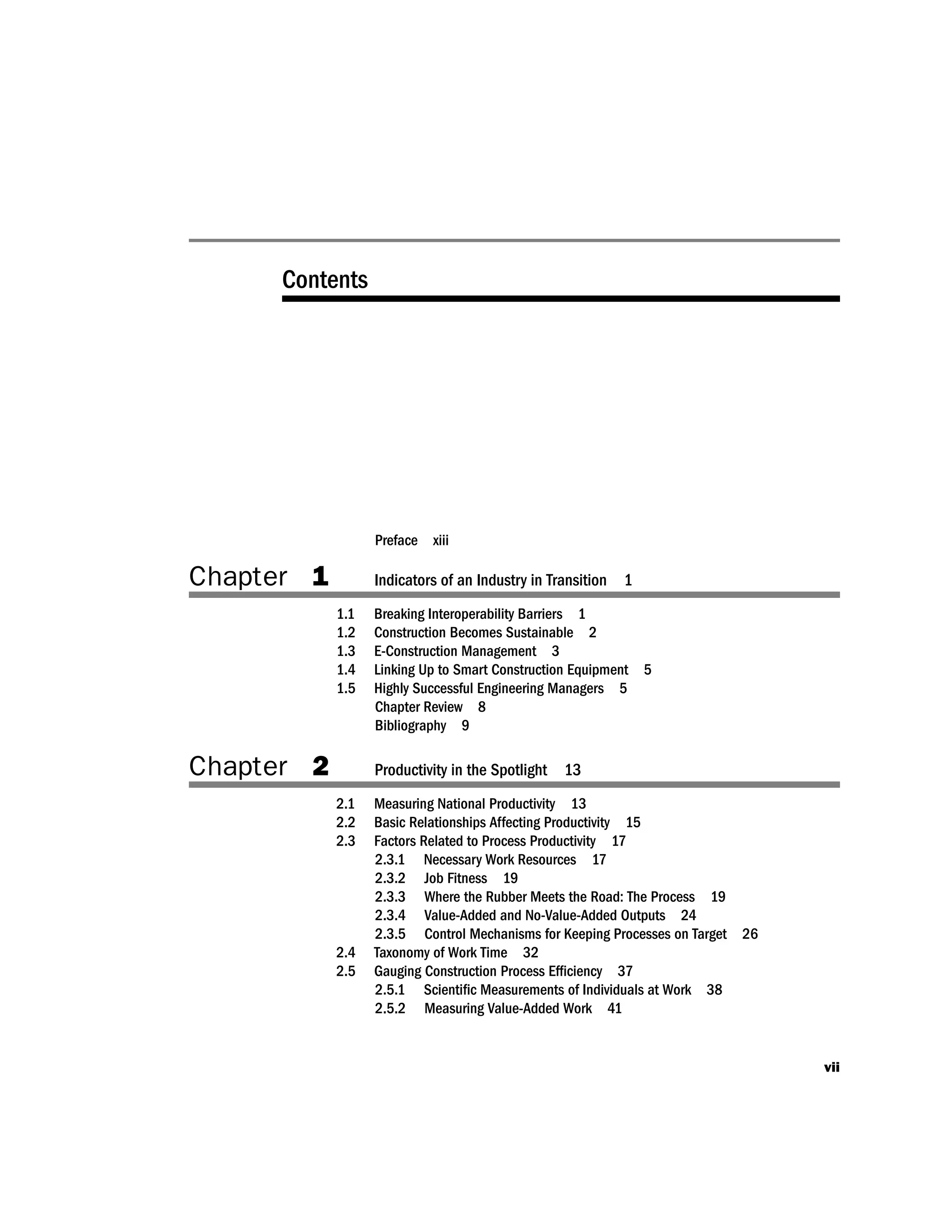
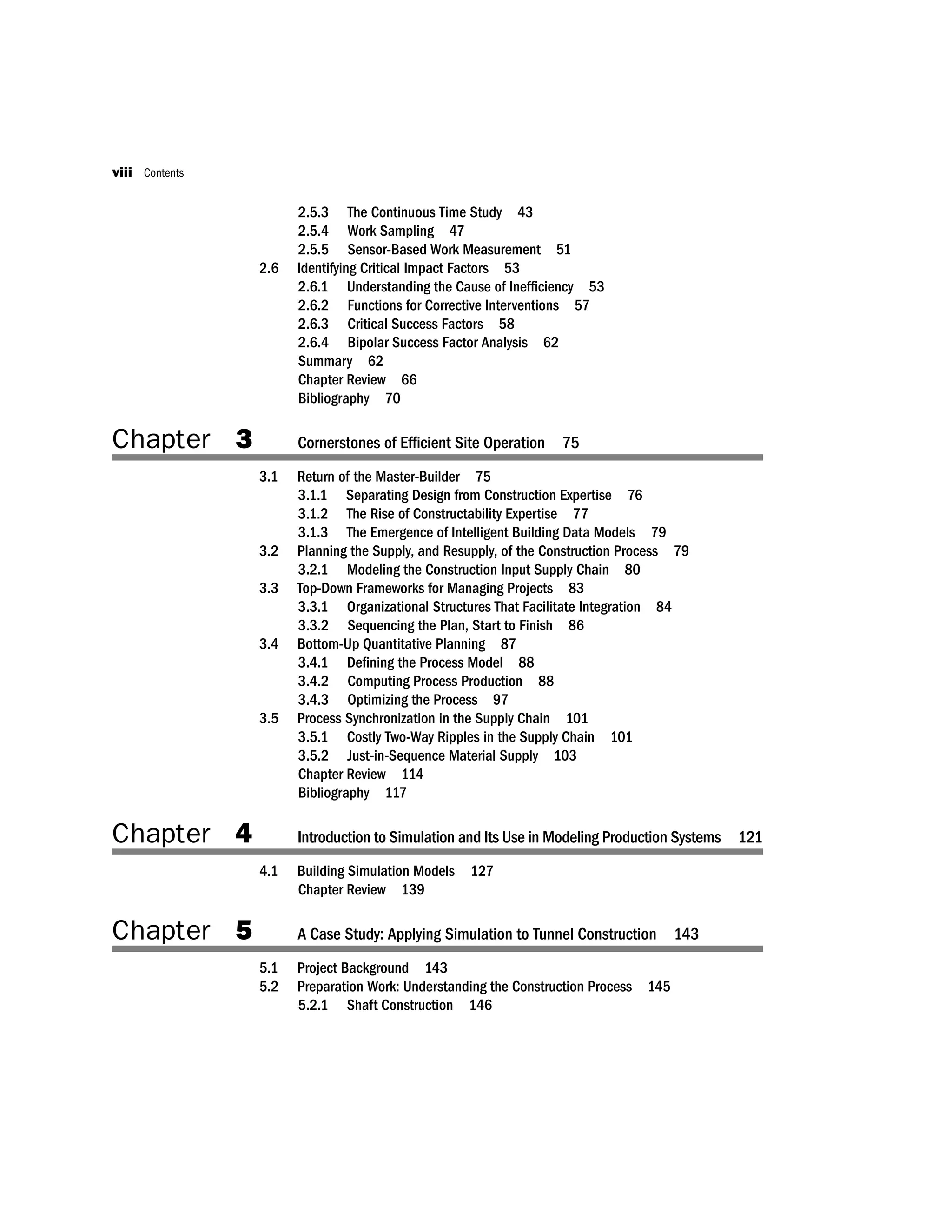


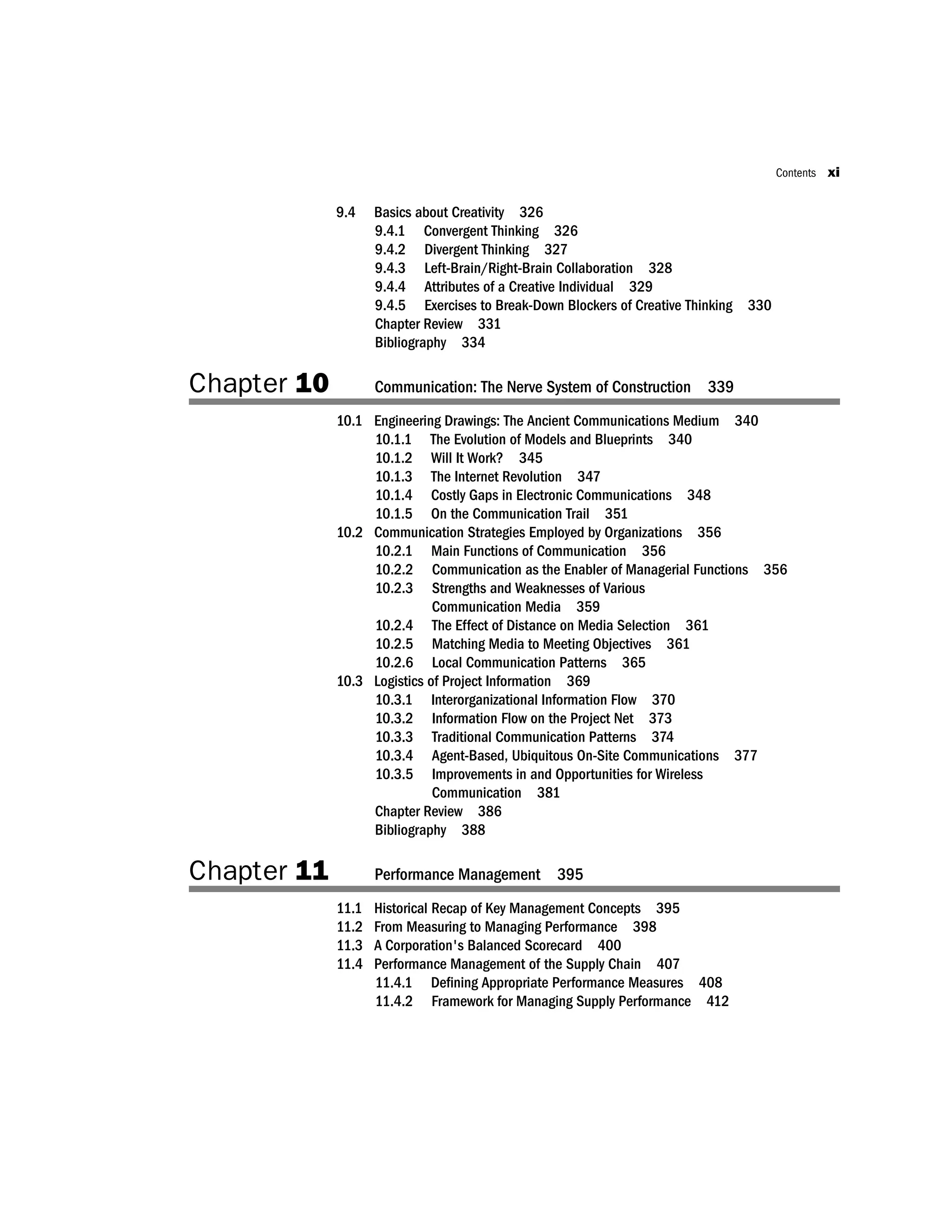








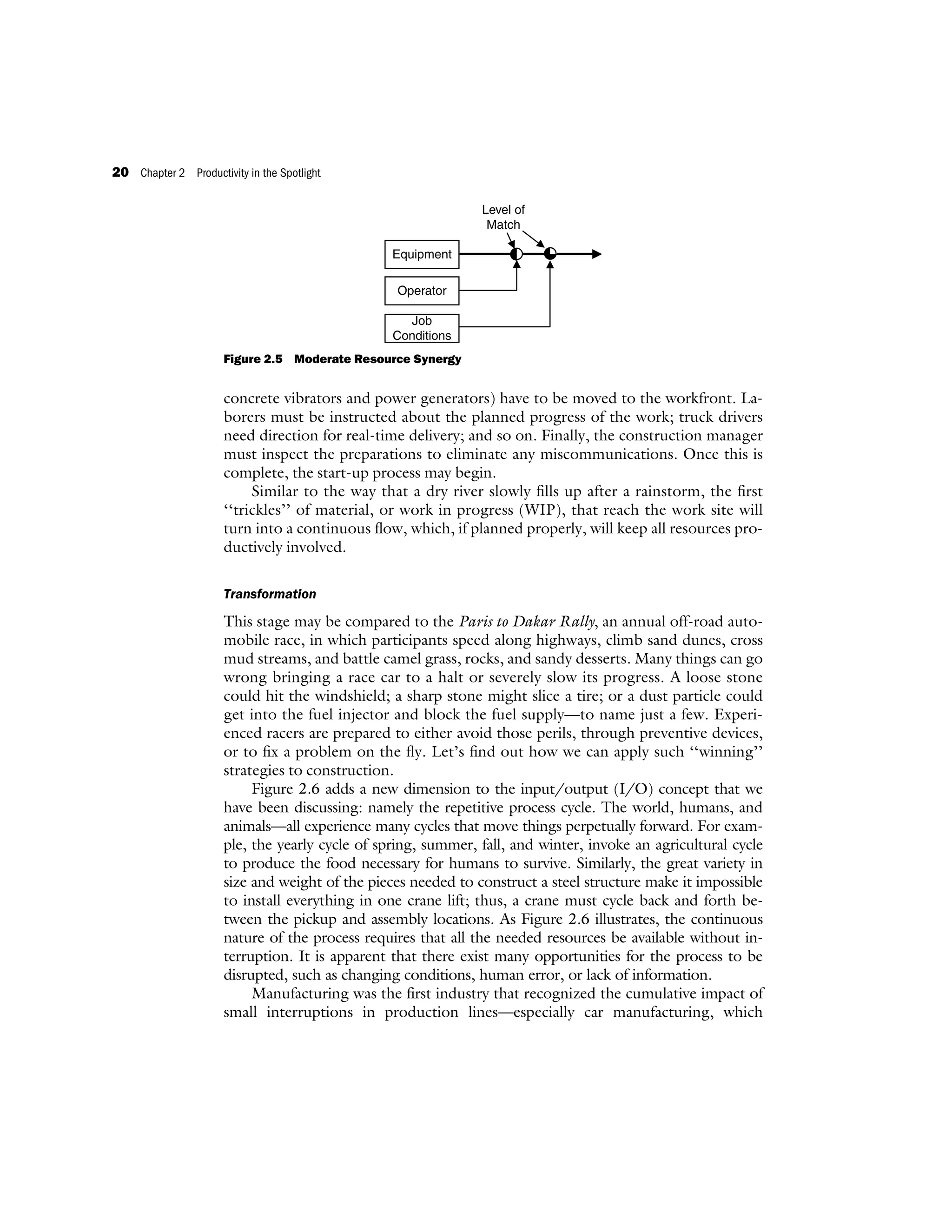










![Waterzeilen, z. n. o. mv. (veroud.) — Zeilen, die men achter tegen het
schip, tot onder aan het water toe, hing, by het lensen.
Web, z. n. v. — De scheepstimmerlieden noemen een W— scheren,
wanneer zy de latten spijkeren, naar welke het beloop van een schip
moet gemaakt worden.
Wederzee, z. n. v. — ’t Zelfde als Tegenzee. Zie ald.
Weekbak, z. n. m. (veroud.) — Groote bak op den overloop, waar de
varsebalie zijn water in draagt en de spijs in weekt en reinigt.
Weer, z. n. m. — Zie Rietpark.
Weêr of weer, (naarmate men dit woord als samentrekking van weder—
wat niemand ooit zegt—of van geweer, van weeren [waaien],
beschouwt) z. n. o. Luchtgesteldheid. Zwaar W— (storm.) Gemeen W
—, roezemoezig, buiig W—. Het W— klaart op. Het W— is bestendig.
Helder W—. Dik W—. Donker W—. Handzaam W—. Deinzig W—.
NoodW—.
Spreekwijze: Mooi W— en geen haring (het doet zich goed voor; maar
men heeft er niet aan).
W— en wind dienen hem (het gaat hem naar wensch).
Mooi W— spelen (den boel er doorbrassen).
’s Avonds rood, morgen goed W— aan boord.
Weêr aan of weêr an, t. w. Goed zoo: toe maar:
Weer an: riepen de Matroosen:
’t Is een man, oft Mouringh waer,
zingt Huyghens in zijn Scheepvaart op ’t overlijden van Prins
Maurits.](https://image.slidesharecdn.com/2153809-250605110151-31bee846/75/Managing-Performance-In-Construction-Leonhard-E-Bernold-Simaan-M-Abourizkauth-66-2048.jpg)