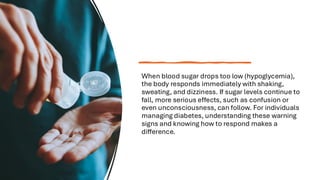
When blood sugar drops too low (hypoglycemia), the body responds immediately with shaking, sweating, and dizziness. If sugar levels continue to fall, more serious effects, such as confusion or even unconsciousness, can follow.
When blood sugardrops too low (hypoglycemia),
the body responds immediately with shaking,
sweating, and dizziness. If sugar levels continue to
fall, more serious effects, such as confusion or
even unconsciousness, can follow. For individuals
managing diabetes, understanding these warning
signs and knowing how to respond makes a
difference.
3.
Several factors cantrigger hypoglycemia, including taking too much insulin, skipping
meals, prolonged physical activity, or drinking alcohol on an empty stomach. The best
way to counteract a sudden sugar drop is by following the 15-15 rule - consuming 15
grams of fast-acting carbohydrates, waiting 15 minutes, and rechecking the blood
sugar. If the level is still too low, individuals should repeat the process. In more severe
situations or when eating is impossible, glucagon, a hormone rapidly raising blood
sugar, can become a lifesaving treatment. Medical professionals can prescribe it as
an injection or nasal spray during emergencies, and patients cannot consume
carbohydrates.
4.
Prevention comes downto consistency. Regular
meals, mindful medication management, and
frequent glucose monitoring help maintain sugar
stability. Equally important is ensuring family
members or caregivers know how to help when
needed. Moreover, a proactive approach can
help individuals with hypoglycemia.