ALPHY MARIA THOMAS
           MACFAST
         TIRUVALLA
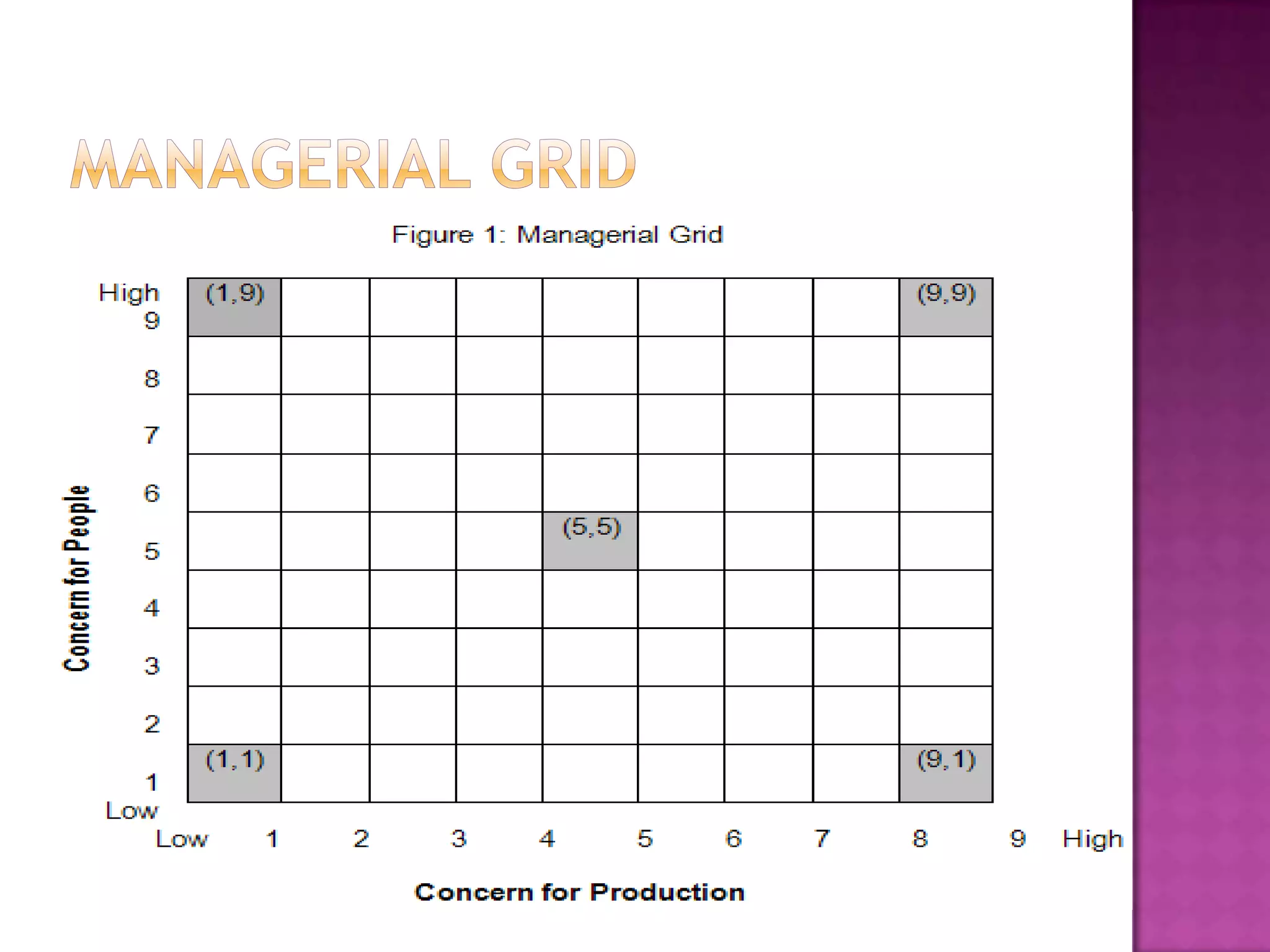
The managerial grid model is a
behavioral leadership model
developed by Robert R. Blake and
Jane Mouton in 1964. This model
identified five different leadership
styles based on the concern for
people in y-axis and the concern for
production in x-axis.
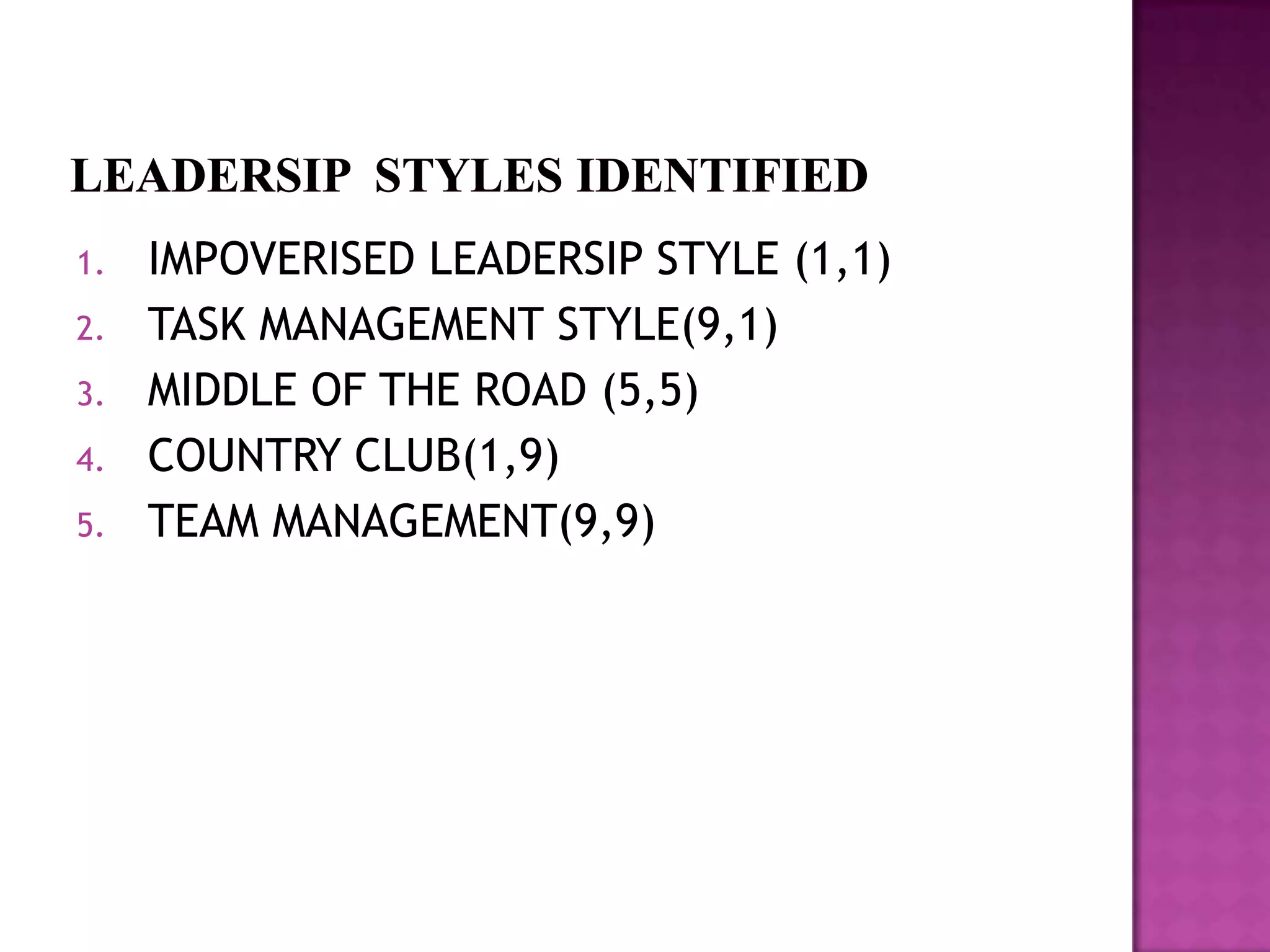
1.   IMPOVERISED LEADERSIP STYLE (1,1)
2.   TASK MANAGEMENT STYLE(9,1)
3.   MIDDLE OF THE ROAD (5,5)
4.   COUNTRY CLUB(1,9)
5.   TEAM MANAGEMENT(9,9)
Managers with this approach are low on both
the dimensions and exercise minimum effort
to get the work done from subordinates. The
leader has low concern for employee
satisfaction and work deadlines. As a result
disharmony and disorganization prevail
within the organization. The leaders are
termed ineffective wherein their action is
merely aimed at preserving job and seniority.
Here leaders are more concerned about
production and have less concern for people.
The style is based on Theory X of McGregor.
The leader believes that efficiency can result
only through proper organization of work
systems and through elimination of people
wherever possible. Such a style can
definitely increase the output of organization
in short run but due to the strict policies and
procedures, high labor turnover is inevitable.
This is basically a compromising style
wherein the leader tries to maintain a
balance between goals of company and the
needs of people. The leader does not push
the boundaries of achievement resulting in
average performance for organization. Here
neither employee nor production needs are
fully met.
This is a collegial style characterized by low
task and high people orientation where the
leader gives thoughtful attention to the
needs of people thus providing them with a
friendly and comfortable environment. The
leader feels that such a treatment with
employees will lead to self-motivation and
will find people working hard on their own.
However, a low focus on tasks can hamper
production and lead to questionable results.
Characterized by high people and task focus,
the style is based on the Theory Y of
McGregor and has been termed as most
effective style according to Blake and
Mouton. The leader feels that empowerment,
commitment, trust, and respect are the key
elements in creating a team atmosphere
which will automatically result in high
employee satisfaction and production.
THANKYOU

Managerial grid

  • 1.
    ALPHY MARIA THOMAS MACFAST TIRUVALLA
  • 2.
    The managerial gridmodel is a behavioral leadership model developed by Robert R. Blake and Jane Mouton in 1964. This model identified five different leadership styles based on the concern for people in y-axis and the concern for production in x-axis.
  • 4.
    1. IMPOVERISED LEADERSIP STYLE (1,1) 2. TASK MANAGEMENT STYLE(9,1) 3. MIDDLE OF THE ROAD (5,5) 4. COUNTRY CLUB(1,9) 5. TEAM MANAGEMENT(9,9)
  • 5.
    Managers with thisapproach are low on both the dimensions and exercise minimum effort to get the work done from subordinates. The leader has low concern for employee satisfaction and work deadlines. As a result disharmony and disorganization prevail within the organization. The leaders are termed ineffective wherein their action is merely aimed at preserving job and seniority.
  • 6.
    Here leaders aremore concerned about production and have less concern for people. The style is based on Theory X of McGregor. The leader believes that efficiency can result only through proper organization of work systems and through elimination of people wherever possible. Such a style can definitely increase the output of organization in short run but due to the strict policies and procedures, high labor turnover is inevitable.
  • 7.
    This is basicallya compromising style wherein the leader tries to maintain a balance between goals of company and the needs of people. The leader does not push the boundaries of achievement resulting in average performance for organization. Here neither employee nor production needs are fully met.
  • 8.
    This is acollegial style characterized by low task and high people orientation where the leader gives thoughtful attention to the needs of people thus providing them with a friendly and comfortable environment. The leader feels that such a treatment with employees will lead to self-motivation and will find people working hard on their own. However, a low focus on tasks can hamper production and lead to questionable results.
  • 9.
    Characterized by highpeople and task focus, the style is based on the Theory Y of McGregor and has been termed as most effective style according to Blake and Mouton. The leader feels that empowerment, commitment, trust, and respect are the key elements in creating a team atmosphere which will automatically result in high employee satisfaction and production.
  • 10.