MBA – 1st Semester
Management Concepts and Organisational Behaviour
Dr.P.G.Arul
Professor
Department of International Business
Pondicherry Univesity
Puducherry - 605014
Pondicherry University
Directorate of Distance Education
Unit: I
• Syllabus:
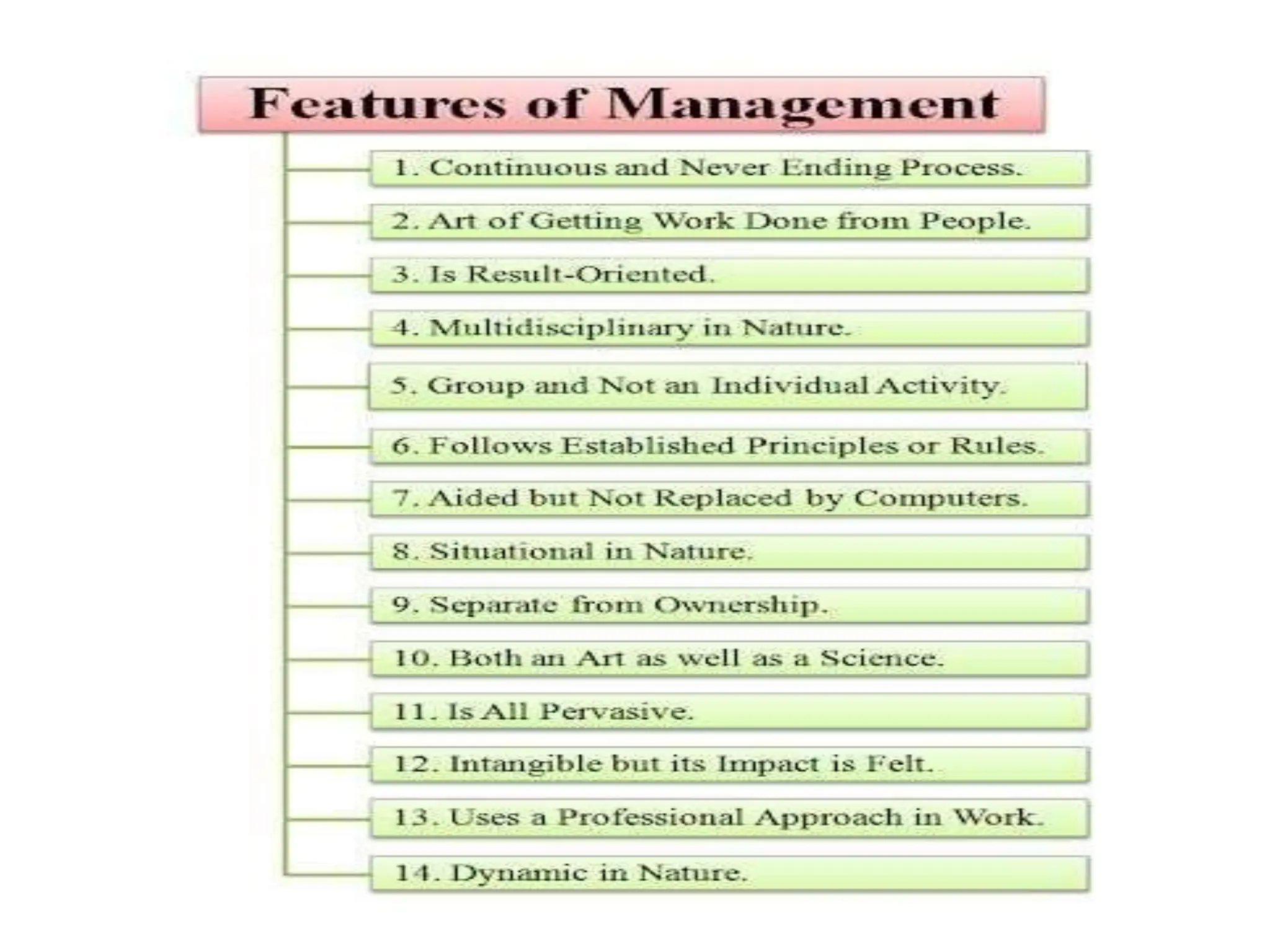
• Nature of Management - Social Responsibilities of
Business - Manager and Environment Levels
• in Management - Managerial Skills - Planning - Steps in
Planning Process - Scope and
• Limitations - Short Range and Long Range Planning -
Flexibility in Planning Characteristics of a
• sound Plan - Management by Objectives (MBO) -
Policies and Strategies - Scope and
• Formulation - Decision Making - Techniques and
Processes
Concepts of Management
• Body of Language
• Management Tools
• Separate Discipline
• Specialisation
• Code of Conduct
• Professional Association
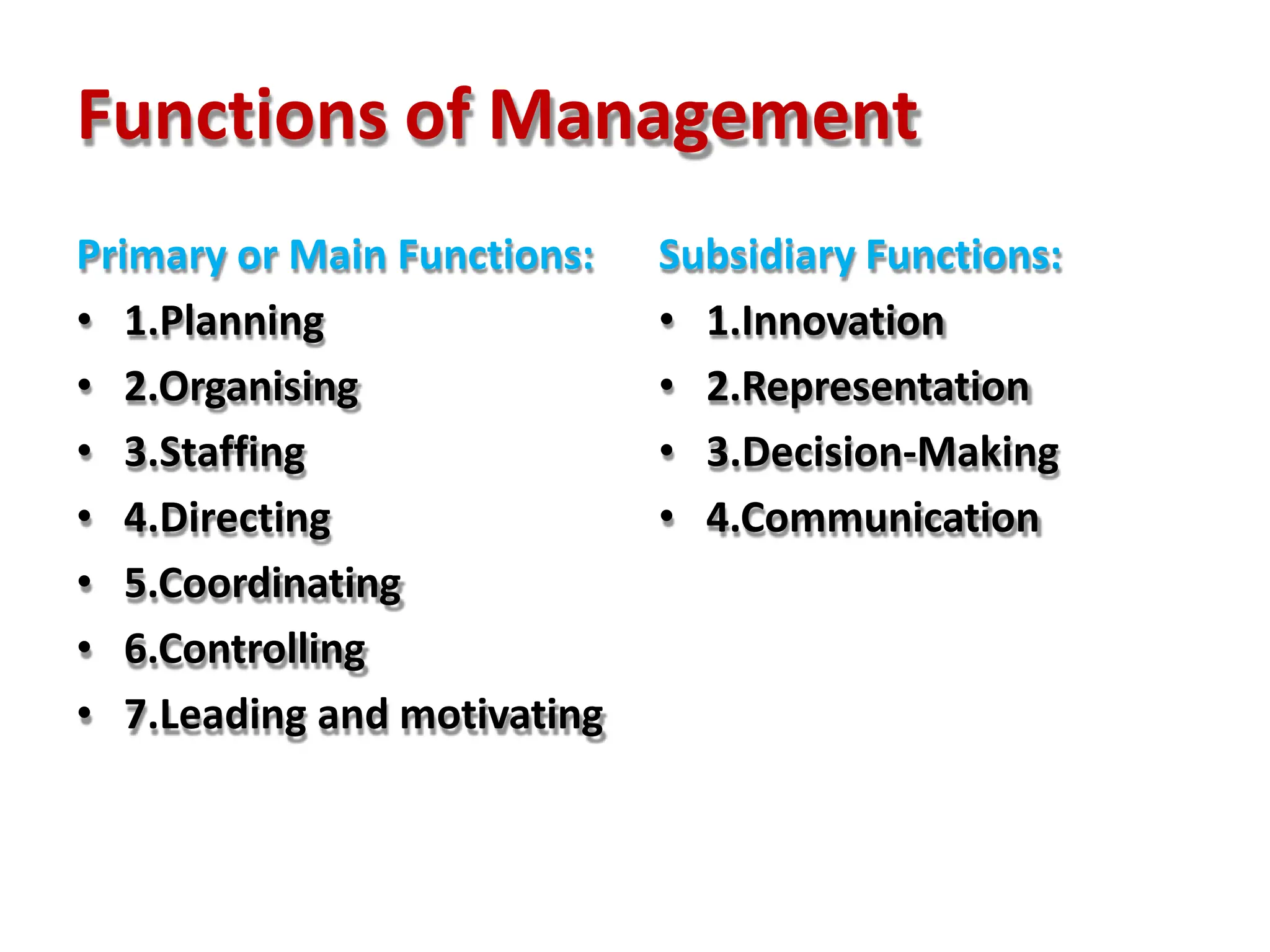
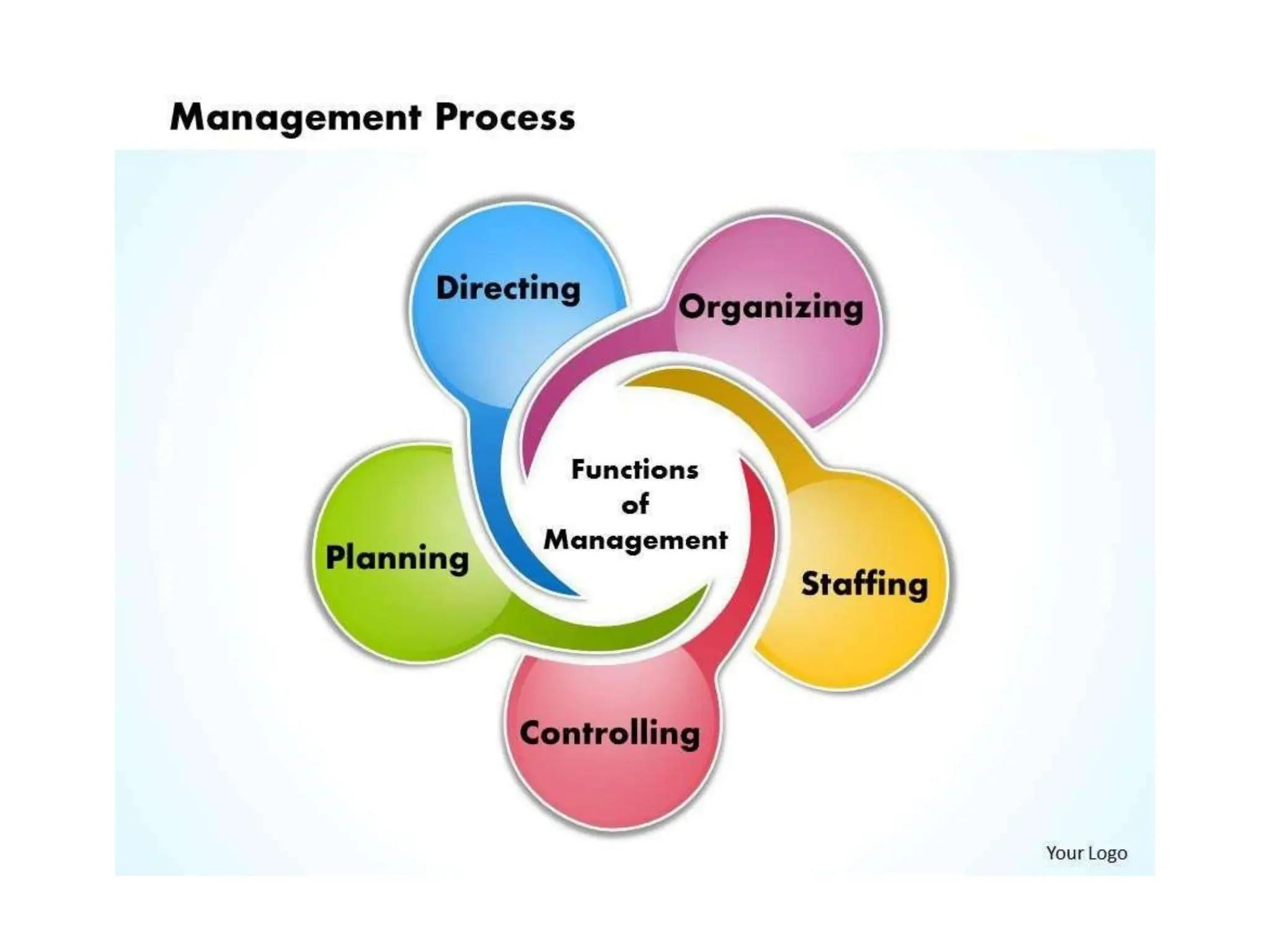
Functions of Management
• 1.Planning
• 2.Organising
• 3.Staffing
• 4.Directing
• 5.Coordinating
• 6.Controlling
• 7.Leading and motivating
Primary or Main Functions: Subsidiary Functions:
• 1.Innovation
• 2.Representation
• 3.Decision-Making
• 4.Communication
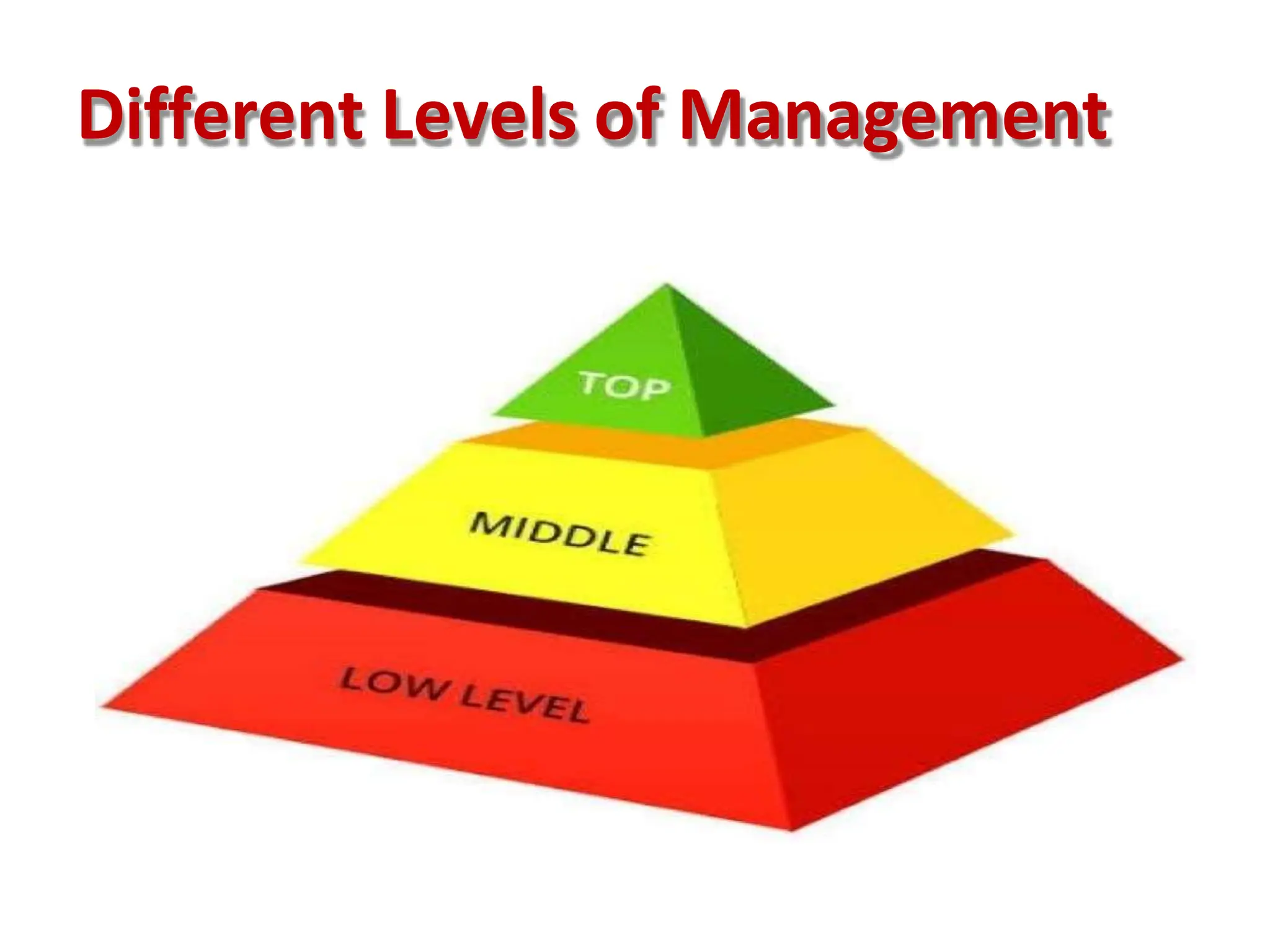
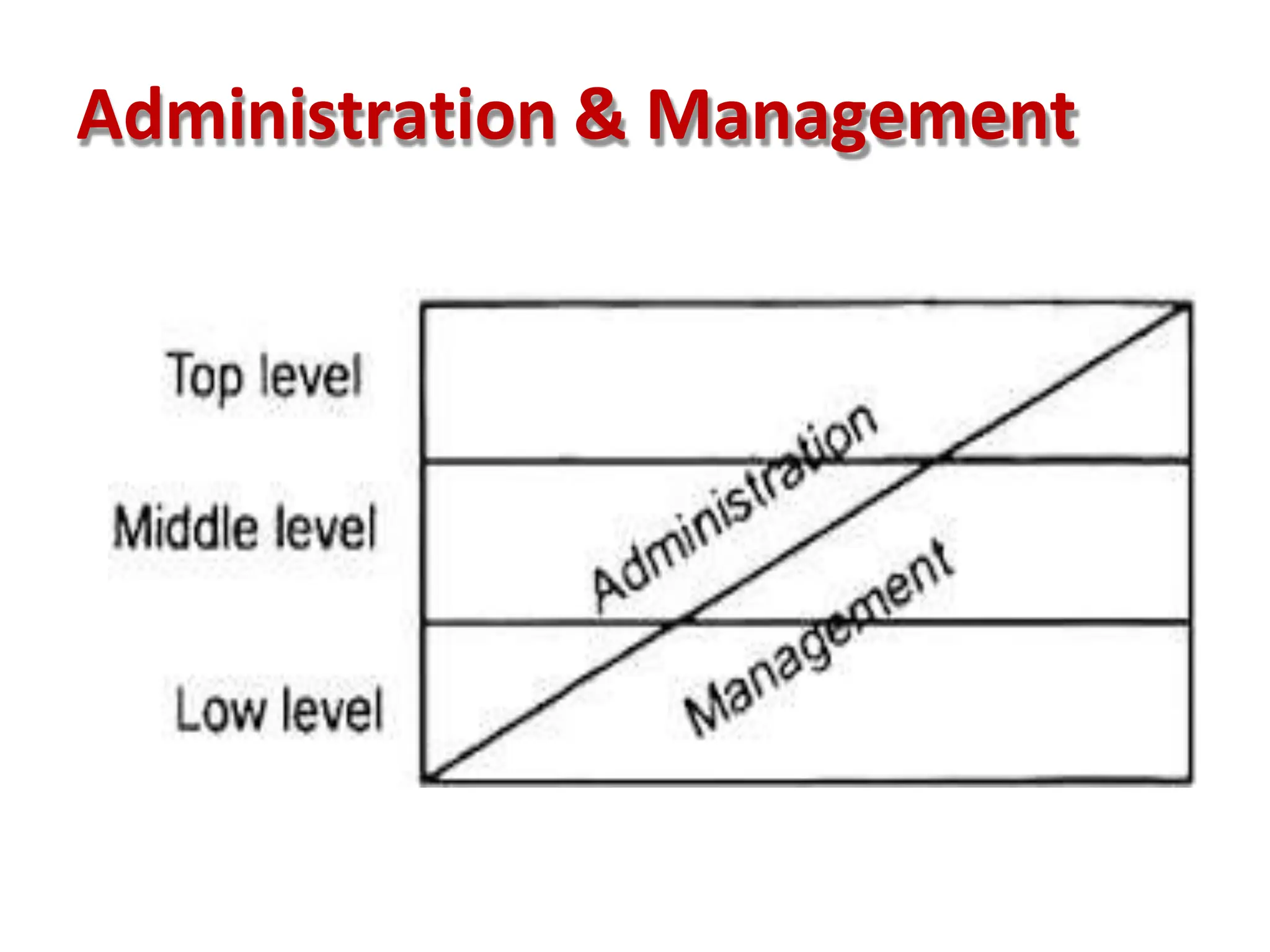
Different Levels of Management
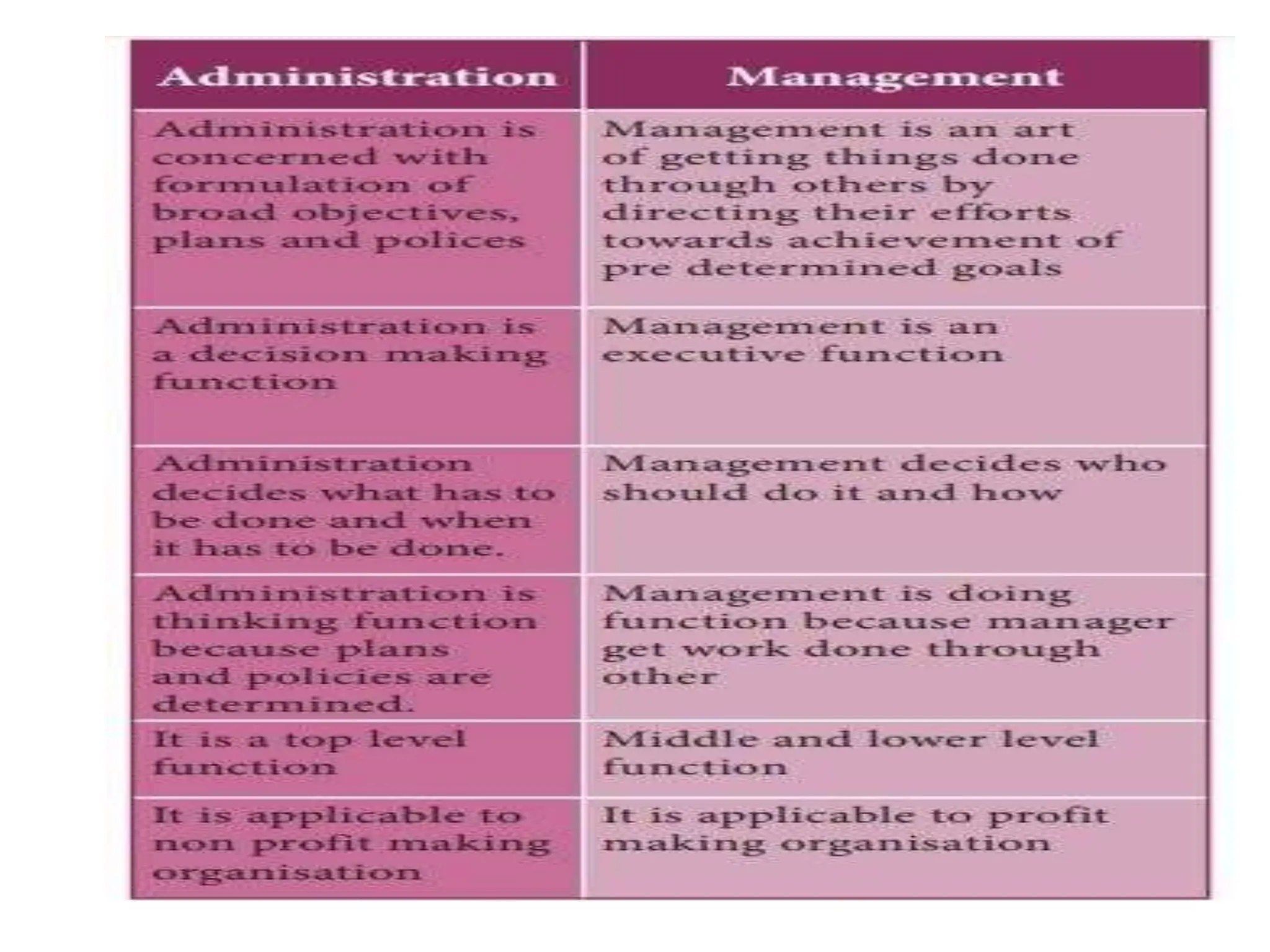
Administration & Management
Functions of a Manager
Presentation – 2
Social Responsibilities of Business
Dr.P.G.Arul
Professor
Department of International
Business
Pondicherry University
Puducherry - 605014
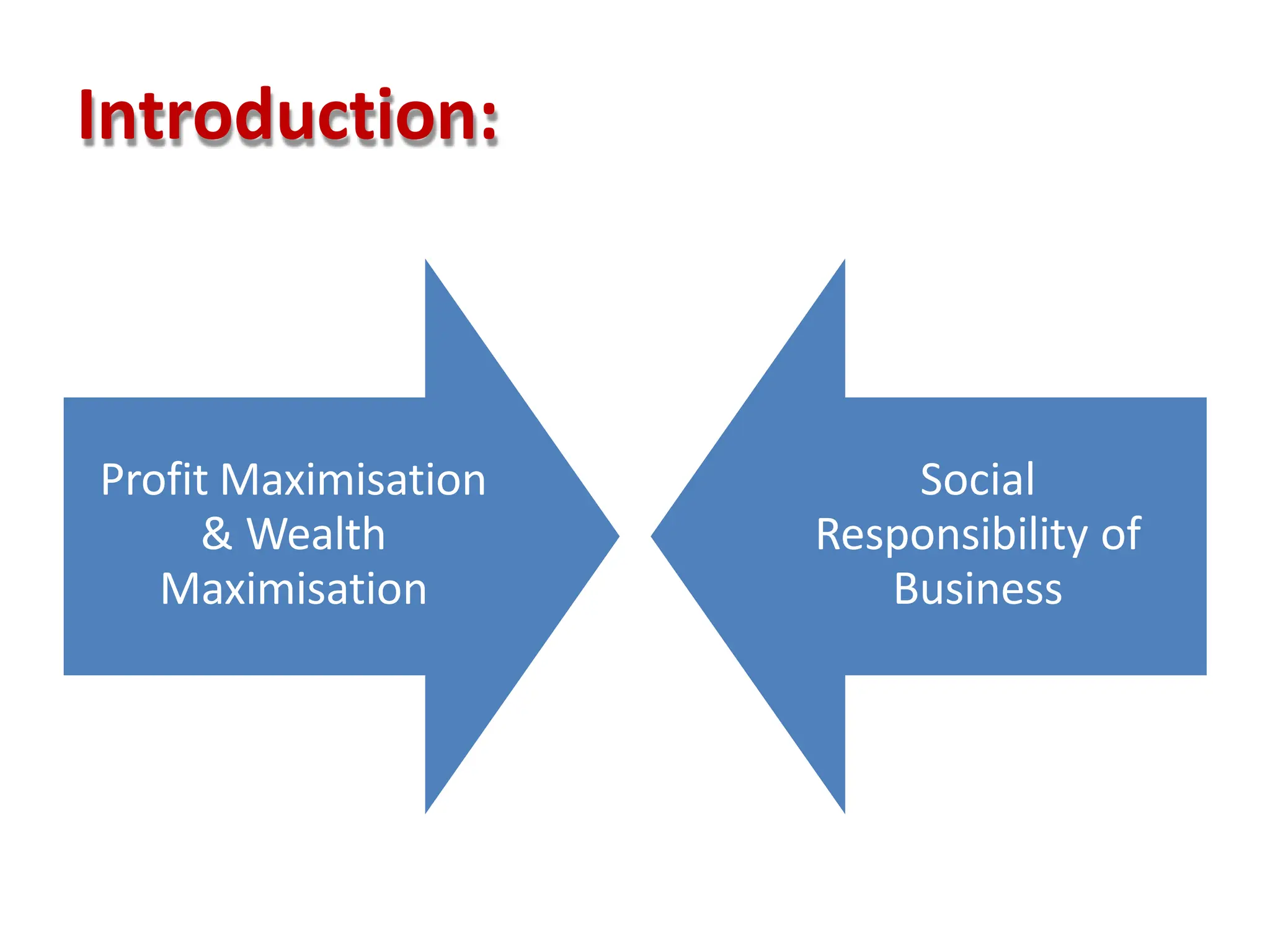
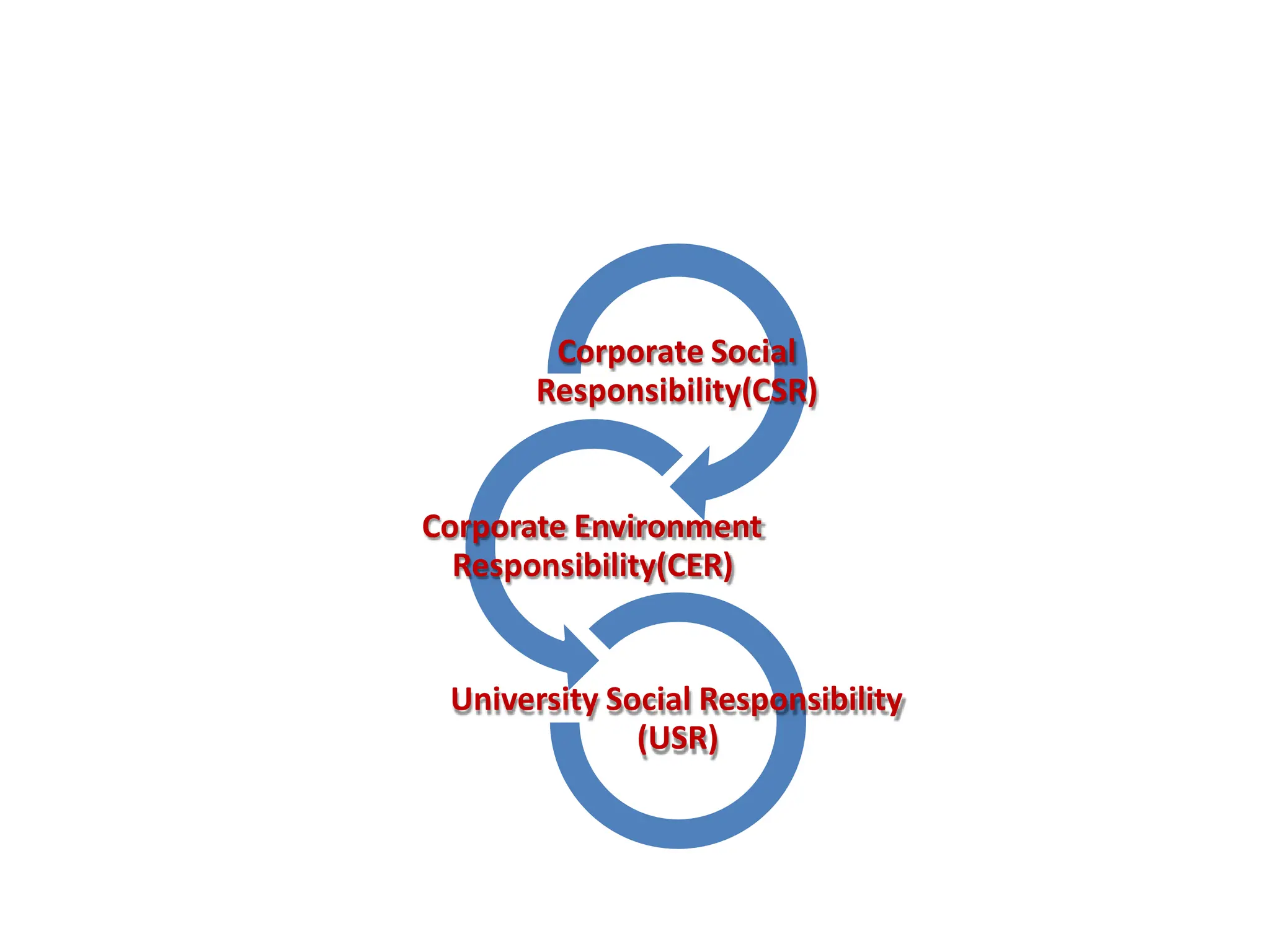
Introduction:
Profit Maximisation
& Wealth
Maximisation
Social
Responsibility of
Business
Corporate Social
Responsibility(CSR)
Corporate Environment
Responsibility(CER)
University Social Responsibility
(USR)
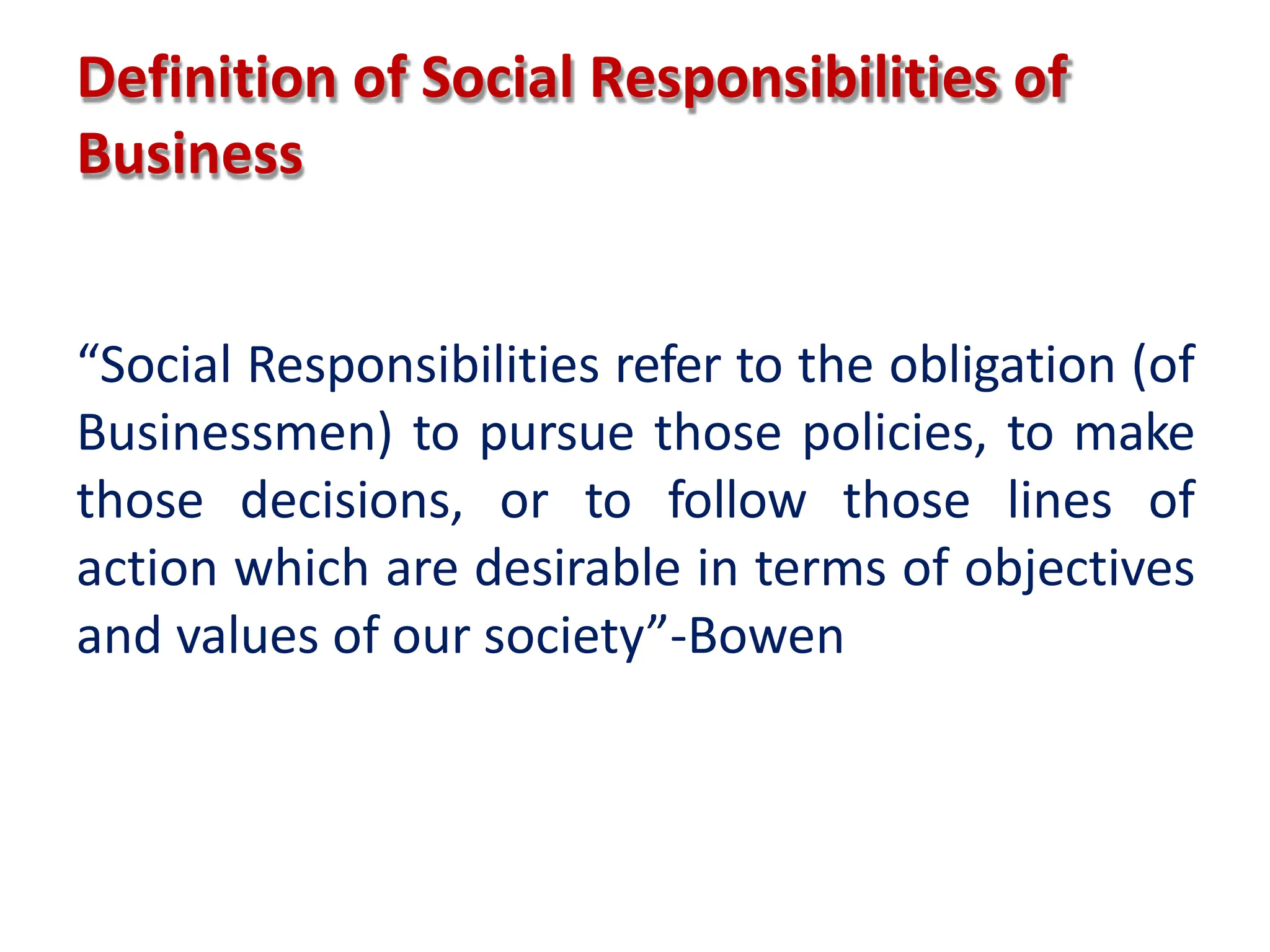
Definition of Social Responsibilities of
Business
“Social Responsibilities refer to the obligation (of
Businessmen) to pursue those policies, to make
those decisions, or to follow those lines of
action which are desirable in terms of objectives
and values of our society”-Bowen
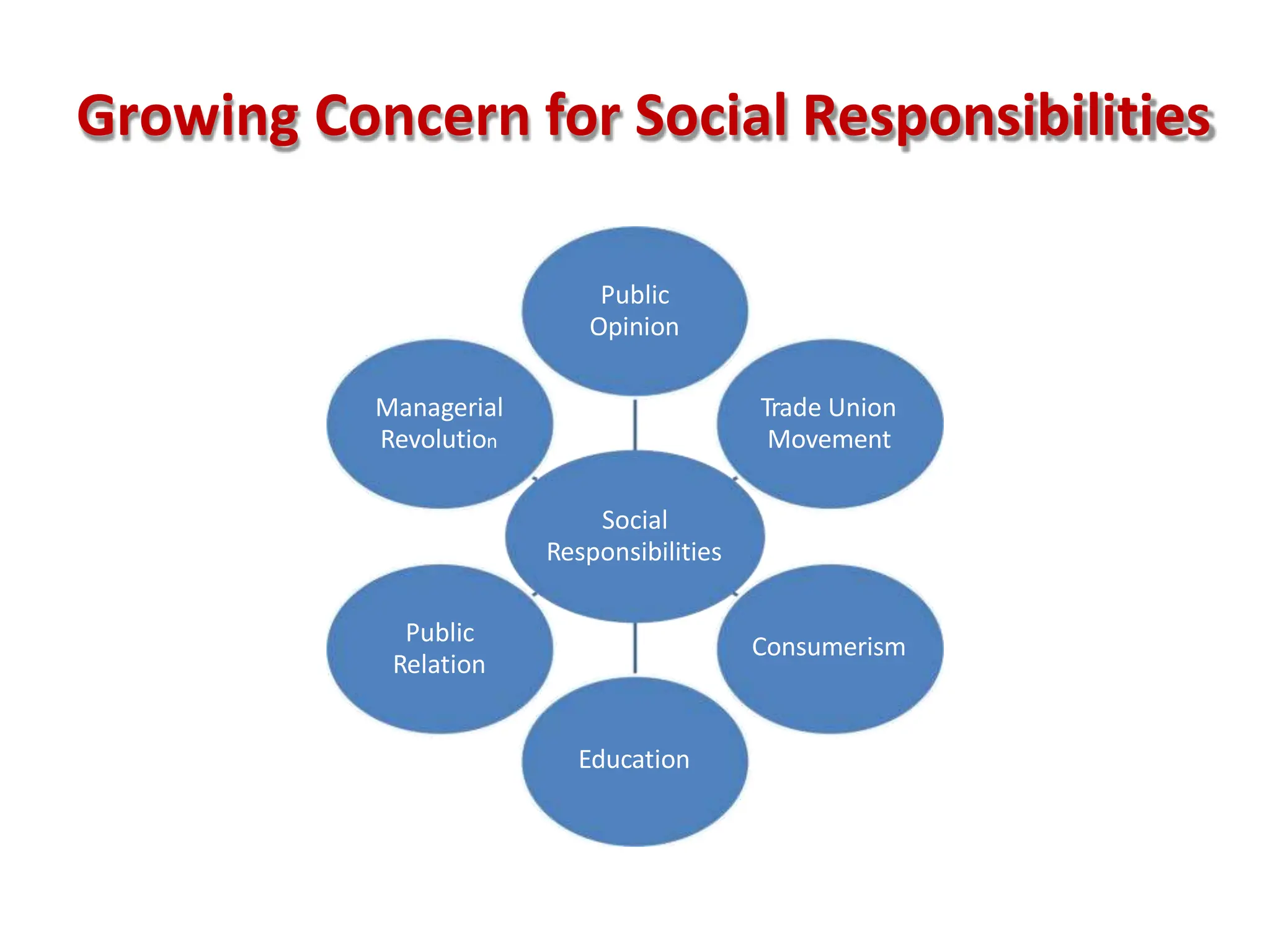
Growing Concern for Social Responsibilities
Social
Responsibilities
Public
Opinion
Trade Union
Movement
Consumerism
Education
Public
Relation
Managerial
Revolution
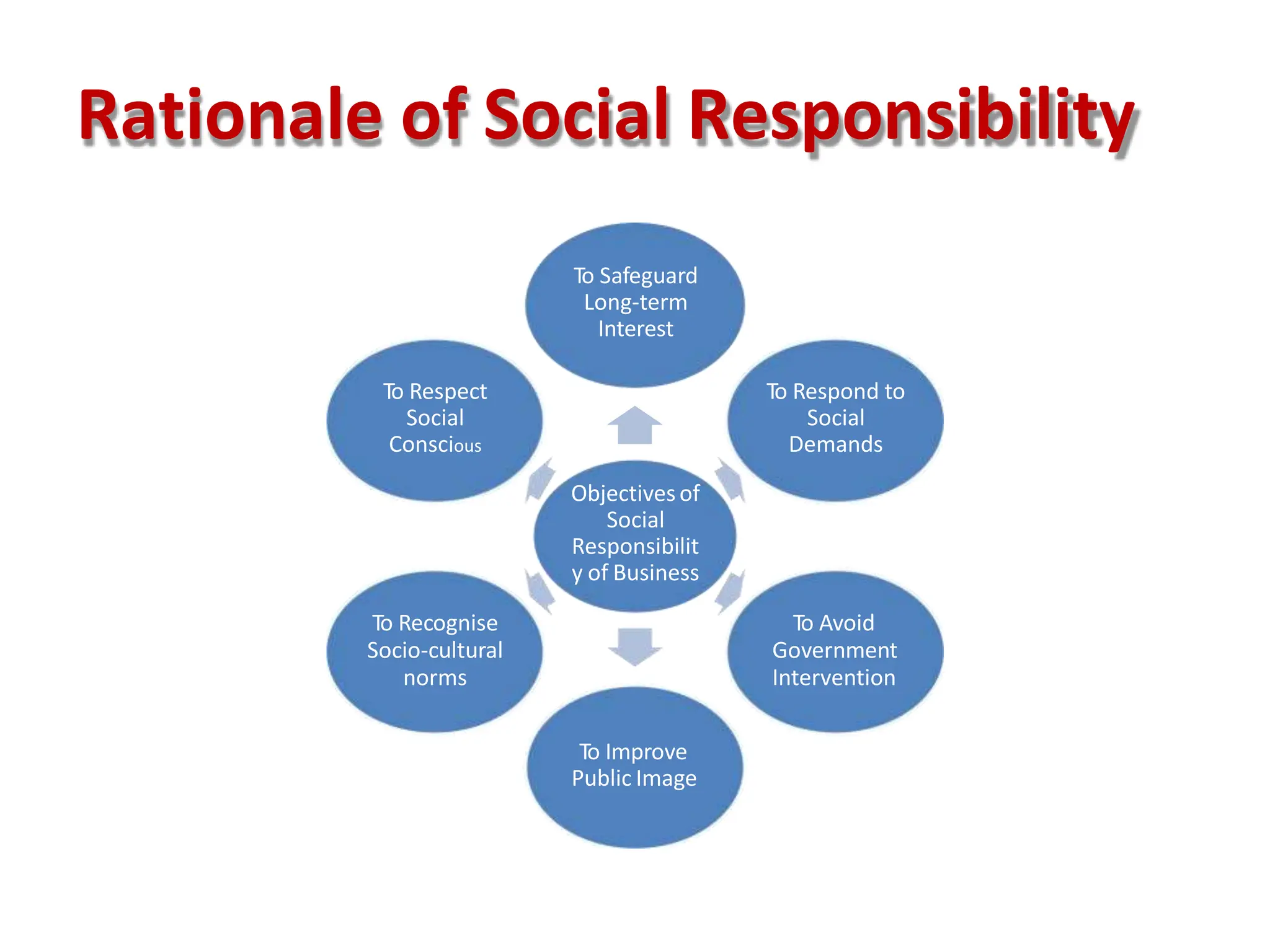
Rationale of Social Responsibility
Objectivesof
Social
Responsibilit
y of Business
To Safeguard
Long-term
Interest
To Respond to
Social
Demands
To Avoid
Government
Intervention
To Improve
Public Image
To Recognise
Socio-cultural
norms
To Respect
Social
Conscious
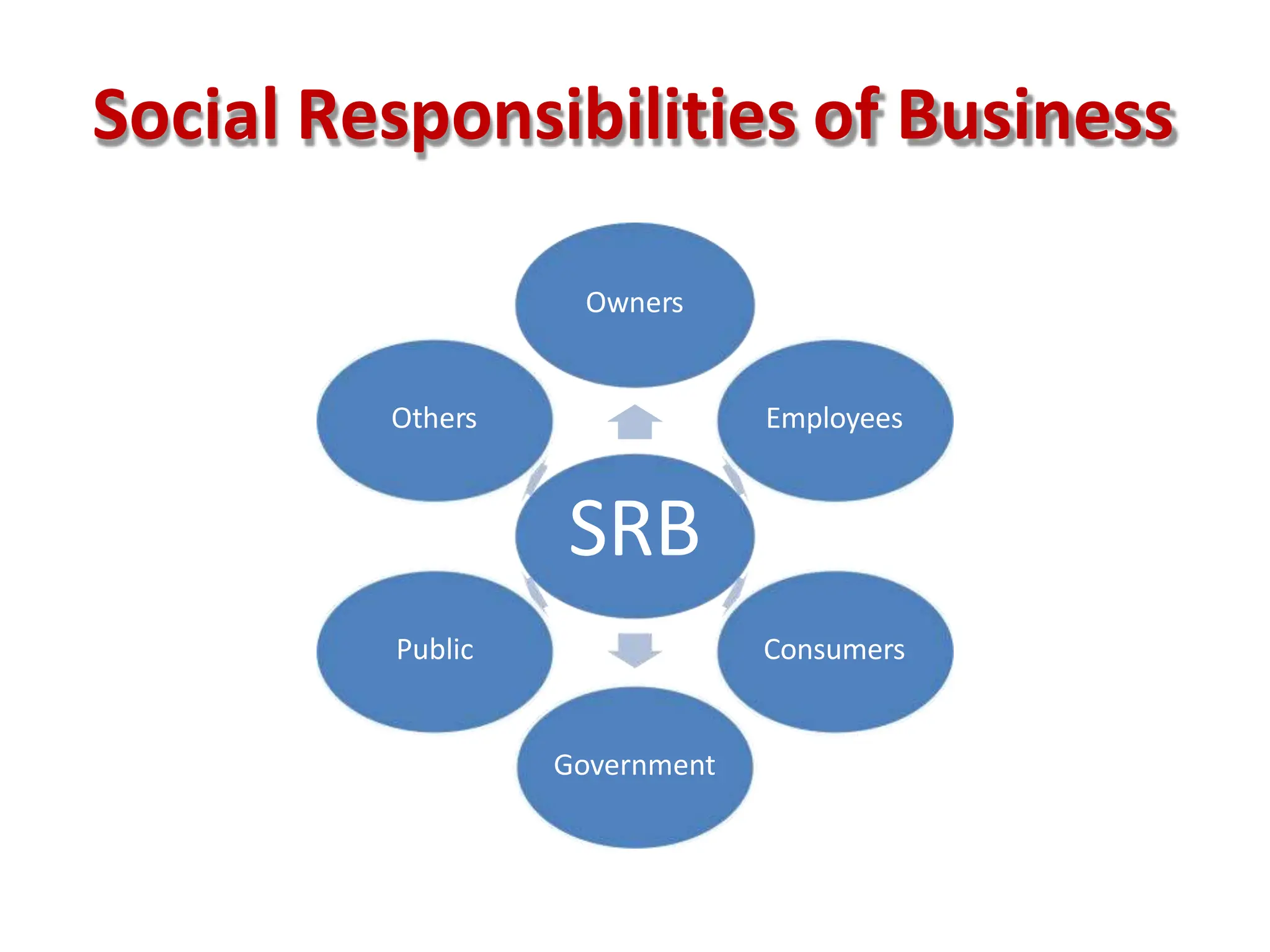
Social Responsibilities of Business
SRB
Owners
Employees
Consumers
Government
Public
Others
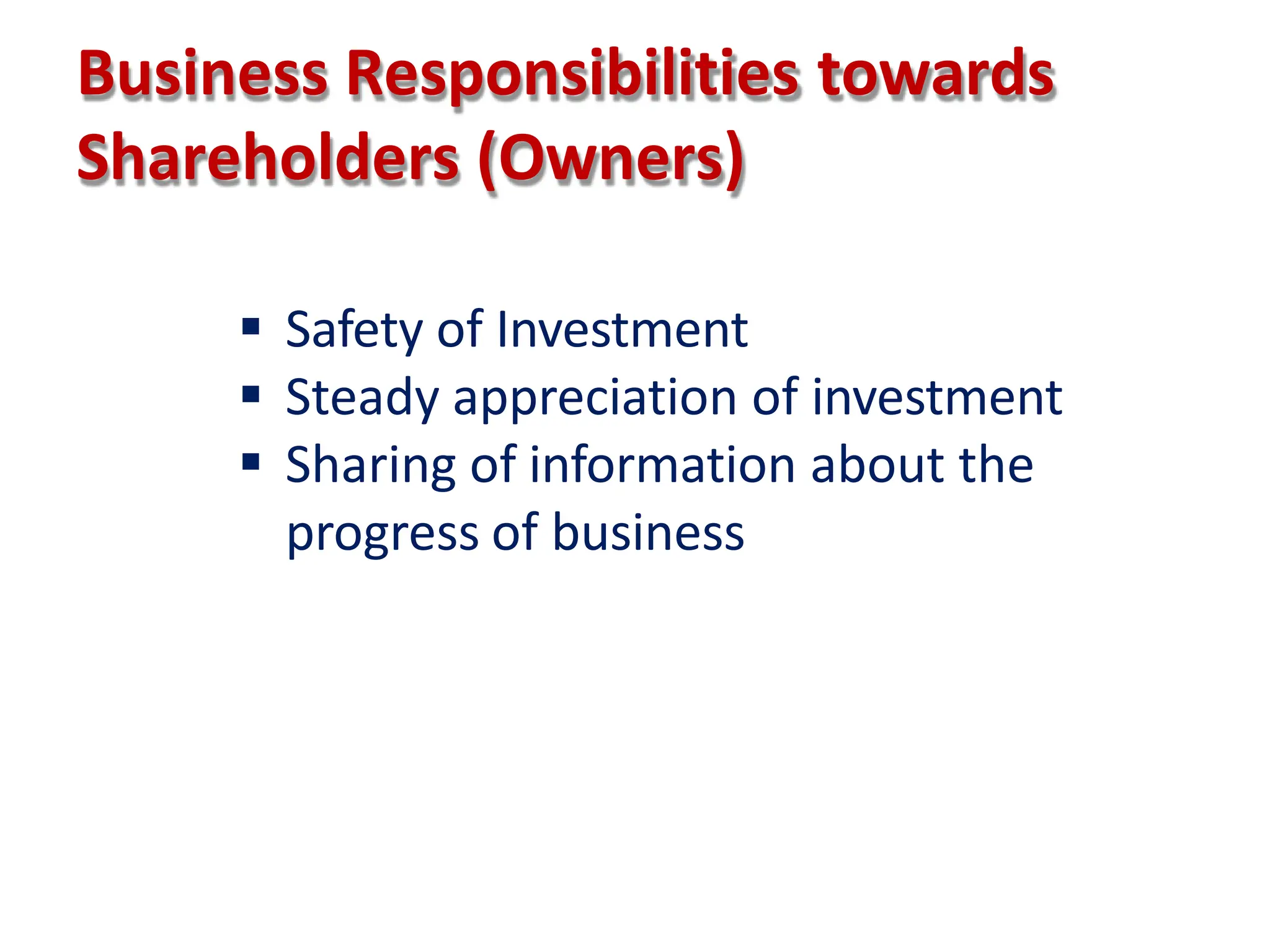
Business Responsibilities towards
Shareholders (Owners)
 Safety of Investment
 Steady appreciation of investment
 Sharing of information about the
progress of business
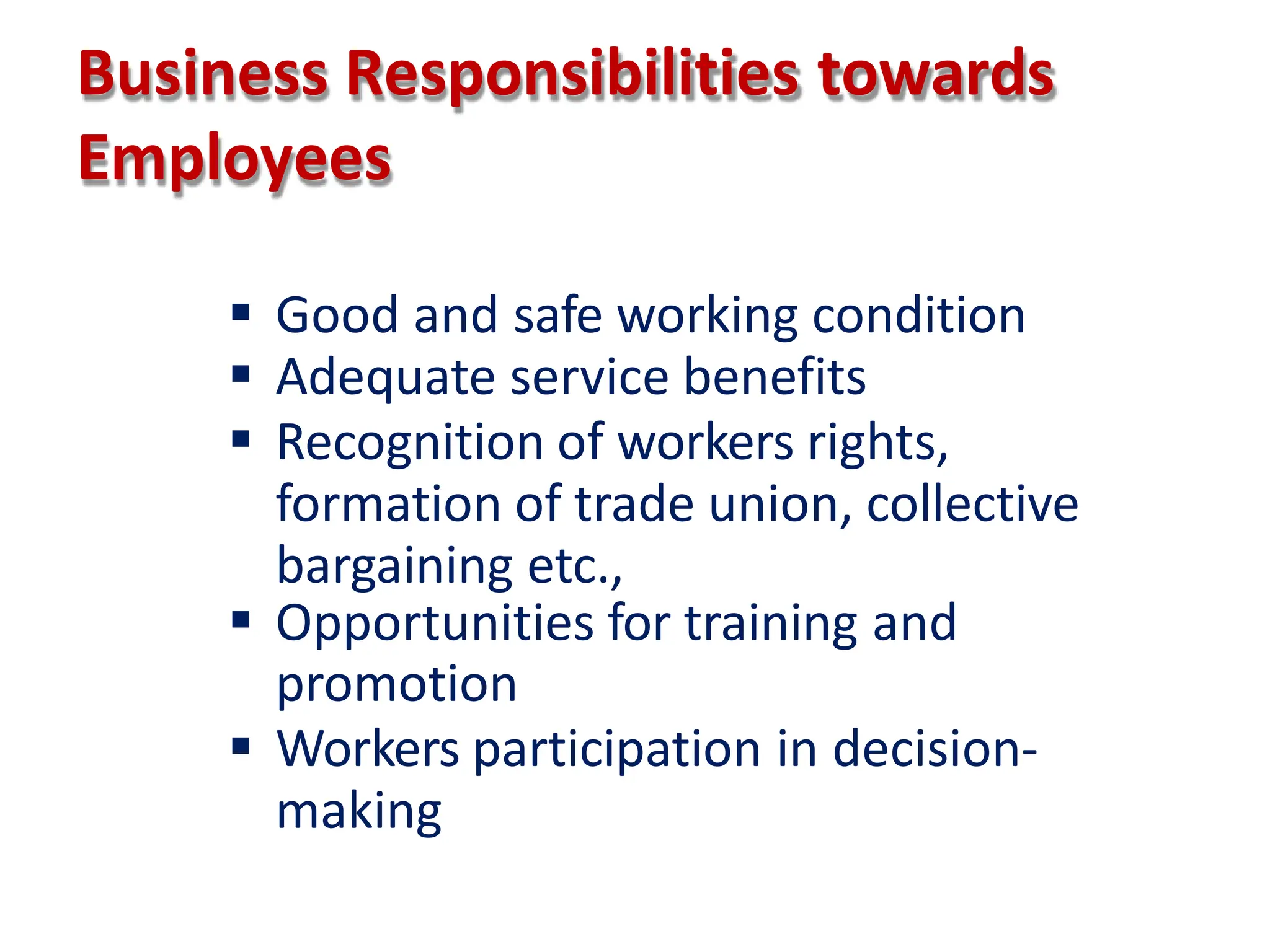
Business Responsibilities towards
Employees
 Good and safe working condition
 Adequate service benefits
 Recognition of workers rights,
formation of trade union, collective
bargaining etc.,
 Opportunities for training and
promotion
 Workers participation in decision-
making
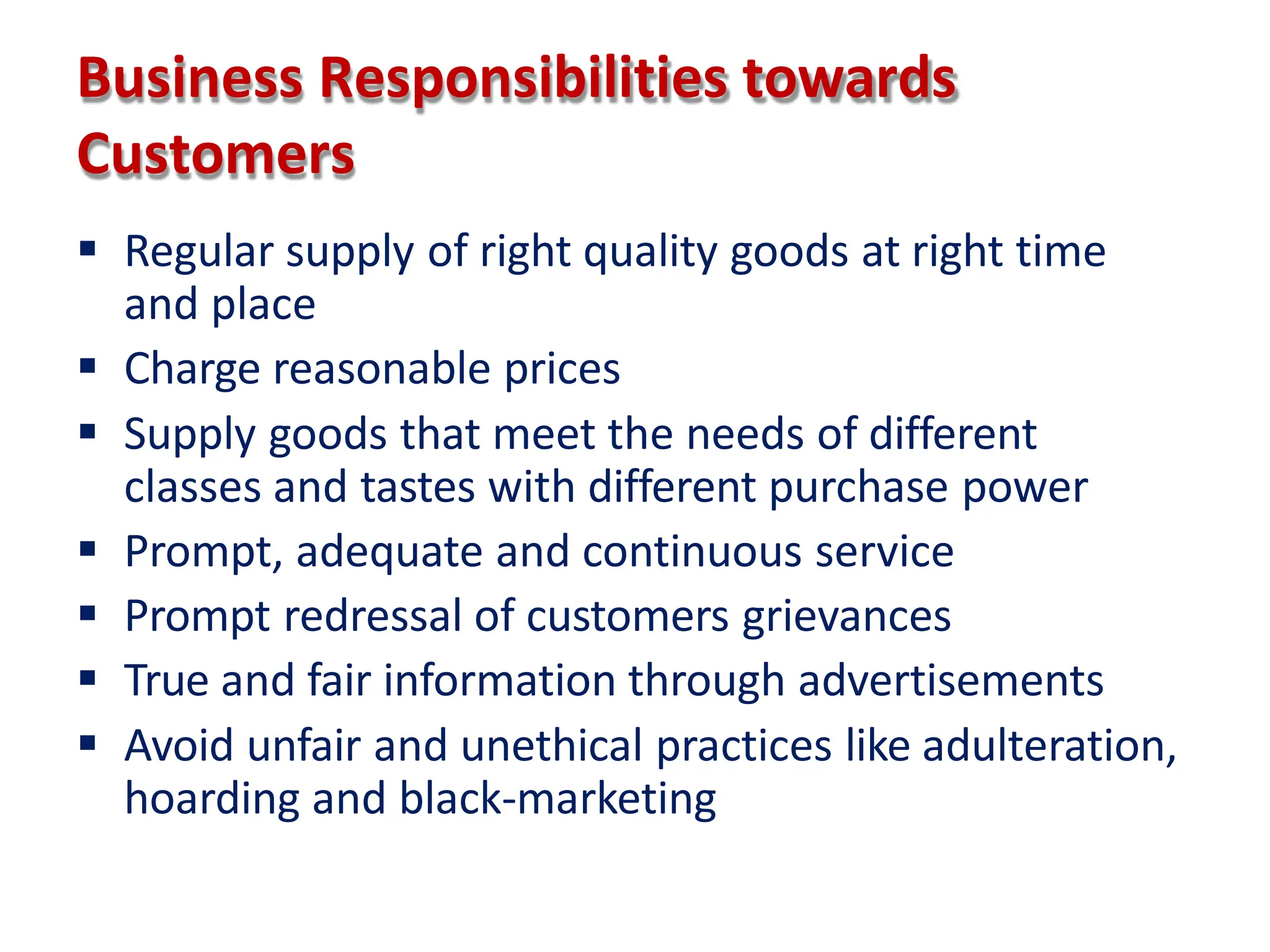
Business Responsibilities towards
Customers
 Regular supply of right quality goods at right time
and place
 Charge reasonable prices
 Supply goods that meet the needs of different
classes and tastes with different purchase power
 Prompt, adequate and continuous service
 Prompt redressal of customers grievances
 True and fair information through advertisements
 Avoid unfair and unethical practices like adulteration,
hoarding and black-marketing
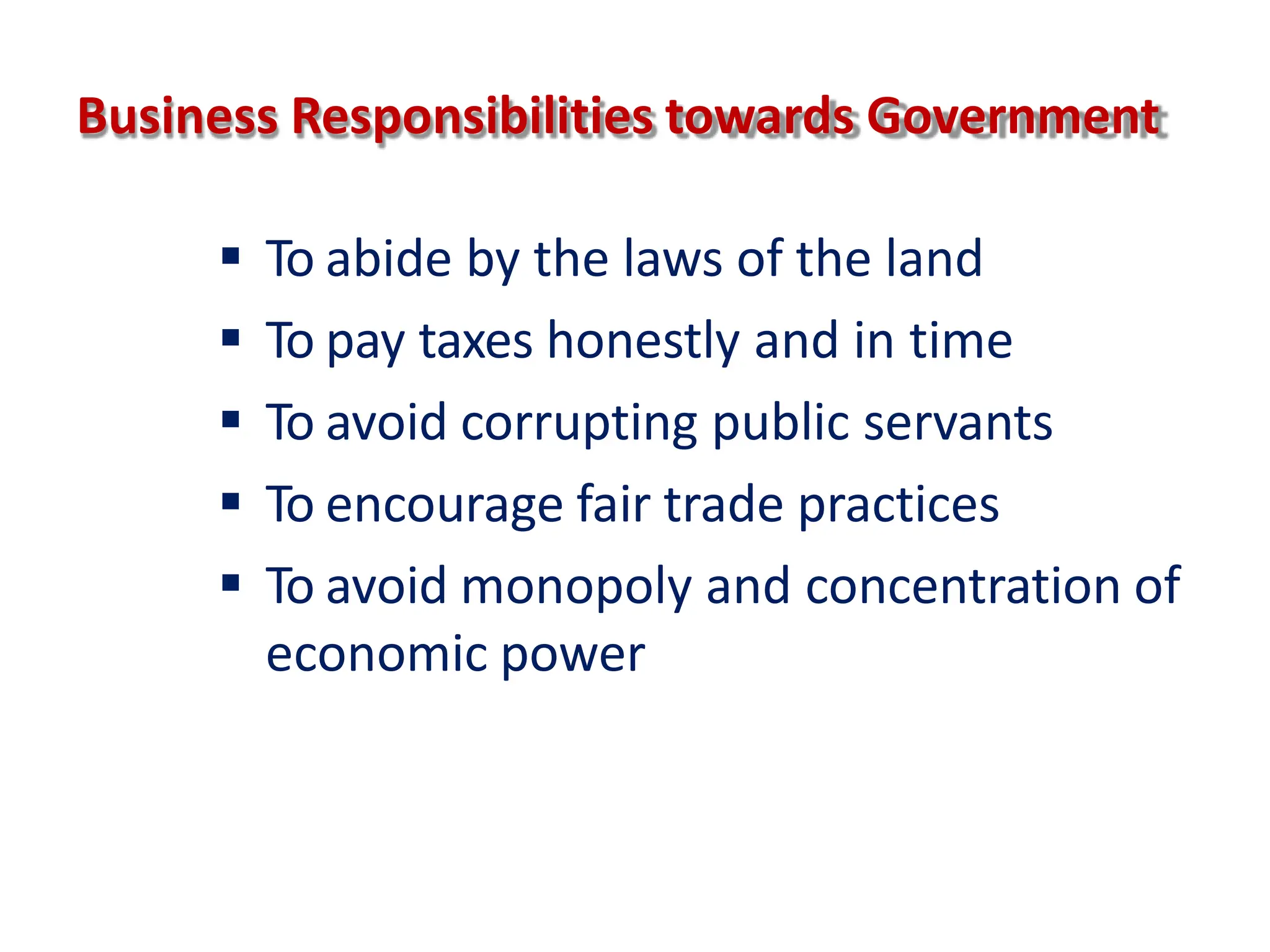
Business Responsibilities towards Government
 To abide by the laws of the land
 To pay taxes honestly and in time
 To avoid corrupting public servants
 To encourage fair trade practices
 To avoid monopoly and concentration of
economic power
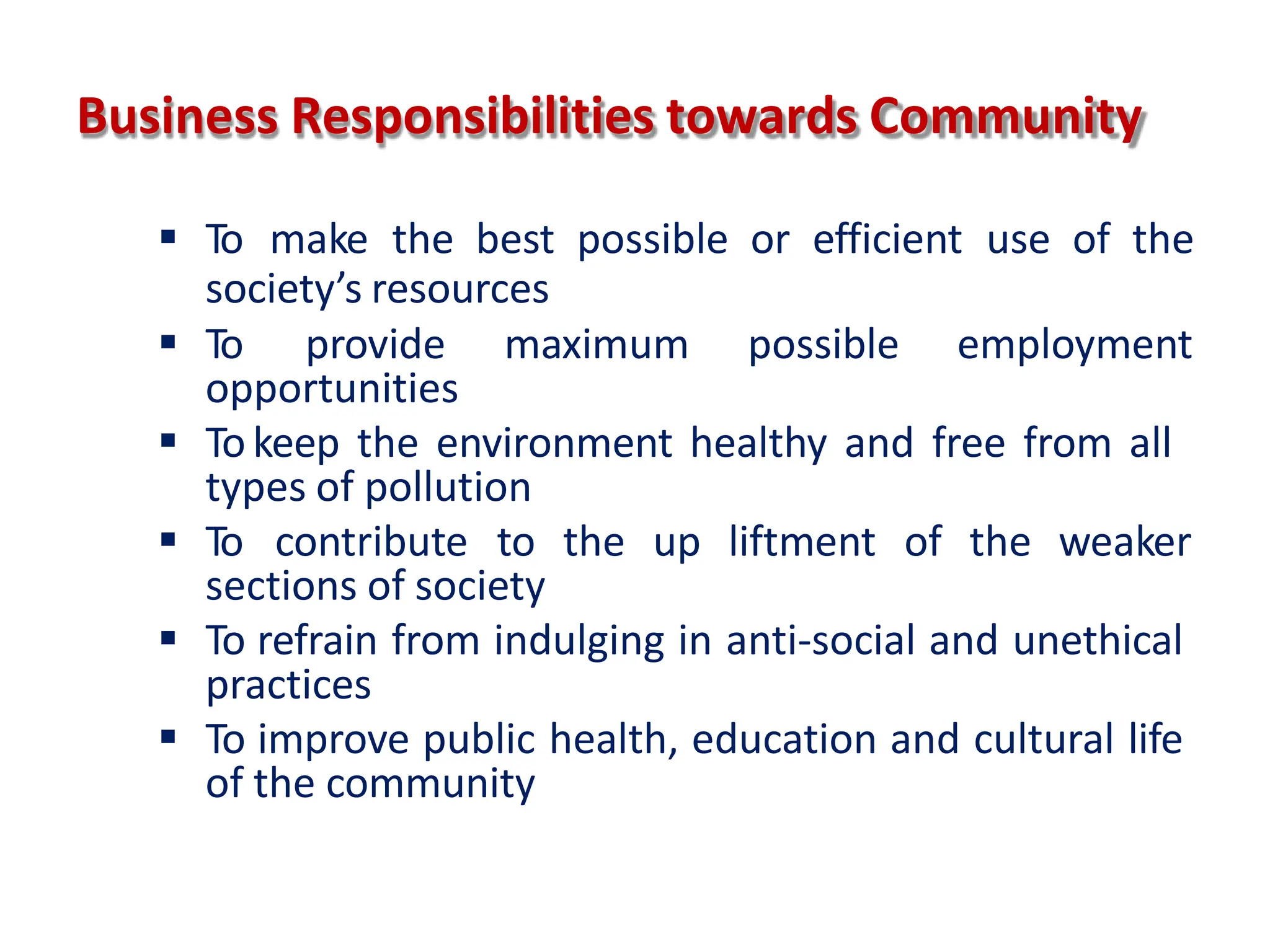
Business Responsibilities towards Community
 To make the best possible or efficient use of the
society’s resources
 To provide maximum possible employment
opportunities
 To keep the environment healthy and free from all
types of pollution
 To contribute to the up liftment of the weaker
sections of society
 To refrain from indulging in anti-social and unethical
practices
 To improve public health, education and cultural life
of the community
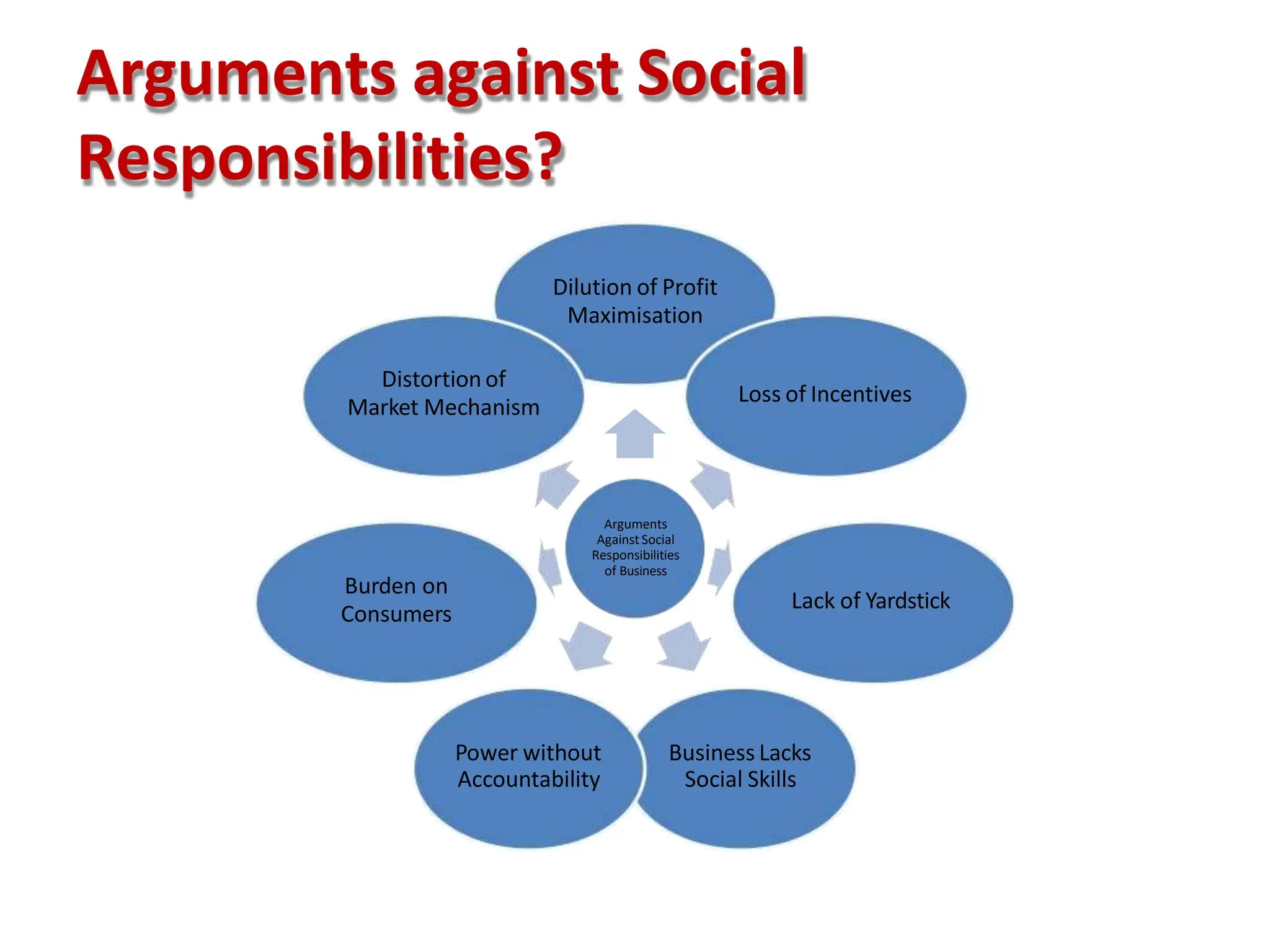
Arguments against Social
Responsibilities?
Arguments
Against Social
Responsibilities
of Business
Dilution of Profit
Maximisation
Loss of Incentives
Lack of Yardstick
Business Lacks
Social Skills
Power without
Accountability
Burden on
Consumers
Distortion of
Market Mechanism
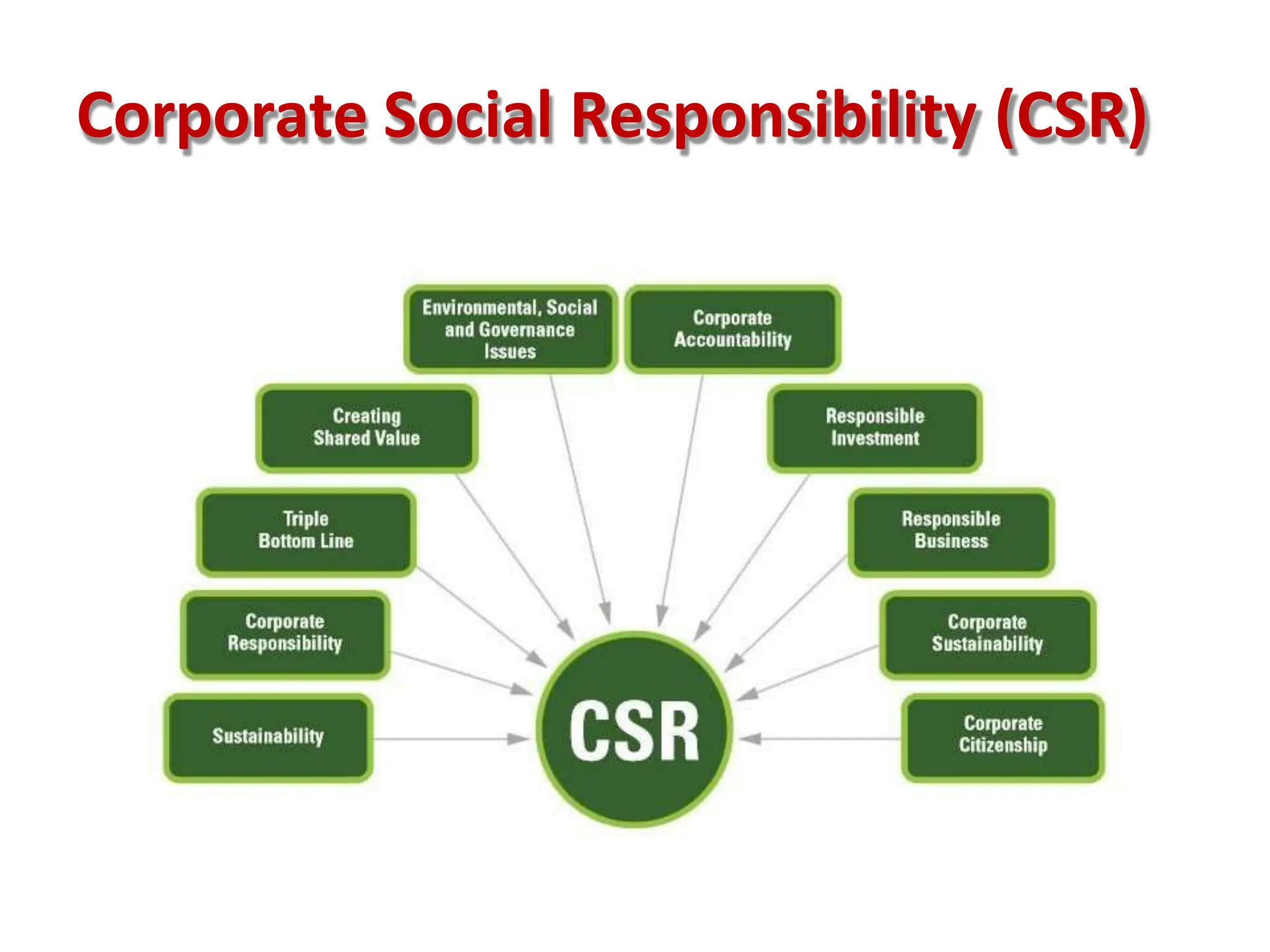
Corporate Social Responsibility (CSR)
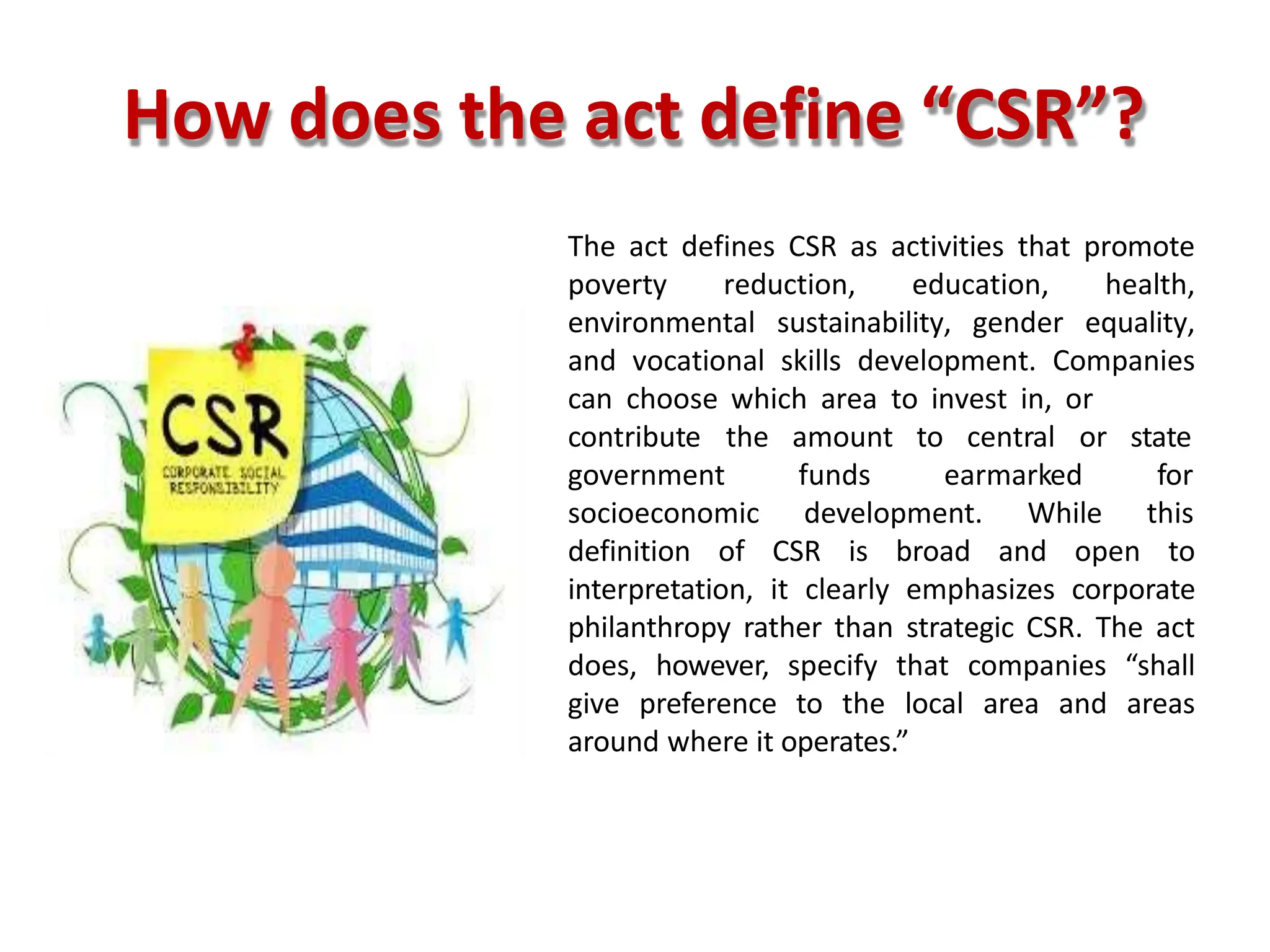
How does the act define “CSR”?
The act defines CSR as activities that promote
poverty reduction, education, health,
environmental sustainability, gender equality,
and vocational skills development. Companies
can choose which area to invest in, or
amount to central or
funds earmarked
contribute the
government
socioeconomic development. While
state
for
this
definition of CSR is broad and open to
interpretation, it clearly emphasizes corporate
philanthropy rather than strategic CSR. The act
does, however, specify that companies “shall
give preference to the local area and areas
around where it operates.”
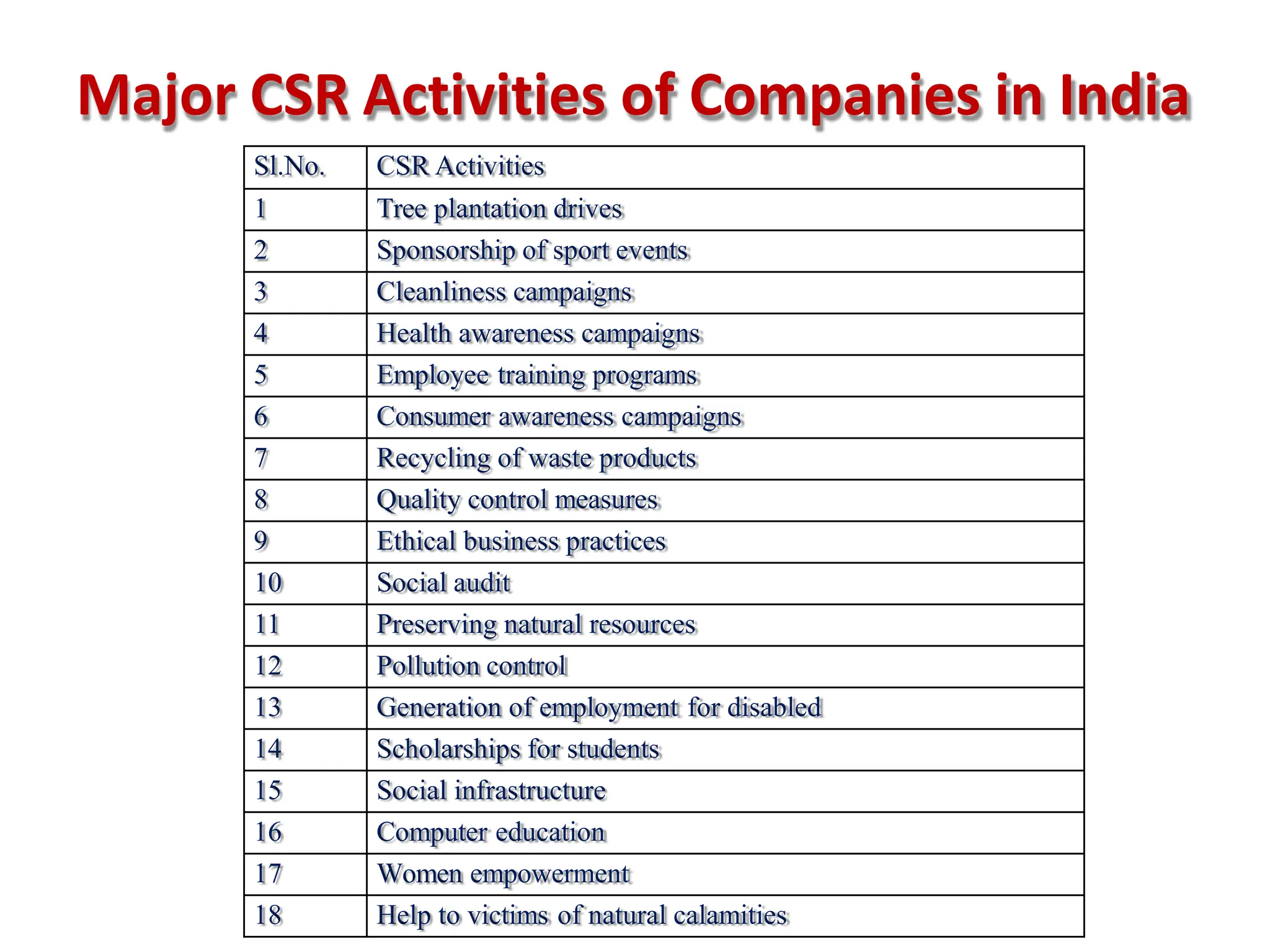
Major CSR Activities of Companies in India
Sl.No. CSR Activities
1 Tree plantation drives
2 Sponsorship of sport events
3 Cleanliness campaigns
4 Health awareness campaigns
5 Employee training programs
6 Consumer awareness campaigns
7 Recycling of waste products
8 Quality control measures
9 Ethical business practices
10 Social audit
11 Preserving natural resources
12 Pollution control
13 Generation of employment for disabled
14 Scholarships for students
15 Social infrastructure
16 Computer education
17 Women empowerment
18 Help to victims of natural calamities
Managerial concepts of organizational  behavior

Managerial concepts of organizational behavior

  • 1.
    MBA – 1stSemester Management Concepts and Organisational Behaviour Dr.P.G.Arul Professor Department of International Business Pondicherry Univesity Puducherry - 605014 Pondicherry University Directorate of Distance Education
  • 2.
    Unit: I • Syllabus: •Nature of Management - Social Responsibilities of Business - Manager and Environment Levels • in Management - Managerial Skills - Planning - Steps in Planning Process - Scope and • Limitations - Short Range and Long Range Planning - Flexibility in Planning Characteristics of a • sound Plan - Management by Objectives (MBO) - Policies and Strategies - Scope and • Formulation - Decision Making - Techniques and Processes
  • 3.
  • 4.
    Concepts of Management •Body of Language • Management Tools • Separate Discipline • Specialisation • Code of Conduct • Professional Association
  • 8.
    Functions of Management •1.Planning • 2.Organising • 3.Staffing • 4.Directing • 5.Coordinating • 6.Controlling • 7.Leading and motivating Primary or Main Functions: Subsidiary Functions: • 1.Innovation • 2.Representation • 3.Decision-Making • 4.Communication
  • 10.
  • 11.
  • 13.
  • 15.
    Presentation – 2 SocialResponsibilities of Business Dr.P.G.Arul Professor Department of International Business Pondicherry University Puducherry - 605014
  • 16.
  • 17.
  • 18.
    Definition of SocialResponsibilities of Business “Social Responsibilities refer to the obligation (of Businessmen) to pursue those policies, to make those decisions, or to follow those lines of action which are desirable in terms of objectives and values of our society”-Bowen
  • 19.
    Growing Concern forSocial Responsibilities Social Responsibilities Public Opinion Trade Union Movement Consumerism Education Public Relation Managerial Revolution
  • 20.
    Rationale of SocialResponsibility Objectivesof Social Responsibilit y of Business To Safeguard Long-term Interest To Respond to Social Demands To Avoid Government Intervention To Improve Public Image To Recognise Socio-cultural norms To Respect Social Conscious
  • 21.
    Social Responsibilities ofBusiness SRB Owners Employees Consumers Government Public Others
  • 22.
    Business Responsibilities towards Shareholders(Owners)  Safety of Investment  Steady appreciation of investment  Sharing of information about the progress of business
  • 23.
    Business Responsibilities towards Employees Good and safe working condition  Adequate service benefits  Recognition of workers rights, formation of trade union, collective bargaining etc.,  Opportunities for training and promotion  Workers participation in decision- making
  • 24.
    Business Responsibilities towards Customers Regular supply of right quality goods at right time and place  Charge reasonable prices  Supply goods that meet the needs of different classes and tastes with different purchase power  Prompt, adequate and continuous service  Prompt redressal of customers grievances  True and fair information through advertisements  Avoid unfair and unethical practices like adulteration, hoarding and black-marketing
  • 25.
    Business Responsibilities towardsGovernment  To abide by the laws of the land  To pay taxes honestly and in time  To avoid corrupting public servants  To encourage fair trade practices  To avoid monopoly and concentration of economic power
  • 26.
    Business Responsibilities towardsCommunity  To make the best possible or efficient use of the society’s resources  To provide maximum possible employment opportunities  To keep the environment healthy and free from all types of pollution  To contribute to the up liftment of the weaker sections of society  To refrain from indulging in anti-social and unethical practices  To improve public health, education and cultural life of the community
  • 27.
    Arguments against Social Responsibilities? Arguments AgainstSocial Responsibilities of Business Dilution of Profit Maximisation Loss of Incentives Lack of Yardstick Business Lacks Social Skills Power without Accountability Burden on Consumers Distortion of Market Mechanism
  • 28.
  • 29.
    How does theact define “CSR”? The act defines CSR as activities that promote poverty reduction, education, health, environmental sustainability, gender equality, and vocational skills development. Companies can choose which area to invest in, or amount to central or funds earmarked contribute the government socioeconomic development. While state for this definition of CSR is broad and open to interpretation, it clearly emphasizes corporate philanthropy rather than strategic CSR. The act does, however, specify that companies “shall give preference to the local area and areas around where it operates.”
  • 30.
    Major CSR Activitiesof Companies in India Sl.No. CSR Activities 1 Tree plantation drives 2 Sponsorship of sport events 3 Cleanliness campaigns 4 Health awareness campaigns 5 Employee training programs 6 Consumer awareness campaigns 7 Recycling of waste products 8 Quality control measures 9 Ethical business practices 10 Social audit 11 Preserving natural resources 12 Pollution control 13 Generation of employment for disabled 14 Scholarships for students 15 Social infrastructure 16 Computer education 17 Women empowerment 18 Help to victims of natural calamities