Management, Cost, and
Schedule
Team 3
DIOS - Deimos Impact & Observation Spacecraft
Jeff Anderson, Thomas Blachman, Andrew Fallon, John Franklin, Samuel Gaultney,
David Habashy, Brian Hardie, Brandon Hing, Zujia Huang, Sung Kim, Jonathan Saenger
2
Mission Concept
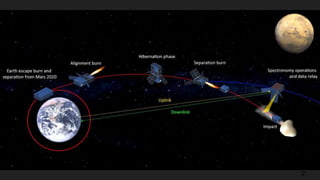
Mission Goal: Direct an impactor into Deimos at high velocities to launch a plume of
surface and subsurface debris into space. The plume will be analyzed by an infrared
spectrometer to determine the composition Deimos. This will determine whether
Deimos is a C or D type asteroid, or Mars ejecta. In addition, prebiotic volatile
concentrations will be analyzed to determine asteroid contributions to early life.
Mission Objectives:
- The impactor shall collide with Deimos’ surface and generate a plume sufficient enough in size for
the CubeSat Spectrometer to detect
- The impactor shall penetrate Deimos’ surface deep enough to expose volatile compounds including
oxygen, carbon dioxide, carbon monoxide, water, and ammonia
- The CubeSat shall analyze the plume with a spectrometer and determine the 1.3 µm absorption
levels, as well as the absorption levels of volatiles
3
Key Requirements
The two major design goals of the spacecraft are to generate a plume of Deimos subsurface
material, and to relay the composition of the material to Earth. The driving requirements serve to fulfill
these two goals either directly or secondarily.
1. Shall be ready for launch by July 20th 2020
2. Shall arrive at Deimos between February 19th 2021 and February 20th 2021
3. Shall not exceed 5.6 million dollars in total cost
4. Shall have an acceptable amount of risk.
4
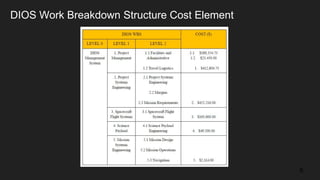
DIOS Work Breakdown Structure Cost Element
6
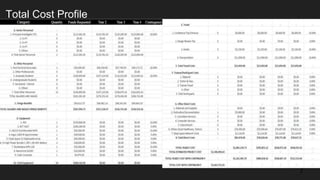
Total Cost Profile
7
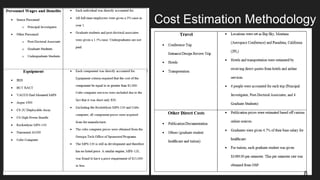
Cost Estimation Methodology
8
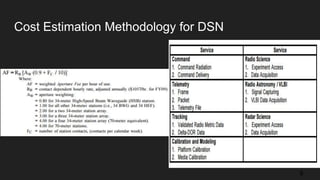
Cost Estimation Methodology for DSN
9
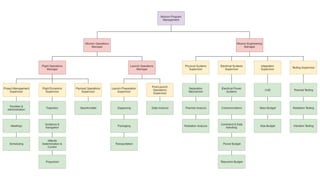
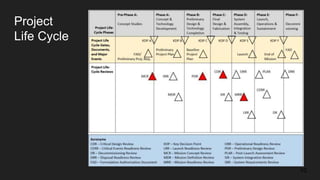
Project
Life Cycle
10
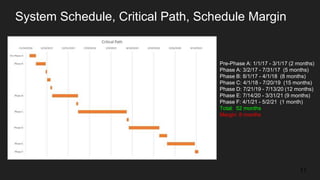
System Schedule, Critical Path, Schedule Margin
Pre-Phase A: 1/1/17 - 3/1/17 (2 months)
Phase A: 3/2/17 - 7/31/17 (5 months)
Phase B: 8/1/17 - 4/1/18 (8 months)
Phase C: 4/1/18 - 7/20/19 (15 months)
Phase D: 7/21/19 - 7/13/20 (12 months)
Phase E: 7/14/20 - 3/31/21 (9 months)
Phase F: 4/1/21 - 5/2/21 (1 month)
Total: 52 months
Margin: 8 months
11
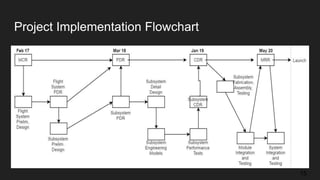
Project Implementation Flowchart
15
Flight Schedule
Significant events during flight
Days Elapsed since Separation Seconds
Separation
Date
ΔVi ΔVc + ΔVo Impact Flyby
Observe
Time
21-Jul 2020 4 208.22667 210.80 210.85 248.72
22-Jul 2020 4 207.22667 209.81 209.86 260.54
23-Jul 2020 4 206.22667 208.82 208.86 257.12
24-Jul 2020 4 205.22667 207.83 207.87 255.70
16
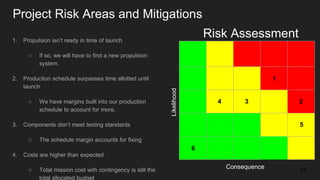
Project Risk Areas and Mitigations
17
Risk Assessment
Likelihood
Consequence
1. Propulsion isn’t ready in time of launch
○ If so, we will have to find a new propulsion
system.
2. Production schedule surpasses time allotted until
launch
○ We have margins built into our production
schedule to account for more.
3. Components don’t meet testing standards
○ The schedule margin accounts for fixing
4. Costs are higher than expected
○ Total mission cost with contingency is still the
total allocated budget
1
2
6
4 3
5
Descopes
Reduce the amount of quality testing
Reduces build time but increases risks
Reduce the amount of employees
Reduces salary costs but increases build time
Reduce the amount of trips to conferences and design
review trips
Reduces costs but reduces centainity of design.
18

Management, Cost, and Schedule Presentation for Project A.D.I.O.S.

  • 1.
    Management, Cost, and Schedule Team3 DIOS - Deimos Impact & Observation Spacecraft Jeff Anderson, Thomas Blachman, Andrew Fallon, John Franklin, Samuel Gaultney, David Habashy, Brian Hardie, Brandon Hing, Zujia Huang, Sung Kim, Jonathan Saenger
  • 2.
  • 3.
    Mission Concept Mission Goal:Direct an impactor into Deimos at high velocities to launch a plume of surface and subsurface debris into space. The plume will be analyzed by an infrared spectrometer to determine the composition Deimos. This will determine whether Deimos is a C or D type asteroid, or Mars ejecta. In addition, prebiotic volatile concentrations will be analyzed to determine asteroid contributions to early life. Mission Objectives: - The impactor shall collide with Deimos’ surface and generate a plume sufficient enough in size for the CubeSat Spectrometer to detect - The impactor shall penetrate Deimos’ surface deep enough to expose volatile compounds including oxygen, carbon dioxide, carbon monoxide, water, and ammonia - The CubeSat shall analyze the plume with a spectrometer and determine the 1.3 µm absorption levels, as well as the absorption levels of volatiles 3
  • 4.
    Key Requirements The twomajor design goals of the spacecraft are to generate a plume of Deimos subsurface material, and to relay the composition of the material to Earth. The driving requirements serve to fulfill these two goals either directly or secondarily. 1. Shall be ready for launch by July 20th 2020 2. Shall arrive at Deimos between February 19th 2021 and February 20th 2021 3. Shall not exceed 5.6 million dollars in total cost 4. Shall have an acceptable amount of risk. 4
  • 6.
    DIOS Work BreakdownStructure Cost Element 6
  • 7.
  • 8.
  • 9.
  • 10.
  • 11.
    System Schedule, CriticalPath, Schedule Margin Pre-Phase A: 1/1/17 - 3/1/17 (2 months) Phase A: 3/2/17 - 7/31/17 (5 months) Phase B: 8/1/17 - 4/1/18 (8 months) Phase C: 4/1/18 - 7/20/19 (15 months) Phase D: 7/21/19 - 7/13/20 (12 months) Phase E: 7/14/20 - 3/31/21 (9 months) Phase F: 4/1/21 - 5/2/21 (1 month) Total: 52 months Margin: 8 months 11
  • 15.
  • 16.
    Flight Schedule Significant eventsduring flight Days Elapsed since Separation Seconds Separation Date ΔVi ΔVc + ΔVo Impact Flyby Observe Time 21-Jul 2020 4 208.22667 210.80 210.85 248.72 22-Jul 2020 4 207.22667 209.81 209.86 260.54 23-Jul 2020 4 206.22667 208.82 208.86 257.12 24-Jul 2020 4 205.22667 207.83 207.87 255.70 16
  • 17.
    Project Risk Areasand Mitigations 17 Risk Assessment Likelihood Consequence 1. Propulsion isn’t ready in time of launch ○ If so, we will have to find a new propulsion system. 2. Production schedule surpasses time allotted until launch ○ We have margins built into our production schedule to account for more. 3. Components don’t meet testing standards ○ The schedule margin accounts for fixing 4. Costs are higher than expected ○ Total mission cost with contingency is still the total allocated budget 1 2 6 4 3 5
  • 18.
    Descopes Reduce the amountof quality testing Reduces build time but increases risks Reduce the amount of employees Reduces salary costs but increases build time Reduce the amount of trips to conferences and design review trips Reduces costs but reduces centainity of design. 18

Editor's Notes