UNIVERSIDAD JOSE CARLOS 
MARIATEGUI 
FACULTAD: 
CIENCIAS JURIDICAS, EMPRESARIALES Y PEDAGOGICAS 
ESPECIALIDAD: 
CONTABILIDAD IV 
CURSO: 
INGLES INTERMEDIO II 
DOCENTE: 
LIC. REGINA PEREIRA PIZARRO 
INTEGRANTES: 
 GIOVANA APAZA ARO 
 ANCCA CHAMPI, LUZMA 
 SECLEN ROJAS, GRACIELA 
 PARIZACA VILCA. ANYELA 
 SANTA CRUZ MAMANI, MONICA
IAS 8 - Accounting Policies, Changes in Accounting 
Estimates and Errors 
The objective of this standard is to prescribe the criteria for 
selecting and changing accounting policies, together with the 
accounting treatment and disclosures about changes in 
accounting policies, changes in accounting estimates and 
correction of errors. The standard is intended to enhance the 
relevance and reliability of financial statements of an entity, 
as well as comparability with the financial statements issued 
by this in previous years, and with those developed by other 
entities.
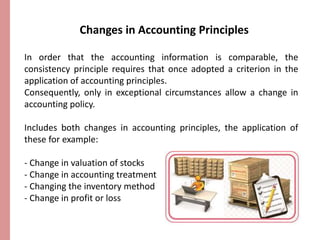
Changes in Accounting Principles 
In order that the accounting information is comparable, the 
consistency principle requires that once adopted a criterion in the 
application of accounting principles. 
Consequently, only in exceptional circumstances allow a change in 
accounting policy. 
Includes both changes in accounting principles, the application of 
these for example: 
- Change in valuation of stocks 
- Change in accounting treatment 
- Changing the inventory method 
- Change in profit or loss
Changes in Accounting Estimates 
Because of the uncertainty inherent in the business, the 
company must make estimates to value some items in the 
financial statements, which can not be measured accurately. 
Changes in estimates are due to changes in the conditions 
underlying the estimate or further information to knowledge, 
time or occurrence of new facts, and make it necessary to 
revise the estimate made at the time. 
Changes in estimates can be 
distinguished from accounting 
changes. 
Example: a change in the method 
of depreciation is an accounting 
change, while a change in life is a 
change in an estimate.
Correction of Errors 
It may be the fact that errors in an exercise in preparing the 
financial statements of one or more prior periods that have been 
finally approved by the competent body is detected. 
It may be arithmetic errors in the application of accounting 
principles, interpret economic events, and other omissions. 
When the error has a significant effect on the financial 
statements of one or more years, the financial statements can 
not be considered reliable at the date they were issued. 
These errors, IAS 8 are considered 
"fundamental errors". Be remedied by 
the time they are discovered.
SEAT ADJUSTMENTS 
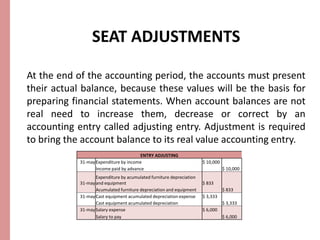
At the end of the accounting period, the accounts must present 
their actual balance, because these values will be the basis for 
preparing financial statements. When account balances are not 
real need to increase them, decrease or correct by an 
accounting entry called adjusting entry. Adjustment is required 
to bring the account balance to its real value accounting entry. 
ENTRY ADJUSTING 
31-may Expenditure by income $ 10,000 
Income paid by advance $ 10,000 
31-may 
Expenditure by acumulated furniture depreciation 
and equipment $ 833 
Acumulated furniture depreciation and equipment $ 833 
31-may Cast equipment acumulated depreciation expense $ 3,333 
Cast equipment acumulated depreciation $ 3,333 
31-may Salary expense $ 6,000 
Salary to pay $ 6,000
II. PURPOSES 
1. Adjust accounts to display on their real balances 
which give rise to reasonable preparing financial 
statements. 
2. Confirm the association of the expenses with 
revenues of the . 
3. Facilitate the recognition of all economic events on 
the accounting period. 
4. Correct any errors in the ordinary records.
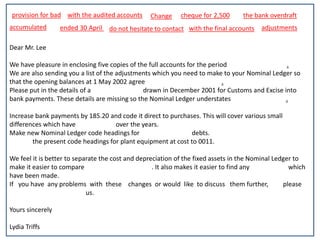
provision for bad Change 
Dear Mr. Lee 
with the audited accounts cheque for 2,500 the bank overdraft 
We have pleasure in enclosing five copies of the full accounts for the period ended 30 April 2002. 
We are also sending you a list of the adjustments which you need to make to your Nominal Ledger so 
that the opening balances at 1 May 2002 agree with the audited accounts. 
Please put in the details of a cheque for 2,500 drawn in December 2001 for Customs and Excise into 
bank payments. These details are missing so the Nominal Ledger understates the bank overdraft. 
Increase bank payments by 185.20 and code it direct to purchases. This will cover various small 
differences which have accumulated over the years. 
Make new Nominal Ledger code headings for provision for bad debts. 
Change the present code headings for plant equipment at cost to 0011. 
We feel it is better to separate the cost and depreciation of the fixed assets in the Nominal Ledger to 
make it easier to compare with the final accounts. It also makes it easier to find any adjustments which 
have been made. 
If you have any problems with these changes or would like to discuss them further, please 
do not hesitate to contact us. 
Yours sincerely 
Lydia Triffs 
ended 30 April 
accumulated 
do not hesitate to contact with the final accounts adjustments
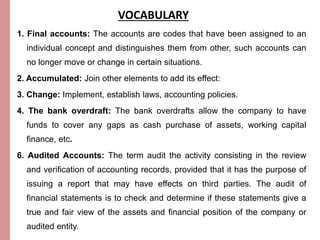
VOCABULARY 
1. Final accounts: The accounts are codes that have been assigned to an 
individual concept and distinguishes them from other, such accounts can 
no longer move or change in certain situations. 
2. Accumulated: Join other elements to add its effect: 
3. Change: Implement, establish laws, accounting policies. 
4. The bank overdraft: The bank overdrafts allow the company to have 
funds to cover any gaps as cash purchase of assets, working capital 
finance, etc. 
6. Audited Accounts: The term audit the activity consisting in the review 
and verification of accounting records, provided that it has the purpose of 
issuing a report that may have effects on third parties. The audit of 
financial statements is to check and determine if these statements give a 
true and fair view of the assets and financial position of the company or 
audited entity.
Making changes ultimo

Making changes ultimo

  • 1.
    UNIVERSIDAD JOSE CARLOS MARIATEGUI FACULTAD: CIENCIAS JURIDICAS, EMPRESARIALES Y PEDAGOGICAS ESPECIALIDAD: CONTABILIDAD IV CURSO: INGLES INTERMEDIO II DOCENTE: LIC. REGINA PEREIRA PIZARRO INTEGRANTES:  GIOVANA APAZA ARO  ANCCA CHAMPI, LUZMA  SECLEN ROJAS, GRACIELA  PARIZACA VILCA. ANYELA  SANTA CRUZ MAMANI, MONICA
  • 2.
    IAS 8 -Accounting Policies, Changes in Accounting Estimates and Errors The objective of this standard is to prescribe the criteria for selecting and changing accounting policies, together with the accounting treatment and disclosures about changes in accounting policies, changes in accounting estimates and correction of errors. The standard is intended to enhance the relevance and reliability of financial statements of an entity, as well as comparability with the financial statements issued by this in previous years, and with those developed by other entities.
  • 3.
    Changes in AccountingPrinciples In order that the accounting information is comparable, the consistency principle requires that once adopted a criterion in the application of accounting principles. Consequently, only in exceptional circumstances allow a change in accounting policy. Includes both changes in accounting principles, the application of these for example: - Change in valuation of stocks - Change in accounting treatment - Changing the inventory method - Change in profit or loss
  • 4.
    Changes in AccountingEstimates Because of the uncertainty inherent in the business, the company must make estimates to value some items in the financial statements, which can not be measured accurately. Changes in estimates are due to changes in the conditions underlying the estimate or further information to knowledge, time or occurrence of new facts, and make it necessary to revise the estimate made at the time. Changes in estimates can be distinguished from accounting changes. Example: a change in the method of depreciation is an accounting change, while a change in life is a change in an estimate.
  • 5.
    Correction of Errors It may be the fact that errors in an exercise in preparing the financial statements of one or more prior periods that have been finally approved by the competent body is detected. It may be arithmetic errors in the application of accounting principles, interpret economic events, and other omissions. When the error has a significant effect on the financial statements of one or more years, the financial statements can not be considered reliable at the date they were issued. These errors, IAS 8 are considered "fundamental errors". Be remedied by the time they are discovered.
  • 6.
    SEAT ADJUSTMENTS Atthe end of the accounting period, the accounts must present their actual balance, because these values will be the basis for preparing financial statements. When account balances are not real need to increase them, decrease or correct by an accounting entry called adjusting entry. Adjustment is required to bring the account balance to its real value accounting entry. ENTRY ADJUSTING 31-may Expenditure by income $ 10,000 Income paid by advance $ 10,000 31-may Expenditure by acumulated furniture depreciation and equipment $ 833 Acumulated furniture depreciation and equipment $ 833 31-may Cast equipment acumulated depreciation expense $ 3,333 Cast equipment acumulated depreciation $ 3,333 31-may Salary expense $ 6,000 Salary to pay $ 6,000
  • 7.
    II. PURPOSES 1.Adjust accounts to display on their real balances which give rise to reasonable preparing financial statements. 2. Confirm the association of the expenses with revenues of the . 3. Facilitate the recognition of all economic events on the accounting period. 4. Correct any errors in the ordinary records.
  • 8.
    provision for badChange Dear Mr. Lee with the audited accounts cheque for 2,500 the bank overdraft We have pleasure in enclosing five copies of the full accounts for the period ended 30 April 2002. We are also sending you a list of the adjustments which you need to make to your Nominal Ledger so that the opening balances at 1 May 2002 agree with the audited accounts. Please put in the details of a cheque for 2,500 drawn in December 2001 for Customs and Excise into bank payments. These details are missing so the Nominal Ledger understates the bank overdraft. Increase bank payments by 185.20 and code it direct to purchases. This will cover various small differences which have accumulated over the years. Make new Nominal Ledger code headings for provision for bad debts. Change the present code headings for plant equipment at cost to 0011. We feel it is better to separate the cost and depreciation of the fixed assets in the Nominal Ledger to make it easier to compare with the final accounts. It also makes it easier to find any adjustments which have been made. If you have any problems with these changes or would like to discuss them further, please do not hesitate to contact us. Yours sincerely Lydia Triffs ended 30 April accumulated do not hesitate to contact with the final accounts adjustments
  • 9.
    VOCABULARY 1. Finalaccounts: The accounts are codes that have been assigned to an individual concept and distinguishes them from other, such accounts can no longer move or change in certain situations. 2. Accumulated: Join other elements to add its effect: 3. Change: Implement, establish laws, accounting policies. 4. The bank overdraft: The bank overdrafts allow the company to have funds to cover any gaps as cash purchase of assets, working capital finance, etc. 6. Audited Accounts: The term audit the activity consisting in the review and verification of accounting records, provided that it has the purpose of issuing a report that may have effects on third parties. The audit of financial statements is to check and determine if these statements give a true and fair view of the assets and financial position of the company or audited entity.