AI, Machine Learning & Data
What Businesses Need to Know
Artificial intelligence and machine
learning are at the forefront of technical
innovation.
From autonomous driving to
predictive analytics, robotic
manufacturing to smart
homes, how we live, work
and play is impacted in
profound ways.
As talk of AI and machine
learning permeates our
world, the benefits for
businesses are getting lost
in a sea of technical jargon
and prognostication by
experts from all walks of life.
At the end of the day, data
is the fuel for any machine
learning algorithm and it’s
common for the terms
used to describe how that
data is used to become
confusing.
As folks who love data, machines, and especially
people, we decided to put together a helpful
guide to machine learning and the terms that
businesses should know as they look to
navigate this exciting and complex frontier of
technological advancement.
Machine Learning 101
A Glossary of Machine Learning Data Terms
Artificial intelligence is building
technology that behaves like a human.
Self-driving cars, Siri, smart homes, and
many other emerging technologies are
examples of AI.
Artificial Intelligence
Machine learning is a subset of AI that
uses algorithms to learn from data sets.
Using data and algorithms, machine
learning technologies make intelligent
predictions, similar to that of a human,
but at scale.
Machine Learning
In machine learning, the
framework is developed
and data is provided, so
that machines can teach
themselves what they
need to know and
understand what to do.
Classification is when a set of data
trains a machine to identify certain
inputs or observations, and based on
those, assign them to certain outputs
or categories.
Classification
Classification is an example of supervised
learning, because it uses a set of labeled data
examples and classifies any new data into
those sets.
Annotation
In the traditional sense, an annotation
is when we reference a piece of
information back to the original source
or to additional, relevant data. In
machine learning, it’s very similar.
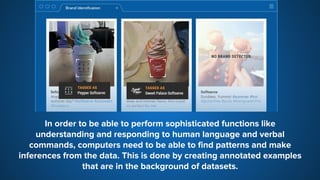
In order to be able to perform sophisticated functions like
understanding and responding to human language and verbal
commands, computers need to be able to find patterns and make
inferences from the data. This is done by creating annotated examples
that are in the background of datasets.
Image Tagging
Image tagging is the simple act of
identifying objects, categories, or even
human gestures to help organize data
for ground truth data sets and ongoing
machine learning applications.
Facial Recognition
Facial recognition has primarily been
used for security purposes, but new
possibilities in marketing and
enhanced UX have made facial
recognition an important aspect of
machine learning.
Natural Language Processing
Natural language processing or NLP is
the ability for computers to interact in
dialogue with humans, either audibly or
through text. NLP machine learning
technologies are built to understand
and communicate with human
languages...think of your favorite
chatbot :-)
Communication is one of the most natural
functions for humans, so it’s crucial to develop
natural language processing in AI.
Technologies like Siri, Amazon Echo, and
Google Home operate using NLP-based
algorithms.
Sentiment Analysis
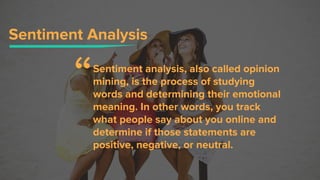
Sentiment analysis, also called opinion
mining, is the process of studying
words and determining their emotional
meaning. In other words, you track
what people say about you online and
determine if those statements are
positive, negative, or neutral.
Landmarking
Landmark recognition is the ability for
technology to identify a building,
physical object or landmark. To do this,
technology relies on large amounts of
image data and smart algorithms.
Machine learning is revolutionizing
how we live, work, play, and interact
with the world around us. It holds the
potential to augment human
capabilities to make us smarter and
more productive than ever.
CloudFactory is helping companies by providing human
intelligence to create accurate training data sets that
improve machine learning algorithms. Whether that’s in
the form of annotating images, identifying classifiers,
drawing bounding boxes, labeling objects or analyzing
text for NLP, we’ve made it super easy to offload that
work, by spinning up a WorkStream, which empowers
data teams and engineers to focus on innovating the next
generation of AI that very well may change the world.
About
CloudFactory CloudFactory makes it super EASY to offload data
work so our customers can focus on innovation and
growth. We specialize in preparing and organizing
data sets and work with companies like Microsoft,
Embark, Drive.ai, FaceTec to implement them into
building innovative AI, ML and other complex
technologies.
www.cloudfactory.com
hello@cloudfactory.com
(888) 809-0229
SPIN UP A TEAM NOW!

Machine Learning Glossary

  • 1.
    AI, Machine Learning& Data What Businesses Need to Know
  • 2.
    Artificial intelligence andmachine learning are at the forefront of technical innovation.
  • 3.
    From autonomous drivingto predictive analytics, robotic manufacturing to smart homes, how we live, work and play is impacted in profound ways.
  • 4.
    As talk ofAI and machine learning permeates our world, the benefits for businesses are getting lost in a sea of technical jargon and prognostication by experts from all walks of life.
  • 5.
    At the endof the day, data is the fuel for any machine learning algorithm and it’s common for the terms used to describe how that data is used to become confusing.
  • 6.
    As folks wholove data, machines, and especially people, we decided to put together a helpful guide to machine learning and the terms that businesses should know as they look to navigate this exciting and complex frontier of technological advancement.
  • 7.
    Machine Learning 101 AGlossary of Machine Learning Data Terms
  • 8.
    Artificial intelligence isbuilding technology that behaves like a human. Self-driving cars, Siri, smart homes, and many other emerging technologies are examples of AI. Artificial Intelligence
  • 9.
    Machine learning isa subset of AI that uses algorithms to learn from data sets. Using data and algorithms, machine learning technologies make intelligent predictions, similar to that of a human, but at scale. Machine Learning
  • 10.
    In machine learning,the framework is developed and data is provided, so that machines can teach themselves what they need to know and understand what to do.
  • 11.
    Classification is whena set of data trains a machine to identify certain inputs or observations, and based on those, assign them to certain outputs or categories. Classification
  • 12.
    Classification is anexample of supervised learning, because it uses a set of labeled data examples and classifies any new data into those sets.
  • 13.
    Annotation In the traditionalsense, an annotation is when we reference a piece of information back to the original source or to additional, relevant data. In machine learning, it’s very similar.
  • 14.
    In order tobe able to perform sophisticated functions like understanding and responding to human language and verbal commands, computers need to be able to find patterns and make inferences from the data. This is done by creating annotated examples that are in the background of datasets.
  • 15.
    Image Tagging Image taggingis the simple act of identifying objects, categories, or even human gestures to help organize data for ground truth data sets and ongoing machine learning applications.
  • 16.
    Facial Recognition Facial recognitionhas primarily been used for security purposes, but new possibilities in marketing and enhanced UX have made facial recognition an important aspect of machine learning.
  • 17.
    Natural Language Processing Naturallanguage processing or NLP is the ability for computers to interact in dialogue with humans, either audibly or through text. NLP machine learning technologies are built to understand and communicate with human languages...think of your favorite chatbot :-)
  • 18.
    Communication is oneof the most natural functions for humans, so it’s crucial to develop natural language processing in AI. Technologies like Siri, Amazon Echo, and Google Home operate using NLP-based algorithms.
  • 19.
    Sentiment Analysis Sentiment analysis,also called opinion mining, is the process of studying words and determining their emotional meaning. In other words, you track what people say about you online and determine if those statements are positive, negative, or neutral.
  • 20.
    Landmarking Landmark recognition isthe ability for technology to identify a building, physical object or landmark. To do this, technology relies on large amounts of image data and smart algorithms.
  • 21.
    Machine learning isrevolutionizing how we live, work, play, and interact with the world around us. It holds the potential to augment human capabilities to make us smarter and more productive than ever.
  • 22.
    CloudFactory is helpingcompanies by providing human intelligence to create accurate training data sets that improve machine learning algorithms. Whether that’s in the form of annotating images, identifying classifiers, drawing bounding boxes, labeling objects or analyzing text for NLP, we’ve made it super easy to offload that work, by spinning up a WorkStream, which empowers data teams and engineers to focus on innovating the next generation of AI that very well may change the world.
  • 23.
    About CloudFactory CloudFactory makesit super EASY to offload data work so our customers can focus on innovation and growth. We specialize in preparing and organizing data sets and work with companies like Microsoft, Embark, Drive.ai, FaceTec to implement them into building innovative AI, ML and other complex technologies. www.cloudfactory.com hello@cloudfactory.com (888) 809-0229 SPIN UP A TEAM NOW!