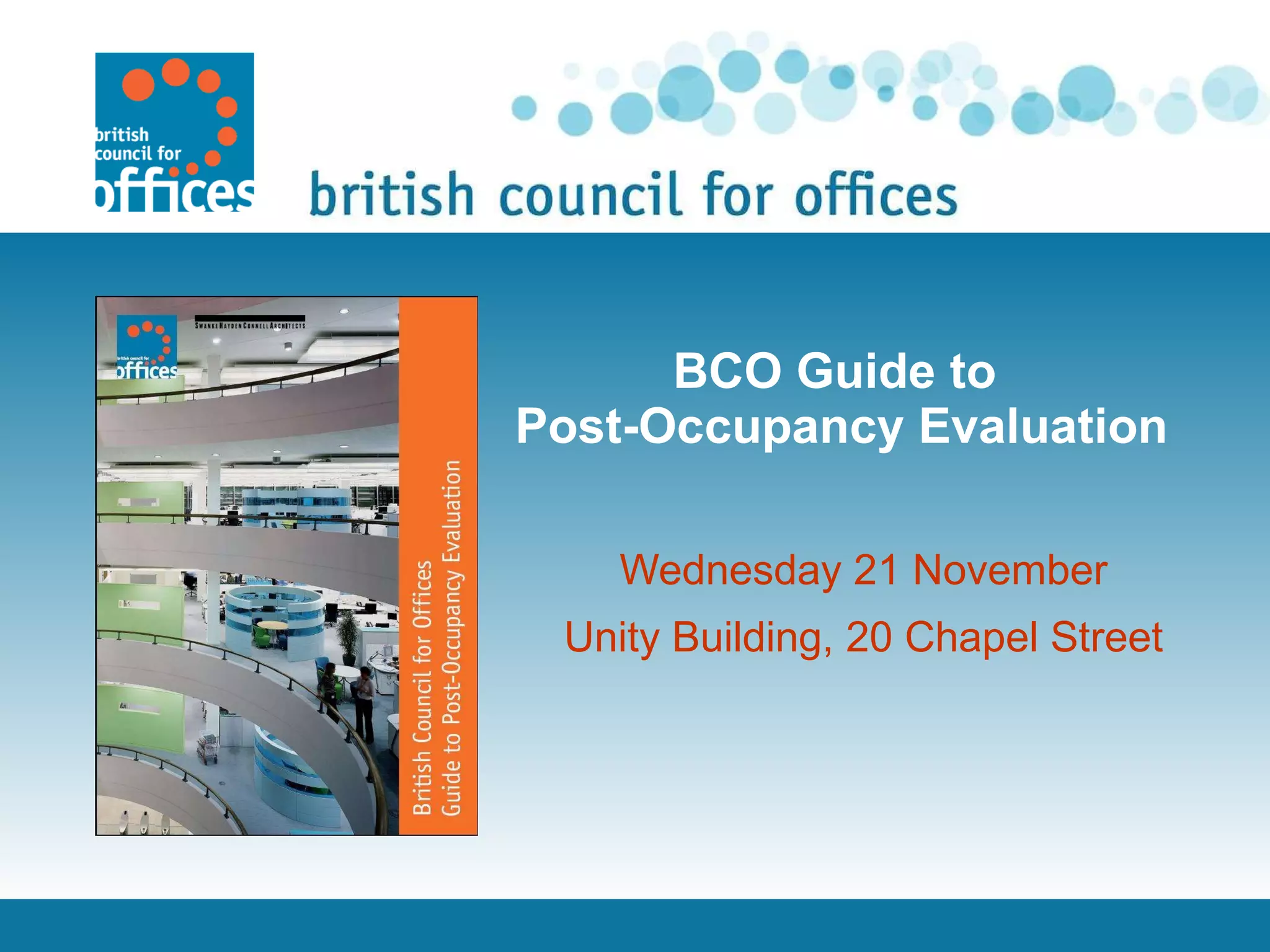
BCO Guide to  Post-Occupancy Evaluation Wednesday 21 November Unity Building, 20 Chapel Street
Overview  BCO Guide to Post-Occupancy Evaluation Nigel Oseland [email_address]
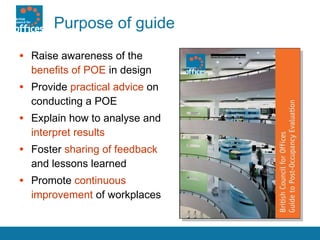
Purpose of guide Raise awareness of the  benefits of POE  in design Provide  practical advice  on conducting a POE Explain how to analyse and  interpret results Foster  sharing of feedback  and lessons learned  Promote  continuous improvement  of workplaces
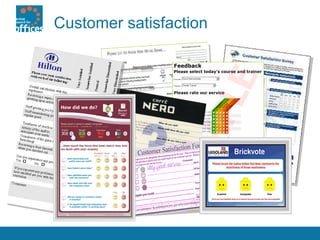
Customer satisfaction
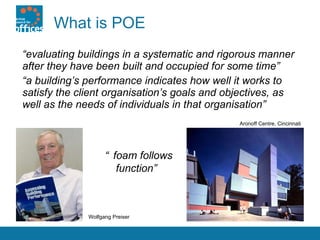
What is POE “ evaluating buildings in a systematic and rigorous manner after they have been built and occupied for some time”  “ a building’s performance indicates how well it works to satisfy the client organisation’s goals and objectives, as well as the needs of individuals in that organisation” Wolfgang Preiser “ foam follows function” Aronoff Centre, Cincinnati
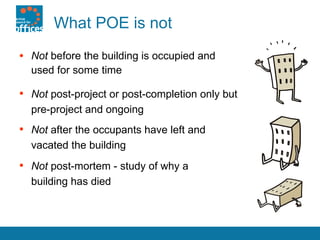
What POE is not Not  before the building is occupied and used for some time Not  after the occupants have left and vacated the building Not  post-project or post-completion only but pre-project and ongoing Not  post-mortem - study of why a building has died
Why POE Measuring project success and value
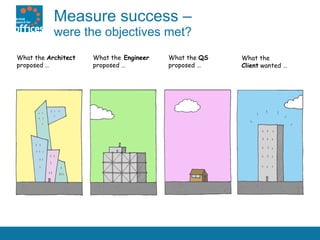
Measure success –  were the objectives met? What the  Architect  proposed … What the  Engineer  proposed … What the  QS  proposed … What the  Client  wanted …
Why POE Measuring project success and value Design feedback: “without a feedback loop every building, to some extent is a prototype – spaces and systems put together in new ways,  with potentially unpredictable outcomes” (Ian Cooper)
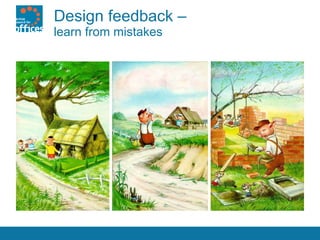
Design feedback – learn from mistakes
Why POE Measuring project success and value Design feedback: “ without a feedback loop every building, to some extent is a prototype – spaces and systems put together in new ways,  with potentially unpredictable outcomes” (Ian Cooper) Inform the design process and focus expenditure
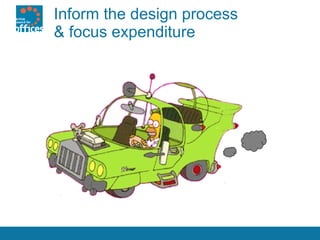
Inform the design process  & focus expenditure
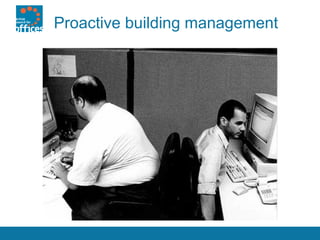
Why POE Measuring project success and value Design feedback: “ without a feedback loop every building, to some extent is a prototype – spaces and systems put together in new ways,  with potentially unpredictable outcomes” (Ian Cooper) Inform the design process and focus expenditure Proactive building management: “ prevents minor problems developing into longer-term  chronic irritants” (Bill Bordass & Mark Way)
Proactive building management
Why POE Measuring project success and value Design feedback: “ without a feedback loop every building, to some extent is a prototype – spaces and systems put together in new ways,  with potentially unpredictable outcomes” (Cooper) Inform the design process and focus expenditure Proactive building management: “ prevents minor problems developing into longer-term  chronic irritants” (Bill Bordass & Mark Way) Change management and communications
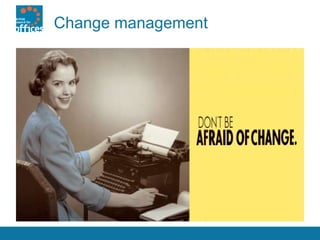
Change management
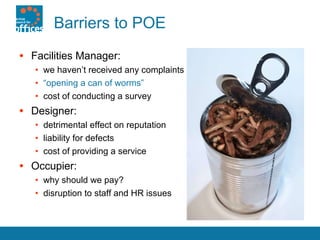
Barriers to POE Facilities Manager: we haven’t received any complaints “ opening a can of worms” cost of conducting a survey Designer: detrimental effect on reputation liability for defects cost of providing a service Occupier: why should we pay? disruption to staff and HR issues
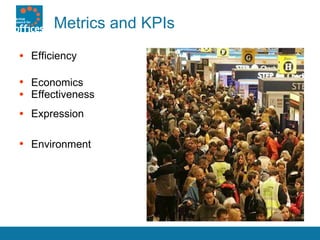
Metrics and KPIs Efficiency Effectiveness Expression Economics Environment
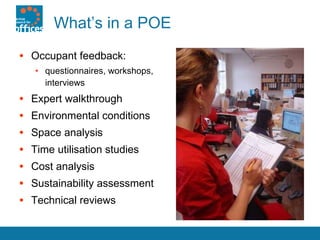
What’s in a POE Occupant feedback:  questionnaires, workshops, interviews Expert walkthrough Environmental conditions Space analysis  Time utilisation studies Cost analysis Sustainability assessment Technical reviews
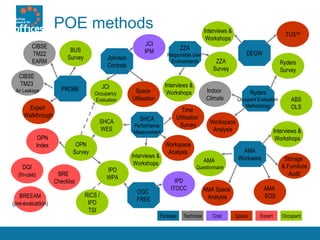
POE methods IPD WPA IPD ITOCC OGC  FREE RICS / IPD TSI OPN Survey OPN Index AMA  Questionnaire AMA Space  Analysis AMA  SOS Interviews & Workshops Storage  & Furniture Audit AMA Workware BRE  Checklist DQI (In-use) BREEAM (pre-evaluation) Space Expert Occupant Cost Technical Package CIBSE TM22 EARM BUS Survey CIBSE  TM23  Air Leakage Expert  Walkthrough ABS OLS SHCA WES Ryders Survey Ryders Occupant Evaluation  Methodology Indoor  Climate Workspace Analysis ZZA Responsible User  Environments ZZA Survey Interviews & Workshops SHCA Performance Measurement Interviews & Workshops Time  Utilisation  Survey Workspace Analysis Johnson Controls JCI  Occupancy  Evaluation Space  Utilisation JCI IPM DEGW TUS TM Interviews & Workshops PROBE
Feedback survey topics Temperature Ventilation / air quality Lighting Privacy Noise Desk space Storage  Informal / breakout Formal meeting Layout Productivity / performance Overall satisfaction Work patterns / mobility Most important Support of work activities Facilities and amenities Sustainability Base build
10 Point Summary Conduct regular surveys Select the right feedback method Define the objectives Pilot the survey  Use tried-and-tested techniques Select the sample Invite responses Report the results Share the findings
Thank you to: Expert panel Paul Bartlett SBS & OPN Bill Bordass Usable Buildings Trust Glenn Corney IPD Occupiers Joanna Eley AMA Alexi Marmot Associates Farrol Goldblatt tpbennett Bridget Hardy OGC Ken Hope  Arup Adrian Leaman Usable Buildings Trust Peter McLennan Bartlett School of Architecture Simon Roberts Arup Ziona Strelitz ZZA Jenny Thomas Ryders Jim Ure ABS Consulting Research management Ian Selby BCO Jenny MacDonnell BCO BCO Occupier Group Paul Harrington PwC (chair) Editor Melanie Thompson www.melaniethompson.co.uk Layout Steve Dalton www.wordsearch.co.uk Kerry Mallet www.wordsearch.co.uk
BCO Guide to  Post-Occupancy Evaluation Wednesday 21 November Unity Building, 20 Chapel Street

BCO Guide To Poe

  • 1.
    BCO Guide to Post-Occupancy Evaluation Wednesday 21 November Unity Building, 20 Chapel Street
  • 2.
    Overview BCOGuide to Post-Occupancy Evaluation Nigel Oseland [email_address]
  • 3.
    Purpose of guideRaise awareness of the benefits of POE in design Provide practical advice on conducting a POE Explain how to analyse and interpret results Foster sharing of feedback and lessons learned Promote continuous improvement of workplaces
  • 4.
  • 5.
    What is POE“ evaluating buildings in a systematic and rigorous manner after they have been built and occupied for some time” “ a building’s performance indicates how well it works to satisfy the client organisation’s goals and objectives, as well as the needs of individuals in that organisation” Wolfgang Preiser “ foam follows function” Aronoff Centre, Cincinnati
  • 6.
    What POE isnot Not before the building is occupied and used for some time Not after the occupants have left and vacated the building Not post-project or post-completion only but pre-project and ongoing Not post-mortem - study of why a building has died
  • 7.
    Why POE Measuringproject success and value
  • 8.
    Measure success – were the objectives met? What the Architect proposed … What the Engineer proposed … What the QS proposed … What the Client wanted …
  • 9.
    Why POE Measuringproject success and value Design feedback: “without a feedback loop every building, to some extent is a prototype – spaces and systems put together in new ways, with potentially unpredictable outcomes” (Ian Cooper)
  • 10.
    Design feedback –learn from mistakes
  • 11.
    Why POE Measuringproject success and value Design feedback: “ without a feedback loop every building, to some extent is a prototype – spaces and systems put together in new ways, with potentially unpredictable outcomes” (Ian Cooper) Inform the design process and focus expenditure
  • 12.
    Inform the designprocess & focus expenditure
  • 13.
    Why POE Measuringproject success and value Design feedback: “ without a feedback loop every building, to some extent is a prototype – spaces and systems put together in new ways, with potentially unpredictable outcomes” (Ian Cooper) Inform the design process and focus expenditure Proactive building management: “ prevents minor problems developing into longer-term chronic irritants” (Bill Bordass & Mark Way)
  • 14.
  • 15.
    Why POE Measuringproject success and value Design feedback: “ without a feedback loop every building, to some extent is a prototype – spaces and systems put together in new ways, with potentially unpredictable outcomes” (Cooper) Inform the design process and focus expenditure Proactive building management: “ prevents minor problems developing into longer-term chronic irritants” (Bill Bordass & Mark Way) Change management and communications
  • 16.
  • 17.
    Barriers to POEFacilities Manager: we haven’t received any complaints “ opening a can of worms” cost of conducting a survey Designer: detrimental effect on reputation liability for defects cost of providing a service Occupier: why should we pay? disruption to staff and HR issues
  • 18.
    Metrics and KPIsEfficiency Effectiveness Expression Economics Environment
  • 19.
    What’s in aPOE Occupant feedback: questionnaires, workshops, interviews Expert walkthrough Environmental conditions Space analysis Time utilisation studies Cost analysis Sustainability assessment Technical reviews
  • 20.
    POE methods IPDWPA IPD ITOCC OGC FREE RICS / IPD TSI OPN Survey OPN Index AMA Questionnaire AMA Space Analysis AMA SOS Interviews & Workshops Storage & Furniture Audit AMA Workware BRE Checklist DQI (In-use) BREEAM (pre-evaluation) Space Expert Occupant Cost Technical Package CIBSE TM22 EARM BUS Survey CIBSE TM23 Air Leakage Expert Walkthrough ABS OLS SHCA WES Ryders Survey Ryders Occupant Evaluation Methodology Indoor Climate Workspace Analysis ZZA Responsible User Environments ZZA Survey Interviews & Workshops SHCA Performance Measurement Interviews & Workshops Time Utilisation Survey Workspace Analysis Johnson Controls JCI Occupancy Evaluation Space Utilisation JCI IPM DEGW TUS TM Interviews & Workshops PROBE
  • 21.
    Feedback survey topicsTemperature Ventilation / air quality Lighting Privacy Noise Desk space Storage Informal / breakout Formal meeting Layout Productivity / performance Overall satisfaction Work patterns / mobility Most important Support of work activities Facilities and amenities Sustainability Base build
  • 22.
    10 Point SummaryConduct regular surveys Select the right feedback method Define the objectives Pilot the survey Use tried-and-tested techniques Select the sample Invite responses Report the results Share the findings
  • 23.
    Thank you to:Expert panel Paul Bartlett SBS & OPN Bill Bordass Usable Buildings Trust Glenn Corney IPD Occupiers Joanna Eley AMA Alexi Marmot Associates Farrol Goldblatt tpbennett Bridget Hardy OGC Ken Hope Arup Adrian Leaman Usable Buildings Trust Peter McLennan Bartlett School of Architecture Simon Roberts Arup Ziona Strelitz ZZA Jenny Thomas Ryders Jim Ure ABS Consulting Research management Ian Selby BCO Jenny MacDonnell BCO BCO Occupier Group Paul Harrington PwC (chair) Editor Melanie Thompson www.melaniethompson.co.uk Layout Steve Dalton www.wordsearch.co.uk Kerry Mallet www.wordsearch.co.uk
  • 24.
    BCO Guide to Post-Occupancy Evaluation Wednesday 21 November Unity Building, 20 Chapel Street

Editor's Notes

  • #4 Aimed at office occupiers, developers, designers and operators I hope the FMs amongst us appreciate the post trolley on the first page
  • #5 In every walk of life we are now asked to provide feedback on the service, I even get asked when I order a mug of coffee (particularly an expensive mug of coffee) Sometimes the feedback does not lead to much but it is mostly used to inform he product or help deal with a complaint In 1998 in Rethinking Construction, Sir John Egan observed that the best companies are customer focussed and actively seek feedback from their customers whereas those involved in designing and developing offices conduct little research on what the end-user requires and have no standard process for gauging their customer’s satisfaction.
  • #6 Let me introduce you to Wolfgang Preiser, quite a character, calls himself a building pathologist – father of POEs, since 1950s POE is a rigorous methodology – not anecdotal And about meeting the business needs of the occupier, not necessarily building defects Exterior insulating foam system (EIFS)
  • #7 Occupied buildings – pre and post project, pre-occupancy = building appraisal
  • #9 Measure and show achieved value using a baseline Were objectives met – all different views and success criteria – what of client
  • #11 We need to evolve our buildings Learn from mistakes as well as successes and share Keep wolf from the door
  • #13 Involve occupants in the design process – particularly how it will support their work and day to day needs Not stifling creativity, architect to challenge, and not designing by occupant or committee Don’t want a Homer’s car – ugly and expensive, but use the good bits
  • #15 Avoid complaints, regular short surveys Hopefully wont design like this
  • #17 Buy in and ownership from staff is key to a succesful project Less likely to complain if feel input to design plus understand the why certain design decisions made
  • #18 Some people don’t like or have the mechanism to complain – too late anyhow What are they afraid of revealing – is it already known Electronic surveys are inexpensive and quick POE is not about defects or liability, this is known at commissioning stage or prior to PC. Does building work for the business Usually harmonious and leads to more work Occupier should measure value Questions are light and not usually contentious
  • #19 We live in a world of metrics and KPIs Probably heard of 3Es Health and safety key metric for some companies, also absenteeism etc Economic worth separating out from space – TCO Environment now deserves its own category and metrics Value – quality and cost Range of metrics – queues at airports is a metric of how the building is performing – but not the only one and need to use it several times
  • #20 The Guide covers some of the common POE methods with a focus on occupant feedback
  • #21 Many methods exist, don’t think you have to invent your own However, if you do then the guide covers how to go about it These are methods either known to BCO and members
  • #22 Analysed 20 different surveys These are key topics New ones creeping in Did not want to be prescriptive and provide a single method – plenty of BCO members have a good method already
  • #23 On inside of front cover are key tips Either pilot or use tried and tested Pre and post project survey What id best way of obtaining feedback Who from – sample – better go to all occupants if not then sample Good invite essential to get a good response Good objectives means a good survey design Present at right level to audience