ぶんぽう: レッスン 4 
Grammar: 
Lesson 
4
nan 
nin 
desu 
ka 
なん にん です か。 
HOW 
MANY 
PEOPLE?
なん にん です か。 
How 
many 
people? 
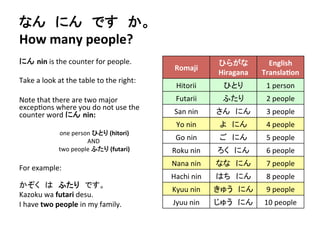
にん nin 
is 
the 
counter 
for 
people. 
Take 
a 
look 
at 
the 
table 
to 
the 
right: 
Note 
that 
there 
are 
two 
major 
excep?ons 
where 
you 
do 
not 
use 
the 
counter 
word 
にん nin: 
one 
person 
ひとり 
(hitori) 
AND 
two 
people 
ふたり 
(futari) 
For 
example: 
かぞく は ふたり です。 
Kazoku 
wa 
futari 
desu. 
I 
have 
two 
people 
in 
my 
family. 
Romaji 
ひらがな  
Hiragana 
English 
TranslaDon 
Hitorii 
ひとり 
1 
person 
Futarii 
ふたり 
2 
people 
San 
nin 
さん にん 
3 
people 
Yo 
nin 
よ にん 
4 
people 
Go 
nin 
ご にん 
5 
people 
Roku 
nin 
ろく にん 
6 
people 
Nana 
nin 
なな にん 
7 
people 
Hachi 
nin 
はち にん 
8 
people 
Kyuu 
nin 
きゅう にん 
9 
people 
Jyuu 
nin 
じゅう にん 
10 
people
なん にん です か。 
How 
many 
people? 
(ConDnued) 
• To 
ask 
someone 
how 
many 
people 
there 
are, 
we 
use 
the 
expression 
なん にん 
nan 
nin to 
ask 
“how 
many 
people?” 
• なん 
nan 
is 
the 
form 
of 
the 
word 
“what” 
that 
comes 
before 
a 
counter 
word. 
In 
this 
case, 
it 
translates 
to 
“how 
many.” 
– For 
example: 
• ごかぞく は なん にん です か。 
• Gokazoku 
wa 
nan 
nin 
desu 
ka. 
• How 
many 
people 
are 
in 
your 
family? 
– Note 
how 
the 
character 
ご go 
has 
been 
added 
before 
the 
word 
かぞ 
く kazoku, 
family. 
Because 
you 
are 
asking 
about 
someone 
else’s 
family, 
this 
prefix 
is 
added 
to 
make 
the 
word 
sound 
more 
polite. 
It 
is 
similar 
to 
the 
honorific 
お 
o 
from 
Lesson 
1.
ご にん です。 
5 
people. 
• To 
respond 
to 
the 
ques?on 
“how 
many 
people 
are 
in 
your 
family?” 
replace 
なん にん 
nan 
nin, 
with 
the 
correct 
counter 
for 
people: 
– For 
example: 
• わたし の かぞく は ろく にん です。 
• Watashi 
no 
kazoku 
wa 
roku 
nin 
desu. 
• I 
have 
6 
people 
in 
my 
family. 
• (lit. 
“My 
family 
is 
6 
people.”) 
– When 
responding, 
simply 
use 
かぞく kazoku, 
to 
refer 
to 
your 
own 
family.
ima 
 ・  mae 
いま ・ まえ 
NOW ・ BEFORE
いま ・ まえ 
Now 
・ 
Before 
• In 
this 
lesson, 
いま ima, 
now, 
and 
まえ mae, 
before, 
are 
being 
used 
as 
adverbs, 
therefore, 
you 
will 
not 
need 
to 
use 
any 
par?cles 
with 
them. 
– For 
example: 
• ちち は いま いしゃ です。 
• Chichi 
wa 
ima 
isha 
desu 
• My 
father 
is 
a 
doctor 
now. 
• When 
using 
まえ mae, 
you 
will 
be 
talking 
about 
things 
that 
happened 
before, 
which 
will 
require 
the 
past 
tense. 
The 
past 
tense 
of 
ですdesu 
= 
is/am/are 
…is: 
でした deshita 
= 
was/were 
– For 
example: 
• はは は まえ かいしゃいん でした。 
• Haha 
wa 
mae 
kaishain 
deshita. 
• My 
mom 
was 
a 
company 
employee 
before.
Remember 
all 
of 
those 
par?cles 
from 
Lessons 
1, 
2, 
and 
3? 
Let’s 
take 
some 
?me 
to 
review 
a 
couple 
now: 
• の 
no 
– 
the 
possessive 
par?cle 
(Lesson 
2) 
• と 
to 
– 
the 
“and” 
par?cle 
(Lesson 
3) 
jyoshi 
fukushuu 
じょし ふくしゅう 
PARTICLES 
REVIEW
の 
no 
– 
the 
Possessive 
ParDcle 
(Review) 
• In 
lesson 
2, 
we 
learned 
the 
par?cle 
の 
no 
indicates 
possession 
or 
ownership, 
of 
something. 
• It’s 
like 
using 
an 
apostrophe 
+ 
s 
( 
…‘s 
) 
in 
English. 
– For 
example: 
• これ は わたし の かぞく の しゃしん です。 
• Kore 
wa 
watashi 
no 
kazoku 
no 
shashin 
desu. 
• This 
is 
my 
family’s 
picture. 
– Let’s 
break 
it 
down 
even 
more! 
Look 
at 
the 
sentence 
divided 
in 
“chunks” 
: 
ひらがな 
hiragana 
これ は 
わたし の 
かぞく の 
しゃしん  
です。 
romaji 
Kore 
wa 
watashi 
no 
kazoku 
no 
shashin 
desu. 
Literal 
transla?on 
This 
my 
family’s 
picture 
is.
と to 
-­‐ 
the 
“and” 
ParDcle 
(Review) 
• The 
par?cle 
と to 
means 
and 
when 
lis?ng 
items, 
people, 
animals, 
etc. 
• It 
can 
act 
like 
a 
comma 
when 
lis?ng 
more 
than 
two 
nouns 
in 
the 
same 
sentence. 
– For 
example: 
• かぞく は ちち と はは と あね と あに と いもうと  
と わたし です。 
• Kazoku 
wa 
chichi 
to 
haha 
to 
ane 
to 
ani 
to 
imouto 
to 
watashi 
desu. 
• The 
family 
is 
my 
dad, 
my 
mom, 
my 
older 
sister, 
my 
older 
brother, 
my 
younger 
sister, 
and 
me. 
• You 
can 
have 
as 
many 
と 
to 
in 
a 
sentence 
as 
you 
need, 
but 
don’t 
get 
carried 
away!
おわり 
This 
is 
the 
end 
of 
the 
Grammar 
Notes 
for 
this 
lesson. 
You 
can 
print 
these 
notes 
for 
your 
reference 
using 
the 
link 
above 
this 
slideshow.

M2 L4 grammar

  • 1.
  • 2.
    nan nin desu ka なん にん です か。 HOW MANY PEOPLE?
  • 3.
    なん にん です か。 How many people? にん nin is the counter for people. Take a look at the table to the right: Note that there are two major excep?ons where you do not use the counter word にん nin: one person ひとり (hitori) AND two people ふたり (futari) For example: かぞく は ふたり です。 Kazoku wa futari desu. I have two people in my family. Romaji ひらがな  Hiragana English TranslaDon Hitorii ひとり 1 person Futarii ふたり 2 people San nin さん にん 3 people Yo nin よ にん 4 people Go nin ご にん 5 people Roku nin ろく にん 6 people Nana nin なな にん 7 people Hachi nin はち にん 8 people Kyuu nin きゅう にん 9 people Jyuu nin じゅう にん 10 people
  • 4.
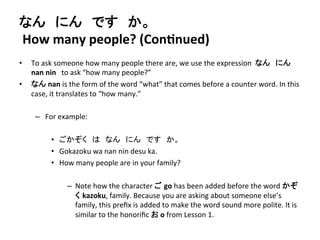
    なん にん です か。 How many people? (ConDnued) • To ask someone how many people there are, we use the expression なん にん nan nin to ask “how many people?” • なん nan is the form of the word “what” that comes before a counter word. In this case, it translates to “how many.” – For example: • ごかぞく は なん にん です か。 • Gokazoku wa nan nin desu ka. • How many people are in your family? – Note how the character ご go has been added before the word かぞ く kazoku, family. Because you are asking about someone else’s family, this prefix is added to make the word sound more polite. It is similar to the honorific お o from Lesson 1.
  • 5.
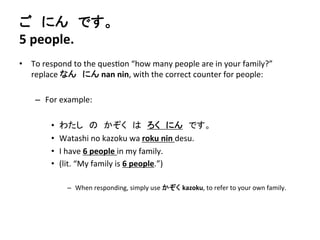
    ご にん です。 5 people. • To respond to the ques?on “how many people are in your family?” replace なん にん nan nin, with the correct counter for people: – For example: • わたし の かぞく は ろく にん です。 • Watashi no kazoku wa roku nin desu. • I have 6 people in my family. • (lit. “My family is 6 people.”) – When responding, simply use かぞく kazoku, to refer to your own family.
  • 6.
    ima  ・  mae いま ・ まえ NOW ・ BEFORE
  • 7.
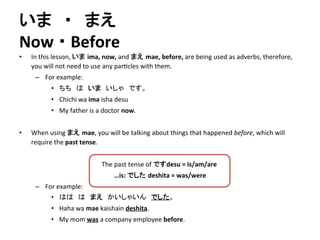
    いま ・ まえ Now ・ Before • In this lesson, いま ima, now, and まえ mae, before, are being used as adverbs, therefore, you will not need to use any par?cles with them. – For example: • ちち は いま いしゃ です。 • Chichi wa ima isha desu • My father is a doctor now. • When using まえ mae, you will be talking about things that happened before, which will require the past tense. The past tense of ですdesu = is/am/are …is: でした deshita = was/were – For example: • はは は まえ かいしゃいん でした。 • Haha wa mae kaishain deshita. • My mom was a company employee before.
  • 8.
    Remember all of those par?cles from Lessons 1, 2, and 3? Let’s take some ?me to review a couple now: • の no – the possessive par?cle (Lesson 2) • と to – the “and” par?cle (Lesson 3) jyoshi fukushuu じょし ふくしゅう PARTICLES REVIEW
  • 9.
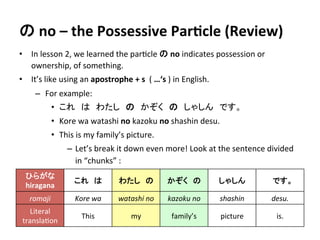
    の no – the Possessive ParDcle (Review) • In lesson 2, we learned the par?cle の no indicates possession or ownership, of something. • It’s like using an apostrophe + s ( …‘s ) in English. – For example: • これ は わたし の かぞく の しゃしん です。 • Kore wa watashi no kazoku no shashin desu. • This is my family’s picture. – Let’s break it down even more! Look at the sentence divided in “chunks” : ひらがな hiragana これ は わたし の かぞく の しゃしん  です。 romaji Kore wa watashi no kazoku no shashin desu. Literal transla?on This my family’s picture is.
  • 10.
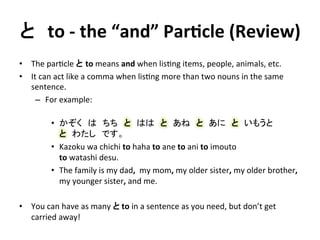
    と to -­‐ the “and” ParDcle (Review) • The par?cle と to means and when lis?ng items, people, animals, etc. • It can act like a comma when lis?ng more than two nouns in the same sentence. – For example: • かぞく は ちち と はは と あね と あに と いもうと  と わたし です。 • Kazoku wa chichi to haha to ane to ani to imouto to watashi desu. • The family is my dad, my mom, my older sister, my older brother, my younger sister, and me. • You can have as many と to in a sentence as you need, but don’t get carried away!
  • 11.
    おわり This is the end of the Grammar Notes for this lesson. You can print these notes for your reference using the link above this slideshow.