LYMPHOEDEMA
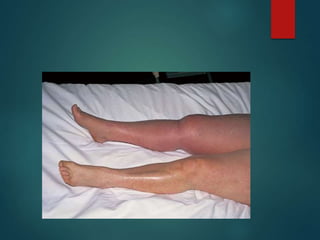
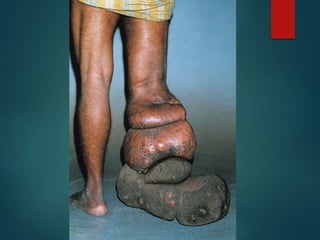
 Lymphoedema may be defined as abnormal limb
swelling caused by the accumulation of increased
amounts of high protein ISF secondary to defective
lymphatic drainage in the presence of (near) normal
net capillary filtration.
Risk factors:
Upper limb/trunk lymphoedema
 Surgery for lymph node dissection. Breast surgey.
 Radiotherapy to breast or to axilary, im or subclaviclar
lymph nodes.
 Wound complications
 Cancer
 Obesity
 Hypertension
 Chronic skin disorders
 Air travel
 Congenital predisposition
Lower limb lymphoedema
 Obesity
 Varicose vein stripping
 Advance cancer
 Orthopedic surgery
 Surgery with inguinal lymph node dissection
 Postoperative pelvic radiotherapy
 Genetic predisposition/family history of chronic
oedema
 Thrombophlebitis and chronic venous
insufficiency
Symptoms and signs
 Constant dull ache, even severe pain
 Burning and bursting sensations
 General tiredness and debility
 Sensitivity to heat
 ‘Pins and needles’
 Cramp
 Skin problems including flakiness, weeping, excoriation
and breakdown
 Immobility, leading to obesity and muscle wasting
 Backache and joint problems
 Athlete’s foot
 Acute infective episodes
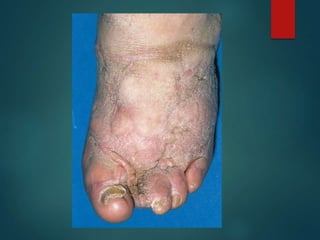
 Toes become “square” shaped
 Stemmer’s sign
Classification
 Primary lymphoedema, in which the cause is unknown (or at least
uncertain and unproven); it is thought to be caused by ‘congenital
lymphatic dysplasia’
 Secondary or acquired lymphoedema, in which there is a clear
underlying cause.
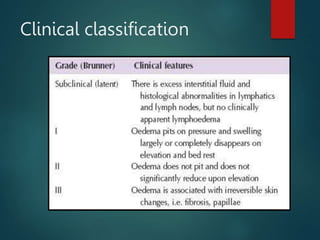
Clinical classification
PRIMARY LYMPHOEDEMA
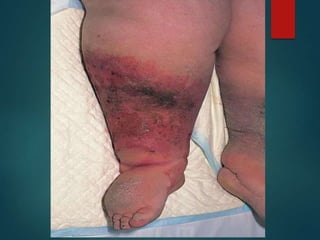
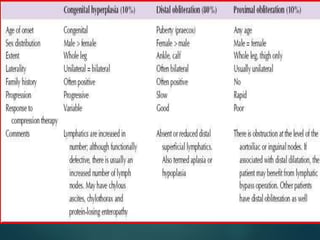
 all cases of primary lymphoedema are due to an
inherited abnormality of the lymphatic system,
sometimes termed ‘congenital lymphatic dysplasia’.
 Primary lymphoedema is much more common in the
legs than the arms.
Classification
 Congenital (onset < 2 years old): sporadic; familial (Nonne–Milroy’s
disease)
 Praecox (onset 2–35 years old): sporadic; familial (Letessier–Meige’s
disease)
 Tarda (onset after 35 years old)
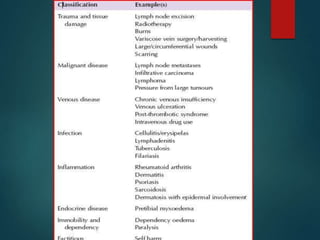
SECONDARY LYMPHOEDEMA
 This is the most common form of lymphoedema. There
are several well-recognised causes including infection,
inflammation, neoplasia and trauma
INVESTIGATION OF
LYMPHOEDEMA
 ‘Routine’ tests
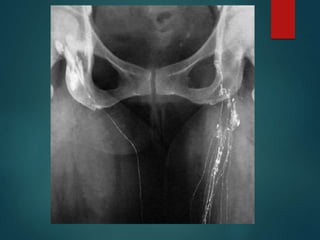
 Lymphangiography
 Isotope lymphoscintigraphy
 Computerised tomography
 Magnetic resonance imaging
 Ultrasound
 Pathological examination
MANAGEMENT OF
LYMPHOEDEMA
Initial evaluation of the patient with lymphoedema
 History (age of onset, location, progression, exacerbating and
relieving features)
 Past medical history including cancer history
 Family history
 Obesity
 Complications (venous, arterial, skin, joint, neurological,
malignant)
 Assessment of physical, emotional and psychosocial symptoms
 Social circumstances (mobility, housing, education, work)
 Special needs (footwear, clothing, compression garments)
 Previous and current treatment
 Pain control
 Compliance with therapy and ability to self-care
 Relief of pain
 Control of swelling
 Decongestive lymphoedema therapy (DLT),
Intensive phase :
Skin care
Manual lymphatic drainage
Multilayer lymphoedema bandaging and
compression garments
Exercise
Maintainence phase
Surgery
 Only a small minority of patients with lymphoedema
benefit from surgery. Operations fall into two categories:
 Bypass procedures
 The rare patient with proximal ilioinguinal lymphatic
obstruction and normal distal lymphatic channels
might benefit, at least in theory, from lymphatic
bypass.
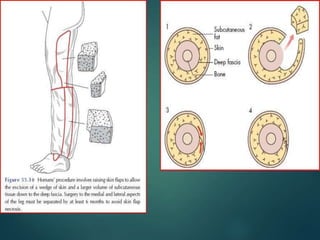
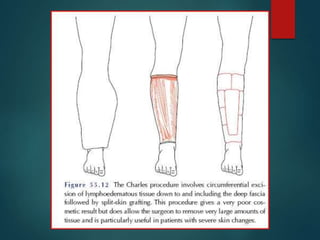
 Limb Reduction procedures.
 Sistrunk
 Homans
 Thompson
 Charles
lymphoedema basics and management plan .ppt

lymphoedema basics and management plan .ppt

  • 1.
  • 2.
     Lymphoedema maybe defined as abnormal limb swelling caused by the accumulation of increased amounts of high protein ISF secondary to defective lymphatic drainage in the presence of (near) normal net capillary filtration.
  • 3.
    Risk factors: Upper limb/trunklymphoedema  Surgery for lymph node dissection. Breast surgey.  Radiotherapy to breast or to axilary, im or subclaviclar lymph nodes.  Wound complications  Cancer  Obesity  Hypertension  Chronic skin disorders  Air travel  Congenital predisposition
  • 4.
    Lower limb lymphoedema Obesity  Varicose vein stripping  Advance cancer  Orthopedic surgery  Surgery with inguinal lymph node dissection  Postoperative pelvic radiotherapy  Genetic predisposition/family history of chronic oedema  Thrombophlebitis and chronic venous insufficiency
  • 5.
    Symptoms and signs Constant dull ache, even severe pain  Burning and bursting sensations  General tiredness and debility  Sensitivity to heat  ‘Pins and needles’  Cramp  Skin problems including flakiness, weeping, excoriation and breakdown  Immobility, leading to obesity and muscle wasting  Backache and joint problems  Athlete’s foot  Acute infective episodes  Toes become “square” shaped  Stemmer’s sign
  • 6.
    Classification  Primary lymphoedema,in which the cause is unknown (or at least uncertain and unproven); it is thought to be caused by ‘congenital lymphatic dysplasia’  Secondary or acquired lymphoedema, in which there is a clear underlying cause.
  • 7.
  • 10.
    PRIMARY LYMPHOEDEMA  allcases of primary lymphoedema are due to an inherited abnormality of the lymphatic system, sometimes termed ‘congenital lymphatic dysplasia’.  Primary lymphoedema is much more common in the legs than the arms.
  • 11.
    Classification  Congenital (onset< 2 years old): sporadic; familial (Nonne–Milroy’s disease)  Praecox (onset 2–35 years old): sporadic; familial (Letessier–Meige’s disease)  Tarda (onset after 35 years old)
  • 13.
    SECONDARY LYMPHOEDEMA  Thisis the most common form of lymphoedema. There are several well-recognised causes including infection, inflammation, neoplasia and trauma
  • 17.
    INVESTIGATION OF LYMPHOEDEMA  ‘Routine’tests  Lymphangiography  Isotope lymphoscintigraphy  Computerised tomography  Magnetic resonance imaging  Ultrasound  Pathological examination
  • 19.
    MANAGEMENT OF LYMPHOEDEMA Initial evaluationof the patient with lymphoedema  History (age of onset, location, progression, exacerbating and relieving features)  Past medical history including cancer history  Family history  Obesity  Complications (venous, arterial, skin, joint, neurological, malignant)  Assessment of physical, emotional and psychosocial symptoms  Social circumstances (mobility, housing, education, work)  Special needs (footwear, clothing, compression garments)  Previous and current treatment  Pain control  Compliance with therapy and ability to self-care
  • 20.
     Relief ofpain  Control of swelling  Decongestive lymphoedema therapy (DLT), Intensive phase : Skin care Manual lymphatic drainage Multilayer lymphoedema bandaging and compression garments Exercise Maintainence phase
  • 21.
    Surgery  Only asmall minority of patients with lymphoedema benefit from surgery. Operations fall into two categories:  Bypass procedures  The rare patient with proximal ilioinguinal lymphatic obstruction and normal distal lymphatic channels might benefit, at least in theory, from lymphatic bypass.  Limb Reduction procedures.  Sistrunk  Homans  Thompson  Charles