The BRT Corridor Design
       Workshop
      A semester long class taught simultaneously
Schools of Architecture and Planning and Engineering at
MIT and Schools of Engineering and Architecture, Design,
       and Urban Studies (FADEU) of PUC-Chile.
   Rosanna Forray, Rocio Hidalgo, Juan Carlos Munoz
Jan Wampler, Chris Zegras, John Attanucci, Nigel Wilson
Working hypothesis
• BRT systems can be a successful driver of
  urban revitalization, conditional upon proper,
  integrated design
  – routes,
  – public spaces,
  – real estate projects,
  – and related policy packages
• Testing this hypothesis requires a combination
  of disciplines and contexts.
Partners
• Architecture and Planning (SAP) and the Dept. of Civil
  and Environmental Engineering (CEE) at MIT and the
  Schools of Engineering and Architecture, Design, and
  Urban Studies (FADEU) of PUC-Chile.
• Academics and graduate students from both
  institutions
• A selection of 15 Master’s students from Academic
  Departments at both universities (i.e., 30 total) who
  will complete the semester-long workshop, for credit.
• This collaboration builds from previous professional
  and personal experiences among the members
Overall Objectives
1. help fill a practical knowledge gap regarding
   urban design for BRT implementation using real
   BRT examples from different urban contexts,
2. develop and demonstrate innovative design
   solutions for actual on-the-ground conditions;
   and,
3. teach the next generation of urban designers
   and transportation planners how to integrate
   BRT and urban design.
BRT Design Objectives
• Identify conditions necessary for urban design to lead
  to “successful” BRT
   – including equitable and inclusionary processes and
     outcomes
• We will examine
   – the corridors themselves (allocation of space to different
     vehicles, modes, and activities);
• urban space and its role in mitigating the adverse
  elements of BRT that might inhibit urban revitalization;
• policy and social measures that can lead to equitable
  outcomes, with particular attention to housing
  availability and affordability.
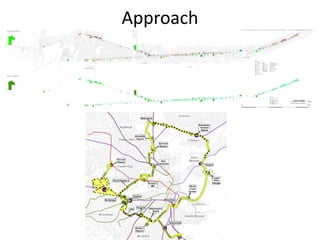
Approach
Approach: Workshop Specifics
• Simultaneously implemented in both universities
  – enable cross-learning across the contexts and the
    various disciplines involved.
• Broad parameters for student “design”:
  – Can BRT deliver TOD by integrating BRT corridors and
    stations into the urban physical and social fabrics in
    which it operates?
• Focus on innovations, with integral vision from
  the “vehicles to the buildings”
Project Phases
• Workshop Preparation: January, 2013-August, 2013.
   – Developing all necessary support materials
   – Selecting participating students.

• Workshop Implementation: August, 2013-December, 2013
   –   Beginning August, 2013. PUC Students start work on the Santiago Corridor.
   –   Week of 26 August, 2013. MIT students and faculty visit Santiago.
   –   Sept-October, 2013: Classes proceed in parallel, focusing on Santiago Corridor.
   –   Week of 14 (or 21) October: PUC students and faculty visit MIT.
   –   October-December, 2013: Classes proceed in parallel, focusing on Boston Corridor.
   –   December, 2013-January, 2014: Final presentations of final products.

• Post-Workshop Synthesis: January-May 2014
   –   Final, bi-lingual project report and website
   –   site-specific proposals;
   –   generalizable design recommendations
   –   educational lessons.

• Project Continuation….?
In Sum
• Bring together multi-disciplinary mix of students and faculty:
    – Urban planning and policy;
    – Urban design and architecture;
    – Transportation planning and engineering.

• Objectives:
    –   develop new pedagogical techniques,
    –   new urban design/planning/transportation innovations,
    –   new levels of trans-disciplinary knowledge among the students, and
    –   experience in working in the field for specific clients and a range of stakeholder
        groups.

• Offer experiences working, collaboratively:
    –   across disciplines;
    –   for a “client” on a “real” project;
    –   in two distinct contexts;
    –   across different cultures.

LT9: The BRT corridor design workshop

  • 1.
    The BRT CorridorDesign Workshop A semester long class taught simultaneously Schools of Architecture and Planning and Engineering at MIT and Schools of Engineering and Architecture, Design, and Urban Studies (FADEU) of PUC-Chile. Rosanna Forray, Rocio Hidalgo, Juan Carlos Munoz Jan Wampler, Chris Zegras, John Attanucci, Nigel Wilson
  • 2.
    Working hypothesis • BRTsystems can be a successful driver of urban revitalization, conditional upon proper, integrated design – routes, – public spaces, – real estate projects, – and related policy packages • Testing this hypothesis requires a combination of disciplines and contexts.
  • 3.
    Partners • Architecture andPlanning (SAP) and the Dept. of Civil and Environmental Engineering (CEE) at MIT and the Schools of Engineering and Architecture, Design, and Urban Studies (FADEU) of PUC-Chile. • Academics and graduate students from both institutions • A selection of 15 Master’s students from Academic Departments at both universities (i.e., 30 total) who will complete the semester-long workshop, for credit. • This collaboration builds from previous professional and personal experiences among the members
  • 4.
    Overall Objectives 1. helpfill a practical knowledge gap regarding urban design for BRT implementation using real BRT examples from different urban contexts, 2. develop and demonstrate innovative design solutions for actual on-the-ground conditions; and, 3. teach the next generation of urban designers and transportation planners how to integrate BRT and urban design.
  • 5.
    BRT Design Objectives •Identify conditions necessary for urban design to lead to “successful” BRT – including equitable and inclusionary processes and outcomes • We will examine – the corridors themselves (allocation of space to different vehicles, modes, and activities); • urban space and its role in mitigating the adverse elements of BRT that might inhibit urban revitalization; • policy and social measures that can lead to equitable outcomes, with particular attention to housing availability and affordability.
  • 6.
  • 7.
    Approach: Workshop Specifics •Simultaneously implemented in both universities – enable cross-learning across the contexts and the various disciplines involved. • Broad parameters for student “design”: – Can BRT deliver TOD by integrating BRT corridors and stations into the urban physical and social fabrics in which it operates? • Focus on innovations, with integral vision from the “vehicles to the buildings”
  • 8.
    Project Phases • WorkshopPreparation: January, 2013-August, 2013. – Developing all necessary support materials – Selecting participating students. • Workshop Implementation: August, 2013-December, 2013 – Beginning August, 2013. PUC Students start work on the Santiago Corridor. – Week of 26 August, 2013. MIT students and faculty visit Santiago. – Sept-October, 2013: Classes proceed in parallel, focusing on Santiago Corridor. – Week of 14 (or 21) October: PUC students and faculty visit MIT. – October-December, 2013: Classes proceed in parallel, focusing on Boston Corridor. – December, 2013-January, 2014: Final presentations of final products. • Post-Workshop Synthesis: January-May 2014 – Final, bi-lingual project report and website – site-specific proposals; – generalizable design recommendations – educational lessons. • Project Continuation….?
  • 9.
    In Sum • Bringtogether multi-disciplinary mix of students and faculty: – Urban planning and policy; – Urban design and architecture; – Transportation planning and engineering. • Objectives: – develop new pedagogical techniques, – new urban design/planning/transportation innovations, – new levels of trans-disciplinary knowledge among the students, and – experience in working in the field for specific clients and a range of stakeholder groups. • Offer experiences working, collaboratively: – across disciplines; – for a “client” on a “real” project; – in two distinct contexts; – across different cultures.