www.self-diagnostics.com
LSD – Effects and facts
LSD, also known as acid, is one of the most potent mood-
changing chemicals around; even if consumed in tiny amounts, it
can still produce 12 hours or more of unpredictable effects. The
drug is derived from a very poisonous ergot fungus, a mold that
grows on grains. LSD is a psychedelic drug which has
psychological effects and it is commonly used as a recreational
drug or for spiritual reasons.
www.self-diagnostics.com
LSD – Effects and facts
Physical effects of LSD:
- Dilatation of pupils
- Increased temperature
- High blood pressure
- Increased heart rate
- Sweating and nausea
www.self-diagnostics.com
LSD – Effects and facts
Even though the effects of LSD are more pronounced on a mental
rather than physical level, some consequences linger following long
term use of the drug. First of all, individuals can develop tolerance for
the drug, and then require a larger dose of LSD for the desired effects.
If the dose is too high, this can lead to a life threatening level of
toxicity. A cardiovascular collapse or sudden heart failure is also a high
possibility following a long term use of the drug.
Mixing LSD with other drugs poses a serious health risk and can also
drastically increase the chances of a bad trip. Mixed with alcohol, LSD
can cause nausea and vomiting.
www.self-diagnostics.com
LSD – Effects and facts
Psychological effects of LSD:
- Euphoria and well being
- Hallucinations (seeing/hearing things that aren’t there)
- Confusion and trouble concentrating
- The delusion that one has extreme mental clarity
- Unusual thoughts and increase in associative and creative thinking
- Over-awareness and over-sensitivity to music and noise
- Paranoia, fear and panic
- Occasional bad trips; so powerful that the effects can be irreversible
(especially among people that have mental health issues in their
family)
www.self-diagnostics.com
LSD – Effects and facts
The mental effects of LSD are unpredictable and differ a lot
based on the drug dose. Effects usually start to show 30-45
minutes after consumption and can last from 3 to 12 hours
(factors that can influence this are the user’s metabolism, the
tolerance level towards the drug, etc.).
There can also be psychological long term effects of consuming
the drug such as flashbacks, paranoia or even psychosis. The
flashbacks can occur a few weeks, a few months or even a few
years after consumption and can last for a minute or two.
www.self-diagnostics.com
LSD – Effects and facts
Facts about LSD:
- It was first synthesized in 1938 in Basel, Switzerland
- It is also known as “Lucy”, “yellow sunshine”, “trips” but has various
names used on the streets
- LSD does not create a physical addiction, but it can become addictive
on a psychological level
- Tripping on LSD has aided at least 2 Nobel Prize winners in their
scientific discoveries.
- After its discovery in 1938, LSD was used experimentally to treat
neuroses, drug addiction, autism, alcoholism, terminally-ill cancer
patients and to study the mechanisms of psychotic diseases such as
schizophrenia.
www.self-diagnostics.com
LSD – Effects and facts
If you suspect that a friend or someone close to you is using LSD, try
and have a frank discussion with them or seek professional help.
www.self-diagnostics.com
Thank you!
www.self-diagnostics.com

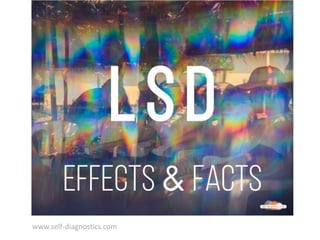
LSD - effects and facts

  • 1.
  • 2.
    LSD – Effectsand facts LSD, also known as acid, is one of the most potent mood- changing chemicals around; even if consumed in tiny amounts, it can still produce 12 hours or more of unpredictable effects. The drug is derived from a very poisonous ergot fungus, a mold that grows on grains. LSD is a psychedelic drug which has psychological effects and it is commonly used as a recreational drug or for spiritual reasons. www.self-diagnostics.com
  • 3.
    LSD – Effectsand facts Physical effects of LSD: - Dilatation of pupils - Increased temperature - High blood pressure - Increased heart rate - Sweating and nausea www.self-diagnostics.com
  • 4.
    LSD – Effectsand facts Even though the effects of LSD are more pronounced on a mental rather than physical level, some consequences linger following long term use of the drug. First of all, individuals can develop tolerance for the drug, and then require a larger dose of LSD for the desired effects. If the dose is too high, this can lead to a life threatening level of toxicity. A cardiovascular collapse or sudden heart failure is also a high possibility following a long term use of the drug. Mixing LSD with other drugs poses a serious health risk and can also drastically increase the chances of a bad trip. Mixed with alcohol, LSD can cause nausea and vomiting. www.self-diagnostics.com
  • 5.
    LSD – Effectsand facts Psychological effects of LSD: - Euphoria and well being - Hallucinations (seeing/hearing things that aren’t there) - Confusion and trouble concentrating - The delusion that one has extreme mental clarity - Unusual thoughts and increase in associative and creative thinking - Over-awareness and over-sensitivity to music and noise - Paranoia, fear and panic - Occasional bad trips; so powerful that the effects can be irreversible (especially among people that have mental health issues in their family) www.self-diagnostics.com
  • 6.
    LSD – Effectsand facts The mental effects of LSD are unpredictable and differ a lot based on the drug dose. Effects usually start to show 30-45 minutes after consumption and can last from 3 to 12 hours (factors that can influence this are the user’s metabolism, the tolerance level towards the drug, etc.). There can also be psychological long term effects of consuming the drug such as flashbacks, paranoia or even psychosis. The flashbacks can occur a few weeks, a few months or even a few years after consumption and can last for a minute or two. www.self-diagnostics.com
  • 7.
    LSD – Effectsand facts Facts about LSD: - It was first synthesized in 1938 in Basel, Switzerland - It is also known as “Lucy”, “yellow sunshine”, “trips” but has various names used on the streets - LSD does not create a physical addiction, but it can become addictive on a psychological level - Tripping on LSD has aided at least 2 Nobel Prize winners in their scientific discoveries. - After its discovery in 1938, LSD was used experimentally to treat neuroses, drug addiction, autism, alcoholism, terminally-ill cancer patients and to study the mechanisms of psychotic diseases such as schizophrenia. www.self-diagnostics.com
  • 8.
    LSD – Effectsand facts If you suspect that a friend or someone close to you is using LSD, try and have a frank discussion with them or seek professional help. www.self-diagnostics.com
  • 9.