Download to read offline
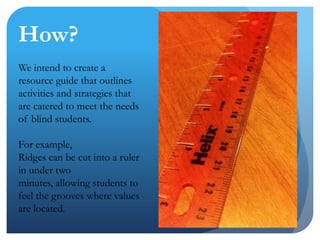
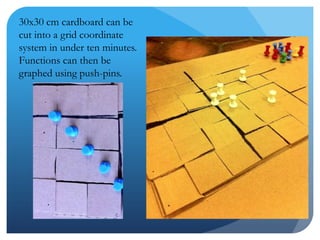

This document outlines a proposal to develop low-cost math and science lesson plans for blind students in developing countries. The curriculum aims to be implemented cheaply using locally available materials, in order to give blind students access to education. Examples of adaptations include cutting ridges into rulers and cardboard into grids that students can feel, to allow graphing functions using push-pins. The proposal involves examining curricula from schools for the blind, adapting materials, testing sections in summer camps, and distributing the curriculum internationally to help blind students succeed.


