loveLife
Social and Behavioural Interventions Workshop
30 November 2009
Rationale of new approach


• Young people have ‘got the message’
                               message
• What continues to drive HIV is not their response to the message,
  but response to their circumstances
• Perception of limited day-to-day opportunity – social, educational,
  economic – is the core fuel for the epidemic
• Their context must change, but so must their response
• Risk can be reduced by personal initiative; this means to negotiate
                                     initiative
  day-to-day pressures and expectations; and new links to opportunity
                             expectations
What continues to drive HIV is
  not their response to the
message, but response to their
       circumstances
Perception of limited day-to-day
opportunity – social, educational,
economic – is the core fuel for the
            epidemic
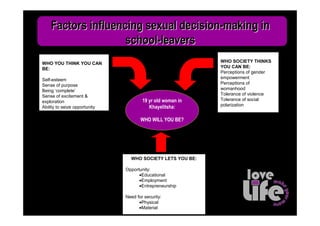
Factors influencing sexual decision-making in
                    school-leavers
WHO YOU THINK YOU CAN                                       WHO SOCIETY THINKS
BE:                                                         YOU CAN BE:
                                                            Perceptions of gender
Self-esteem                                                 empowerment
Sense of purpose                                            Perceptions of
Being ‘complete’                                            womanhood
Sense of excitement &                                       Tolerance of violence
exploration                            19 yr old woman in   Tolerance of social
Ability to seize opportunity              Khayelitsha:      polarization


                                      WHO WILL YOU BE?


                                 WHO SOCIETY LETS YOU BE:

                               Opportunity:
                                     •Educational
                                     •Employment
                                     •Entrepreneurship

                               Need for security:
                                     •Physical
                                     •Material
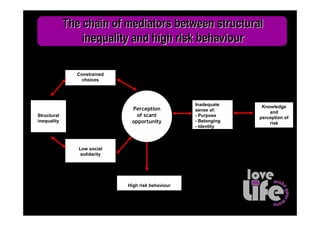
The chain of mediators between structural
                 inequality and high risk behaviour

               Constrained
                 choices


                                                    Inadequate     Knowledge
                               Perception           sense of:         and
Structural                       of scant           - Purpose     perception of
inequality                     opportunity          - Belonging       risk
                                                    - Identity


                Low social
                 solidarity


                              High risk behaviour
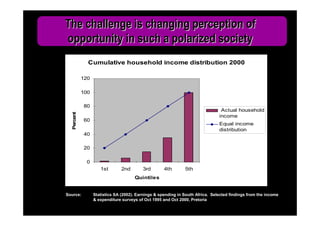
The challenge is changing perception of
opportunity in such a polarized society
              Cumulative household income distribution 2000

            120

            100

            80
                                                                                 Actual household
  Percent


                                                                                income
            60
                                                                                Equal income
                                                                                distribution
            40

            20

             0
                     1st       2nd        3rd        4th       5th
                                      Quintiles


Source:           Statistics SA (2002). Earnings & spending in South Africa. Selected findings from the income
                  & expenditure surveys of Oct 1995 and Oct 2000, Pretoria
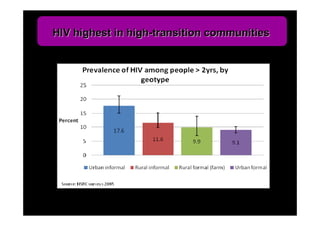
HIV highest in high-transition communities
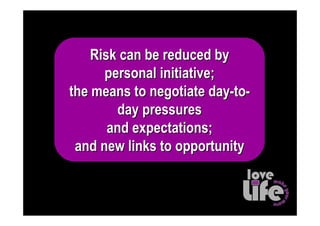
Risk can be reduced by
      personal initiative;
the means to negotiate day-to-
        day pressures
       and expectations;
 and new links to opportunity
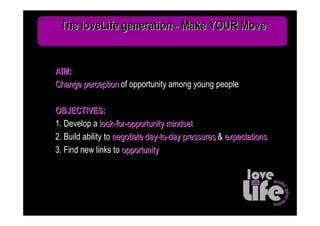
The loveLife generation - Make YOUR Move


AIM:
Change perception of opportunity among young people

OBJECTIVES:
1. Develop a look-for-opportunity mindset
2. Build ability to negotiate day-to-day pressures & expectations
3. Find new links to opportunity
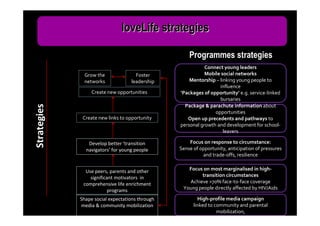
loveLife strategies

                                                     Programmes strategies
                                                            Connect young leaders
              Grow the               Foster                 Mobile social networks
              networks             leadership        Mentorship – linking young people to
                                                                  influence
                  Create new opportunities       ‘Packages of opportunity’ e.g. service-linked
                                                                  bursaries
                                                   Package & parachute information about
Strategies


                                                                opportunities
              Create new links to opportunity       Open up precedents and pathways to
                                                 personal growth and development for school-
                                                                    leavers

                Develop better ‘transition           Focus on response to circumstance:
               navigators’ for young people      Sense of opportunity, anticipation of pressures
                                                           and trade-offs, resilience


               Use peers, parents and other         Focus on most marginalised in high-
                 significant motivators in               transition circumstances
              comprehensive life enrichment         Achieve >70% face-to-face coverage
                          programs                Young people directly affected by HIV/Aids

             Shape social expectations through           High-profile media campaign
             media & community mobilization            linked to community and parental
                                                                  mobilization,
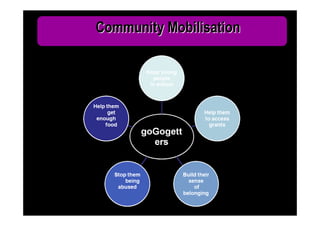
Community Mobilisation
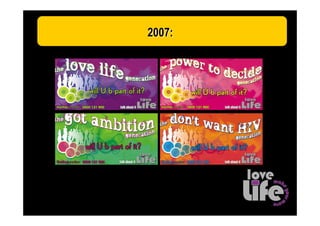
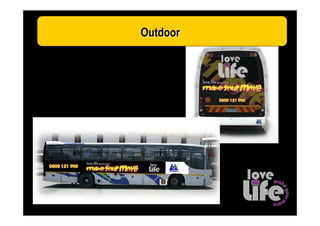
loveLife MEDIA
2007:
Outdoor
Television
 2008: Make YOUR move: Media Support


  Year-long Public Service Announcements (SABC)

  External broadcasts on partner stations

  Broadcast video clips (SABC, website)

TOTAL REACH: + 1 million daily
Radio


  Year-long 60” Public Service Announcements (13 SABC stations)

  Weekly programmes (11 SABC Language Stations)

  Extended weekly broadcasts (Jacaranda, YFM, Community Stations)

  PR-targeted interviews (commercial stations)

TOTAL LISTENERSHIP: +7 million weekly
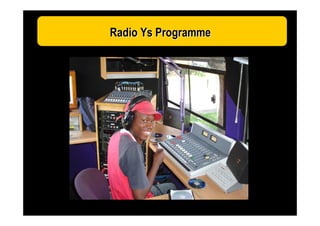
Radio Ys Programme
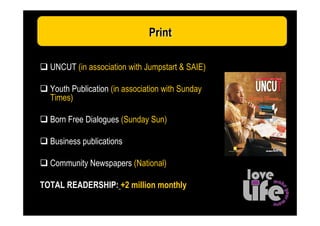
Print
 2008: Make YOUR move: Media Support


  UNCUT (in association with Jumpstart & SAIE)

  Youth Publication (in association with Sunday
  Times)

  Born Free Dialogues (Sunday Sun)

  Business publications

  Community Newspapers (National)

TOTAL READERSHIP: +2 million monthly
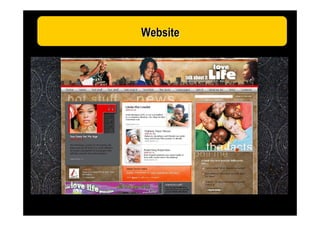
Website


  Youth Website: interactive Make YOUR move challenges including
  youth portal and mobile content

  Parent Website: gogoGetters & parents MYM-themed activities

  Corporate: Corporate MYM challenges

TOTAL HITS: +500K monthly
Website
Trigger behaviour change

• Internal Determinants – [ personal beliefs, attitudes] - individual focus

• External Determinants – [access to resources, social norms] –
  structural/societal focus
Determinants

Determinants can encourage change or discourage change.

• Behaviour change interventions must build on positive determinants
  and reduce negative ones in order to be effective.
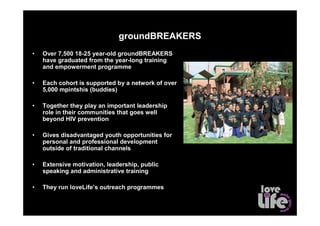
groundBREAKERS
•   Over 7,500 18-25 year-old groundBREAKERS
    have graduated from the year-long training
    and empowerment programme

•   Each cohort is supported by a network of over
    5,000 mpintshis (buddies)

•   Together they play an important leadershipbecoming groundBREAKERS
                           Employment levels, before and after

    role in their communities that goes well
    beyond HIV prevention

•   Gives disadvantaged youth opportunities for
    personal and professional development
    outside of traditional channels

•   Extensive motivation, leadership, public
    speaking and administrative training

•   They run loveLife’s outreach programmes
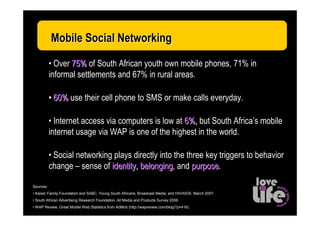
Mobile Social Networking

           • Over 75% of South African youth own mobile phones, 71% in
           informal settlements and 67% in rural areas.

           • 60% use their cell phone to SMS or make calls everyday.

           • Internet access via computers is low at 6%, but South Africa’s mobile
           internet usage via WAP is one of the highest in the world.

           • Social networking plays directly into the three key triggers to behavior
           change – sense of identity, belonging, and purpose.
                                       belonging         purpose

Sources:
• Kaiser Family Foundation and SABC, Young South Africans, Broadcast Media, and HIV/AIDS. March 2007.
• South African Advertising Research Foundation, All Media and Products Survey 2006.
• WAP Review, Great Mobile Web Statistics from AdMob (http://wapreview.com/blog/?p=416).
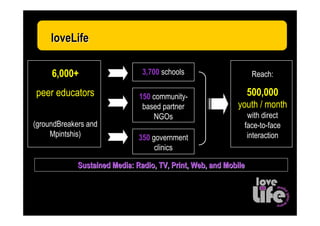
loveLife

     6,000+                     3,700 schools                      Reach:

peer educators                 150 community-                     500,000
                                based partner               youth / month
                                   NGOs                        with direct
(groundBreakers and                                           face-to-face
     Mpintshis)                350 government                  interaction
                                    clinics

             Sustained Media: Radio, TV, Print, Web, and Mobile

Lovelife Case Study 30 Nov 2009

  • 1.
    loveLife Social and BehaviouralInterventions Workshop 30 November 2009
  • 2.
    Rationale of newapproach • Young people have ‘got the message’ message • What continues to drive HIV is not their response to the message, but response to their circumstances • Perception of limited day-to-day opportunity – social, educational, economic – is the core fuel for the epidemic • Their context must change, but so must their response • Risk can be reduced by personal initiative; this means to negotiate initiative day-to-day pressures and expectations; and new links to opportunity expectations
  • 3.
    What continues todrive HIV is not their response to the message, but response to their circumstances
  • 4.
    Perception of limitedday-to-day opportunity – social, educational, economic – is the core fuel for the epidemic
  • 5.
    Factors influencing sexualdecision-making in school-leavers WHO YOU THINK YOU CAN WHO SOCIETY THINKS BE: YOU CAN BE: Perceptions of gender Self-esteem empowerment Sense of purpose Perceptions of Being ‘complete’ womanhood Sense of excitement & Tolerance of violence exploration 19 yr old woman in Tolerance of social Ability to seize opportunity Khayelitsha: polarization WHO WILL YOU BE? WHO SOCIETY LETS YOU BE: Opportunity: •Educational •Employment •Entrepreneurship Need for security: •Physical •Material
  • 6.
    The chain ofmediators between structural inequality and high risk behaviour Constrained choices Inadequate Knowledge Perception sense of: and Structural of scant - Purpose perception of inequality opportunity - Belonging risk - Identity Low social solidarity High risk behaviour
  • 7.
    The challenge ischanging perception of opportunity in such a polarized society Cumulative household income distribution 2000 120 100 80 Actual household Percent income 60 Equal income distribution 40 20 0 1st 2nd 3rd 4th 5th Quintiles Source: Statistics SA (2002). Earnings & spending in South Africa. Selected findings from the income & expenditure surveys of Oct 1995 and Oct 2000, Pretoria
  • 8.
    HIV highest inhigh-transition communities
  • 9.
    Risk can bereduced by personal initiative; the means to negotiate day-to- day pressures and expectations; and new links to opportunity
  • 10.
    The loveLife generation- Make YOUR Move AIM: Change perception of opportunity among young people OBJECTIVES: 1. Develop a look-for-opportunity mindset 2. Build ability to negotiate day-to-day pressures & expectations 3. Find new links to opportunity
  • 11.
    loveLife strategies Programmes strategies Connect young leaders Grow the Foster Mobile social networks networks leadership Mentorship – linking young people to influence Create new opportunities ‘Packages of opportunity’ e.g. service-linked bursaries Package & parachute information about Strategies opportunities Create new links to opportunity Open up precedents and pathways to personal growth and development for school- leavers Develop better ‘transition Focus on response to circumstance: navigators’ for young people Sense of opportunity, anticipation of pressures and trade-offs, resilience Use peers, parents and other Focus on most marginalised in high- significant motivators in transition circumstances comprehensive life enrichment Achieve >70% face-to-face coverage programs Young people directly affected by HIV/Aids Shape social expectations through High-profile media campaign media & community mobilization linked to community and parental mobilization,
  • 12.
  • 13.
  • 14.
  • 15.
  • 16.
    Television 2008: MakeYOUR move: Media Support Year-long Public Service Announcements (SABC) External broadcasts on partner stations Broadcast video clips (SABC, website) TOTAL REACH: + 1 million daily
  • 17.
    Radio Year-long60” Public Service Announcements (13 SABC stations) Weekly programmes (11 SABC Language Stations) Extended weekly broadcasts (Jacaranda, YFM, Community Stations) PR-targeted interviews (commercial stations) TOTAL LISTENERSHIP: +7 million weekly
  • 18.
  • 19.
    Print 2008: MakeYOUR move: Media Support UNCUT (in association with Jumpstart & SAIE) Youth Publication (in association with Sunday Times) Born Free Dialogues (Sunday Sun) Business publications Community Newspapers (National) TOTAL READERSHIP: +2 million monthly
  • 20.
    Website YouthWebsite: interactive Make YOUR move challenges including youth portal and mobile content Parent Website: gogoGetters & parents MYM-themed activities Corporate: Corporate MYM challenges TOTAL HITS: +500K monthly
  • 21.
  • 22.
    Trigger behaviour change •Internal Determinants – [ personal beliefs, attitudes] - individual focus • External Determinants – [access to resources, social norms] – structural/societal focus
  • 23.
    Determinants Determinants can encouragechange or discourage change. • Behaviour change interventions must build on positive determinants and reduce negative ones in order to be effective.
  • 24.
    groundBREAKERS • Over 7,500 18-25 year-old groundBREAKERS have graduated from the year-long training and empowerment programme • Each cohort is supported by a network of over 5,000 mpintshis (buddies) • Together they play an important leadershipbecoming groundBREAKERS Employment levels, before and after role in their communities that goes well beyond HIV prevention • Gives disadvantaged youth opportunities for personal and professional development outside of traditional channels • Extensive motivation, leadership, public speaking and administrative training • They run loveLife’s outreach programmes
  • 25.
    Mobile Social Networking • Over 75% of South African youth own mobile phones, 71% in informal settlements and 67% in rural areas. • 60% use their cell phone to SMS or make calls everyday. • Internet access via computers is low at 6%, but South Africa’s mobile internet usage via WAP is one of the highest in the world. • Social networking plays directly into the three key triggers to behavior change – sense of identity, belonging, and purpose. belonging purpose Sources: • Kaiser Family Foundation and SABC, Young South Africans, Broadcast Media, and HIV/AIDS. March 2007. • South African Advertising Research Foundation, All Media and Products Survey 2006. • WAP Review, Great Mobile Web Statistics from AdMob (http://wapreview.com/blog/?p=416).
  • 26.
    loveLife 6,000+ 3,700 schools Reach: peer educators 150 community- 500,000 based partner youth / month NGOs with direct (groundBreakers and face-to-face Mpintshis) 350 government interaction clinics Sustained Media: Radio, TV, Print, Web, and Mobile