LOVEFIELD Analysis 
By D.R. Hayes
THE TITLE 
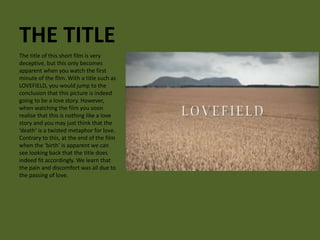
The title of this short film is very 
deceptive, but this only becomes 
apparent when you watch the first 
minute of the film. With a title such as 
LOVEFIELD, you would jump to the 
conclusion that this picture is indeed 
going to be a love story. However, 
when watching the film you soon 
realise that this is nothing like a love 
story and you may just think that the 
‘death’ is a twisted metaphor for love. 
Contrary to this, at the end of the film 
when the ‘birth’ is apparent we can 
see looking back that the title does 
indeed fit accordingly. We learn that 
the pain and discomfort was all due to 
the passing of love.
SOUND 
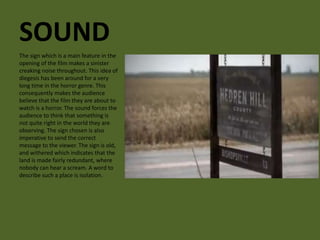
The sign which is a main feature in the 
opening of the film makes a sinister 
creaking noise throughout. This idea of 
diegesis has been around for a very 
long time in the horror genre. This 
consequently makes the audience 
believe that the film they are about to 
watch is a horror. The sound forces the 
audience to think that something is 
not quite right in the world they are 
observing. The sign chosen is also 
imperative to send the correct 
message to the viewer. The sign is old, 
and withered which indicates that the 
land is made fairly redundant, where 
nobody can hear a scream. A word to 
describe such a place is isolation.
MISE EN 
SCENE 
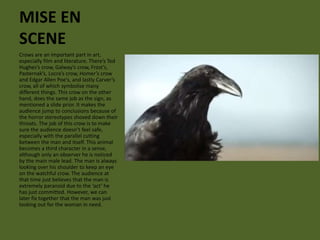
Crows are an important part in art, 
especially film and literature. There’s Ted 
Hughes’s crow, Galway’s crow, Frost’s, 
Pasternak’s, Locra’s crow, Homer’s crow 
and Edgar Allen Poe’s, and lastly Carver’s 
crow, all of which symbolise many 
different things. This crow on the other 
hand, does the same job as the sign, as 
mentioned a slide prior. It makes the 
audience jump to conclusions because of 
the horror stereotypes shoved down their 
throats. The job of this crow is to make 
sure the audience doesn’t feel safe, 
especially with the parallel cutting 
between the man and itself. This animal 
becomes a third character in a sense, 
although only an observer he is noticed 
by the main male lead. The man is always 
looking over his shoulder to keep an eye 
on the watchful crow. The audience at 
that time just believes that the man is 
extremely paranoid due to the ‘act’ he 
has just committed. However, we can 
later fix together that the man was just 
looking out for the woman in need.
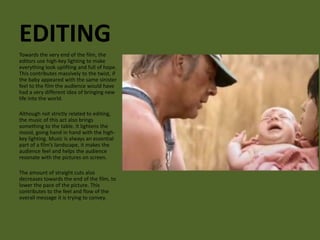
EDITING 
Towards the very end of the film, the 
editors use high-key lighting to make 
everything look uplifting and full of hope. 
This contributes massively to the twist, if 
the baby appeared with the same sinister 
feel to the film the audience would have 
had a very different idea of bringing new 
life into the world. 
Although not strictly related to editing, 
the music of this act also brings 
something to the table. It lightens the 
mood, going hand in hand with the high-key 
lighting. Music is always an essential 
part of a film’s landscape, it makes the 
audience feel and helps the audience 
resonate with the pictures on screen. 
The amount of straight cuts also 
decreases towards the end of the film, to 
lower the pace of the picture. This 
contributes to the feel and flow of the 
overall message it is trying to convey.
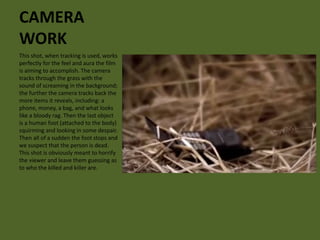
CAMERA 
WORK 
This shot, when tracking is used, works 
perfectly for the feel and aura the film 
is aiming to accomplish. The camera 
tracks through the grass with the 
sound of screaming in the background; 
the further the camera tracks back the 
more items it reveals, including: a 
phone, money, a bag, and what looks 
like a bloody rag. Then the last object 
is a human foot (attached to the body) 
squirming and looking in some despair. 
Then all of a sudden the foot stops and 
we suspect that the person is dead. 
This shot is obviously meant to horrify 
the viewer and leave them guessing as 
to who the killed and killer are.

LOVEFIELD Analysis

  • 1.
  • 2.
    THE TITLE Thetitle of this short film is very deceptive, but this only becomes apparent when you watch the first minute of the film. With a title such as LOVEFIELD, you would jump to the conclusion that this picture is indeed going to be a love story. However, when watching the film you soon realise that this is nothing like a love story and you may just think that the ‘death’ is a twisted metaphor for love. Contrary to this, at the end of the film when the ‘birth’ is apparent we can see looking back that the title does indeed fit accordingly. We learn that the pain and discomfort was all due to the passing of love.
  • 3.
    SOUND The signwhich is a main feature in the opening of the film makes a sinister creaking noise throughout. This idea of diegesis has been around for a very long time in the horror genre. This consequently makes the audience believe that the film they are about to watch is a horror. The sound forces the audience to think that something is not quite right in the world they are observing. The sign chosen is also imperative to send the correct message to the viewer. The sign is old, and withered which indicates that the land is made fairly redundant, where nobody can hear a scream. A word to describe such a place is isolation.
  • 4.
    MISE EN SCENE Crows are an important part in art, especially film and literature. There’s Ted Hughes’s crow, Galway’s crow, Frost’s, Pasternak’s, Locra’s crow, Homer’s crow and Edgar Allen Poe’s, and lastly Carver’s crow, all of which symbolise many different things. This crow on the other hand, does the same job as the sign, as mentioned a slide prior. It makes the audience jump to conclusions because of the horror stereotypes shoved down their throats. The job of this crow is to make sure the audience doesn’t feel safe, especially with the parallel cutting between the man and itself. This animal becomes a third character in a sense, although only an observer he is noticed by the main male lead. The man is always looking over his shoulder to keep an eye on the watchful crow. The audience at that time just believes that the man is extremely paranoid due to the ‘act’ he has just committed. However, we can later fix together that the man was just looking out for the woman in need.
  • 5.
    EDITING Towards thevery end of the film, the editors use high-key lighting to make everything look uplifting and full of hope. This contributes massively to the twist, if the baby appeared with the same sinister feel to the film the audience would have had a very different idea of bringing new life into the world. Although not strictly related to editing, the music of this act also brings something to the table. It lightens the mood, going hand in hand with the high-key lighting. Music is always an essential part of a film’s landscape, it makes the audience feel and helps the audience resonate with the pictures on screen. The amount of straight cuts also decreases towards the end of the film, to lower the pace of the picture. This contributes to the feel and flow of the overall message it is trying to convey.
  • 6.
    CAMERA WORK Thisshot, when tracking is used, works perfectly for the feel and aura the film is aiming to accomplish. The camera tracks through the grass with the sound of screaming in the background; the further the camera tracks back the more items it reveals, including: a phone, money, a bag, and what looks like a bloody rag. Then the last object is a human foot (attached to the body) squirming and looking in some despair. Then all of a sudden the foot stops and we suspect that the person is dead. This shot is obviously meant to horrify the viewer and leave them guessing as to who the killed and killer are.