DAILYLESSON LOG
School Alalum National High School Grade Level 7
Teacher SHERYL D. LUCERO Learning Area T.L.E ( Handicraft)
Teaching Dates and Time 1hour Quarter
I. OBJECTIVES
A. Content Standards The learner demonstrates understanding on the principles and concepts of embroidery
B. Performance Standards The learner use basic tools in embroider and create embroidered article.
C. Learning Competencies / Objectives
Write the LC code for each
L.O. 1: Use basic tools in embroidery
1.1 Basic tools and materials in embroidery are identified.
TLE_HEHD7/8EA0a-b-1
II. CONTENT 1. History of Embroidery
2. Uses and maintenance of basic tools and materials in embroidery
III. LEARNING RESOURCES
1.Curriculum Guide pages CG 2;
2.Textbook pages Learning Module Handicraft 7, pp.9-15
3.Additional Materials from Learning
Resource (LR) portal
4.Other Learning Resources DLP,laptop,pictures
IV.PROCEDURES
A. Reviewing yesterday’s lesson or
Presenting the new lesson
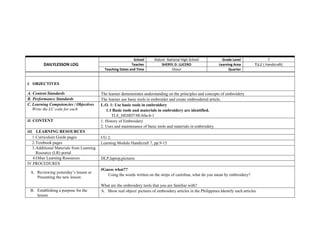
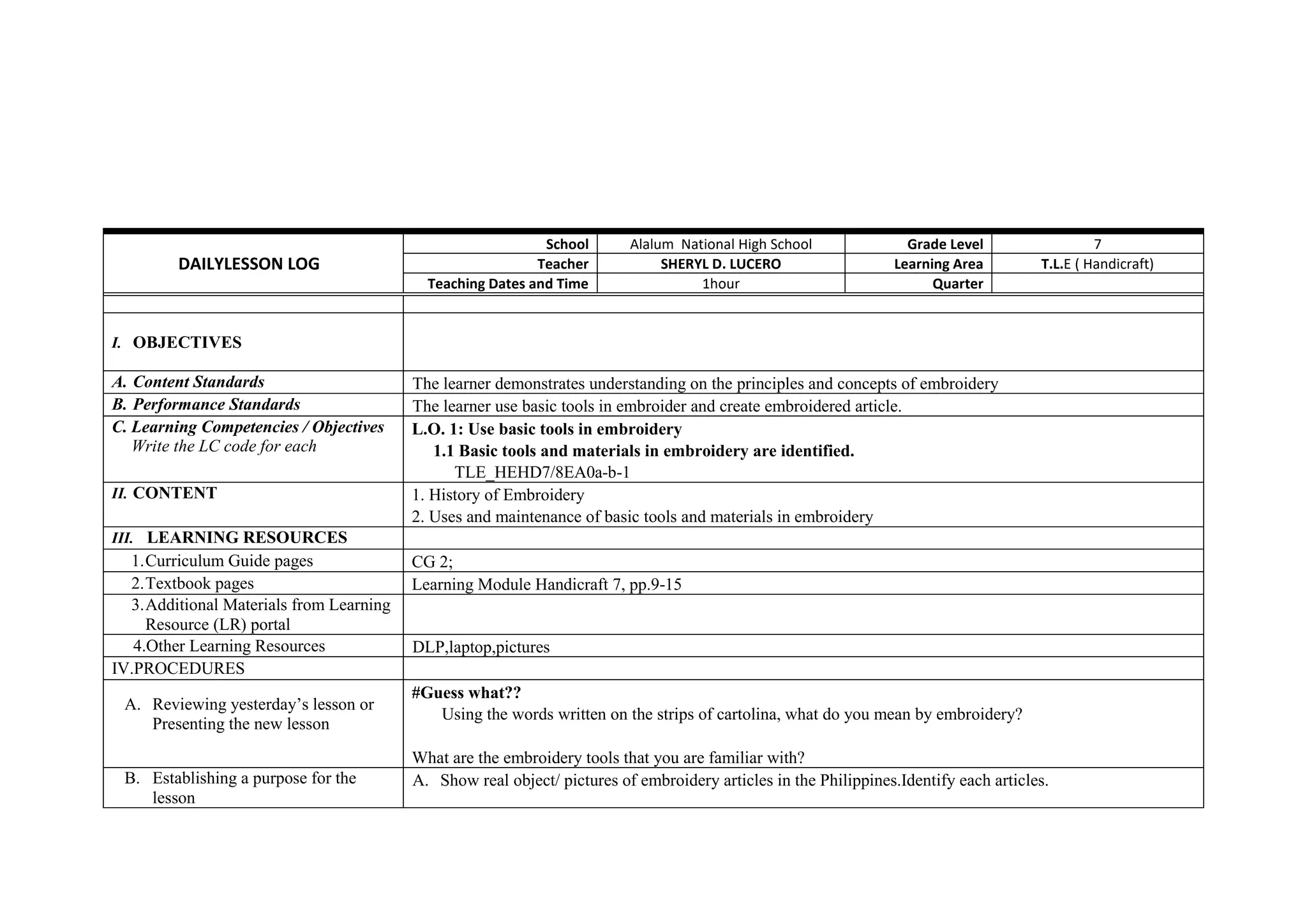
#Guess what??
Using the words written on the strips of cartolina, what do you mean by embroidery?
What are the embroidery tools that you are familiar with?
B. Establishing a purpose for the
lesson
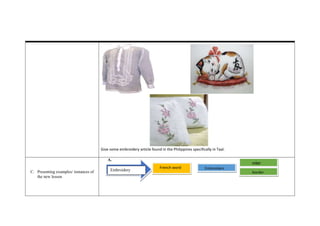
A. Show real object/ pictures of embroidery articles in the Philippines.Identify each articles.
Give some embroidery article found in the Philippines specifically in Taal.
C. Presenting examples/ instances of
the new lesson
A.
Embroidery Embroiders
French word
edge
border
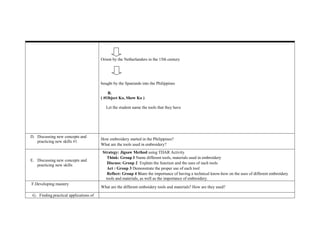
Orient by the Netherlanders in the 15th century
bought by the Spaniards into the Philippines
B.
( #Object Ko, Show Ko )
Let the student name the tools that they have
D. Discussing new concepts and
practicing new skills #1
How embroidery started in the Philippines?
What are the tools used in embroidery?
E. Discussing new concepts and
practicing new skills
Strategy: Jigsaw Method using TDAR Activity
Think: Group I Name different tools, materials used in embroidery
Discuss: Group 2 Explain the function and the uses of each tools
Act : Group 3 Demonstrate the proper use of each tool
Reflect: Group 4 Share the importance of having a technical know-how on the uses of different embroidery
tools and materials, as well as the importance of embroidery.
F.Developing mastery
What are the different emboidery tools and materials? How are they used?
G. Finding practical applications of
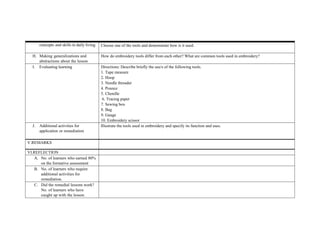
concepts and skills in daily living Choose one of the tools and demonstrate how is it used.
H. Making generalizations and
abstractions about the lesson
How do embroidery tools differ from each other? What are common tools used in embroidery?
I. Evaluating learning Directions: Describe briefly the use/s of the following tools.
1. Tape measure
2. Hoop
3. Needle threader
4. Pounce
5. Chenille
6. Tracing paper
7. Sewing box
8. Bag
9. Gauge
10. Embroidery scissor
J. Additional activities for
application or remediation
Illustrate the tools used in embroidery and specify its function and uses.
V.REMARKS
VI.REFLECTION
A. No. of learners who earned 80%
on the formative assessment
B. No. of learners who require
additional activities for
remediation.
C. Did the remedial lessons work?
No. of learners who have
caught up with the lesson.
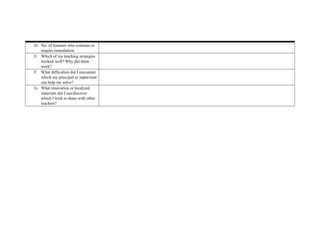
D. No. of learners who continue to
require remediation
E. Which of my teaching strategies
worked well? Why did these
work?
F. What difficulties did I encounter
which my principal or supervisor
can help me solve?
G. What innovation or localized
materials did I use/discover
which I wish to share with other
teachers?

LO1 Tools in embroidery.doc for tle 7 exploratory courses

  • 1.
    DAILYLESSON LOG School AlalumNational High School Grade Level 7 Teacher SHERYL D. LUCERO Learning Area T.L.E ( Handicraft) Teaching Dates and Time 1hour Quarter I. OBJECTIVES A. Content Standards The learner demonstrates understanding on the principles and concepts of embroidery B. Performance Standards The learner use basic tools in embroider and create embroidered article. C. Learning Competencies / Objectives Write the LC code for each L.O. 1: Use basic tools in embroidery 1.1 Basic tools and materials in embroidery are identified. TLE_HEHD7/8EA0a-b-1 II. CONTENT 1. History of Embroidery 2. Uses and maintenance of basic tools and materials in embroidery III. LEARNING RESOURCES 1.Curriculum Guide pages CG 2; 2.Textbook pages Learning Module Handicraft 7, pp.9-15 3.Additional Materials from Learning Resource (LR) portal 4.Other Learning Resources DLP,laptop,pictures IV.PROCEDURES A. Reviewing yesterday’s lesson or Presenting the new lesson #Guess what?? Using the words written on the strips of cartolina, what do you mean by embroidery? What are the embroidery tools that you are familiar with? B. Establishing a purpose for the lesson A. Show real object/ pictures of embroidery articles in the Philippines.Identify each articles.
  • 2.
    Give some embroideryarticle found in the Philippines specifically in Taal. C. Presenting examples/ instances of the new lesson A. Embroidery Embroiders French word edge border
  • 3.
    Orient by theNetherlanders in the 15th century bought by the Spaniards into the Philippines B. ( #Object Ko, Show Ko ) Let the student name the tools that they have D. Discussing new concepts and practicing new skills #1 How embroidery started in the Philippines? What are the tools used in embroidery? E. Discussing new concepts and practicing new skills Strategy: Jigsaw Method using TDAR Activity Think: Group I Name different tools, materials used in embroidery Discuss: Group 2 Explain the function and the uses of each tools Act : Group 3 Demonstrate the proper use of each tool Reflect: Group 4 Share the importance of having a technical know-how on the uses of different embroidery tools and materials, as well as the importance of embroidery. F.Developing mastery What are the different emboidery tools and materials? How are they used? G. Finding practical applications of
  • 4.
    concepts and skillsin daily living Choose one of the tools and demonstrate how is it used. H. Making generalizations and abstractions about the lesson How do embroidery tools differ from each other? What are common tools used in embroidery? I. Evaluating learning Directions: Describe briefly the use/s of the following tools. 1. Tape measure 2. Hoop 3. Needle threader 4. Pounce 5. Chenille 6. Tracing paper 7. Sewing box 8. Bag 9. Gauge 10. Embroidery scissor J. Additional activities for application or remediation Illustrate the tools used in embroidery and specify its function and uses. V.REMARKS VI.REFLECTION A. No. of learners who earned 80% on the formative assessment B. No. of learners who require additional activities for remediation. C. Did the remedial lessons work? No. of learners who have caught up with the lesson.
  • 5.
    D. No. oflearners who continue to require remediation E. Which of my teaching strategies worked well? Why did these work? F. What difficulties did I encounter which my principal or supervisor can help me solve? G. What innovation or localized materials did I use/discover which I wish to share with other teachers?