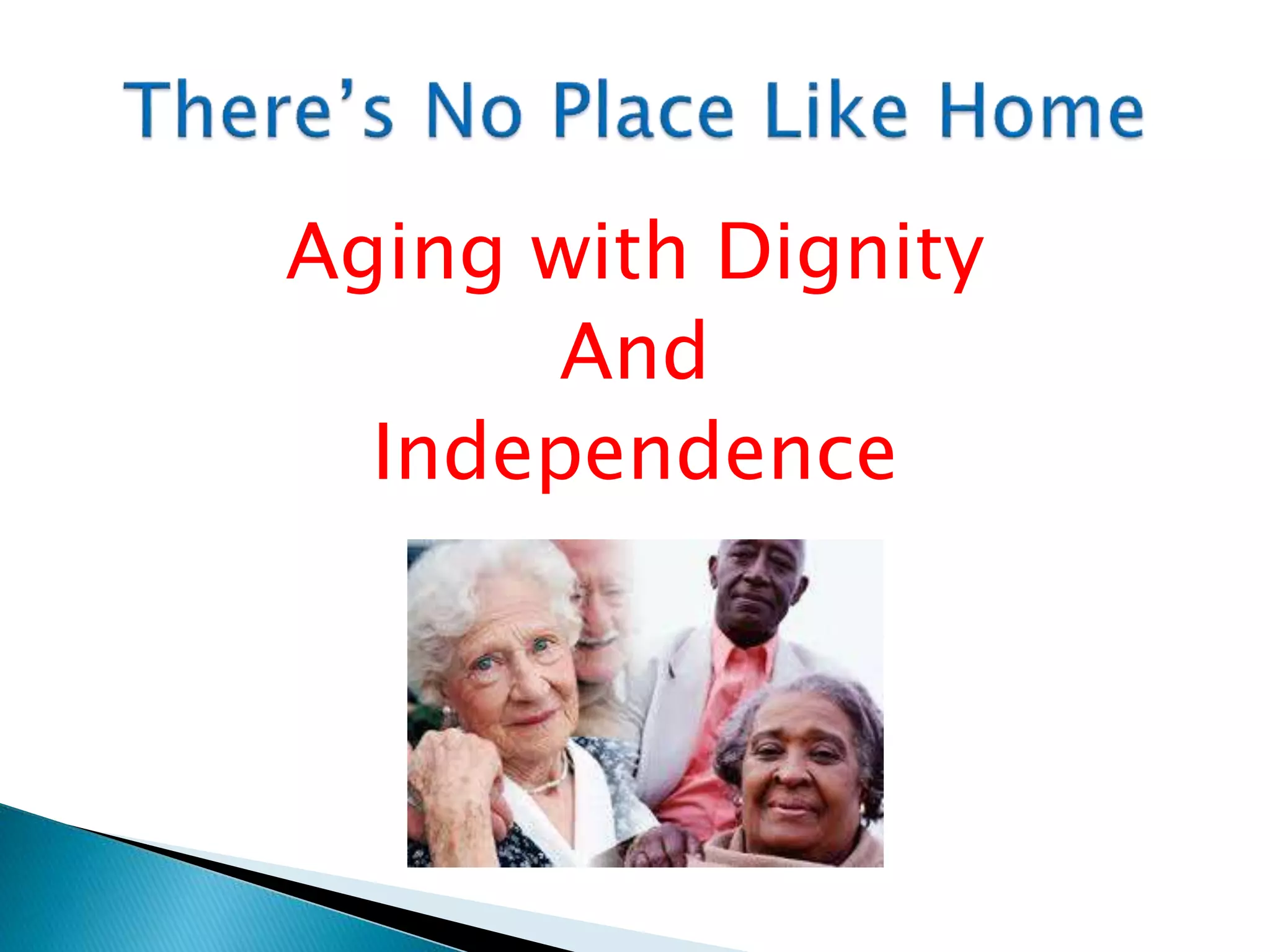
Aging with Dignity
And
Independence
 Ten Thousand People a Day Turn 65 in the
United States
 North Carolinians who were 60 in 2013
could be expected to live, on average, an
additional 22.9 years to almost 83 years old.
 Heart disease was the leading cause of death
among people 65 and over, with cancer and
chronic respiratory diseases, coming second
and third on the list.
 Aging with dignity and
independence is the ability
to live life to its fullest in the
place you call home,
regardless of age, illness,
or disability.
 In North Carolina, our 65 and older
population will almost double in the
next 20 years from 1.3 to 2.3 million.
 According to AARP, 90% want to age in
their own homes.
 Over the next two decades, the 75-84
age groups will be the fastest growing
of those 65 and older in North
Carolina.
 Women outnumbered men in the state
in 2011. They represent 58% of the 65
and over and 70% of 85 and over
population.
 We all see ourselves staying as
healthy as possible through our
golden years.
 70 percent of us who reach the age
65 will need some form of care or
services for an average of three years
 Home Care
 Assisted Living
 Continuing Care Retirement Communities
 Skilled Nursing Facility
 Hospice Care
 Adult Day Care
 Home Health
 Home Care aims to make it possible for
people to remain at home rather than
use residential, long-term, or institutional
based care.
 Home care is the option that promotes the
individual’s independence and ability to
continue with the normal, daily routine as
long as possible.
1. Personal Care Needs
2. Medication Supervision
3. Special Needs Care
4. Companionship
5. Safety
6. Family Involvement and Continuity of Care
7. Ease Burden of Family Members
8. Respite Care
9. Avoid Hospital Readmission
 Assisted living residences or assisted living
facilities (ALFs) are housing facilities with
limited care designed for senior citizens and
people with disabilities.
 CCRC is a particular type of retirement
community that offers several levels of health
care on one campus:
 Independent Living
 Assisted Living
 Memory Care (this is sometimes referred to
as “Special Care”).
 Skilled Nursing and Rehabilitation (both
short- and long-term)
 A nursing home, convalescent home, skilled
nursing facility (SNF), care home, rest home
or intermediate care provides a type of
residential care.
 Hospice care focuses on quality rather than
length of life. It provides humane and
compassionate care for people in the last
phases of incurable disease so that they may
live as fully and comfortably as possible.
 Adult day care centers are senior care
locations that are open during normal
business hours and provide various care
services, supervision and social interaction
for the elderly.
 Home health care is defined as rendering
predominantly medically-related services to
patients in a home setting rather than in a
medical facility.
 Home health care is defined as rendering
predominantly medically-related services to
patients in a home setting rather than in a
medical facility.
Become the New Face of Aging
Add Life to Your Years
Add Years To Your Life
 Challenge the negative stereotypes
about aging by maintaining an active
role in your own community.
 The notion of a senior retiring to a
rocking chair is obsolete. Resolve to
remain active and involved.
 Make a plan for yourself that includes
where and how you will live as you grow
older.
 Think about what you might need in your
life in case you need daily support.
 Choose someone you trust to be a
surrogate decision-maker who will honor
your health care wishes if you cannot
make decisions for yourself, and let that
person know what you want for your life.
 Talk with your doctor and your loved
ones now about the kind of care you
want for yourself.
 Consider filling out advance directives.

Llp presentation aging with dignity washington helping hands presentation

  • 1.
  • 2.
     Ten ThousandPeople a Day Turn 65 in the United States
  • 3.
     North Carolinianswho were 60 in 2013 could be expected to live, on average, an additional 22.9 years to almost 83 years old.  Heart disease was the leading cause of death among people 65 and over, with cancer and chronic respiratory diseases, coming second and third on the list.
  • 4.
     Aging withdignity and independence is the ability to live life to its fullest in the place you call home, regardless of age, illness, or disability.
  • 5.
     In NorthCarolina, our 65 and older population will almost double in the next 20 years from 1.3 to 2.3 million.  According to AARP, 90% want to age in their own homes.
  • 6.
     Over thenext two decades, the 75-84 age groups will be the fastest growing of those 65 and older in North Carolina.  Women outnumbered men in the state in 2011. They represent 58% of the 65 and over and 70% of 85 and over population.
  • 7.
     We allsee ourselves staying as healthy as possible through our golden years.  70 percent of us who reach the age 65 will need some form of care or services for an average of three years
  • 8.
     Home Care Assisted Living  Continuing Care Retirement Communities  Skilled Nursing Facility  Hospice Care  Adult Day Care  Home Health
  • 9.
     Home Careaims to make it possible for people to remain at home rather than use residential, long-term, or institutional based care.
  • 10.
     Home careis the option that promotes the individual’s independence and ability to continue with the normal, daily routine as long as possible.
  • 11.
    1. Personal CareNeeds 2. Medication Supervision 3. Special Needs Care 4. Companionship 5. Safety 6. Family Involvement and Continuity of Care 7. Ease Burden of Family Members 8. Respite Care 9. Avoid Hospital Readmission
  • 12.
     Assisted livingresidences or assisted living facilities (ALFs) are housing facilities with limited care designed for senior citizens and people with disabilities.
  • 13.
     CCRC isa particular type of retirement community that offers several levels of health care on one campus:  Independent Living  Assisted Living  Memory Care (this is sometimes referred to as “Special Care”).  Skilled Nursing and Rehabilitation (both short- and long-term)
  • 14.
     A nursinghome, convalescent home, skilled nursing facility (SNF), care home, rest home or intermediate care provides a type of residential care.
  • 15.
     Hospice carefocuses on quality rather than length of life. It provides humane and compassionate care for people in the last phases of incurable disease so that they may live as fully and comfortably as possible.
  • 16.
     Adult daycare centers are senior care locations that are open during normal business hours and provide various care services, supervision and social interaction for the elderly.
  • 17.
     Home healthcare is defined as rendering predominantly medically-related services to patients in a home setting rather than in a medical facility.
  • 18.
     Home healthcare is defined as rendering predominantly medically-related services to patients in a home setting rather than in a medical facility.
  • 19.
    Become the NewFace of Aging
  • 20.
    Add Life toYour Years Add Years To Your Life
  • 21.
     Challenge thenegative stereotypes about aging by maintaining an active role in your own community.  The notion of a senior retiring to a rocking chair is obsolete. Resolve to remain active and involved.
  • 22.
     Make aplan for yourself that includes where and how you will live as you grow older.  Think about what you might need in your life in case you need daily support.  Choose someone you trust to be a surrogate decision-maker who will honor your health care wishes if you cannot make decisions for yourself, and let that person know what you want for your life.
  • 23.
     Talk withyour doctor and your loved ones now about the kind of care you want for yourself.  Consider filling out advance directives.