LIVING WITH THE EARTH
CHAPTER 7
EMERGING DISEASES
Esherichia coli on EMB plate
Objectives for this chapter
A student reading this chapter will be able to:
1. Differentiate the emerging infectious diseases in the United
States and those occurring worldwide.
2. List and recognize the 6 major reasons associated with the
emergence of infectious diseases.
3. Explain the likely reasons for the emergence of specific
infectious diseases.
Objectives for this chapter
A student reading this chapter will be able to:
4. Identify, list, and explain the etiological agents, the
epidemiology, and the disease characteristics of the major
emerging infectious diseases including: influenza, hanta virus,
dengue fever, ebola, AIDs, Cryptosporidiosis, Malaria, Lyme
disease, Tuberculosis, Streptococcal infections, and E. coli
infections.
Objectives for this chapter
A student reading this chapter will be able to:
5.Recognize and explain the practical approaches to limiting the
emergence of infectious diseases.
EMERGING DISEASES
INTRODUCTION
Infectious diseases continue to be the foremost cause of death
worldwide.
The Centers for Disease Control and Prevention (CDC) reported
a 58 percent rise in deaths from infectious diseases since 1980.
Emerging Diseases in the United States
Cryptosporidium
AIDS
Escherichia coli
Hanta Virus
Lyme Disease
Group A Strep
Emerging Diseases Worldwide
What is an Emerging Infectious Disease
The term "emerging infectious diseases" refers to diseases of
infectious origin whose incidence in humans has either
increased within the past two decades or threatens to increase in
the near future.
REASONS FOR THE EMERGENCE OF INFECTIOUS
DISEASE
There are a number of specific explanations responsible for
disease emergence that can be identified in most all cases
(Table 7-1a-d).
Table 7-1a
Viral
Viral diseases that have been identified since 1973
1977 Ebola, Marburg
Origin undetermined. (Importation of monkeys associated
with outbreaks in these primates in Europe and the United
States)
1980 HTLV Influenza (pandemic)
Pig-duck agriculture thought to contribute to reassortment of
avian and mammalian influenza viruses
1983 HIV
Transmission by intimate contact as in sexual transmission,
contaminated hypodermic needles, transfusions, organ
transplants. Contributing condition that spread the disease
include war or civil conflict, urban decay, migration to cities
and travel
1989 Hepatitis C
Transmission in infected blood such as by transfusions,
contaminated hypodermic needles, and sexual transmission
1993 Hantaviruses
Increased contact with rodent hosts because of ecological or
environmental changes
Adapted from Morse.24
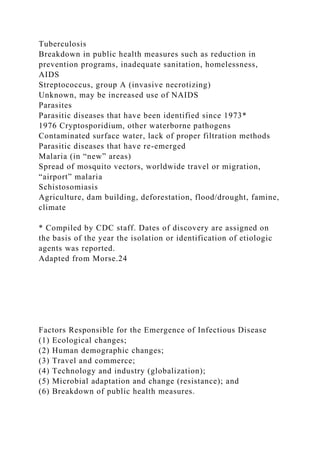
Table 7-1b
Viral Diseases that have re-emerged
Argentine, Bolivian hemorrhagic fever
Agricutural changes that promote growth of rodents
Bovine spongiform encephalopathy (cattle)
Alterations in the rendering of meat products
Dengue, dengue hemorrhagic fever
Travel, transportation, urbanization, and migration
Lassa fever
Coniditons such as urbanization that favor rodent host,
increasing exposure (usually in homes)
Rift Valley fever
Irrigation dam building, agriculture: possibly change in
virulence
Yellow Fever
Conditions favoring mosquito vector (in “new” areas)
Adapted from Morse.24
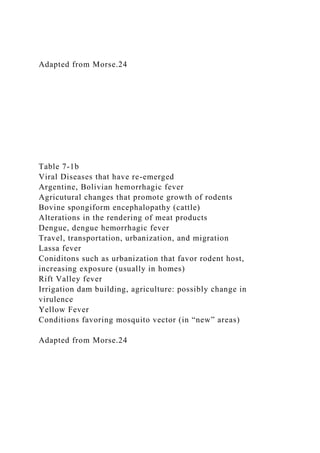
Table 7-1c
Bacterial
Bacterial Diseases that have been identified since 1973
1977 Legionella disease
Cooling and plumbing systems that allow the organisms to grow
in biofilns that form on water
1982 Hemolytic uremic syndrome (Escherichia coli- O157:H7)
Modern food processing on a large scale permitting
contamination through meat storage tanks and unsterile
plumbing
1982 Lyme borreliosis (Borrelia burgdorfen)
Close contact between homeowners encroaching on forested
areas and the mice and deer (a secondary reservoir host) that
maintain the tick vector for Borrelia
1983 Helicobacter pylori
Newly recognized as agent involved with gastric ulcers,
probably widespread before recognition
1987 Toxic shock syndrome (Staphyloccus aureus)
Ultra-absorbency tampons
1992 Cholera (type 0139)
Likely introduced from Asia to South America by ship, with
spread made possible by reduced water chlorination; Strain
(type O139) from Asia newly spread by travel (similarly to past
introductions to classic cholera)
Adapted from Morse.24
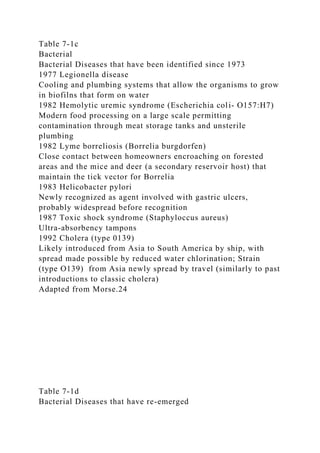
Table 7-1d
Bacterial Diseases that have re-emerged
Tuberculosis
Breakdown in public health measures such as reduction in
prevention programs, inadequate sanitation, homelessness,
AIDS
Streptococcus, group A (invasive necrotizing)
Unknown, may be increased use of NAIDS
Parasites
Parasitic diseases that have been identified since 1973*
1976 Cryptosporidium, other waterborne pathogens
Contaminated surface water, lack of proper filtration methods
Parasitic diseases that have re-emerged
Malaria (in “new” areas)
Spread of mosquito vectors, worldwide travel or migration,
“airport” malaria
Schistosomiasis
Agriculture, dam building, deforestation, flood/drought, famine,
climate
* Compiled by CDC staff. Dates of discovery are assigned on
the basis of the year the isolation or identification of etiologic
agents was reported.
Adapted from Morse.24
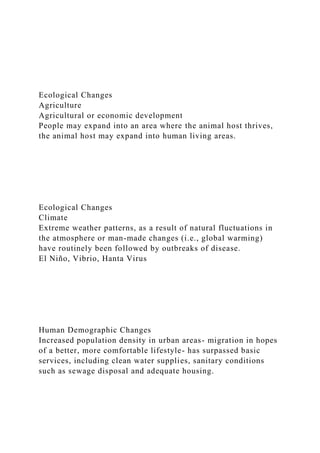
Factors Responsible for the Emergence of Infectious Disease
(1) Ecological changes;
(2) Human demographic changes;
(3) Travel and commerce;
(4) Technology and industry (globalization);
(5) Microbial adaptation and change (resistance); and
(6) Breakdown of public health measures.
Ecological Changes
Agriculture
Agricultural or economic development
People may expand into an area where the animal host thrives,
the animal host may expand into human living areas.
Ecological Changes
Climate
Extreme weather patterns, as a result of natural fluctuations in
the atmosphere or man-made changes (i.e., global warming)
have routinely been followed by outbreaks of disease.
El Niño, Vibrio, Hanta Virus
Human Demographic Changes
Increased population density in urban areas- migration in hopes
of a better, more comfortable lifestyle- has surpassed basic
services, including clean water supplies, sanitary conditions
such as sewage disposal and adequate housing.
Human Demographic Changes
Public health measures in overcrowded cities are often strained
or unavailable to large groups of the urban impoverished living
in inner city slums or in shanty towns on the periphery, thereby
increasing the opportunity for emerging infections such as HIV,
cholera, and dengue.
Travel and Commerce
Increased economic growth into national and international
boundaries has led to increased travel, contributing to the
notion of "diseases without boundaries."
Travel and Commerce
Bubonic Plague
Smallpox
Aedes aegypti
Vibrio cholerae
Technology and Industrialization
Globalization
Defined as the process of denationalization of markets, laws,
and politics in the sense of interlacing peoples and individuals
for the sake of the common good.
Technology and Industrialization
Globalization is influencing public health in three ways.
(1) First, the diseases are moving rapidly around the globe
because of technology and economic interdependence which has
increased international travel and the international nature of
food processing and handling.
Technology and Industrialization
Globalization is influencing public health in three ways.
(2) The funding of public health programs has been reduced
because of increased competition in the global market and
increased pressures to cut expenditures.
Technology and Industrialization
Globalization is influencing public health in three ways.
(3) Public health programs have become international through
WHO and health-related nongovernmental organizations.
These successes have contributed to a population crisis,
producing overcrowding, inadequate sanitation, and
overstretched public health infrastructures.
Microbial Adaptation and change (resistance)
Antibiotic Resistance
Antibiotic-resistant bacteria are emerging from the environment
in response to the wide distribution of antimicrobials.
Selection for antibiotic-resistant bacteria, and drug-resistant
parasites have become common, generated by the wide and
often unsuitable use of antimicrobial drugs.
Antibiotic Resistance
There is growing concern that bacterial pathogens are
developing a resistance to antibiotics as a result of patients not
completing the prescribed course of treatment or the
inappropriate and over prescribing of common antibiotics by
physicians.
Antibiotic Resistance
The use of unsupervised prophylactic tetracycline
administration to 100,000 pilgrims en route to Mecca from
Indonesia is thought to have been significantly responsible for
the fact that 50% of cholera strains in that country are now
tetracycline resistant.
Antibiotic Resistance
Many hospitals consider Vancomycin and Rocephin their “big
guns” in the disease war.
A recent report by the CDC found that Vancomycin resistance
measured at 0.3% in 1986, rose to 7.9% across several facilities
in 1994.
Viruses
Antibiotics have no effect on viruses, and vaccines are often
ineffective against bacterial infections.
Breakdown of Public Health Measures
During the eighteenth and nineteenth centuries advancements in
public health vastly improved the overall health of the
populace, particularly in urban settings.
Breakdown of Public Health Measures
Vector control, chlorination of water, pasteurization of milk,
immunization, and proper sewage disposal are classical public
health and sanitation measures that have successfully minimized
the spread of infectious diseases in humans.
Breakdown of Public Health Measures
Well understood and recognized diseases such as cholera are
rapidly increasing because once active public health measures
have lapsed.
SPECIFIC EMERGING DISEASES
Viruses
The viruses with the greatest potential for emergence in the near
future include: hantaan (hantavirus), dengue, influenza, and
HIV.
Hanta Virus
Background
Navajo Flu
CDC personnel trapped and tested rodents from the area, they
found the deer mouse, Peromyscus maniculatis primary
reservoir in New Mexico.
Hanta Virus
The Disease
The hantaviruses that emerged in the Four Corners region of the
United States were determined to be the cause of an acute
respiratory disease now termed hantavirus pulmonary syndrome
(HPS).
Hanta Virus
The Disease
Initial symptoms of the American version (HPS) were flu-like
and manifested as fever, chills, headache, muscular aches and
pains.
With time the lungs fill with fluids causing severe respiratory
distress for which there is no specific treatment.
Hanta Virus
Epidemiology
The virus is spread to humans from contact with rodents.
The most common route of transmission to humans is by
aerosolized mouse droppings containing the virus particles,
although there is evidence that bites may also transmit the
disease.
Hanta Virus
Epidemiology
It is now established that hantaviruses can be carried by at least
16 various rodent species including rats, mice, and voles.
Investigations have linked virus exposure to such activities as
heavy farm work, threshing, sleeping on the ground, and
military exercises.
Dengue Fever
Background
There are in excess of 10s of million cases of dengue fever
annually, with several hundred thousand cases of the more
severe dengue hemorrhagic fever (DHF).
Dengue Fever
The Disease
There are four antigenically distinct viral serotypes.
There is no cross-protective immunity with any of the viruses,
so that it is possible for a person to acquire multiple dengue
infections.
Dengue Fever
The Disease
Dengue is primarily an urban tropical disease with severe flu-
like symptoms that causes high fevers, frontal headache, severe
body aches and pains, nausea and vomiting.
Dengue Fever
The Disease
When the fever eases, patients start to develop “leaky capillary
syndrome” in which the blood vessels leak and untreated
patients will go into shock and die.
Dengue Fever
Epidemiology
The greatest emerging health menace from dengue/DHF has
been in Central and South America (Fig. 7-1).
Complacency in mosquito control programs has allowed Aedes
aegypti to return with a vengeance and it is a competent vector
for dengue viruses (Fig. 7-2).
Fig. 7-1
Adapted from EID Dispatch.93
Fig. 7-2
Adapted from EID Dispatch.93
Map of areas with recent dengue activity and areas at risk for
epidemic dengue. The southern US along the Gulf is at risk for
epidemic, as are Brazil, Bolivia, Paraguay, and the majority of
Western Africa, Madagascar, and Somalia. Areas with recent
dengue activity include Mexico, all of Central America, Eastern
Brazil, Columbia, Venezuela, Ecuador, Senegal, Nigeria,
Angola, Uganda, India, Most of Southern Asia, and parts of
Australia
Influenza
Background
Types A and B are responsible for the epidemics of respiratory
influenza (Fig. 7-3).
Type C is produces very mild symptoms or none at all.
Fig. 7-3
Adapted from WHO.100
Influenza
The Disease
Influenza is normally characterized by a fever (100¼F to 103¼F
) ; respiratory symptoms, that include cough, sore throat, stuffy
nose; muscle aches and pain; and extreme fatigue.
Influenza
The Disease
There are about 20,000 deaths annually in the United States
with the majority of serious illness and death occurring in the
aged, very young, and debilitated.
Influenza
Epidemiology
To this date, there have been more than 30 pandemics of
influenza with three occurring within the last 80 years.
The Spanish Flu (1918-19) caused an estimated 500,000 deaths
in the United States and 20 million deaths worldwide.
Ebola
Background
Ebola and Marburg viruses belong to a family of viruses called
Filoviridae (Fig. 7-4).
Their extreme pathogenicity combined with the lack of effective
vaccines or antiviral drugs classify them as biosafety level four
agents.
Fig. 7-4
Ebola
The Disease
Ebola fever typically starts suddenly 4 to 16 days after infection
with malaise, fever and flu-like symptoms which can be
followed by rashes, bleeding and kidney and liver failure.
Ebola
The Disease
Generalized bleeding occurs with massive internal
hemorrhaging of the internal organs, with bleeding into the
gastrointestinal tract, from the skin, and even from injection
sites as the clotting ability of the blood is diminished.
Ebola
The Disease
The death of the patient usually occurs from shock within 7 to
16 days and is accompanied by extreme blood loss.
Ebola
Epidemiology
Infections from Ebola virus were first reported in 1976 when
two outbreaks occurred at the same time but in different
locations and with different subtypes of the Ebola virus.
Sudan
Zaire
Ebola
The total number of cases in these two outbreaks was 550 with
340 deaths.
The case fatality rate from the Zaire subtype Ebola virus was 90
percent and case fatality rate for the Sudan subtype was 50
percent.
AIDS/HIV
Background
The AIDS virus (Fig.7-5) belongs to a special group of viruses
known as retroviruses and is referred to as human
immunodeficiency virus (HIV).
Fig. 7-5
AIDS/HIV
Background
The AIDS virus almost exclusively focuses on these white blood
cells since these helper T cells have CD4 molecules on the
surface to which the AIDS virus binds.
The viral genetic information is then able to enter the cell and is
transferred to the nucleus.
AIDS/HIV
The Disease
HIV is transmitted most commonly by sexual contact with an
infected partner and can enter the body through the vaginal
lining, vulva, penis, rectum or mouth.
AIDS/HIV
The Disease
Since the virus appears in the blood and many body fluids, it
can be transmitted by infected blood as through contaminated
needles.
HIV has been transmitted to fetuses during pregnancy and birth.
AIDS/HIV
The Disease
Many people remain asymptomatic for months or years after
acquiring the infection.
AIDS/HIV
The Disease
Symptoms may emerge that include prolonged enlargement of
lymph nodes, energy and weight loss, recurrent sweating and
fevers, skin rashes, or flaky skin, yeast infections, and pelvic
inflammatory disease.
AIDS/HIV
The Disease
The disease will often advance to a stage referred to as AIDS or
acquired immunodeficiency syndrome.
Opportunistic infections produce a myriad of debilitating
symptoms from respiratory distress, severe headaches, extreme
fatigue, nausea, vomiting, to wasting and coma.
AIDS/HIV
Epidemiology
A joint surveillance effort by UNAIDS and WHO now estimates
that over 30 million people are living with HIV infection at the
end of 1997.
This figure also includes over 1 million children under the age
of fifteen.
AIDS/HIV
Epidemiology
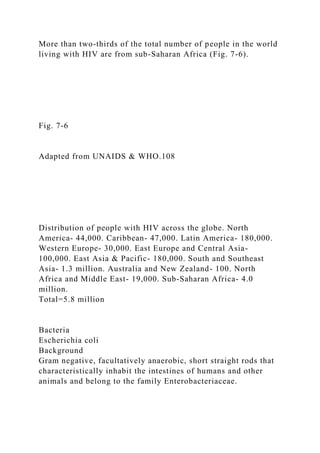
More than two-thirds of the total number of people in the world
living with HIV are from sub-Saharan Africa (Fig. 7-6).
Fig. 7-6
Adapted from UNAIDS & WHO.108
Distribution of people with HIV across the globe. North
America- 44,000. Caribbean- 47,000. Latin America- 180,000.
Western Europe- 30,000. East Europe and Central Asia-
100,000. East Asia & Pacific- 180,000. South and Southeast
Asia- 1.3 million. Australia and New Zealand- 100. North
Africa and Middle East- 19,000. Sub-Saharan Africa- 4.0
million.
Total=5.8 million
Bacteria
Escherichia coli
Background
Gram negative, facultatively anaerobic, short straight rods that
characteristically inhabit the intestines of humans and other
animals and belong to the family Enterobacteriaceae.
Escherichia coli
Background
Members of the enterics cause gastroenteritis, mostly, but have
also been implicated in urinary tract infections, wound
infections, pneumonia, septicemia, and meningitis.
Escherichia coli
Background
The strains of E. coli capable of causing hemorrhagic colitis are
referred to as Enterohemorrhagic Escherichia coli (EHEC).
Escherichia coli
The Disease
Escherichia coli 0157:H7 is pathogenic for humans and has
characteristically produced bloody diarrhea with abdominal
cramps; sometimes the infection causes nonbloody diarrhea with
very few symptoms.
Escherichia coli
The disease
Children under 5 years of age and the elderly, the infection may
progress into a more severe and life-threatening form of the
disease known as hemolytic uremic syndrome (HUS).
In the United States, HUS is the leading cause of acute kidney
failure in children.
Escherichia coli
Epidemiology
The majority of infections with serotype 0157:H7 have come
from eating undercooked beef products, but many other sources
of infection have been identified.
Escherichia coli
Epidemiology
In 1993 a foodborne outbreak of serotype O157:H7 was linked
to the undercooked hamburgers eaten at a fast-food chain
restaurant.
The outbreak involved the infection of 700 persons from 4
different states with 51 of these persons developing HUS and
four people dying from the syndrome.
Lyme Disease
Background
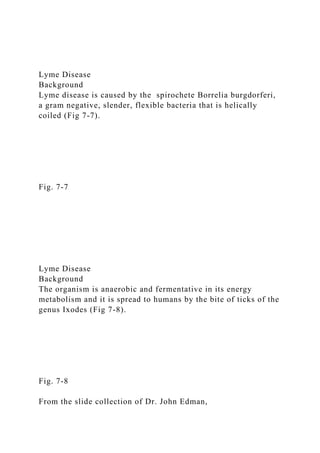
Lyme disease is caused by the spirochete Borrelia burgdorferi,
a gram negative, slender, flexible bacteria that is helically
coiled (Fig 7-7).
Fig. 7-7
Lyme Disease
Background
The organism is anaerobic and fermentative in its energy
metabolism and it is spread to humans by the bite of ticks of the
genus Ixodes (Fig 7-8).
Fig. 7-8
From the slide collection of Dr. John Edman,
Entomology, Umass, Amherst
Lyme Disease
Disease and Epidemiology
Lyme disease was first reported in 1975 near Lyme,
Connecticut, following a mysterious outbreak of arthritis.
Lyme Disease
Disease and Epidemiology
The early stages of Lyme disease are characterized by headache,
fever, chills, swollen lymph glands, muscle and joint pain, and a
characteristic skin rash (erythema migrans).
Lyme disease rarely results in death but chronic Lyme disease
can lead to permanent damage to joints or the nervous system.
Lyme Disease
Disease and Epidemiology
Prevention is best accomplished by avoiding tick-infested areas
in the summer periods.
Spraying with DEET on exposed skin surfaces other than the
face will also be helpful.
Streptococcus
Background
Streptococci are gram positive cocci (spheres) arranged in
chains or in pairs.
The major pathogens are included in groups A and B, and their
pathogenicity is associated with certain enzymes and surface
proteins including hemolysins, erythrogenic toxins, and M-
protein.
Streptococcus
Background
Hemolysins are enzymes capable of breaking or lysing blood
cells.
The streptococci may produce a broad of array of enzymes
including neuraminidases, hyaluronidases, streptokinases,
ATPases, DNAses, and many others that participate in the
destruction and invasion of human tissue.
Streptococcus
The Disease
The Group A Streptococci produce a variety of diseases that
include strep throat, impetigo, and scarlet fever.
The more severe of these invasions results in necrotizing
fasciitis and / or streptococcal toxic shock syndrome.
Streptococcus
The Disease
Streptococcal toxic-shock syndrome (strep TSS) is defined as
any Group A streptococcal infection associated with the early
onset of shock and organ failure.
Streptococcus
Epidemiology
Beginning in the 1980s there has been a sudden elevation in the
reporting of a highly invasive group A streptococci infection
with or without necrotizing fasciitis associated with shock and
organ failure.
Streptococcus
Epidemiology
The mortality rate for streptococcal TSS is about 60 percent of
the 2,000 to 3,000 cases reported per year.
Annually, about 20 percent of the 500-1,500 patients who
acquire Streptococcal fasciitis have died.
Tuberculosis
Background and Disease
Tuberculosis (TB) is a chronic infectious disease of the lower
respiratory tract caused by Mycobacterium tuberculosis, a
slender, acid-fast rod with cell walls containing high lipid
levels.
The slow growing bacilli are transmitted by aerosols from
persons with active disease.
Tuberculosis
Background and Disease
Symptoms normally begin to develop at this stage from a cell
mediated immunity that walls off the pathogen within
multinucleated giant cells surrounded by lymphocytes and
macrophages (Fig. 7-9).
Fig. 7-9
Tuberculosis
Epidemiology
Tuberculosis kills over 3 million people worldwide each year,
and many more become ill from it.
Tuberculosis was declared a U.S. public health emergency in
1992.
Tuberculosis
Epidemiology
WHO estimates that the 1990's will see 90 million new cases
and 30 million deaths with annual rates in infection in
developing countries exceeding 2 percent.
Parasites
Cryptosporidium
Background
Cryptosporidium is a single celled microscopic protozoan
parasite that belongs to the Class Sporozoa.
Cryptosporidium
Background
The resistant form of the parasite is called an oocyst which is
characterized by an outer protective shell which protects the
organism against environmental extremes such as heat, cold,
dryness, and chemical insult.
Cryptosporidium
Background
It is estimated that as few as 30 or even one oocyst(s) may
cause infection when swallowed.
Cryptosporidium is resistant to chlorine and difficult to filter
thereby making it a serious threat to water supplies.
Cryptosporidium
Disease
The ingested oocysts reach the upper small bowel where they
excyst and produce four infectious sporozoites that attach to the
surface epithelium of the digestive tract and reproduce, forming
more oocysts and sporozoites.
Cryptosporidium
Disease
The symptoms are self limiting, and include watery diarrhea,
stomach cramps, nausea, and a slight fever.
The immunocompromised are at increased risk from infection,
and may develop serious and life-threatening illness from this
organism.
Cryptosporidium
Epidemiology
There have been five major outbreaks associated with public
water supplies of Cryptosporidium gastroenteritis in the USA
and seven in the UK since 1983.
Cryptosporidium
Epidemiology
Contamination of drinking water by Cryptosporidium is a
growing concern especially after the outbreak in Milwaukee in
1993 which affected some 400,000 people.
Cryptosporidium
Epidemiology
Cryptosporidium is found in animal droppings and human feces,
soil, drinking water and recreational water, food, hands, and
surfaces contaminated by such wastes.
Malaria
Background
Malarial diseases are caused by protozoan parasites belonging
to the genus Plasmodium.
There are four species known to infest humans and they are: P.
falciparum, P. vivax, P. ovale, and P. malariae.
Malaria
Background
These parasites are transmitted from human to human by the
bite of a female anophelene mosquito in which the parasite has
gone through a complex development cycle.
Malaria
Background
A complex cycle takes place that involves the union of the
gametocytes in the stomach of the mosquito and results in the
development of slender, microscopic sporozoites that appear in
the salivary glands, and are infective for humans (Fig. 7-10a,b).
Fig.
7-10a
Malaria cycle. When a malaria-transmitting mosquito bites a
human, sporozoites enter liver cells. Development and
reproduction of merozoites in liver cells. Primary attack on red
blood cells in days. Ring forms in red blood cells, the
trophozoites, then schizonts. Merozoites invade more RBCs.
Some develop into gametocytes. Another mosquito takes a
blood meal with some RBCs containing gametocytes. See next
slide for process within the mosquito..
Fig. 7-10b
After mosquito takes blood from the infected human past its
salivary glands, a zygote forms and turns into an Öokinte inside
the stomach. It then becomes an oocyst, then sporozoites form.
The sporozoites become present in the salivary glands and are
ready to infect humans in 7 or more days.
Malaria
Background
Inside the cell, the parasite form the classical signet ring stage
(Fig. 7-11) and feed on the cells contents as they grow through
the stages of trophozoites, and schizonts.
Fig. 7-11
Malaria
Disease
The symptomology and pathogenesis of malaria infection is
related to the parasite's stage of growth and the host's
parasitemia.
High parasitemias result in decreased hemoglobin and a lower
oxygen carrying capacity.
Malaria
Disease
Untreated infections lead to splenomegaly (enlarged spleen) and
particularly in falciparum to cerebral malaria and death.
Malaria
Epidemiology
The World health Organization (WHO) estimates that there are
300 to 500 million people worldwide infected with malaria.
The majority of malarial transmission occurs in tropical and
subtropical countries (Fig 7-12).
Fig. 7-12
Adapted from Zucker141
Malaria
Re-emergence
Decreased spraying of homes with DDT
Drug resistant malaria
Global warming
Malaria
Epidemiology
There have been 76 cases of malaria reported from 1957 through
1994 including the three outbreaks occurring in the densely
populated areas of New Jersey (1991), New York (1993) and
Texas (1994).
PRACTICAL APPROACHES TO LIMITING THE
EMERGENCE OF INFECTIOUS DISEASE
The emergence of 29 new infectious diseases and re-emergence
of many others are creating national and international crises.
PRACTICAL APPROACHES TO LIMITING THE
EMERGENCE OF INFECTIOUS DISEASE
A Prevention Strategy Plan for the United States was developed
with four major goals:
(1) promptly investigate and monitor emerging pathogens, the
diseases they cause, and factors of emergence;
(2) integrate laboratory science and epidemiology to optimize
public health practice;
PRACTICAL APPROACHES TO LIMITING THE
EMERGENCE OF INFECTIOUS DISEASE
(3) enhance communication of public health information about
emerging diseases and ensure prompt implementation
prevention strategies; and
(4) strengthen local, state, and federal public health
infrastructures to support surveillance and implement
prevention and control programs.
So what are the capabilities and limitations of domestic
intelligence efforts in supporting the homeland security
enterprise? Some framework was altered on Sept. 11. The U.S.
intelligence community that primarily focused on state
functions now faced a threat posed by evasive terrorists,
national and international. The community also had to address
the fundamental asymmetry given by the terrorists' use of
relatively and unsophisticated unconventional methods to create
a loss of life and damage a more sophisticated intelligence task.
Moreover, due to terrorist disregard for laws, national borders,
and foreign financing, the United States had to change its
concept of non-native versus domestic intelligence.
The area of domestic intelligence raises a couple of issues.
Firstly, law enforcement and intelligence operations in different
society – one seeks to prosecute, the other to gathers
information. Secondly, with the development of multiple state
fusion centers and the creation of new organizations focused on
intelligence, there is a correspondingly high increase in
bureaucratization. This very much so adds to the high challenge
of sharing information. Lastly and perhaps the most important is
that there are some issues concerning the protection of effective
oversight and civil liberties.
The challenge in developing a viable national intelligence
capability for the United States centers on how to organize
these capabilities optimally within the broader United States
intelligence framework, how to ensure mainlined information
sharing between non-domestic intelligence and the multitude of
local and state law enforcement agencies, and how best to
implement oversight mechanisms to protect civil liberties and
ensure accountability of intelligence operations. Organizational
arrangements, information sharing, and oversight are the three
critical components to instituting a sufficient domestic
intelligence capability.
Inside the Department of Homeland Security alone, there is a
departmental office of Intelligence and Analysis and there are
intelligence activities within several of the Department's
components as well, including the United States Citizenship and
immigration service, the Coast Guard, Customs and Border
Protection (CBP), Immigration and Customs Enforcement, and
the Transportation Security Administration(TSA).
It should also be noted that having an understanding of the
intelligence community and local law enforcement and how
each relates to Homeland Security is essential and can be gaged
by the lessons learned from the 9/11 Commission on
intelligence sharing and how those lessons/recommendations
were implemented. At the end of the 9/11 Commission Report in
Chapter 13, these recommendations were laid out in plain
language. These recommendations outlined significant changes
in the organization of the government. The recommendations
stated that improvement in the "unity of effort" was needed and
essential in future collaborative efforts.
Local law enforcement or Intelligence-led policing (ILP) is "a
new dimension of community policing, building on tactics and
methodologies developed during years of community policing
experimentation." (USDOJ, 2014) As outlined in the ILP
Guidelines, intelligence-led policing can be useful in combating
terrorism in the following key points. Both community policing
and ILP rely on information management and information
gained from citizens helping define the parameters of
community problems; therefore, information input is the
essential ingredient for intelligence analysis.
Next, two-way communication with the public as information is
sought from the public about offenders. Conversely,
communicating critical information to the public aids in crime
prevention and fear reduction. In fighting terrorism, in the ILP
sense, communications from the public can provide valuable
information for the intelligence cycle. When threats are defined
with specific details, communicating essential information to
the U.S. citizens may help prevent a vulnerable terrorist attack
and, like community policing, will reduce fear.
Thirdly, scientific data analysis in community policing uses
Crime analysis as a critical ingredient in the process.
Conversely using ILP for preventing terror attacks, intelligence
analysis is the essential element in threat management.
Lastly, in problem-solving in community policing, it is a
problem solving that is used to accommodate community
conditions that are precursors to crime and disorder. Conversely
in ILP, the same process is used for intelligence to combine
factors precedent to a terrorist attack" (USDOJ, 2014) At the
State level, there are the State Fusion Centers which" serve as
primary focal points within the state and local environment for
the receipt, analysis, gathering, and sharing of threat-related
information among federal, state, local, tribal, and territorial
(SLTT) partners.
Located in states and major urban areas throughout the
country, fusion centers are uniquely situated to empower front-
line law enforcement, public safety, fire service emergency
response, public health, critical infrastructure protection, and
private sector security personnel to gather and share threat-
related information lawfully." (DHS, 2014) The value of State
Fusion centers to homeland security is they "provide
interdisciplinary expertise and situational awareness to inform
decision-making at all levels of government. Fusion centers
conduct analysis and facilitate information sharing, assisting
law enforcement and homeland security partners in preventing,
protecting against, and responding to crime and terrorism."
(DHS, 2014)

LIVING WITH THE EARTHCHAPTER 7EMERGING DISEASES.docx

  • 1.
    LIVING WITH THEEARTH CHAPTER 7 EMERGING DISEASES Esherichia coli on EMB plate Objectives for this chapter A student reading this chapter will be able to: 1. Differentiate the emerging infectious diseases in the United States and those occurring worldwide. 2. List and recognize the 6 major reasons associated with the emergence of infectious diseases. 3. Explain the likely reasons for the emergence of specific infectious diseases. Objectives for this chapter
  • 2.
    A student readingthis chapter will be able to: 4. Identify, list, and explain the etiological agents, the epidemiology, and the disease characteristics of the major emerging infectious diseases including: influenza, hanta virus, dengue fever, ebola, AIDs, Cryptosporidiosis, Malaria, Lyme disease, Tuberculosis, Streptococcal infections, and E. coli infections. Objectives for this chapter A student reading this chapter will be able to: 5.Recognize and explain the practical approaches to limiting the emergence of infectious diseases. EMERGING DISEASES INTRODUCTION Infectious diseases continue to be the foremost cause of death worldwide. The Centers for Disease Control and Prevention (CDC) reported a 58 percent rise in deaths from infectious diseases since 1980. Emerging Diseases in the United States
  • 3.
    Cryptosporidium AIDS Escherichia coli Hanta Virus LymeDisease Group A Strep Emerging Diseases Worldwide What is an Emerging Infectious Disease The term "emerging infectious diseases" refers to diseases of infectious origin whose incidence in humans has either increased within the past two decades or threatens to increase in the near future.
  • 4.
    REASONS FOR THEEMERGENCE OF INFECTIOUS DISEASE There are a number of specific explanations responsible for disease emergence that can be identified in most all cases (Table 7-1a-d). Table 7-1a Viral Viral diseases that have been identified since 1973 1977 Ebola, Marburg Origin undetermined. (Importation of monkeys associated with outbreaks in these primates in Europe and the United States) 1980 HTLV Influenza (pandemic) Pig-duck agriculture thought to contribute to reassortment of avian and mammalian influenza viruses 1983 HIV Transmission by intimate contact as in sexual transmission, contaminated hypodermic needles, transfusions, organ transplants. Contributing condition that spread the disease include war or civil conflict, urban decay, migration to cities and travel 1989 Hepatitis C Transmission in infected blood such as by transfusions, contaminated hypodermic needles, and sexual transmission 1993 Hantaviruses Increased contact with rodent hosts because of ecological or environmental changes
  • 5.
    Adapted from Morse.24 Table7-1b Viral Diseases that have re-emerged Argentine, Bolivian hemorrhagic fever Agricutural changes that promote growth of rodents Bovine spongiform encephalopathy (cattle) Alterations in the rendering of meat products Dengue, dengue hemorrhagic fever Travel, transportation, urbanization, and migration Lassa fever Coniditons such as urbanization that favor rodent host, increasing exposure (usually in homes) Rift Valley fever Irrigation dam building, agriculture: possibly change in virulence Yellow Fever Conditions favoring mosquito vector (in “new” areas) Adapted from Morse.24
  • 6.
    Table 7-1c Bacterial Bacterial Diseasesthat have been identified since 1973 1977 Legionella disease Cooling and plumbing systems that allow the organisms to grow in biofilns that form on water 1982 Hemolytic uremic syndrome (Escherichia coli- O157:H7) Modern food processing on a large scale permitting contamination through meat storage tanks and unsterile plumbing 1982 Lyme borreliosis (Borrelia burgdorfen) Close contact between homeowners encroaching on forested areas and the mice and deer (a secondary reservoir host) that maintain the tick vector for Borrelia 1983 Helicobacter pylori Newly recognized as agent involved with gastric ulcers, probably widespread before recognition 1987 Toxic shock syndrome (Staphyloccus aureus) Ultra-absorbency tampons 1992 Cholera (type 0139) Likely introduced from Asia to South America by ship, with spread made possible by reduced water chlorination; Strain (type O139) from Asia newly spread by travel (similarly to past introductions to classic cholera) Adapted from Morse.24 Table 7-1d Bacterial Diseases that have re-emerged
  • 7.
    Tuberculosis Breakdown in publichealth measures such as reduction in prevention programs, inadequate sanitation, homelessness, AIDS Streptococcus, group A (invasive necrotizing) Unknown, may be increased use of NAIDS Parasites Parasitic diseases that have been identified since 1973* 1976 Cryptosporidium, other waterborne pathogens Contaminated surface water, lack of proper filtration methods Parasitic diseases that have re-emerged Malaria (in “new” areas) Spread of mosquito vectors, worldwide travel or migration, “airport” malaria Schistosomiasis Agriculture, dam building, deforestation, flood/drought, famine, climate * Compiled by CDC staff. Dates of discovery are assigned on the basis of the year the isolation or identification of etiologic agents was reported. Adapted from Morse.24 Factors Responsible for the Emergence of Infectious Disease (1) Ecological changes; (2) Human demographic changes; (3) Travel and commerce; (4) Technology and industry (globalization); (5) Microbial adaptation and change (resistance); and (6) Breakdown of public health measures.
  • 8.
    Ecological Changes Agriculture Agricultural oreconomic development People may expand into an area where the animal host thrives, the animal host may expand into human living areas. Ecological Changes Climate Extreme weather patterns, as a result of natural fluctuations in the atmosphere or man-made changes (i.e., global warming) have routinely been followed by outbreaks of disease. El Niño, Vibrio, Hanta Virus Human Demographic Changes Increased population density in urban areas- migration in hopes of a better, more comfortable lifestyle- has surpassed basic services, including clean water supplies, sanitary conditions such as sewage disposal and adequate housing.
  • 9.
    Human Demographic Changes Publichealth measures in overcrowded cities are often strained or unavailable to large groups of the urban impoverished living in inner city slums or in shanty towns on the periphery, thereby increasing the opportunity for emerging infections such as HIV, cholera, and dengue. Travel and Commerce Increased economic growth into national and international boundaries has led to increased travel, contributing to the notion of "diseases without boundaries." Travel and Commerce Bubonic Plague Smallpox Aedes aegypti Vibrio cholerae
  • 10.
    Technology and Industrialization Globalization Definedas the process of denationalization of markets, laws, and politics in the sense of interlacing peoples and individuals for the sake of the common good. Technology and Industrialization Globalization is influencing public health in three ways. (1) First, the diseases are moving rapidly around the globe because of technology and economic interdependence which has increased international travel and the international nature of food processing and handling. Technology and Industrialization Globalization is influencing public health in three ways. (2) The funding of public health programs has been reduced because of increased competition in the global market and increased pressures to cut expenditures. Technology and Industrialization Globalization is influencing public health in three ways.
  • 11.
    (3) Public healthprograms have become international through WHO and health-related nongovernmental organizations. These successes have contributed to a population crisis, producing overcrowding, inadequate sanitation, and overstretched public health infrastructures. Microbial Adaptation and change (resistance) Antibiotic Resistance Antibiotic-resistant bacteria are emerging from the environment in response to the wide distribution of antimicrobials. Selection for antibiotic-resistant bacteria, and drug-resistant parasites have become common, generated by the wide and often unsuitable use of antimicrobial drugs. Antibiotic Resistance There is growing concern that bacterial pathogens are developing a resistance to antibiotics as a result of patients not completing the prescribed course of treatment or the inappropriate and over prescribing of common antibiotics by physicians.
  • 12.
    Antibiotic Resistance The useof unsupervised prophylactic tetracycline administration to 100,000 pilgrims en route to Mecca from Indonesia is thought to have been significantly responsible for the fact that 50% of cholera strains in that country are now tetracycline resistant. Antibiotic Resistance Many hospitals consider Vancomycin and Rocephin their “big guns” in the disease war. A recent report by the CDC found that Vancomycin resistance measured at 0.3% in 1986, rose to 7.9% across several facilities in 1994. Viruses Antibiotics have no effect on viruses, and vaccines are often ineffective against bacterial infections. Breakdown of Public Health Measures During the eighteenth and nineteenth centuries advancements in public health vastly improved the overall health of the
  • 13.
    populace, particularly inurban settings. Breakdown of Public Health Measures Vector control, chlorination of water, pasteurization of milk, immunization, and proper sewage disposal are classical public health and sanitation measures that have successfully minimized the spread of infectious diseases in humans. Breakdown of Public Health Measures Well understood and recognized diseases such as cholera are rapidly increasing because once active public health measures have lapsed. SPECIFIC EMERGING DISEASES Viruses The viruses with the greatest potential for emergence in the near future include: hantaan (hantavirus), dengue, influenza, and HIV.
  • 14.
    Hanta Virus Background Navajo Flu CDCpersonnel trapped and tested rodents from the area, they found the deer mouse, Peromyscus maniculatis primary reservoir in New Mexico. Hanta Virus The Disease The hantaviruses that emerged in the Four Corners region of the United States were determined to be the cause of an acute respiratory disease now termed hantavirus pulmonary syndrome (HPS). Hanta Virus The Disease Initial symptoms of the American version (HPS) were flu-like and manifested as fever, chills, headache, muscular aches and pains. With time the lungs fill with fluids causing severe respiratory distress for which there is no specific treatment.
  • 15.
    Hanta Virus Epidemiology The virusis spread to humans from contact with rodents. The most common route of transmission to humans is by aerosolized mouse droppings containing the virus particles, although there is evidence that bites may also transmit the disease. Hanta Virus Epidemiology It is now established that hantaviruses can be carried by at least 16 various rodent species including rats, mice, and voles. Investigations have linked virus exposure to such activities as heavy farm work, threshing, sleeping on the ground, and military exercises. Dengue Fever Background There are in excess of 10s of million cases of dengue fever annually, with several hundred thousand cases of the more severe dengue hemorrhagic fever (DHF).
  • 16.
    Dengue Fever The Disease Thereare four antigenically distinct viral serotypes. There is no cross-protective immunity with any of the viruses, so that it is possible for a person to acquire multiple dengue infections. Dengue Fever The Disease Dengue is primarily an urban tropical disease with severe flu- like symptoms that causes high fevers, frontal headache, severe body aches and pains, nausea and vomiting. Dengue Fever The Disease When the fever eases, patients start to develop “leaky capillary syndrome” in which the blood vessels leak and untreated patients will go into shock and die.
  • 17.
    Dengue Fever Epidemiology The greatestemerging health menace from dengue/DHF has been in Central and South America (Fig. 7-1). Complacency in mosquito control programs has allowed Aedes aegypti to return with a vengeance and it is a competent vector for dengue viruses (Fig. 7-2). Fig. 7-1 Adapted from EID Dispatch.93 Fig. 7-2 Adapted from EID Dispatch.93
  • 18.
    Map of areaswith recent dengue activity and areas at risk for epidemic dengue. The southern US along the Gulf is at risk for epidemic, as are Brazil, Bolivia, Paraguay, and the majority of Western Africa, Madagascar, and Somalia. Areas with recent dengue activity include Mexico, all of Central America, Eastern Brazil, Columbia, Venezuela, Ecuador, Senegal, Nigeria, Angola, Uganda, India, Most of Southern Asia, and parts of Australia Influenza Background Types A and B are responsible for the epidemics of respiratory influenza (Fig. 7-3). Type C is produces very mild symptoms or none at all. Fig. 7-3 Adapted from WHO.100 Influenza The Disease
  • 19.
    Influenza is normallycharacterized by a fever (100¼F to 103¼F ) ; respiratory symptoms, that include cough, sore throat, stuffy nose; muscle aches and pain; and extreme fatigue. Influenza The Disease There are about 20,000 deaths annually in the United States with the majority of serious illness and death occurring in the aged, very young, and debilitated. Influenza Epidemiology To this date, there have been more than 30 pandemics of influenza with three occurring within the last 80 years. The Spanish Flu (1918-19) caused an estimated 500,000 deaths in the United States and 20 million deaths worldwide. Ebola Background Ebola and Marburg viruses belong to a family of viruses called Filoviridae (Fig. 7-4).
  • 20.
    Their extreme pathogenicitycombined with the lack of effective vaccines or antiviral drugs classify them as biosafety level four agents. Fig. 7-4 Ebola The Disease Ebola fever typically starts suddenly 4 to 16 days after infection with malaise, fever and flu-like symptoms which can be followed by rashes, bleeding and kidney and liver failure. Ebola The Disease Generalized bleeding occurs with massive internal hemorrhaging of the internal organs, with bleeding into the gastrointestinal tract, from the skin, and even from injection sites as the clotting ability of the blood is diminished.
  • 21.
    Ebola The Disease The deathof the patient usually occurs from shock within 7 to 16 days and is accompanied by extreme blood loss. Ebola Epidemiology Infections from Ebola virus were first reported in 1976 when two outbreaks occurred at the same time but in different locations and with different subtypes of the Ebola virus. Sudan Zaire Ebola The total number of cases in these two outbreaks was 550 with 340 deaths. The case fatality rate from the Zaire subtype Ebola virus was 90 percent and case fatality rate for the Sudan subtype was 50 percent.
  • 22.
    AIDS/HIV Background The AIDS virus(Fig.7-5) belongs to a special group of viruses known as retroviruses and is referred to as human immunodeficiency virus (HIV). Fig. 7-5 AIDS/HIV Background The AIDS virus almost exclusively focuses on these white blood cells since these helper T cells have CD4 molecules on the surface to which the AIDS virus binds. The viral genetic information is then able to enter the cell and is transferred to the nucleus. AIDS/HIV
  • 23.
    The Disease HIV istransmitted most commonly by sexual contact with an infected partner and can enter the body through the vaginal lining, vulva, penis, rectum or mouth. AIDS/HIV The Disease Since the virus appears in the blood and many body fluids, it can be transmitted by infected blood as through contaminated needles. HIV has been transmitted to fetuses during pregnancy and birth. AIDS/HIV The Disease Many people remain asymptomatic for months or years after acquiring the infection. AIDS/HIV The Disease Symptoms may emerge that include prolonged enlargement of lymph nodes, energy and weight loss, recurrent sweating and
  • 24.
    fevers, skin rashes,or flaky skin, yeast infections, and pelvic inflammatory disease. AIDS/HIV The Disease The disease will often advance to a stage referred to as AIDS or acquired immunodeficiency syndrome. Opportunistic infections produce a myriad of debilitating symptoms from respiratory distress, severe headaches, extreme fatigue, nausea, vomiting, to wasting and coma. AIDS/HIV Epidemiology A joint surveillance effort by UNAIDS and WHO now estimates that over 30 million people are living with HIV infection at the end of 1997. This figure also includes over 1 million children under the age of fifteen. AIDS/HIV Epidemiology
  • 25.
    More than two-thirdsof the total number of people in the world living with HIV are from sub-Saharan Africa (Fig. 7-6). Fig. 7-6 Adapted from UNAIDS & WHO.108 Distribution of people with HIV across the globe. North America- 44,000. Caribbean- 47,000. Latin America- 180,000. Western Europe- 30,000. East Europe and Central Asia- 100,000. East Asia & Pacific- 180,000. South and Southeast Asia- 1.3 million. Australia and New Zealand- 100. North Africa and Middle East- 19,000. Sub-Saharan Africa- 4.0 million. Total=5.8 million Bacteria Escherichia coli Background Gram negative, facultatively anaerobic, short straight rods that characteristically inhabit the intestines of humans and other animals and belong to the family Enterobacteriaceae.
  • 26.
    Escherichia coli Background Members ofthe enterics cause gastroenteritis, mostly, but have also been implicated in urinary tract infections, wound infections, pneumonia, septicemia, and meningitis. Escherichia coli Background The strains of E. coli capable of causing hemorrhagic colitis are referred to as Enterohemorrhagic Escherichia coli (EHEC). Escherichia coli The Disease Escherichia coli 0157:H7 is pathogenic for humans and has characteristically produced bloody diarrhea with abdominal cramps; sometimes the infection causes nonbloody diarrhea with very few symptoms.
  • 27.
    Escherichia coli The disease Childrenunder 5 years of age and the elderly, the infection may progress into a more severe and life-threatening form of the disease known as hemolytic uremic syndrome (HUS). In the United States, HUS is the leading cause of acute kidney failure in children. Escherichia coli Epidemiology The majority of infections with serotype 0157:H7 have come from eating undercooked beef products, but many other sources of infection have been identified. Escherichia coli Epidemiology In 1993 a foodborne outbreak of serotype O157:H7 was linked to the undercooked hamburgers eaten at a fast-food chain restaurant. The outbreak involved the infection of 700 persons from 4 different states with 51 of these persons developing HUS and four people dying from the syndrome.
  • 28.
    Lyme Disease Background Lyme diseaseis caused by the spirochete Borrelia burgdorferi, a gram negative, slender, flexible bacteria that is helically coiled (Fig 7-7). Fig. 7-7 Lyme Disease Background The organism is anaerobic and fermentative in its energy metabolism and it is spread to humans by the bite of ticks of the genus Ixodes (Fig 7-8). Fig. 7-8 From the slide collection of Dr. John Edman,
  • 29.
    Entomology, Umass, Amherst LymeDisease Disease and Epidemiology Lyme disease was first reported in 1975 near Lyme, Connecticut, following a mysterious outbreak of arthritis. Lyme Disease Disease and Epidemiology The early stages of Lyme disease are characterized by headache, fever, chills, swollen lymph glands, muscle and joint pain, and a characteristic skin rash (erythema migrans). Lyme disease rarely results in death but chronic Lyme disease can lead to permanent damage to joints or the nervous system. Lyme Disease Disease and Epidemiology Prevention is best accomplished by avoiding tick-infested areas in the summer periods. Spraying with DEET on exposed skin surfaces other than the face will also be helpful.
  • 30.
    Streptococcus Background Streptococci are grampositive cocci (spheres) arranged in chains or in pairs. The major pathogens are included in groups A and B, and their pathogenicity is associated with certain enzymes and surface proteins including hemolysins, erythrogenic toxins, and M- protein. Streptococcus Background Hemolysins are enzymes capable of breaking or lysing blood cells. The streptococci may produce a broad of array of enzymes including neuraminidases, hyaluronidases, streptokinases, ATPases, DNAses, and many others that participate in the destruction and invasion of human tissue. Streptococcus The Disease
  • 31.
    The Group AStreptococci produce a variety of diseases that include strep throat, impetigo, and scarlet fever. The more severe of these invasions results in necrotizing fasciitis and / or streptococcal toxic shock syndrome. Streptococcus The Disease Streptococcal toxic-shock syndrome (strep TSS) is defined as any Group A streptococcal infection associated with the early onset of shock and organ failure. Streptococcus Epidemiology Beginning in the 1980s there has been a sudden elevation in the reporting of a highly invasive group A streptococci infection with or without necrotizing fasciitis associated with shock and organ failure. Streptococcus Epidemiology The mortality rate for streptococcal TSS is about 60 percent of
  • 32.
    the 2,000 to3,000 cases reported per year. Annually, about 20 percent of the 500-1,500 patients who acquire Streptococcal fasciitis have died. Tuberculosis Background and Disease Tuberculosis (TB) is a chronic infectious disease of the lower respiratory tract caused by Mycobacterium tuberculosis, a slender, acid-fast rod with cell walls containing high lipid levels. The slow growing bacilli are transmitted by aerosols from persons with active disease. Tuberculosis Background and Disease Symptoms normally begin to develop at this stage from a cell mediated immunity that walls off the pathogen within multinucleated giant cells surrounded by lymphocytes and macrophages (Fig. 7-9). Fig. 7-9
  • 33.
    Tuberculosis Epidemiology Tuberculosis kills over3 million people worldwide each year, and many more become ill from it. Tuberculosis was declared a U.S. public health emergency in 1992. Tuberculosis Epidemiology WHO estimates that the 1990's will see 90 million new cases and 30 million deaths with annual rates in infection in developing countries exceeding 2 percent. Parasites Cryptosporidium Background Cryptosporidium is a single celled microscopic protozoan parasite that belongs to the Class Sporozoa.
  • 34.
    Cryptosporidium Background The resistant formof the parasite is called an oocyst which is characterized by an outer protective shell which protects the organism against environmental extremes such as heat, cold, dryness, and chemical insult. Cryptosporidium Background It is estimated that as few as 30 or even one oocyst(s) may cause infection when swallowed. Cryptosporidium is resistant to chlorine and difficult to filter thereby making it a serious threat to water supplies. Cryptosporidium Disease The ingested oocysts reach the upper small bowel where they excyst and produce four infectious sporozoites that attach to the surface epithelium of the digestive tract and reproduce, forming more oocysts and sporozoites.
  • 35.
    Cryptosporidium Disease The symptoms areself limiting, and include watery diarrhea, stomach cramps, nausea, and a slight fever. The immunocompromised are at increased risk from infection, and may develop serious and life-threatening illness from this organism. Cryptosporidium Epidemiology There have been five major outbreaks associated with public water supplies of Cryptosporidium gastroenteritis in the USA and seven in the UK since 1983. Cryptosporidium Epidemiology Contamination of drinking water by Cryptosporidium is a growing concern especially after the outbreak in Milwaukee in 1993 which affected some 400,000 people.
  • 36.
    Cryptosporidium Epidemiology Cryptosporidium is foundin animal droppings and human feces, soil, drinking water and recreational water, food, hands, and surfaces contaminated by such wastes. Malaria Background Malarial diseases are caused by protozoan parasites belonging to the genus Plasmodium. There are four species known to infest humans and they are: P. falciparum, P. vivax, P. ovale, and P. malariae. Malaria Background These parasites are transmitted from human to human by the bite of a female anophelene mosquito in which the parasite has gone through a complex development cycle.
  • 37.
    Malaria Background A complex cycletakes place that involves the union of the gametocytes in the stomach of the mosquito and results in the development of slender, microscopic sporozoites that appear in the salivary glands, and are infective for humans (Fig. 7-10a,b). Fig. 7-10a Malaria cycle. When a malaria-transmitting mosquito bites a human, sporozoites enter liver cells. Development and reproduction of merozoites in liver cells. Primary attack on red blood cells in days. Ring forms in red blood cells, the trophozoites, then schizonts. Merozoites invade more RBCs. Some develop into gametocytes. Another mosquito takes a blood meal with some RBCs containing gametocytes. See next slide for process within the mosquito.. Fig. 7-10b
  • 38.
    After mosquito takesblood from the infected human past its salivary glands, a zygote forms and turns into an Öokinte inside the stomach. It then becomes an oocyst, then sporozoites form. The sporozoites become present in the salivary glands and are ready to infect humans in 7 or more days. Malaria Background Inside the cell, the parasite form the classical signet ring stage (Fig. 7-11) and feed on the cells contents as they grow through the stages of trophozoites, and schizonts. Fig. 7-11 Malaria Disease The symptomology and pathogenesis of malaria infection is related to the parasite's stage of growth and the host's
  • 39.
    parasitemia. High parasitemias resultin decreased hemoglobin and a lower oxygen carrying capacity. Malaria Disease Untreated infections lead to splenomegaly (enlarged spleen) and particularly in falciparum to cerebral malaria and death. Malaria Epidemiology The World health Organization (WHO) estimates that there are 300 to 500 million people worldwide infected with malaria. The majority of malarial transmission occurs in tropical and subtropical countries (Fig 7-12). Fig. 7-12 Adapted from Zucker141
  • 40.
    Malaria Re-emergence Decreased spraying ofhomes with DDT Drug resistant malaria Global warming Malaria Epidemiology There have been 76 cases of malaria reported from 1957 through 1994 including the three outbreaks occurring in the densely populated areas of New Jersey (1991), New York (1993) and Texas (1994). PRACTICAL APPROACHES TO LIMITING THE EMERGENCE OF INFECTIOUS DISEASE The emergence of 29 new infectious diseases and re-emergence of many others are creating national and international crises.
  • 41.
    PRACTICAL APPROACHES TOLIMITING THE EMERGENCE OF INFECTIOUS DISEASE A Prevention Strategy Plan for the United States was developed with four major goals: (1) promptly investigate and monitor emerging pathogens, the diseases they cause, and factors of emergence; (2) integrate laboratory science and epidemiology to optimize public health practice; PRACTICAL APPROACHES TO LIMITING THE EMERGENCE OF INFECTIOUS DISEASE (3) enhance communication of public health information about emerging diseases and ensure prompt implementation prevention strategies; and (4) strengthen local, state, and federal public health infrastructures to support surveillance and implement prevention and control programs. So what are the capabilities and limitations of domestic intelligence efforts in supporting the homeland security
  • 42.
    enterprise? Some frameworkwas altered on Sept. 11. The U.S. intelligence community that primarily focused on state functions now faced a threat posed by evasive terrorists, national and international. The community also had to address the fundamental asymmetry given by the terrorists' use of relatively and unsophisticated unconventional methods to create a loss of life and damage a more sophisticated intelligence task. Moreover, due to terrorist disregard for laws, national borders, and foreign financing, the United States had to change its concept of non-native versus domestic intelligence. The area of domestic intelligence raises a couple of issues. Firstly, law enforcement and intelligence operations in different society – one seeks to prosecute, the other to gathers information. Secondly, with the development of multiple state fusion centers and the creation of new organizations focused on intelligence, there is a correspondingly high increase in bureaucratization. This very much so adds to the high challenge of sharing information. Lastly and perhaps the most important is that there are some issues concerning the protection of effective oversight and civil liberties. The challenge in developing a viable national intelligence capability for the United States centers on how to organize these capabilities optimally within the broader United States intelligence framework, how to ensure mainlined information sharing between non-domestic intelligence and the multitude of local and state law enforcement agencies, and how best to implement oversight mechanisms to protect civil liberties and ensure accountability of intelligence operations. Organizational arrangements, information sharing, and oversight are the three critical components to instituting a sufficient domestic intelligence capability. Inside the Department of Homeland Security alone, there is a departmental office of Intelligence and Analysis and there are intelligence activities within several of the Department's components as well, including the United States Citizenship and immigration service, the Coast Guard, Customs and Border
  • 43.
    Protection (CBP), Immigrationand Customs Enforcement, and the Transportation Security Administration(TSA). It should also be noted that having an understanding of the intelligence community and local law enforcement and how each relates to Homeland Security is essential and can be gaged by the lessons learned from the 9/11 Commission on intelligence sharing and how those lessons/recommendations were implemented. At the end of the 9/11 Commission Report in Chapter 13, these recommendations were laid out in plain language. These recommendations outlined significant changes in the organization of the government. The recommendations stated that improvement in the "unity of effort" was needed and essential in future collaborative efforts. Local law enforcement or Intelligence-led policing (ILP) is "a new dimension of community policing, building on tactics and methodologies developed during years of community policing experimentation." (USDOJ, 2014) As outlined in the ILP Guidelines, intelligence-led policing can be useful in combating terrorism in the following key points. Both community policing and ILP rely on information management and information gained from citizens helping define the parameters of community problems; therefore, information input is the essential ingredient for intelligence analysis. Next, two-way communication with the public as information is sought from the public about offenders. Conversely, communicating critical information to the public aids in crime prevention and fear reduction. In fighting terrorism, in the ILP sense, communications from the public can provide valuable information for the intelligence cycle. When threats are defined with specific details, communicating essential information to the U.S. citizens may help prevent a vulnerable terrorist attack and, like community policing, will reduce fear. Thirdly, scientific data analysis in community policing uses Crime analysis as a critical ingredient in the process. Conversely using ILP for preventing terror attacks, intelligence analysis is the essential element in threat management.
  • 44.
    Lastly, in problem-solvingin community policing, it is a problem solving that is used to accommodate community conditions that are precursors to crime and disorder. Conversely in ILP, the same process is used for intelligence to combine factors precedent to a terrorist attack" (USDOJ, 2014) At the State level, there are the State Fusion Centers which" serve as primary focal points within the state and local environment for the receipt, analysis, gathering, and sharing of threat-related information among federal, state, local, tribal, and territorial (SLTT) partners. Located in states and major urban areas throughout the country, fusion centers are uniquely situated to empower front- line law enforcement, public safety, fire service emergency response, public health, critical infrastructure protection, and private sector security personnel to gather and share threat- related information lawfully." (DHS, 2014) The value of State Fusion centers to homeland security is they "provide interdisciplinary expertise and situational awareness to inform decision-making at all levels of government. Fusion centers conduct analysis and facilitate information sharing, assisting law enforcement and homeland security partners in preventing, protecting against, and responding to crime and terrorism." (DHS, 2014)