(25) Community Inclusion
From social programs to social change:
building a welcoming community.
Keenan Wellar, MA and Julie Kingstone, MEd
LiveWorkPlay (Ottawa, Canada)
From 2008-2010, the LiveWorkPlay charitable organization engaged
in a successful process of “de-programming” by making a shift from
congregated programs to authentic community-based supports and
outcomes based on flexible and individualized person-centered
planning. They have been living this new way of being for the past
three years and will share what they have learned, with a particular
focus on life-changing outcomes for individuals who have an
intellectual disability, as well as partnerships with citizens and
organizations in support of a more inclusive community.
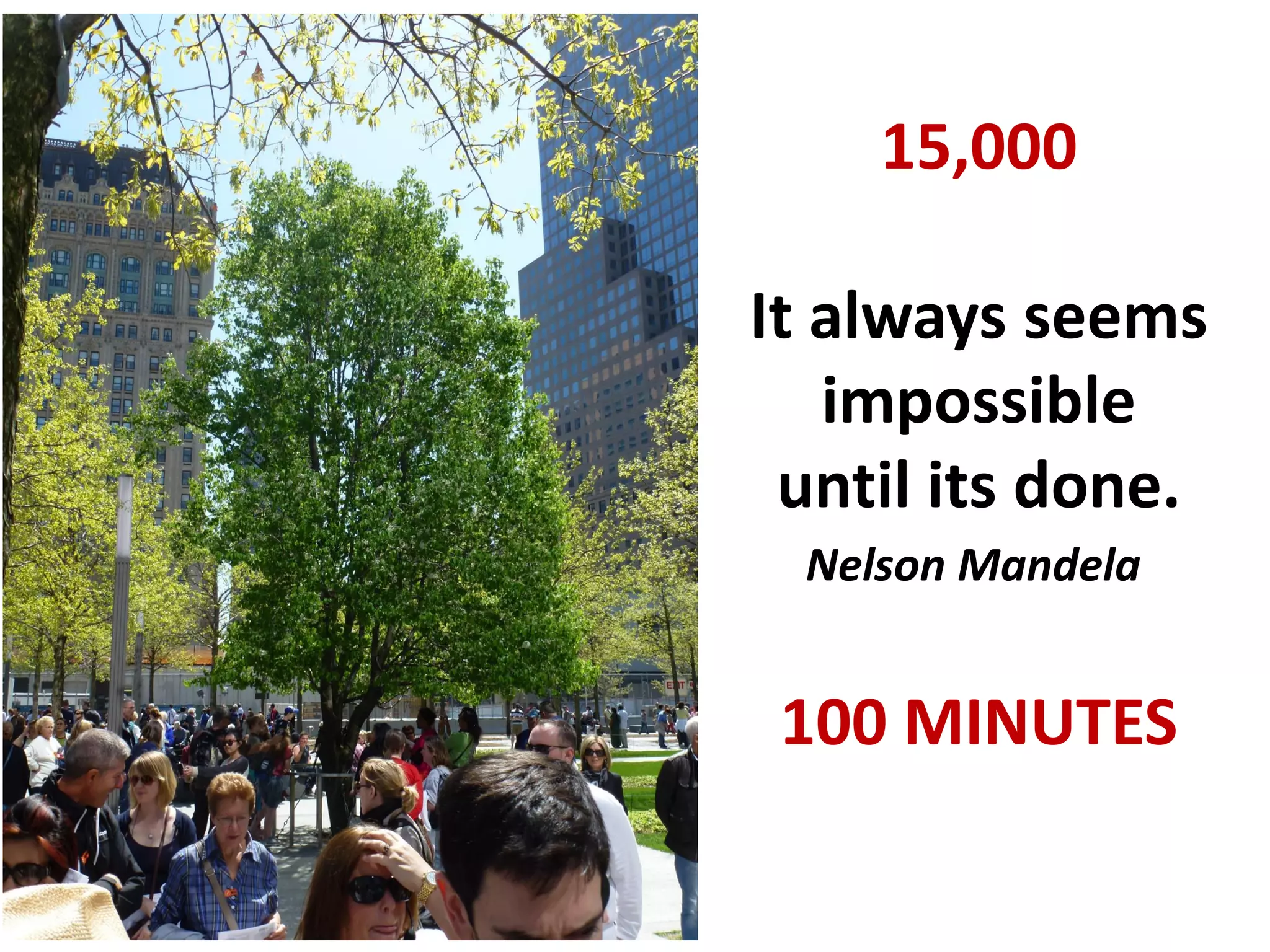
15,000
It always seems
impossible
until its done.
Nelson Mandela
100 MINUTES
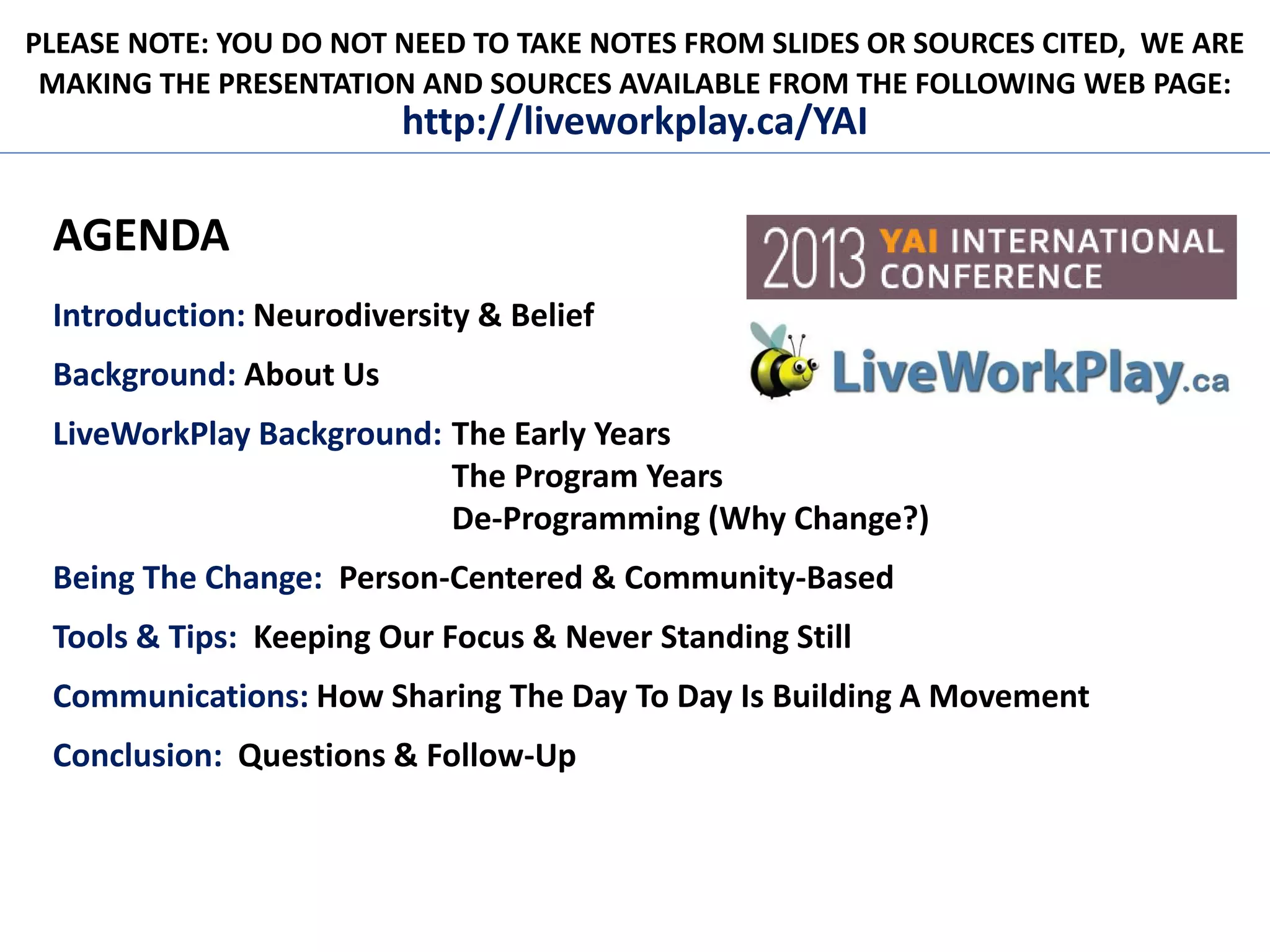
PLEASE NOTE: YOU DO NOT NEED TO TAKE NOTES FROM SLIDES OR SOURCES CITED, WE ARE
MAKING THE PRESENTATION AND SOURCES AVAILABLE FROM THE FOLLOWING WEB PAGE:
http://liveworkplay.ca/YAI
AGENDA
Introduction: Neurodiversity & Belief
Background: About Us
LiveWorkPlay Background: The Early Years
The Program Years
De-Programming (Why Change?)
Being The Change: Person-Centered & Community-Based
Tools & Tips: Keeping Our Focus & Never Standing Still
Communications: How Sharing The Day To Day Is Building A Movement
Conclusion: Questions & Follow-Up
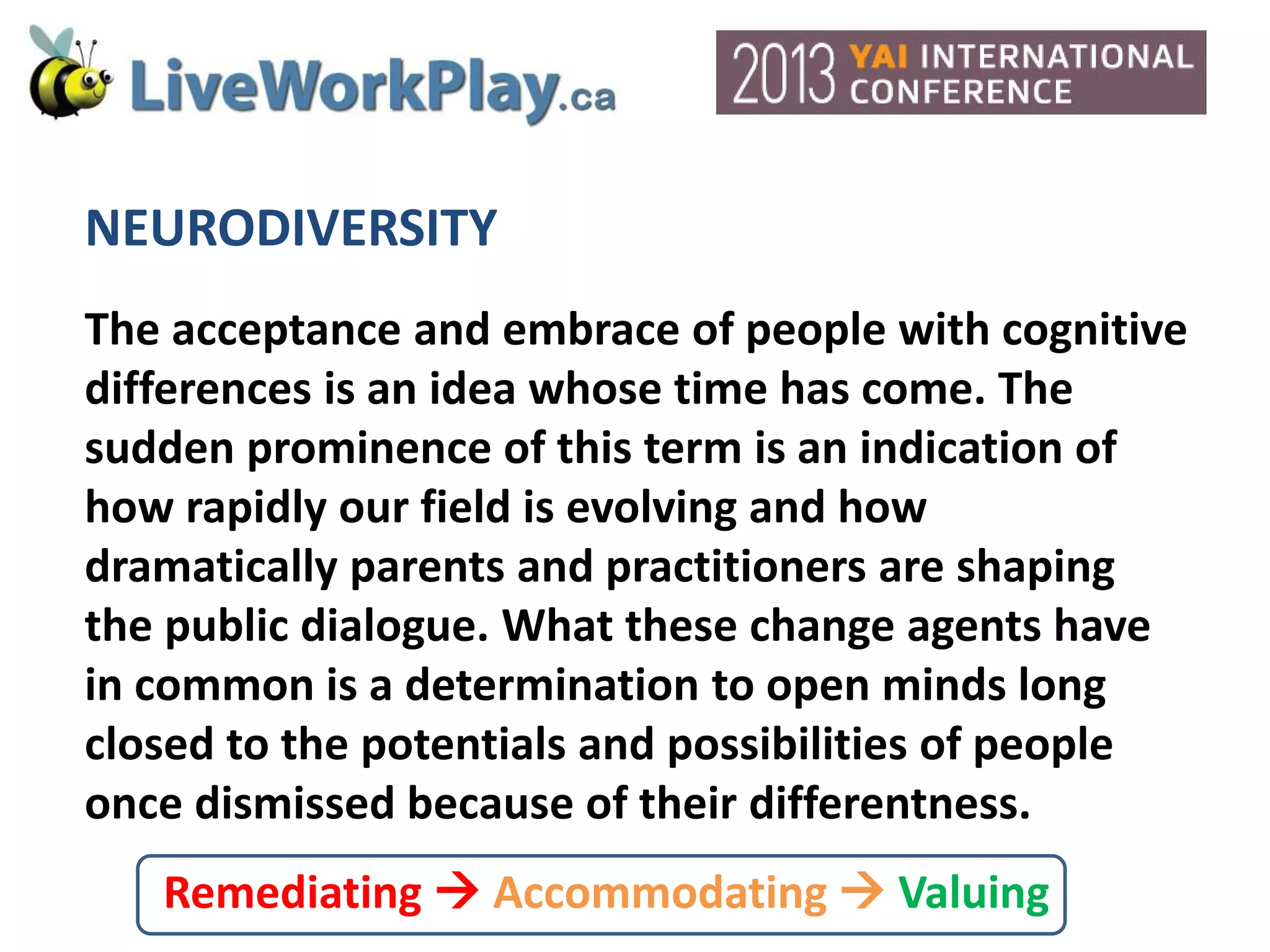
NEURODIVERSITY
The acceptance and embrace of people with cognitive
differences is an idea whose time has come. The
sudden prominence of this term is an indication of
how rapidly our field is evolving and how
dramatically parents and practitioners are shaping
the public dialogue. What these change agents have
in common is a determination to open minds long
closed to the potentials and possibilities of people
once dismissed because of their differentness.
Remediating  Accommodating  Valuing
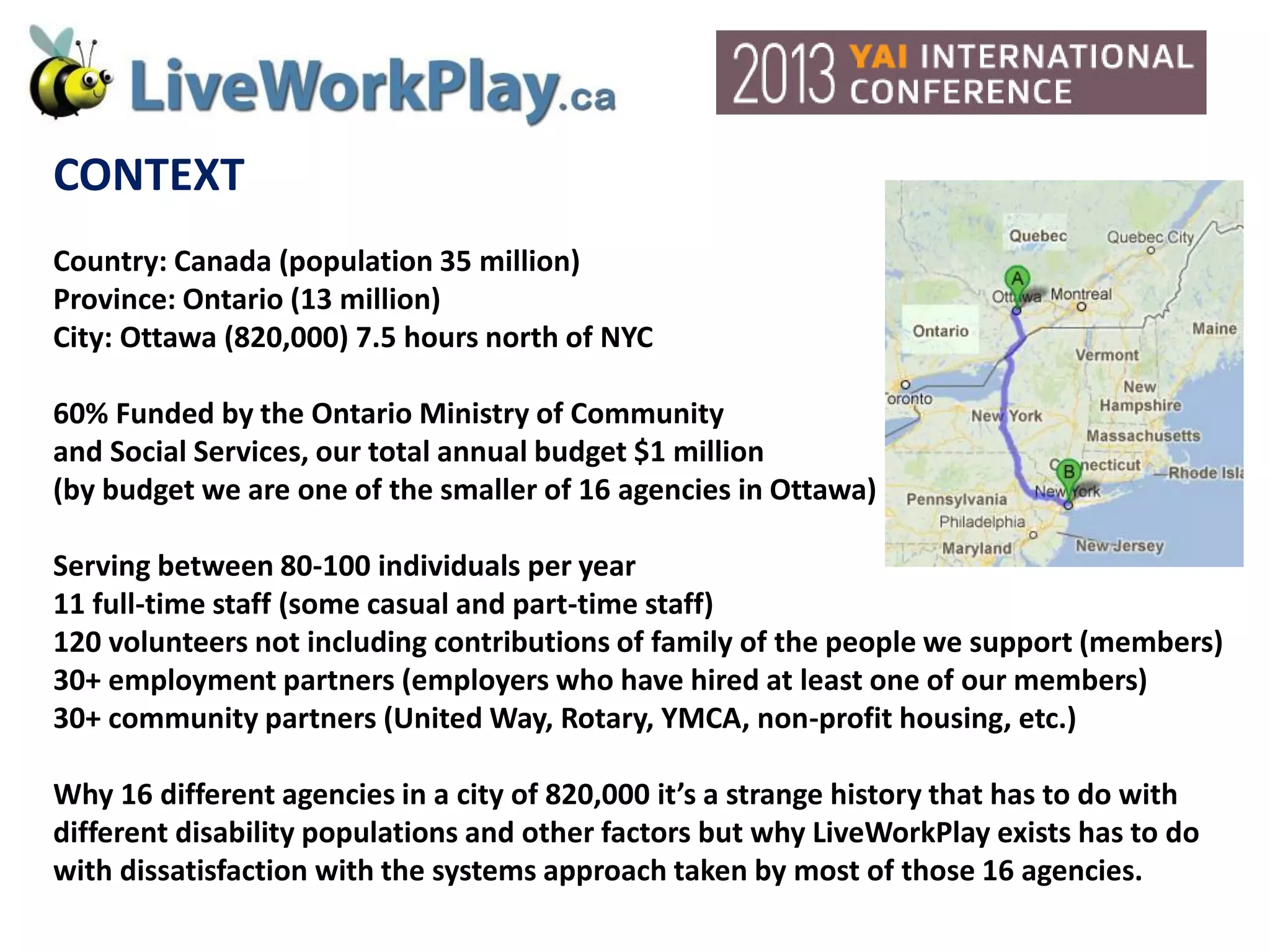
CONTEXT
Country: Canada (population 35 million)
Province: Ontario (13 million)
City: Ottawa (820,000) 7.5 hours north of NYC
60% Funded by the Ontario Ministry of Community
and Social Services, our total annual budget $1 million
(by budget we are one of the smaller of 16 agencies in Ottawa)
Serving between 80-100 individuals per year
11 full-time staff (some casual and part-time staff)
120 volunteers not including contributions of family of the people we support (members)
30+ employment partners (employers who have hired at least one of our members)
30+ community partners (United Way, Rotary, YMCA, non-profit housing, etc.)
Why 16 different agencies in a city of 820,000 it’s a strange history that has to do with
different disability populations and other factors but why LiveWorkPlay exists has to do
with dissatisfaction with the systems approach taken by most of those 16 agencies.
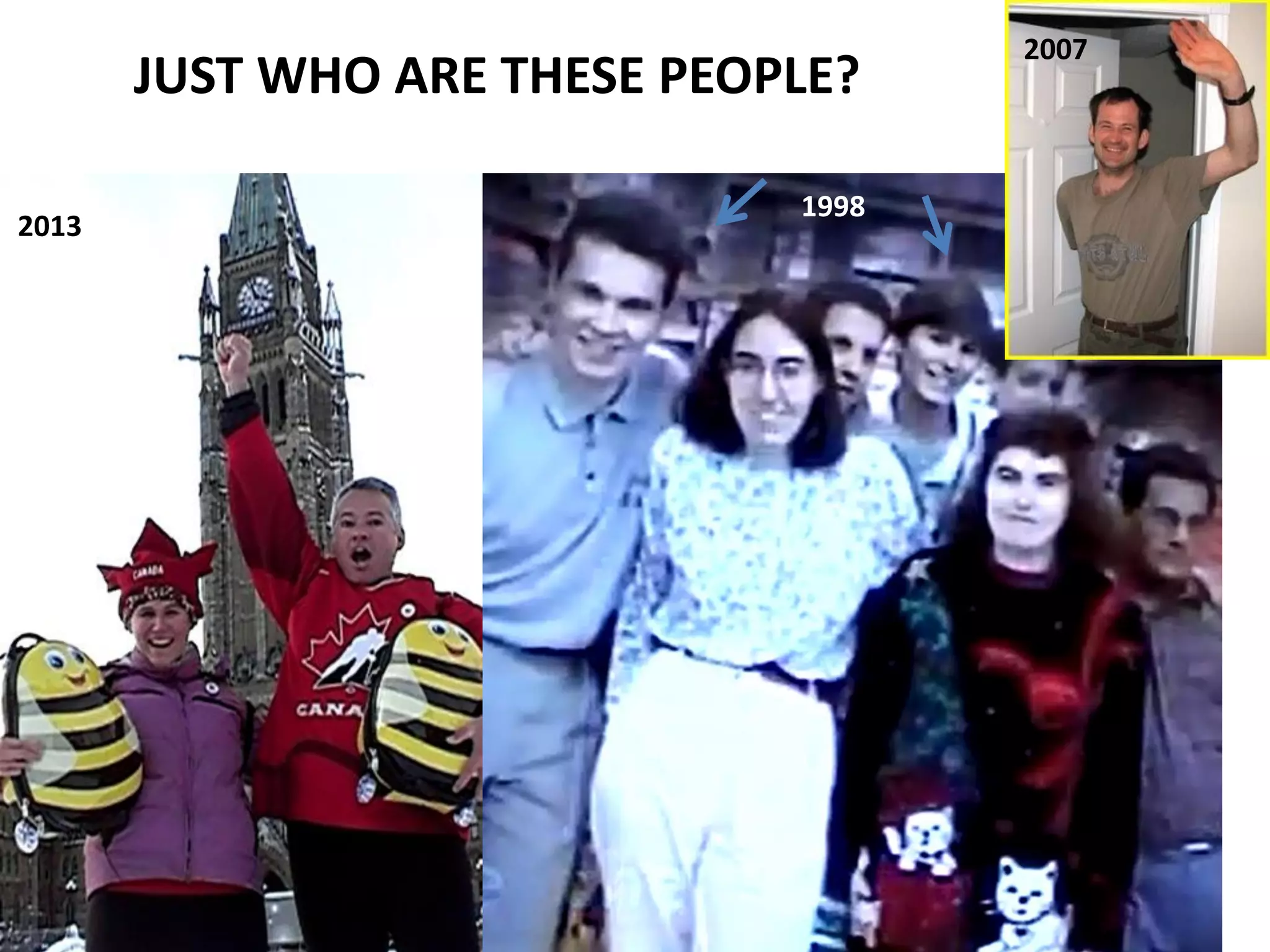
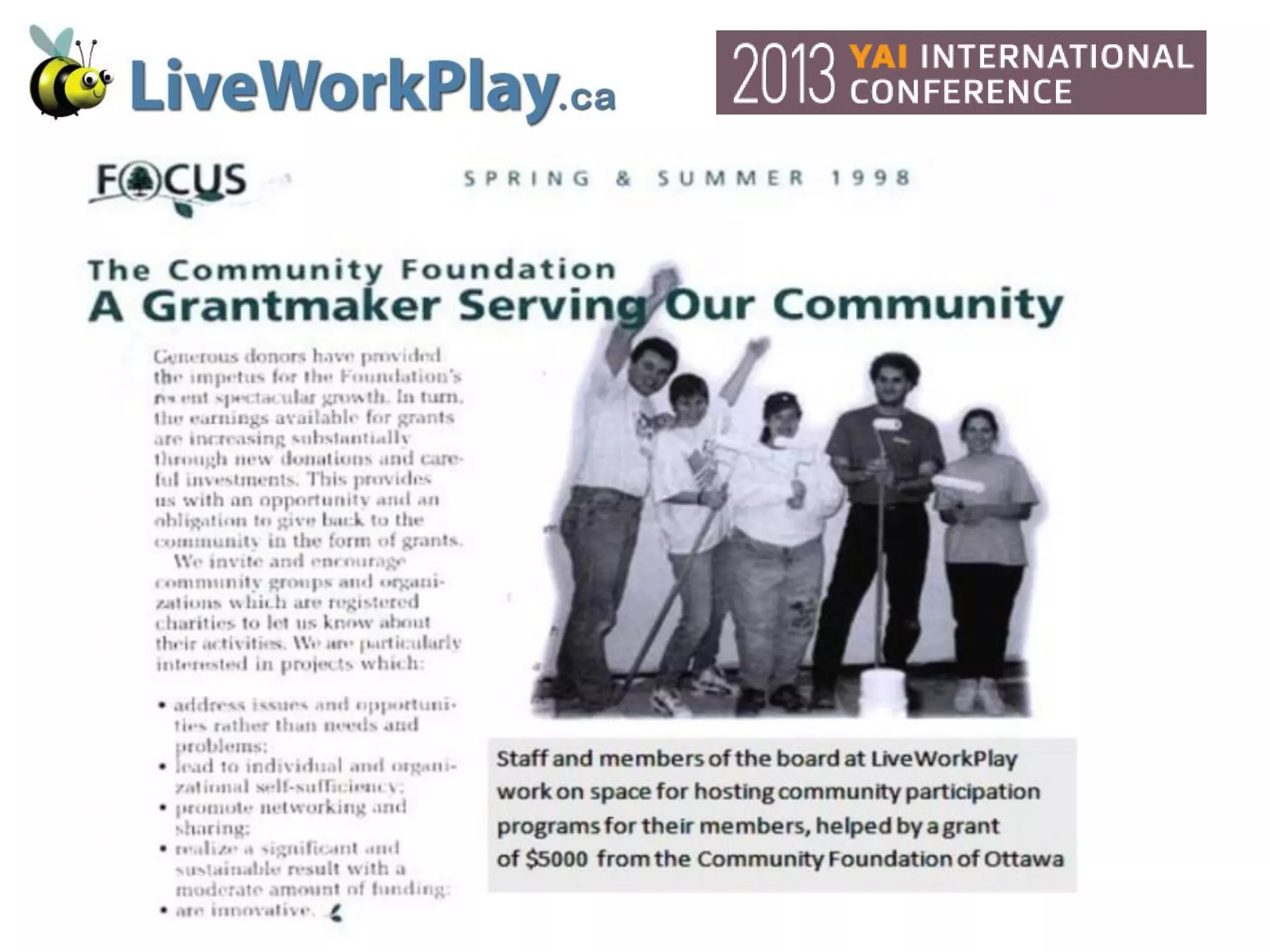
JUST WHO ARE THESE PEOPLE?
1998
2007
2013
http://j.mp/ablastfrompast
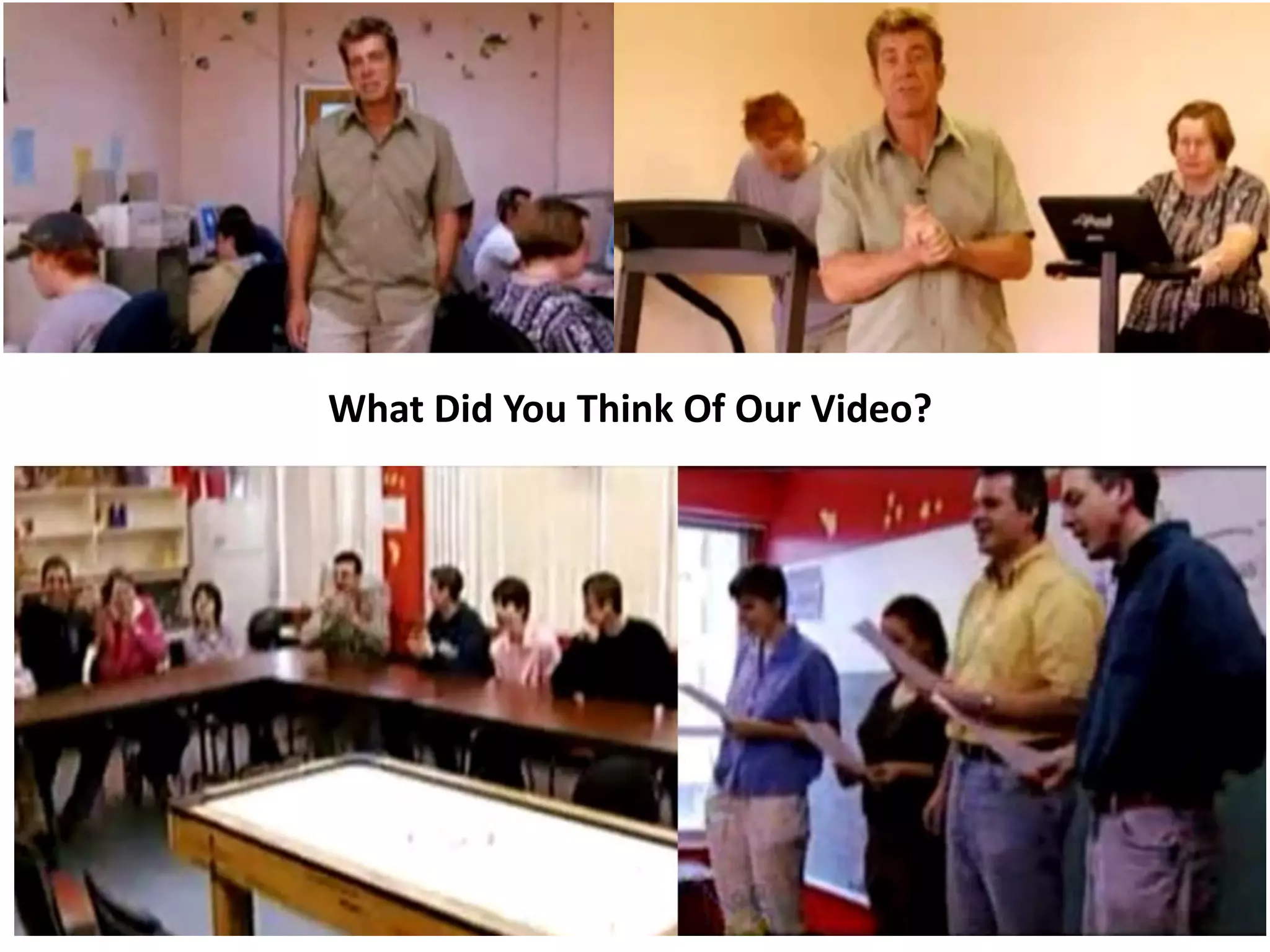
What Did You Think Of Our Video?
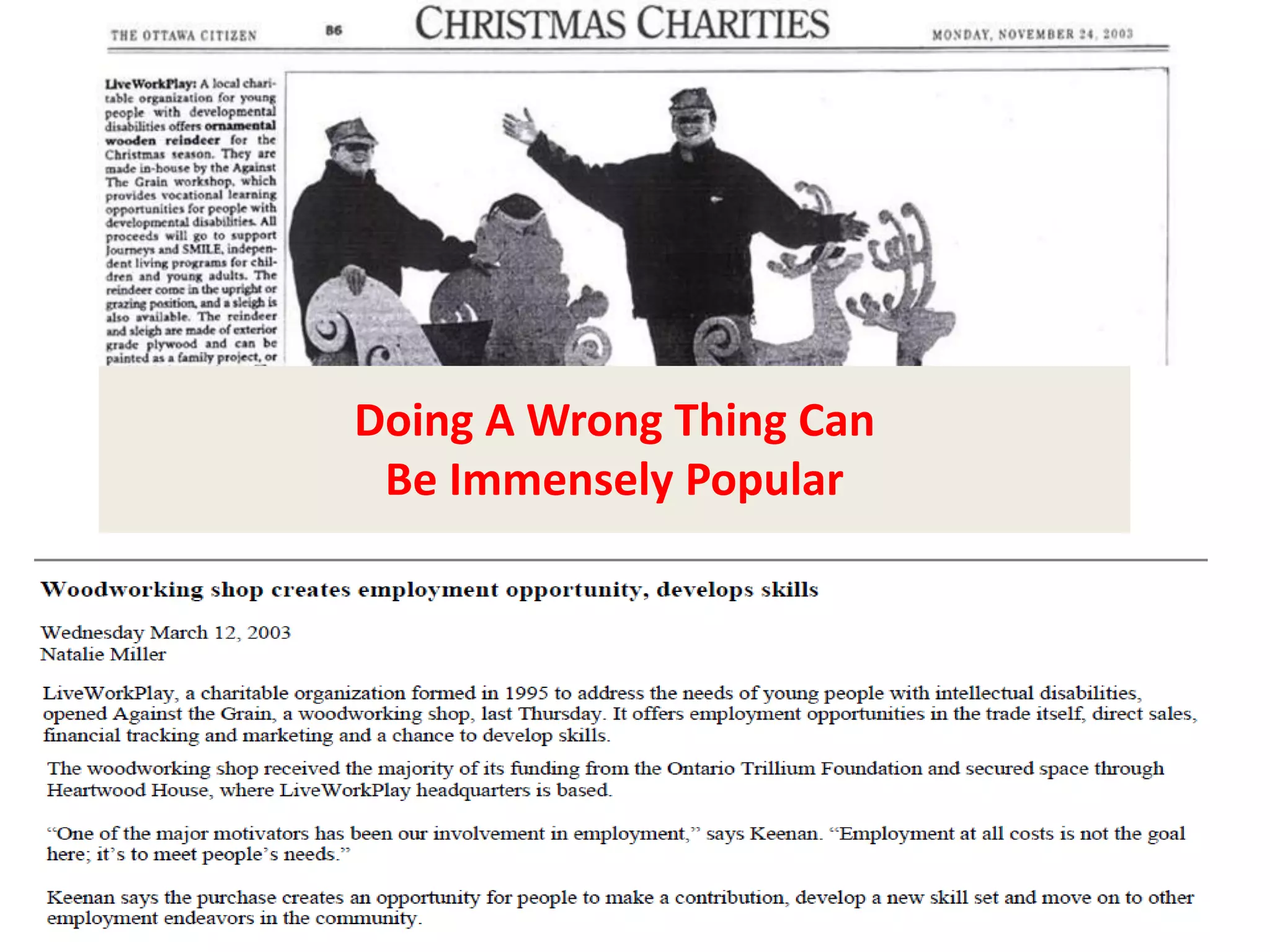
Doing A Wrong Thing Can
Be Immensely Popular
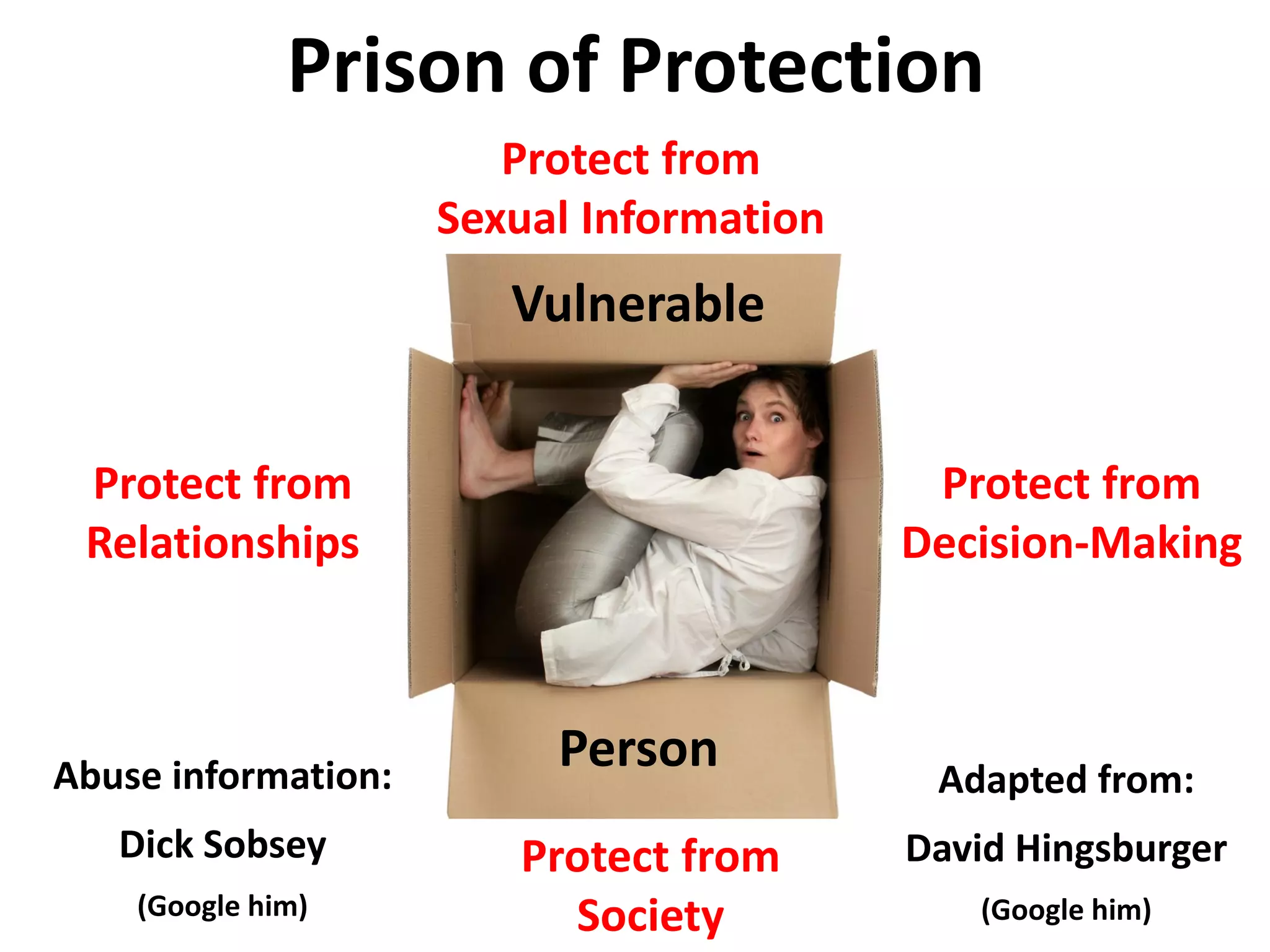
Prison of Protection
Protect from
Sexual Information
Protect from
Society
Protect from
Relationships
Protect from
Decision-Making
Vulnerable
Person Adapted from:
David Hingsburger
(Google him)
Abuse information:
Dick Sobsey
(Google him)
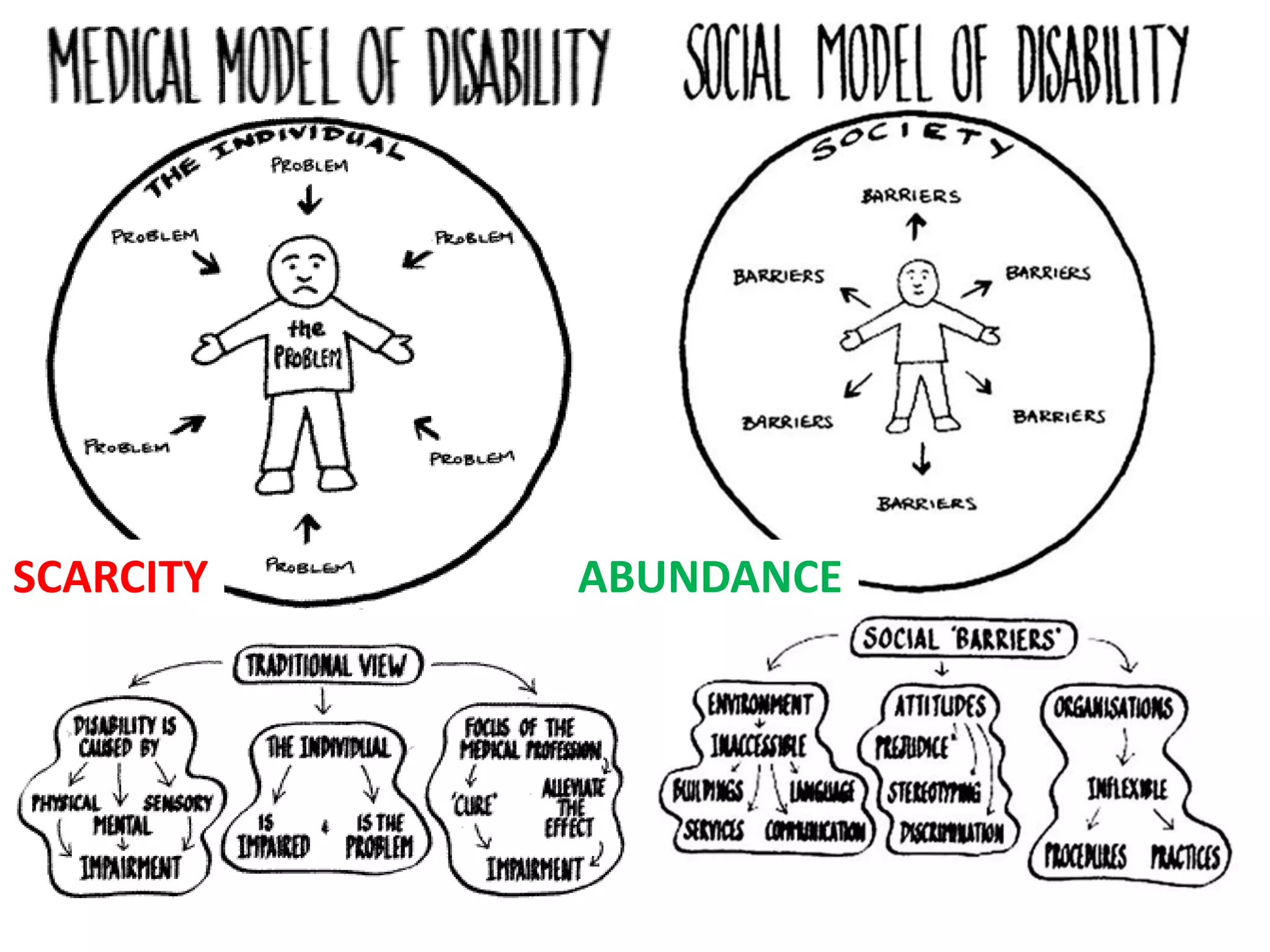
SCARCITY ABUNDANCE
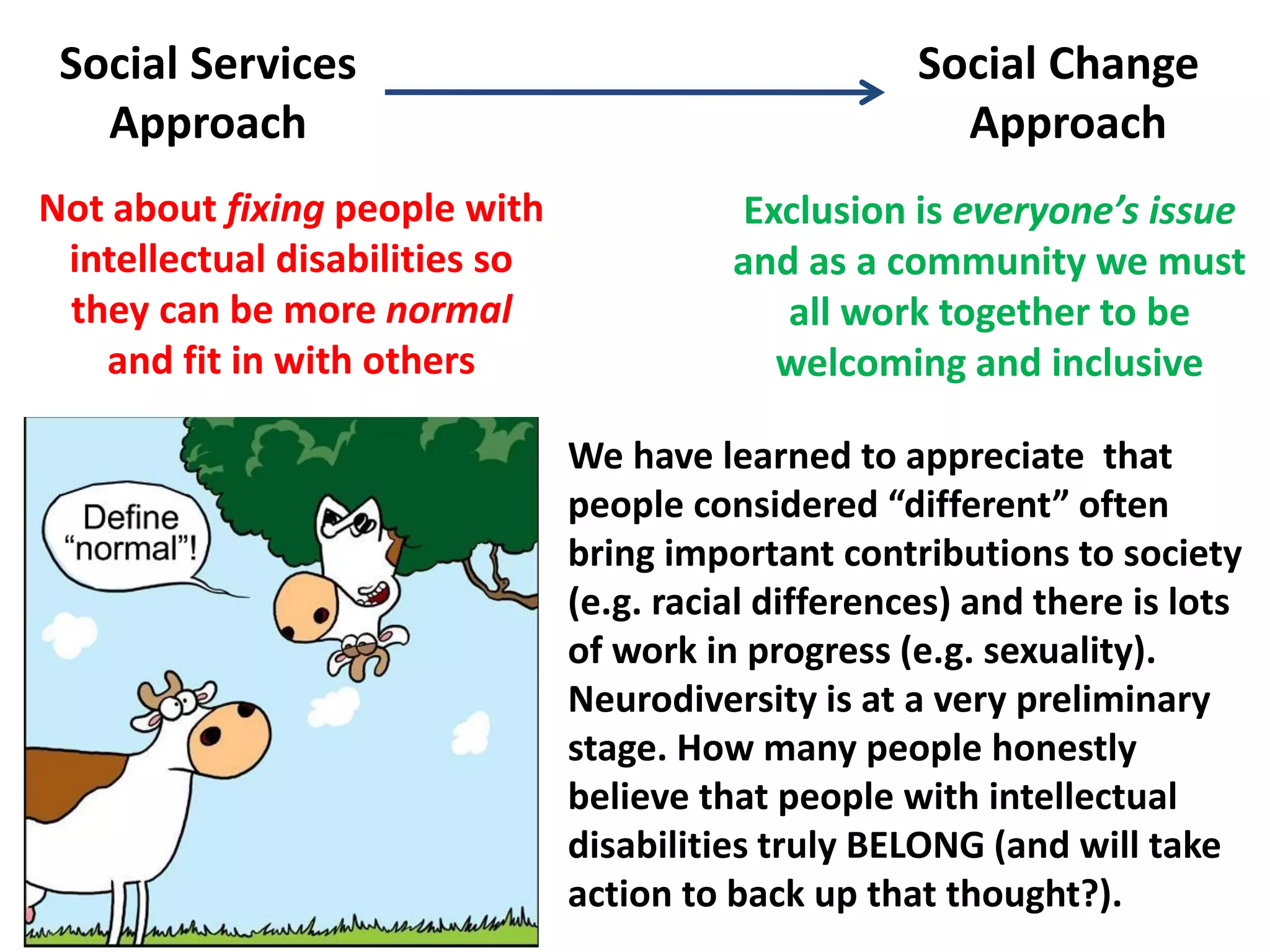
Not about fixing people with
intellectual disabilities so
they can be more normal
and fit in with others
Exclusion is everyone’s issue
and as a community we must
all work together to be
welcoming and inclusive
Social Services
Approach
Social Change
Approach
We have learned to appreciate that
people considered “different” often
bring important contributions to society
(e.g. racial differences) and there is lots
of work in progress (e.g. sexuality).
Neurodiversity is at a very preliminary
stage. How many people honestly
believe that people with intellectual
disabilities truly BELONG (and will take
action to back up that thought?).
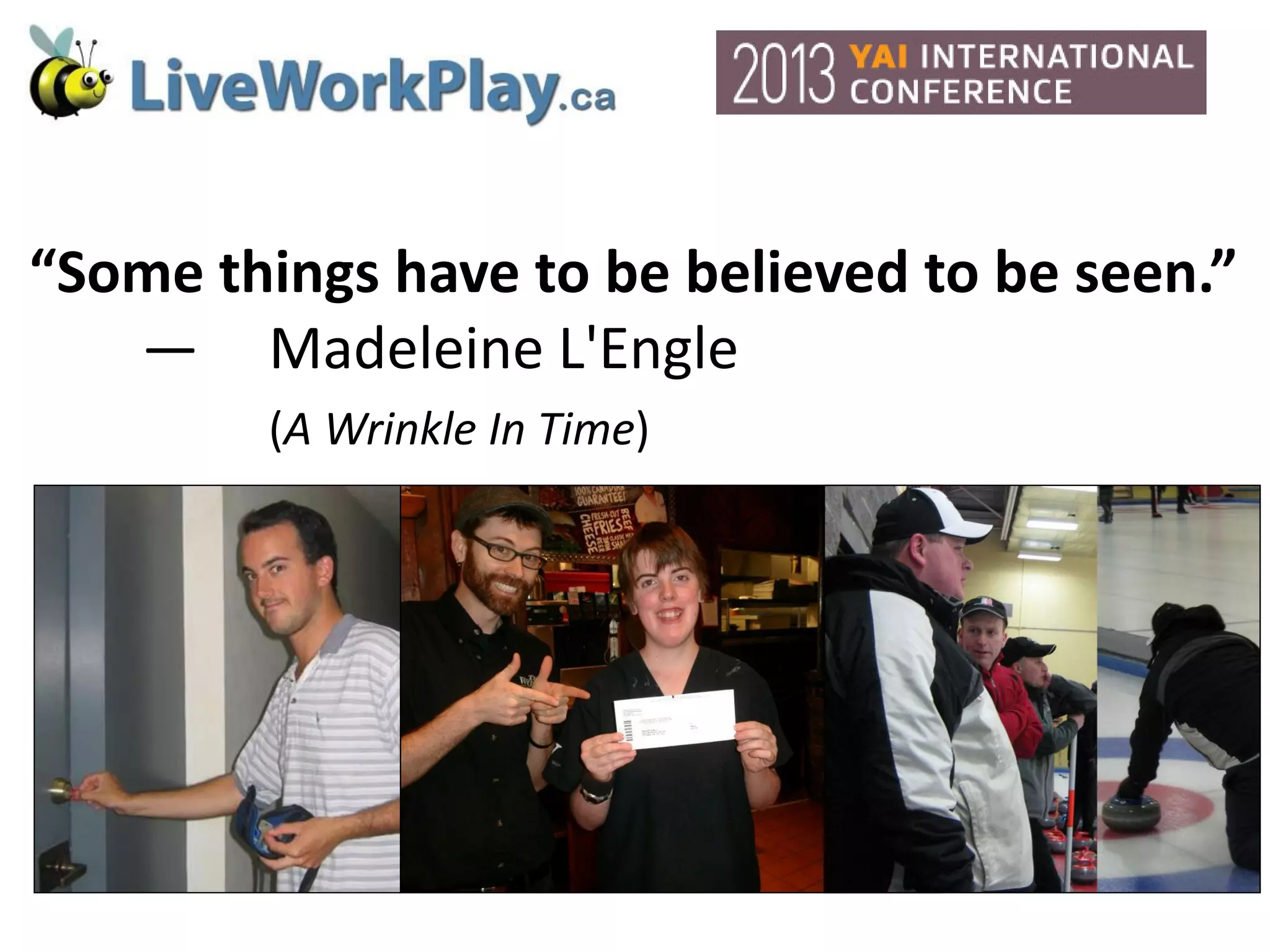
“Some things have to be believed to be seen.”
― Madeleine L'Engle
(A Wrinkle In Time)
When Dan Heath and his brother Chip started
their research for their best-seller Switch: How
to Change Things When Change Is Hard , the
two of the most common comments they
heard about change were:
“Change is hard.”
“I hate change.”
18
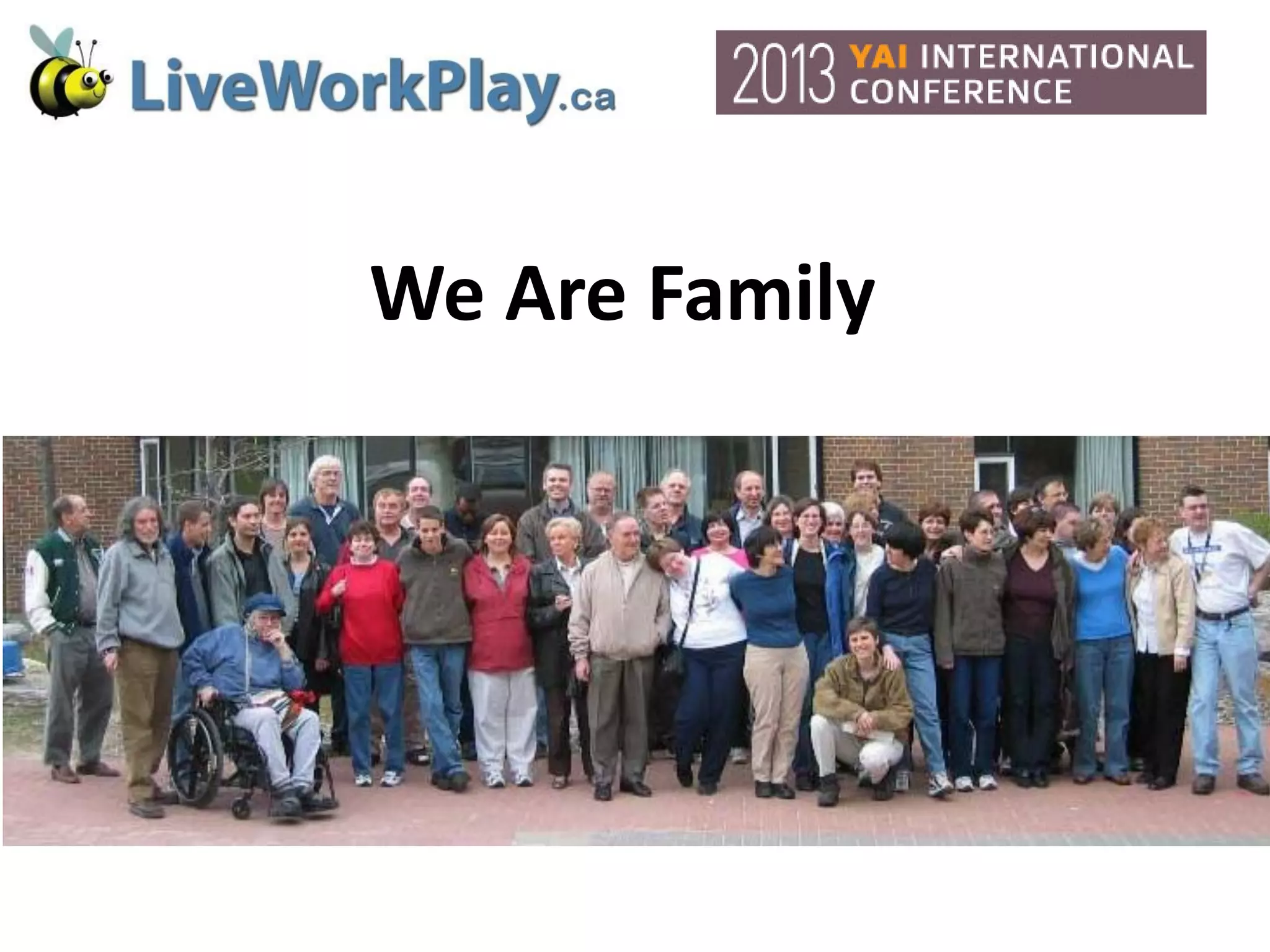
We Are Family
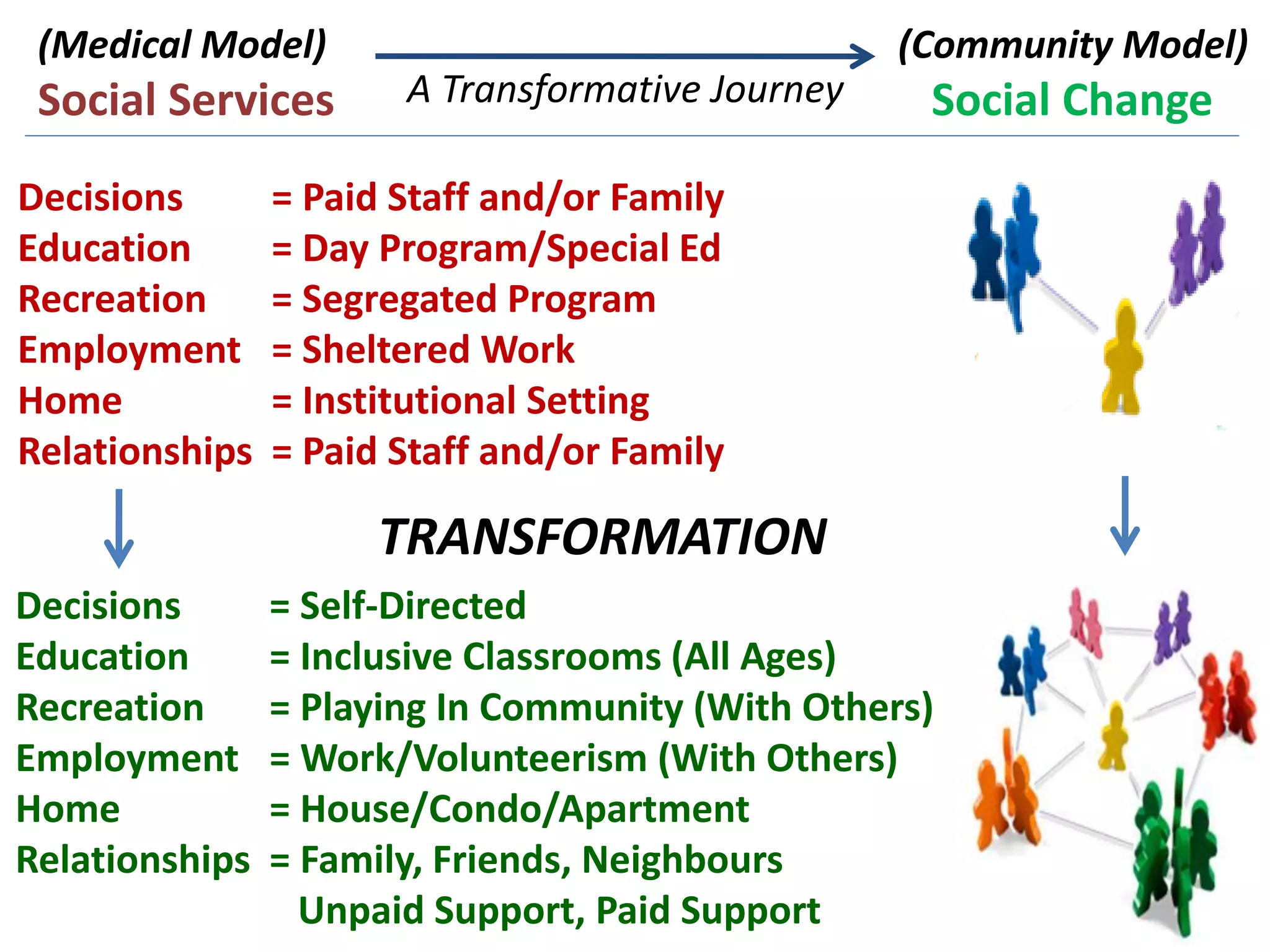
(Medical Model)
Social Services
(Community Model)
Social Change
Decisions = Paid Staff and/or Family
Education = Day Program/Special Ed
Recreation = Segregated Program
Employment = Sheltered Work
Home = Institutional Setting
Relationships = Paid Staff and/or Family
Decisions = Self-Directed
Education = Inclusive Classrooms (All Ages)
Recreation = Playing In Community (With Others)
Employment = Work/Volunteerism (With Others)
Home = House/Condo/Apartment
Relationships = Family, Friends, Neighbours
Unpaid Support, Paid Support
TRANSFORMATION
A Transformative Journey
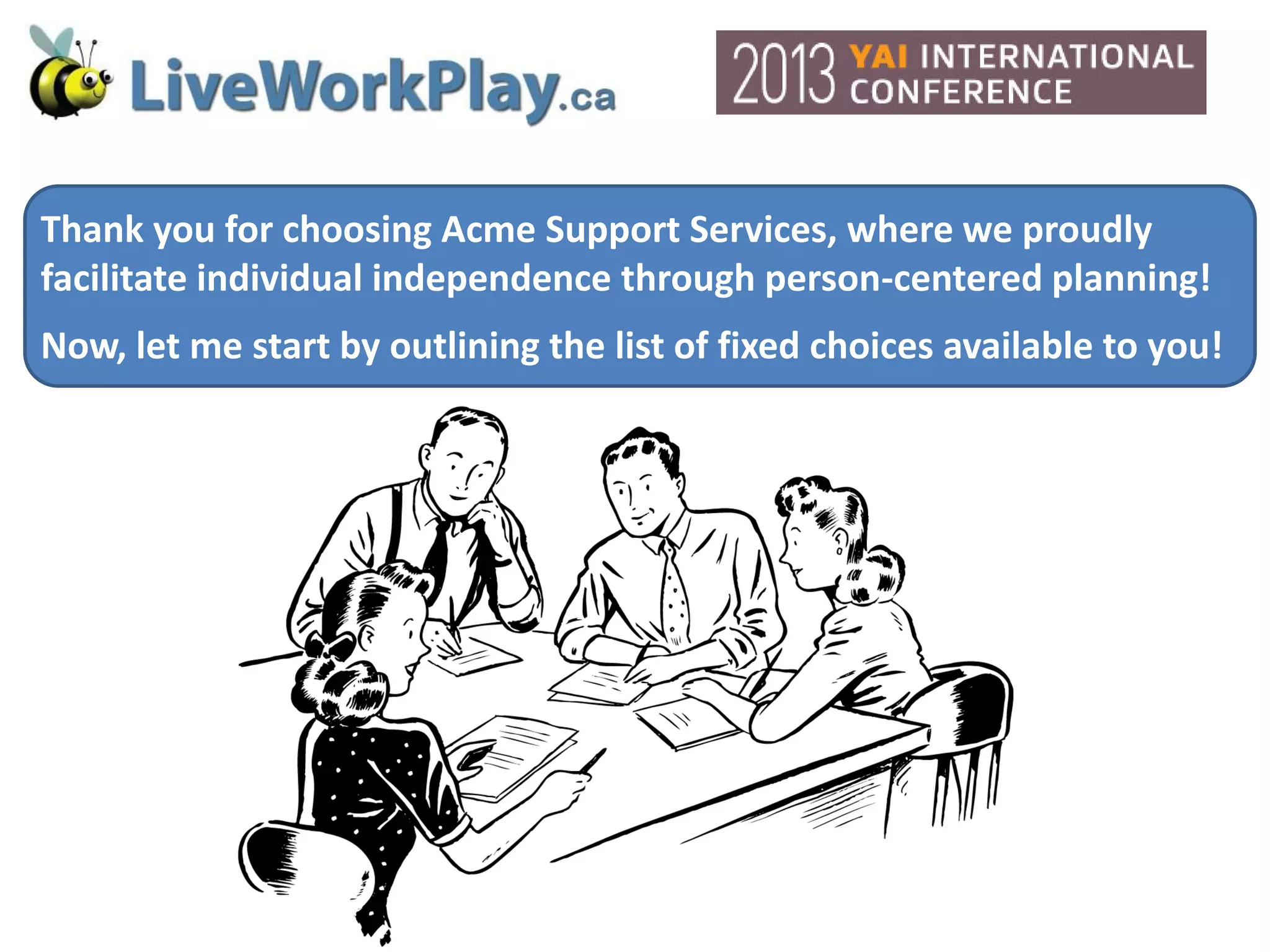
Thank you for choosing Acme Support Services, where we proudly
facilitate individual independence through person-centered planning!
Now, let me start by outlining the list of fixed choices available to you!
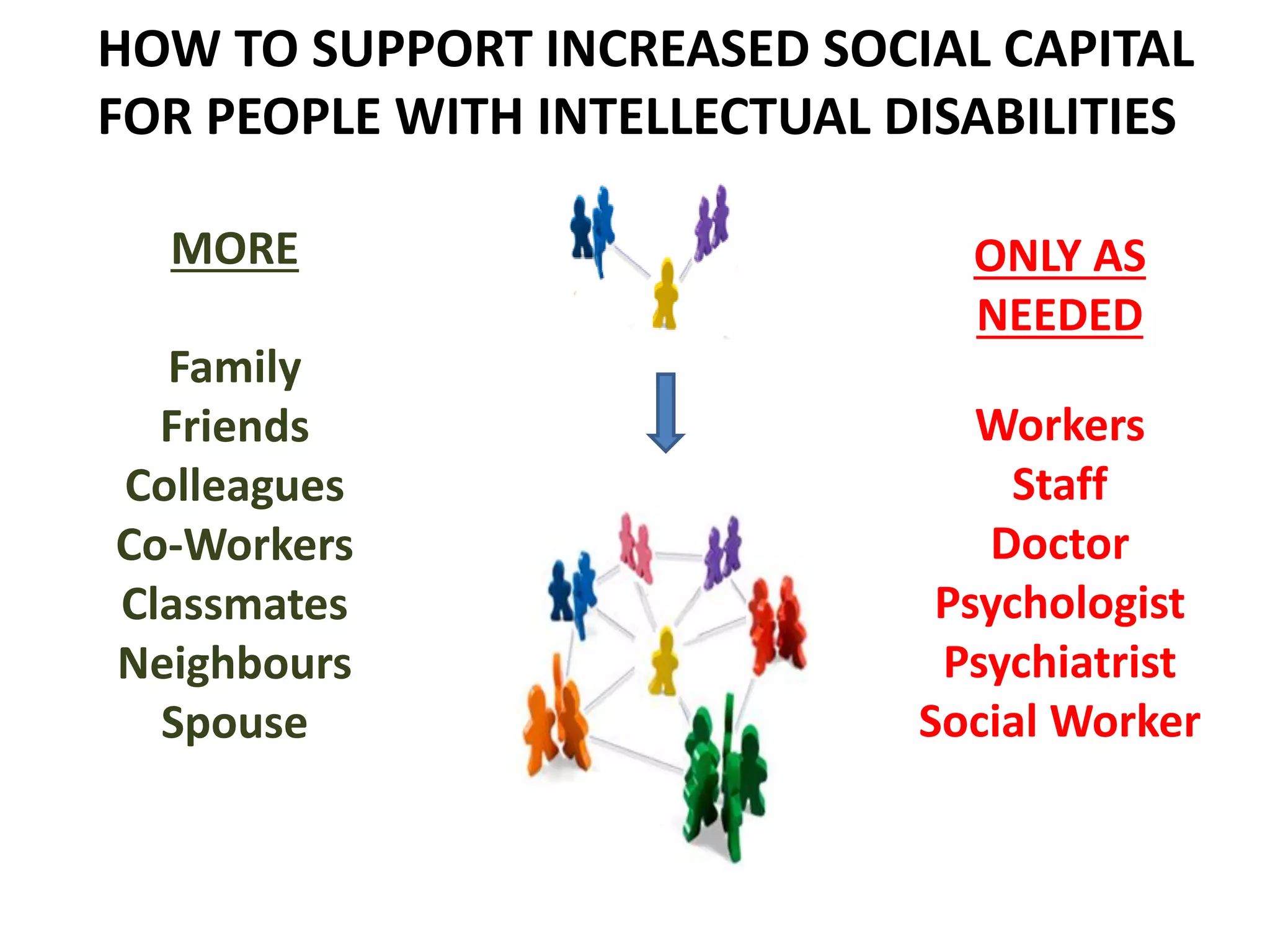
MORE
Family
Friends
Colleagues
Co-Workers
Classmates
Neighbours
Spouse
ONLY AS
NEEDED
Workers
Staff
Doctor
Psychologist
Psychiatrist
Social Worker
HOW TO SUPPORT INCREASED SOCIAL CAPITAL
FOR PEOPLE WITH INTELLECTUAL DISABILITIES
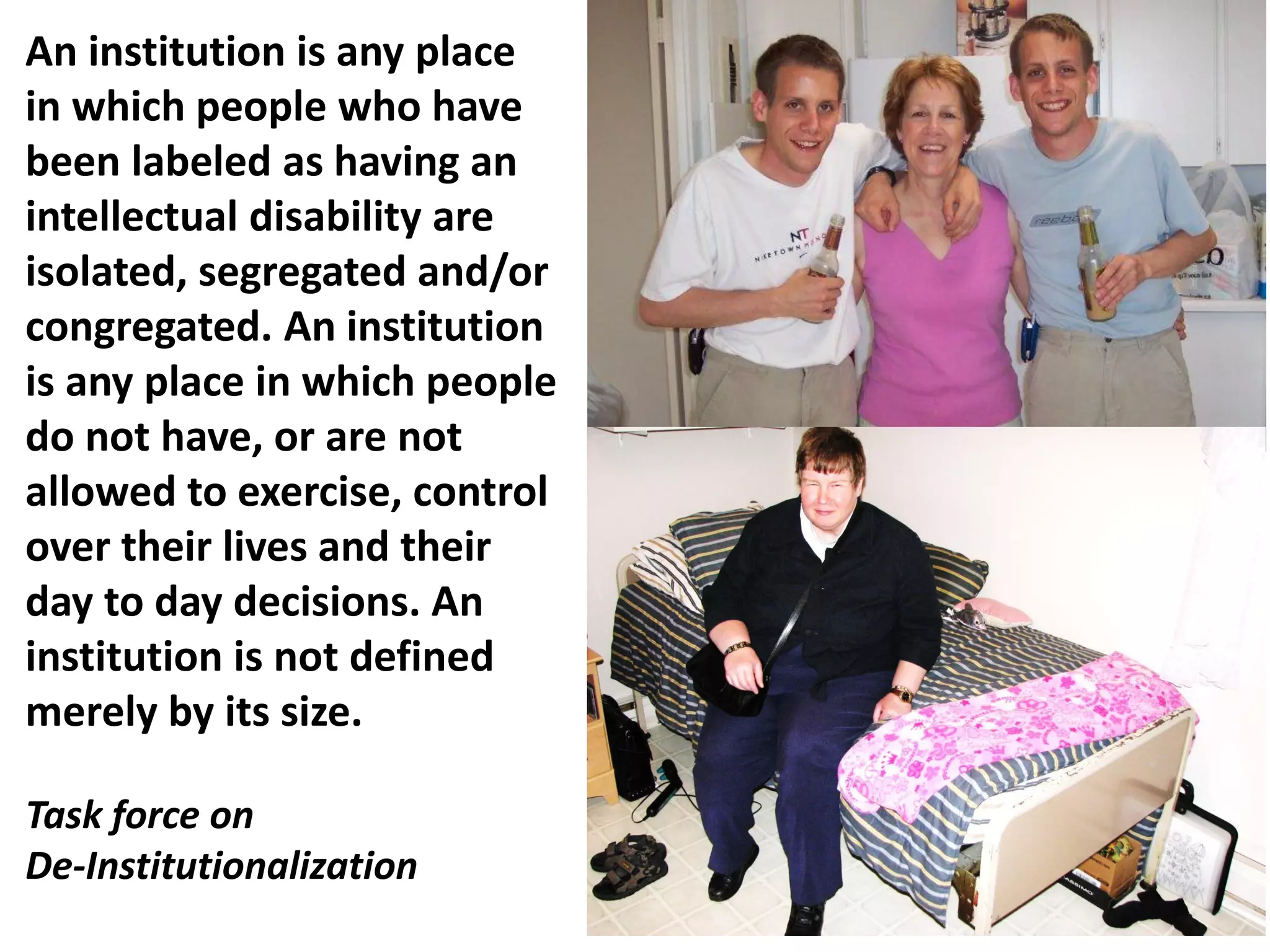
An institution is any place
in which people who have
been labeled as having an
intellectual disability are
isolated, segregated and/or
congregated. An institution
is any place in which people
do not have, or are not
allowed to exercise, control
over their lives and their
day to day decisions. An
institution is not defined
merely by its size.
Task force on
De-Institutionalization
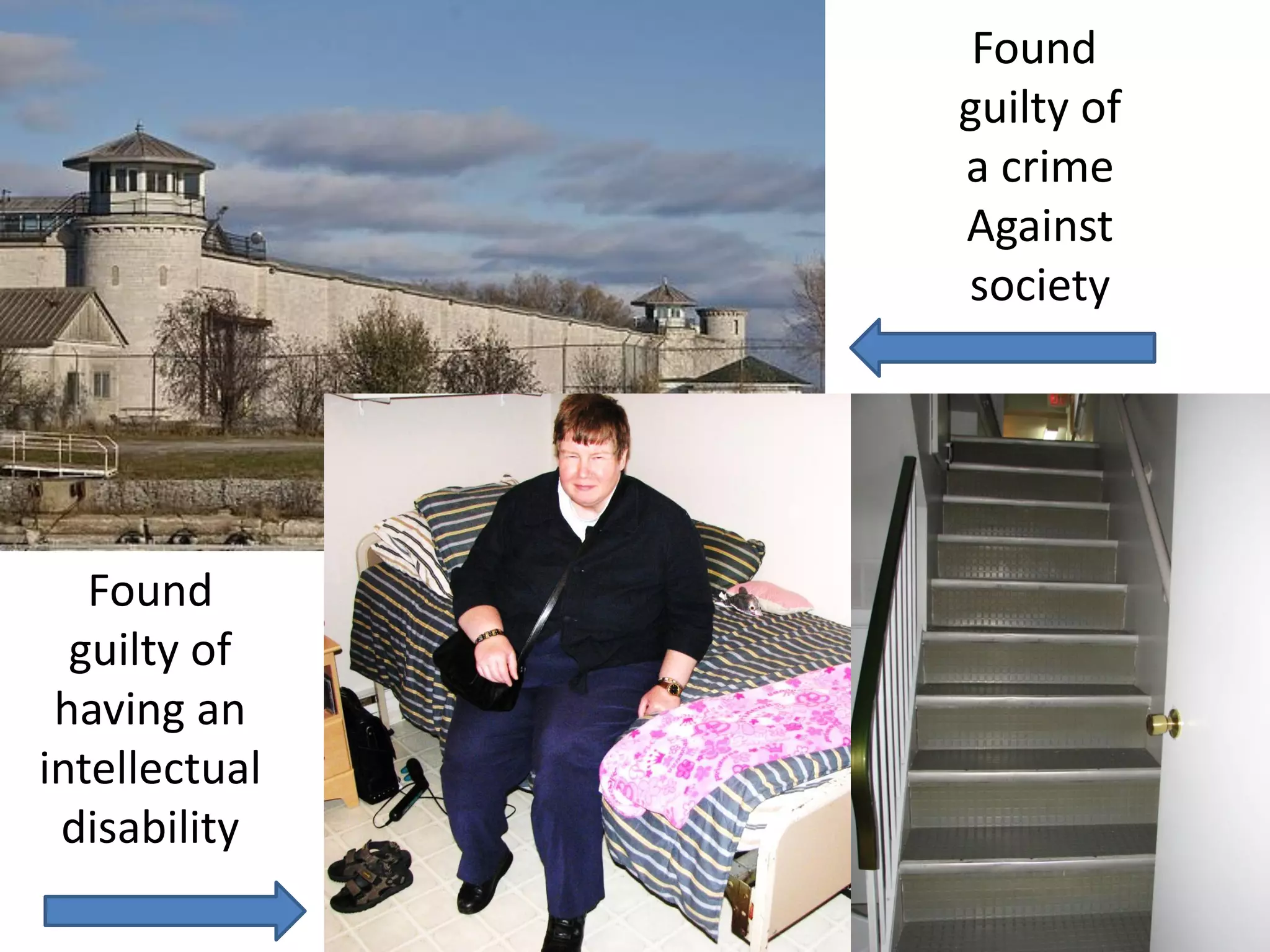
Found
guilty of
a crime
Against
society
Found
guilty of
having an
intellectual
disability
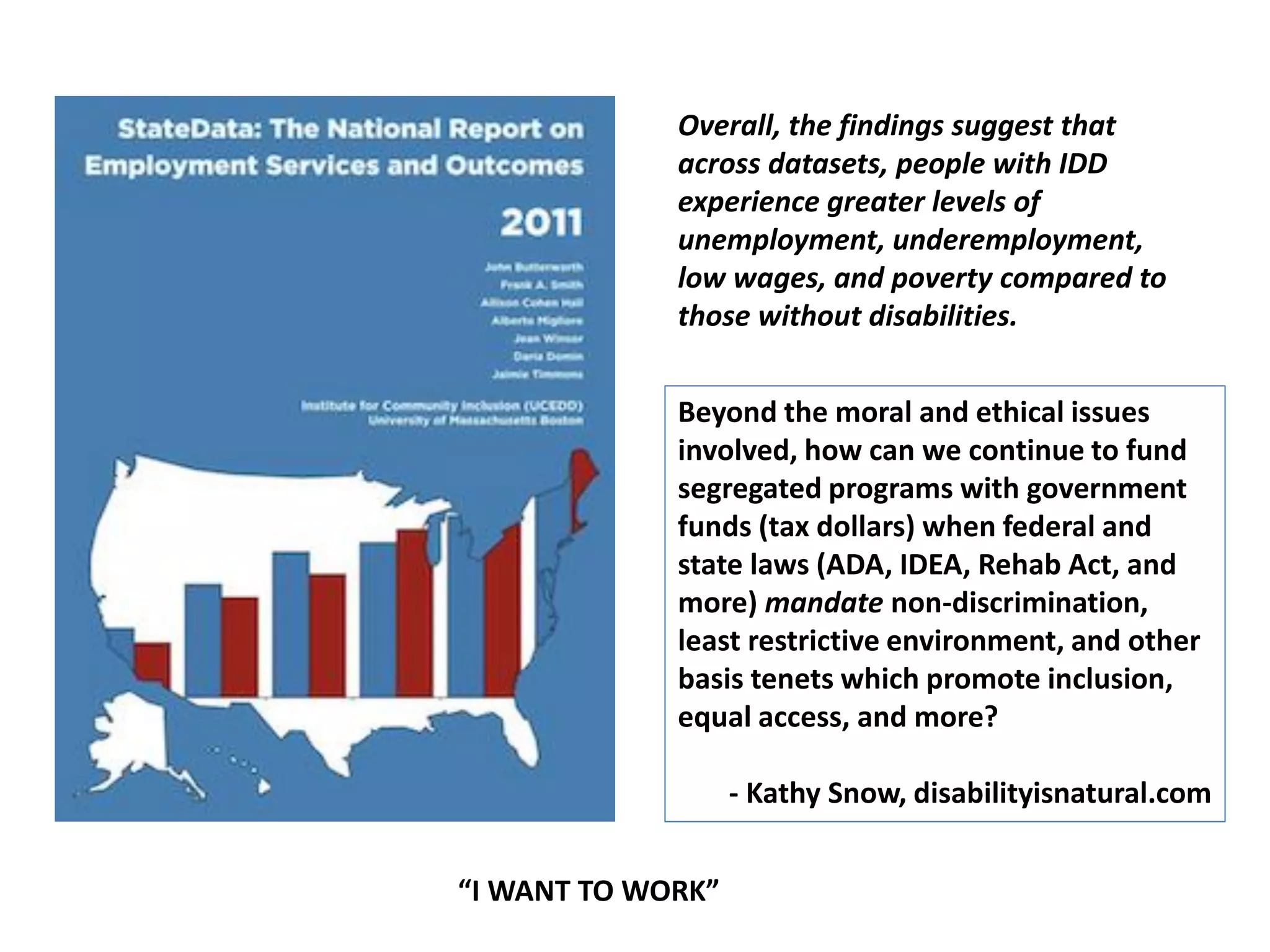
Overall, the findings suggest that
across datasets, people with IDD
experience greater levels of
unemployment, underemployment,
low wages, and poverty compared to
those without disabilities.
Beyond the moral and ethical issues
involved, how can we continue to fund
segregated programs with government
funds (tax dollars) when federal and
state laws (ADA, IDEA, Rehab Act, and
more) mandate non-discrimination,
least restrictive environment, and other
basis tenets which promote inclusion,
equal access, and more?
- Kathy Snow, disabilityisnatural.com
“I WANT TO WORK”
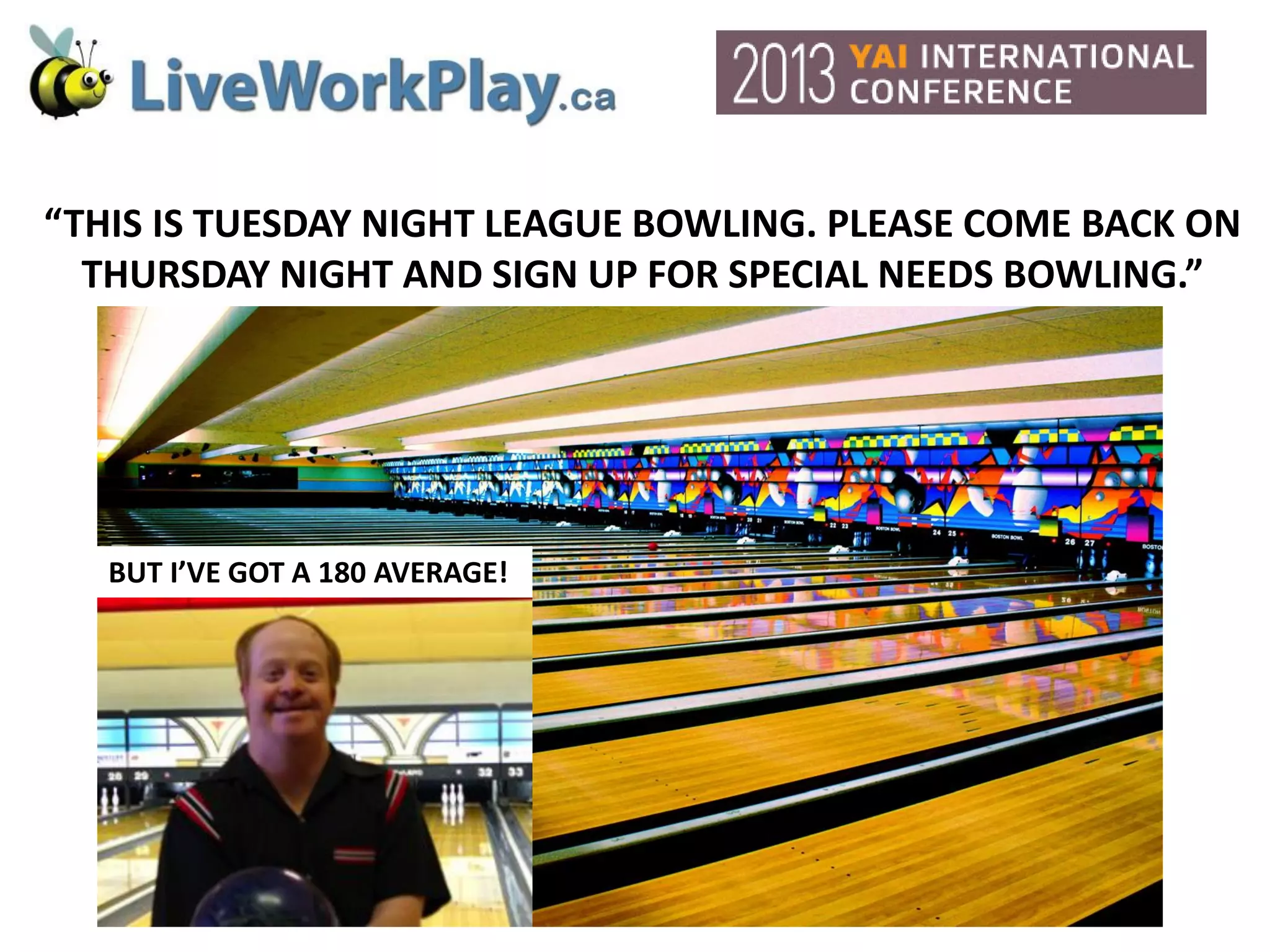
“THIS IS TUESDAY NIGHT LEAGUE BOWLING. PLEASE COME BACK ON
THURSDAY NIGHT AND SIGN UP FOR SPECIAL NEEDS BOWLING.”
BUT I’VE GOT A 180 AVERAGE!
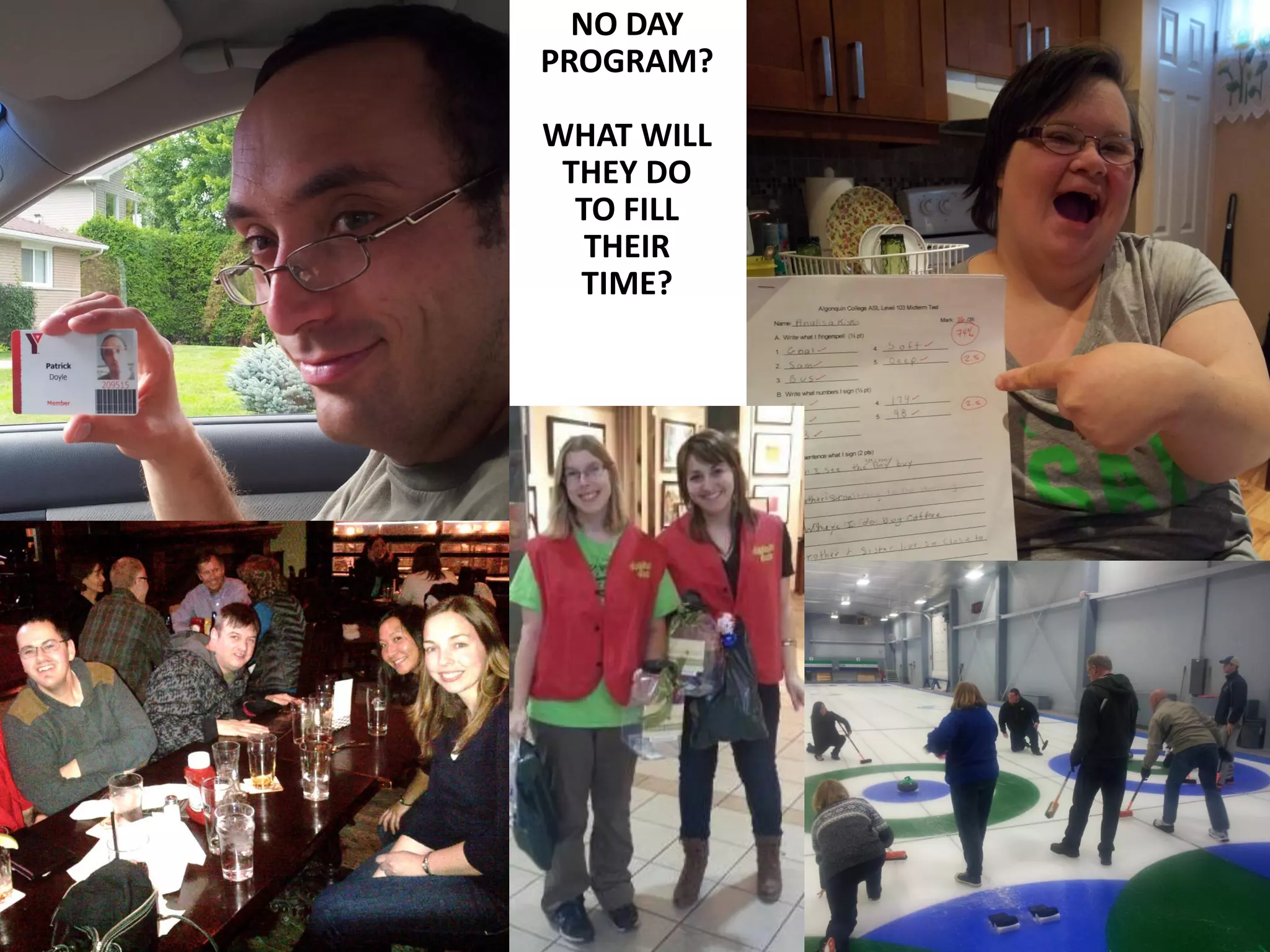
Play collage
NO DAY
PROGRAM?
WHAT WILL
THEY DO
TO FILL
THEIR
TIME?
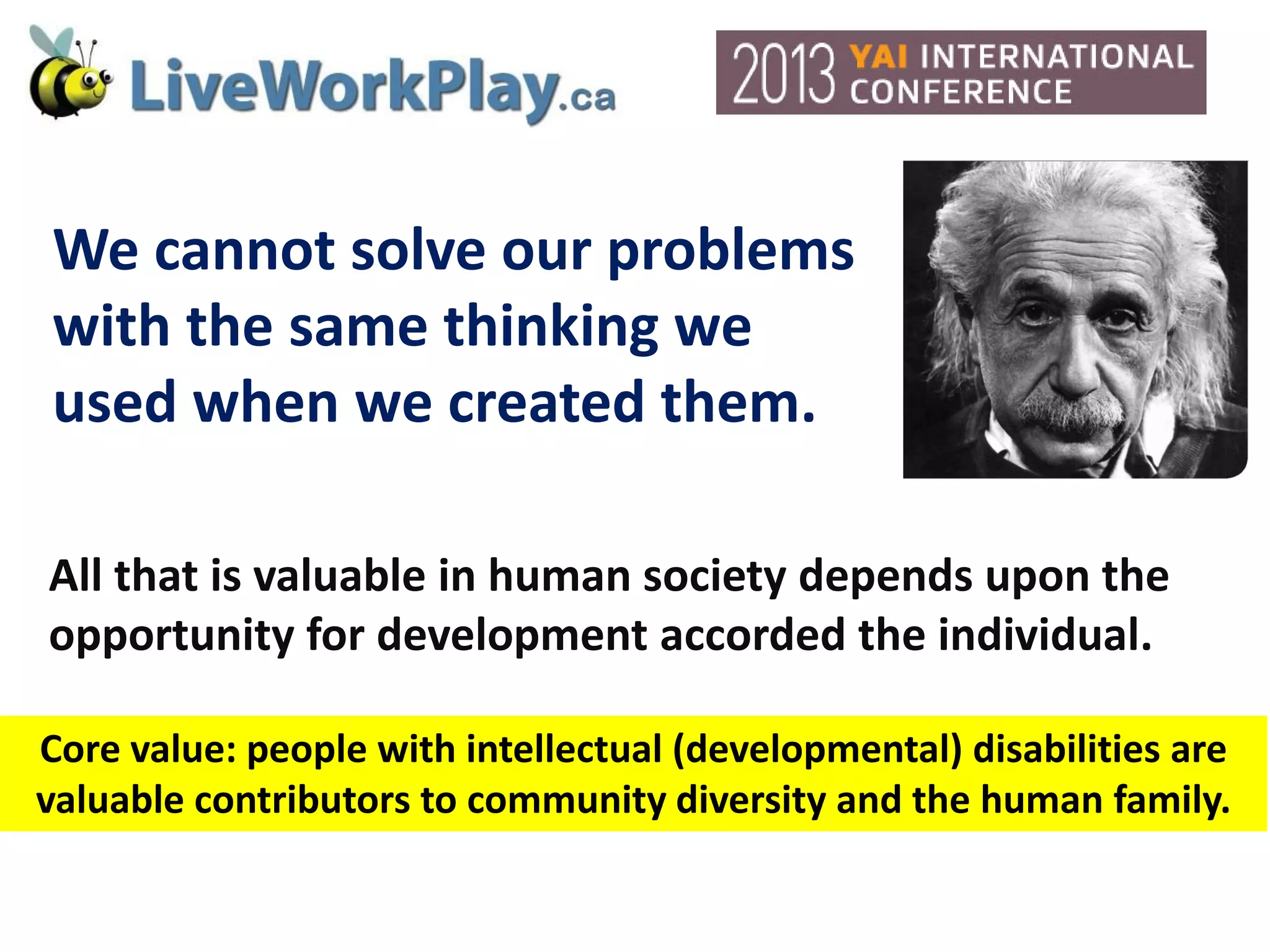
We cannot solve our problems
with the same thinking we
used when we created them.
All that is valuable in human society depends upon the
opportunity for development accorded the individual.
Core value: people with intellectual (developmental) disabilities are
valuable contributors to community diversity and the human family.
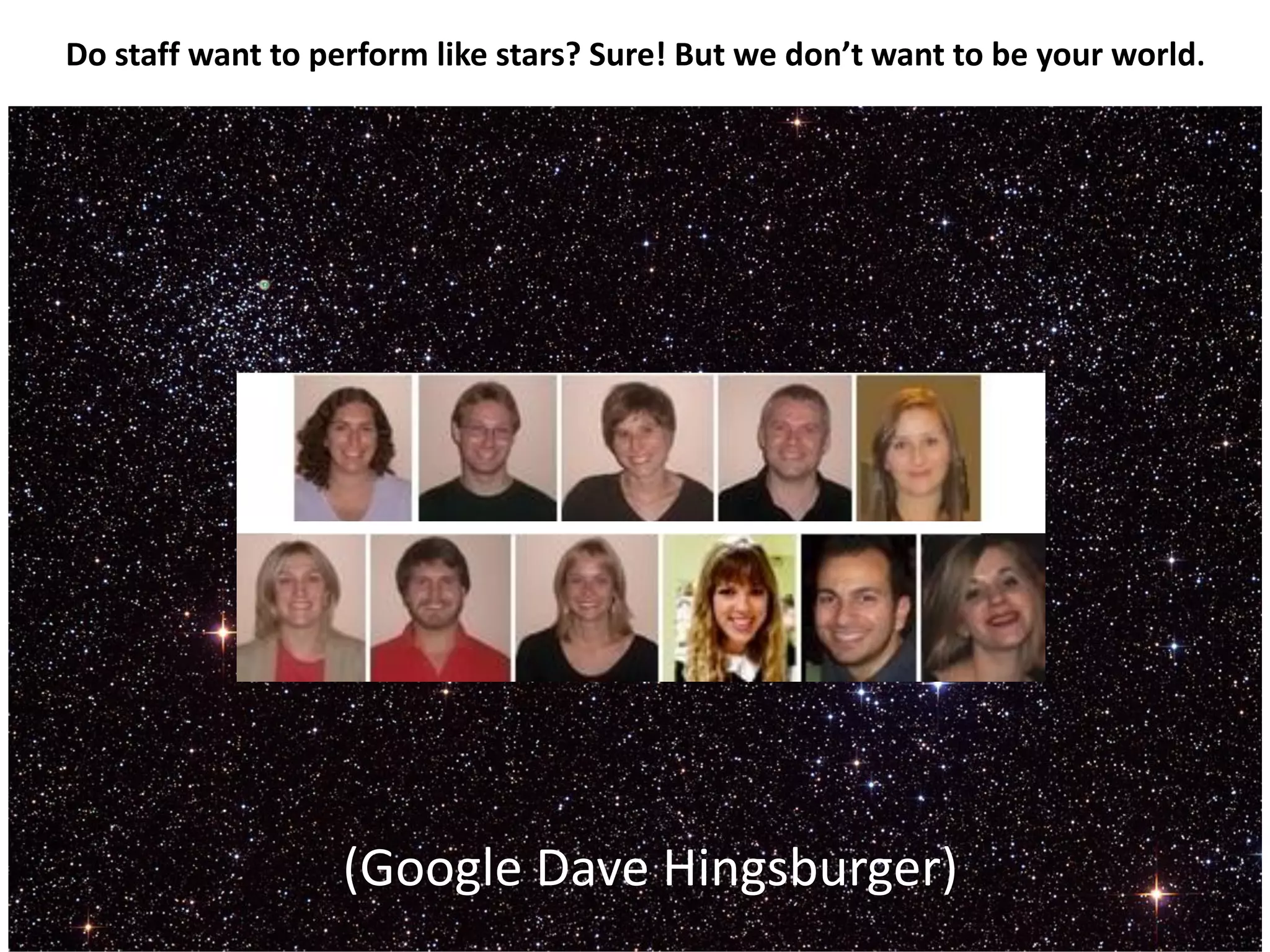
Do staff want to perform like stars? Sure! But we don’t want to be your world.
(Google Dave Hingsburger)
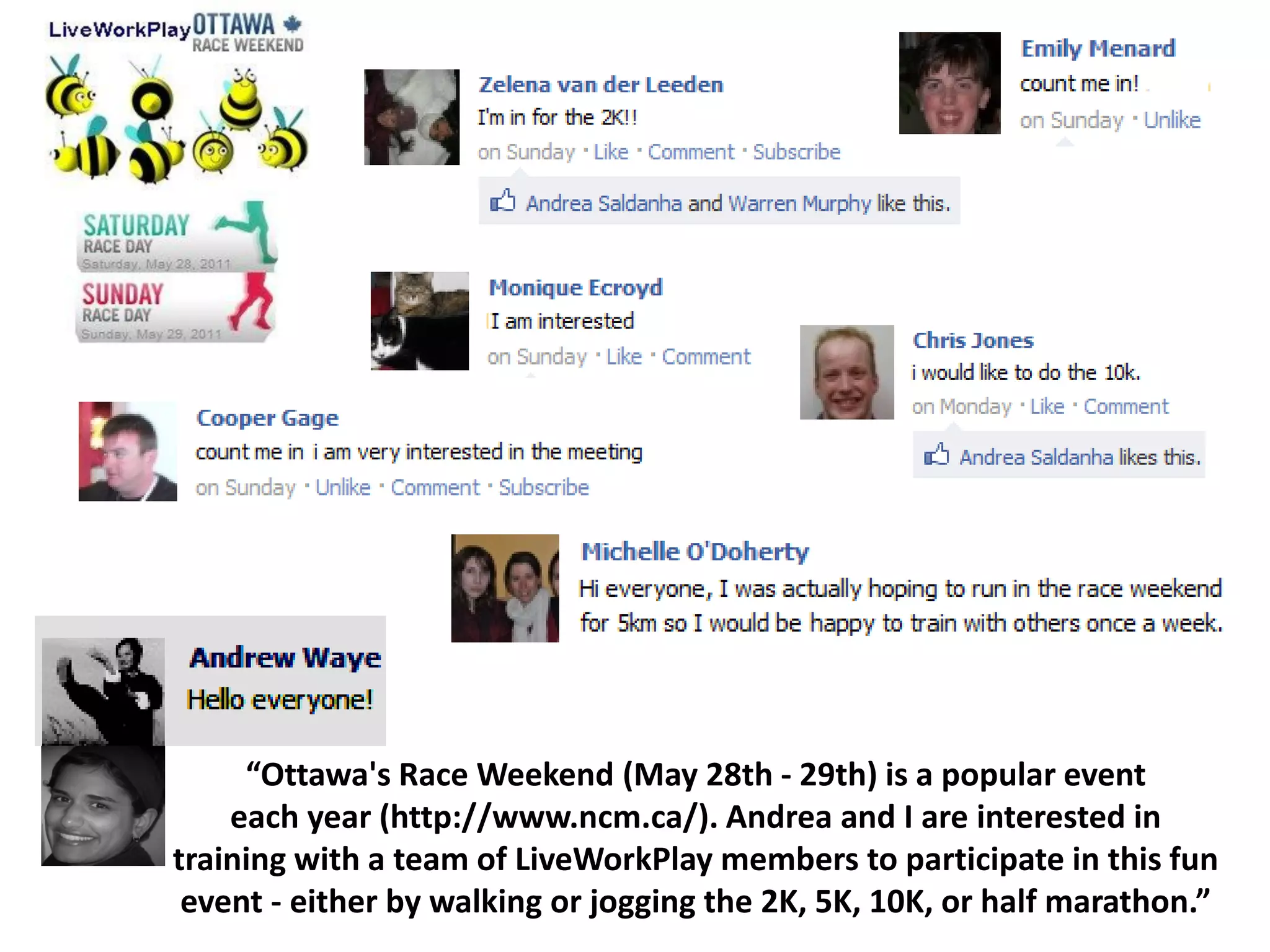
“Ottawa's Race Weekend (May 28th - 29th) is a popular event
each year (http://www.ncm.ca/). Andrea and I are interested in
training with a team of LiveWorkPlay members to participate in this fun
event - either by walking or jogging the 2K, 5K, 10K, or half marathon.”
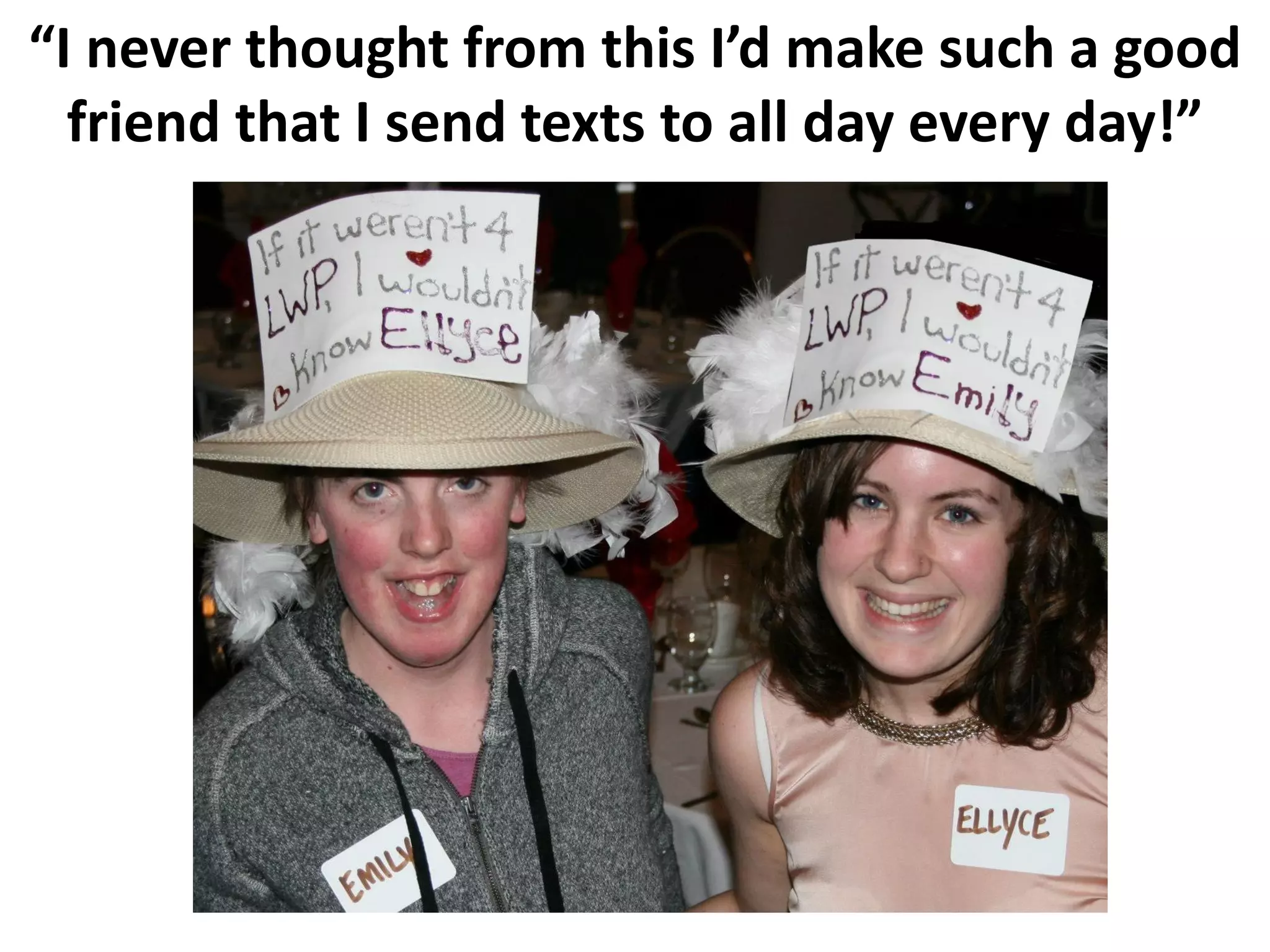
“I never thought from this I’d make such a good
friend that I send texts to all day every day!”
“Agencies trying to create and
sustain person-centred services
based in the community
are spectacularly more successful
at it than those agencies who believe
it is impossible and refuse to try.”
(Modified quote fromDr. Michael Kendrick)
35
36
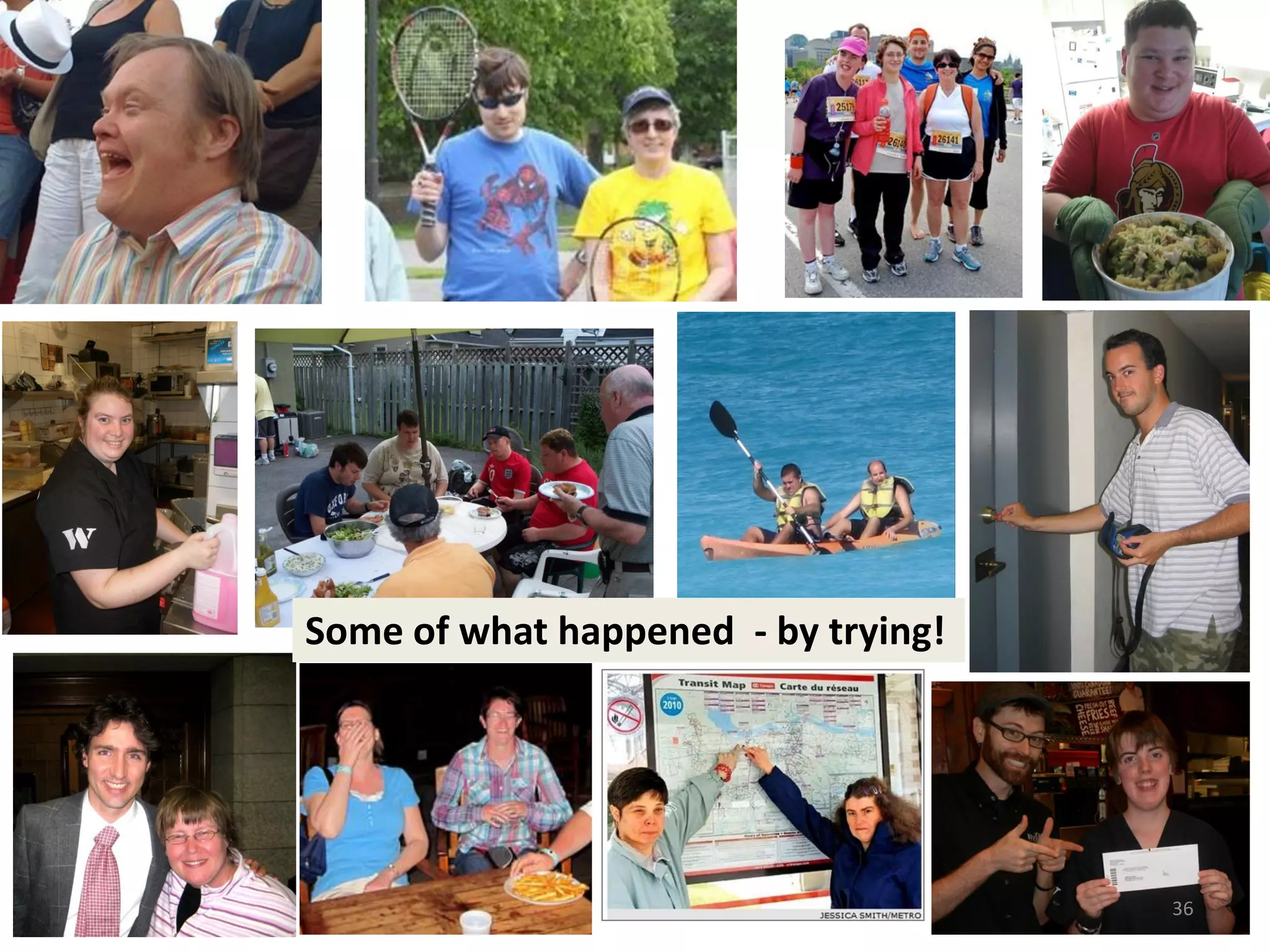
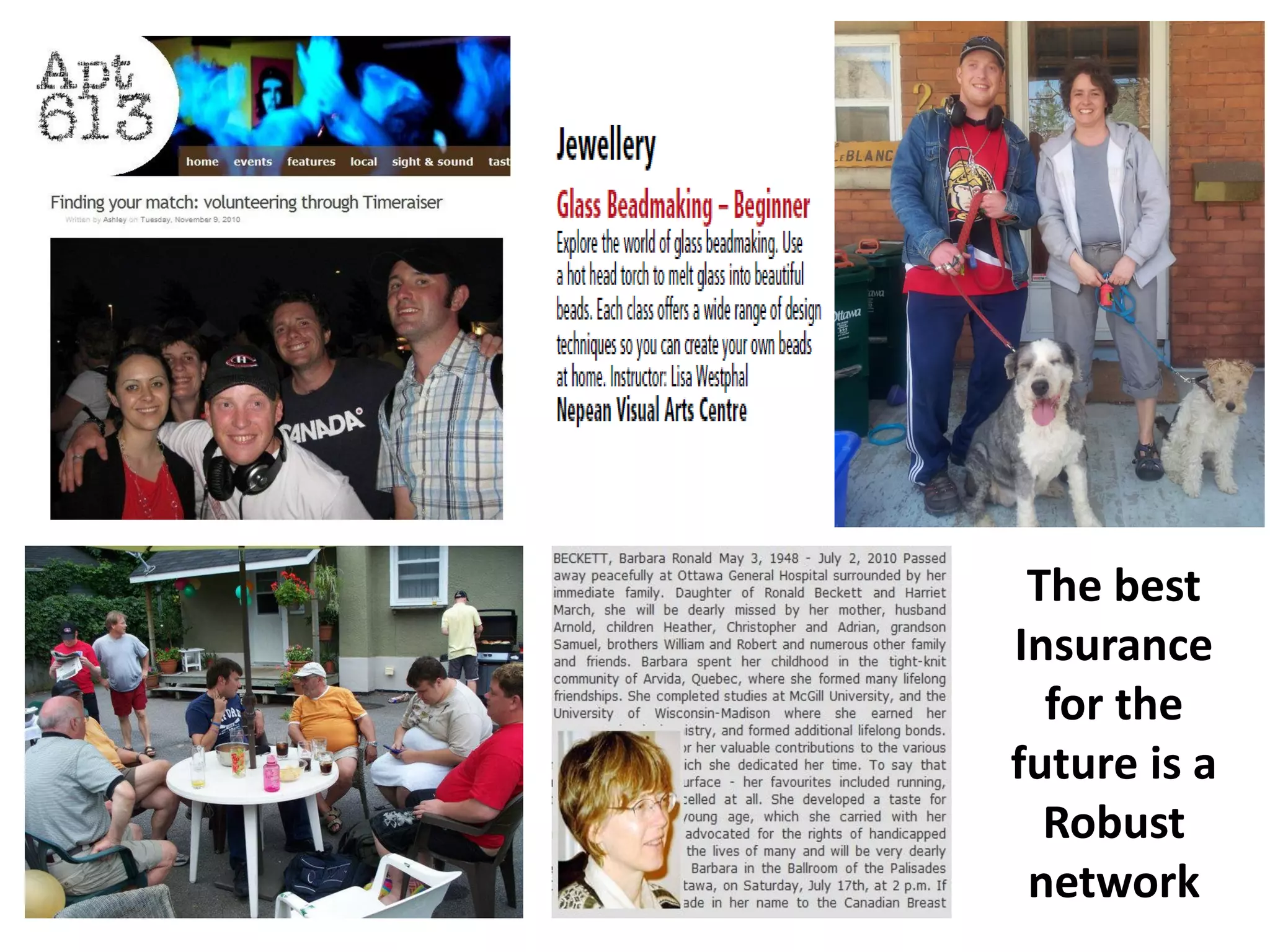
Some of what happened - by trying!
The best
Insurance
for the
future is a
Robust
network
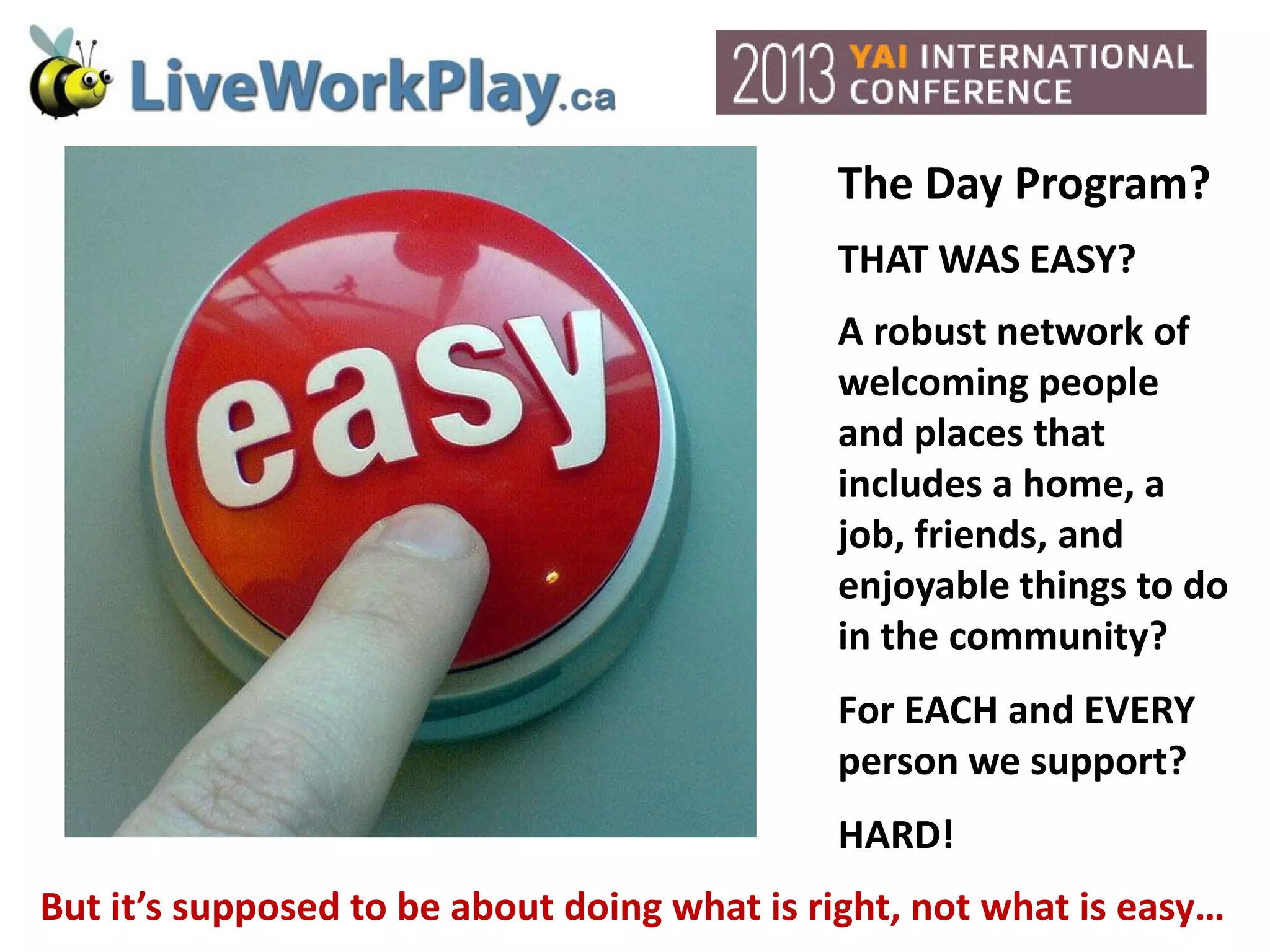
The Day Program?
THAT WAS EASY?
A robust network of
welcoming people
and places that
includes a home, a
job, friends, and
enjoyable things to do
in the community?
For EACH and EVERY
person we support?
HARD!
But it’s supposed to be about doing what is right, not what is easy…
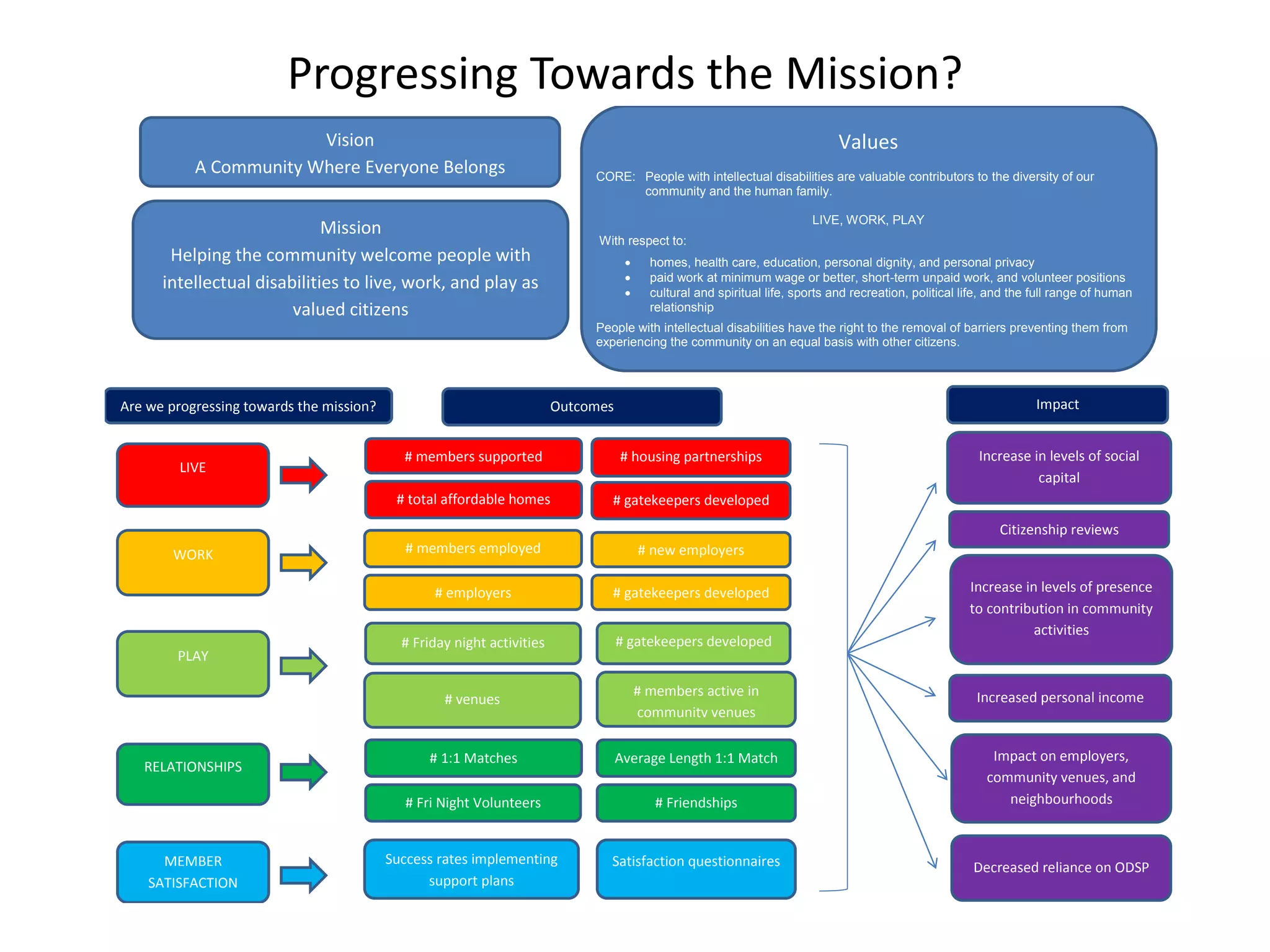
Progressing Towards the Mission?
Vision
A Community Where Everyone Belongs
Mission
Helping the community welcome people with
intellectual disabilities to live, work, and play as
valued citizens
Impact
Increase in levels of social
capital
Increase in levels of presence
to contribution in community
activities
Increased personal income
LIVE
WORK
PLAY
RELATIONSHIPS
Success rates implementing
support plans
Decreased reliance on ODSP
Impact on employers,
community venues, and
neighbourhoods
# 1:1 Matches Average Length 1:1 Match
# members active in
community venues
# venues
# gatekeepers developed
# members employed
# employers
# new employers
# gatekeepers developed# total affordable homes
# housing partnerships# members supported
# gatekeepers developed
# Friendships# Fri Night Volunteers
Citizenship reviews
# Friday night activities
Satisfaction questionnaires
Values
CORE: People with intellectual disabilities are valuable contributors to the diversity of our
community and the human family.
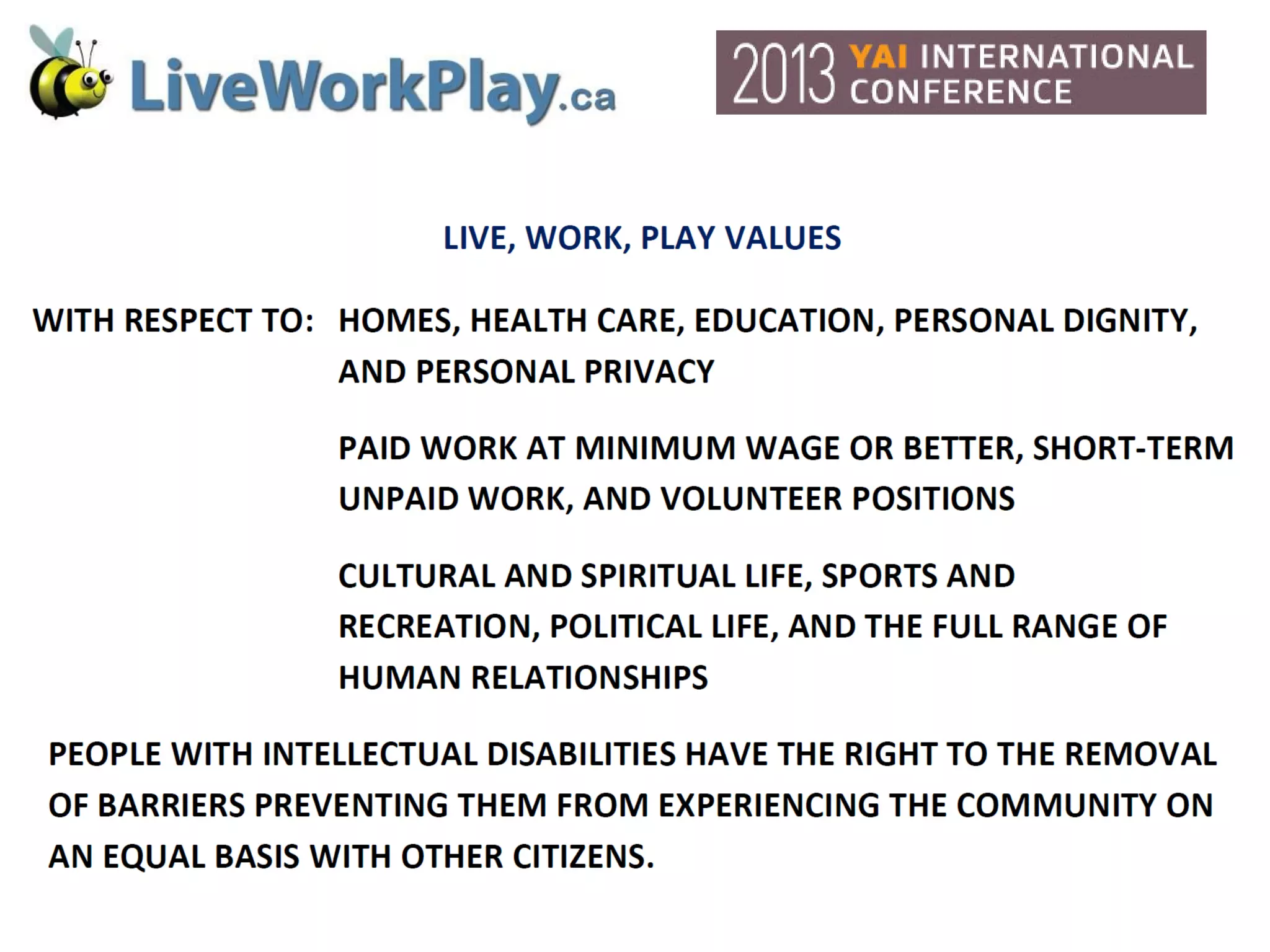
LIVE, WORK, PLAY
With respect to:
 homes, health care, education, personal dignity, and personal privacy
 paid work at minimum wage or better, short-term unpaid work, and volunteer positions
 cultural and spiritual life, sports and recreation, political life, and the full range of human
relationship
People with intellectual disabilities have the right to the removal of barriers preventing them from
experiencing the community on an equal basis with other citizens.
MEMBER
SATISFACTION
OutcomesAre we progressing towards the mission?
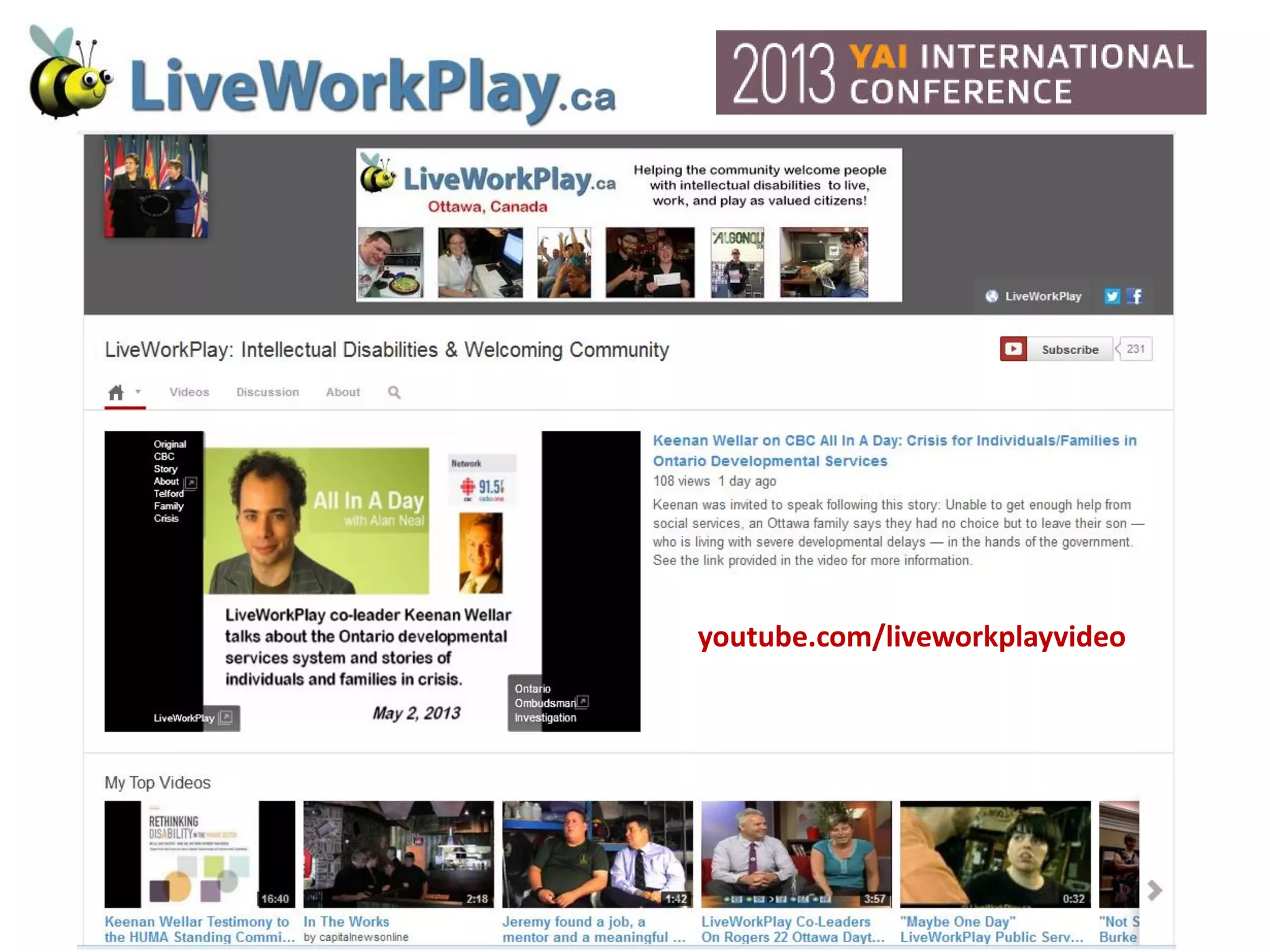
youtube.com/liveworkplayvideo
PLEASE NOTE: YOU DO NOT NEED TO TAKE NOTES FROM SLIDES OR SOURCES CITED, WE ARE
MAKING THE PRESENTATION AND SOURCES AVAILABLE FROM THE FOLLOWING WEB PAGE:
http://liveworkplay.ca/YAI

LiveWorkPlay (No Notes) Presentation To YAI Conference 2013

  • 1.
    (25) Community Inclusion Fromsocial programs to social change: building a welcoming community. Keenan Wellar, MA and Julie Kingstone, MEd LiveWorkPlay (Ottawa, Canada) From 2008-2010, the LiveWorkPlay charitable organization engaged in a successful process of “de-programming” by making a shift from congregated programs to authentic community-based supports and outcomes based on flexible and individualized person-centered planning. They have been living this new way of being for the past three years and will share what they have learned, with a particular focus on life-changing outcomes for individuals who have an intellectual disability, as well as partnerships with citizens and organizations in support of a more inclusive community.
  • 2.
    15,000 It always seems impossible untilits done. Nelson Mandela 100 MINUTES
  • 3.
    PLEASE NOTE: YOUDO NOT NEED TO TAKE NOTES FROM SLIDES OR SOURCES CITED, WE ARE MAKING THE PRESENTATION AND SOURCES AVAILABLE FROM THE FOLLOWING WEB PAGE: http://liveworkplay.ca/YAI AGENDA Introduction: Neurodiversity & Belief Background: About Us LiveWorkPlay Background: The Early Years The Program Years De-Programming (Why Change?) Being The Change: Person-Centered & Community-Based Tools & Tips: Keeping Our Focus & Never Standing Still Communications: How Sharing The Day To Day Is Building A Movement Conclusion: Questions & Follow-Up
  • 4.
    NEURODIVERSITY The acceptance andembrace of people with cognitive differences is an idea whose time has come. The sudden prominence of this term is an indication of how rapidly our field is evolving and how dramatically parents and practitioners are shaping the public dialogue. What these change agents have in common is a determination to open minds long closed to the potentials and possibilities of people once dismissed because of their differentness. Remediating  Accommodating  Valuing
  • 7.
    CONTEXT Country: Canada (population35 million) Province: Ontario (13 million) City: Ottawa (820,000) 7.5 hours north of NYC 60% Funded by the Ontario Ministry of Community and Social Services, our total annual budget $1 million (by budget we are one of the smaller of 16 agencies in Ottawa) Serving between 80-100 individuals per year 11 full-time staff (some casual and part-time staff) 120 volunteers not including contributions of family of the people we support (members) 30+ employment partners (employers who have hired at least one of our members) 30+ community partners (United Way, Rotary, YMCA, non-profit housing, etc.) Why 16 different agencies in a city of 820,000 it’s a strange history that has to do with different disability populations and other factors but why LiveWorkPlay exists has to do with dissatisfaction with the systems approach taken by most of those 16 agencies.
  • 8.
    JUST WHO ARETHESE PEOPLE? 1998 2007 2013
  • 10.
  • 11.
    What Did YouThink Of Our Video?
  • 12.
    Doing A WrongThing Can Be Immensely Popular
  • 13.
    Prison of Protection Protectfrom Sexual Information Protect from Society Protect from Relationships Protect from Decision-Making Vulnerable Person Adapted from: David Hingsburger (Google him) Abuse information: Dick Sobsey (Google him)
  • 14.
  • 16.
    Not about fixingpeople with intellectual disabilities so they can be more normal and fit in with others Exclusion is everyone’s issue and as a community we must all work together to be welcoming and inclusive Social Services Approach Social Change Approach We have learned to appreciate that people considered “different” often bring important contributions to society (e.g. racial differences) and there is lots of work in progress (e.g. sexuality). Neurodiversity is at a very preliminary stage. How many people honestly believe that people with intellectual disabilities truly BELONG (and will take action to back up that thought?).
  • 17.
    “Some things haveto be believed to be seen.” ― Madeleine L'Engle (A Wrinkle In Time)
  • 18.
    When Dan Heathand his brother Chip started their research for their best-seller Switch: How to Change Things When Change Is Hard , the two of the most common comments they heard about change were: “Change is hard.” “I hate change.” 18
  • 19.
  • 21.
    (Medical Model) Social Services (CommunityModel) Social Change Decisions = Paid Staff and/or Family Education = Day Program/Special Ed Recreation = Segregated Program Employment = Sheltered Work Home = Institutional Setting Relationships = Paid Staff and/or Family Decisions = Self-Directed Education = Inclusive Classrooms (All Ages) Recreation = Playing In Community (With Others) Employment = Work/Volunteerism (With Others) Home = House/Condo/Apartment Relationships = Family, Friends, Neighbours Unpaid Support, Paid Support TRANSFORMATION A Transformative Journey
  • 22.
    Thank you forchoosing Acme Support Services, where we proudly facilitate individual independence through person-centered planning! Now, let me start by outlining the list of fixed choices available to you!
  • 23.
  • 24.
    An institution isany place in which people who have been labeled as having an intellectual disability are isolated, segregated and/or congregated. An institution is any place in which people do not have, or are not allowed to exercise, control over their lives and their day to day decisions. An institution is not defined merely by its size. Task force on De-Institutionalization
  • 25.
    Found guilty of a crime Against society Found guiltyof having an intellectual disability
  • 27.
    Overall, the findingssuggest that across datasets, people with IDD experience greater levels of unemployment, underemployment, low wages, and poverty compared to those without disabilities. Beyond the moral and ethical issues involved, how can we continue to fund segregated programs with government funds (tax dollars) when federal and state laws (ADA, IDEA, Rehab Act, and more) mandate non-discrimination, least restrictive environment, and other basis tenets which promote inclusion, equal access, and more? - Kathy Snow, disabilityisnatural.com “I WANT TO WORK”
  • 29.
    “THIS IS TUESDAYNIGHT LEAGUE BOWLING. PLEASE COME BACK ON THURSDAY NIGHT AND SIGN UP FOR SPECIAL NEEDS BOWLING.” BUT I’VE GOT A 180 AVERAGE!
  • 30.
    Play collage NO DAY PROGRAM? WHATWILL THEY DO TO FILL THEIR TIME?
  • 31.
    We cannot solveour problems with the same thinking we used when we created them. All that is valuable in human society depends upon the opportunity for development accorded the individual. Core value: people with intellectual (developmental) disabilities are valuable contributors to community diversity and the human family.
  • 32.
    Do staff wantto perform like stars? Sure! But we don’t want to be your world. (Google Dave Hingsburger)
  • 33.
    “Ottawa's Race Weekend(May 28th - 29th) is a popular event each year (http://www.ncm.ca/). Andrea and I are interested in training with a team of LiveWorkPlay members to participate in this fun event - either by walking or jogging the 2K, 5K, 10K, or half marathon.”
  • 34.
    “I never thoughtfrom this I’d make such a good friend that I send texts to all day every day!”
  • 35.
    “Agencies trying tocreate and sustain person-centred services based in the community are spectacularly more successful at it than those agencies who believe it is impossible and refuse to try.” (Modified quote fromDr. Michael Kendrick) 35
  • 36.
    36 Some of whathappened - by trying!
  • 37.
  • 38.
    The Day Program? THATWAS EASY? A robust network of welcoming people and places that includes a home, a job, friends, and enjoyable things to do in the community? For EACH and EVERY person we support? HARD! But it’s supposed to be about doing what is right, not what is easy…
  • 46.
    Progressing Towards theMission? Vision A Community Where Everyone Belongs Mission Helping the community welcome people with intellectual disabilities to live, work, and play as valued citizens Impact Increase in levels of social capital Increase in levels of presence to contribution in community activities Increased personal income LIVE WORK PLAY RELATIONSHIPS Success rates implementing support plans Decreased reliance on ODSP Impact on employers, community venues, and neighbourhoods # 1:1 Matches Average Length 1:1 Match # members active in community venues # venues # gatekeepers developed # members employed # employers # new employers # gatekeepers developed# total affordable homes # housing partnerships# members supported # gatekeepers developed # Friendships# Fri Night Volunteers Citizenship reviews # Friday night activities Satisfaction questionnaires Values CORE: People with intellectual disabilities are valuable contributors to the diversity of our community and the human family. LIVE, WORK, PLAY With respect to:  homes, health care, education, personal dignity, and personal privacy  paid work at minimum wage or better, short-term unpaid work, and volunteer positions  cultural and spiritual life, sports and recreation, political life, and the full range of human relationship People with intellectual disabilities have the right to the removal of barriers preventing them from experiencing the community on an equal basis with other citizens. MEMBER SATISFACTION OutcomesAre we progressing towards the mission?
  • 50.
  • 51.
    PLEASE NOTE: YOUDO NOT NEED TO TAKE NOTES FROM SLIDES OR SOURCES CITED, WE ARE MAKING THE PRESENTATION AND SOURCES AVAILABLE FROM THE FOLLOWING WEB PAGE: http://liveworkplay.ca/YAI