Lively Applications to Introduce  College Algebra/Precalculus Topics Reva Narasimhan  Kean University, NJ
Overview Introduction  Encouraging mathematical thinking Challenges in teaching college algebra and precalculus Examples of lively applications to connect concepts and skills Questions
Mathematical Thinking How are problems approached?  Why is mathematical thinking important?
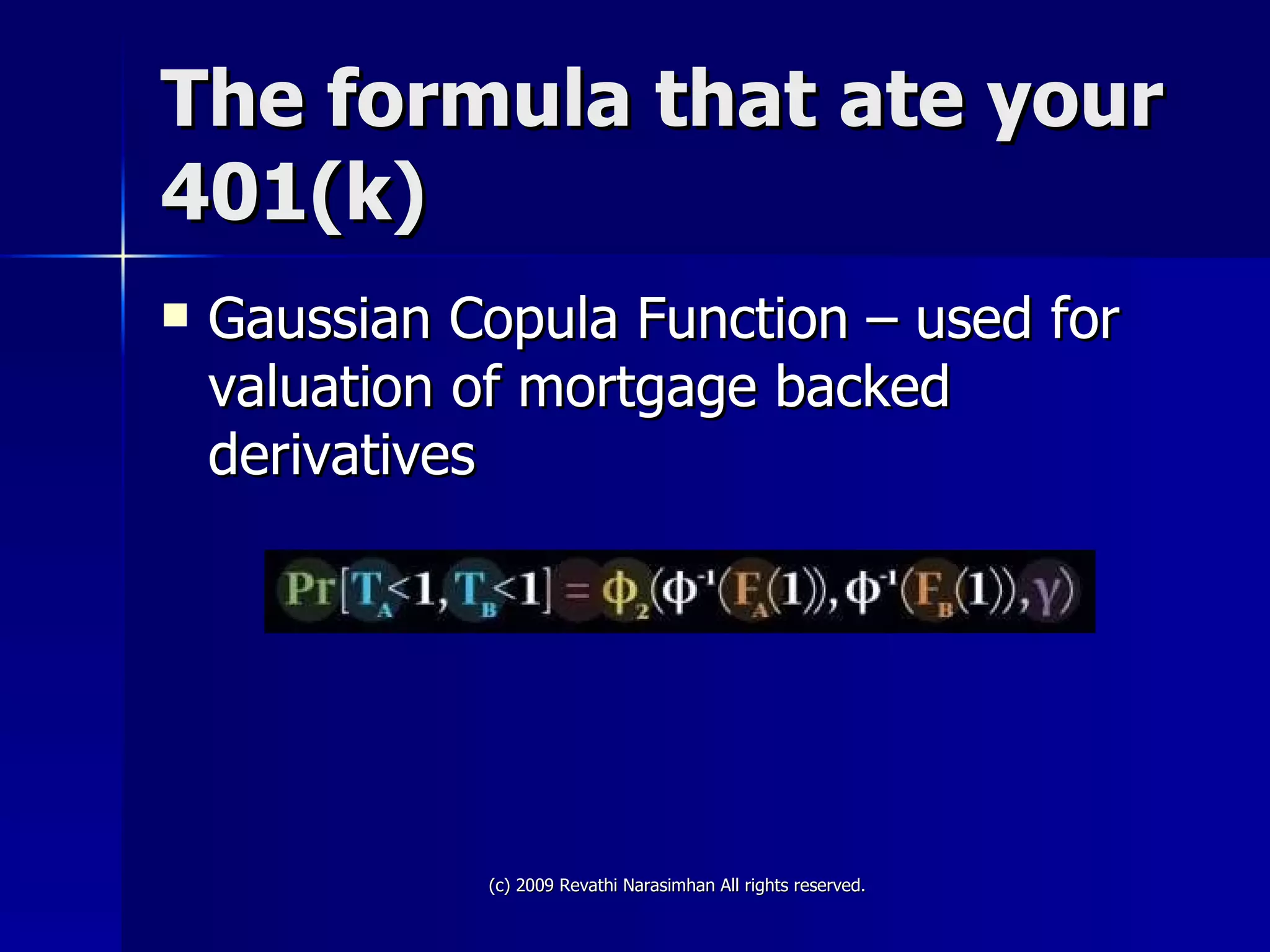
The formula that ate your 401(k) Gaussian Copula Function – used for valuation of mortgage backed derivatives
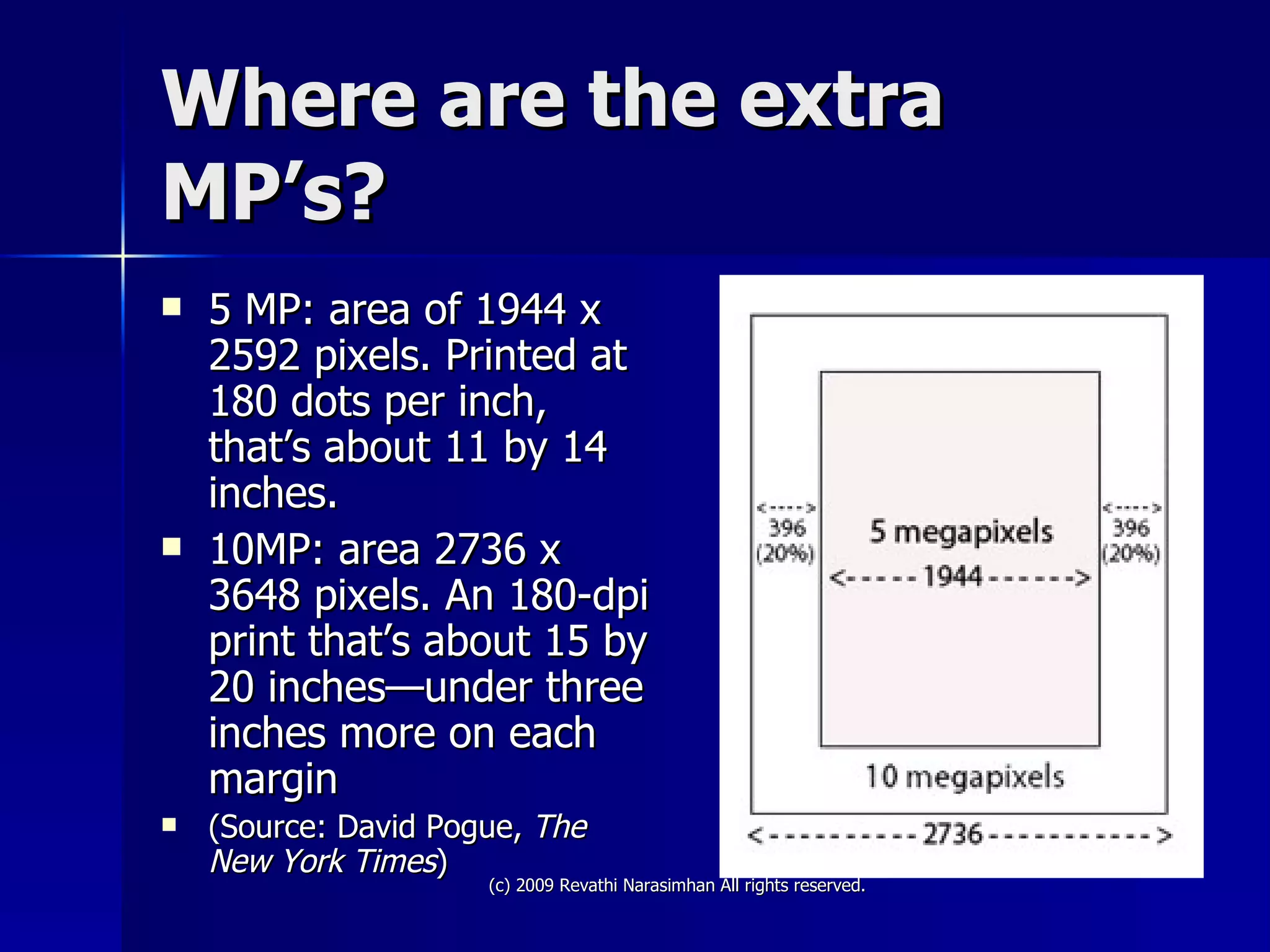
The Megapixel Myth Does a 10MP camera give you a picture that is twice the length and width  of a picture from a 5MP camera? No. The megapixels refer to the amount of area in the picture. So, while the area is doubled, the length and width are not.
Where are the extra MP’s? 5 MP: area of 1944 x 2592 pixels. Printed at 180 dots per inch, that’s about 11 by 14 inches.  10MP: area 2736 x 3648 pixels. An 180-dpi print that’s about 15 by 20 inches—under three inches more on each margin  (Source: David Pogue,  The New York Times )
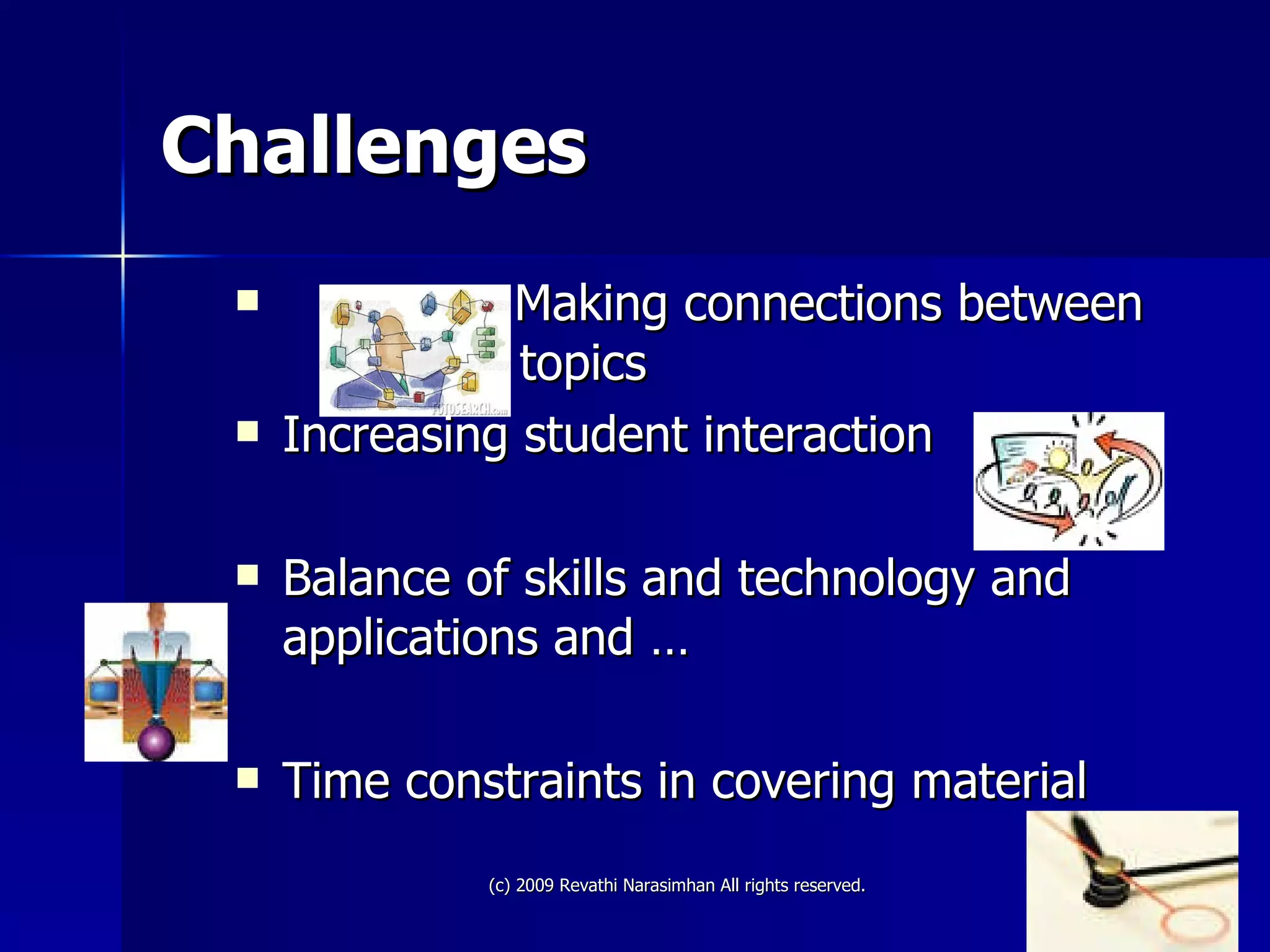
Challenges Making connections between    topics Increasing student interaction Balance of skills and technology and applications and … Time constraints in covering material
How can applications help? Start with an example in a familiar context Work with the example and obtain new insights Use the example to introduce a new idea
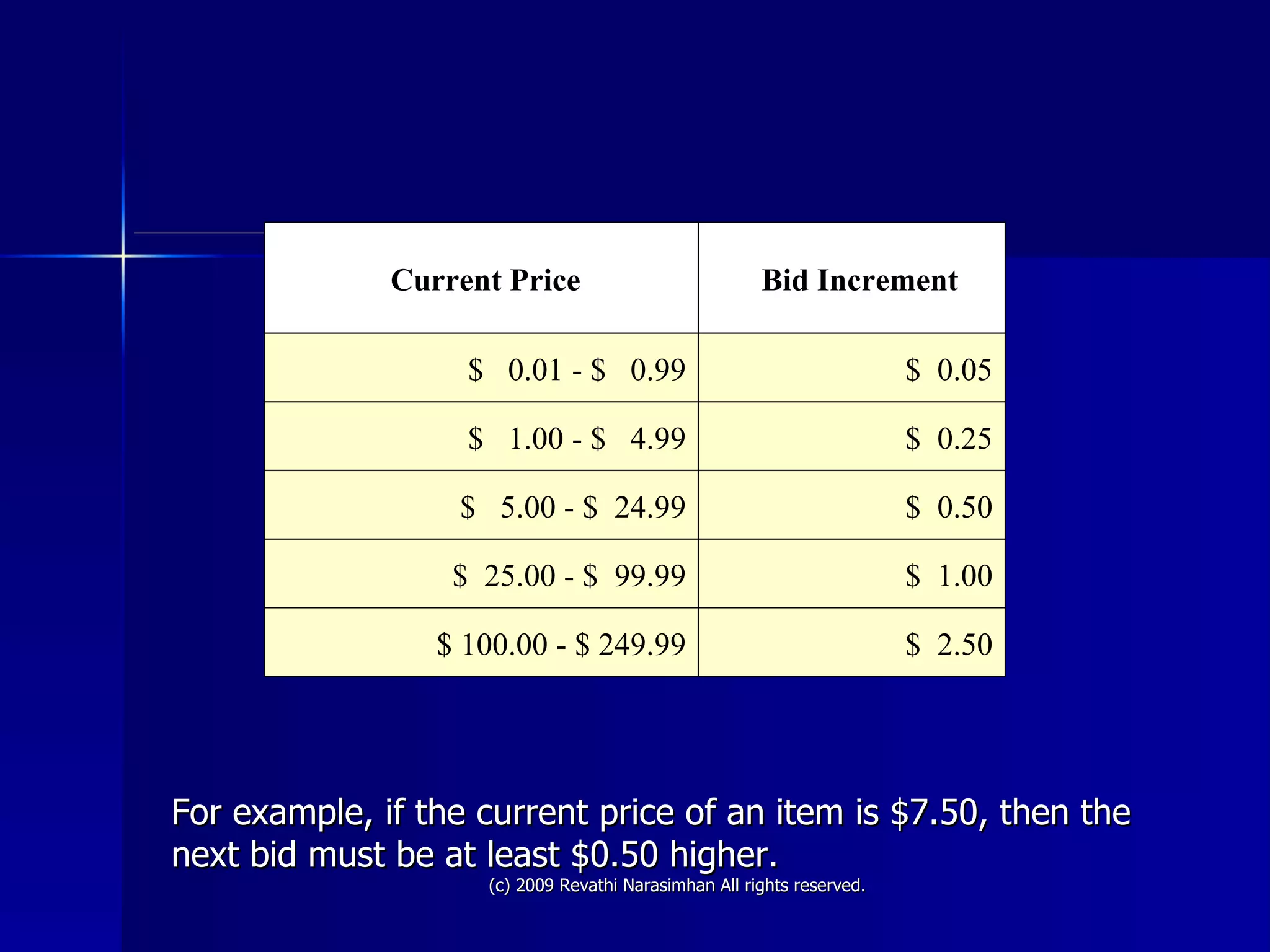
Making Connections Application  – Ebay Objective – to introduce piecewise functions On the online auction site Ebay, the next highest amount that one may bid is based on the current price of the item according to this table. The  bid increment  is the amount by which a bid will be raised each time the current bid is outdone
For example, if the current price of an item is $7.50, then the next bid must be at least $0.50 higher. $  2.50 $ 100.00 - $ 249.99 $  1.00 $  25.00 - $  99.99 $  0.50 $   5.00 - $  24.99 $  0.25 $   1.00 - $   4.99 $  0.05 $   0.01 - $   0.99    Bid Increment   Current Price
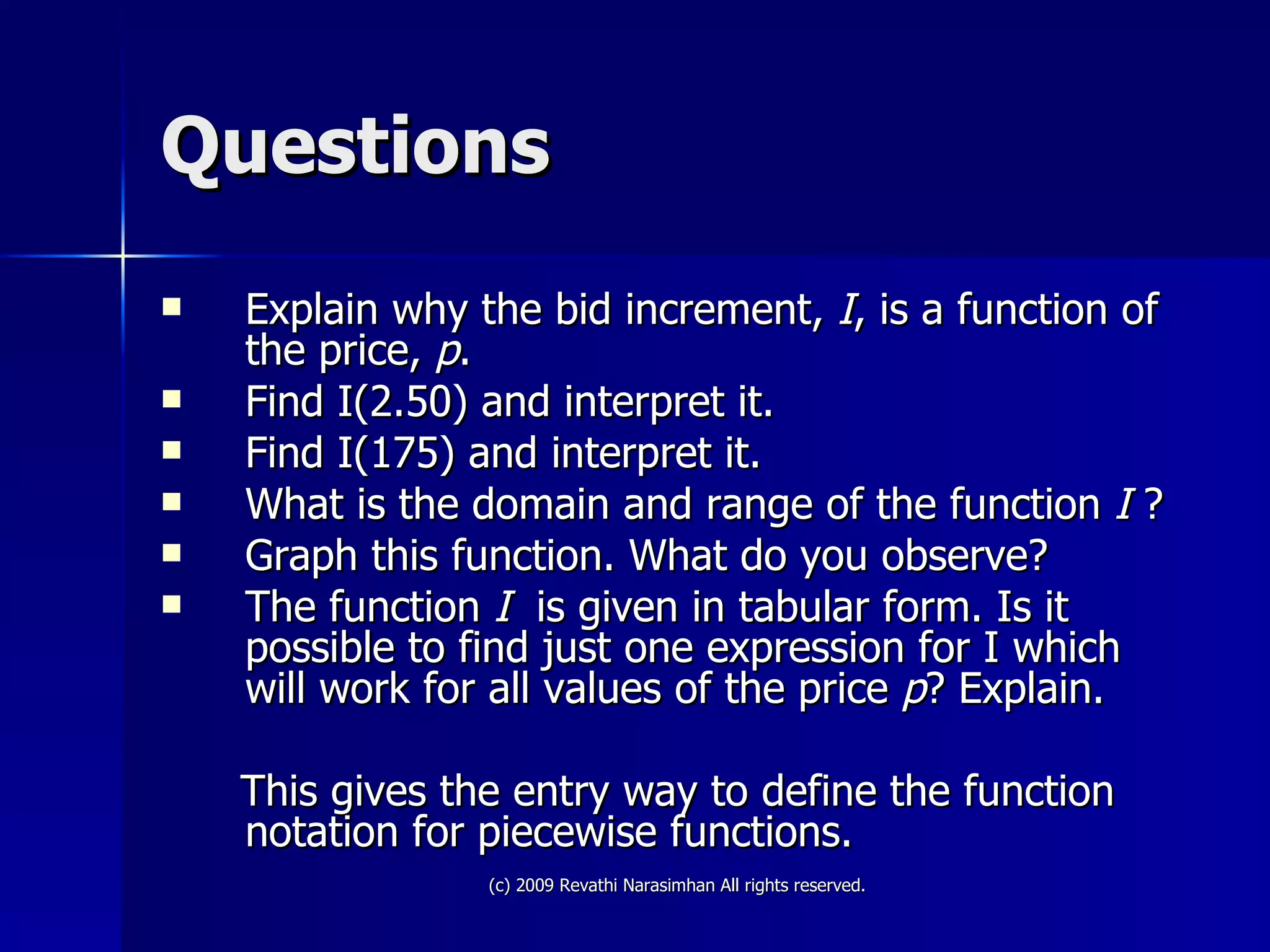
Questions Explain why the bid increment,  I , is a function of the price,  p . Find I(2.50) and interpret it. Find I(175) and interpret it. What is the domain and range of the function  I  ? Graph this function. What do you observe? The function  I   is given in tabular form. Is it possible to find just one expression for I which will work for all values of the price  p ? Explain. This gives the entry way to define the function notation for piecewise functions.
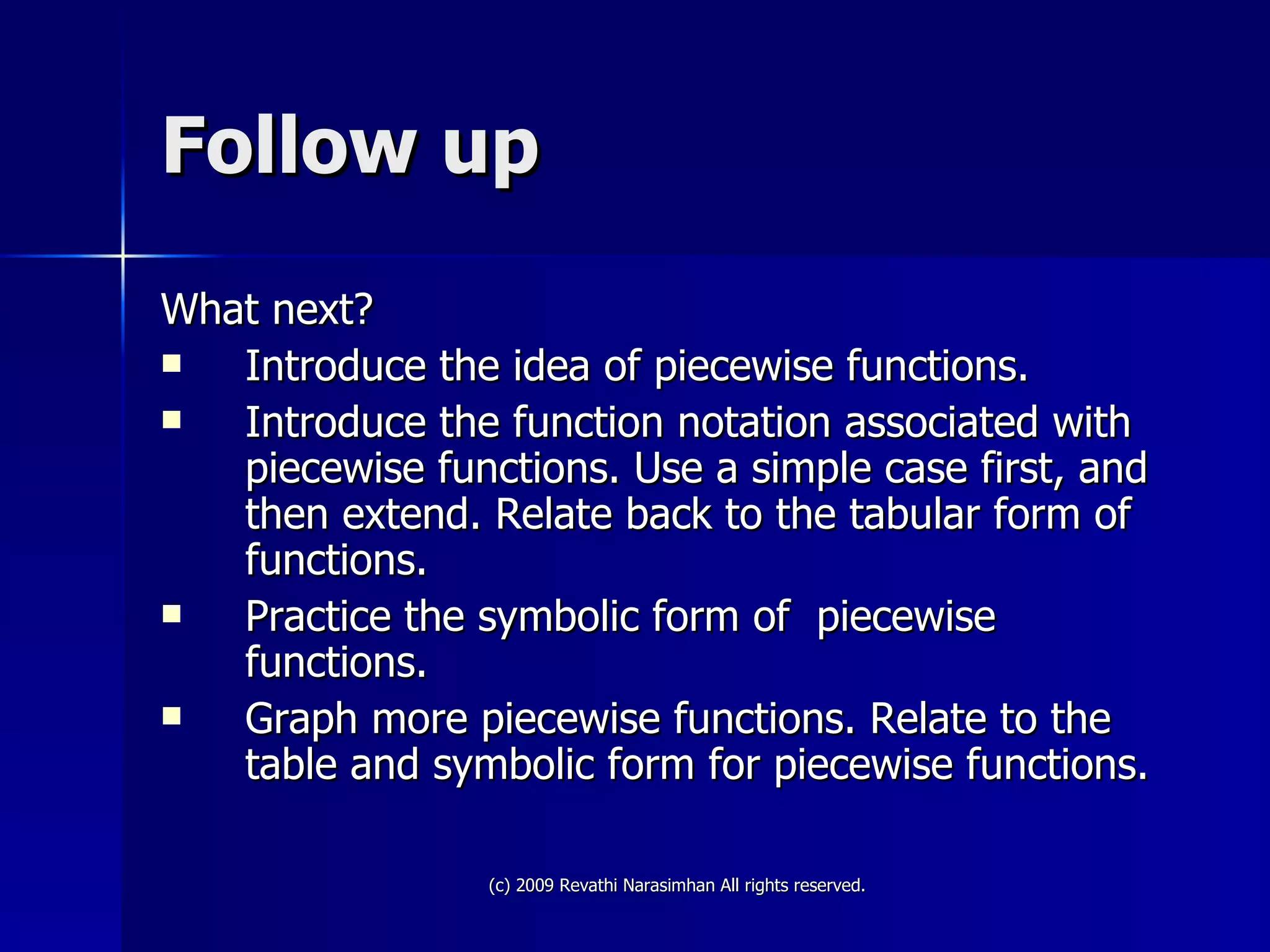
Follow up What next? Introduce the idea of piecewise functions. Introduce the function notation associated with piecewise functions. Use a simple case first, and then extend. Relate back to the tabular form of functions. Practice the symbolic form of  piecewise functions. Graph more piecewise functions. Relate to the table and symbolic form for piecewise functions.
Time Constraints  Explore multiple ideas using a single example Just-in-time introduction of new algebraic skills
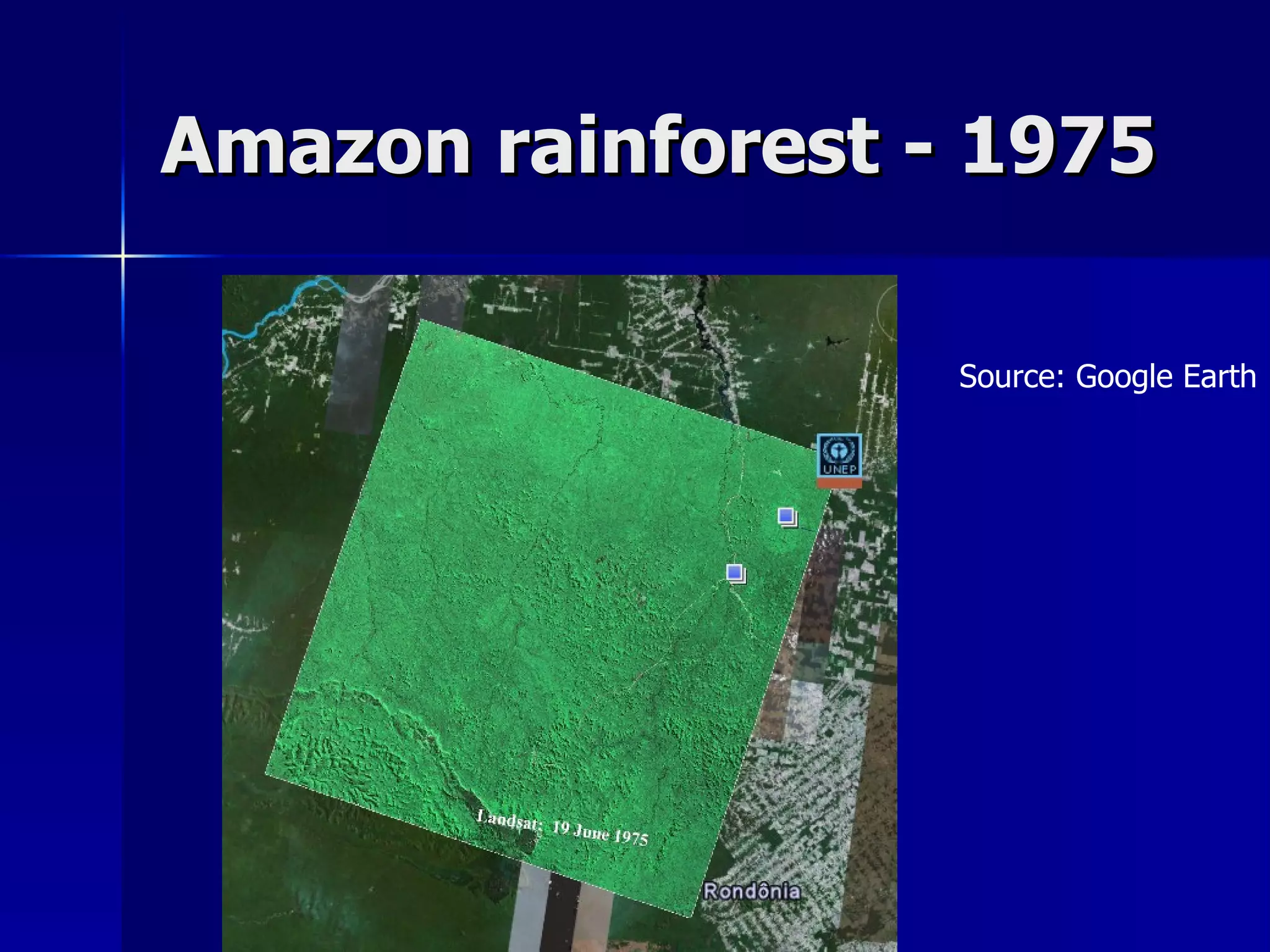
Amazon rainforest - 1975 Source: Google Earth
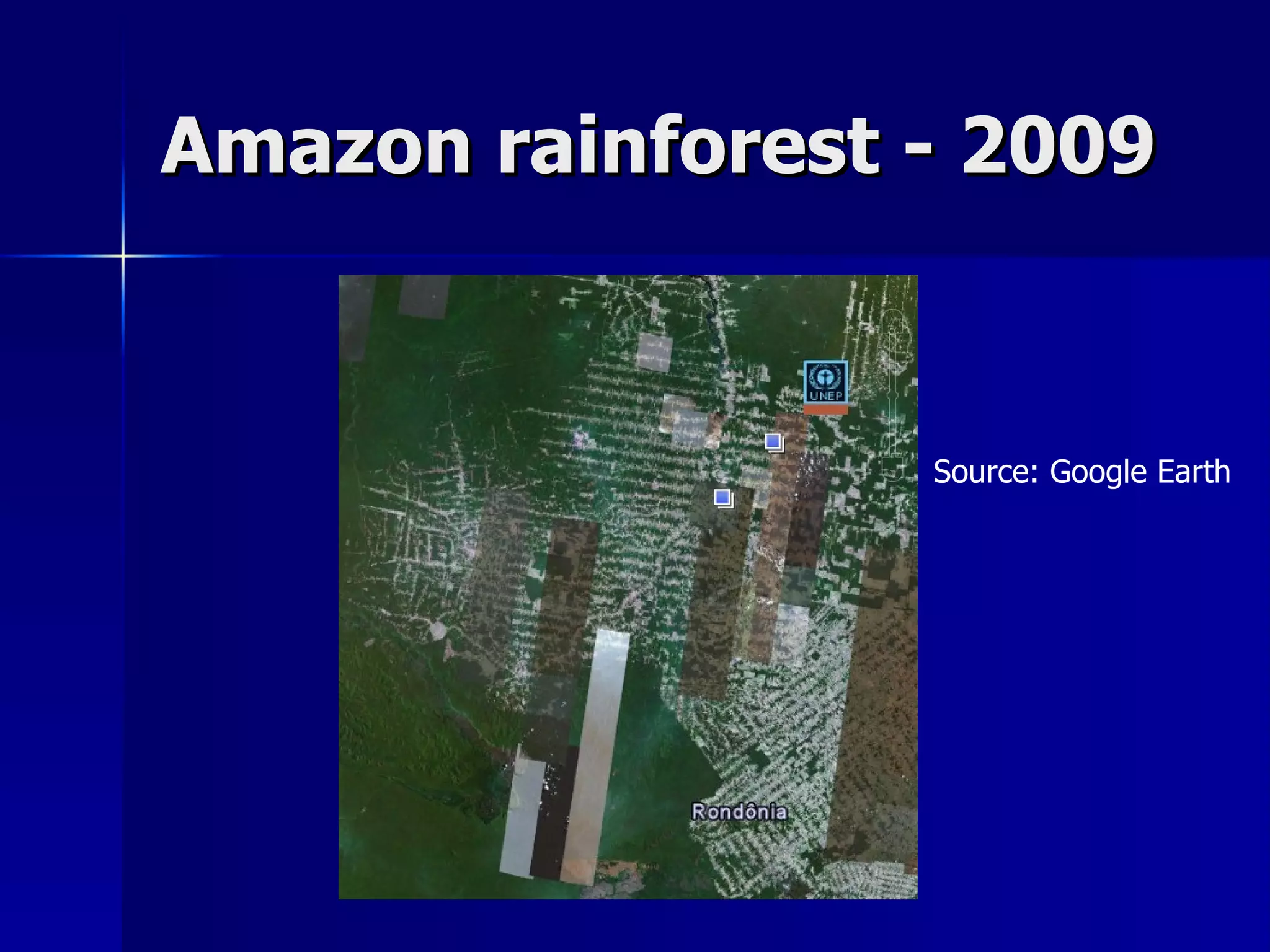
Amazon rainforest - 2009 Source: Google Earth
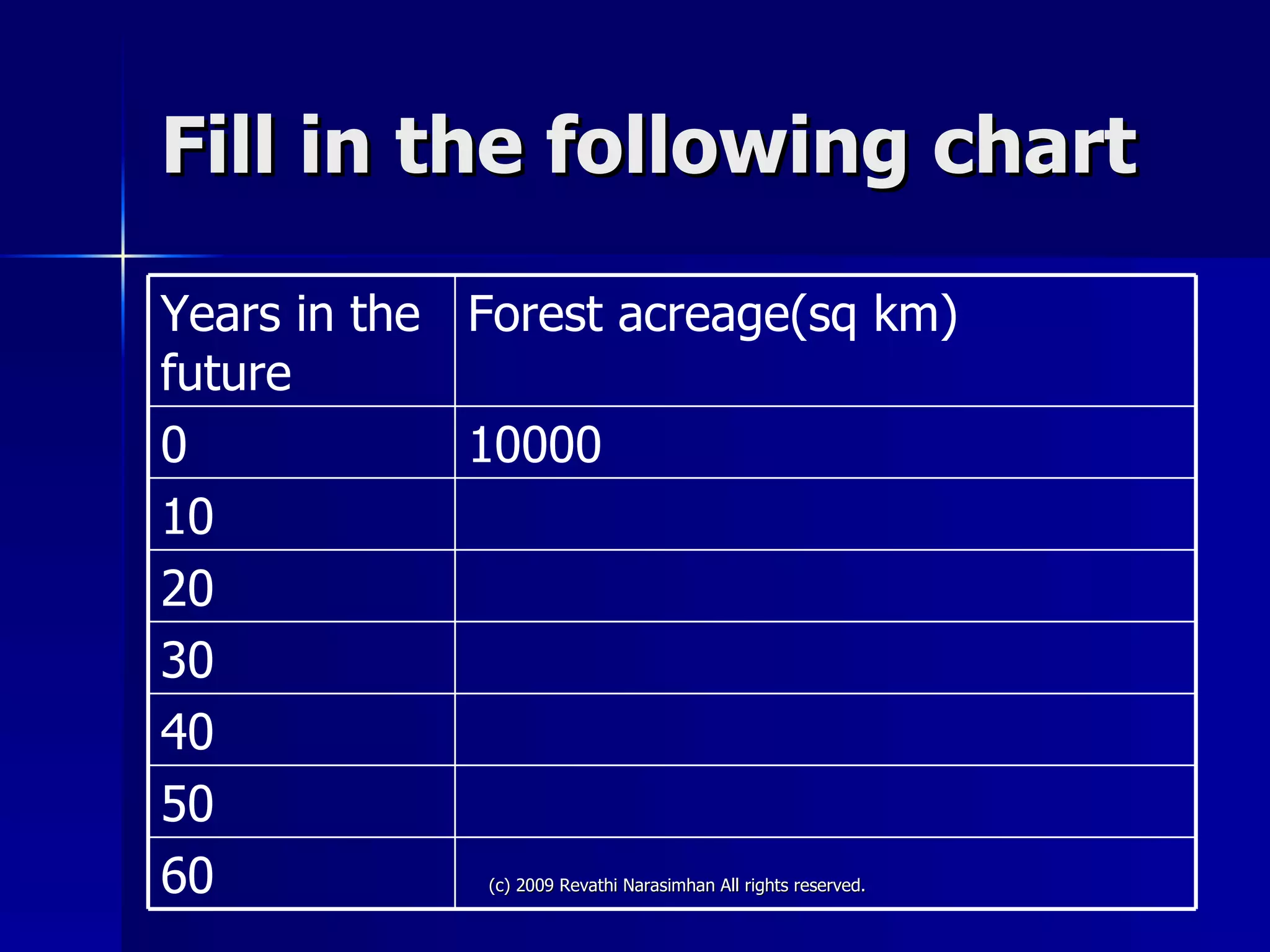
Making Connections Application  – Rainforest decline Objective – to introduce exponential functions The total area of the world’s tropical rainforests have been declining at a rate of approximately 8% every ten years. Put another way, 92% of the total area of rainforests will be retained 10 years from now. For illustration, consider a 10000 square kilometer area of rainforest. (Source: World Resources Institute)
Fill in the following chart 60 50 40 30 20 10 10000 0 Forest acreage(sq km)  Years in the  future
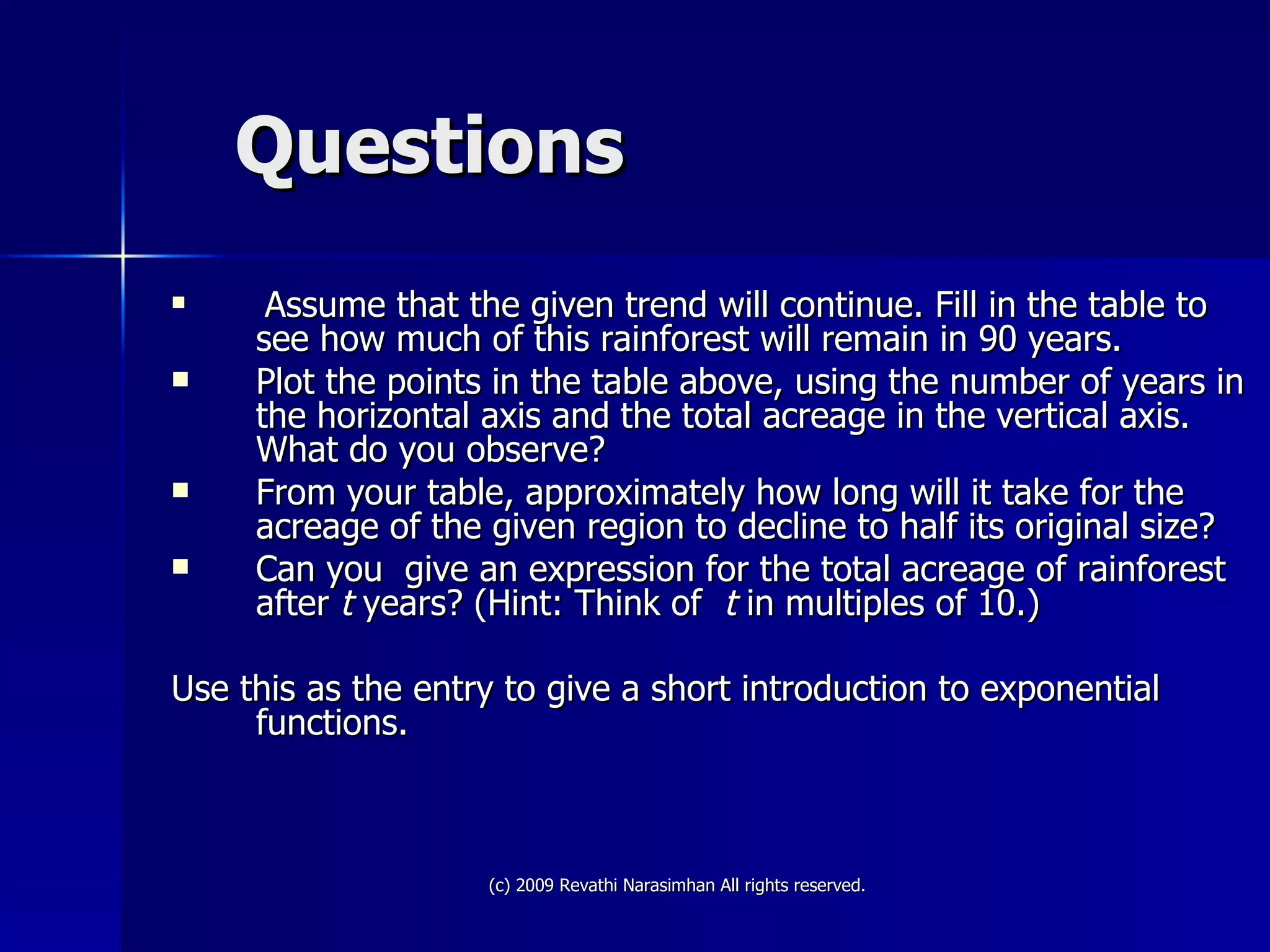
Questions Assume that the given trend will continue. Fill in the table to see how much of this rainforest will remain in 90 years. Plot the points in the table above, using the number of years in the horizontal axis and the total acreage in the vertical axis. What do you observe? From your table, approximately how long will it take for the acreage of the given region to decline to half its original size? Can you  give an expression for the total acreage of rainforest after  t  years? (Hint: Think of  t  in multiples of 10.) Use this as the entry to give a short introduction to exponential functions.
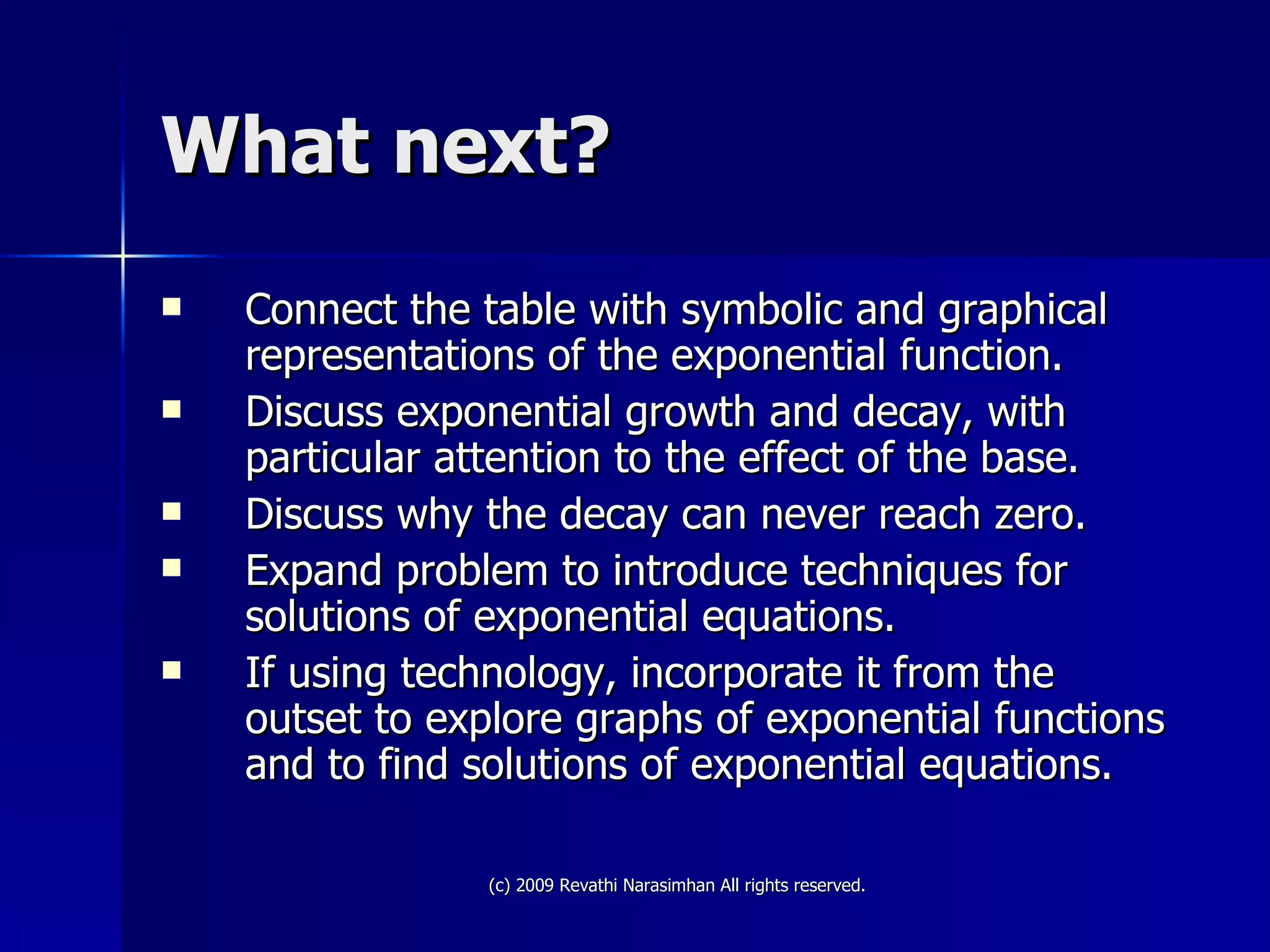
What next? Connect the table with symbolic and graphical representations of the exponential function. Discuss exponential growth and decay, with particular attention to the effect of the base. Discuss why the decay can never reach zero. Expand problem to introduce techniques for solutions of exponential equations. If using technology, incorporate it from the outset to explore graphs of exponential functions and to find solutions of exponential equations.
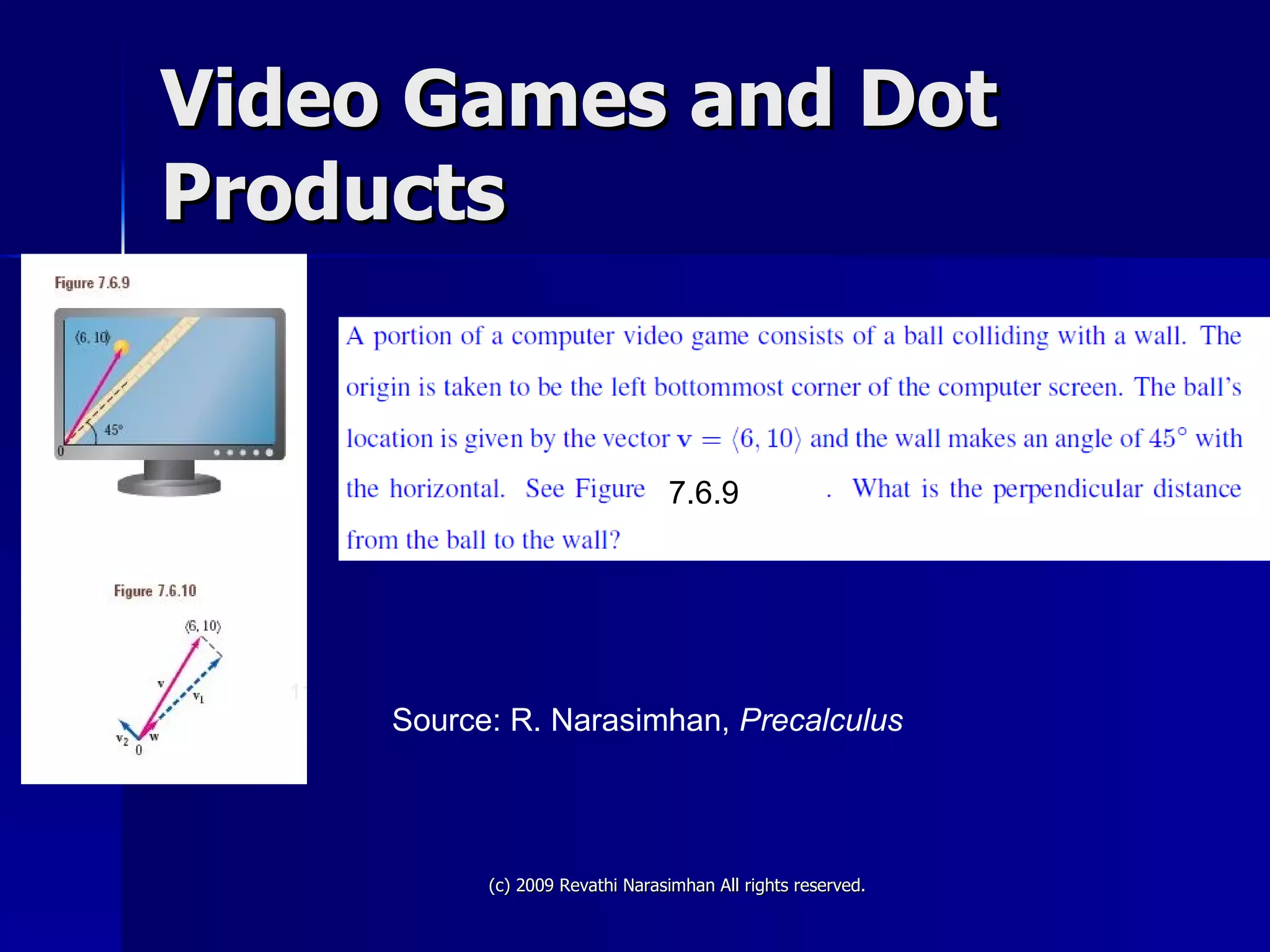
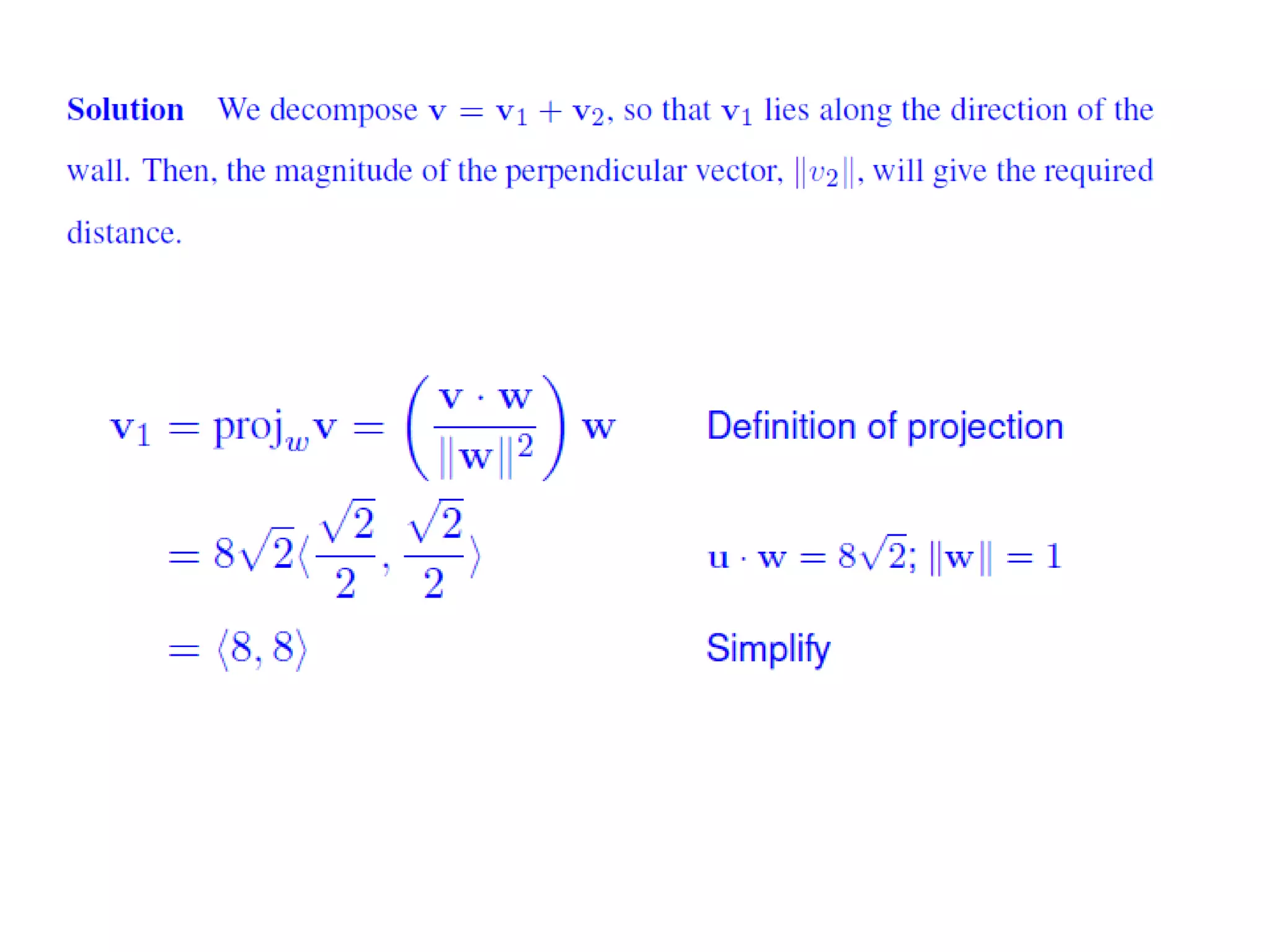
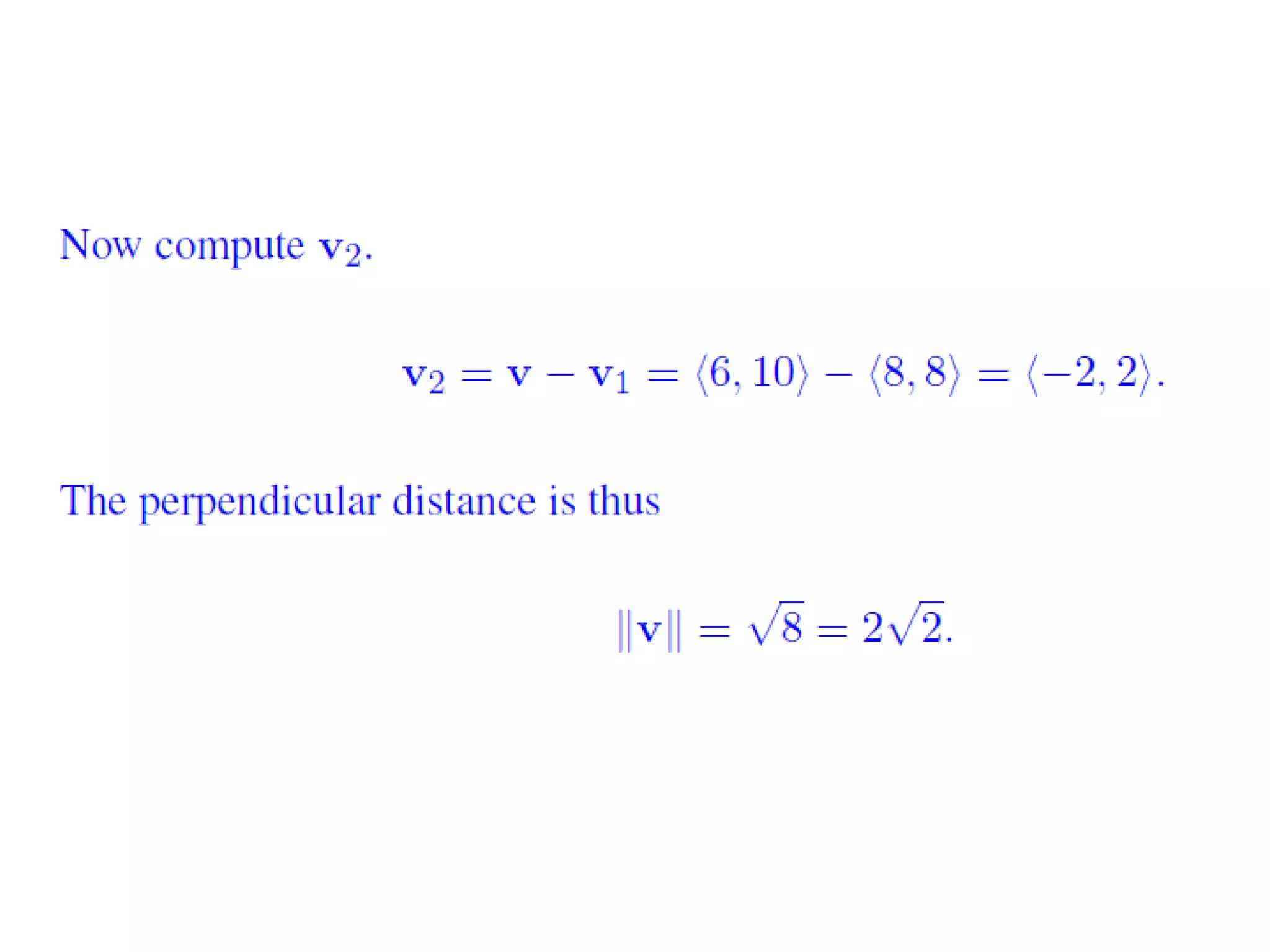
Video Games and Dot Products 7.6.9 Source: R. Narasimhan,  Precalculus
 
 
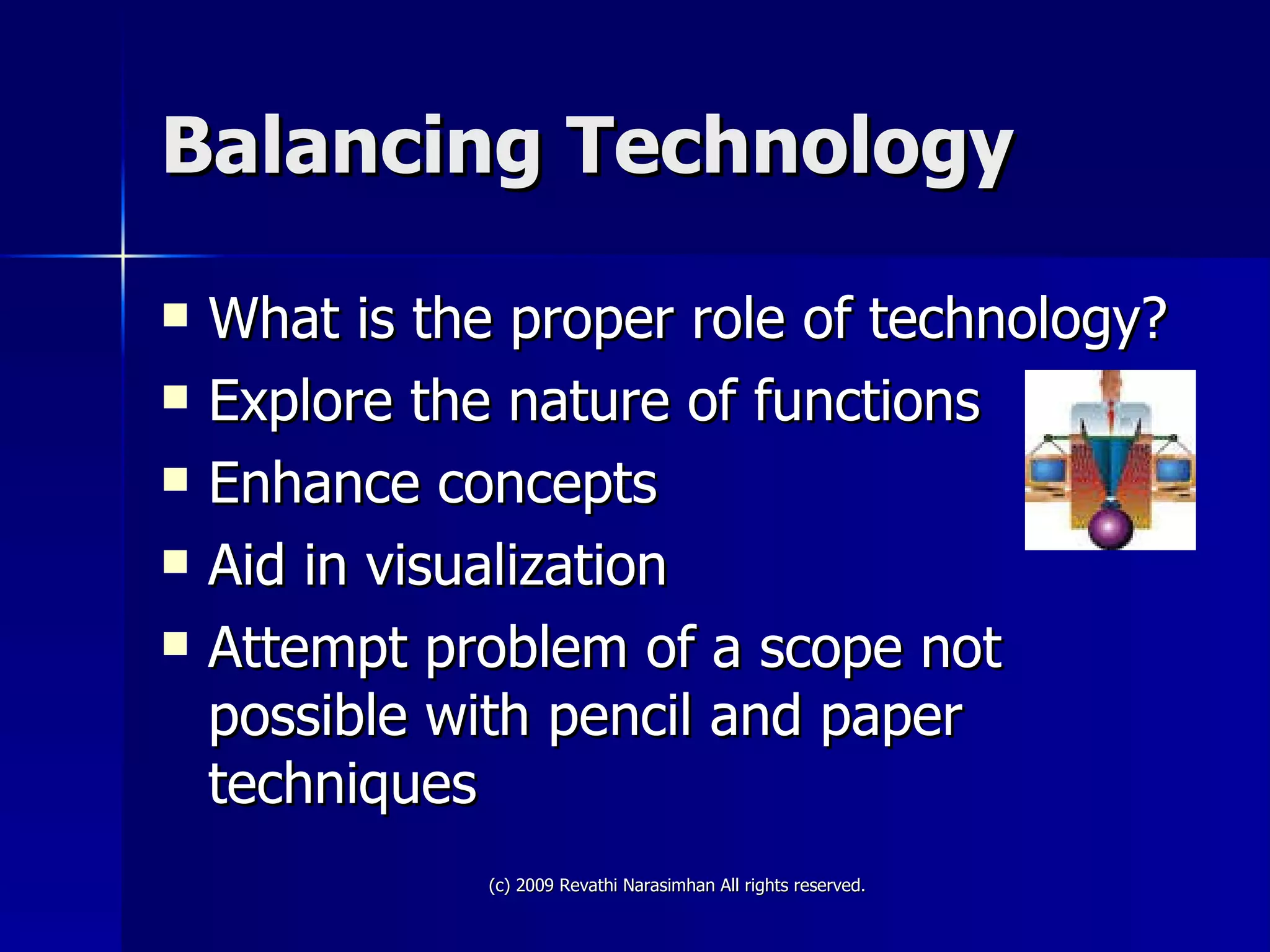
Balancing Technology What is the proper role of technology? Explore the nature of functions Enhance concepts Aid in visualization Attempt problem of a scope not possible with pencil and paper techniques
Balancing Technology Application  – Trigonometric functions Objective – to examine the role of period and amplitude by studying the  length of daylight  in various locations using an Excel
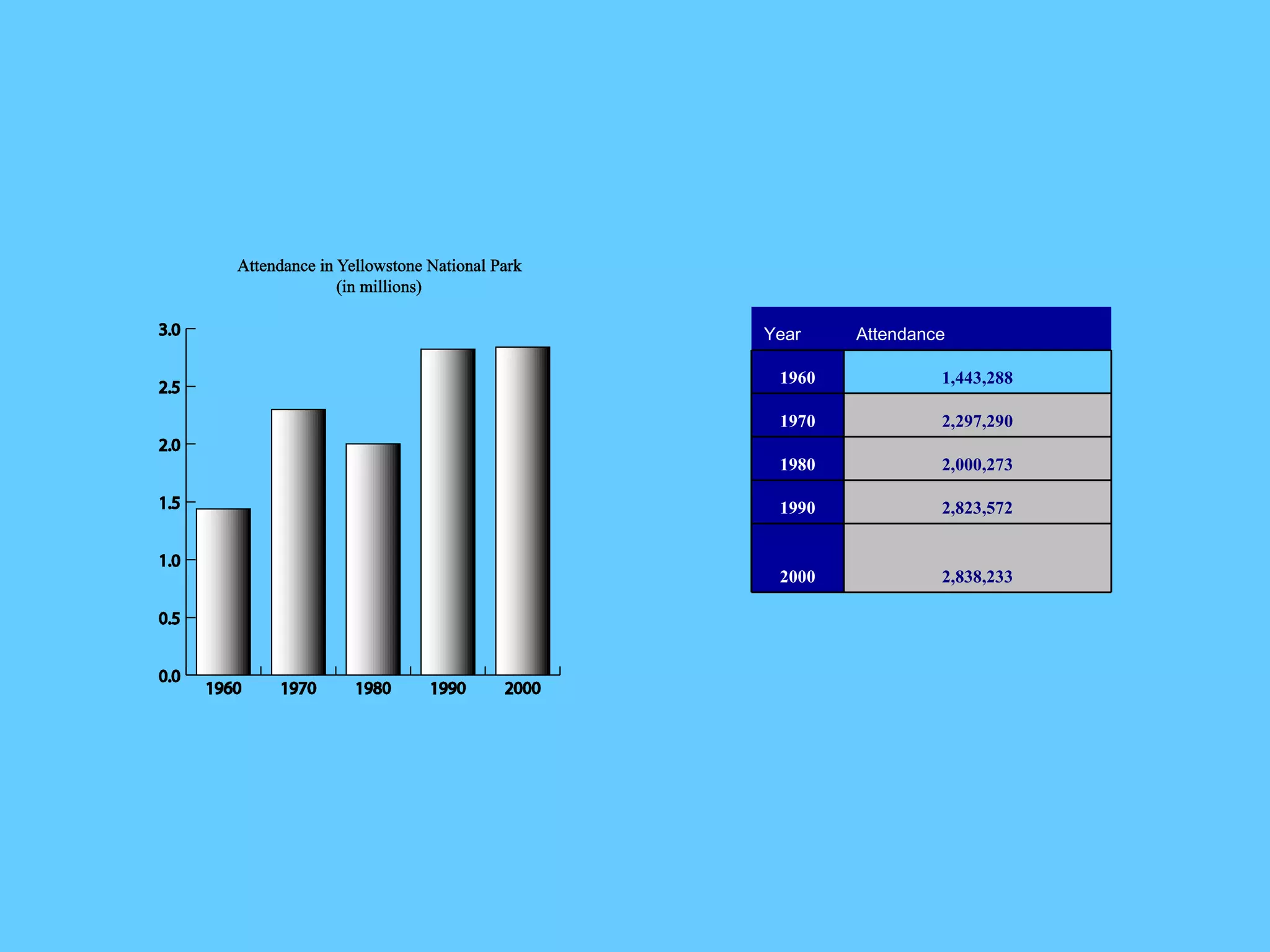
Balancing Technology Application – Curve fitting with data Objective – to introduce piecewise polynomial models and to see how technology can be properly integrated You have introduced polynomials and would like to introduce using curve fitting for polynomial models. This application is written in that context.
2,838,233 2000 2,823,572 1990 2,000,273 1980 2,297,290 1970 1,443,288 1960 Attendance Year
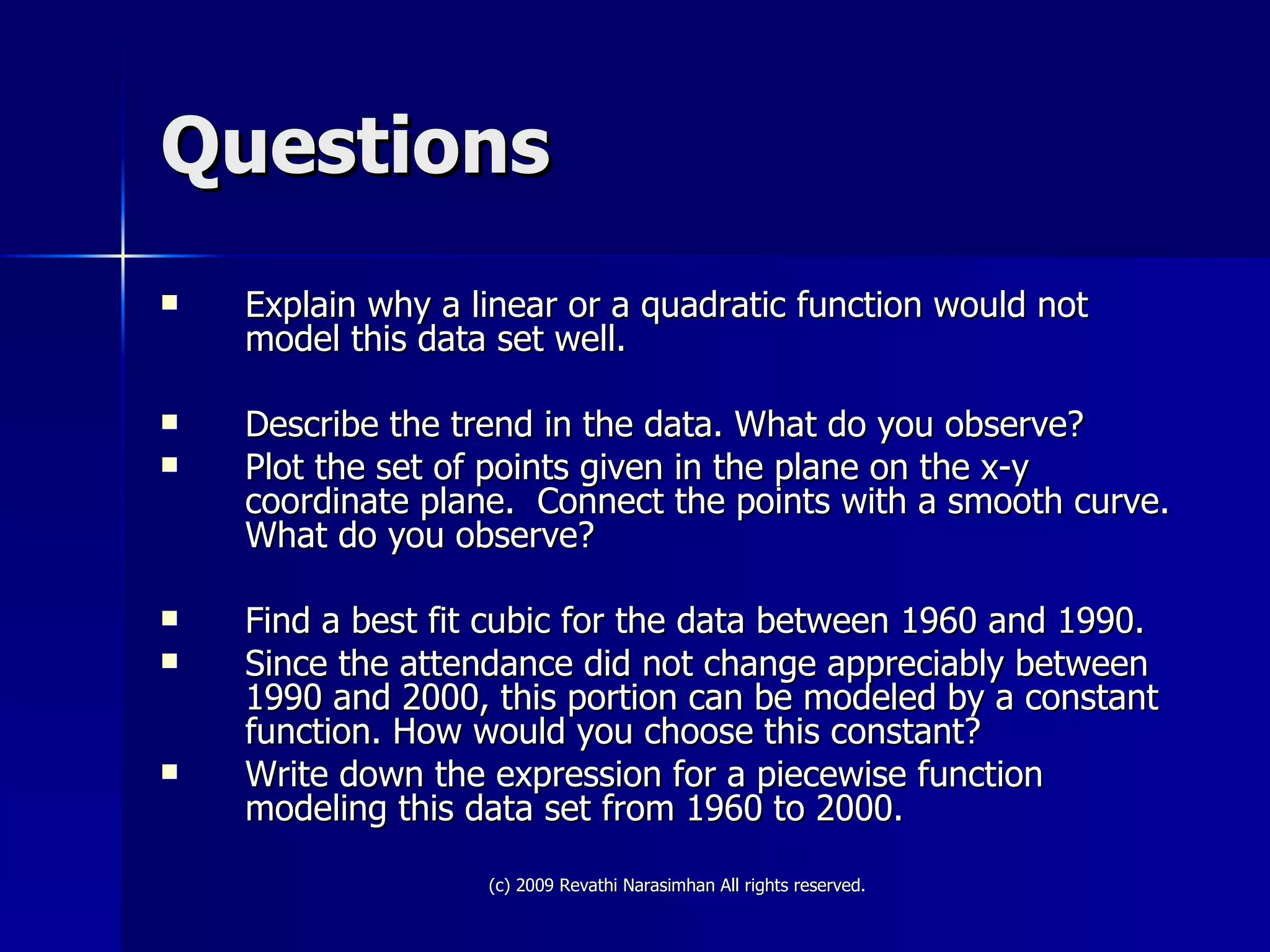
Questions Explain why a linear or a quadratic function would not model this data set well. Describe the trend in the data. What do you observe? Plot the set of points given in the plane on the x-y coordinate plane.  Connect the points with a smooth curve. What do you observe? Find a best fit cubic for the data between 1960 and 1990. Since the attendance did not change appreciably between 1990 and 2000, this portion can be modeled by a constant function. How would you choose this constant? Write down the expression for a piecewise function modeling this data set from 1960 to 2000.
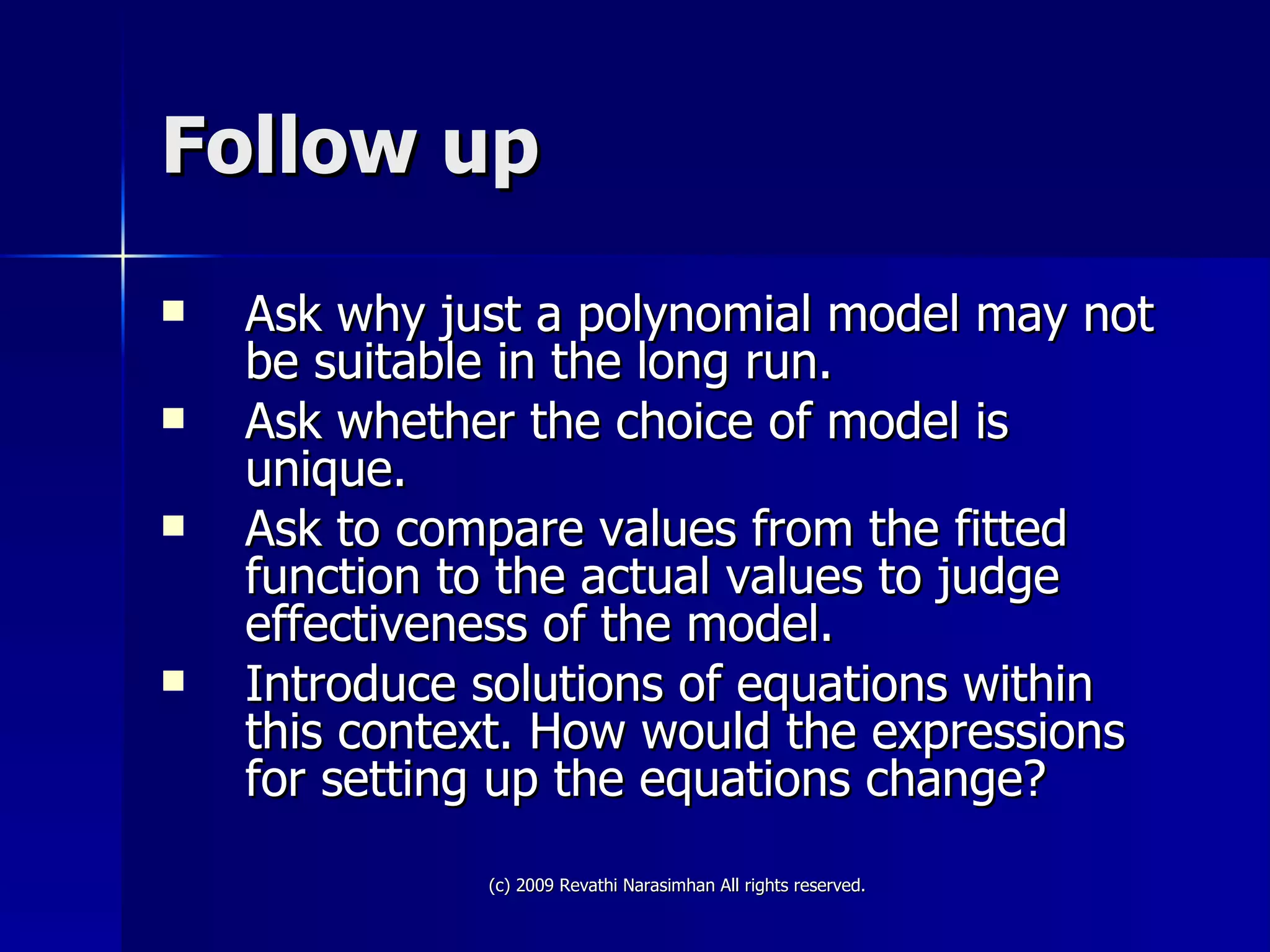
Follow up Ask why just a polynomial model may not be suitable in the long run. Ask whether the choice of model is unique. Ask to compare values from the fitted function to the actual values to judge effectiveness of the model. Introduce solutions of equations within this context. How would the expressions for setting up the equations change?
Creating an Application Examine the steps involved in creating the relative humidity problem Gather data and information  from the Internet Input data into spreadsheet and graph Find the line of best fit since the trend is approximately linear
Pedagogy Using functions early and often Reducing “algebra fatigue” Multi-step problems pull together various concepts and skills in one setting A simple idea is built upon and extended
Summary Lively applications hold student interest and get them to connect with the mathematics they are learning. New algebraic skills that are introduced are now in some context.  Gives some rationale  for why we define mathematical objects the way we do.
Contact Information Email: [email_address] Web:  http://www.mymathspace.net

Lively Applications in Precalculus

  • 1.
    Lively Applications toIntroduce College Algebra/Precalculus Topics Reva Narasimhan Kean University, NJ
  • 2.
    Overview Introduction Encouraging mathematical thinking Challenges in teaching college algebra and precalculus Examples of lively applications to connect concepts and skills Questions
  • 3.
    Mathematical Thinking Howare problems approached? Why is mathematical thinking important?
  • 4.
    The formula thatate your 401(k) Gaussian Copula Function – used for valuation of mortgage backed derivatives
  • 5.
    The Megapixel MythDoes a 10MP camera give you a picture that is twice the length and width of a picture from a 5MP camera? No. The megapixels refer to the amount of area in the picture. So, while the area is doubled, the length and width are not.
  • 6.
    Where are theextra MP’s? 5 MP: area of 1944 x 2592 pixels. Printed at 180 dots per inch, that’s about 11 by 14 inches. 10MP: area 2736 x 3648 pixels. An 180-dpi print that’s about 15 by 20 inches—under three inches more on each margin (Source: David Pogue, The New York Times )
  • 7.
    Challenges Making connectionsbetween topics Increasing student interaction Balance of skills and technology and applications and … Time constraints in covering material
  • 8.
    How can applicationshelp? Start with an example in a familiar context Work with the example and obtain new insights Use the example to introduce a new idea
  • 9.
    Making Connections Application – Ebay Objective – to introduce piecewise functions On the online auction site Ebay, the next highest amount that one may bid is based on the current price of the item according to this table. The bid increment is the amount by which a bid will be raised each time the current bid is outdone
  • 10.
    For example, ifthe current price of an item is $7.50, then the next bid must be at least $0.50 higher. $  2.50 $ 100.00 - $ 249.99 $  1.00 $  25.00 - $  99.99 $  0.50 $   5.00 - $  24.99 $  0.25 $   1.00 - $   4.99 $  0.05 $   0.01 - $   0.99   Bid Increment   Current Price
  • 11.
    Questions Explain whythe bid increment, I , is a function of the price, p . Find I(2.50) and interpret it. Find I(175) and interpret it. What is the domain and range of the function I ? Graph this function. What do you observe? The function I is given in tabular form. Is it possible to find just one expression for I which will work for all values of the price p ? Explain. This gives the entry way to define the function notation for piecewise functions.
  • 12.
    Follow up Whatnext? Introduce the idea of piecewise functions. Introduce the function notation associated with piecewise functions. Use a simple case first, and then extend. Relate back to the tabular form of functions. Practice the symbolic form of piecewise functions. Graph more piecewise functions. Relate to the table and symbolic form for piecewise functions.
  • 13.
    Time Constraints Explore multiple ideas using a single example Just-in-time introduction of new algebraic skills
  • 14.
    Amazon rainforest -1975 Source: Google Earth
  • 15.
    Amazon rainforest -2009 Source: Google Earth
  • 16.
    Making Connections Application – Rainforest decline Objective – to introduce exponential functions The total area of the world’s tropical rainforests have been declining at a rate of approximately 8% every ten years. Put another way, 92% of the total area of rainforests will be retained 10 years from now. For illustration, consider a 10000 square kilometer area of rainforest. (Source: World Resources Institute)
  • 17.
    Fill in thefollowing chart 60 50 40 30 20 10 10000 0 Forest acreage(sq km) Years in the future
  • 18.
    Questions Assume thatthe given trend will continue. Fill in the table to see how much of this rainforest will remain in 90 years. Plot the points in the table above, using the number of years in the horizontal axis and the total acreage in the vertical axis. What do you observe? From your table, approximately how long will it take for the acreage of the given region to decline to half its original size? Can you give an expression for the total acreage of rainforest after t years? (Hint: Think of t in multiples of 10.) Use this as the entry to give a short introduction to exponential functions.
  • 19.
    What next? Connectthe table with symbolic and graphical representations of the exponential function. Discuss exponential growth and decay, with particular attention to the effect of the base. Discuss why the decay can never reach zero. Expand problem to introduce techniques for solutions of exponential equations. If using technology, incorporate it from the outset to explore graphs of exponential functions and to find solutions of exponential equations.
  • 20.
    Video Games andDot Products 7.6.9 Source: R. Narasimhan, Precalculus
  • 21.
  • 22.
  • 23.
    Balancing Technology Whatis the proper role of technology? Explore the nature of functions Enhance concepts Aid in visualization Attempt problem of a scope not possible with pencil and paper techniques
  • 24.
    Balancing Technology Application – Trigonometric functions Objective – to examine the role of period and amplitude by studying the length of daylight in various locations using an Excel
  • 25.
    Balancing Technology Application– Curve fitting with data Objective – to introduce piecewise polynomial models and to see how technology can be properly integrated You have introduced polynomials and would like to introduce using curve fitting for polynomial models. This application is written in that context.
  • 26.
    2,838,233 2000 2,823,5721990 2,000,273 1980 2,297,290 1970 1,443,288 1960 Attendance Year
  • 27.
    Questions Explain whya linear or a quadratic function would not model this data set well. Describe the trend in the data. What do you observe? Plot the set of points given in the plane on the x-y coordinate plane. Connect the points with a smooth curve. What do you observe? Find a best fit cubic for the data between 1960 and 1990. Since the attendance did not change appreciably between 1990 and 2000, this portion can be modeled by a constant function. How would you choose this constant? Write down the expression for a piecewise function modeling this data set from 1960 to 2000.
  • 28.
    Follow up Askwhy just a polynomial model may not be suitable in the long run. Ask whether the choice of model is unique. Ask to compare values from the fitted function to the actual values to judge effectiveness of the model. Introduce solutions of equations within this context. How would the expressions for setting up the equations change?
  • 29.
    Creating an ApplicationExamine the steps involved in creating the relative humidity problem Gather data and information from the Internet Input data into spreadsheet and graph Find the line of best fit since the trend is approximately linear
  • 30.
    Pedagogy Using functionsearly and often Reducing “algebra fatigue” Multi-step problems pull together various concepts and skills in one setting A simple idea is built upon and extended
  • 31.
    Summary Lively applicationshold student interest and get them to connect with the mathematics they are learning. New algebraic skills that are introduced are now in some context. Gives some rationale for why we define mathematical objects the way we do.
  • 32.
    Contact Information Email:[email_address] Web: http://www.mymathspace.net