 GENERAL TRAITS
◦ anything written
 (or published – published = approved)
◦ holds interest, gives pleasure
◦ fictional, non-fictional
 imaginative, biographical
◦ makes readers see, feel, hear, love,…
◦ has structure, form
2
 GENRE
◦ Tragedy, Comedy, Tragi-Comedy
◦ sonnet, lyric, ode
◦ Shakespearean, Petrarchan sonnets
◦ Short Story, Play, Poem
◦ myth, legend, fairy tale, allegory
 Movement
◦ Neo-Classical, Romantic, Post-Modern
 Elements
◦ Plot, Theme, Characterization, Symbolism
◦ conventions
3
 FORM
◦ any length
◦ any form
◦ lack of form
 blank verse
 Theatre of the Absurd
 stream-of-consciousness
4
 PLOT
◦ Plot = #1 to Aristotle
◦ narrative
◦ tells a story
◦ beginning, middle, end
 even the lack of a plot is significant
5
 CHARACTER
◦ has someone in the plot
 human, animal, other
◦ persona
◦ narrator
◦ protagonist, antagonist
6
 Ezra Pound:
◦ “Literature is news that stays news.”
 Robert Frost:
◦ “a performance in words.”
◦ not just “meaning”
 Lady Murasaki
◦ has a significance, something that the author thinks is
invaluable, “so important that one cannot bear to let it pass
into oblivion.”
7
 allows us to
◦ appreciate excellence
◦ admire achievement
 so, not only do the authors demonstrate a usage or
skill with the aforementioned “Structure & Form”
 but they also exhibit a mastery of it
◦ and we admire it as we would a virtuoso’s performance
 athletic, musical, technological, mechanical, pedagogical
8
 ANALOGY:
◦ Many people play sports.
 Many even play sports professionally.
◦ BUT
◦ What separates the average players from the Greats?
 Hobey Baker, Wayne Gretsky
 Jim Thorpe, Babe Didrikson
 Wilt Chamberlain, Bill Russell
 Emmett Smith, Walter Peyton
 Babe Ruth, Ted Williams
9
 Literature with a Capital “L”
◦ distinguished from mere versification
 just b/c it rhymes doesn’t make it Literature
 greeting card, lyrics to pop song
◦ distinguished from mere information
 just b/c it relays some data doesn’t make it Literature
 the months poem (“30 days hath…”)
10
 THOUGHT-PROVOKING
◦ makes readers think, discuss, argue, disagree
 communication
 with ourselves
 with each other
◦ allows us to see some issue from a different, perhaps unique,
perspective
 expands our viewpoints
 beyond our personal experiences
11
 MEANING
◦ makes sense
◦ even nonsense makes sense
◦ morals
◦ themes
◦ literary work teaches
 edifying, instructional, historical, cultural
 learn @ their culture, our culture
 life lessons
12
 MEANING
◦ literary work has significance
◦ universality
 beyond fads, “flash-in-the-pans”
 long “shelf life”
 crosses many boundaries
 time, space, culture, religion,…
 not myopic, but far-sighted view
MEANING OF LIFE
13
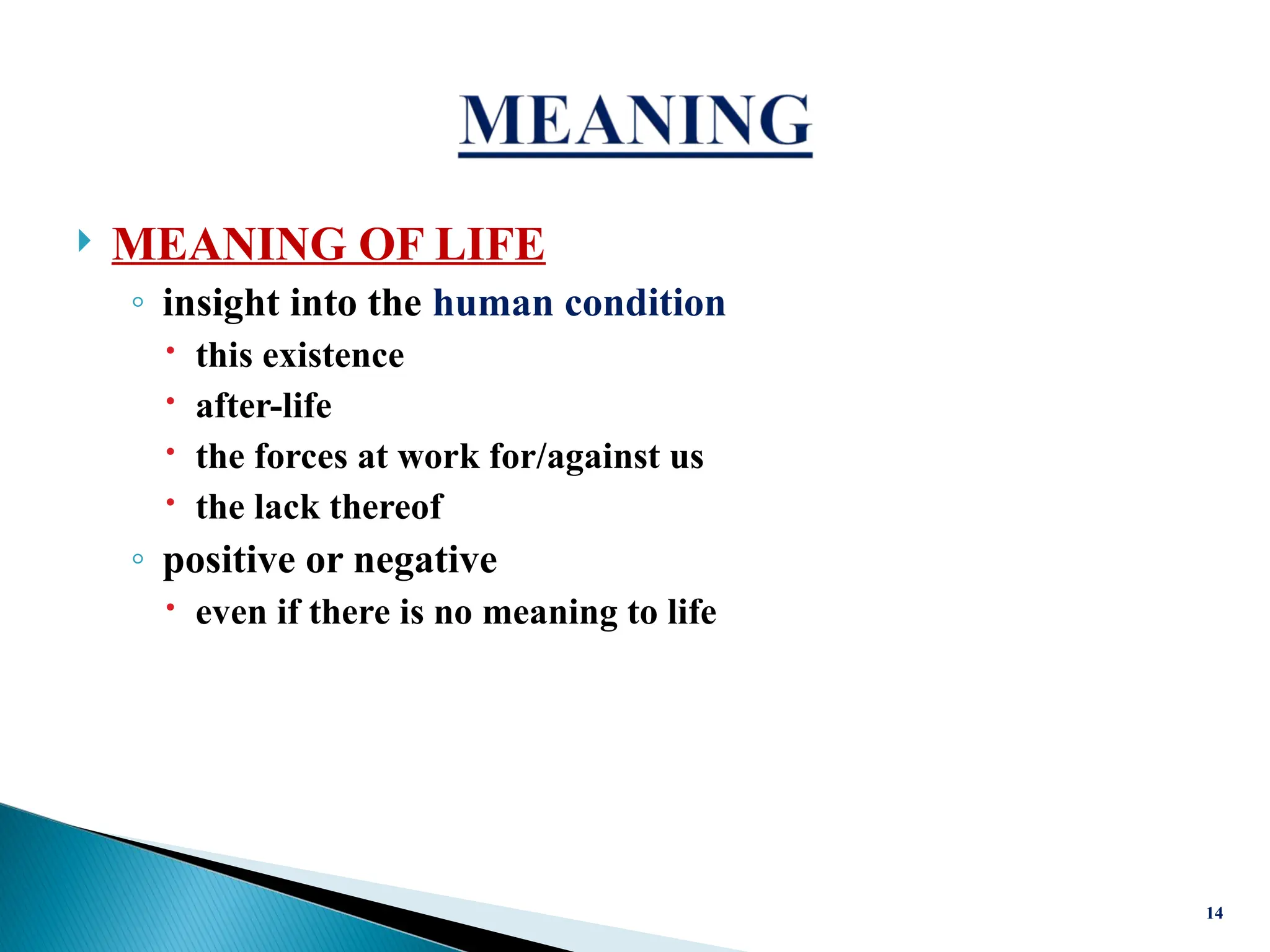
 MEANING OF LIFE
◦ insight into the human condition
 this existence
 after-life
 the forces at work for/against us
 the lack thereof
◦ positive or negative
 even if there is no meaning to life
14
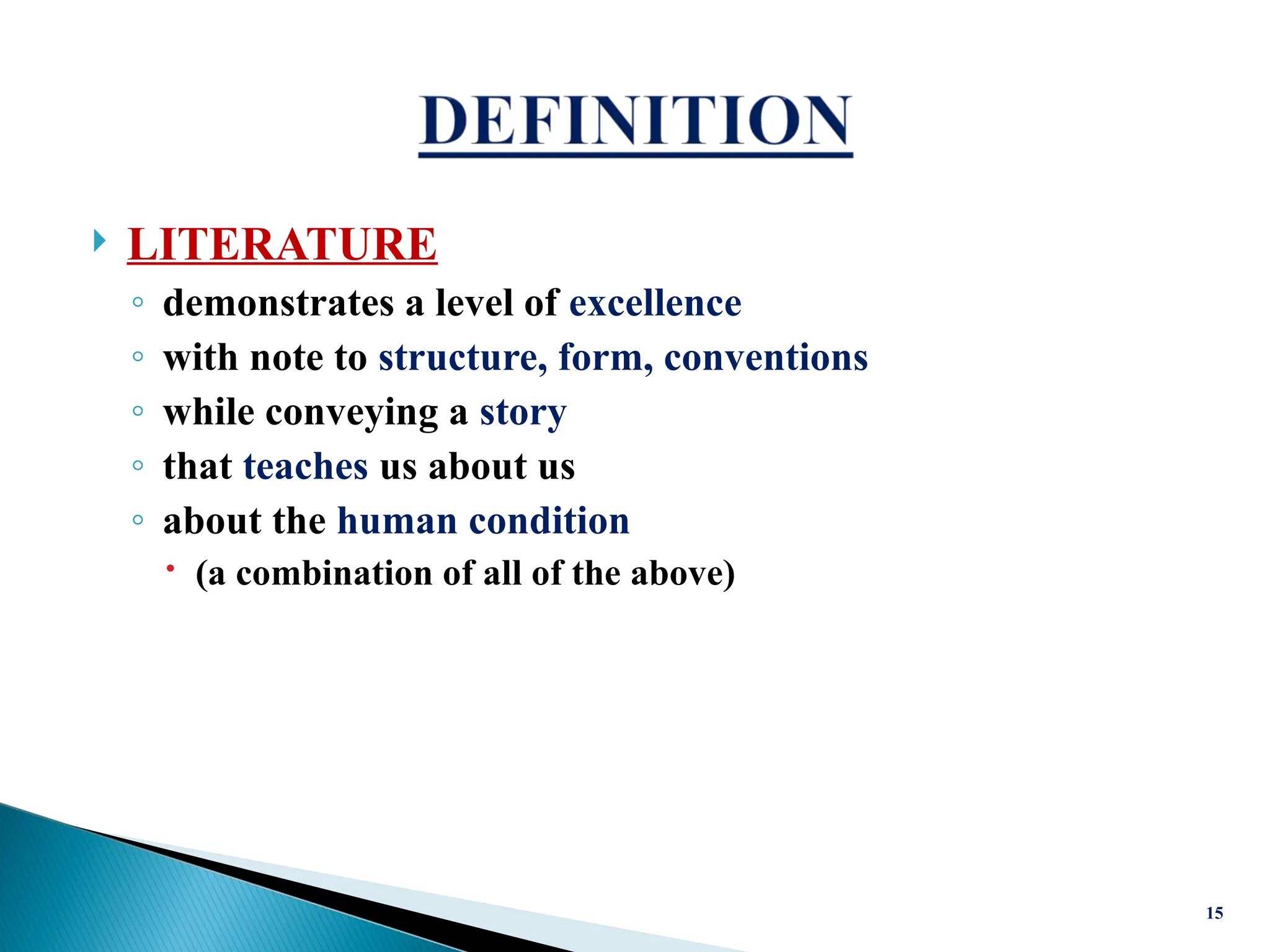
 LITERATURE
◦ demonstrates a level of excellence
◦ with note to structure, form, conventions
◦ while conveying a story
◦ that teaches us about us
◦ about the human condition
 (a combination of all of the above)
15
Literature, Its Definition and Classification.ppt

Literature, Its Definition and Classification.ppt

  • 2.
     GENERAL TRAITS ◦anything written  (or published – published = approved) ◦ holds interest, gives pleasure ◦ fictional, non-fictional  imaginative, biographical ◦ makes readers see, feel, hear, love,… ◦ has structure, form 2
  • 3.
     GENRE ◦ Tragedy,Comedy, Tragi-Comedy ◦ sonnet, lyric, ode ◦ Shakespearean, Petrarchan sonnets ◦ Short Story, Play, Poem ◦ myth, legend, fairy tale, allegory  Movement ◦ Neo-Classical, Romantic, Post-Modern  Elements ◦ Plot, Theme, Characterization, Symbolism ◦ conventions 3
  • 4.
     FORM ◦ anylength ◦ any form ◦ lack of form  blank verse  Theatre of the Absurd  stream-of-consciousness 4
  • 5.
     PLOT ◦ Plot= #1 to Aristotle ◦ narrative ◦ tells a story ◦ beginning, middle, end  even the lack of a plot is significant 5
  • 6.
     CHARACTER ◦ hassomeone in the plot  human, animal, other ◦ persona ◦ narrator ◦ protagonist, antagonist 6
  • 7.
     Ezra Pound: ◦“Literature is news that stays news.”  Robert Frost: ◦ “a performance in words.” ◦ not just “meaning”  Lady Murasaki ◦ has a significance, something that the author thinks is invaluable, “so important that one cannot bear to let it pass into oblivion.” 7
  • 8.
     allows usto ◦ appreciate excellence ◦ admire achievement  so, not only do the authors demonstrate a usage or skill with the aforementioned “Structure & Form”  but they also exhibit a mastery of it ◦ and we admire it as we would a virtuoso’s performance  athletic, musical, technological, mechanical, pedagogical 8
  • 9.
     ANALOGY: ◦ Manypeople play sports.  Many even play sports professionally. ◦ BUT ◦ What separates the average players from the Greats?  Hobey Baker, Wayne Gretsky  Jim Thorpe, Babe Didrikson  Wilt Chamberlain, Bill Russell  Emmett Smith, Walter Peyton  Babe Ruth, Ted Williams 9
  • 10.
     Literature witha Capital “L” ◦ distinguished from mere versification  just b/c it rhymes doesn’t make it Literature  greeting card, lyrics to pop song ◦ distinguished from mere information  just b/c it relays some data doesn’t make it Literature  the months poem (“30 days hath…”) 10
  • 11.
     THOUGHT-PROVOKING ◦ makesreaders think, discuss, argue, disagree  communication  with ourselves  with each other ◦ allows us to see some issue from a different, perhaps unique, perspective  expands our viewpoints  beyond our personal experiences 11
  • 12.
     MEANING ◦ makessense ◦ even nonsense makes sense ◦ morals ◦ themes ◦ literary work teaches  edifying, instructional, historical, cultural  learn @ their culture, our culture  life lessons 12
  • 13.
     MEANING ◦ literarywork has significance ◦ universality  beyond fads, “flash-in-the-pans”  long “shelf life”  crosses many boundaries  time, space, culture, religion,…  not myopic, but far-sighted view MEANING OF LIFE 13
  • 14.
     MEANING OFLIFE ◦ insight into the human condition  this existence  after-life  the forces at work for/against us  the lack thereof ◦ positive or negative  even if there is no meaning to life 14
  • 15.
     LITERATURE ◦ demonstratesa level of excellence ◦ with note to structure, form, conventions ◦ while conveying a story ◦ that teaches us about us ◦ about the human condition  (a combination of all of the above) 15