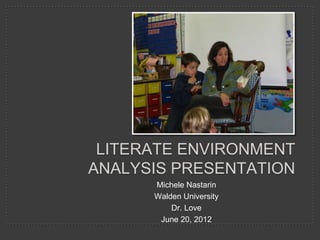
LITERATE ENVIRONMENT
ANALYSIS PRESENTATION
      Michele Nastarin
      Walden University
          Dr. Love
       June 20, 2012
Getting to
know literacy
learners The teacher
administered the Elementary
Reading Attitude Survey.
Three students at different
reading levels had a positive
attitude toward recreational
and academic reading. The
benefit of the survey was to
ascertain students’ attitudes
toward reading.
SELECTING TEXTS
Three texts were selected for the three students: a narrative, informational and online
text. The narrative text, Jack and the Beanstalk by Kellogg, was chosen for the
beginning reader because it is repetitive. The informational text The Magic School Bus:
Gets Planted by Cole was selected for the transitional reader because it provides facts
about plants. Last, the online text from BookPALS A Bad Case of Stripes by Shanon
was chosen for the emergent reader because this student could not read independently
and listened to the read aloud story.
Interactive
Perspective
The lesson focused on teaching
students to be strategic and show
metacognition in areas such as
word recognition and
comprehension. The word
recognition strategy focused on
chanting and clapping instructional
practice to learn sight words in the
narrative text Jack and the
Beanstalk by Kellogg. The
comprehension strategy focused on
having the students summarize the
narrative text. The more
opportunities children are given to
practice, the more natural these
strategies become.
Critical and Response
                  Perspectives
The response activity was for students to write in their reading log
about what they liked about narrative text Jack and the Beanstalk by
Kellogg. The critical response activity focused on teaching students to
write a simple retell to include the beginning, middle, and end of the
narrative text.
Feedback from Family Members of Students
•   What insights did you gain about literacy and literacy instruction from
    viewing this presentation?
•   How might the information presented change your literacy practices and/or
    your literacy interactions with students?
•   In what ways can I support you in the literacy development of your
    students or children?
•   How might you support me in my work with students or your children?
•   What questions do you have?

Literate environment presentation

  • 1.
    LITERATE ENVIRONMENT ANALYSIS PRESENTATION Michele Nastarin Walden University Dr. Love June 20, 2012
  • 2.
    Getting to know literacy learnersThe teacher administered the Elementary Reading Attitude Survey. Three students at different reading levels had a positive attitude toward recreational and academic reading. The benefit of the survey was to ascertain students’ attitudes toward reading.
  • 3.
    SELECTING TEXTS Three textswere selected for the three students: a narrative, informational and online text. The narrative text, Jack and the Beanstalk by Kellogg, was chosen for the beginning reader because it is repetitive. The informational text The Magic School Bus: Gets Planted by Cole was selected for the transitional reader because it provides facts about plants. Last, the online text from BookPALS A Bad Case of Stripes by Shanon was chosen for the emergent reader because this student could not read independently and listened to the read aloud story.
  • 4.
    Interactive Perspective The lesson focusedon teaching students to be strategic and show metacognition in areas such as word recognition and comprehension. The word recognition strategy focused on chanting and clapping instructional practice to learn sight words in the narrative text Jack and the Beanstalk by Kellogg. The comprehension strategy focused on having the students summarize the narrative text. The more opportunities children are given to practice, the more natural these strategies become.
  • 5.
    Critical and Response Perspectives The response activity was for students to write in their reading log about what they liked about narrative text Jack and the Beanstalk by Kellogg. The critical response activity focused on teaching students to write a simple retell to include the beginning, middle, and end of the narrative text.
  • 6.
    Feedback from FamilyMembers of Students • What insights did you gain about literacy and literacy instruction from viewing this presentation? • How might the information presented change your literacy practices and/or your literacy interactions with students? • In what ways can I support you in the literacy development of your students or children? • How might you support me in my work with students or your children? • What questions do you have?