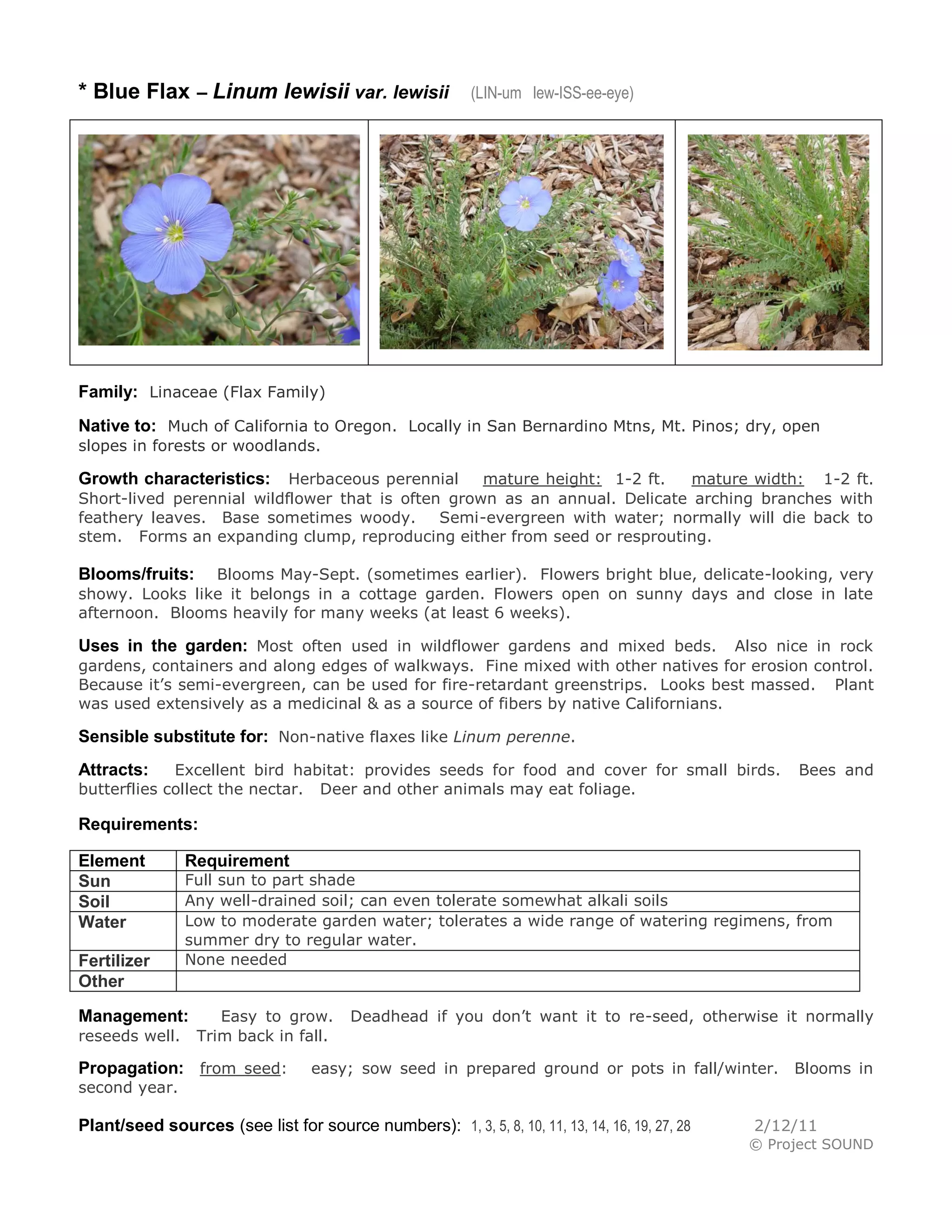
* Blue Flax – Linum lewisii var. lewisii

(LIN-um lew-ISS-ee-eye)

Family: Linaceae (Flax Family)
Native to: Much of California to Oregon. Locally in San Bernardino Mtns, Mt. Pinos; dry, open
slopes in forests or woodlands.
Herbaceous perennial
mature height: 1-2 ft.
mature width: 1-2 ft.
Short-lived perennial wildflower that is often grown as an annual. Delicate arching branches with
feathery leaves. Base sometimes woody.
Semi-evergreen with water; normally will die back to
stem. Forms an expanding clump, reproducing either from seed or resprouting.

Growth characteristics:

Blooms May-Sept. (sometimes earlier). Flowers bright blue, delicate-looking, very
showy. Looks like it belongs in a cottage garden. Flowers open on sunny days and close in late
afternoon. Blooms heavily for many weeks (at least 6 weeks).

Blooms/fruits:

Uses in the garden: Most often used in wildflower gardens and mixed beds.

Also nice in rock
gardens, containers and along edges of walkways. Fine mixed with other natives for erosion control.
Because it’s semi-evergreen, can be used for fire-retardant greenstrips. Looks best massed. Plant
was used extensively as a medicinal & as a source of fibers by native Californians.

Sensible substitute for: Non-native flaxes like Linum perenne.
Excellent bird habitat: provides seeds for food and cover for small birds.
butterflies collect the nectar. Deer and other animals may eat foliage.

Attracts:

Bees and

Requirements:
Element
Sun
Soil
Water
Fertilizer
Other

Requirement

Full sun to part shade
Any well-drained soil; can even tolerate somewhat alkali soils
Low to moderate garden water; tolerates a wide range of watering regimens, from
summer dry to regular water.
None needed

Management:
reseeds well.

Easy to grow.
Trim back in fall.

Propagation: from seed:

Deadhead if you don’t want it to re-seed, otherwise it normally

easy; sow seed in prepared ground or pots in fall/winter.

Blooms in

second year.

Plant/seed sources (see list for source numbers): 1, 3, 5, 8, 10, 11, 13, 14, 16, 19, 27, 28

2/12/11
© Project SOUND

Linum lewisii

  • 1.
    * Blue Flax– Linum lewisii var. lewisii (LIN-um lew-ISS-ee-eye) Family: Linaceae (Flax Family) Native to: Much of California to Oregon. Locally in San Bernardino Mtns, Mt. Pinos; dry, open slopes in forests or woodlands. Herbaceous perennial mature height: 1-2 ft. mature width: 1-2 ft. Short-lived perennial wildflower that is often grown as an annual. Delicate arching branches with feathery leaves. Base sometimes woody. Semi-evergreen with water; normally will die back to stem. Forms an expanding clump, reproducing either from seed or resprouting. Growth characteristics: Blooms May-Sept. (sometimes earlier). Flowers bright blue, delicate-looking, very showy. Looks like it belongs in a cottage garden. Flowers open on sunny days and close in late afternoon. Blooms heavily for many weeks (at least 6 weeks). Blooms/fruits: Uses in the garden: Most often used in wildflower gardens and mixed beds. Also nice in rock gardens, containers and along edges of walkways. Fine mixed with other natives for erosion control. Because it’s semi-evergreen, can be used for fire-retardant greenstrips. Looks best massed. Plant was used extensively as a medicinal & as a source of fibers by native Californians. Sensible substitute for: Non-native flaxes like Linum perenne. Excellent bird habitat: provides seeds for food and cover for small birds. butterflies collect the nectar. Deer and other animals may eat foliage. Attracts: Bees and Requirements: Element Sun Soil Water Fertilizer Other Requirement Full sun to part shade Any well-drained soil; can even tolerate somewhat alkali soils Low to moderate garden water; tolerates a wide range of watering regimens, from summer dry to regular water. None needed Management: reseeds well. Easy to grow. Trim back in fall. Propagation: from seed: Deadhead if you don’t want it to re-seed, otherwise it normally easy; sow seed in prepared ground or pots in fall/winter. Blooms in second year. Plant/seed sources (see list for source numbers): 1, 3, 5, 8, 10, 11, 13, 14, 16, 19, 27, 28 2/12/11 © Project SOUND