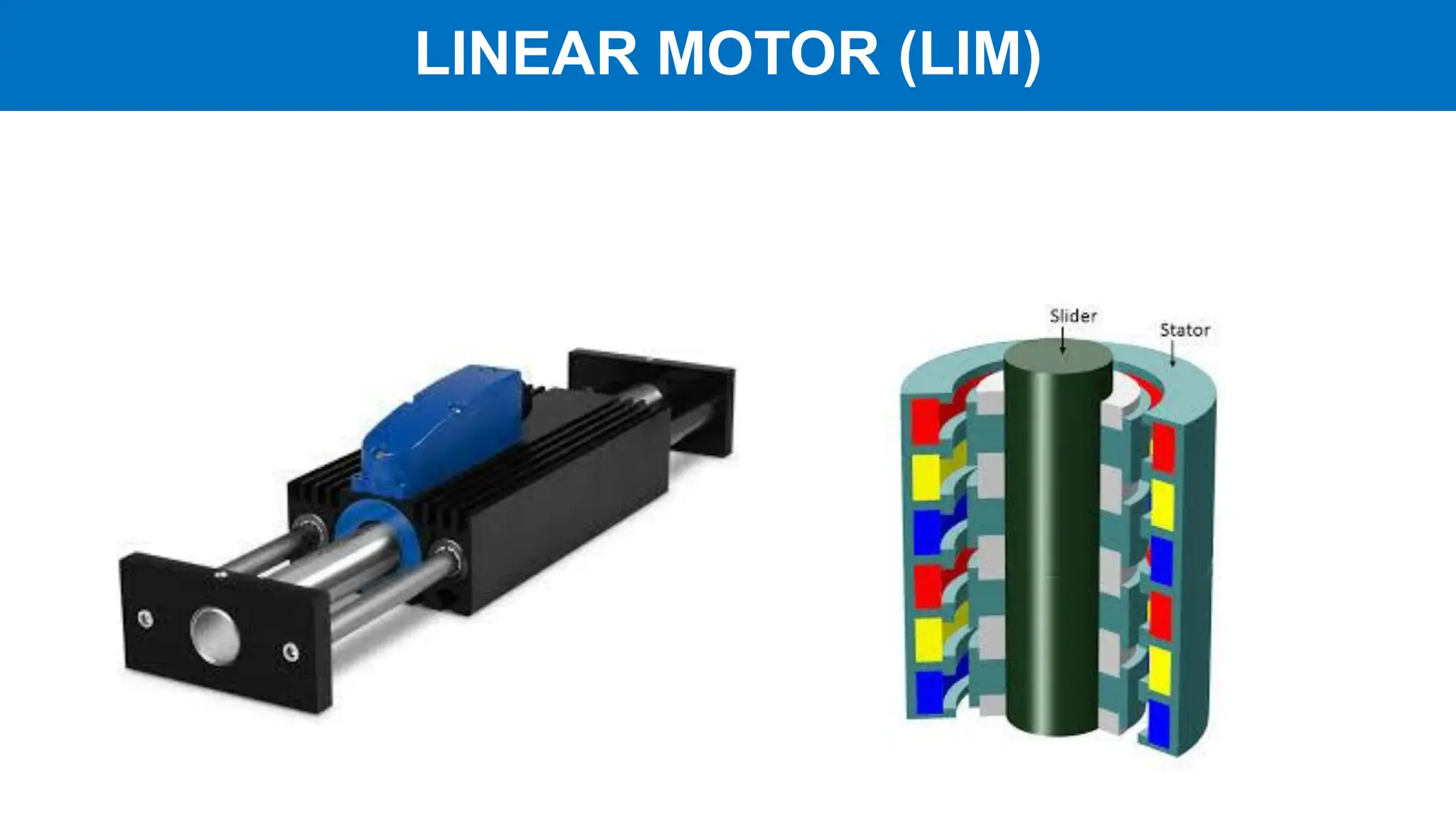
LINEAR MOTOR (LIM)
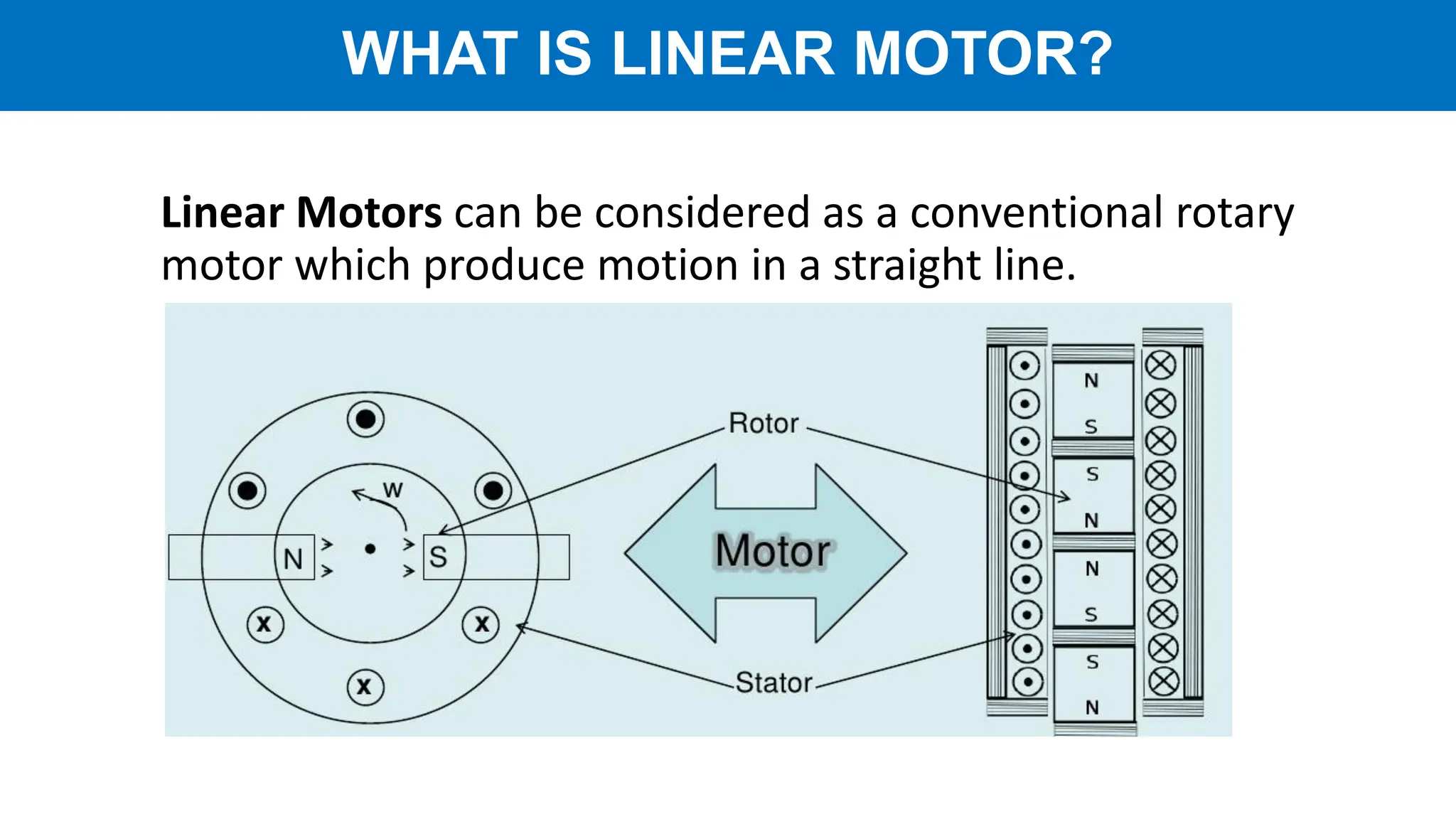
Linear Motors can be considered as a conventional rotary
motor which produce motion in a straight line.
WHAT IS LINEAR MOTOR?
• How does it work?
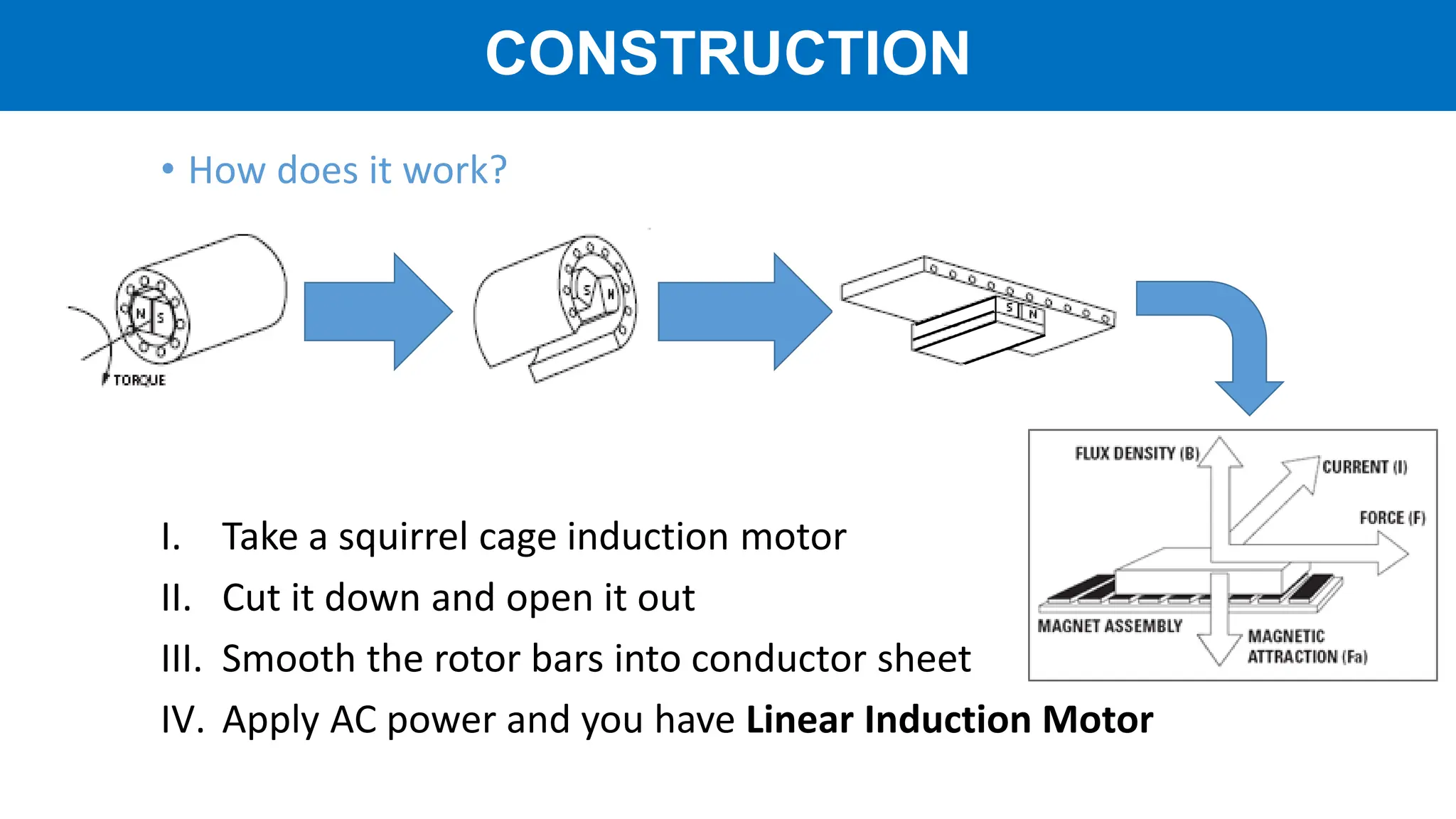
I. Take a squirrel cage induction motor
II. Cut it down and open it out
III. Smooth the rotor bars into conductor sheet
IV. Apply AC power and you have Linear Induction Motor
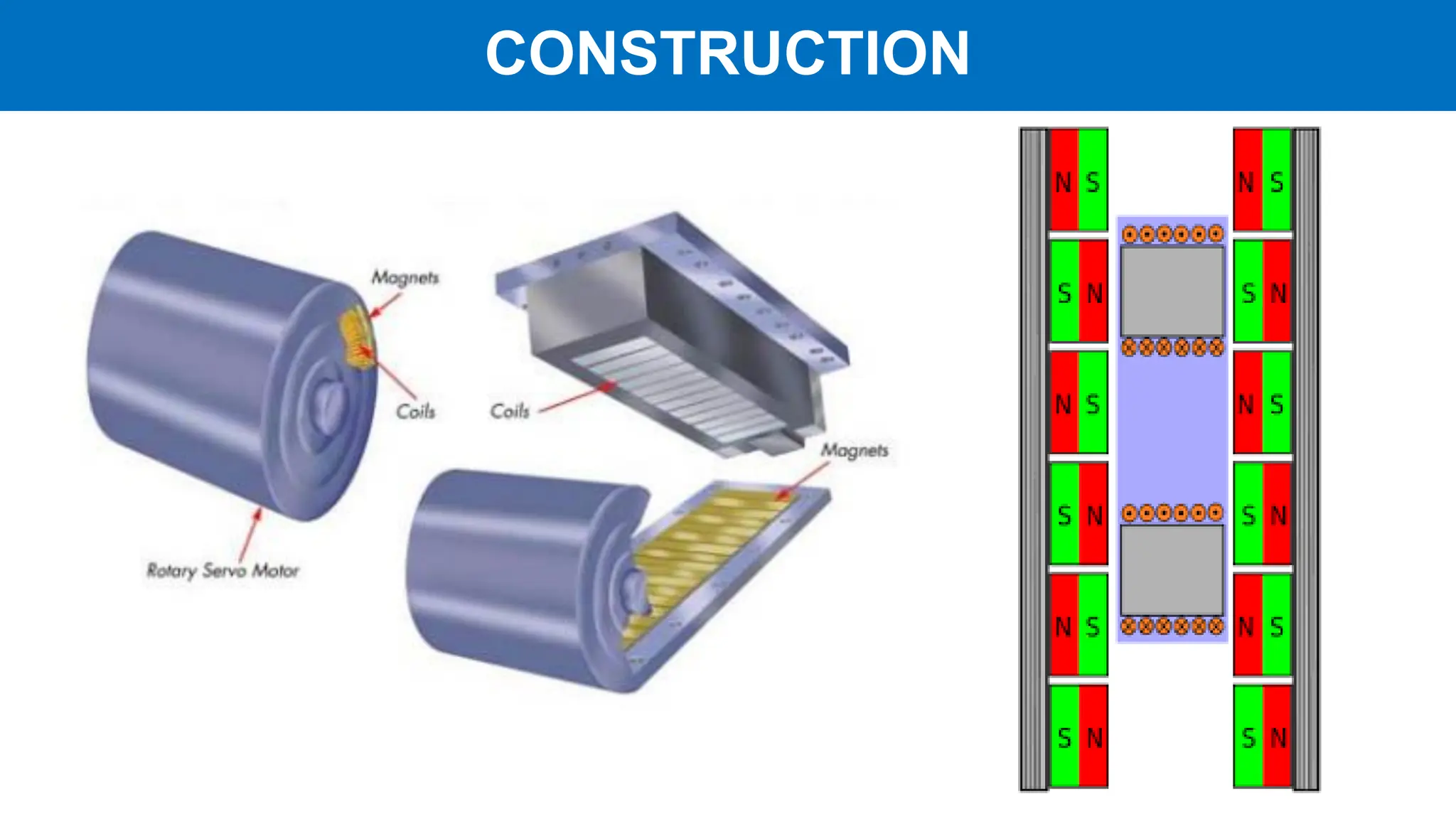
CONSTRUCTION
construction
CONSTRUCTION
CONSTRUCTION
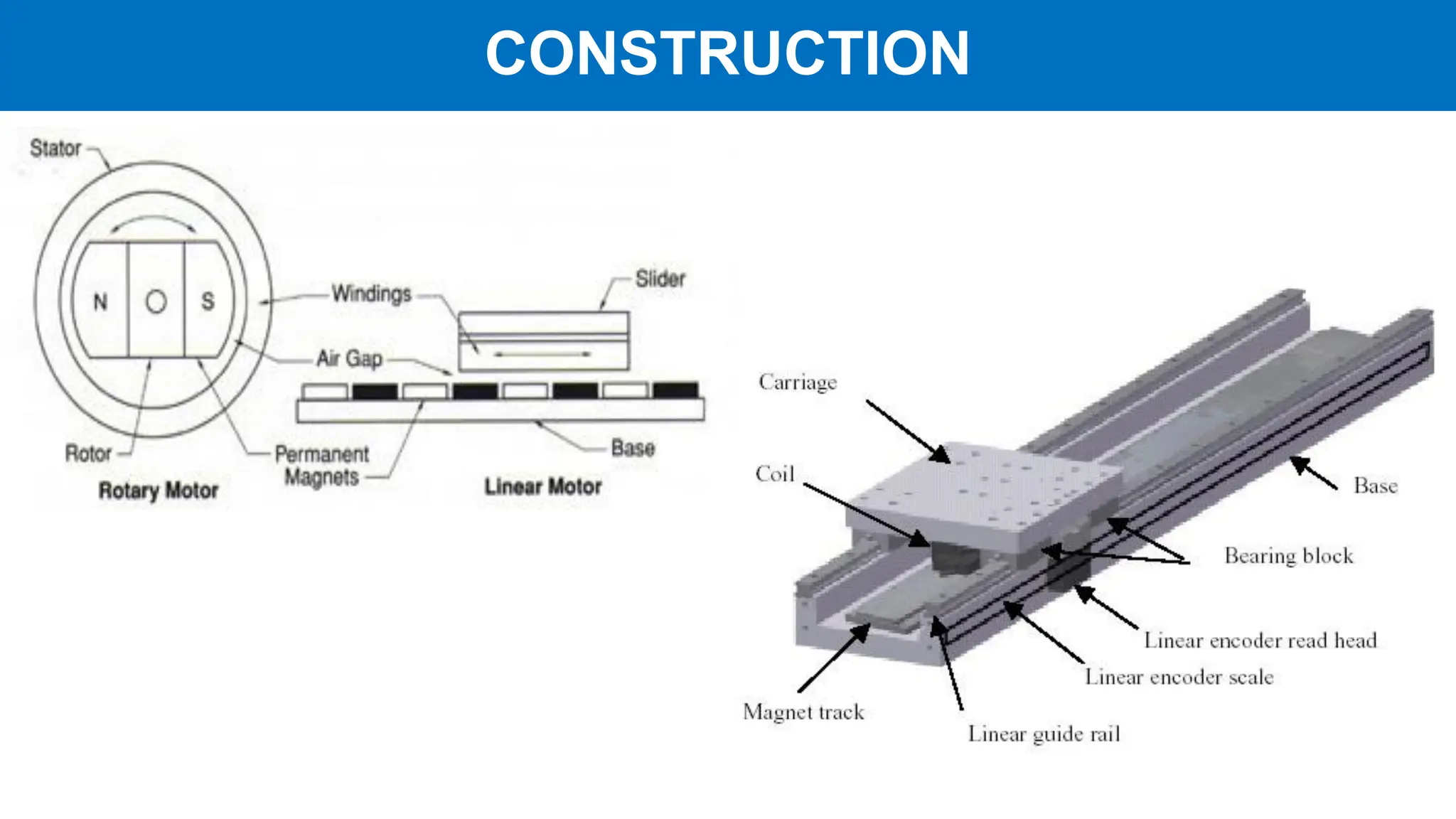
• The stator produce magnetic poles through electromagnetic
process
• The stator poles always changes due to AC supply
• The magnetizing of stator is controlled via external electronic circuit
(Liner Motor Driver)
• The rotor used superconducting magnets which are cooled to low
temperatures to reduce power consumption
• The interaction of magnetic poles (attract/repel) caused the rotor
to move in a straight line
WORKING PRINCIPLE
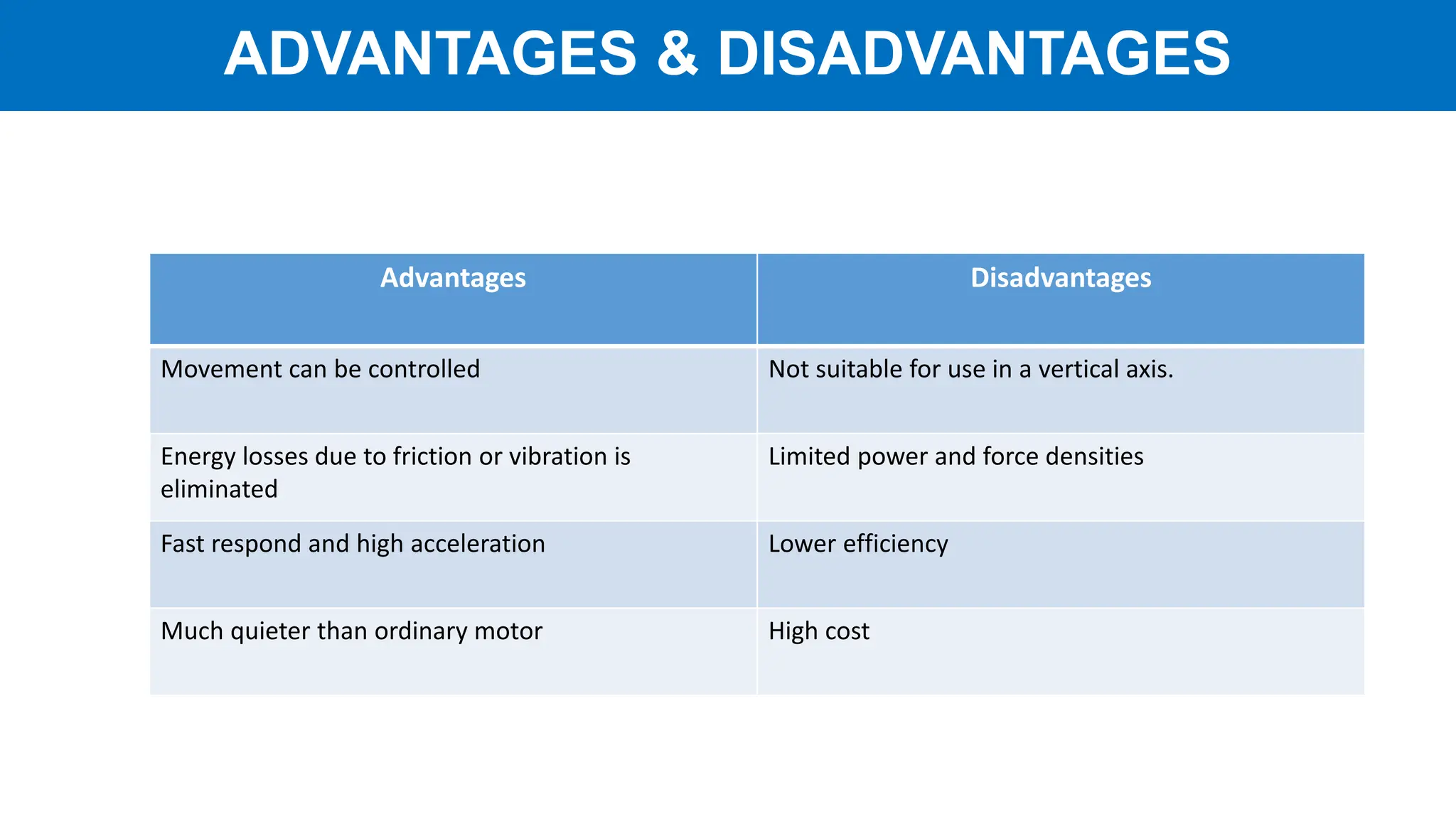
Advantages Disadvantages
Movement can be controlled Not suitable for use in a vertical axis.
Energy losses due to friction or vibration is
eliminated
Limited power and force densities
Fast respond and high acceleration Lower efficiency
Much quieter than ordinary motor High cost
ADVANTAGES & DISADVANTAGES
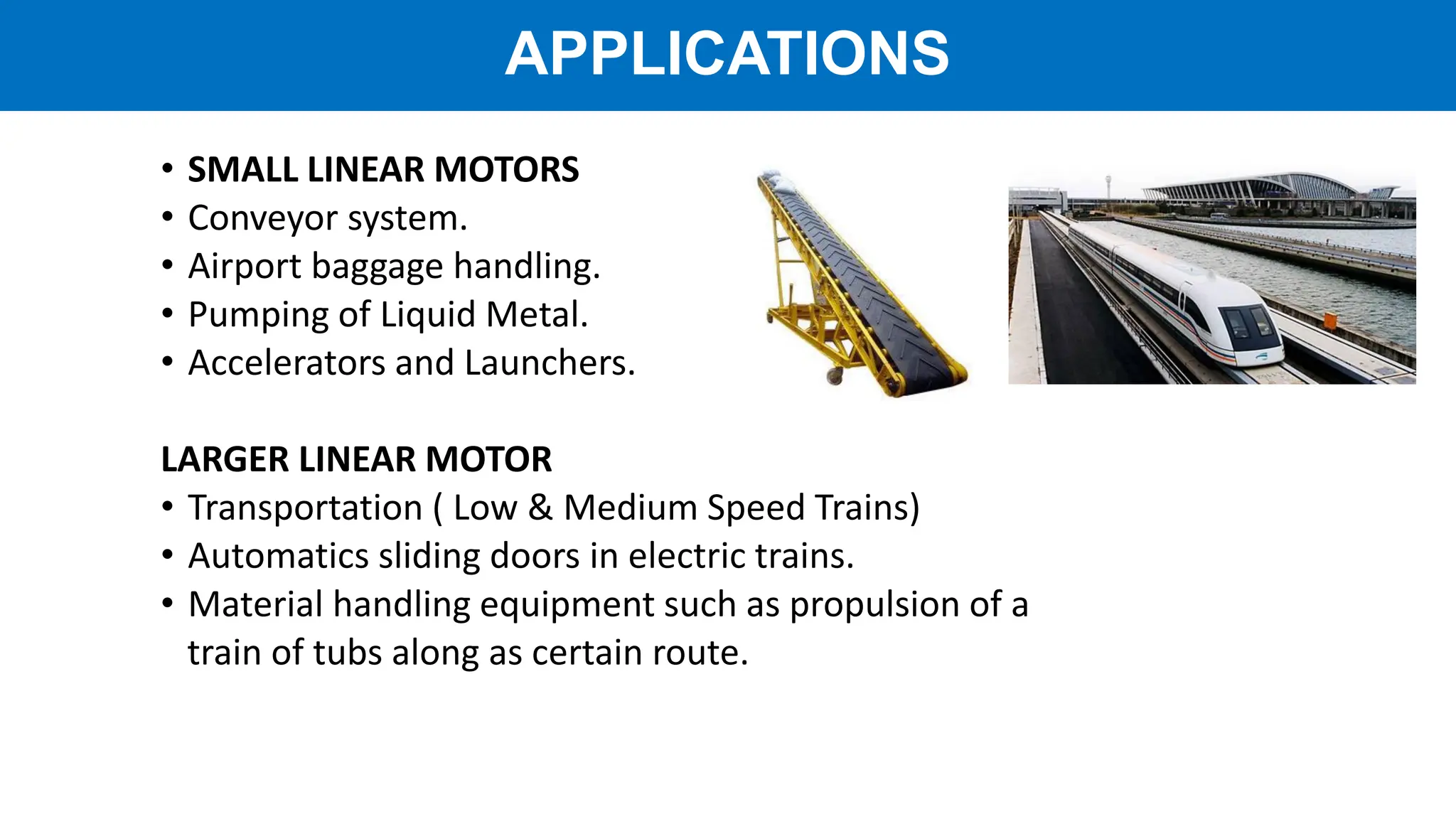
• SMALL LINEAR MOTORS
• Conveyor system.
• Airport baggage handling.
• Pumping of Liquid Metal.
• Accelerators and Launchers.
LARGER LINEAR MOTOR
• Transportation ( Low & Medium Speed Trains)
• Automatics sliding doors in electric trains.
• Material handling equipment such as propulsion of a
train of tubs along as certain route.
APPLICATIONS
• LIM can be considered as conventional rotatory motor with
both the stator and the rotor split and rolled out flat to
produce motion in a straight line
• It produce high respond with high acceleration motor
• The air-gap needs to be as small as possible to have a
better thrust and efficiency
• The speed of linear motor can be determine by the
frequency of alternating current and the magnetic field
directions
• The cost is high due to complicated construction and
control circuitry
CONCLUSION
LINEAR MOTOR principle , contraction, working type

LINEAR MOTOR principle , contraction, working type

  • 1.
  • 2.
    Linear Motors canbe considered as a conventional rotary motor which produce motion in a straight line. WHAT IS LINEAR MOTOR?
  • 3.
    • How doesit work? I. Take a squirrel cage induction motor II. Cut it down and open it out III. Smooth the rotor bars into conductor sheet IV. Apply AC power and you have Linear Induction Motor CONSTRUCTION
  • 4.
  • 5.
  • 6.
    • The statorproduce magnetic poles through electromagnetic process • The stator poles always changes due to AC supply • The magnetizing of stator is controlled via external electronic circuit (Liner Motor Driver) • The rotor used superconducting magnets which are cooled to low temperatures to reduce power consumption • The interaction of magnetic poles (attract/repel) caused the rotor to move in a straight line WORKING PRINCIPLE
  • 7.
    Advantages Disadvantages Movement canbe controlled Not suitable for use in a vertical axis. Energy losses due to friction or vibration is eliminated Limited power and force densities Fast respond and high acceleration Lower efficiency Much quieter than ordinary motor High cost ADVANTAGES & DISADVANTAGES
  • 8.
    • SMALL LINEARMOTORS • Conveyor system. • Airport baggage handling. • Pumping of Liquid Metal. • Accelerators and Launchers. LARGER LINEAR MOTOR • Transportation ( Low & Medium Speed Trains) • Automatics sliding doors in electric trains. • Material handling equipment such as propulsion of a train of tubs along as certain route. APPLICATIONS
  • 9.
    • LIM canbe considered as conventional rotatory motor with both the stator and the rotor split and rolled out flat to produce motion in a straight line • It produce high respond with high acceleration motor • The air-gap needs to be as small as possible to have a better thrust and efficiency • The speed of linear motor can be determine by the frequency of alternating current and the magnetic field directions • The cost is high due to complicated construction and control circuitry CONCLUSION