1
Agenda
Term Life Insurance
 Level Term Life Insurance
 Decreasing Term Life Insurance
 Increasing Term Life Insurance
 Features of Term Life Insurance
Cash Value and Endowment Insurance
 Whole Life Insurance
 Premium Payment Methods
 Modified Whole Life Insurance
 Whole Life Insurance covering more than one insured
2
Term Life Insurance
Term Life Insurance
 Death Benefit provided only when insured dies during the policy period defined in the policy
 Specified period in policy is called Policy Term
 Policy benefit Payable only if:
1. Insured dies during policy term
2. Policy is in force when insured dies
 Policy term varies from policy to policy. Can be 1, 5, 10, 15, 30 years depending on the provider
 Policy Anniversary is the anniversary of the date on which coverage under the under the policy
became effective
 Term to Age 65 policy: Provides coverage to an insured upto the age 65
Example for Term to Age 65
 Case
Sara was born on November 1, 1975. She was issued a term to age 65 policy, effective October 1, 2009.
Under the terms of the policy, coverage expires on the policy anniversary closest to her 65th birthday.
Sara paid all renewal premiums as they were due.
 Analysis
Sara’s policy will expire on October 1, 2040, the anniversary date closest to her 65th birthday. If Sara’s
policy instead provided that coverage expires on the policy anniversary immediately after her 65th
birthday, her policy would expire on October 1, 2041.
Term Life Insurance: Types/ Insurance Products
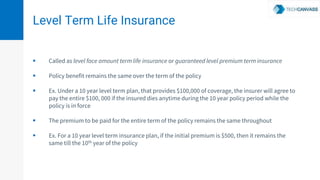
Level Term Life Insurance
 Called as level face amount term life insurance or guaranteed level premium term insurance
 Policy benefit remains the same over the term of the policy
 Ex. Under a 10 year level term plan, that provides $100,000 of coverage, the insurer will agree to
pay the entire $100, 000 if the insured dies anytime during the 10 year policy period while the
policy is in force
 The premium to be paid for the entire term of the policy remains the same throughout
 Ex. For a 10 year level term insurance plan, if the initial premium is $500, then it remains the
same till the 10th year of the policy
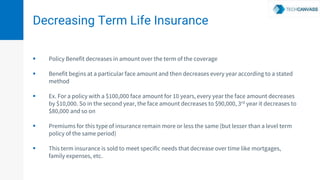
Decreasing Term Life Insurance
 Policy Benefit decreases in amount over the term of the coverage
 Benefit begins at a particular face amount and then decreases every year according to a stated
method
 Ex. For a policy with a $100,000 face amount for 10 years, every year the face amount decreases
by $10,000. So in the second year, the face amount decreases to $90,000, 3rd year it decreases to
$80,000 and so on
 Premiums for this type of insurance remain more or less the same (but lesser than a level term
policy of the same period)
 This term insurance is sold to meet specific needs that decrease over time like mortgages,
family expenses, etc.
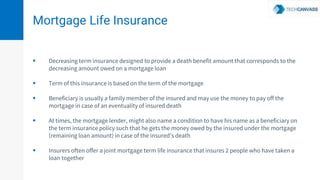
Mortgage Life Insurance
 Decreasing term insurance designed to provide a death benefit amount that corresponds to the
decreasing amount owed on a mortgage loan
 Term of this insurance is based on the term of the mortgage
 Beneficiary is usually a family member of the insured and may use the money to pay off the
mortgage in case of an eventuality of insured death
 At times, the mortgage lender, might also name a condition to have his name as a beneficiary on
the term insurance policy such that he gets the money owed by the insured under the mortgage
(remaining loan amount) in case of the insured’s death
 Insurers often offer a joint mortgage term life insurance that insures 2 people who have taken a
loan together
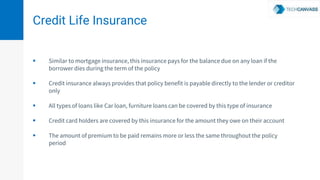
Credit Life Insurance
 Similar to mortgage insurance, this insurance pays for the balance due on any loan if the
borrower dies during the term of the policy
 Credit insurance always provides that policy benefit is payable directly to the lender or creditor
only
 All types of loans like Car loan, furniture loans can be covered by this type of insurance
 Credit card holders are covered by this insurance for the amount they owe on their account
 The amount of premium to be paid remains more or less the same throughout the policy
period
Family Income Coverage
 This policy provides the beneficiary the a stated monthly income benefit amout if the insured
dies during the policy period
 Monthly term benefits continue till the end of the policy term
 Beneficiary in such policies is generally the surviving spouse of the insured
 This type of insurance is generally taken on as a Rider to a Cash Value Life insurance policy
 A Rider is an endorsement to a policy that either expands or limits the benefits payable under a
policy
Increasing Term Life Insurance
 This type of a policy provides a death benefit that begins at one amount and increases by
some specified amount or percentage at stated intervals of the policy term
 Ex. A $100,000 face amount policy might increase by 5% on each policy anniversary
throughout the policy term
 Premiums for this type of policy increase with increase in the face amount
 This is generally purchased as a Rider to a life insurance policy to meet short term needs like
for providing for a child’s education
 It is a fairly uncommon policy and is generally not preferred
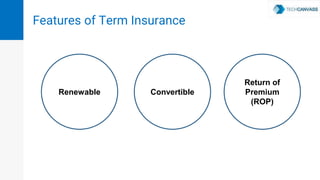
Features of Term Insurance
Renewable Convertible
Return of
Premium
(ROP)
Cash Value Life Insurance
Whole Life Insurance

Life insurance types v2

  • 1.
  • 2.
    Agenda Term Life Insurance Level Term Life Insurance  Decreasing Term Life Insurance  Increasing Term Life Insurance  Features of Term Life Insurance Cash Value and Endowment Insurance  Whole Life Insurance  Premium Payment Methods  Modified Whole Life Insurance  Whole Life Insurance covering more than one insured 2
  • 3.
  • 4.
    Term Life Insurance Death Benefit provided only when insured dies during the policy period defined in the policy  Specified period in policy is called Policy Term  Policy benefit Payable only if: 1. Insured dies during policy term 2. Policy is in force when insured dies  Policy term varies from policy to policy. Can be 1, 5, 10, 15, 30 years depending on the provider  Policy Anniversary is the anniversary of the date on which coverage under the under the policy became effective  Term to Age 65 policy: Provides coverage to an insured upto the age 65
  • 5.
    Example for Termto Age 65  Case Sara was born on November 1, 1975. She was issued a term to age 65 policy, effective October 1, 2009. Under the terms of the policy, coverage expires on the policy anniversary closest to her 65th birthday. Sara paid all renewal premiums as they were due.  Analysis Sara’s policy will expire on October 1, 2040, the anniversary date closest to her 65th birthday. If Sara’s policy instead provided that coverage expires on the policy anniversary immediately after her 65th birthday, her policy would expire on October 1, 2041.
  • 6.
    Term Life Insurance:Types/ Insurance Products
  • 7.
    Level Term LifeInsurance  Called as level face amount term life insurance or guaranteed level premium term insurance  Policy benefit remains the same over the term of the policy  Ex. Under a 10 year level term plan, that provides $100,000 of coverage, the insurer will agree to pay the entire $100, 000 if the insured dies anytime during the 10 year policy period while the policy is in force  The premium to be paid for the entire term of the policy remains the same throughout  Ex. For a 10 year level term insurance plan, if the initial premium is $500, then it remains the same till the 10th year of the policy
  • 8.
    Decreasing Term LifeInsurance  Policy Benefit decreases in amount over the term of the coverage  Benefit begins at a particular face amount and then decreases every year according to a stated method  Ex. For a policy with a $100,000 face amount for 10 years, every year the face amount decreases by $10,000. So in the second year, the face amount decreases to $90,000, 3rd year it decreases to $80,000 and so on  Premiums for this type of insurance remain more or less the same (but lesser than a level term policy of the same period)  This term insurance is sold to meet specific needs that decrease over time like mortgages, family expenses, etc.
  • 9.
    Mortgage Life Insurance Decreasing term insurance designed to provide a death benefit amount that corresponds to the decreasing amount owed on a mortgage loan  Term of this insurance is based on the term of the mortgage  Beneficiary is usually a family member of the insured and may use the money to pay off the mortgage in case of an eventuality of insured death  At times, the mortgage lender, might also name a condition to have his name as a beneficiary on the term insurance policy such that he gets the money owed by the insured under the mortgage (remaining loan amount) in case of the insured’s death  Insurers often offer a joint mortgage term life insurance that insures 2 people who have taken a loan together
  • 10.
    Credit Life Insurance Similar to mortgage insurance, this insurance pays for the balance due on any loan if the borrower dies during the term of the policy  Credit insurance always provides that policy benefit is payable directly to the lender or creditor only  All types of loans like Car loan, furniture loans can be covered by this type of insurance  Credit card holders are covered by this insurance for the amount they owe on their account  The amount of premium to be paid remains more or less the same throughout the policy period
  • 11.
    Family Income Coverage This policy provides the beneficiary the a stated monthly income benefit amout if the insured dies during the policy period  Monthly term benefits continue till the end of the policy term  Beneficiary in such policies is generally the surviving spouse of the insured  This type of insurance is generally taken on as a Rider to a Cash Value Life insurance policy  A Rider is an endorsement to a policy that either expands or limits the benefits payable under a policy
  • 12.
    Increasing Term LifeInsurance  This type of a policy provides a death benefit that begins at one amount and increases by some specified amount or percentage at stated intervals of the policy term  Ex. A $100,000 face amount policy might increase by 5% on each policy anniversary throughout the policy term  Premiums for this type of policy increase with increase in the face amount  This is generally purchased as a Rider to a life insurance policy to meet short term needs like for providing for a child’s education  It is a fairly uncommon policy and is generally not preferred
  • 13.
    Features of TermInsurance Renewable Convertible Return of Premium (ROP)
  • 14.
    Cash Value LifeInsurance
  • 15.