Downloaded 226 times




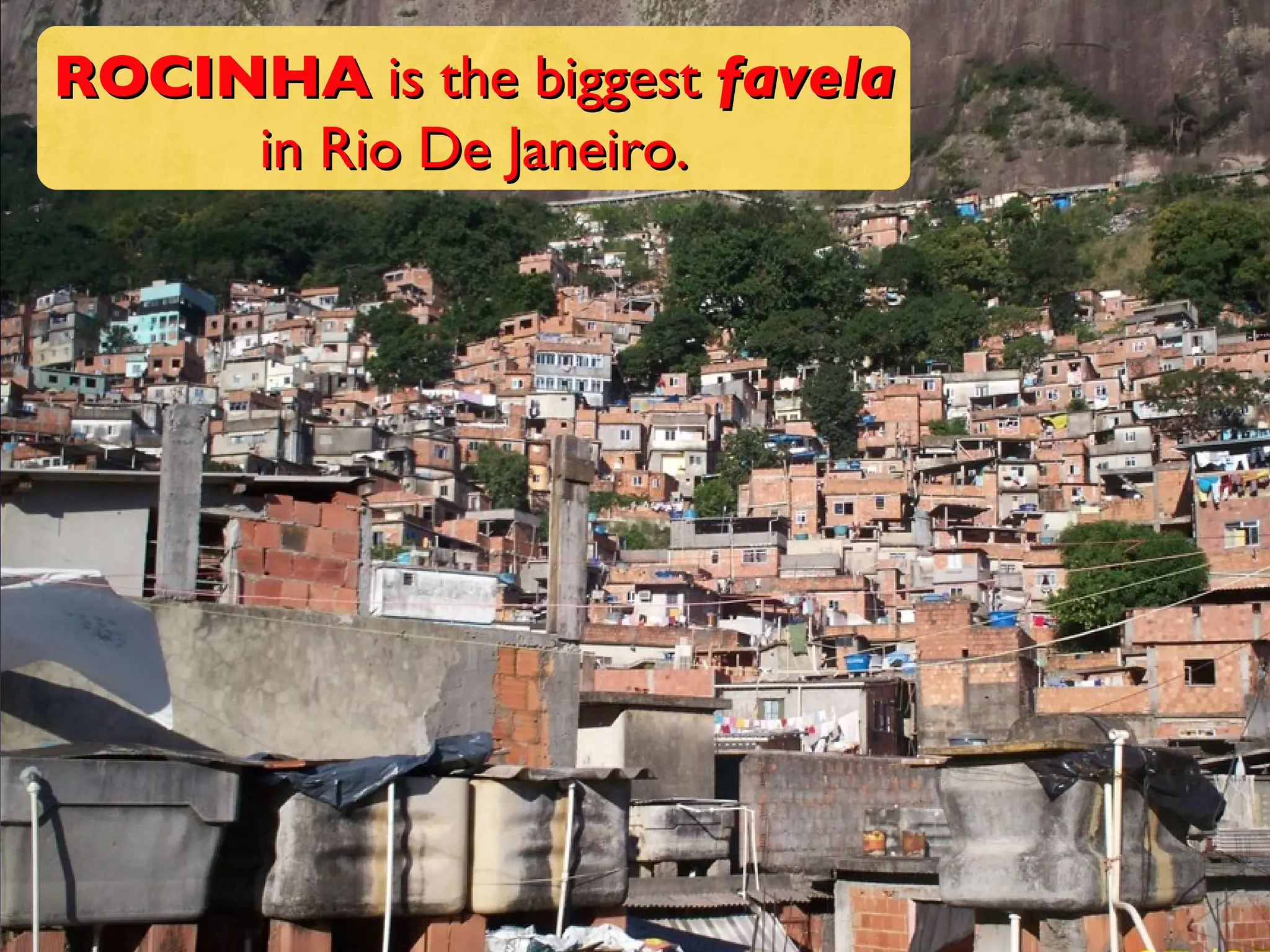


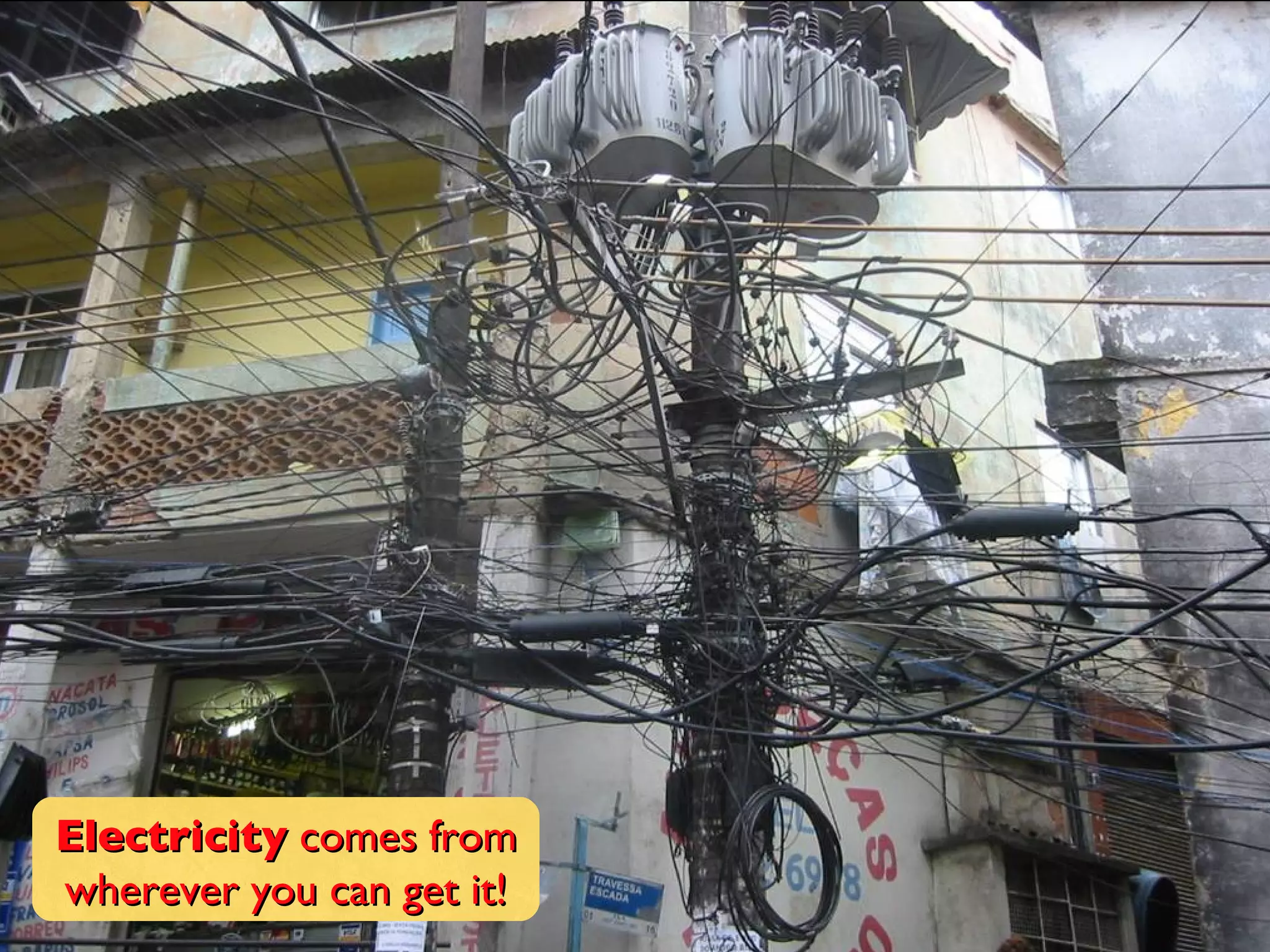

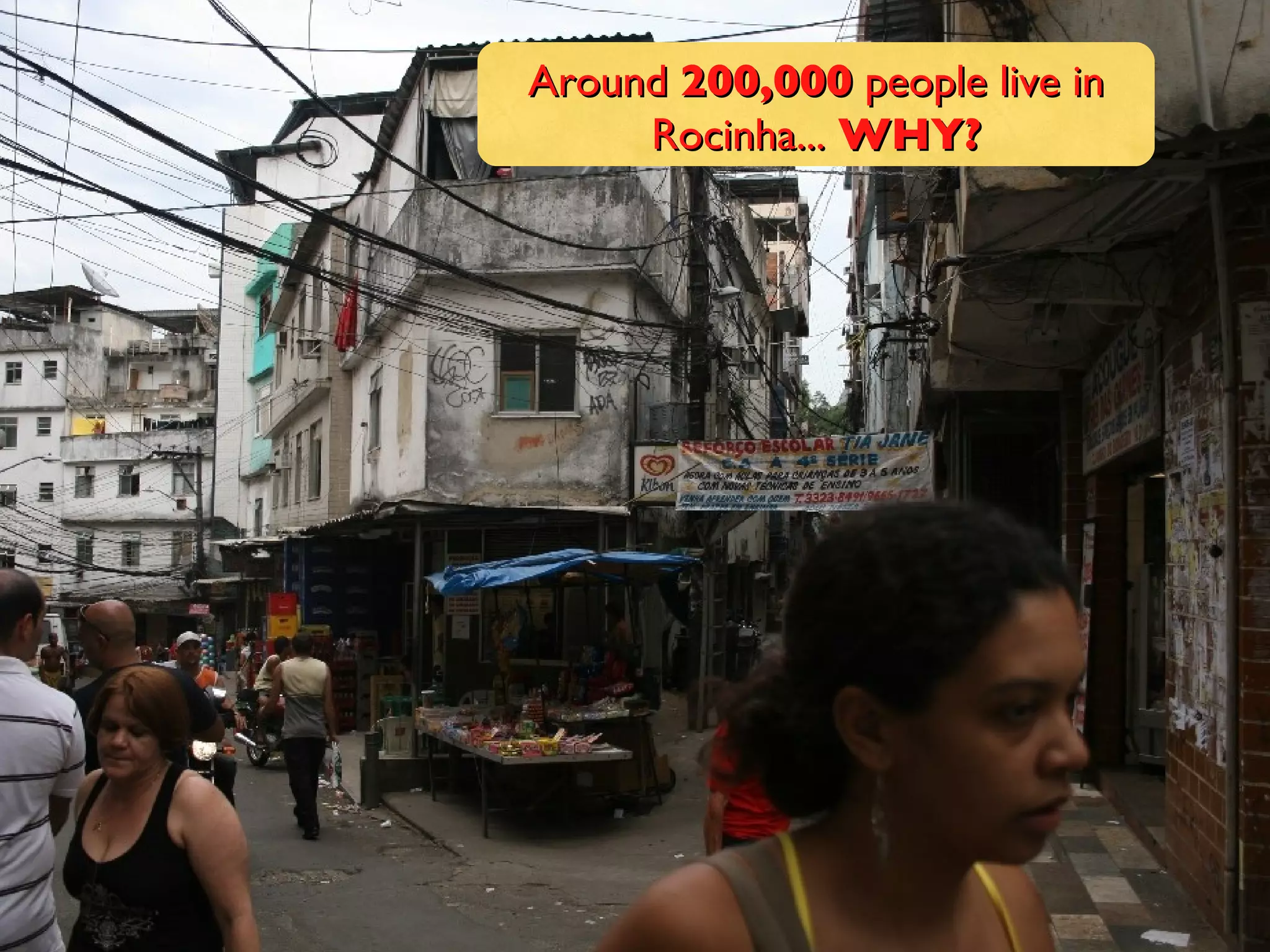
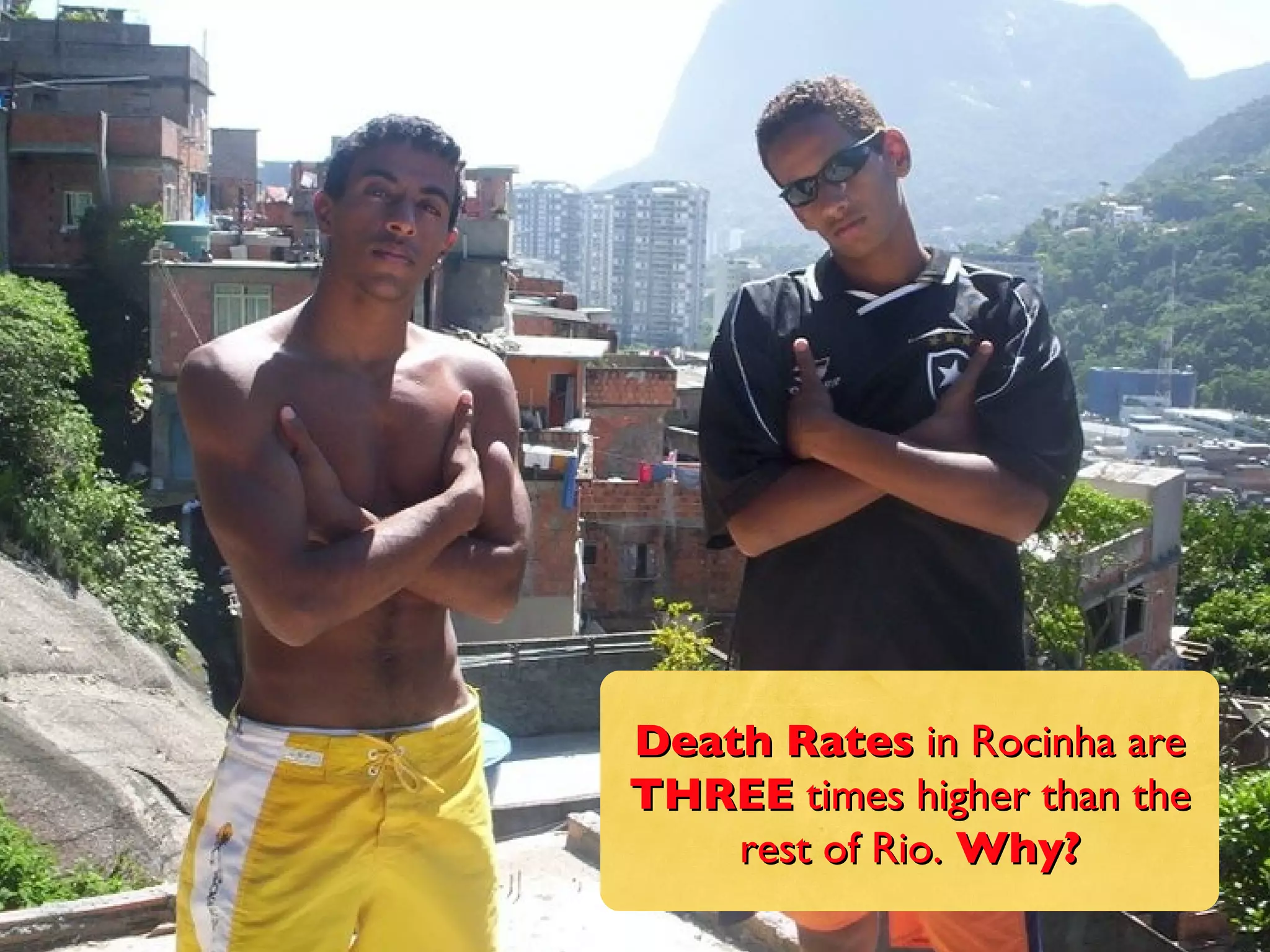


The document discusses life in favelas, or shanty towns, using Rocinha in Rio de Janeiro, Brazil as an example. Rocinha is the largest favela in Rio and all of South America, with around 200,000 people living densely packed together. Infrastructure is informal, with electricity sourced unpredictably wherever possible. Death rates are three times higher in Rocinha than the rest of Rio. The document poses questions about what living conditions and work are like in Rocinha, whether people can enjoy living there, and if tourism could help improve conditions.


