Lesson from MESAS: Monitoring and
Evaluating Scotland's Alcohol Strategy
(MESAS)
North South Alcohol Policy Advisory Group.
22 May 2019
Clare Beeston. Public Health Intelligence Principal
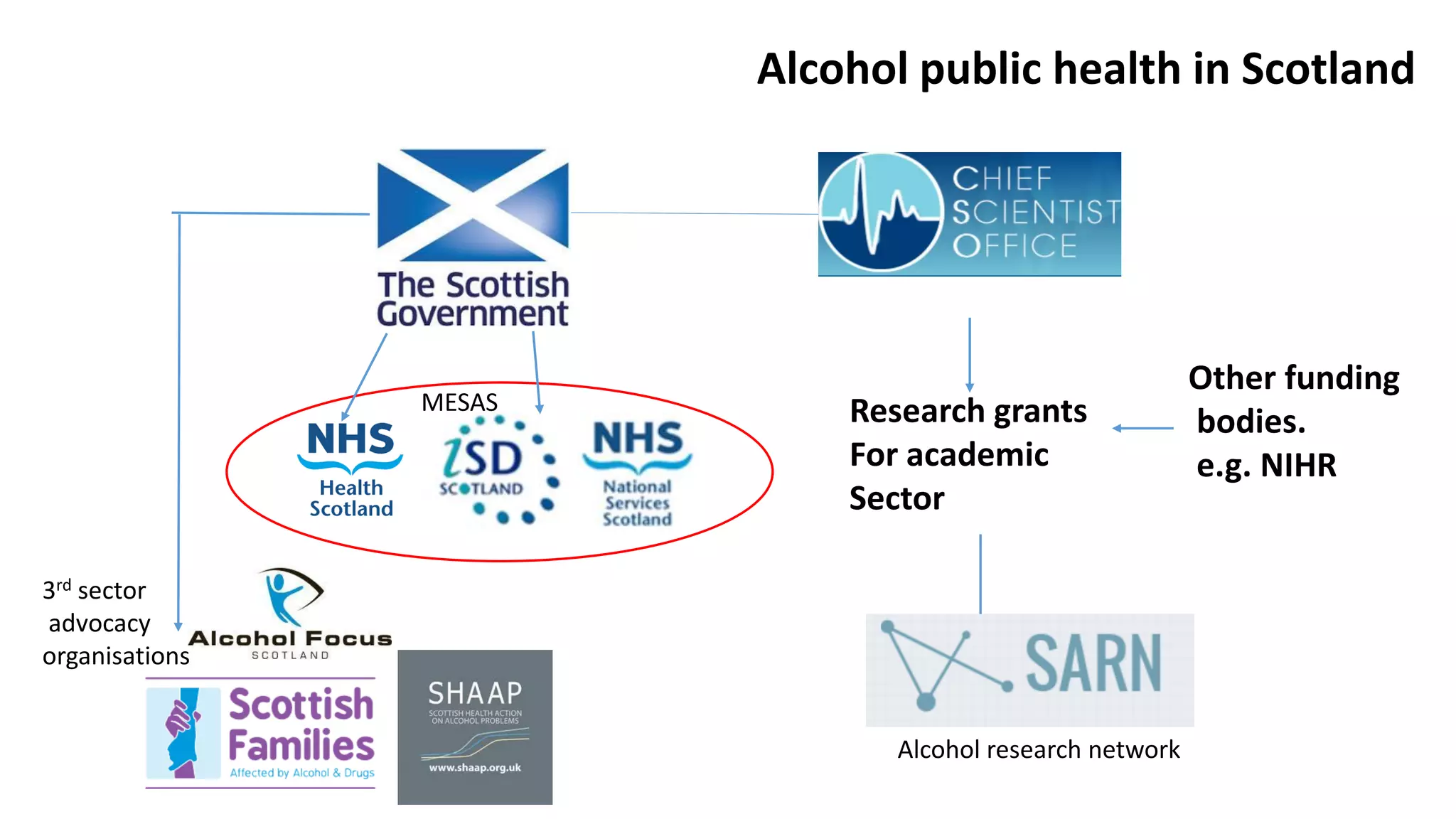
Research grants
For academic
Sector
Other funding
bodies.
e.g. NIHR
Alcohol public health in Scotland
Alcohol research network
3rd sector
advocacy
organisations
MESAS
Evidence-informed, outcome focused.
1. Reduced consumption. MUP; multi-buy
discount ban
2. Supporting families and communities.
Support ↓ drink driving BAC
3. Positive attitudes, positive choices.
Marketing and display restrictions
4. Improved treatment and support. Brief
Interventions; investment in services
Commitment to evaluation
Minimum Unit Pricing
• Sunset clause – parliamentary vote
before 31 April 2024 on MUP’s future
• Review clause – report on MUP’s
impact before then
• Impact on producers, licence holders
and 5 licensing objectives.
• By age, gender, socio-economic and
drinking status where possible.
• Primary purpose of our evaluation
The MESAS approach
• Theory-based – assessing contribution
• Evaluability assessment process to determine appropriate
evaluation studies and monitoring indicators
• Feasible, robust, proportionate to value of information
• Portfolio of connected, quantitative and qualitative
studies to evidence both change and mechanisms.
• Individual study and annual reports
• Interrogation and interpretation of monitoring data
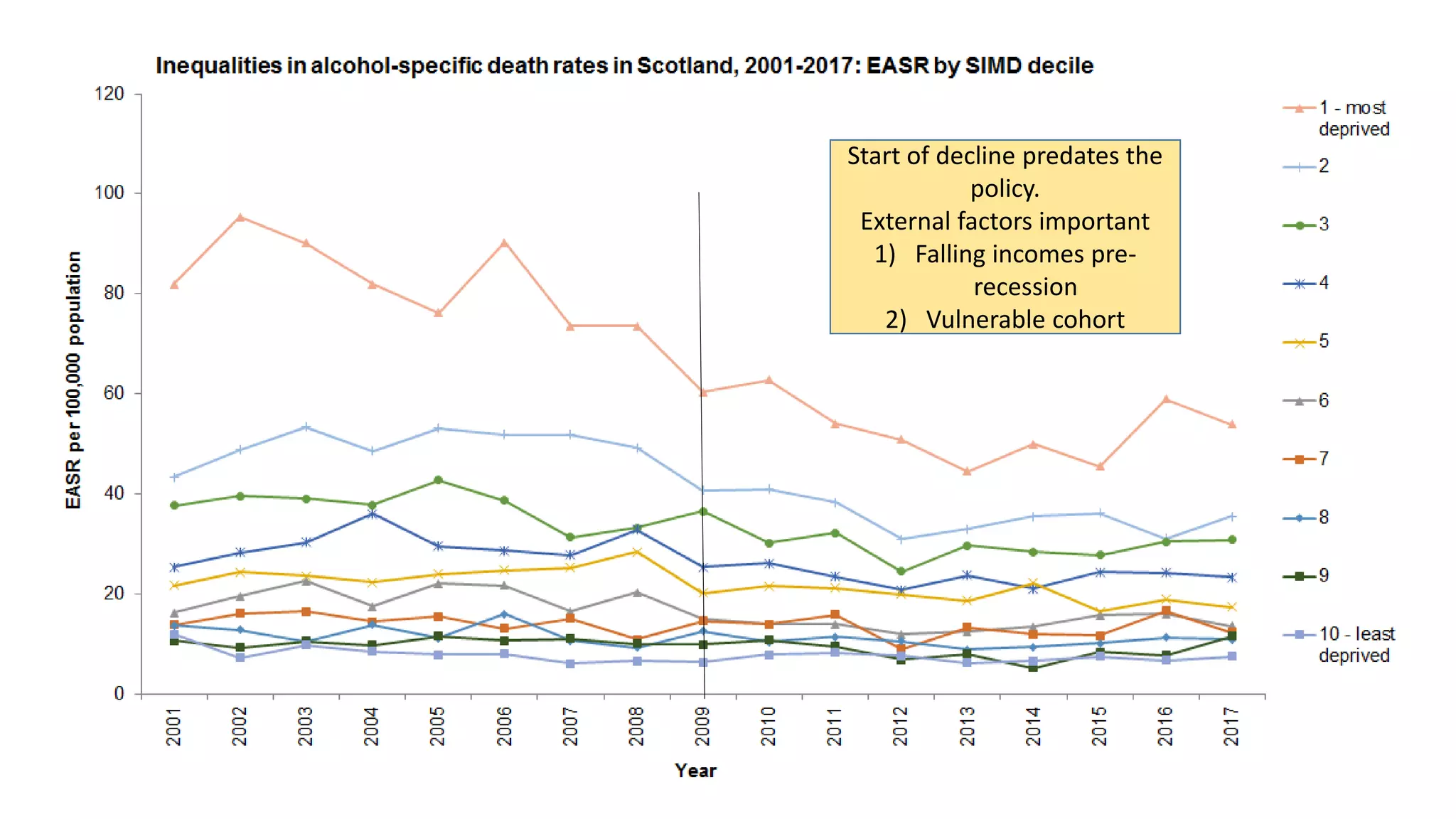
Start of decline predates the
policy.
External factors important
1) Falling incomes pre-
recession
2) Vulnerable cohort
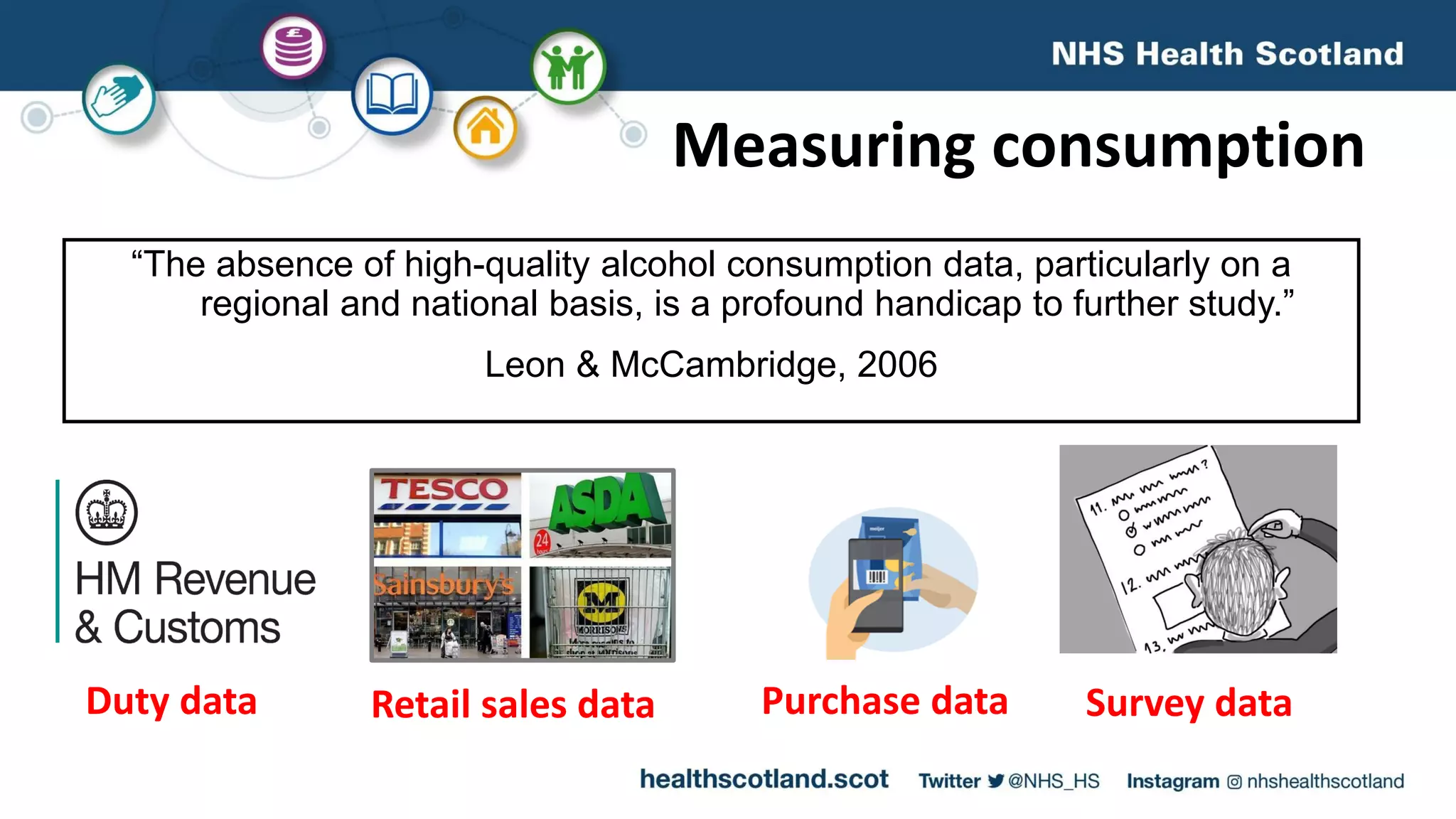
Measuring consumption
“The absence of high-quality alcohol consumption data, particularly on a
regional and national basis, is a profound handicap to further study.”
Leon & McCambridge, 2006
Duty data Retail sales data Purchase data Survey data
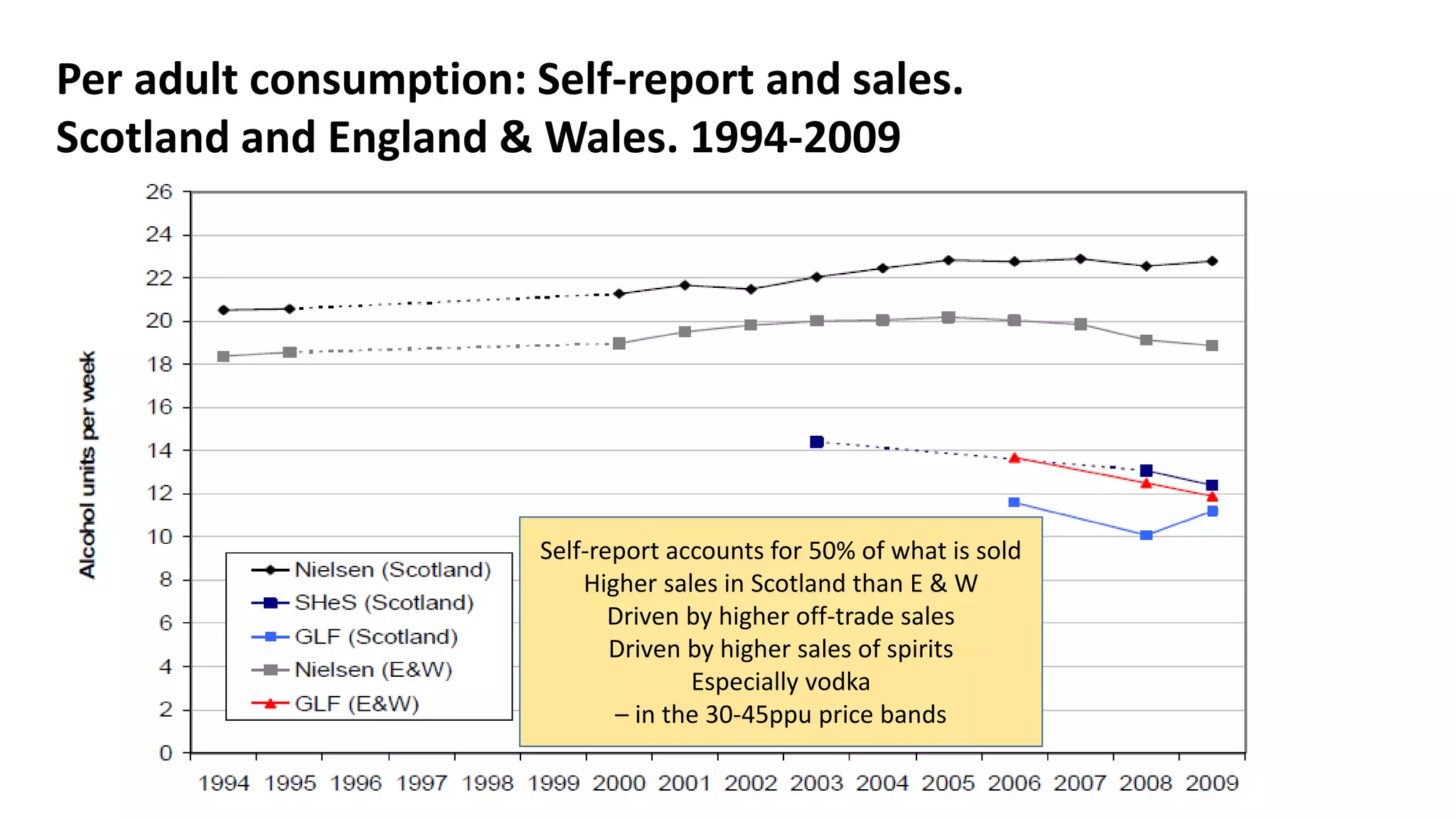
Per adult consumption: Self-report and sales.
Scotland and England & Wales. 1994-2009
Self-report accounts for 50% of what is sold
Higher sales in Scotland than E & W
Driven by higher off-trade sales
Driven by higher sales of spirits
Especially vodka
– in the 30-45ppu price bands
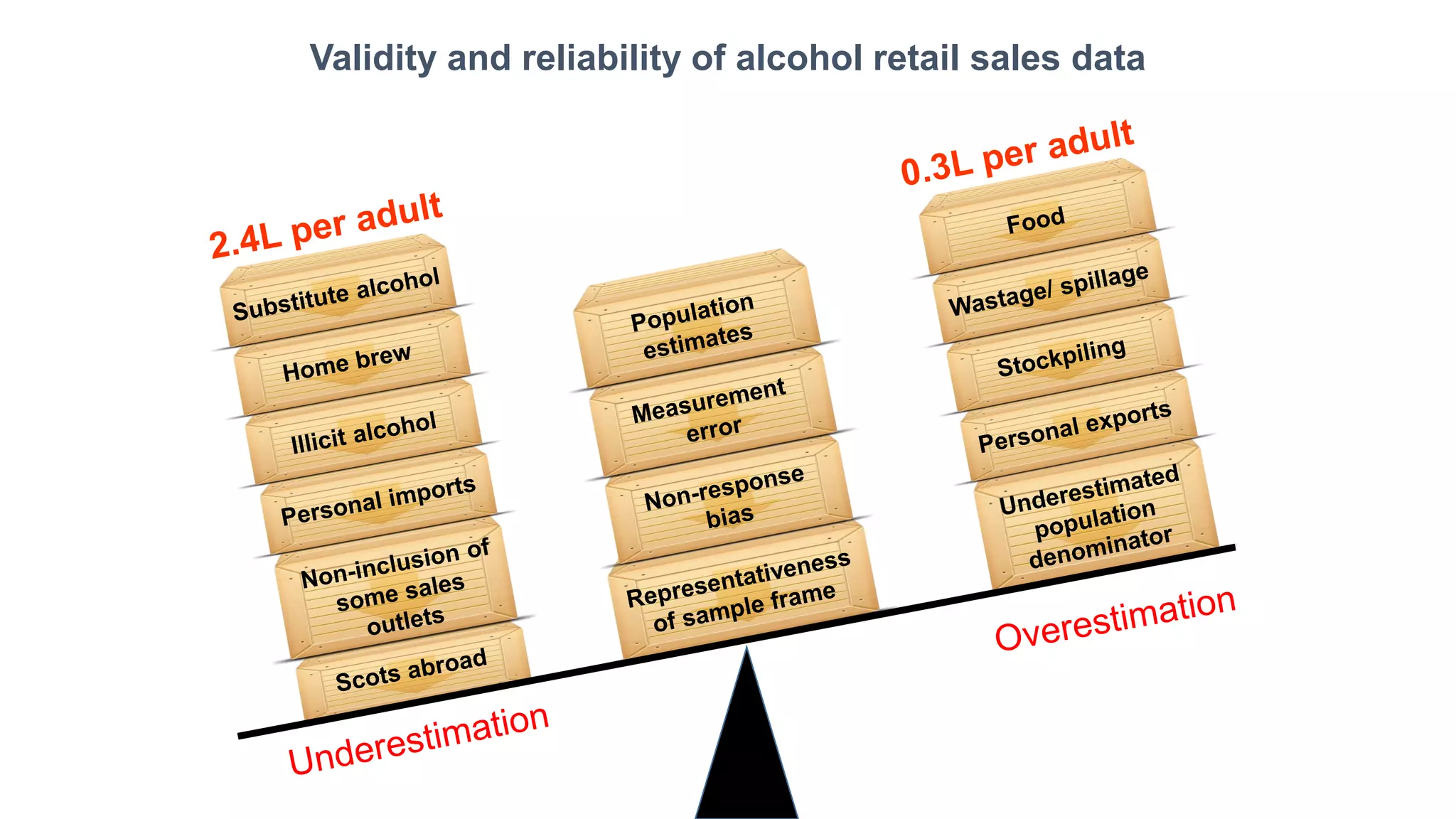
Validity and reliability of alcohol retail sales data
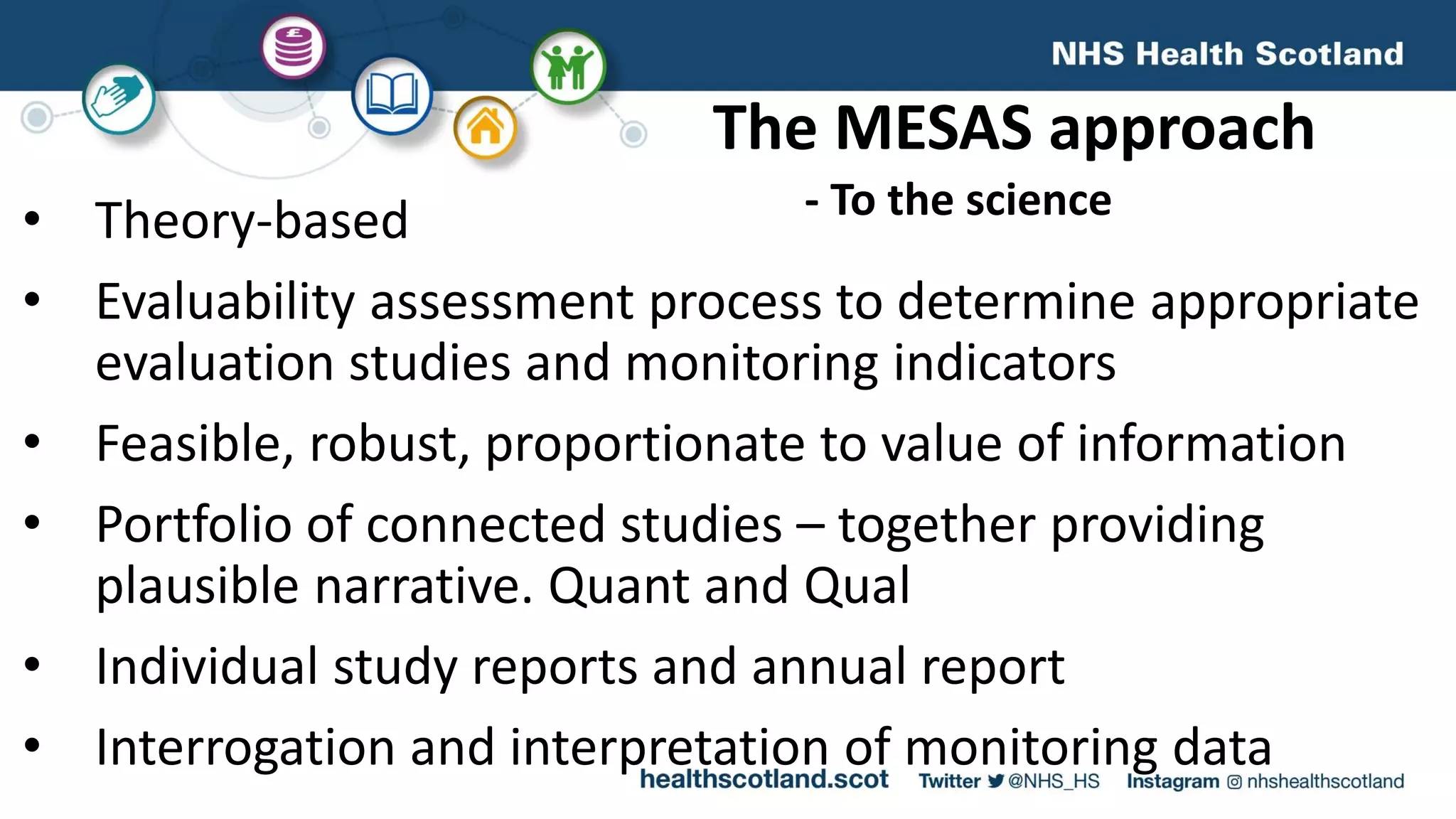
The MESAS approach
• Theory-based
• Evaluability assessment process to determine appropriate
evaluation studies and monitoring indicators
• Feasible, robust, proportionate to value of information
• Portfolio of connected studies – together providing
plausible narrative. Quant and Qual
• Individual study reports and annual report
• Interrogation and interpretation of monitoring data
- To the science
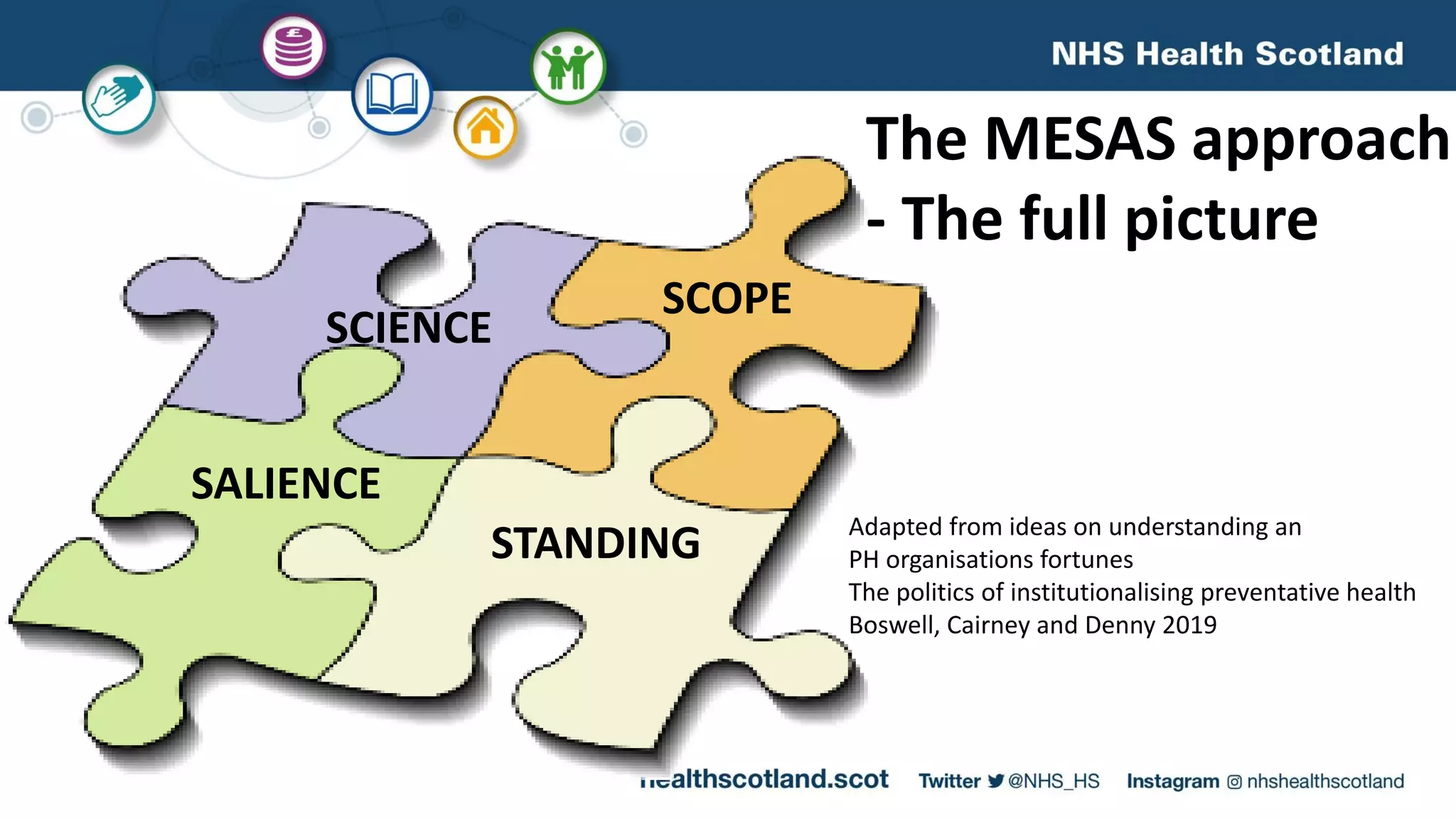
SCIENCE
SCOPE
SALIENCE
STANDING
The MESAS approach
- The full picture
Adapted from ideas on understanding an
PH organisations fortunes
The politics of institutionalising preventative health
Boswell, Cairney and Denny 2019
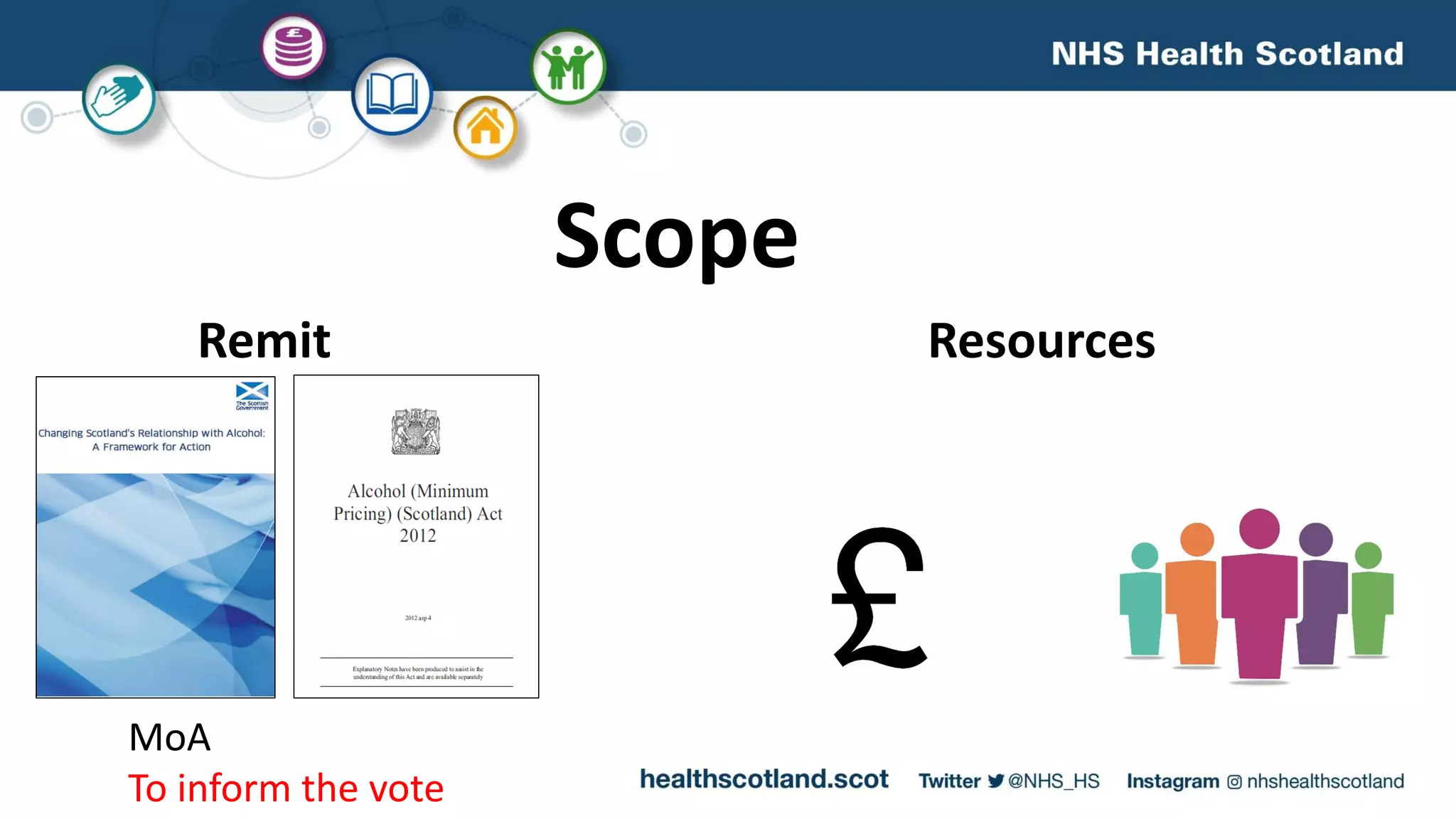
Scope
Remit Resources
MoA
To inform the vote
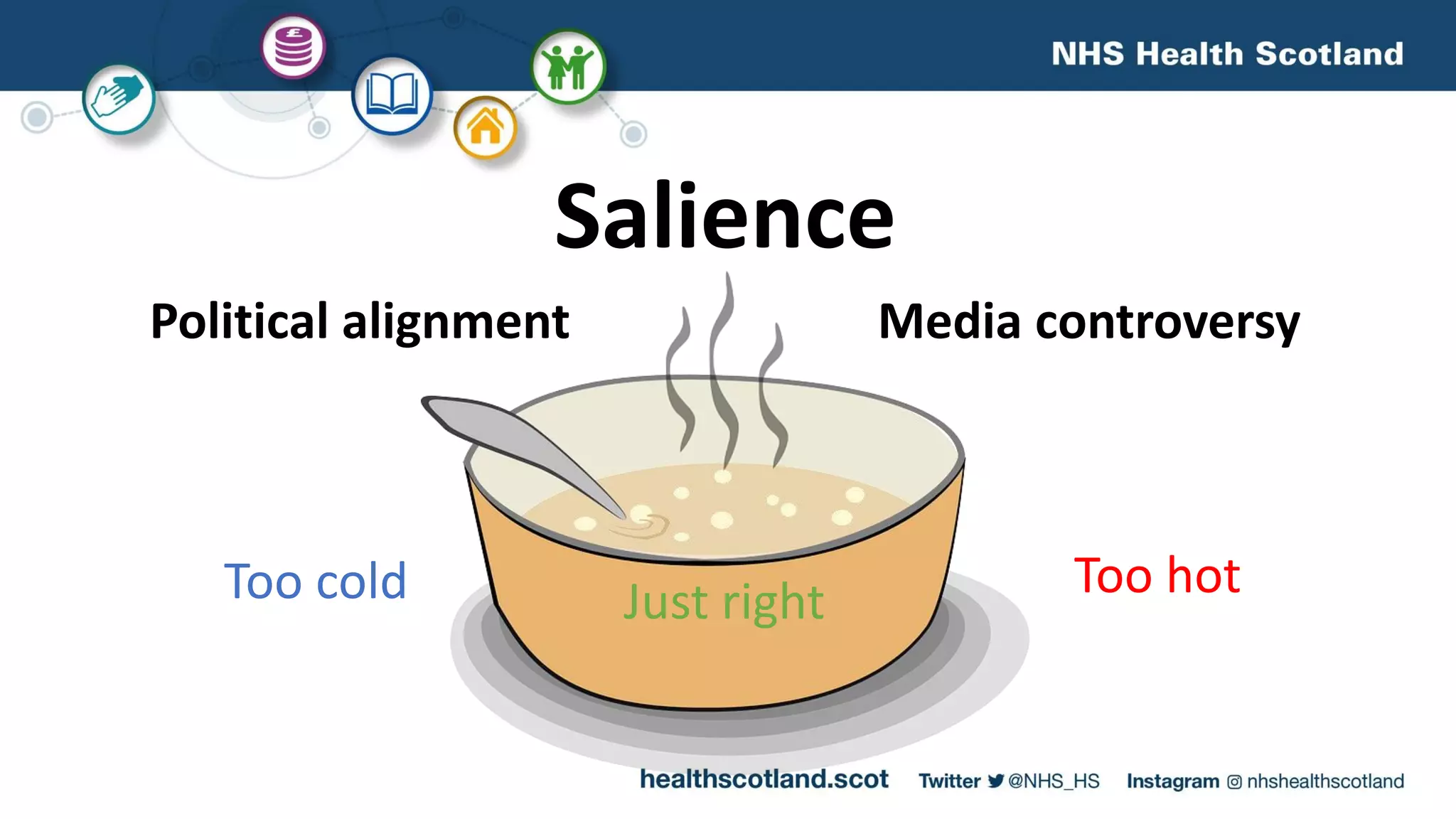
Salience
Political alignment Media controversy
Too cold Too hotJust right
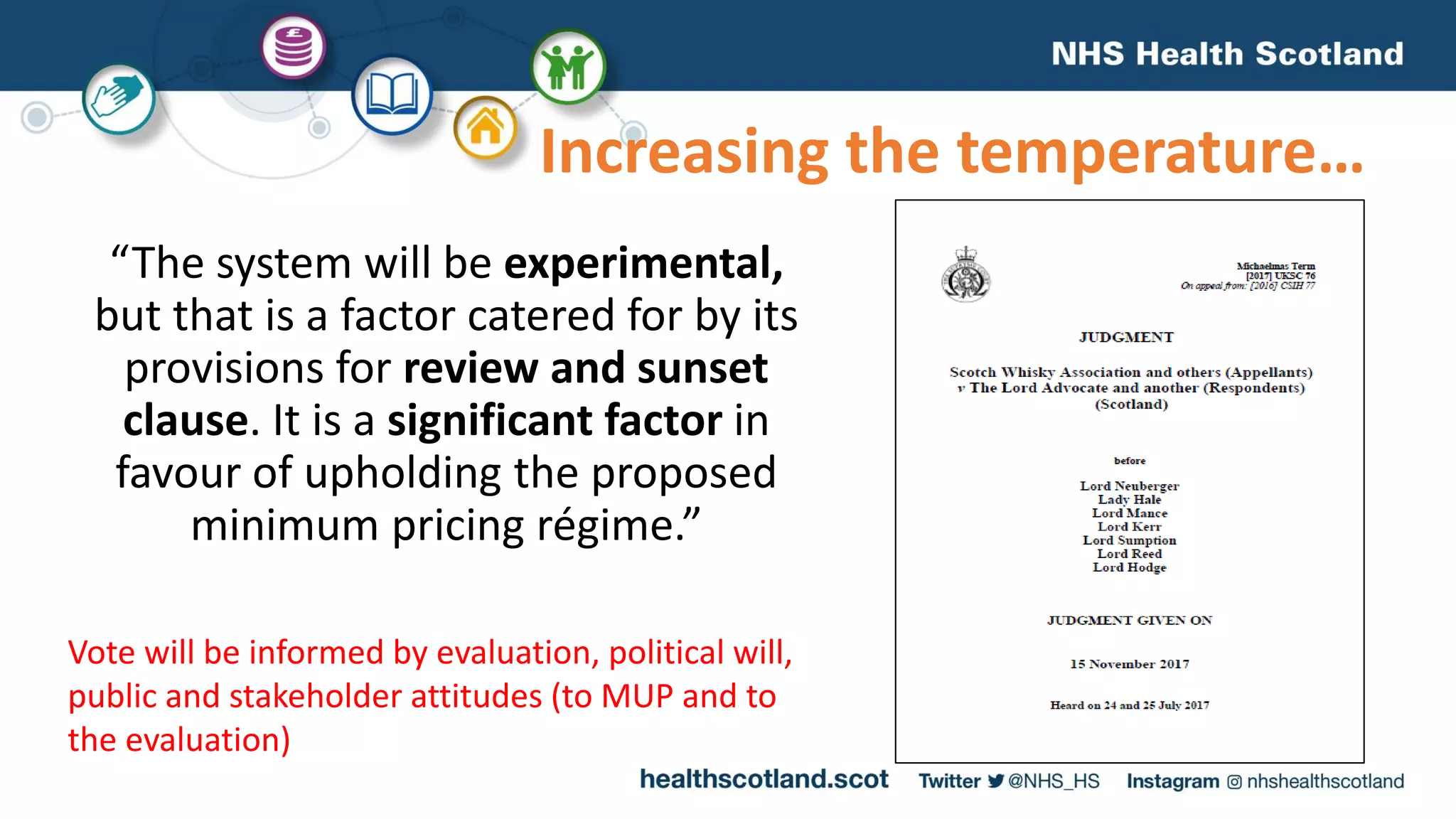
“The system will be experimental,
but that is a factor catered for by its
provisions for review and sunset
clause. It is a significant factor in
favour of upholding the proposed
minimum pricing régime.”
Increasing the temperature…
Vote will be informed by evaluation, political will,
public and stakeholder attitudes (to MUP and to
the evaluation)
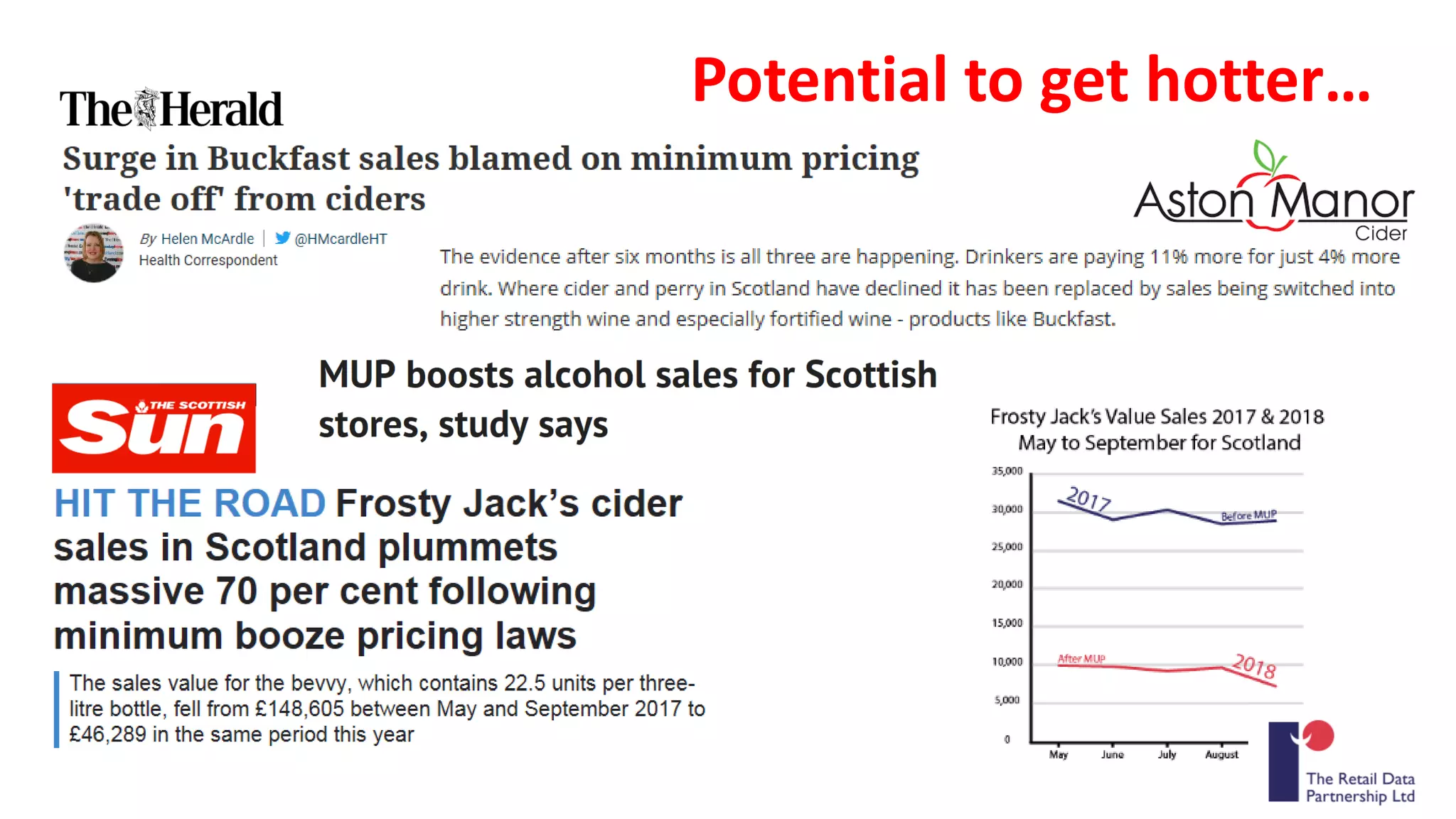
Potential to get hotter…
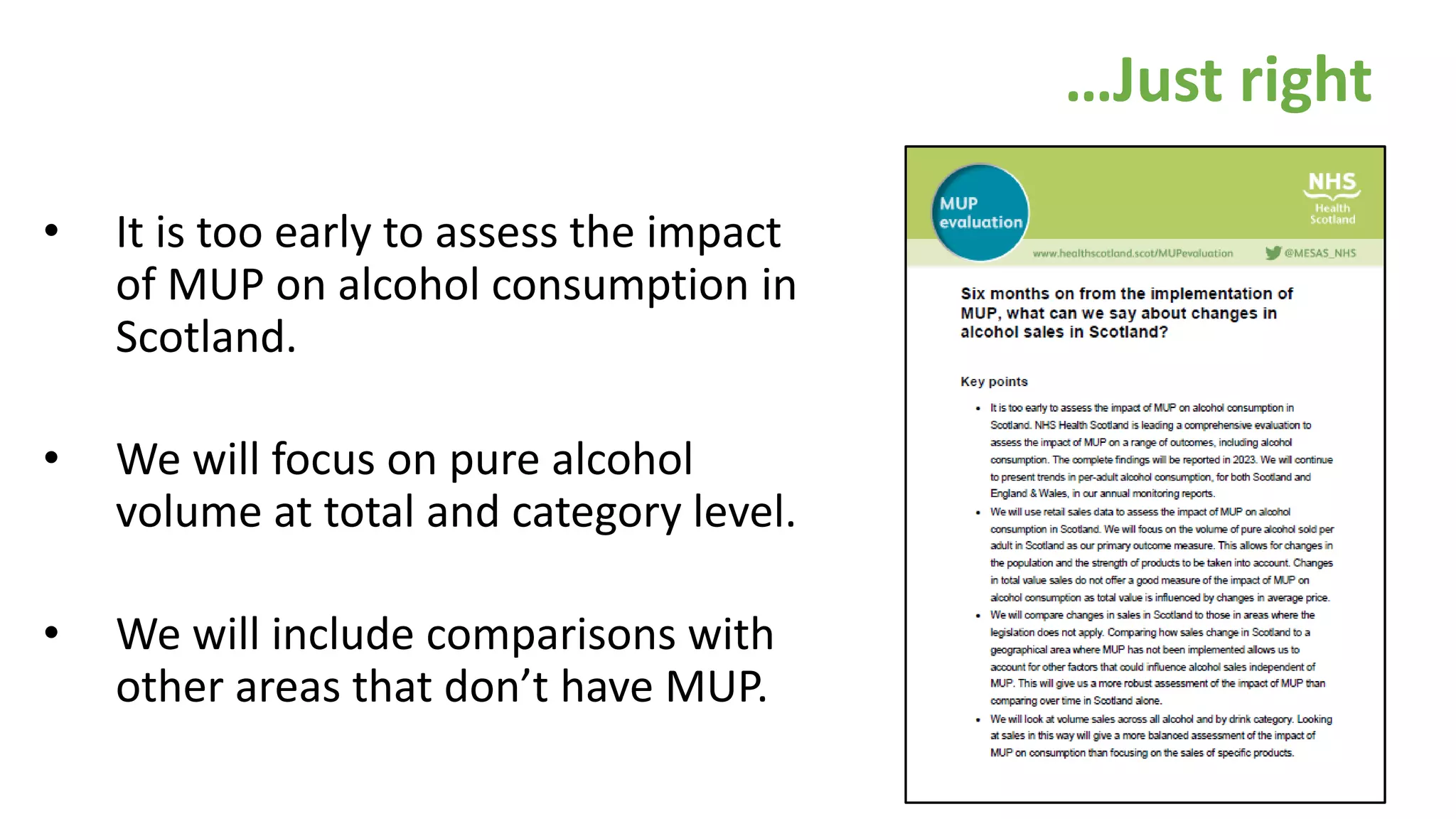
• It is too early to assess the impact
of MUP on alcohol consumption in
Scotland.
• We will focus on pure alcohol
volume at total and category level.
• We will include comparisons with
other areas that don’t have MUP.
…Just right
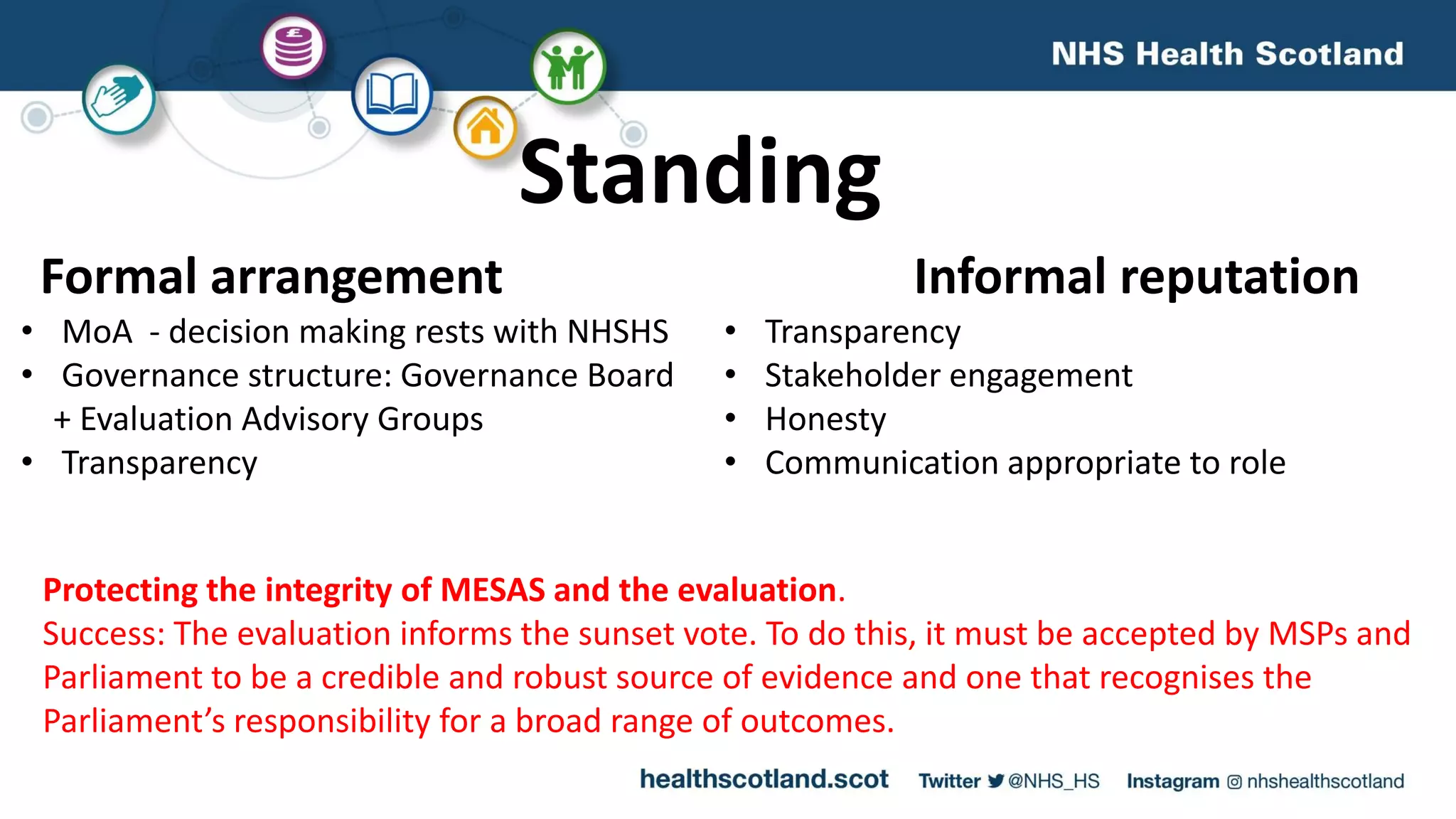
Standing
Formal arrangement Informal reputation
• MoA - decision making rests with NHSHS
• Governance structure: Governance Board
+ Evaluation Advisory Groups
• Transparency
• Transparency
• Stakeholder engagement
• Honesty
• Communication appropriate to role
Protecting the integrity of MESAS and the evaluation.
Success: The evaluation informs the sunset vote. To do this, it must be accepted by MSPs and
Parliament to be a credible and robust source of evidence and one that recognises the
Parliament’s responsibility for a broad range of outcomes.
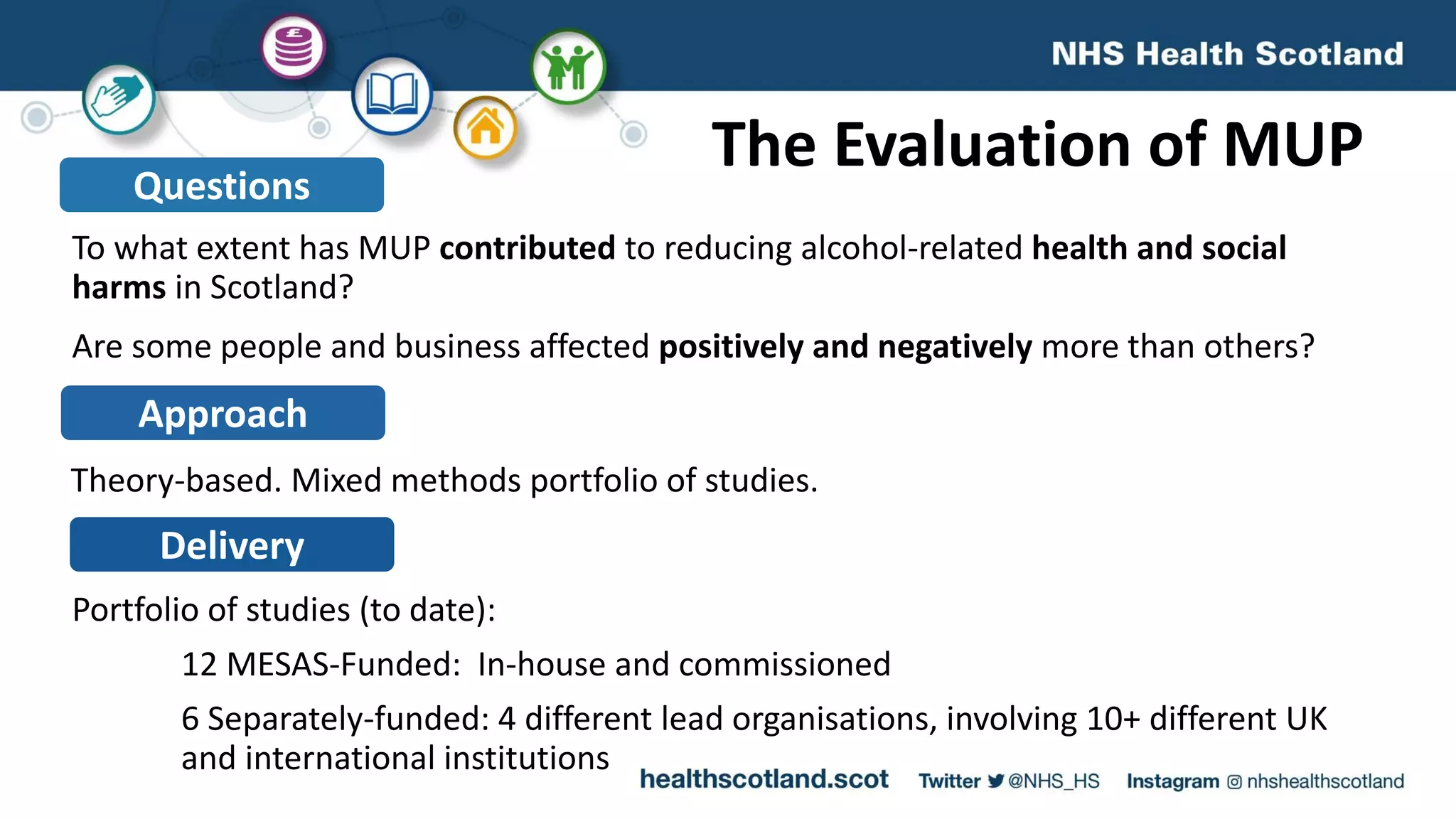
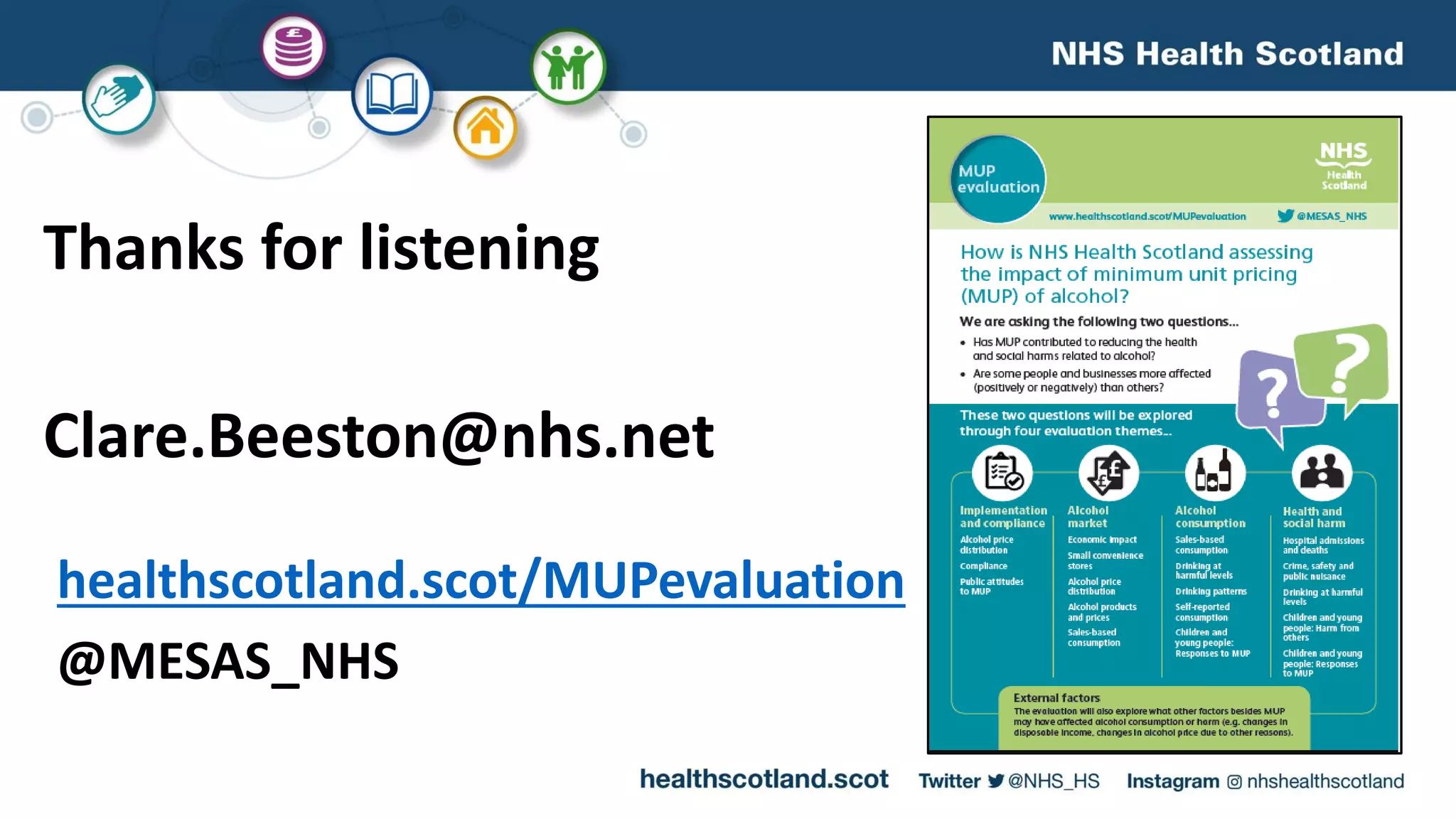
To what extent has MUP contributed to reducing alcohol-related health and social
harms in Scotland?
Are some people and business affected positively and negatively more than others?
The Evaluation of MUPQuestions
Approach
Theory-based. Mixed methods portfolio of studies.
Delivery
Portfolio of studies (to date):
12 MESAS-Funded: In-house and commissioned
6 Separately-funded: 4 different lead organisations, involving 10+ different UK
and international institutions
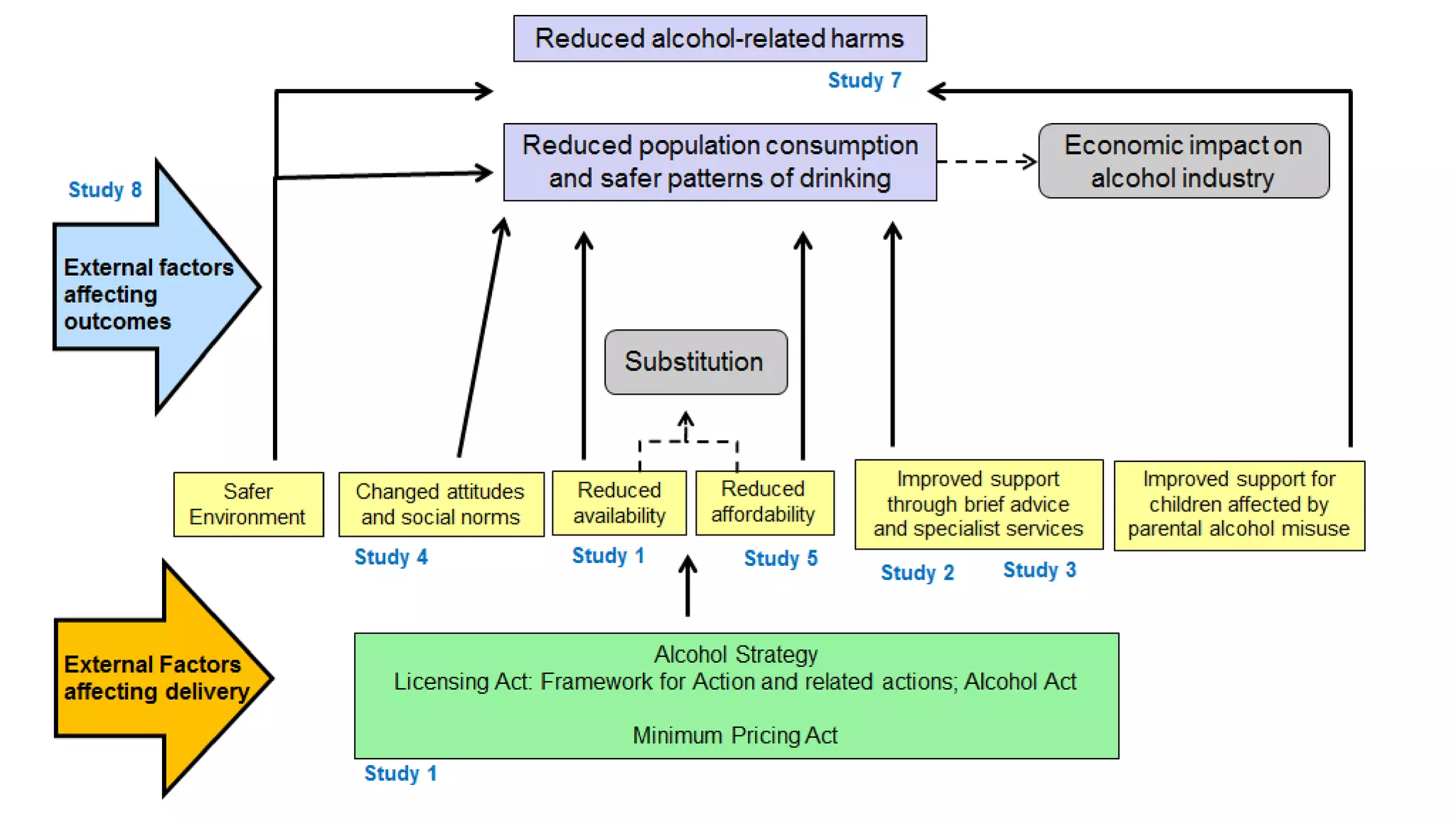
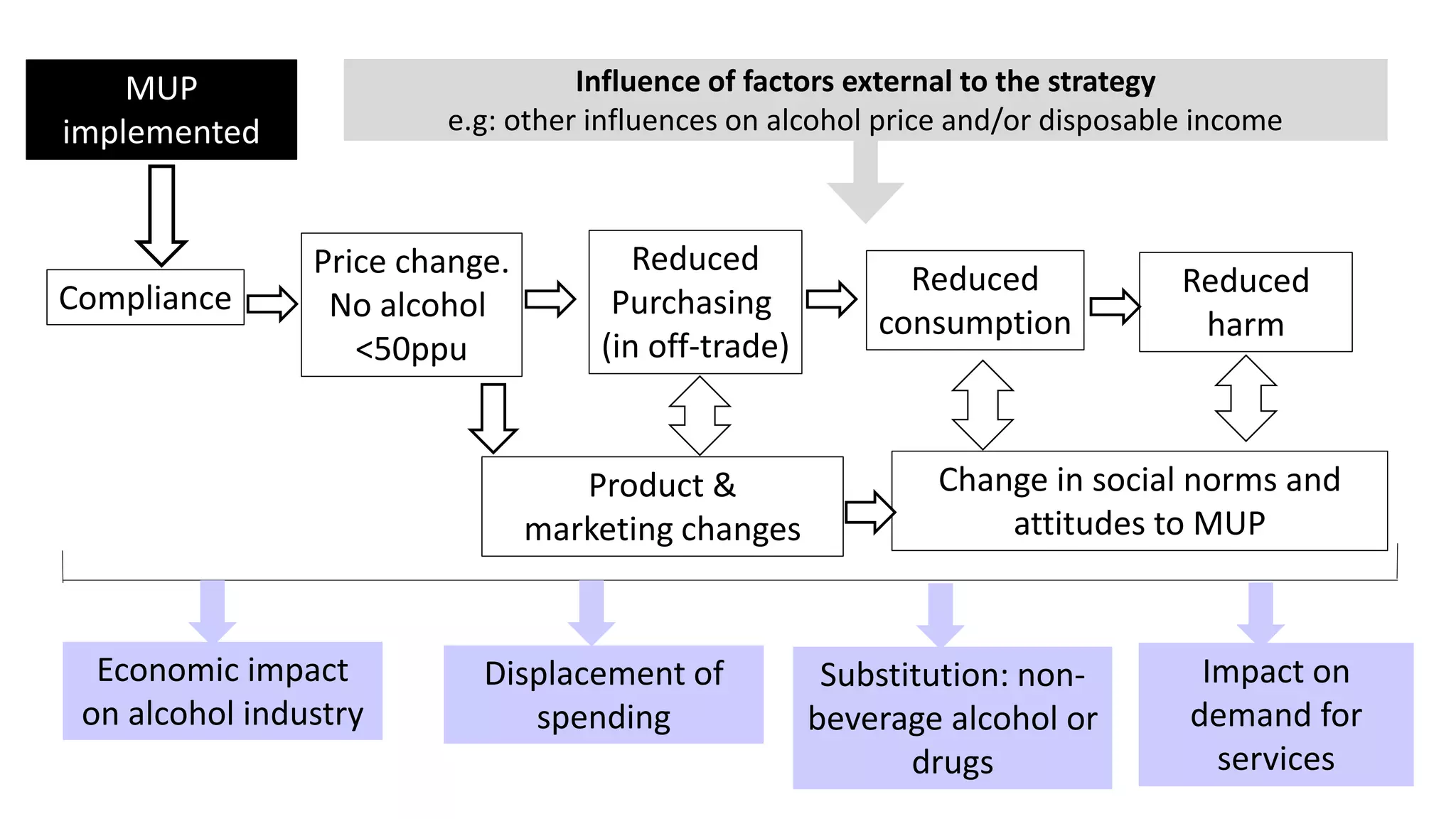
Influence of factors external to the strategy
e.g: other influences on alcohol price and/or disposable income
MUP
implemented
Compliance
Price change.
No alcohol
<50ppu
Reduced
Purchasing
(in off-trade)
Reduced
consumption
Reduced
harm
Product &
marketing changes
Change in social norms and
attitudes to MUP
Economic impact
on alcohol industry
Displacement of
spending
Substitution: non-
beverage alcohol or
drugs
Impact on
demand for
services
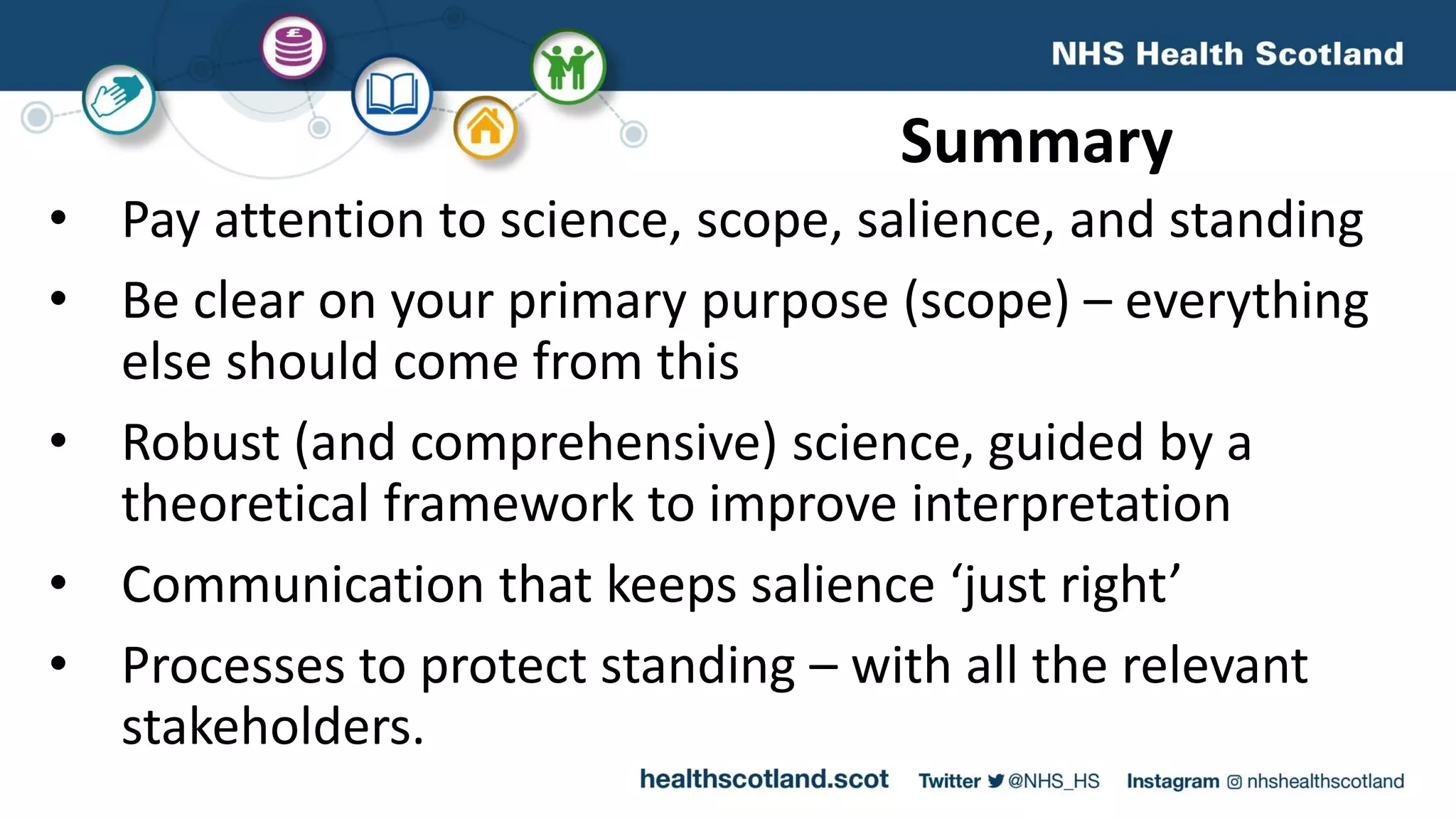
Summary
• Pay attention to science, scope, salience, and standing
• Be clear on your primary purpose (scope) – everything
else should come from this
• Robust (and comprehensive) science, guided by a
theoretical framework to improve interpretation
• Communication that keeps salience ‘just right’
• Processes to protect standing – with all the relevant
stakeholders.
Thanks for listening
Clare.Beeston@nhs.net
healthscotland.scot/MUPevaluation
@MESAS_NHS

Lessons from MESAS: Monitoring and Evaluating Scotland's Alcohol Strategy (MESAS) - Clare beeston

  • 1.
    Lesson from MESAS:Monitoring and Evaluating Scotland's Alcohol Strategy (MESAS) North South Alcohol Policy Advisory Group. 22 May 2019 Clare Beeston. Public Health Intelligence Principal
  • 2.
    Research grants For academic Sector Otherfunding bodies. e.g. NIHR Alcohol public health in Scotland Alcohol research network 3rd sector advocacy organisations MESAS
  • 3.
    Evidence-informed, outcome focused. 1.Reduced consumption. MUP; multi-buy discount ban 2. Supporting families and communities. Support ↓ drink driving BAC 3. Positive attitudes, positive choices. Marketing and display restrictions 4. Improved treatment and support. Brief Interventions; investment in services Commitment to evaluation
  • 4.
    Minimum Unit Pricing •Sunset clause – parliamentary vote before 31 April 2024 on MUP’s future • Review clause – report on MUP’s impact before then • Impact on producers, licence holders and 5 licensing objectives. • By age, gender, socio-economic and drinking status where possible. • Primary purpose of our evaluation
  • 5.
    The MESAS approach •Theory-based – assessing contribution • Evaluability assessment process to determine appropriate evaluation studies and monitoring indicators • Feasible, robust, proportionate to value of information • Portfolio of connected, quantitative and qualitative studies to evidence both change and mechanisms. • Individual study and annual reports • Interrogation and interpretation of monitoring data
  • 7.
    Start of declinepredates the policy. External factors important 1) Falling incomes pre- recession 2) Vulnerable cohort
  • 8.
    Measuring consumption “The absenceof high-quality alcohol consumption data, particularly on a regional and national basis, is a profound handicap to further study.” Leon & McCambridge, 2006 Duty data Retail sales data Purchase data Survey data
  • 9.
    Per adult consumption:Self-report and sales. Scotland and England & Wales. 1994-2009 Self-report accounts for 50% of what is sold Higher sales in Scotland than E & W Driven by higher off-trade sales Driven by higher sales of spirits Especially vodka – in the 30-45ppu price bands
  • 10.
    Validity and reliabilityof alcohol retail sales data
  • 11.
    The MESAS approach •Theory-based • Evaluability assessment process to determine appropriate evaluation studies and monitoring indicators • Feasible, robust, proportionate to value of information • Portfolio of connected studies – together providing plausible narrative. Quant and Qual • Individual study reports and annual report • Interrogation and interpretation of monitoring data - To the science
  • 12.
    SCIENCE SCOPE SALIENCE STANDING The MESAS approach -The full picture Adapted from ideas on understanding an PH organisations fortunes The politics of institutionalising preventative health Boswell, Cairney and Denny 2019
  • 13.
  • 14.
    Salience Political alignment Mediacontroversy Too cold Too hotJust right
  • 16.
    “The system willbe experimental, but that is a factor catered for by its provisions for review and sunset clause. It is a significant factor in favour of upholding the proposed minimum pricing régime.” Increasing the temperature… Vote will be informed by evaluation, political will, public and stakeholder attitudes (to MUP and to the evaluation)
  • 17.
  • 18.
    • It istoo early to assess the impact of MUP on alcohol consumption in Scotland. • We will focus on pure alcohol volume at total and category level. • We will include comparisons with other areas that don’t have MUP. …Just right
  • 19.
    Standing Formal arrangement Informalreputation • MoA - decision making rests with NHSHS • Governance structure: Governance Board + Evaluation Advisory Groups • Transparency • Transparency • Stakeholder engagement • Honesty • Communication appropriate to role Protecting the integrity of MESAS and the evaluation. Success: The evaluation informs the sunset vote. To do this, it must be accepted by MSPs and Parliament to be a credible and robust source of evidence and one that recognises the Parliament’s responsibility for a broad range of outcomes.
  • 20.
    To what extenthas MUP contributed to reducing alcohol-related health and social harms in Scotland? Are some people and business affected positively and negatively more than others? The Evaluation of MUPQuestions Approach Theory-based. Mixed methods portfolio of studies. Delivery Portfolio of studies (to date): 12 MESAS-Funded: In-house and commissioned 6 Separately-funded: 4 different lead organisations, involving 10+ different UK and international institutions
  • 21.
    Influence of factorsexternal to the strategy e.g: other influences on alcohol price and/or disposable income MUP implemented Compliance Price change. No alcohol <50ppu Reduced Purchasing (in off-trade) Reduced consumption Reduced harm Product & marketing changes Change in social norms and attitudes to MUP Economic impact on alcohol industry Displacement of spending Substitution: non- beverage alcohol or drugs Impact on demand for services
  • 22.
    Summary • Pay attentionto science, scope, salience, and standing • Be clear on your primary purpose (scope) – everything else should come from this • Robust (and comprehensive) science, guided by a theoretical framework to improve interpretation • Communication that keeps salience ‘just right’ • Processes to protect standing – with all the relevant stakeholders.
  • 23.