ICT in English Teaching – Prof. Ledesma, Paula
Students: Cáceres Laura, Fernádez Patricia and Palladino Luciana.

                             PROJECT WORK

Topic Environment

Final task

Ss will work in groups of 4 and make a poster with pieces of advice so that people in the school and the
neighbourhood start looking after the environment. The posters will then be posted in the school and
around the neighbourhood.


Lesson 1 (1 period)
Level Elementary
Course: 3rd year at secondary school
Subtopic Environmental problems

Warmer:
Brainstorming of ideas on environmental problems. T will ask Ss to look at the pictures posted on BB and tell me
what they are related to. The pictures are from the Teacher’s magazine. They show images related to
environmental problems such as water, deforestation, gases from cars, rubbish in rivers, and nuclear plants.

Web:

Ss will link on the link below to start working on the webquest.
www.zunal.com/webquest.php?w=111460

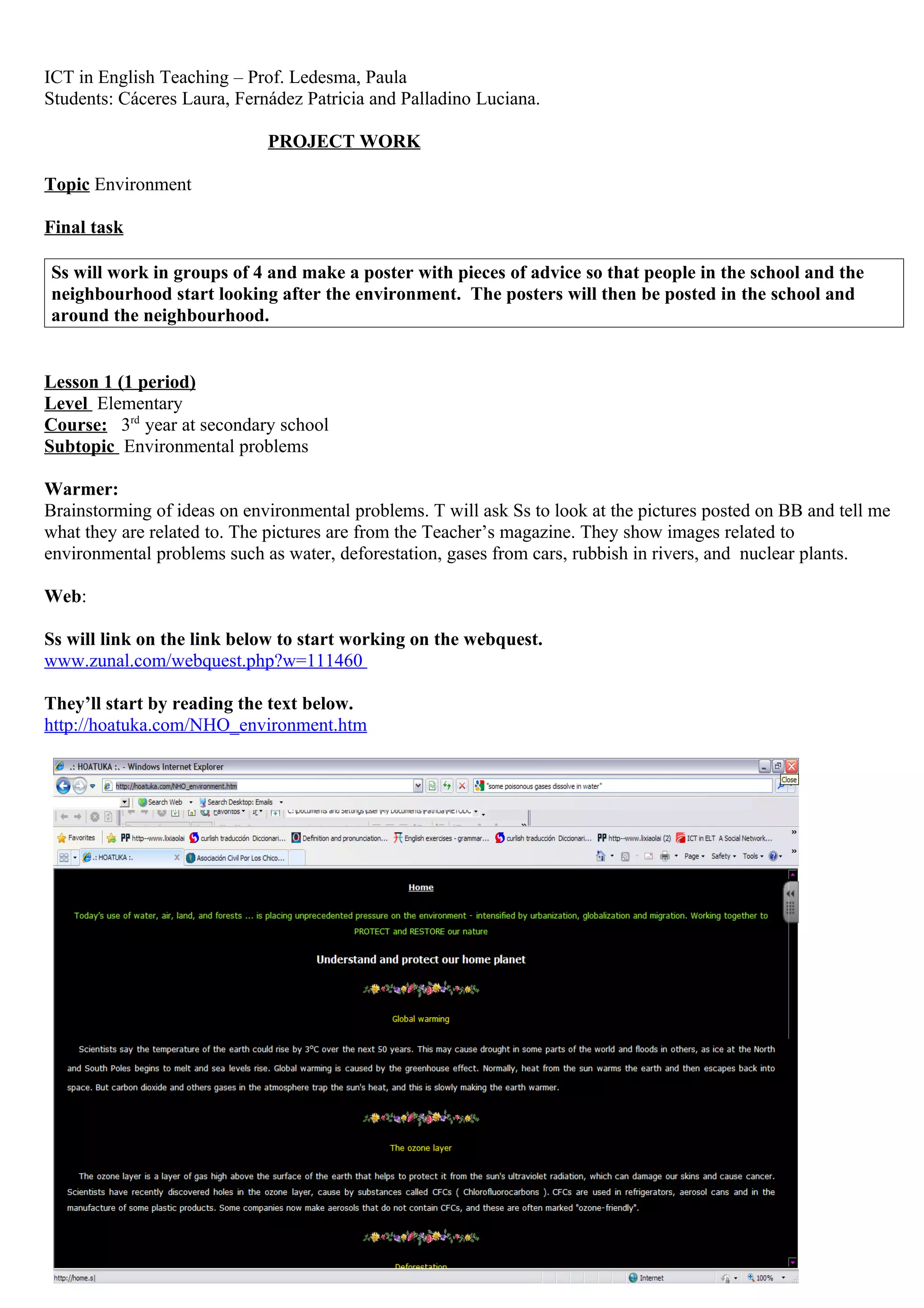
They’ll start by reading the text below.
http://hoatuka.com/NHO_environment.htm
What next

   •   Match the pictures to the phrases. (Hotpot match.)

   •   Decide if the statement are true or false (Forms)

   •   Communication task

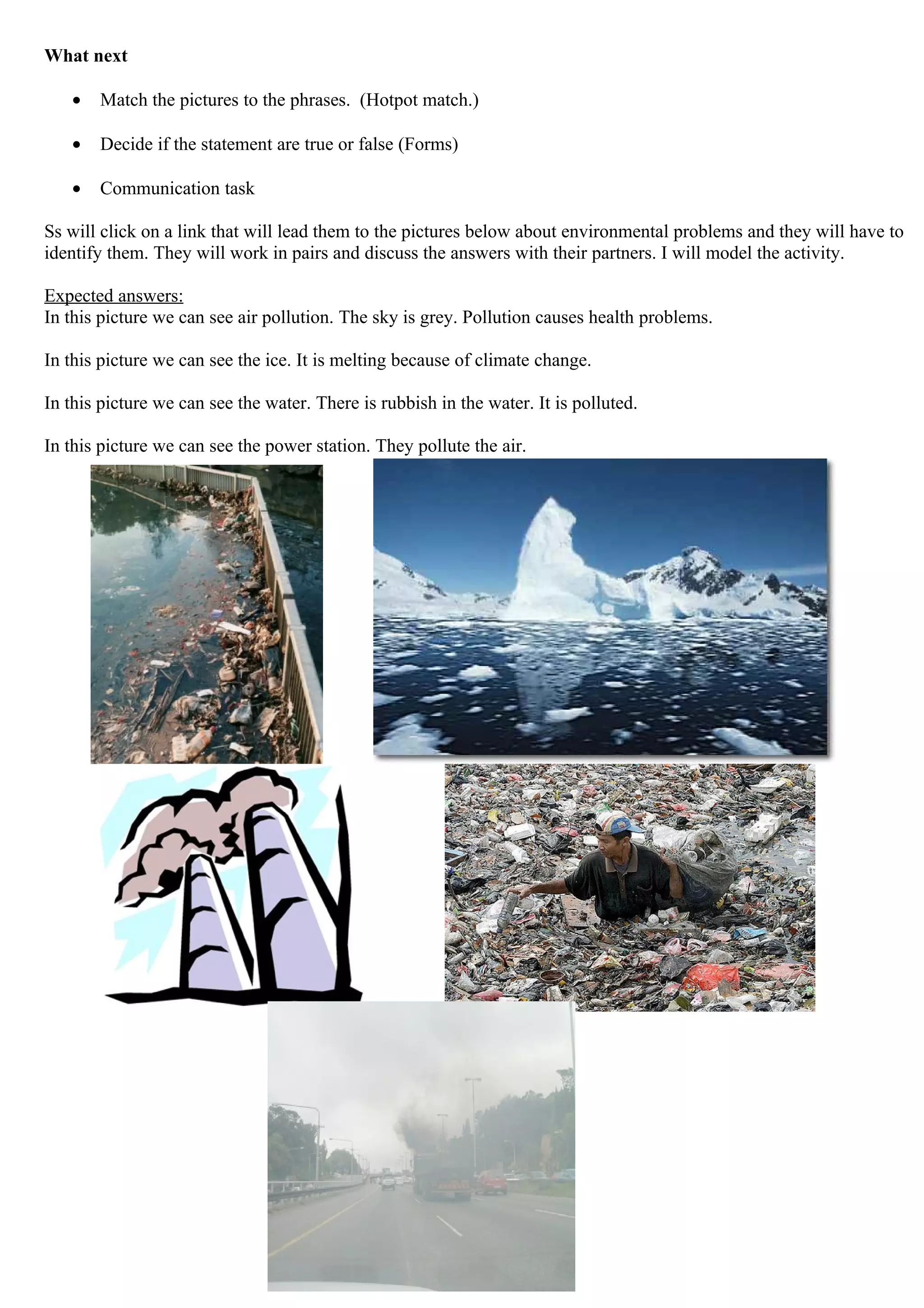
Ss will click on a link that will lead them to the pictures below about environmental problems and they will have to
identify them. They will work in pairs and discuss the answers with their partners. I will model the activity.

Expected answers:
In this picture we can see air pollution. The sky is grey. Pollution causes health problems.

In this picture we can see the ice. It is melting because of climate change.

In this picture we can see the water. There is rubbish in the water. It is polluted.

In this picture we can see the power station. They pollute the air.
Lesson 2 ( 2 periods-80 minutes )
Level Elementary
Course: 3rd year at secondary school
Subtopic Recycling

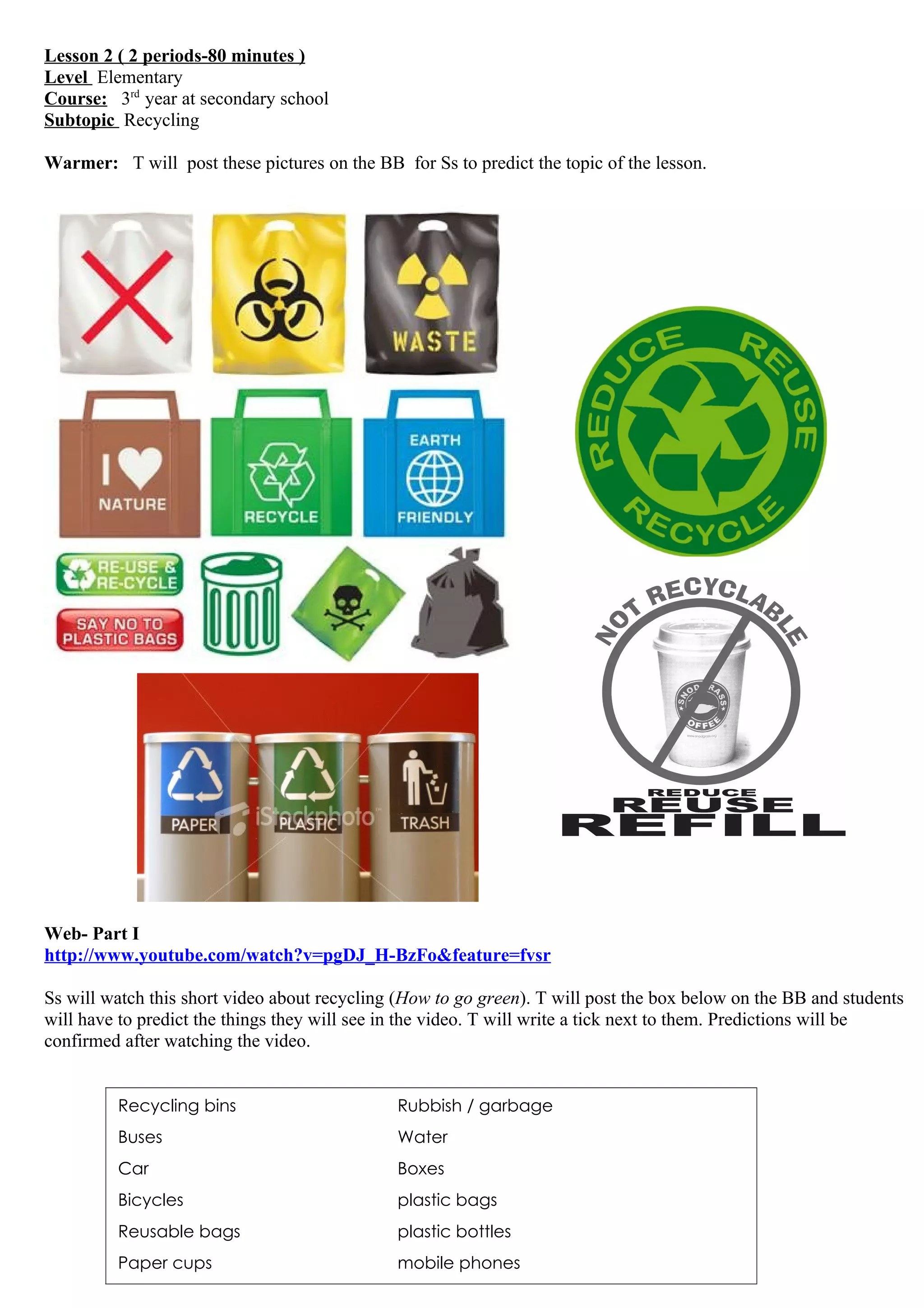
Warmer: T will post these pictures on the BB for Ss to predict the topic of the lesson.


Web- Part I
http://www.youtube.com/watch?v=pgDJ_H-BzFo&feature=fvsr

Ss will watch this short video about recycling (How to go green). T will post the box below on the BB and students
will have to predict the things they will see in the video. T will write a tick next to them. Predictions will be
confirmed after watching the video.


         Recycling bins                       Rubbish / garbage
         Buses                                Water
         Car                                  Boxes
         Bicycles                             plastic bags
         Reusable bags                        plastic bottles
         Paper cups                           mobile phones
Task 1
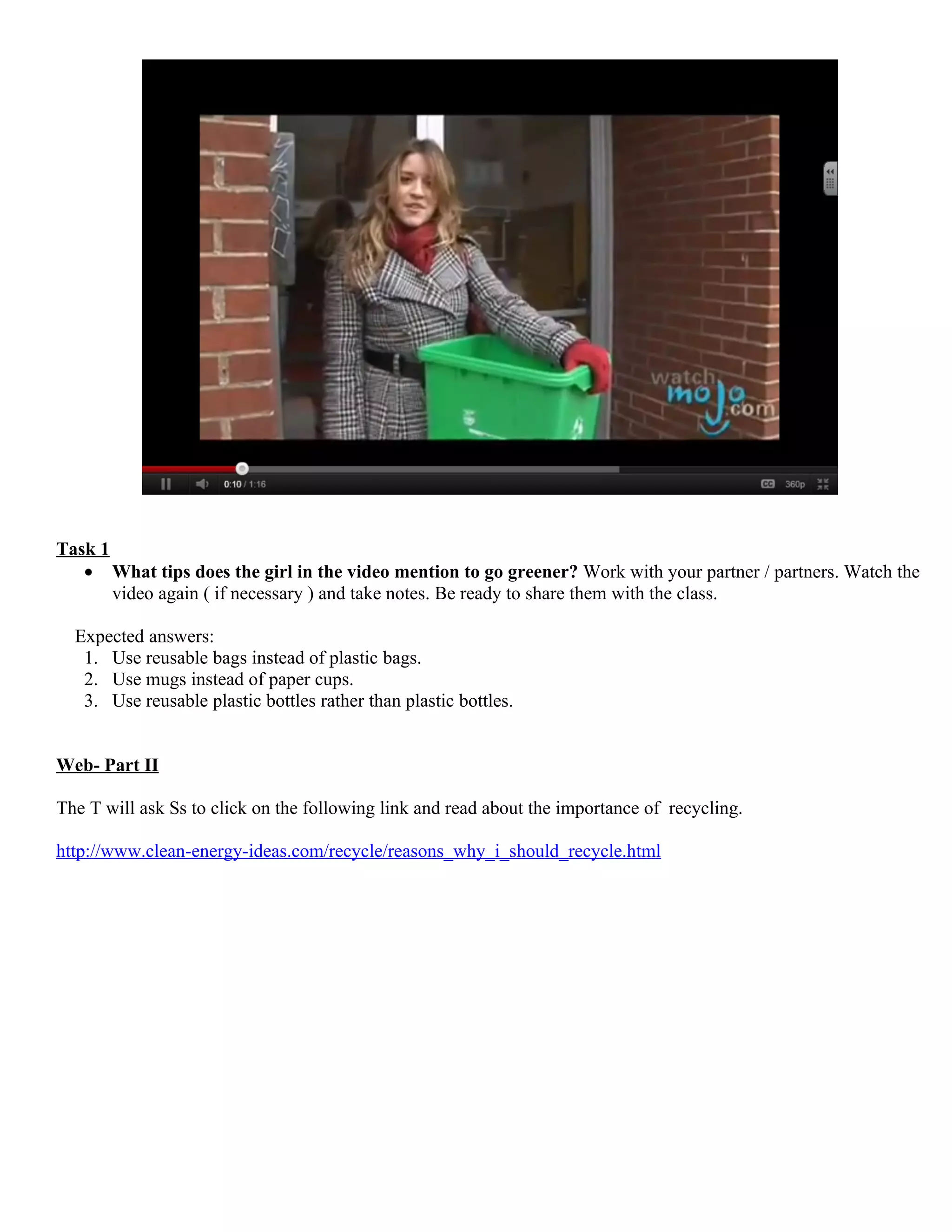
   • What tips does the girl in the video mention to go greener? Work with your partner / partners. Watch the
       video again ( if necessary ) and take notes. Be ready to share them with the class.

  Expected answers:
   1. Use reusable bags instead of plastic bags.
   2. Use mugs instead of paper cups.
   3. Use reusable plastic bottles rather than plastic bottles.


Web- Part II

The T will ask Ss to click on the following link and read about the importance of recycling.

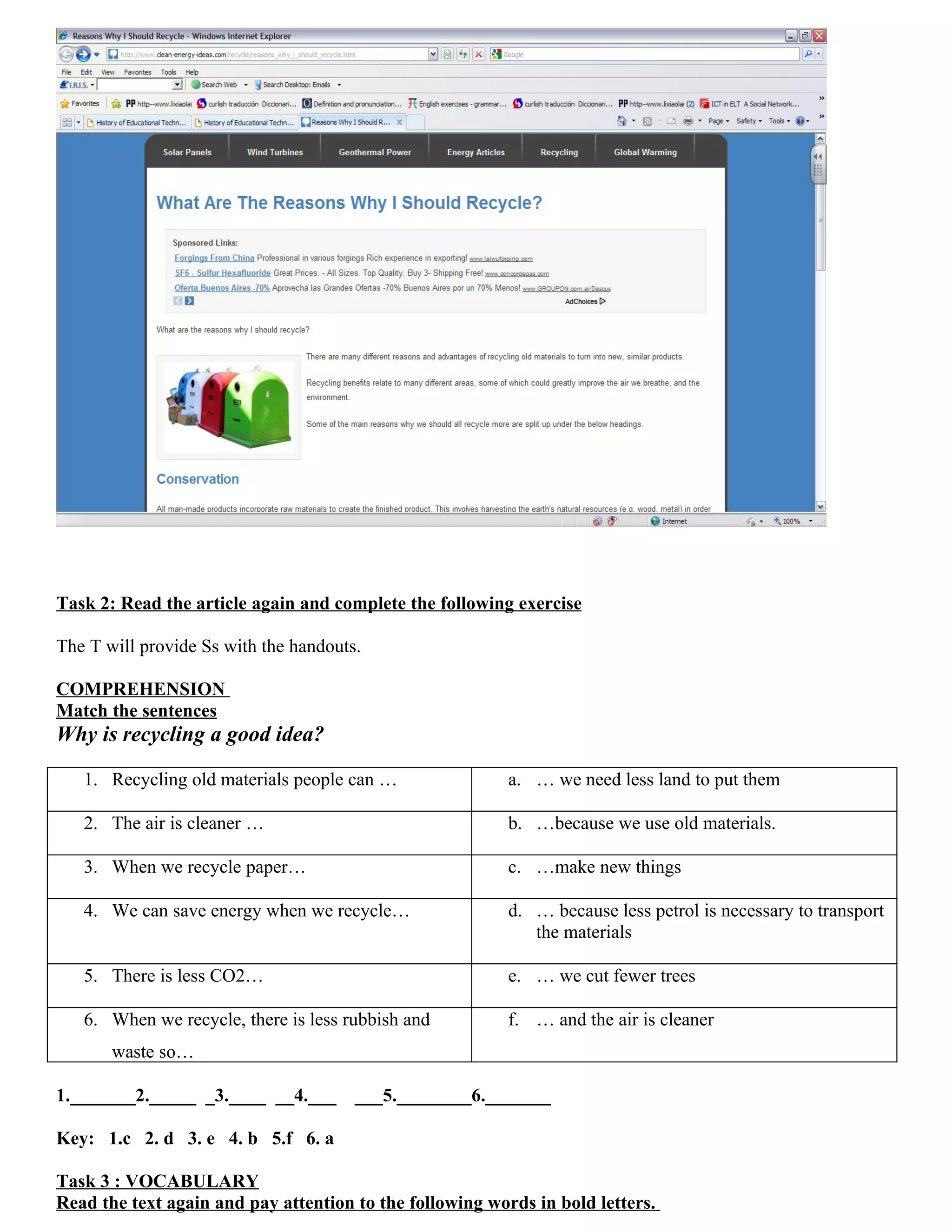
http://www.clean-energy-ideas.com/recycle/reasons_why_i_should_recycle.html
Task 2: Read the article again and complete the following exercise

The T will provide Ss with the handouts.

COMPREHENSION
Match the sentences
Why is recycling a good idea?

   1. Recycling old materials people can …                a. … we need less land to put them

   2. The air is cleaner …                                b. …because we use old materials.

   3. When we recycle paper…                              c. …make new things

   4. We can save energy when we recycle…                 d. … because less petrol is necessary to transport
                                                             the materials

   5. There is less CO2…                                  e. … we cut fewer trees

   6. When we recycle, there is less rubbish and          f. … and the air is cleaner
       waste so…

1._______2._____ _3.____ __4.___       ___5.________6._______

Key: 1.c 2. d 3. e 4. b 5.f 6. a

Task 3 : VOCABULARY
Read the text again and pay attention to the following words in bold letters.
Read the glossary and complete the sentences below with the words in bold

increase               To multiply; reproduce.
wildlife               All living things (except people) that are undomesticated
Landfill               A large hole in the ground where waste from people’s homes or from industry is buried
breathe                To inhale and exhale air
fight                  To attempt to harm or gain power
harm                   Physical or psychological injury or damage.
advantages             Beneficial factors or combinations of factors.

   a. People should____________ for the protection of the environment.
   b. Scientists say that _____________ is in danger
   c. The level of poisonous gasses can __________________ in 2010.
   d. Recycling has many ____________________.
   e. In the city it is difficult to find fresh air to _______________.
   f. Poisonous gases can ___________________ the environment.
KEY:
  a.   People should fight for the protection of the environment.
  b.   Scientists say that wildlife is in danger
  c.   The level of poisonous gasses can increase year.
  d.   Recycling has many advantages.
  e.   In the city it is difficult to find fresh air to breathe.
  f.   Poisonous gases can harm the environment

COMMUNICATION TASK
Pair work activity
Students will ask their partners some questions about their habits in relation to the environment.
T will give them the handout below. They will answer and then they will decide if they have to give their mates
advice about this. I will model the activity with one of the Ss. I will monitor the Ss while they are working.

Task 4: Ask the questions to your mate. Is he / she green? Can you give her advice to be greener?

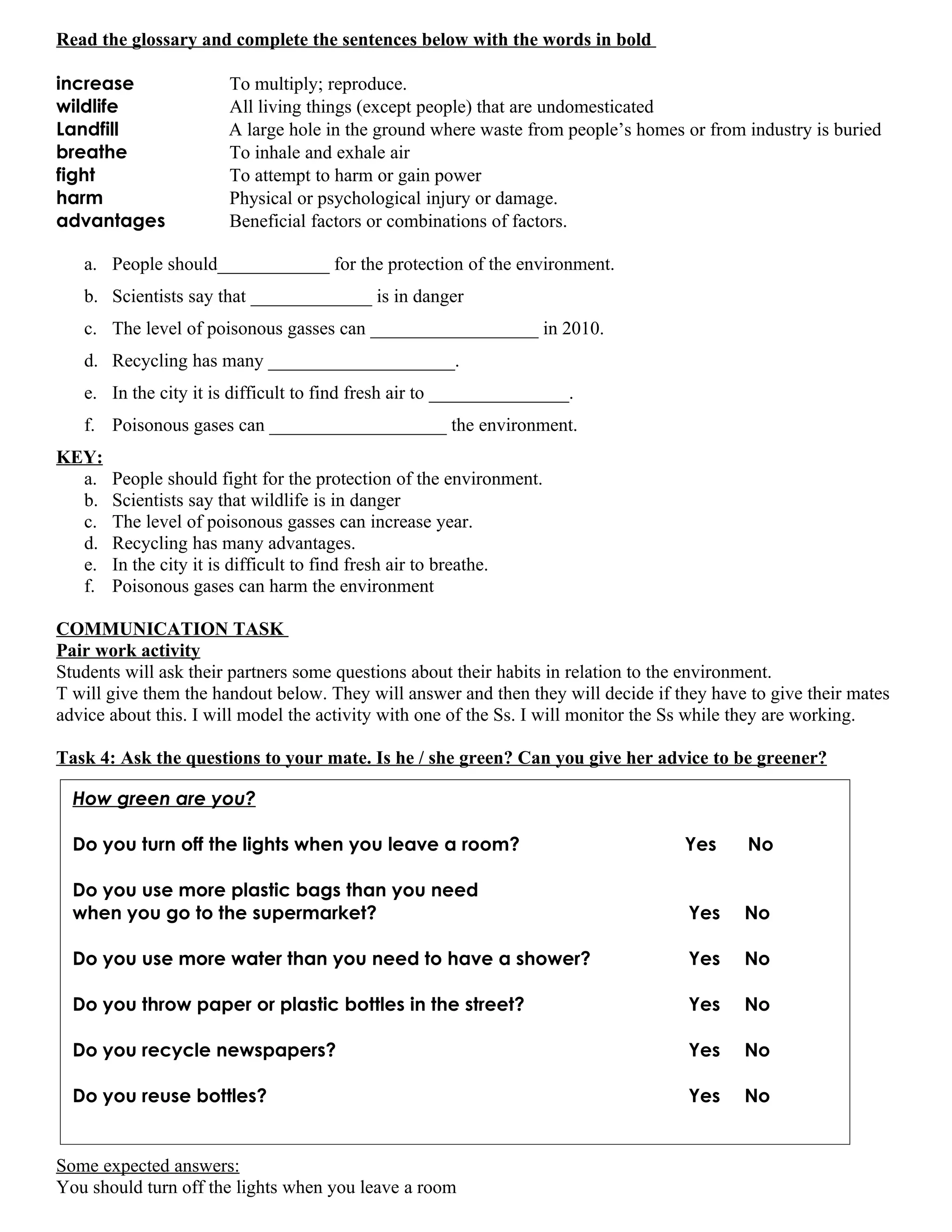
  How green are you?

  Do you turn off the lights when you leave a room?                                Yes      No

  Do you use more plastic bags than you need
  when you go to the supermarket?                                                   Yes    No

  Do you use more water than you need to have a shower?                             Yes    No

  Do you throw paper or plastic bottles in the street?                              Yes    No

  Do you recycle newspapers?                                                        Yes    No

  Do you reuse bottles?                                                             Yes    No


Some expected answers:
You should turn off the lights when you leave a room
You should not use a lot of water when you shower
You should recycle newspapers.


Lesson 3 (2 periods)
Level Elementary
Course: 3rd year at secondary school
Subtopic Solutions to environmental problems

Warmer

Brainstorming of ideas: T will ask students what actions they are ready to take or are already taking to help the
environment from all the information they have read and listened to so far. T will draw a mind map with their
contributions.

Web
T will ask students to click on the links below ( webquest)
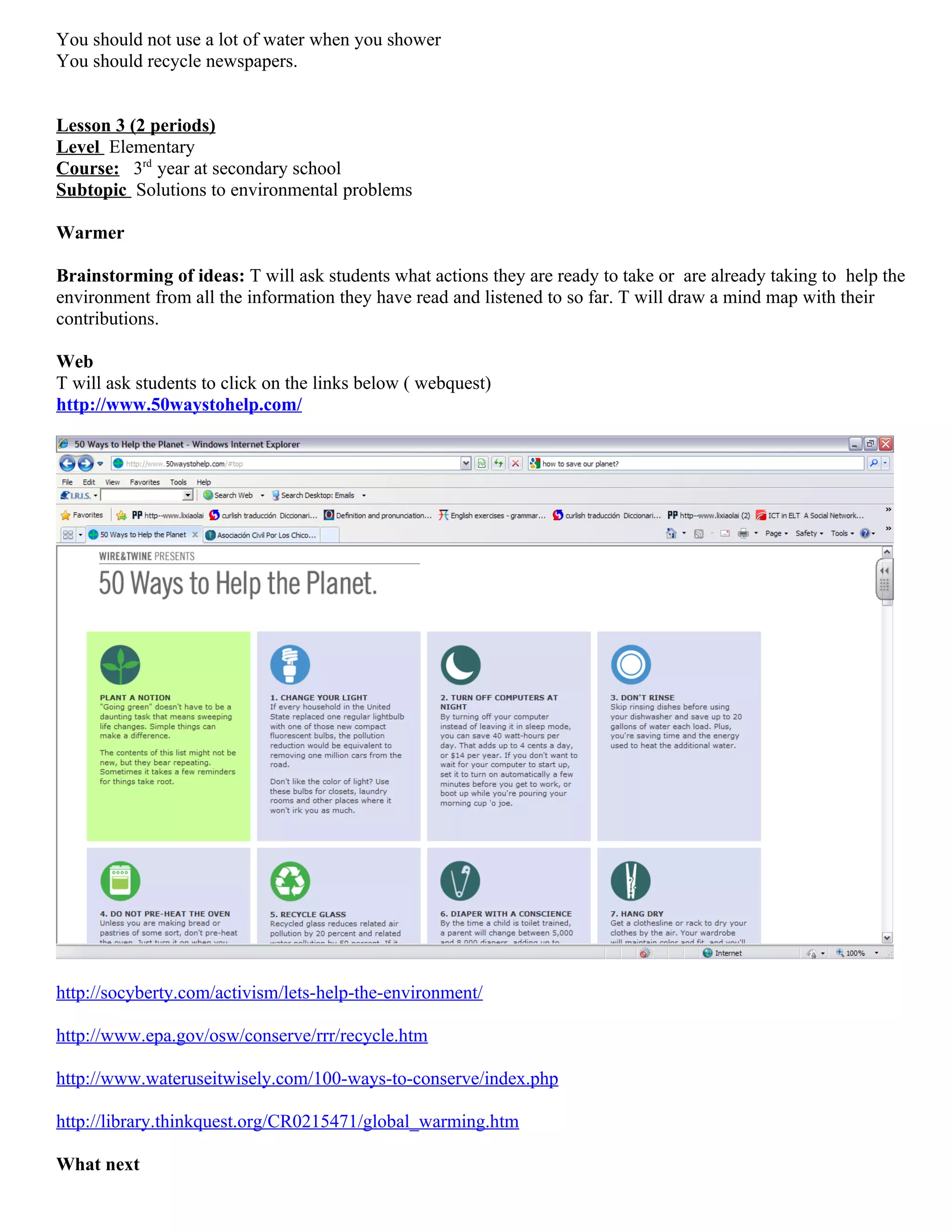
http://www.50waystohelp.com/


http://socyberty.com/activism/lets-help-the-environment/

http://www.epa.gov/osw/conserve/rrr/recycle.htm

http://www.wateruseitwisely.com/100-ways-to-conserve/index.php

http://library.thinkquest.org/CR0215471/global_warming.htm

What next
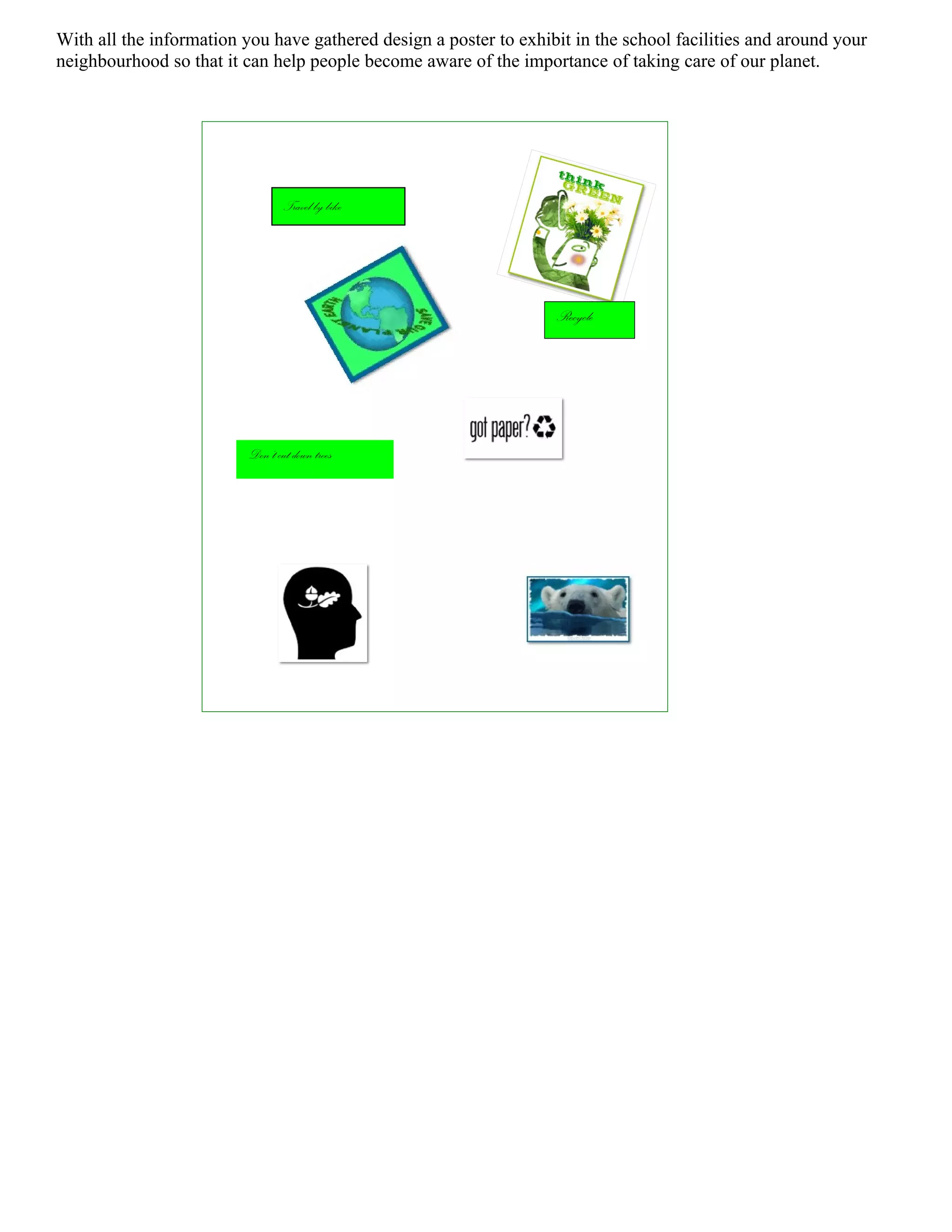
With all the information you have gathered design a poster to exhibit in the school facilities and around your
neighbourhood so that it can help people become aware of the importance of taking care of our planet.


                                  Travel by bike


                                                                   Recycle


                          Don’t cut down trees

Lessons 1 2 3

  • 1.
    ICT in EnglishTeaching – Prof. Ledesma, Paula Students: Cáceres Laura, Fernádez Patricia and Palladino Luciana. PROJECT WORK Topic Environment Final task Ss will work in groups of 4 and make a poster with pieces of advice so that people in the school and the neighbourhood start looking after the environment. The posters will then be posted in the school and around the neighbourhood. Lesson 1 (1 period) Level Elementary Course: 3rd year at secondary school Subtopic Environmental problems Warmer: Brainstorming of ideas on environmental problems. T will ask Ss to look at the pictures posted on BB and tell me what they are related to. The pictures are from the Teacher’s magazine. They show images related to environmental problems such as water, deforestation, gases from cars, rubbish in rivers, and nuclear plants. Web: Ss will link on the link below to start working on the webquest. www.zunal.com/webquest.php?w=111460 They’ll start by reading the text below. http://hoatuka.com/NHO_environment.htm
  • 2.
    What next • Match the pictures to the phrases. (Hotpot match.) • Decide if the statement are true or false (Forms) • Communication task Ss will click on a link that will lead them to the pictures below about environmental problems and they will have to identify them. They will work in pairs and discuss the answers with their partners. I will model the activity. Expected answers: In this picture we can see air pollution. The sky is grey. Pollution causes health problems. In this picture we can see the ice. It is melting because of climate change. In this picture we can see the water. There is rubbish in the water. It is polluted. In this picture we can see the power station. They pollute the air.
  • 3.
    Lesson 2 (2 periods-80 minutes ) Level Elementary Course: 3rd year at secondary school Subtopic Recycling Warmer: T will post these pictures on the BB for Ss to predict the topic of the lesson. Web- Part I http://www.youtube.com/watch?v=pgDJ_H-BzFo&feature=fvsr Ss will watch this short video about recycling (How to go green). T will post the box below on the BB and students will have to predict the things they will see in the video. T will write a tick next to them. Predictions will be confirmed after watching the video. Recycling bins Rubbish / garbage Buses Water Car Boxes Bicycles plastic bags Reusable bags plastic bottles Paper cups mobile phones
  • 4.
    Task 1 • What tips does the girl in the video mention to go greener? Work with your partner / partners. Watch the video again ( if necessary ) and take notes. Be ready to share them with the class. Expected answers: 1. Use reusable bags instead of plastic bags. 2. Use mugs instead of paper cups. 3. Use reusable plastic bottles rather than plastic bottles. Web- Part II The T will ask Ss to click on the following link and read about the importance of recycling. http://www.clean-energy-ideas.com/recycle/reasons_why_i_should_recycle.html
  • 5.
    Task 2: Readthe article again and complete the following exercise The T will provide Ss with the handouts. COMPREHENSION Match the sentences Why is recycling a good idea? 1. Recycling old materials people can … a. … we need less land to put them 2. The air is cleaner … b. …because we use old materials. 3. When we recycle paper… c. …make new things 4. We can save energy when we recycle… d. … because less petrol is necessary to transport the materials 5. There is less CO2… e. … we cut fewer trees 6. When we recycle, there is less rubbish and f. … and the air is cleaner waste so… 1._______2._____ _3.____ __4.___ ___5.________6._______ Key: 1.c 2. d 3. e 4. b 5.f 6. a Task 3 : VOCABULARY Read the text again and pay attention to the following words in bold letters.
  • 6.
    Read the glossaryand complete the sentences below with the words in bold increase To multiply; reproduce. wildlife All living things (except people) that are undomesticated Landfill A large hole in the ground where waste from people’s homes or from industry is buried breathe To inhale and exhale air fight To attempt to harm or gain power harm Physical or psychological injury or damage. advantages Beneficial factors or combinations of factors. a. People should____________ for the protection of the environment. b. Scientists say that _____________ is in danger c. The level of poisonous gasses can __________________ in 2010. d. Recycling has many ____________________. e. In the city it is difficult to find fresh air to _______________. f. Poisonous gases can ___________________ the environment. KEY: a. People should fight for the protection of the environment. b. Scientists say that wildlife is in danger c. The level of poisonous gasses can increase year. d. Recycling has many advantages. e. In the city it is difficult to find fresh air to breathe. f. Poisonous gases can harm the environment COMMUNICATION TASK Pair work activity Students will ask their partners some questions about their habits in relation to the environment. T will give them the handout below. They will answer and then they will decide if they have to give their mates advice about this. I will model the activity with one of the Ss. I will monitor the Ss while they are working. Task 4: Ask the questions to your mate. Is he / she green? Can you give her advice to be greener? How green are you? Do you turn off the lights when you leave a room? Yes No Do you use more plastic bags than you need when you go to the supermarket? Yes No Do you use more water than you need to have a shower? Yes No Do you throw paper or plastic bottles in the street? Yes No Do you recycle newspapers? Yes No Do you reuse bottles? Yes No Some expected answers: You should turn off the lights when you leave a room
  • 7.
    You should notuse a lot of water when you shower You should recycle newspapers. Lesson 3 (2 periods) Level Elementary Course: 3rd year at secondary school Subtopic Solutions to environmental problems Warmer Brainstorming of ideas: T will ask students what actions they are ready to take or are already taking to help the environment from all the information they have read and listened to so far. T will draw a mind map with their contributions. Web T will ask students to click on the links below ( webquest) http://www.50waystohelp.com/ http://socyberty.com/activism/lets-help-the-environment/ http://www.epa.gov/osw/conserve/rrr/recycle.htm http://www.wateruseitwisely.com/100-ways-to-conserve/index.php http://library.thinkquest.org/CR0215471/global_warming.htm What next
  • 8.
    With all theinformation you have gathered design a poster to exhibit in the school facilities and around your neighbourhood so that it can help people become aware of the importance of taking care of our planet. Travel by bike Recycle Don’t cut down trees