LESSON 2
TECHNOLOGY LIVELIHOOD
EDUCATION
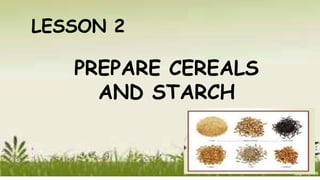
PREPARE CEREALS
AND STARCH
LESSON 2
Cereals are usually starchy pods or
grains.
Cereal grains are the most important
group of food crops in the world named
after the Roman goddess of harvest,
Ceres.
Rice, wheat and corn are the
three most cultivated cereals
in the world. Starch on the
other hand, exists in nature
as the main component of
cereals and tubers.
Starch is the second most
abundant organic substance
on earth. It is found in all
forms of leafy green plants,
located in the roots, fruits
or grains.
Many of the food staples of man
throughout the world are basically
starchy foods, such as rice, corn,
cassava, wheat, potato and others.
Starch is the source of up to 80%
of calories worldwide.
Sources of Starch
The parts of plants that store most starch
are seeds, roots, and tubers.
 cereal grains, including corn, wheat,
rice, grain, sorghum, and oats;
 legumes; and
 roots or tubers, including potato, sweet
potato, arrowroot, and the tropical
cassava plant (marketed as tapioca)
Common Source of
Manufactured Food Starch
1. corn
2. potato
3. Tapioca (cassava)
Starches are named after its
plant sources
-corn starch from corn
-rice starch from rice
-tapioca from cassava
Classification of Starch
1. Native or Natural Starch refers to the
starches as originally derived from its
plant source.
2. Modified Starches are starches that
have been altered physically or
chemically, to modify one or more of its
key chemicals and/or physical property.
3. Purified starch may be separated
from grains and tubers by a process
called wet milling. This procedure
employs various techniques of
grinding, screening, and centrifuging
to separate the starch from fiber,
oil, and protein.
Functional Properties of Starches
Starch plays various roles in food, a typical
multi-tasker :
1.Thickeners in gravies, sauces and pudding. It
absorbs water and become a gel when cooked.
2. Colloidal stabilizers
3. Moisture retainer
4. Gel forming agents
5. Binders
6. Package
7.Flavor carriers– its ability to trap
oils and fats, which absorb flavoring
substances more efficiently.
Starches – are added to processed
meats (luncheon meats, hot dogs,
sausages, etc.) as a filler, binder,
moisture, retainer, and fat
substitute. The quality characteristics
of the starch itself depends upon
which role or function it was used.
Cereal. Cereal is any grain that is
used for food. Grains especially whole
grain are not just empty calories.
These are very valuable and can
contribute a great deal to our health.
You should include at least four
servings from this food group each
day.
Cereals provide the body with:
Carbohydrates
Protein Fat
Vitamins
Minerals
Water
Cellulose or roughage
Nutritional Significance of
Noodles and Pasta or
Alimentary Paste
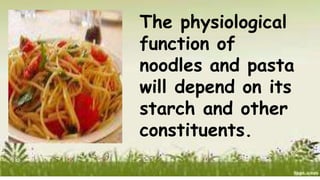
The physiological
function of
noodles and pasta
will depend on its
starch and other
constituents.
Nutritive value:
-Water
-Protein
-Fat
-Carbon
-Calcium
-Phosphorous
-Iron
-Thiamin
-Riboflavin
-Niacin
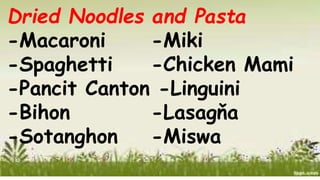
Dried Noodles and Pasta
-Macaroni -Miki
-Spaghetti -Chicken Mami
-Pancit Canton -Linguini
-Bihon
-Sotanghon
-Lasagňa
-Miswa
lesson9starchcookery-190220011422.pptx

lesson9starchcookery-190220011422.pptx

  • 1.
  • 2.
  • 3.
    Cereals are usuallystarchy pods or grains. Cereal grains are the most important group of food crops in the world named after the Roman goddess of harvest, Ceres.
  • 4.
    Rice, wheat andcorn are the three most cultivated cereals in the world. Starch on the other hand, exists in nature as the main component of cereals and tubers.
  • 5.
    Starch is thesecond most abundant organic substance on earth. It is found in all forms of leafy green plants, located in the roots, fruits or grains.
  • 6.
    Many of thefood staples of man throughout the world are basically starchy foods, such as rice, corn, cassava, wheat, potato and others. Starch is the source of up to 80% of calories worldwide.
  • 7.
    Sources of Starch Theparts of plants that store most starch are seeds, roots, and tubers.  cereal grains, including corn, wheat, rice, grain, sorghum, and oats;  legumes; and  roots or tubers, including potato, sweet potato, arrowroot, and the tropical cassava plant (marketed as tapioca)
  • 8.
    Common Source of ManufacturedFood Starch 1. corn 2. potato 3. Tapioca (cassava)
  • 9.
    Starches are namedafter its plant sources -corn starch from corn -rice starch from rice -tapioca from cassava
  • 10.
    Classification of Starch 1.Native or Natural Starch refers to the starches as originally derived from its plant source. 2. Modified Starches are starches that have been altered physically or chemically, to modify one or more of its key chemicals and/or physical property.
  • 11.
    3. Purified starchmay be separated from grains and tubers by a process called wet milling. This procedure employs various techniques of grinding, screening, and centrifuging to separate the starch from fiber, oil, and protein.
  • 13.
    Functional Properties ofStarches Starch plays various roles in food, a typical multi-tasker : 1.Thickeners in gravies, sauces and pudding. It absorbs water and become a gel when cooked. 2. Colloidal stabilizers
  • 14.
    3. Moisture retainer 4.Gel forming agents 5. Binders 6. Package 7.Flavor carriers– its ability to trap oils and fats, which absorb flavoring substances more efficiently.
  • 15.
    Starches – areadded to processed meats (luncheon meats, hot dogs, sausages, etc.) as a filler, binder, moisture, retainer, and fat substitute. The quality characteristics of the starch itself depends upon which role or function it was used.
  • 16.
    Cereal. Cereal isany grain that is used for food. Grains especially whole grain are not just empty calories. These are very valuable and can contribute a great deal to our health. You should include at least four servings from this food group each day.
  • 17.
    Cereals provide thebody with: Carbohydrates Protein Fat Vitamins Minerals Water Cellulose or roughage
  • 18.
    Nutritional Significance of Noodlesand Pasta or Alimentary Paste
  • 19.
    The physiological function of noodlesand pasta will depend on its starch and other constituents.
  • 20.
  • 21.
    Dried Noodles andPasta -Macaroni -Miki -Spaghetti -Chicken Mami -Pancit Canton -Linguini -Bihon -Sotanghon -Lasagňa -Miswa