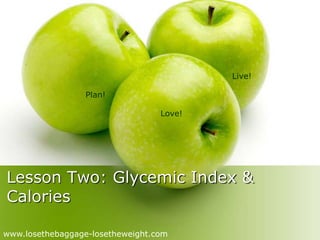
Plan! 
Love! 
Live! 
Lesson Two: Glycemic Index & 
Calories 
www.losethebaggage-losetheweight.com
Why the majority of carbohydrates 
consumed should be low glycemic. 
 take longer to digest 
 weight management assists in 
controlling insulin levels 
 contributes to longer endurance 
performance
Why High glycemic foods 
should be limited. 
 Quick spikes in sugar from many are 
easily stored as fat.
What foods cause spikes in sugar? 
 White bread 
 Candy 
 Soda
LOW GLYCEMIC FOODS 
 Apples 
 Artichokes 
 Asparagus 
 Broccoli 
 Carrots 
 Cauliflower 
 Celery 
 Chickpeas 
 Cucumbers 
 Fructose (natural sugar found 
in fruits and vegetables) 
 Green beans 
 Kidney beans 
 Low-fat yogurt 
 Low-fat milk 
 Multi grain bread 
 Oranges 
 Pears 
 Plums 
 Skim milk 
 Tomatoes 
 Whole grain bread and cereals 
 Whole wheat pasta 
 Lettuce
MEDIUM-HIGH GLYCEMIC FOODS 
 Baked potatoes 
 Bananas 
 Couscous 
 Orange juice 
 Pineapples 
 Popcorn 
 Pretzels 
 Raisins 
 Rice cakes 
 Sweet potatoes 
 Watermelon
Calories 
• A calorie is how we measure energy from food. 
• Each macronutrient—fat, carbohydrates, and protein—provide us 
with energy: 
 Protein: 4 calories per gram 
 Carbohydrates: 4 calories per gram 
 Fat: 9 calories per gram 
1 pound=3,500 calories so to lose 1 pound you 
must burn 3,500 calories.
There’s nothing magical about losing weight. 
• Calories must be 
burned. 
It’s that simple!
www.losethebaggage-losetheweight.com

Lesson Two: The Glycemic Index & Calories

  • 1.
    Plan! Love! Live! Lesson Two: Glycemic Index & Calories www.losethebaggage-losetheweight.com
  • 2.
    Why the majorityof carbohydrates consumed should be low glycemic.  take longer to digest  take longer to digest  weight management assists in controlling insulin levels  contributes to longer endurance performance
  • 3.
    Why High glycemicfoods should be limited.  Quick spikes in sugar from many are easily stored as fat.
  • 4.
    What foods causespikes in sugar?  White bread  Candy  Soda
  • 5.
    LOW GLYCEMIC FOODS  Apples  Artichokes  Asparagus  Broccoli  Carrots  Cauliflower  Celery  Chickpeas  Cucumbers  Fructose (natural sugar found in fruits and vegetables)  Green beans  Kidney beans  Low-fat yogurt  Low-fat milk  Multi grain bread  Oranges  Pears  Plums  Skim milk  Tomatoes  Whole grain bread and cereals  Whole wheat pasta  Lettuce
  • 7.
    MEDIUM-HIGH GLYCEMIC FOODS  Baked potatoes  Bananas  Couscous  Orange juice  Pineapples  Popcorn  Pretzels  Raisins  Rice cakes  Sweet potatoes  Watermelon
  • 8.
    Calories • Acalorie is how we measure energy from food. • Each macronutrient—fat, carbohydrates, and protein—provide us with energy:  Protein: 4 calories per gram  Carbohydrates: 4 calories per gram  Fat: 9 calories per gram 1 pound=3,500 calories so to lose 1 pound you must burn 3,500 calories.
  • 9.
    There’s nothing magicalabout losing weight. • Calories must be burned. It’s that simple!
  • 10.