(‫شارٹ كورس )مختصر مدتی كورس‬


       ‫قرآن اور نماز كو سمجھنا‬
            ‫شروع كيجیے‬
                               ‫آسان طریقے سے‬


                                5- ‫سبق‬
  Make sure you download
  the fonts sent with the
  email or visit the website
  and download them.
www.understandquran.com         www.understandquran.com   1
‫اس سبق ميں...‬


                    ‫سُورةُ الْفَاتحَة )آيات‬
                             ‫ِ‬         ‫َ‬              ‫قرآن:‬
                                                       ‫5-7(‬
                          ‫مُؤنث )ھِيَ، -ھَا(‬         ‫گرامر:‬
                           ‫سانس كا استعمال!!!‬   ‫نكاتِ تعليم:‬
‫‪www.understandquran.com‬‬                                        ‫2‬
‫سورۃ الفاتحۃ )آيات5-7(‬
                          ‫الفاظ كے معانی كو اچھی طرح ياد كرليجيے‬


‫‪www.understandquran.com‬‬                                            ‫3‬
‫سُورَۃُ الْفَاتِحَۃ ...‬
                                                 ‫*341‬


                      ‫إِيّاكَ نَعْبُدُ وإِيّاكَ‬
                                          ‫64‬


                         ‫نَسْتَعِينُ }5{‬

                    ‫استعانت، اعانت، عون،‬
‫‪www.understandquran.com‬‬
                          ‫اهدِنَا الصّرَاطَ‬
                      ‫تعاون، معاون ...‬
                                                        ‫4‬
‫سُورَۃُ الْفَاتِحَۃ ...‬
                           ‫3241‬                  ‫0801‬


‫نعَمتَ عَلَيهِم‬    ‫صِرَاطَ الّذِينَ أ َ‬
                                  ‫2371‬


 ‫غَيرِ المَغضُوبِ عَلَيهِمْ وَلَ‬
                                                            ‫741‬


   ‫ضللت‬
              ‫الضّالّينَ‬
                ‫جس پر ظلم‬        ‫مظلوم:‬
                                   ‫كيا گيا‬
 ‫‪www.understandquran.com‬‬                                          ‫5‬
‫مثال: قرآن سے تعامل كا فارمول....‬


                ‫اهدنَا الصّرَاط المُستَقِيمَ .‬
                               ‫َ‬           ‫ِ‬
                    ‫صِرَاط الّذِين أَنعَمتَ‬
                             ‫َ‬       ‫َ‬
                                ‫عَلَيهِمْ‬
                   ‫غَير المَغضُوبِ عَلَيهمْ وَلَ‬
                          ‫ِ‬                 ‫ِ‬
‫‪www.understandquran.com‬‬                                 ‫6‬
‫نكتہ عبرت...‬

                          ‫المغضوب عليھم ول الضّالين‬
             ‫– كون لوگ: جن كو معلوم ہے مگر كرتےنہيں.‬
                                 ‫– يا جو جانتے ہی نہيں.‬

               ‫گويا ہم روز صبح شام يہ دعا كررہے ہيں كہ‬
                          ‫ان لوگوں كی طرح نہ كردے ...‬


‫‪www.understandquran.com‬‬                                   ‫7‬
– ‫قواعد‬
         Grammar


www.understandquran.com   8
‫إعادة‬    ‫وہ‬         ‫هُوَ‬
                                        ‫وہ سب‬     ‫هُمْ‬
                          ‫21‬    ‫9‬
                                         ‫آپ‬        ‫أنْتَ‬
                          ‫بار‬   ‫5‬
                                        ‫آپ سب‬    ‫أنْتُمْ‬
                 ‫عربی ميں کہتے وقت‬
                  ‫ايسا کہيے كہ گويا‬
                                         ‫ميں‬         ‫أنَا‬
                                                ‫نَحْنُ‬
                     ‫آپ عربوں کو‬
                    ‫سمجھارہے ہوں.‬       ‫ہم سب‬               ‫9‬
‫‪www.understandquran.com‬‬
‫إعادة‬
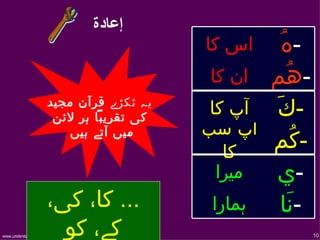
                                         ‫اس كا‬   ‫-هُ‬
                                          ‫-هُم ان كا‬
                     ‫يہ ٹکڑے قرآن مجيد‬
                      ‫كی تقريبا ہر لئن‬
                                          ‫-كَ آپ كا‬
                                         ‫آپ سب‬
                         ‫ميں آتے ہيں‬
                                            ‫كا‬
                                                ‫-كُم‬
                                           ‫ميرا‬  ‫-ي‬
                     ‫... كا، كی،‬          ‫ہمارا‬  ‫-نَا‬
‫‪www.understandquran.com‬‬‫كے، كو‬                           ‫01‬
‫إعادة‬         ‫اس كا رب‬      ‫رَبّه‬
                                                                 ‫،‬

                                               ‫ربهُمْان سب كا رب‬    ‫َّ‬
                                                     ‫ربّكَآپ كا رب‬   ‫َ‬
                                               ‫رَبكُمْآپ سب كا رب‬ ‫ّ‬
                          ‫عربی ميں کہتے وقت‬       ‫ربّي ميرا رب‬         ‫َ‬
                           ‫ايسا کہيے كہ گويا‬
                              ‫آپ عربوں کو‬
                             ‫سمجھارہے ہوں.‬
                                                 ‫ہمارا رب‬     ‫رَبّنَا‬
‫‪www.understandquran.com‬‬                                                    ‫11‬
‫،‬
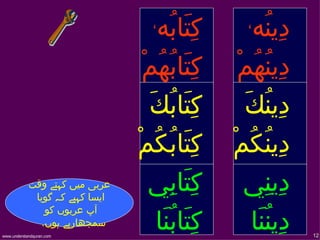
                                      ‫كِتَابُه‬        ‫،‬
                                                        ‫دِينُه‬
                                  ‫كِتَابهُمْ‬
                                          ‫ُ‬         ‫دِينهُمْ‬  ‫ُ‬
                                   ‫كِتَابكَ‬ ‫ُ‬        ‫دِينكَ‬ ‫ُ‬
                                 ‫كِتَابُكمْ‬
                                    ‫ُ‬              ‫دِينُكمْ‬
                                                      ‫ُ‬
            ‫عربی ميں کہتے وقت‬
             ‫ايسا کہيے كہ گويا‬
                                   ‫كِتَابِي‬          ‫دِينِي‬
                                      ‫كِتَابُنَا‬        ‫دِينُنَا‬
                ‫آپ عربوں کو‬
               ‫سمجھارہے ہوں.‬
‫‪www.understandquran.com‬‬                                            ‫21‬
‫مؤنث كی مثال‬


            ‫ابُوبَكْر رَضِيَ ا ُ‬
                               ‫عَنْهُ‬
‫‪www.understandquran.com‬‬                  ‫31‬
‫مؤنث‬


    ‫هِيَ وه )عورت(‬
 ‫ربّهَا اس )عورت كا رب(‬
                      ‫َ‬
 ‫دِينُهَا اس )عورت كا دين(‬
‫كِتَابُهَااس )عورت كی كتاب(‬
‫مؤنث كی واحد اور جمع‬

                           ‫مُسلِمَةمسْلِمَات‬
                                    ‫ُ‬    ‫ْ‬         ‫مُسْلِمْ‬
                           ‫ن مُؤْمِنَة مُؤمِنَات‬
                                  ‫ْ‬                ‫مُؤْمِن‬

                          ‫صَالِحَة صَالِحَات‬      ‫صَالِح‬
                             ‫كَافِر ر كَافِرَة كَافِرَات‬
                                    ‫مُشْرِك ك مُشْرِكَة‬
‫‪www.understandquran.com‬‬                                       ‫51‬
‫نكتہ تعليم‬


www.understandquran.com                16
‫کتنا یاد رہتا ہے؟‬
                             ‫%52 جو ہم پڑھتے‬    ‫‪‬‬
                                          ‫ہيں‬
                          ‫%53 جو ہم سنتے ہيں‬    ‫‪‬‬
                           ‫%05 جو ہم ديكھتے‬     ‫‪‬‬
                                          ‫ہيں‬
                          ‫%06 جو ہم كہتے ہيں‬    ‫‪‬‬
‫‪www.understandquran.com‬‬                             ‫71‬
‫اس سبق ميں ہم نےكيا‬
                            ‫سيكھا؟‬
               ‫نيچے كے الفاظ جوقرآن ميں كئ بار آۓ ہيں‬
                ‫نيچے كے الفاظ جوقرآن ميں كئ بار آۓ ہيں‬

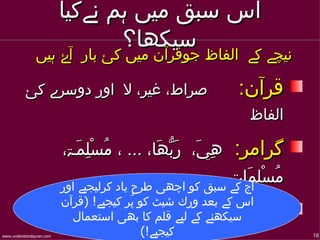
          ‫صراط، غير، ل اور دوسرے كئ‬                         ‫قرآن:‬
                                                              ‫الفاظ‬

                          ‫گرامر: ھِيَ، رَبّھَا، ... ، مسْلمَۃ،‬
                                ‫ُ ِ‬
                                                          ‫مسْل آجَات‬
                          ‫كے سبق كو اچھی طرح ياد كرليجيے اور‬
                                                             ‫ُ ِم‬
                          ‫اس كے بعد ورك شيٹ كو پُر كيجيے! )قرآن‬
                                                  ‫نكاتِ تعليم:‬
                                  ‫كتنا یاد رہتا ہے؟‬
                            ‫سيكھنے كے ليے قلم كا بھی استعمال‬
‫‪www.understandquran.com‬‬
                                            ‫كيجيے!(‬                    ‫81‬
‫اگلے سبق كے ليے تيار رہيے...‬

             ‫ہمارى زندگی كی سب سے اہم كتاب‬
            ‫قرآن ہے اور رمضان قرآن كا مہينہ‬
                ‫ہے. اس ليے اس سلسلہ كو مت‬
                                         ‫چھوڑيے !!!‬
           ‫سُبْحَانَ اِ وَبِحَمْدِهِ سبْحَانَكَ اللهُمّ‬
                            ‫ُ‬
                                 ‫وَبِحَمدِكَ‬
                                        ‫ْ‬
                ‫نَشْهدُ أَن ل ّ إِلَهَ إِل ّ أَنْتَ نسْتَغْفِرُكَ‬
                            ‫َ‬                               ‫َ‬
‫‪www.understandquran.com‬‬
                               ‫وَنَتُوبُ إِليْكَ‬
                                   ‫َ‬                                ‫91‬

Lesson 5

  • 1.
    (‫شارٹ كورس )مختصرمدتی كورس‬ ‫قرآن اور نماز كو سمجھنا‬ ‫شروع كيجیے‬ ‫آسان طریقے سے‬ 5- ‫سبق‬ Make sure you download the fonts sent with the email or visit the website and download them. www.understandquran.com www.understandquran.com 1
  • 2.
    ‫اس سبق ميں...‬ ‫سُورةُ الْفَاتحَة )آيات‬ ‫ِ‬ ‫َ‬ ‫قرآن:‬ ‫5-7(‬ ‫مُؤنث )ھِيَ، -ھَا(‬ ‫گرامر:‬ ‫سانس كا استعمال!!!‬ ‫نكاتِ تعليم:‬ ‫‪www.understandquran.com‬‬ ‫2‬
  • 3.
    ‫سورۃ الفاتحۃ )آيات5-7(‬ ‫الفاظ كے معانی كو اچھی طرح ياد كرليجيے‬ ‫‪www.understandquran.com‬‬ ‫3‬
  • 4.
    ‫سُورَۃُ الْفَاتِحَۃ ...‬ ‫*341‬ ‫إِيّاكَ نَعْبُدُ وإِيّاكَ‬ ‫64‬ ‫نَسْتَعِينُ }5{‬ ‫استعانت، اعانت، عون،‬ ‫‪www.understandquran.com‬‬ ‫اهدِنَا الصّرَاطَ‬ ‫تعاون، معاون ...‬ ‫4‬
  • 5.
    ‫سُورَۃُ الْفَاتِحَۃ ...‬ ‫3241‬ ‫0801‬ ‫نعَمتَ عَلَيهِم‬ ‫صِرَاطَ الّذِينَ أ َ‬ ‫2371‬ ‫غَيرِ المَغضُوبِ عَلَيهِمْ وَلَ‬ ‫741‬ ‫ضللت‬ ‫الضّالّينَ‬ ‫جس پر ظلم‬ ‫مظلوم:‬ ‫كيا گيا‬ ‫‪www.understandquran.com‬‬ ‫5‬
  • 6.
    ‫مثال: قرآن سےتعامل كا فارمول....‬ ‫اهدنَا الصّرَاط المُستَقِيمَ .‬ ‫َ‬ ‫ِ‬ ‫صِرَاط الّذِين أَنعَمتَ‬ ‫َ‬ ‫َ‬ ‫عَلَيهِمْ‬ ‫غَير المَغضُوبِ عَلَيهمْ وَلَ‬ ‫ِ‬ ‫ِ‬ ‫‪www.understandquran.com‬‬ ‫6‬
  • 7.
    ‫نكتہ عبرت...‬ ‫المغضوب عليھم ول الضّالين‬ ‫– كون لوگ: جن كو معلوم ہے مگر كرتےنہيں.‬ ‫– يا جو جانتے ہی نہيں.‬ ‫گويا ہم روز صبح شام يہ دعا كررہے ہيں كہ‬ ‫ان لوگوں كی طرح نہ كردے ...‬ ‫‪www.understandquran.com‬‬ ‫7‬
  • 8.
    – ‫قواعد‬ Grammar www.understandquran.com 8
  • 9.
    ‫إعادة‬ ‫وہ‬ ‫هُوَ‬ ‫وہ سب‬ ‫هُمْ‬ ‫21‬ ‫9‬ ‫آپ‬ ‫أنْتَ‬ ‫بار‬ ‫5‬ ‫آپ سب‬ ‫أنْتُمْ‬ ‫عربی ميں کہتے وقت‬ ‫ايسا کہيے كہ گويا‬ ‫ميں‬ ‫أنَا‬ ‫نَحْنُ‬ ‫آپ عربوں کو‬ ‫سمجھارہے ہوں.‬ ‫ہم سب‬ ‫9‬ ‫‪www.understandquran.com‬‬
  • 10.
    ‫إعادة‬ ‫اس كا‬ ‫-هُ‬ ‫-هُم ان كا‬ ‫يہ ٹکڑے قرآن مجيد‬ ‫كی تقريبا ہر لئن‬ ‫-كَ آپ كا‬ ‫آپ سب‬ ‫ميں آتے ہيں‬ ‫كا‬ ‫-كُم‬ ‫ميرا‬ ‫-ي‬ ‫... كا، كی،‬ ‫ہمارا‬ ‫-نَا‬ ‫‪www.understandquran.com‬‬‫كے، كو‬ ‫01‬
  • 11.
    ‫إعادة‬ ‫اس كا رب‬ ‫رَبّه‬ ‫،‬ ‫ربهُمْان سب كا رب‬ ‫َّ‬ ‫ربّكَآپ كا رب‬ ‫َ‬ ‫رَبكُمْآپ سب كا رب‬ ‫ّ‬ ‫عربی ميں کہتے وقت‬ ‫ربّي ميرا رب‬ ‫َ‬ ‫ايسا کہيے كہ گويا‬ ‫آپ عربوں کو‬ ‫سمجھارہے ہوں.‬ ‫ہمارا رب‬ ‫رَبّنَا‬ ‫‪www.understandquran.com‬‬ ‫11‬
  • 12.
    ‫،‬ ‫كِتَابُه‬ ‫،‬ ‫دِينُه‬ ‫كِتَابهُمْ‬ ‫ُ‬ ‫دِينهُمْ‬ ‫ُ‬ ‫كِتَابكَ‬ ‫ُ‬ ‫دِينكَ‬ ‫ُ‬ ‫كِتَابُكمْ‬ ‫ُ‬ ‫دِينُكمْ‬ ‫ُ‬ ‫عربی ميں کہتے وقت‬ ‫ايسا کہيے كہ گويا‬ ‫كِتَابِي‬ ‫دِينِي‬ ‫كِتَابُنَا‬ ‫دِينُنَا‬ ‫آپ عربوں کو‬ ‫سمجھارہے ہوں.‬ ‫‪www.understandquran.com‬‬ ‫21‬
  • 13.
    ‫مؤنث كی مثال‬ ‫ابُوبَكْر رَضِيَ ا ُ‬ ‫عَنْهُ‬ ‫‪www.understandquran.com‬‬ ‫31‬
  • 14.
    ‫مؤنث‬ ‫هِيَ وه )عورت(‬ ‫ربّهَا اس )عورت كا رب(‬ ‫َ‬ ‫دِينُهَا اس )عورت كا دين(‬ ‫كِتَابُهَااس )عورت كی كتاب(‬
  • 15.
    ‫مؤنث كی واحداور جمع‬ ‫مُسلِمَةمسْلِمَات‬ ‫ُ‬ ‫ْ‬ ‫مُسْلِمْ‬ ‫ن مُؤْمِنَة مُؤمِنَات‬ ‫ْ‬ ‫مُؤْمِن‬ ‫صَالِحَة صَالِحَات‬ ‫صَالِح‬ ‫كَافِر ر كَافِرَة كَافِرَات‬ ‫مُشْرِك ك مُشْرِكَة‬ ‫‪www.understandquran.com‬‬ ‫51‬
  • 16.
  • 17.
    ‫کتنا یاد رہتاہے؟‬ ‫%52 جو ہم پڑھتے‬ ‫‪‬‬ ‫ہيں‬ ‫%53 جو ہم سنتے ہيں‬ ‫‪‬‬ ‫%05 جو ہم ديكھتے‬ ‫‪‬‬ ‫ہيں‬ ‫%06 جو ہم كہتے ہيں‬ ‫‪‬‬ ‫‪www.understandquran.com‬‬ ‫71‬
  • 18.
    ‫اس سبق ميںہم نےكيا‬ ‫سيكھا؟‬ ‫نيچے كے الفاظ جوقرآن ميں كئ بار آۓ ہيں‬ ‫نيچے كے الفاظ جوقرآن ميں كئ بار آۓ ہيں‬ ‫صراط، غير، ل اور دوسرے كئ‬ ‫قرآن:‬ ‫الفاظ‬ ‫گرامر: ھِيَ، رَبّھَا، ... ، مسْلمَۃ،‬ ‫ُ ِ‬ ‫مسْل آجَات‬ ‫كے سبق كو اچھی طرح ياد كرليجيے اور‬ ‫ُ ِم‬ ‫اس كے بعد ورك شيٹ كو پُر كيجيے! )قرآن‬ ‫نكاتِ تعليم:‬ ‫كتنا یاد رہتا ہے؟‬ ‫سيكھنے كے ليے قلم كا بھی استعمال‬ ‫‪www.understandquran.com‬‬ ‫كيجيے!(‬ ‫81‬
  • 19.
    ‫اگلے سبق كےليے تيار رہيے...‬ ‫ہمارى زندگی كی سب سے اہم كتاب‬ ‫قرآن ہے اور رمضان قرآن كا مہينہ‬ ‫ہے. اس ليے اس سلسلہ كو مت‬ ‫چھوڑيے !!!‬ ‫سُبْحَانَ اِ وَبِحَمْدِهِ سبْحَانَكَ اللهُمّ‬ ‫ُ‬ ‫وَبِحَمدِكَ‬ ‫ْ‬ ‫نَشْهدُ أَن ل ّ إِلَهَ إِل ّ أَنْتَ نسْتَغْفِرُكَ‬ ‫َ‬ ‫َ‬ ‫‪www.understandquran.com‬‬ ‫وَنَتُوبُ إِليْكَ‬ ‫َ‬ ‫91‬

Editor's Notes

  • #3 With intention, Du’aa, and then support of Allah… NO PROBLEM INSHA-ALLAH.
  • #5 Mission Statement; need your help to worship. One who can not quench his thirst w/o His help can never worship Him w/o His help. 3. An’amta alaihim: Ambiyaa, siddiqeen,shuhadaa, saliheen; Top: our Prophet pbuh; His path? Practice, Preach, and Organize, and implement (what he can). AEPP If we don’t do this, then our duaa is NOT SERIOUS! (example: Job seeker who just makes du’aa but does not go out to seek job.) 4. Those who knew and did not do (more … first); those who did not know. 5. MOST IMPORTANT: Biggg confusion that We are Muslims = on guidance. Then this prayer is for a Non-Muslim. (Becoming Muslim is first step. Now we need guidance every moment). Where is it? In Qu’ran (theory) and Sunnah (Model). Are we serious in ASKING? Do we care to understand Qur’an and know Sunnah??????? 6. Remember the hadith of Surah Al-Fatihah.
  • #6 1. Remember the hadith of Surah Al-Fatihah. The hadith says: My servant got what he has asked for. What is that? Qur’an. If we are serious in asking, we will value the response (answer) too!
  • #7 An’amta alaihim: Ambiyaa, siddiqeen,shuhadaa, saliheen; Top: our Prophet pbuh; His path? Practice, Preach, and Organize, and implement (what he can). So, our du’aa should be to ask Allah to help us do them. And then start doing them. If we don’t do this, then our duaa is NOT SERIOUS! (Example: Job seeker who just makes du’aa but does not go out to seek job.)
  • #8 Hadith: What is given here is Qur’an (Yousuf Islahi in NY).
  • #10 Show the rules first. We will use all our senses. It is called TPI or TPR. It really enhances the learning. And note that this is not limited to these 6 pronouns. It has much more to do with all the verb forms that we will learn. You have spared so much time and came all the way. Don’t listen to Shaitaan. Don’t be shy to use these directions. We are learning the words of Qur’an here. If you use them, your learning will be easier and quicker. The rule for repetition is: Teacher (Ar+Ur) – Student (Ar+ Ur) * 3 times T(Ar) – St (Ur) * 3 times T(AA) – St(AA) * 3 times (in pairs; ex: huwa, hum – huwa,hum, …)
  • #12 T(A)-S(U): 3 times T(AA) – S(UU): 2 times
  • #13 T(A)-S(U): 3 times T(AA) – S(UU): 2 times
  • #15 Just like in Muslim names (khalid – khalida, sajid – sajidah, and so on), we can make a feminine gender of a word by adding taa at the end. And by adding ‘aaat’ at the end, it can . Repeat for the whole words once.
  • #16 Just like in Muslim names (khalid – khalida, sajid – sajidah, and so on), we can make a feminine gender of a word by adding taa at the end. And by adding ‘aaat’ at the end, it can . Repeat for the whole words once.
  • #17 Get more images of right and left brain; and the quadrants; use them all. (color – highlighter, color pens).
  • #18 Do: Write also.
  • #19 With intention, Du’aa, and then support of Allah… NO PROBLEM INSHA-ALLAH.