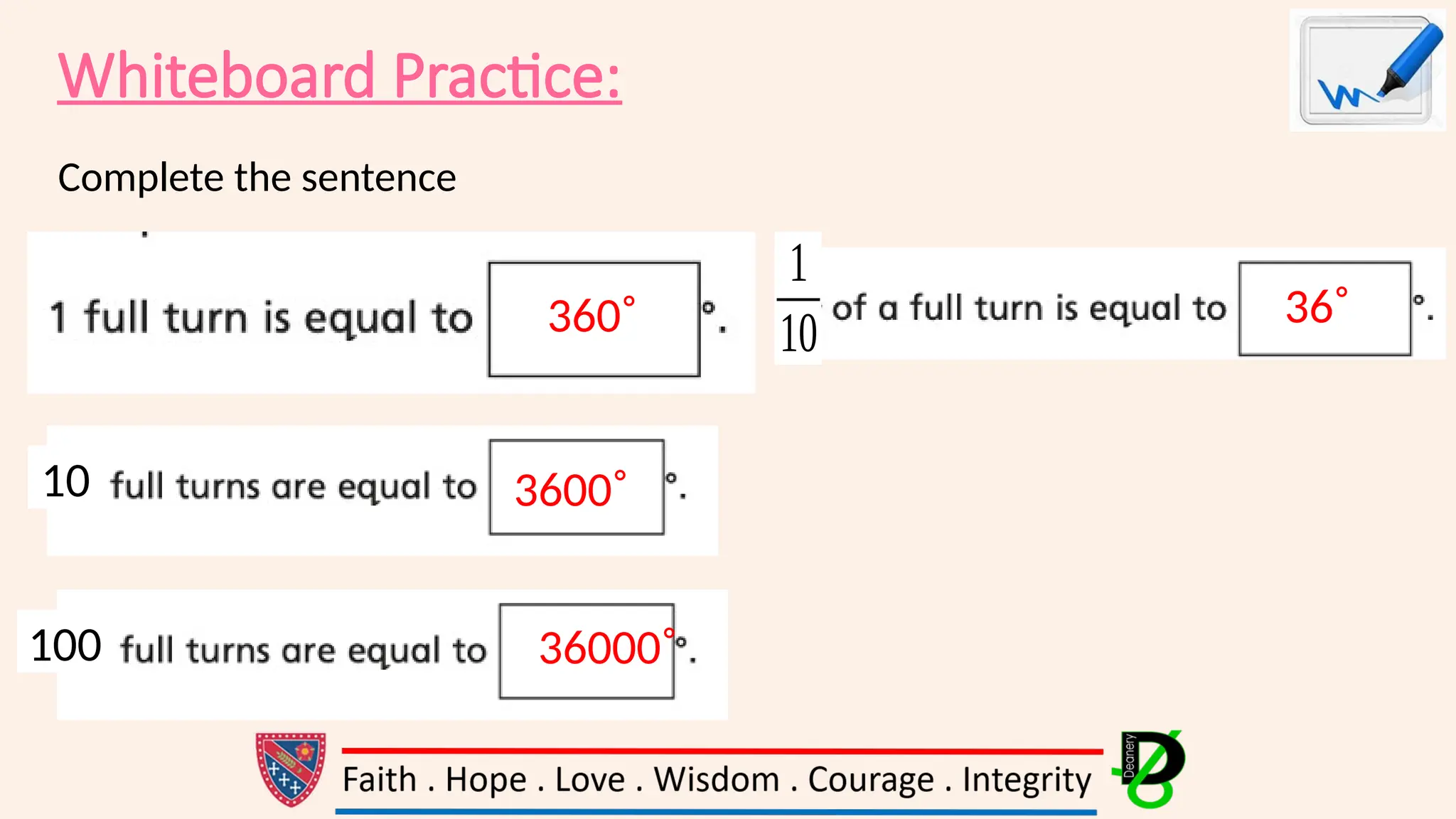
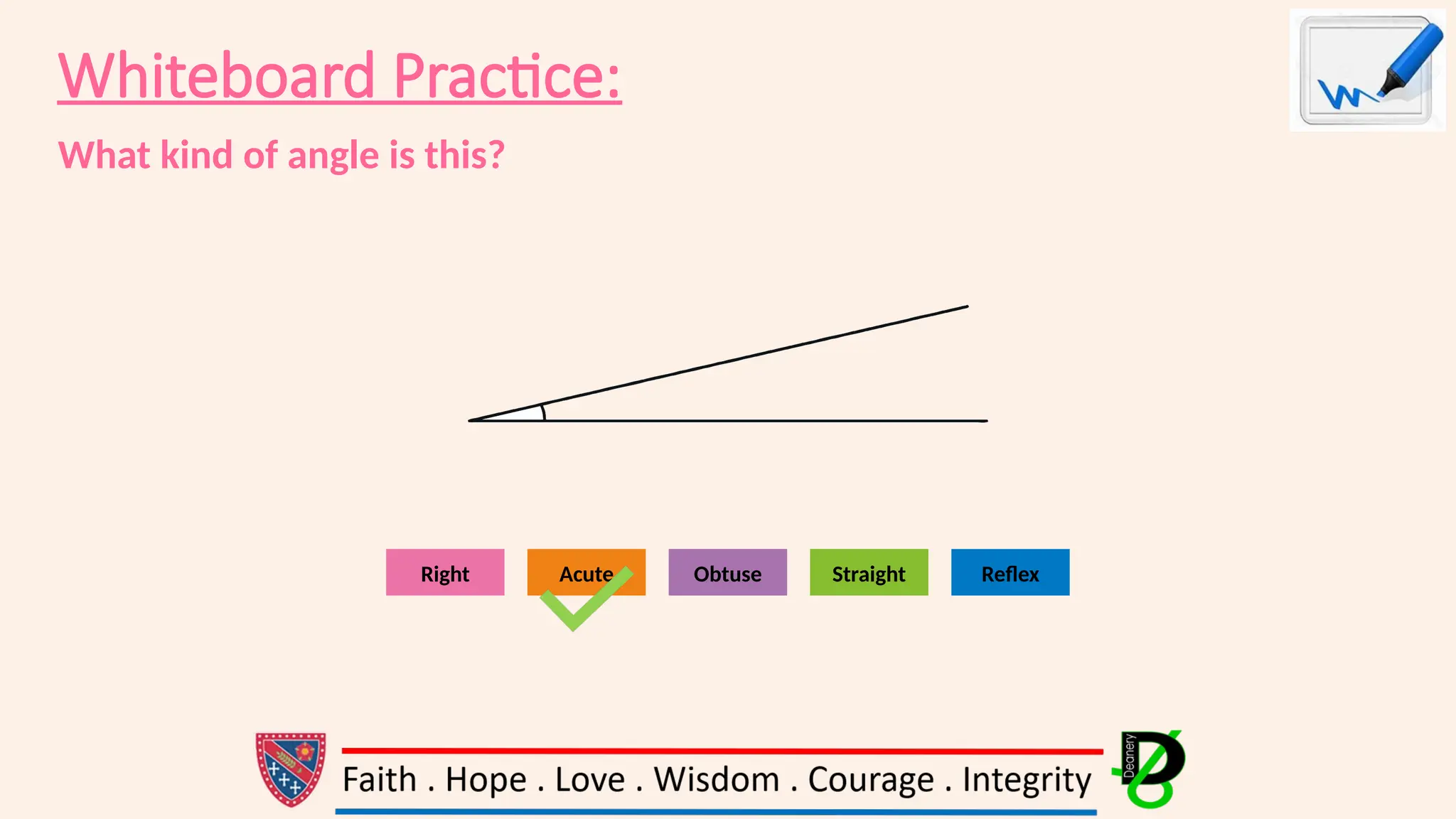
Whiteboard Practice:
Whiteboard Rules
1)Silent,
individual
activity
2) Everyone
shows their
board
3) “3… 2… 1…
Show me”
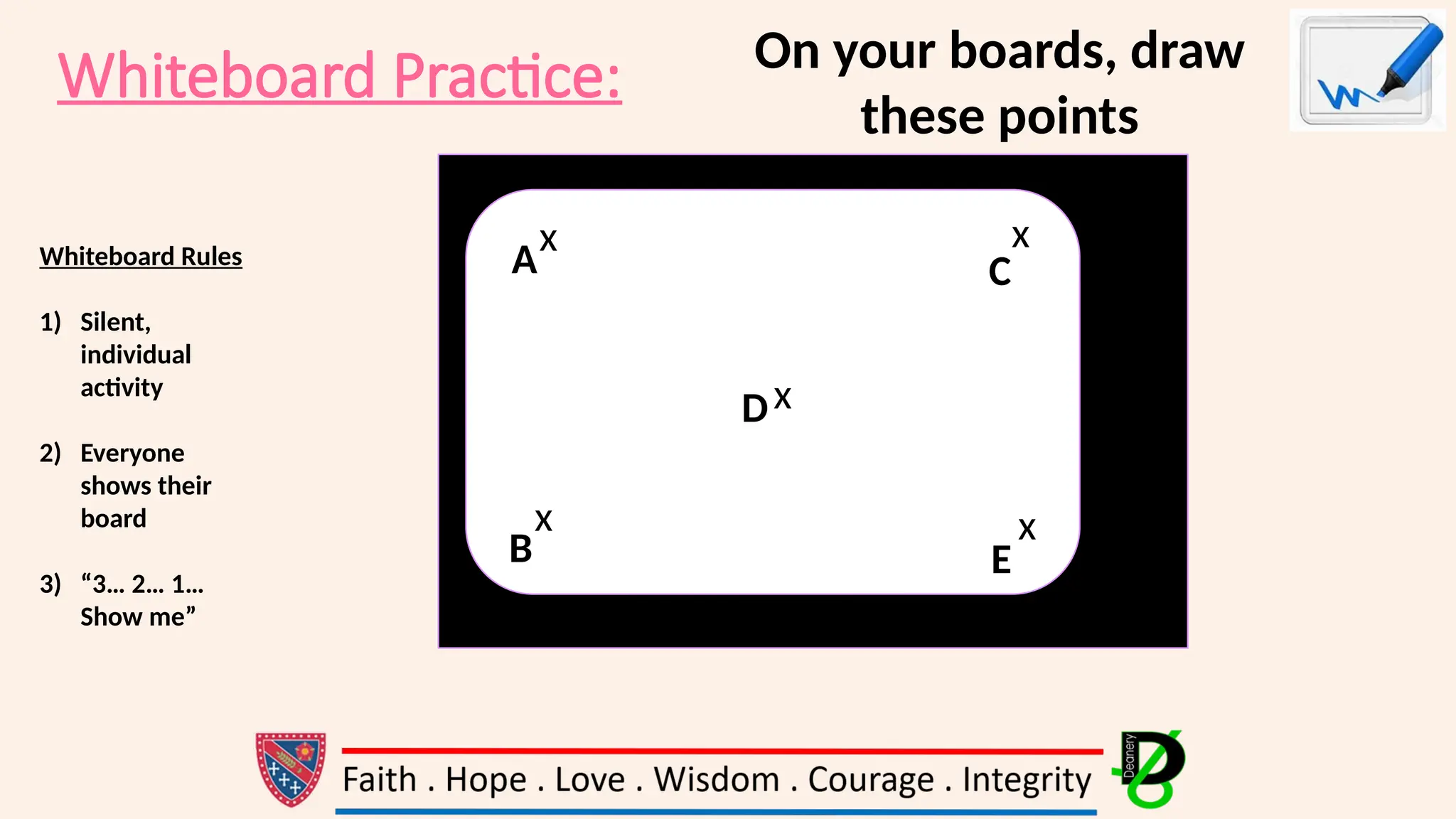
On your boards, draw
these points
A
B
C
D
E
x
x
x
x
x
3.
Whiteboard Practice:
Draw linesegment AD Draw line segment DA
What polygon would I get
if I joined ADB?
Is there another way I can
make this polygon?
What polygon would I get
if I joined ACEB?
4.
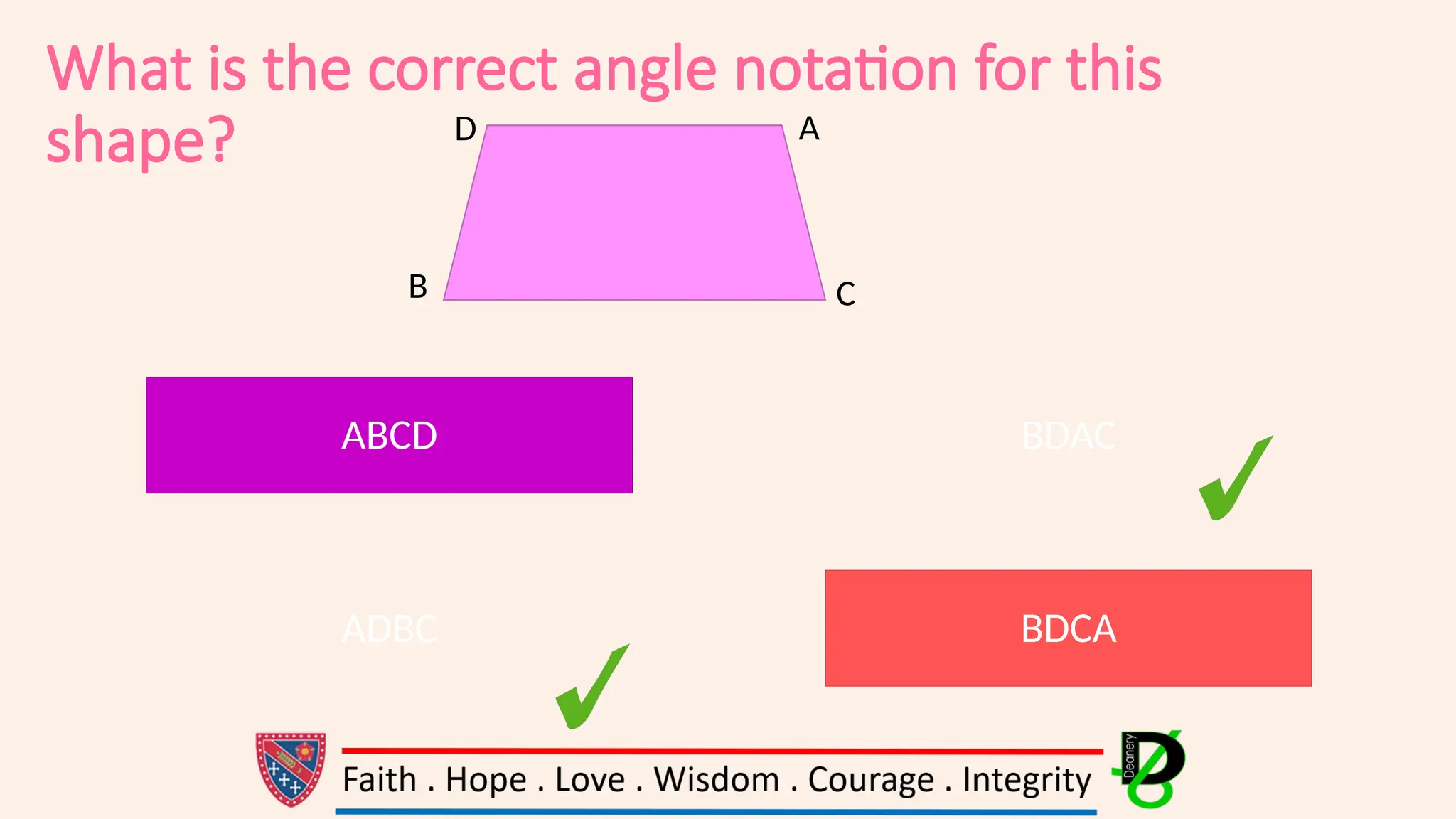
It doesn’t alwayshave to be a shape
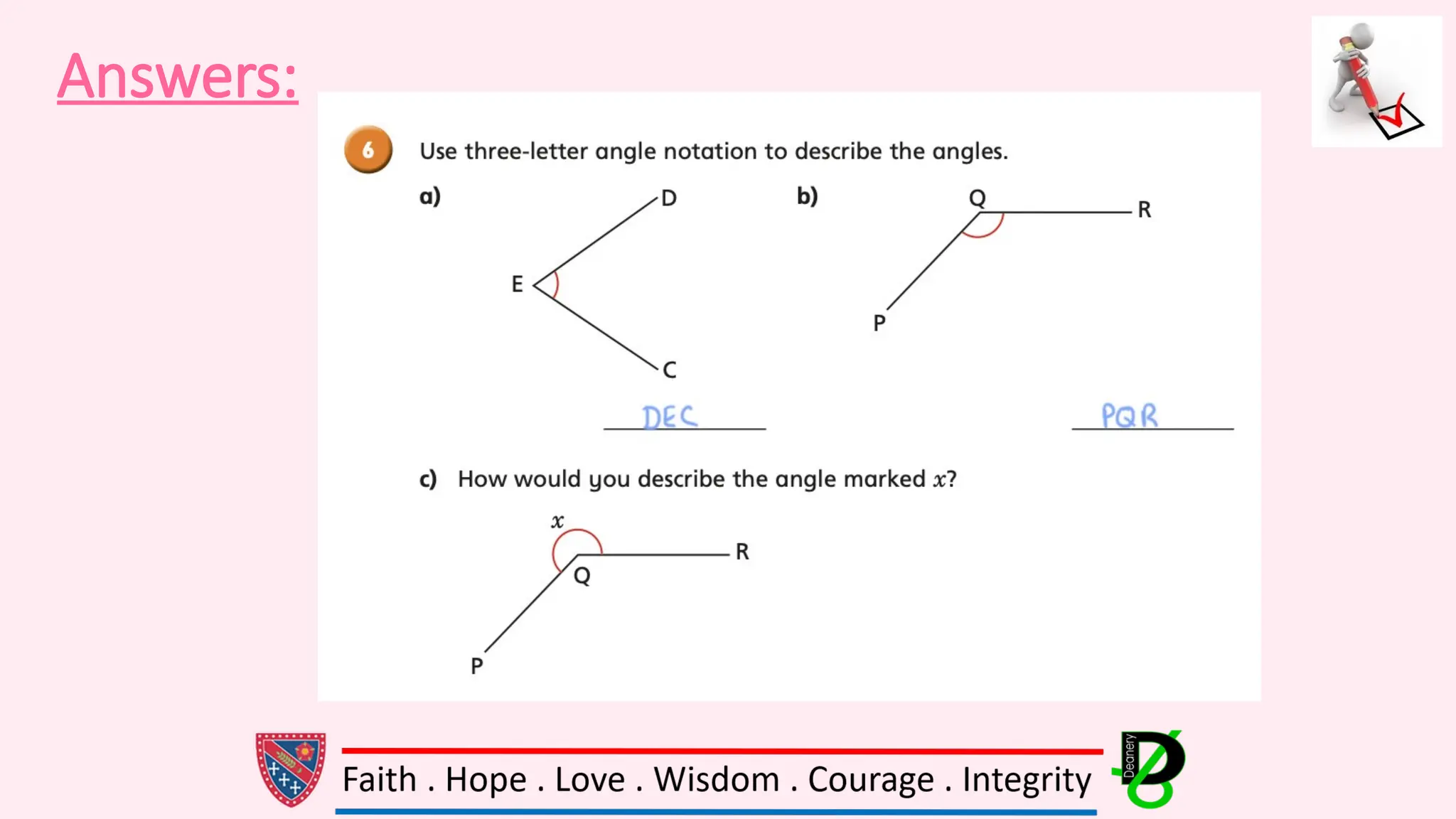
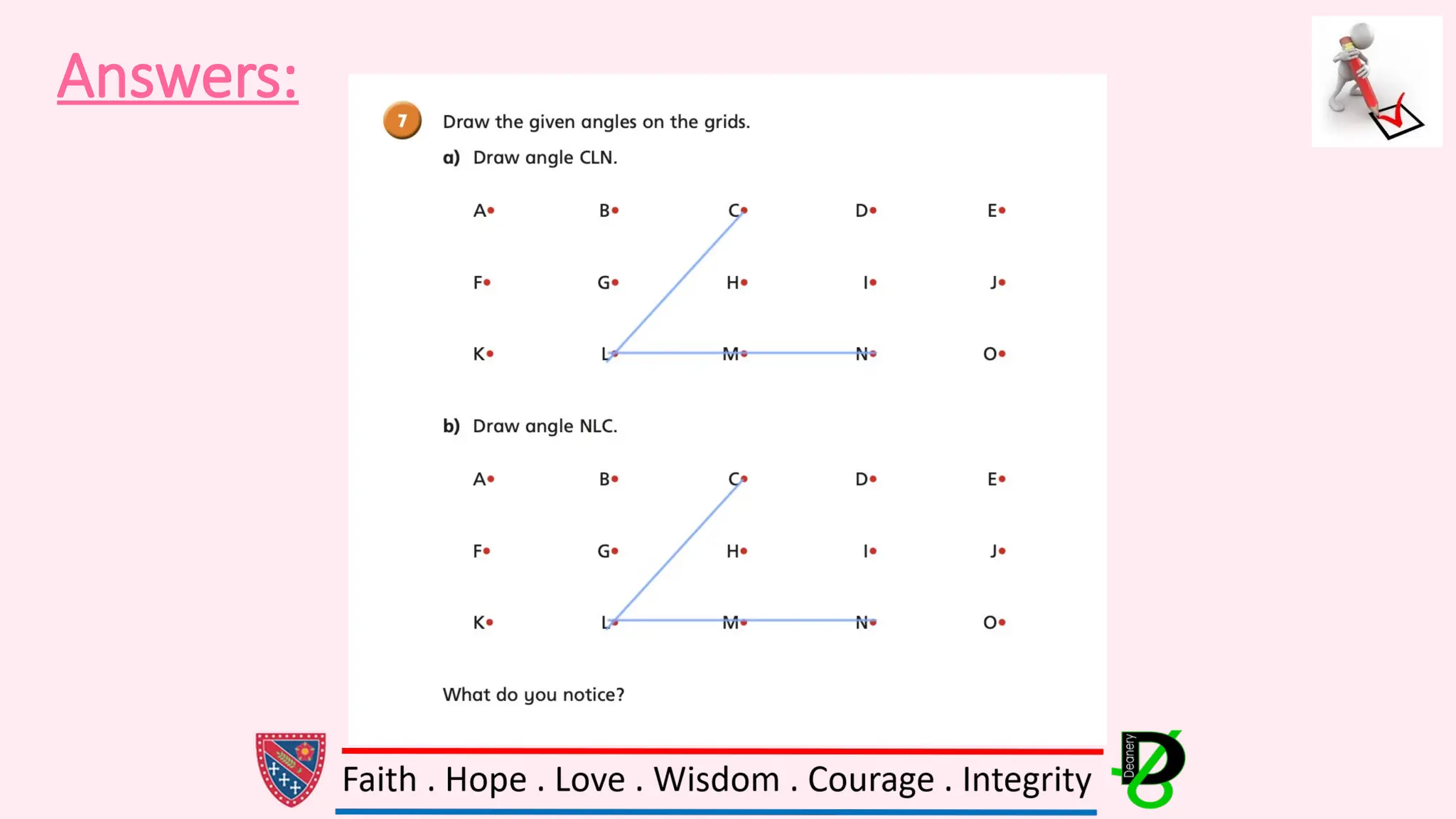
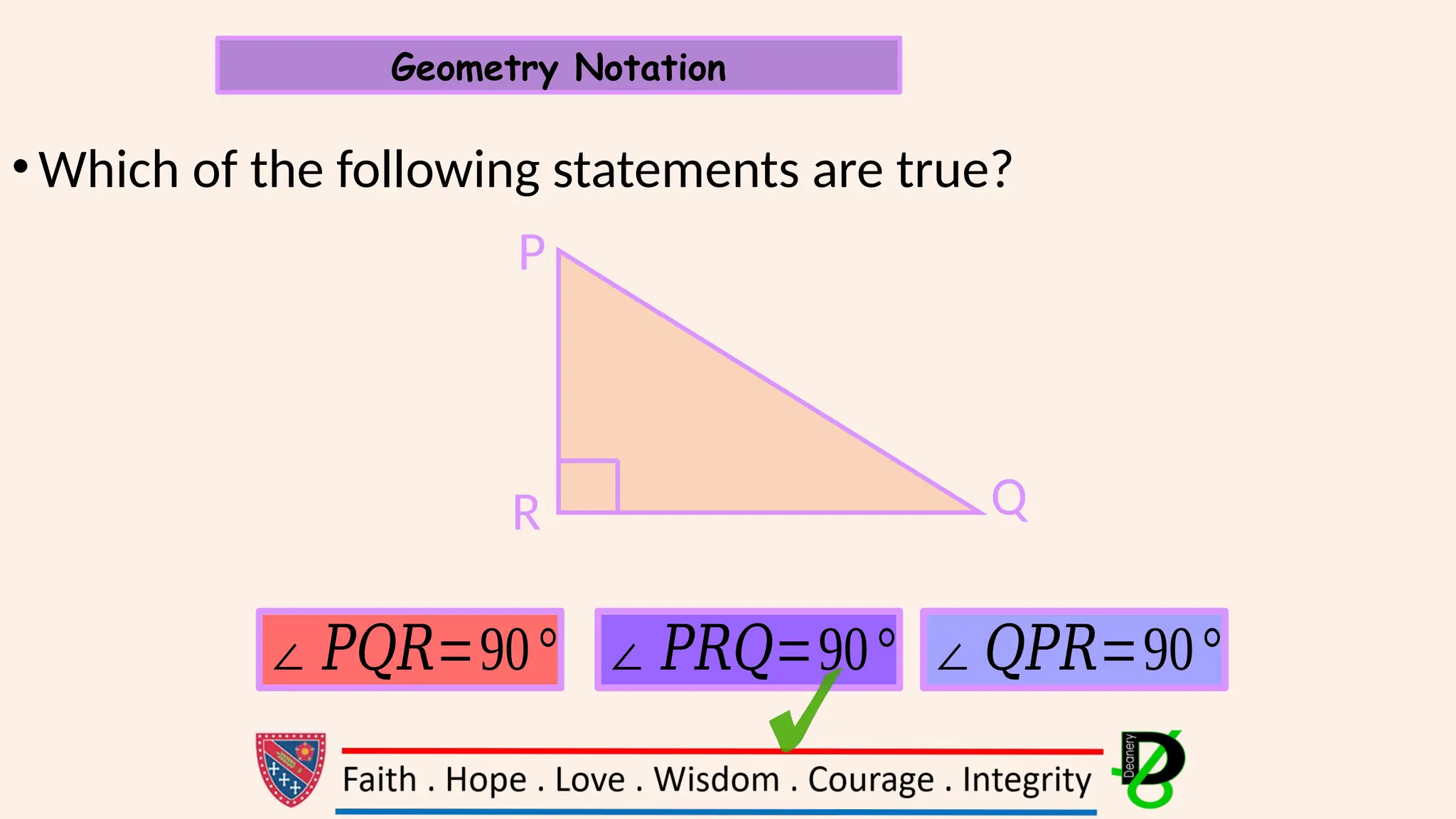
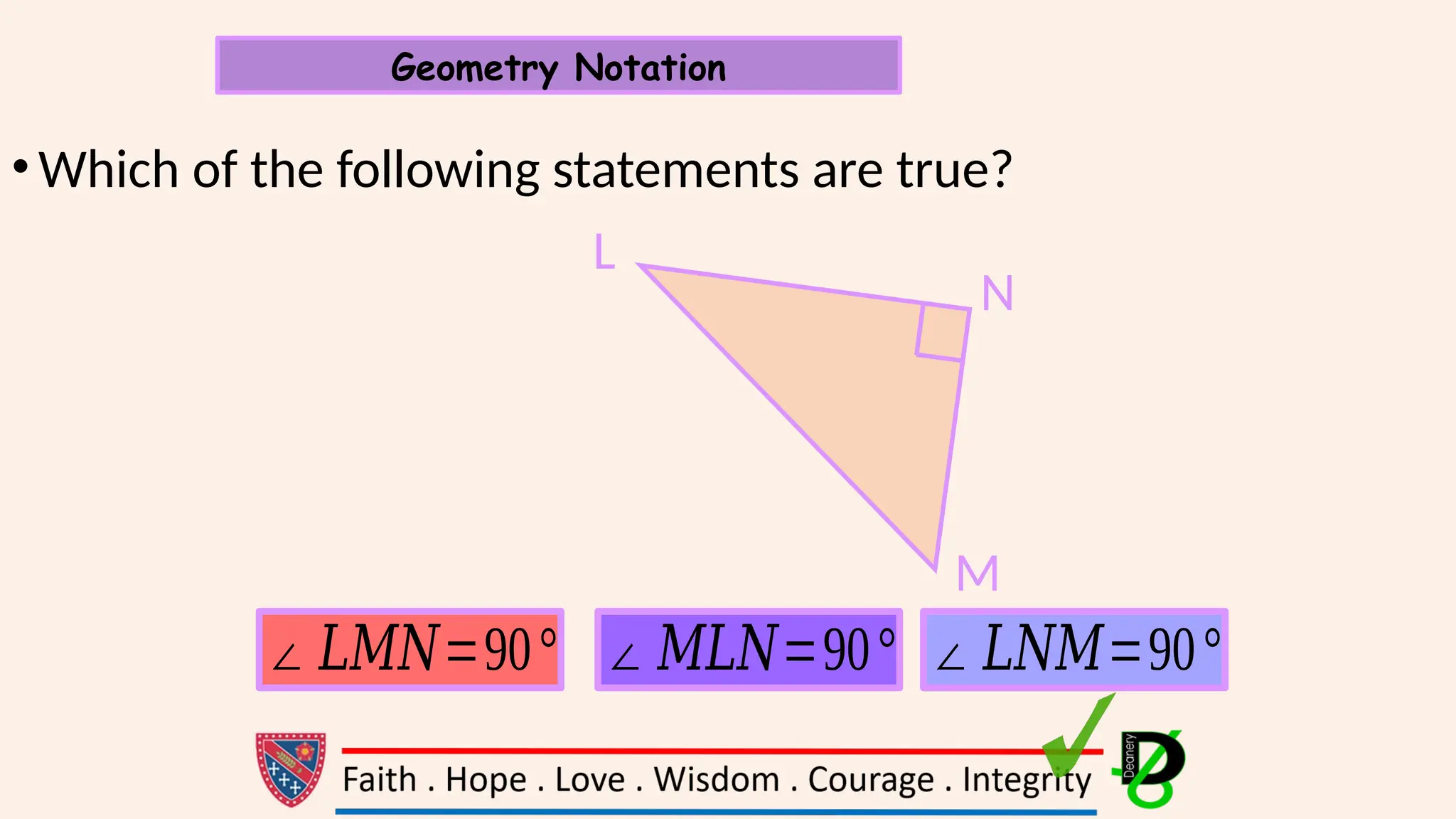
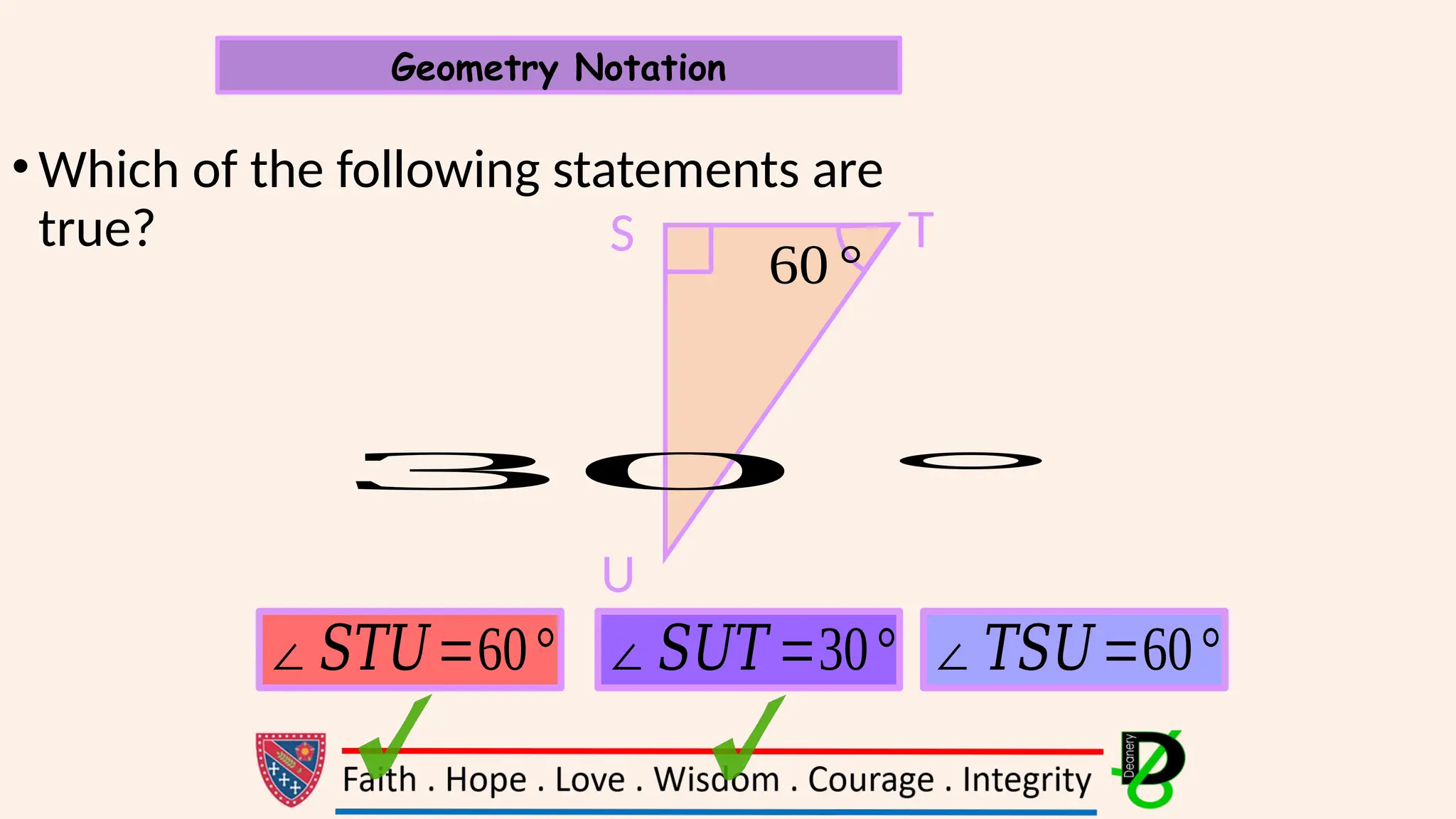
that is labelled, it could be an angle…
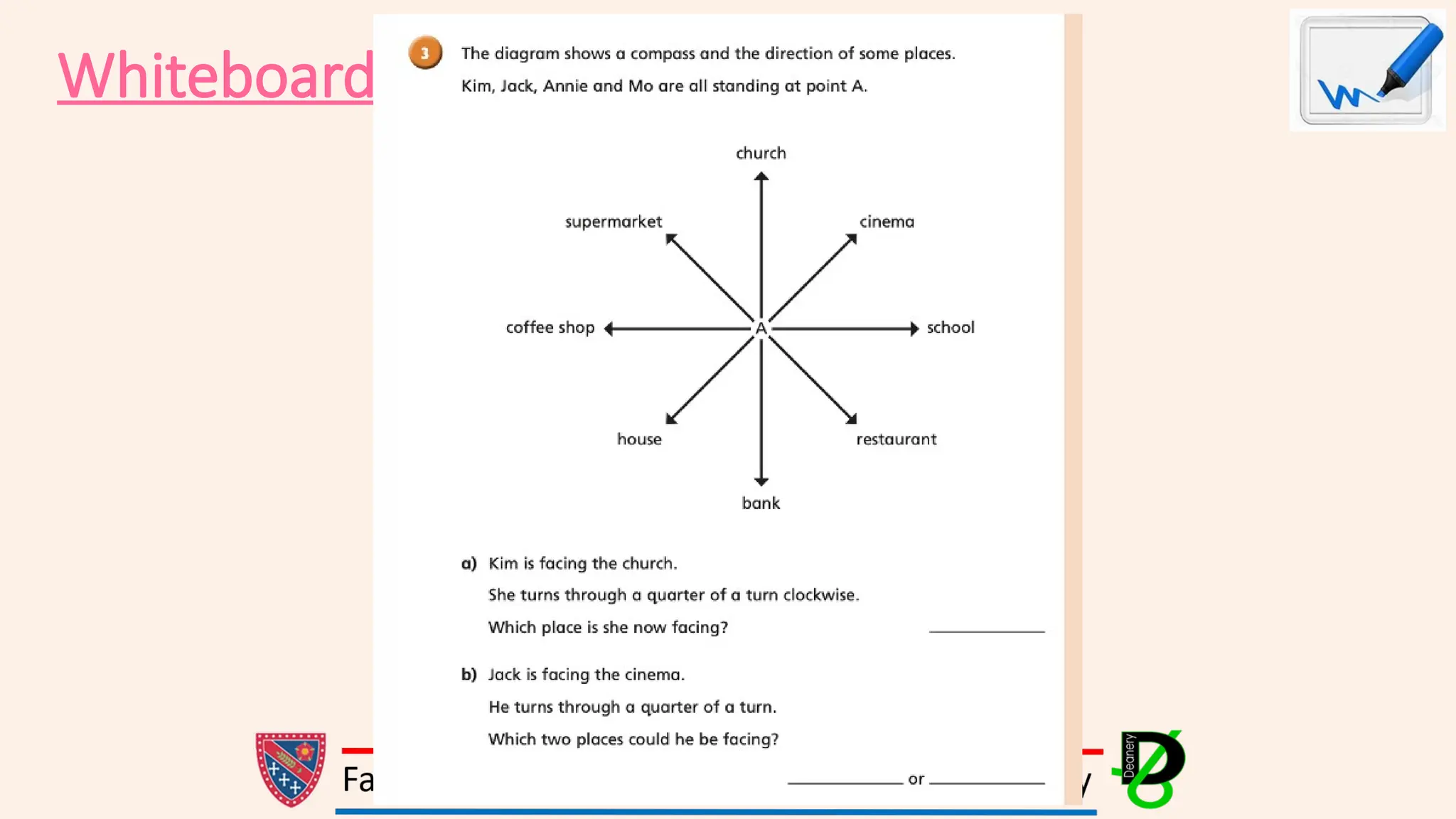
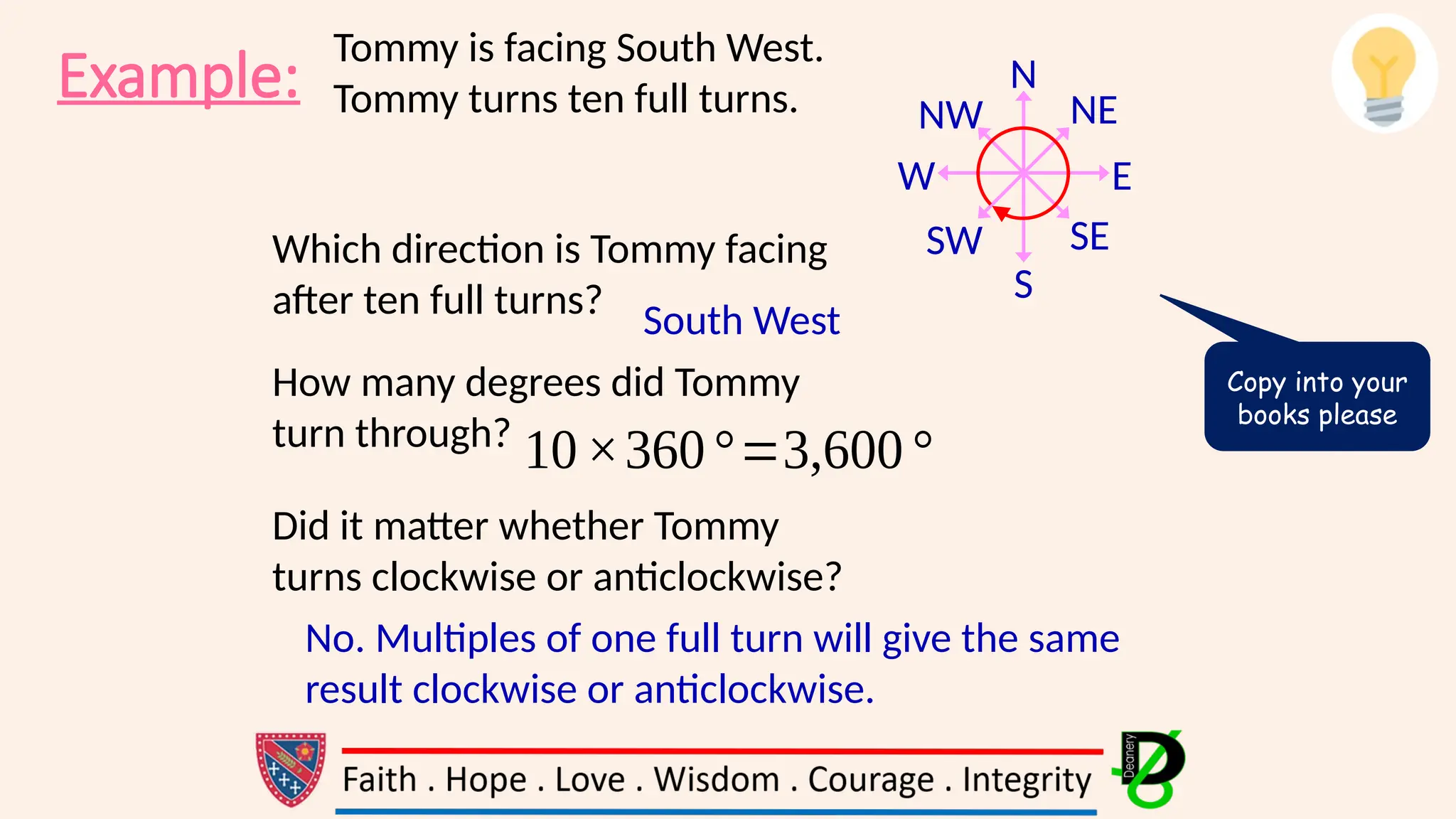
Example: N
S
E
W
NE
SE
SW
NW
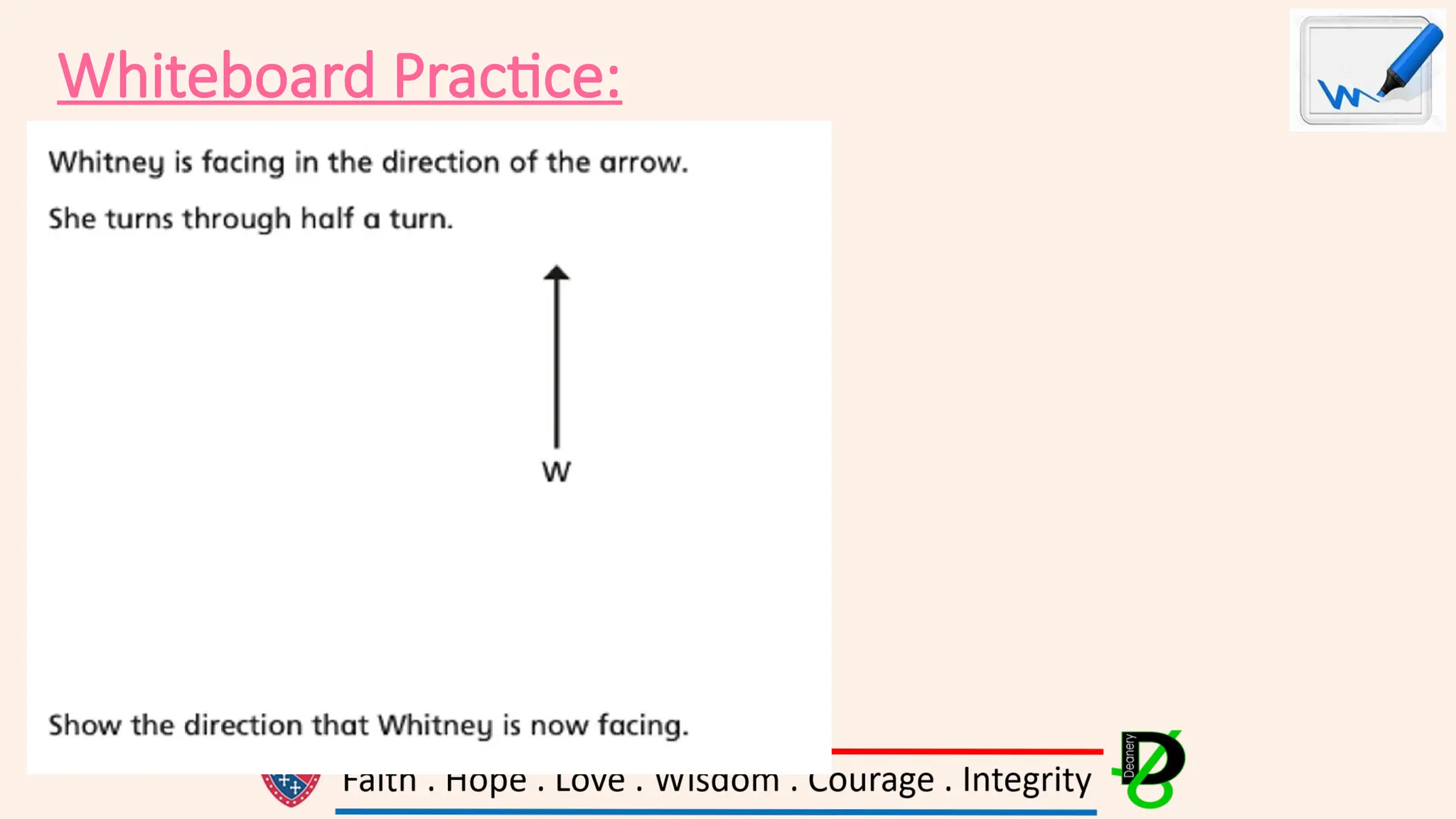
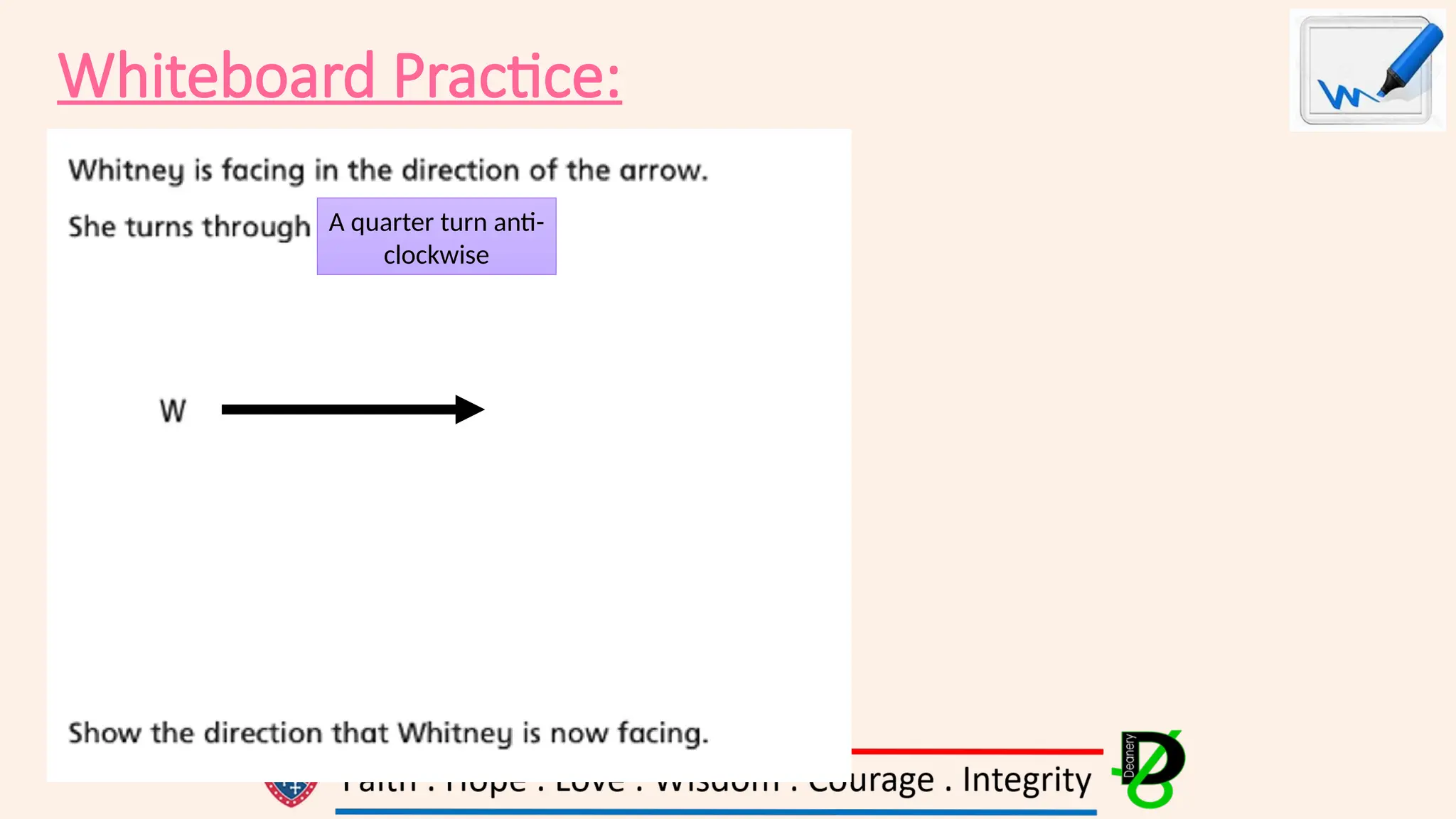
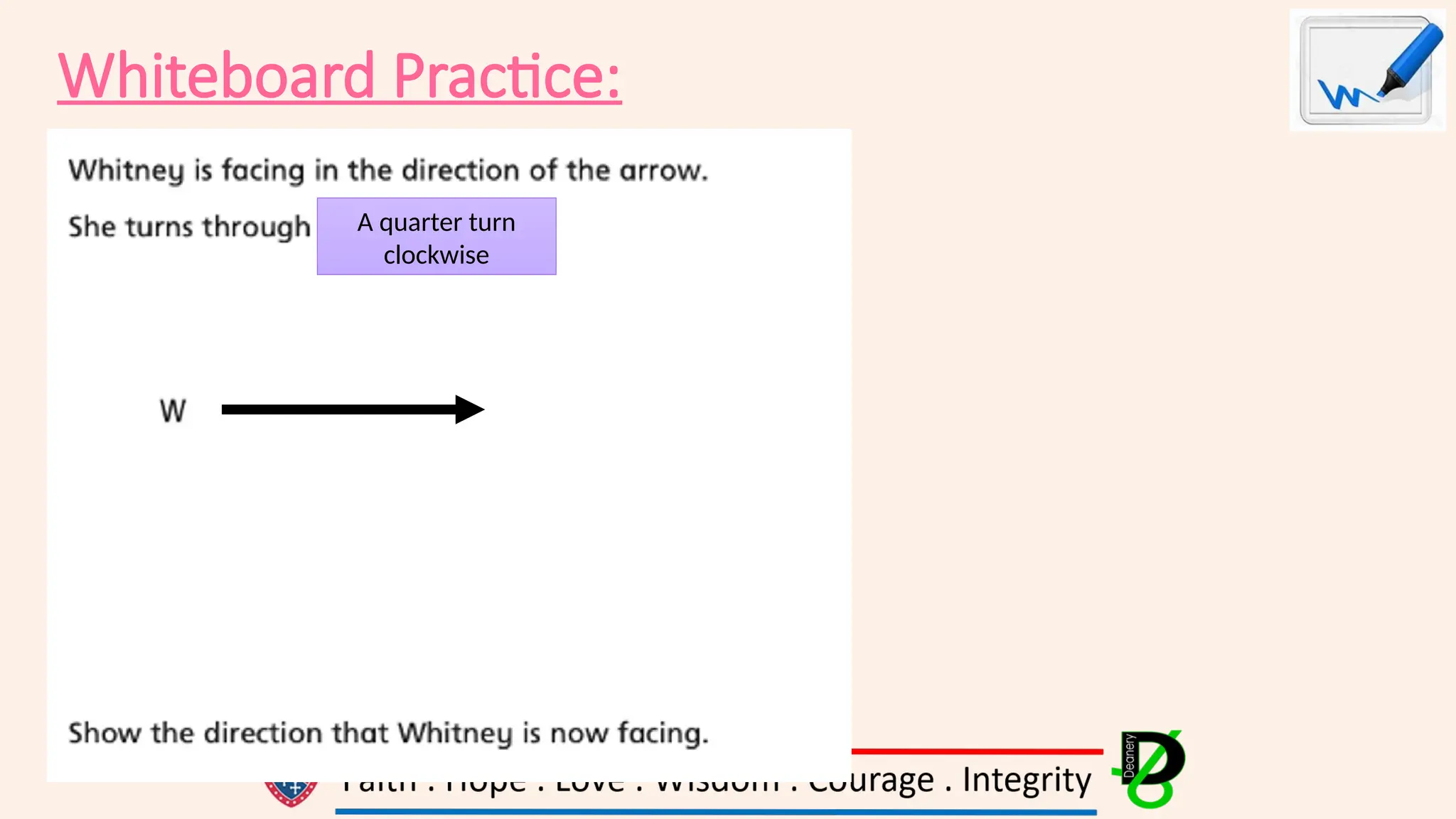
Tommy isfacing South West.
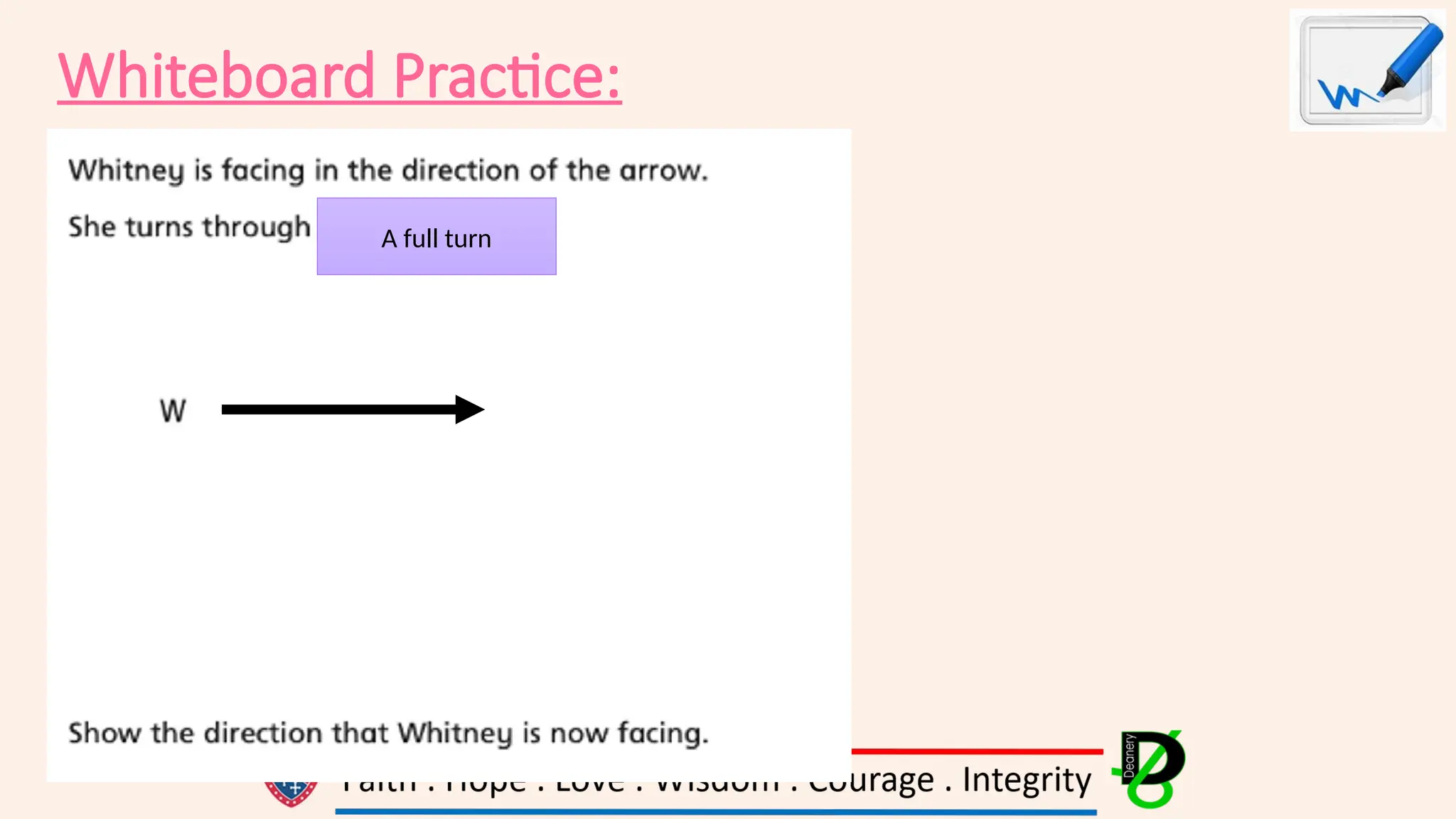
Tommy turns ten full turns.
Which direction is Tommy facing
after ten full turns?
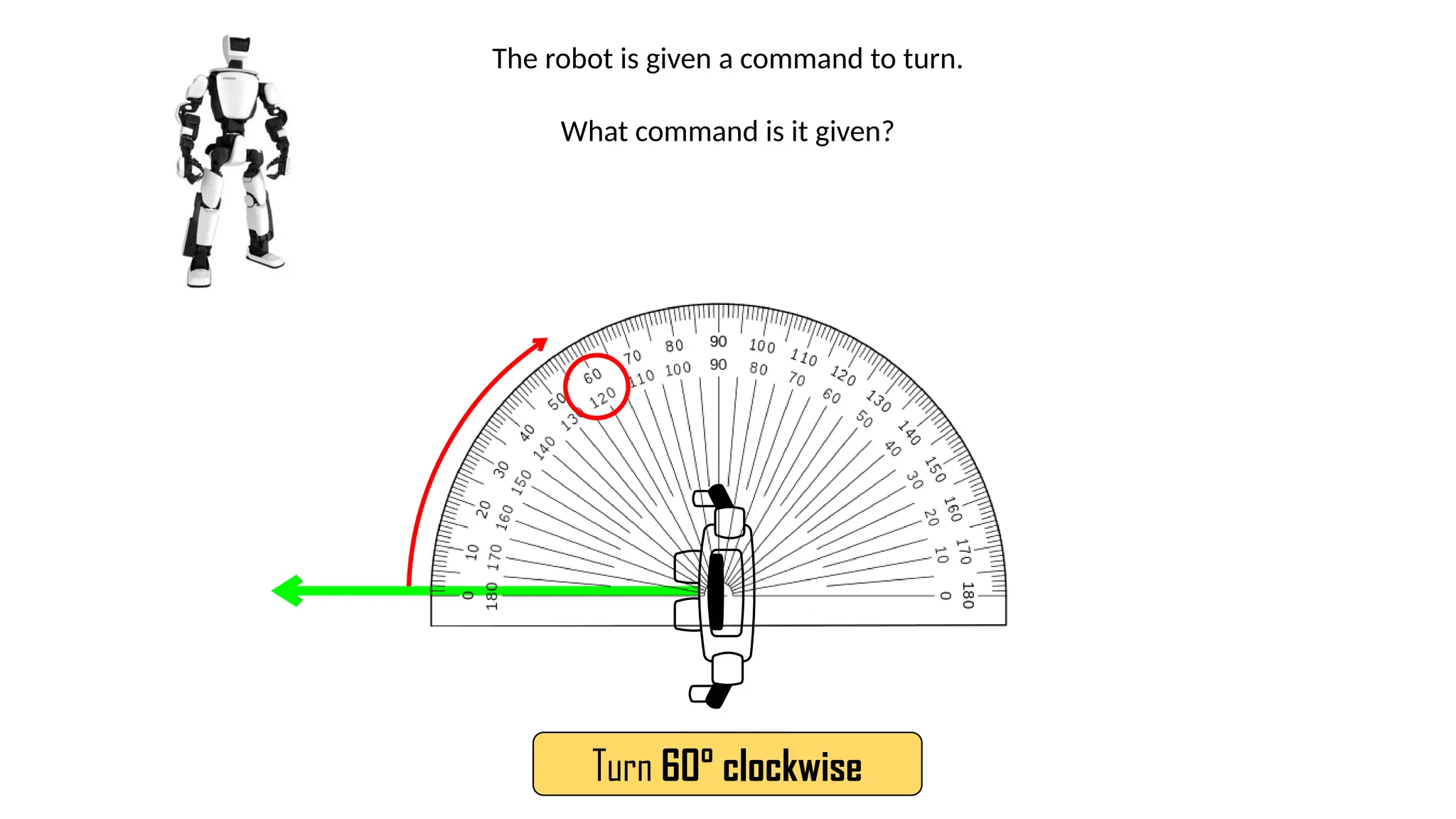
How many degrees did Tommy
turn through?
Did it matter whether Tommy
turns clockwise or anticlockwise?
South West
10×360°=3,600°
No. Multiples of one full turn will give the same
result clockwise or anticlockwise.
Copy into your
books please
24.
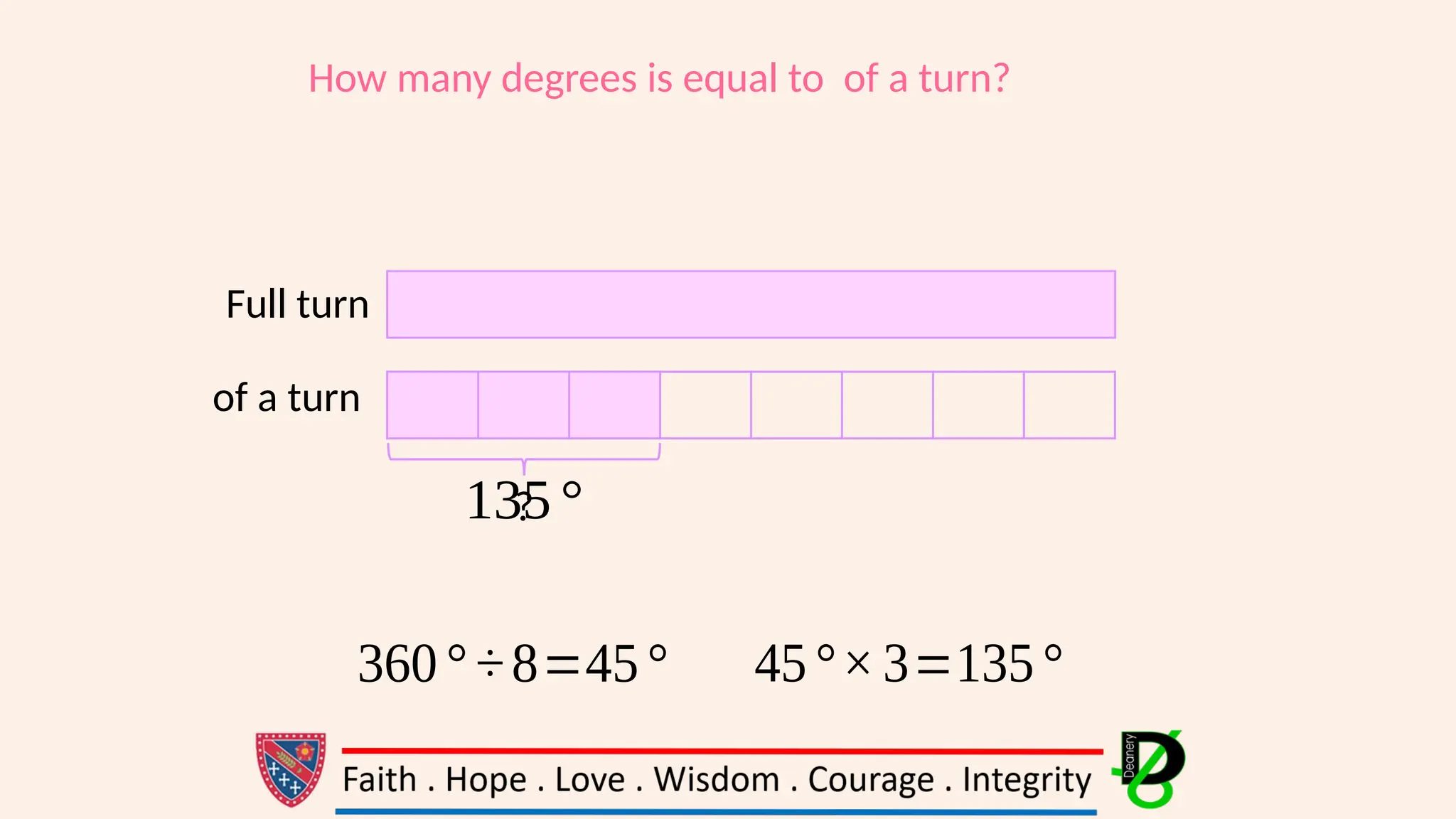
Full turn
How manydegrees is equal to of a turn?
of a turn
?
360° ÷8=45° 45°×3=135°
135°
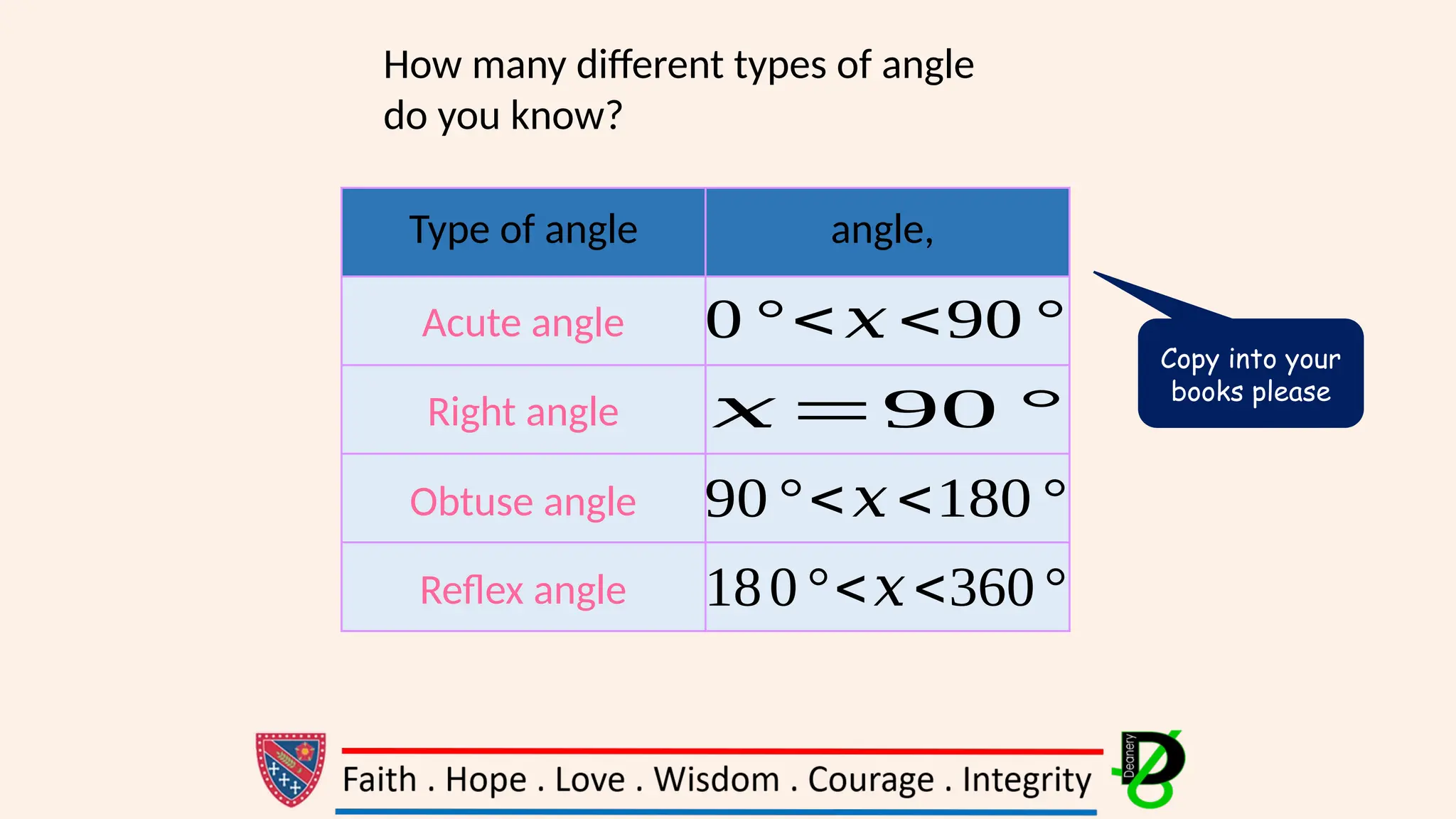
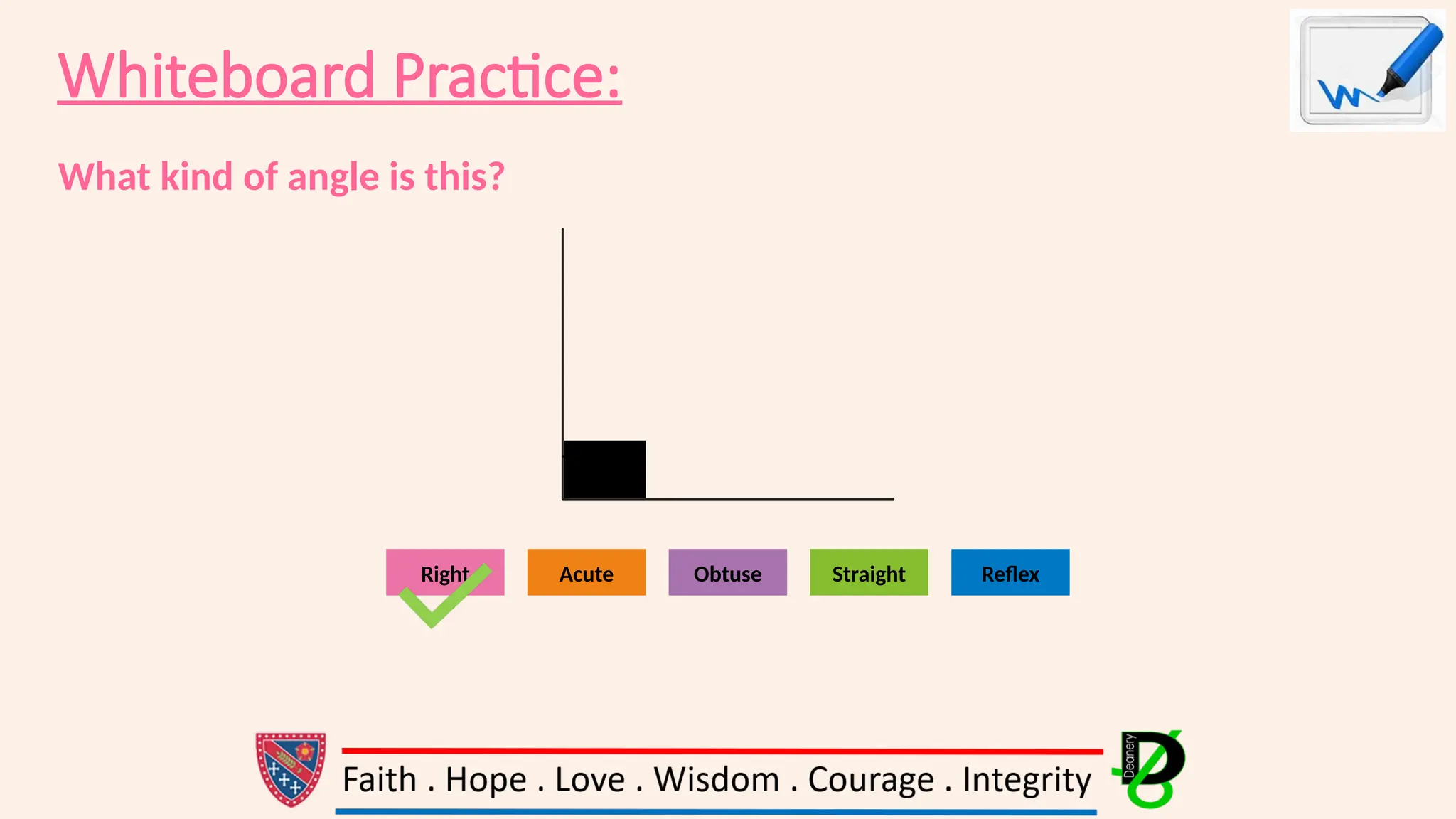
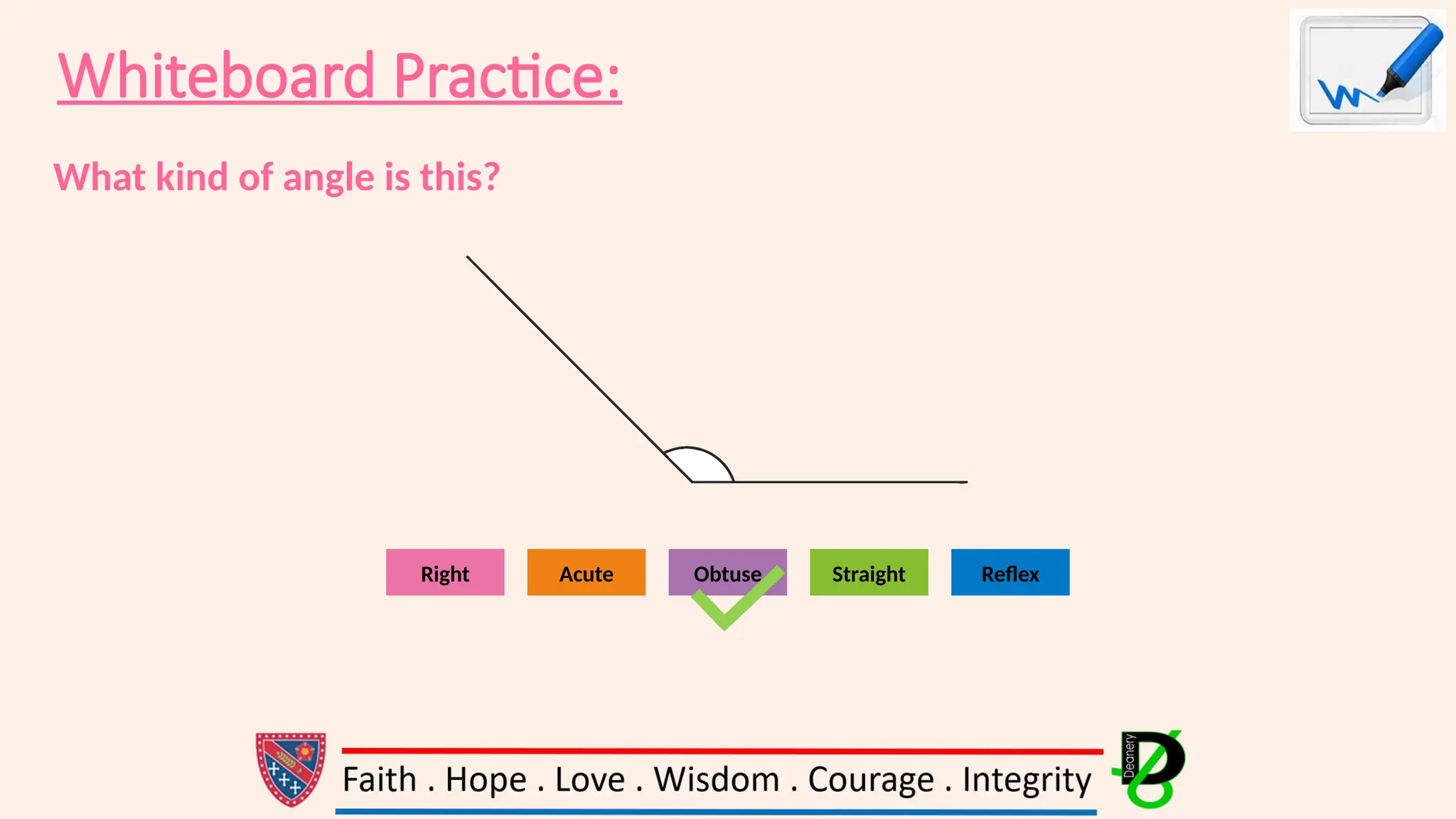
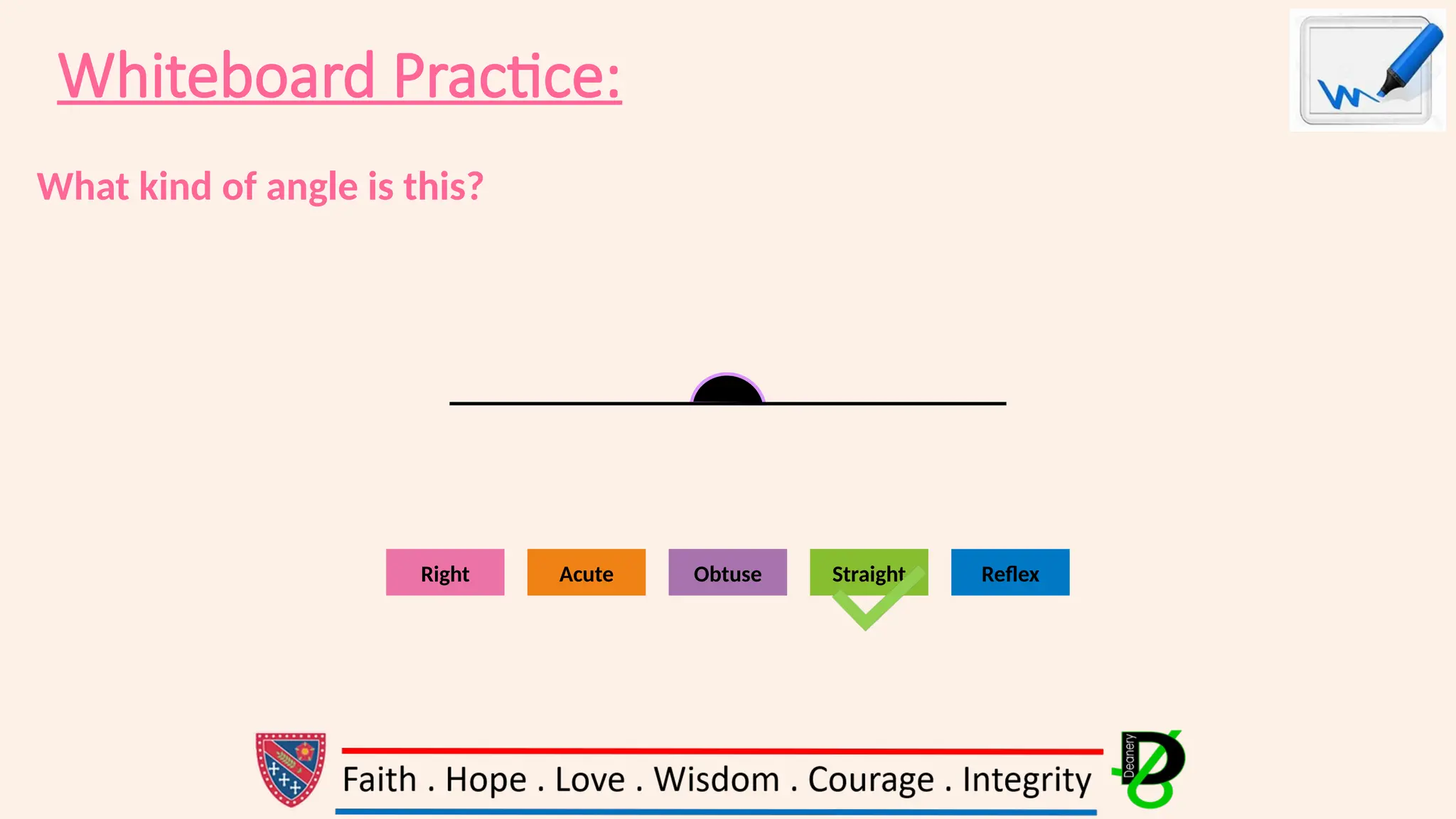
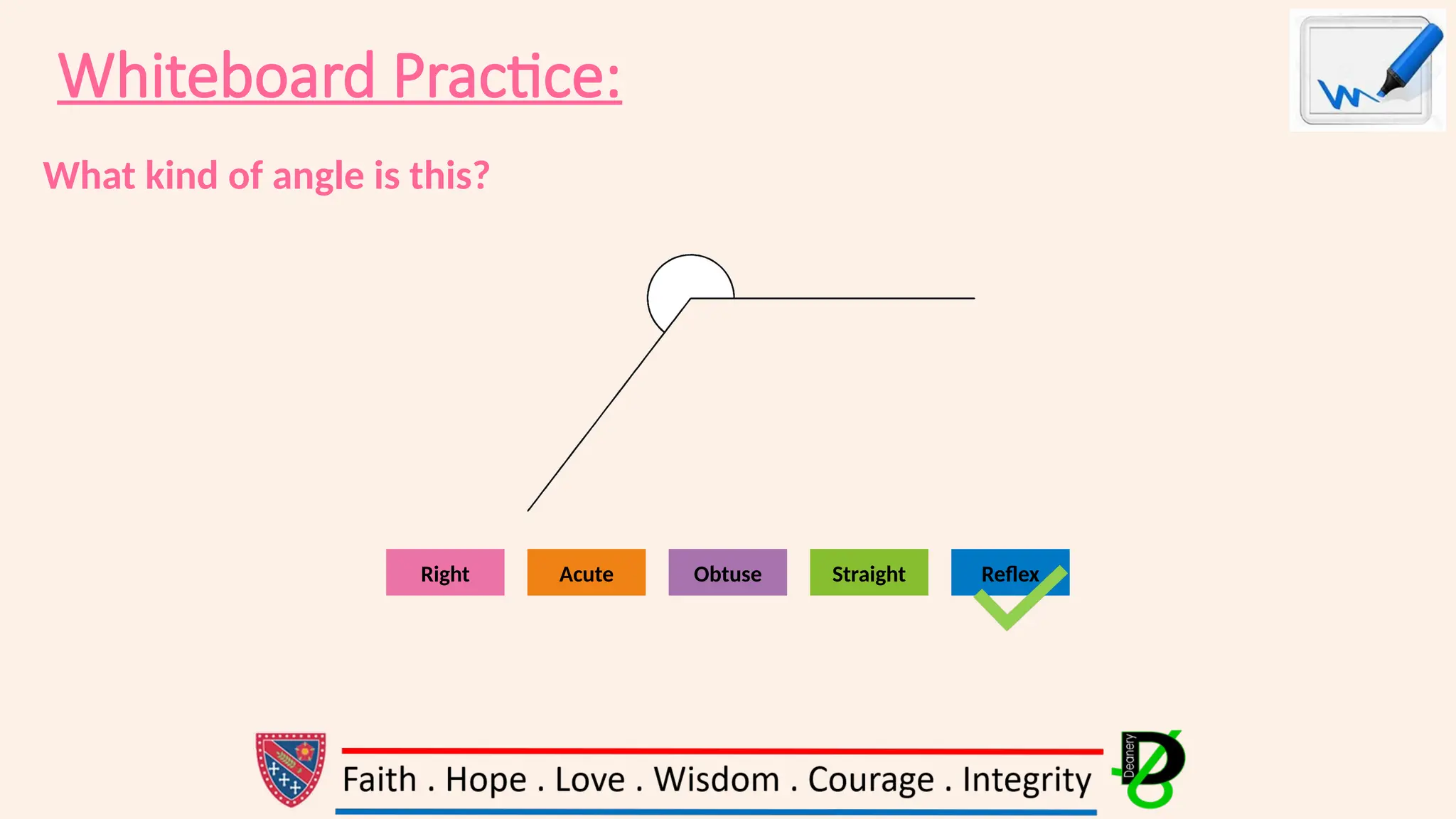
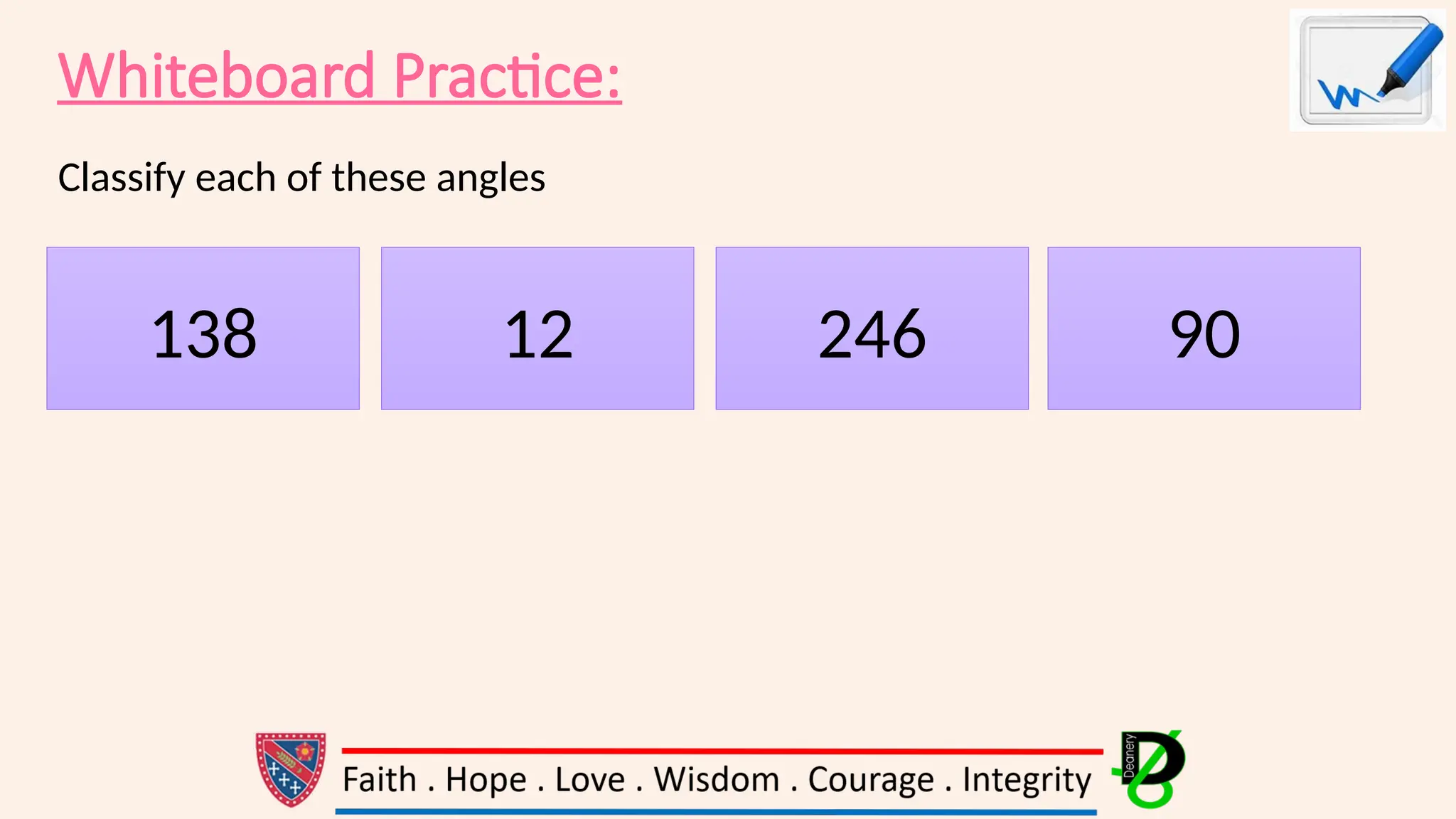
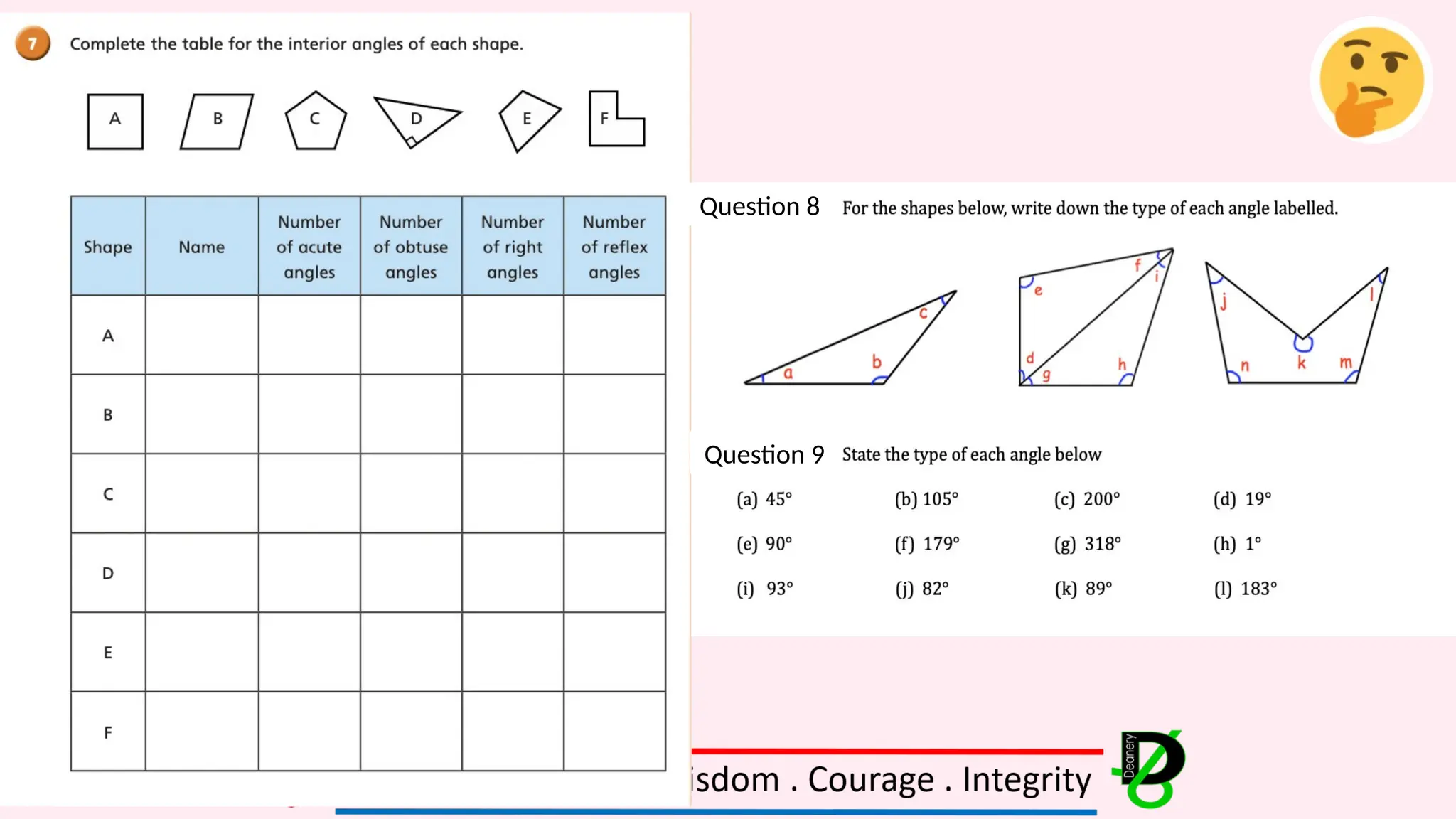
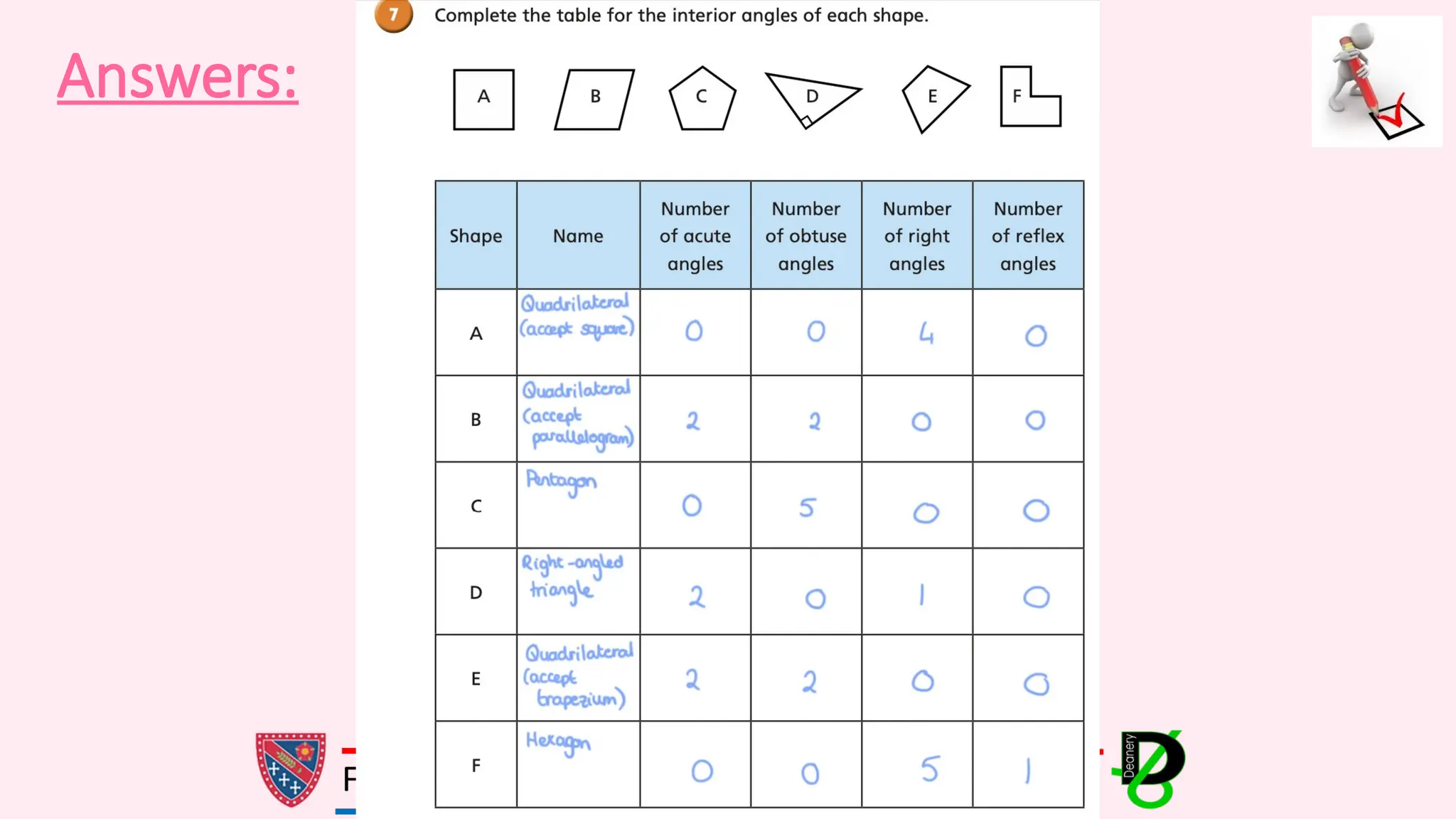
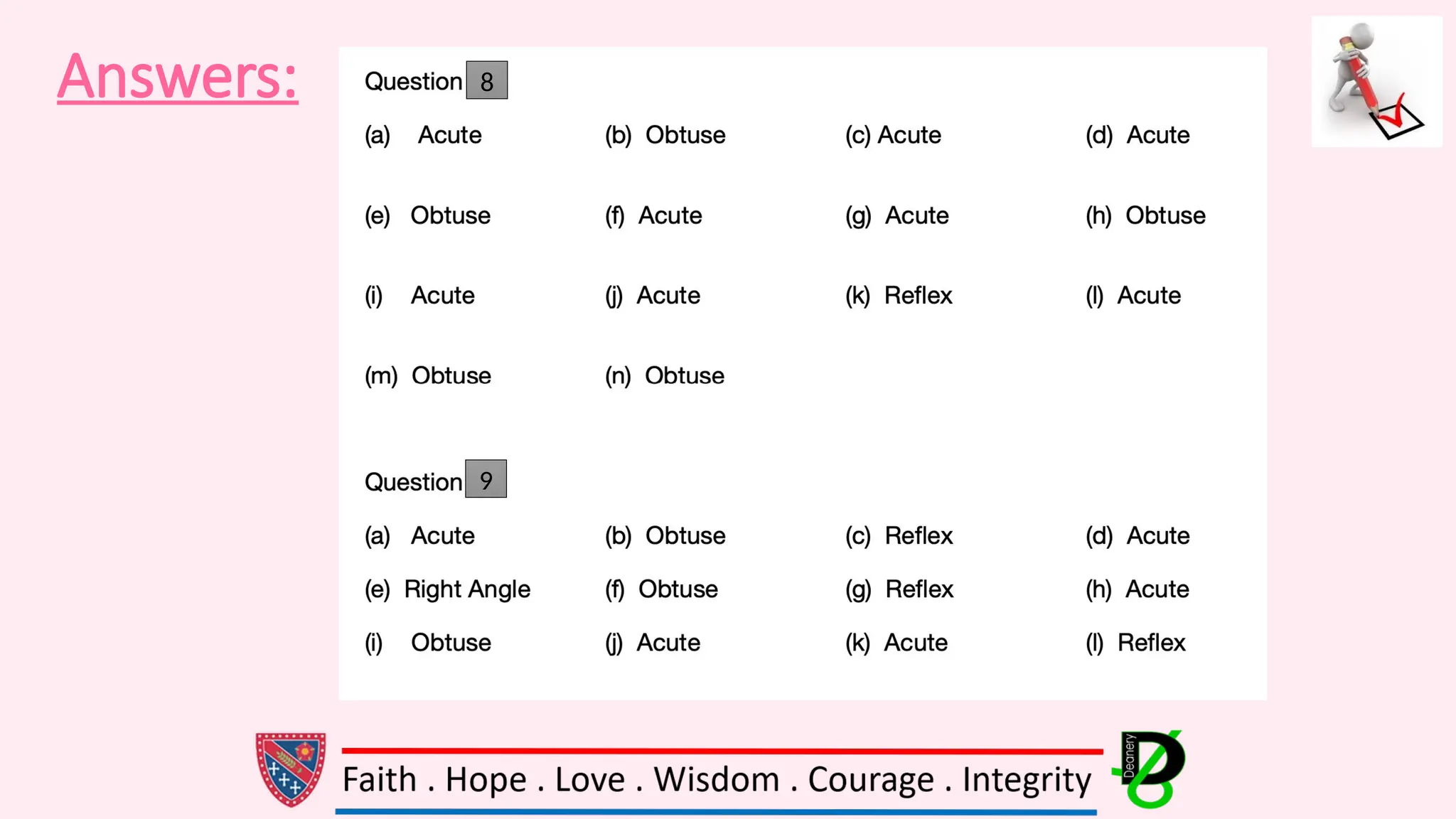
How many differenttypes of angle
do you know?
Type of angle angle,
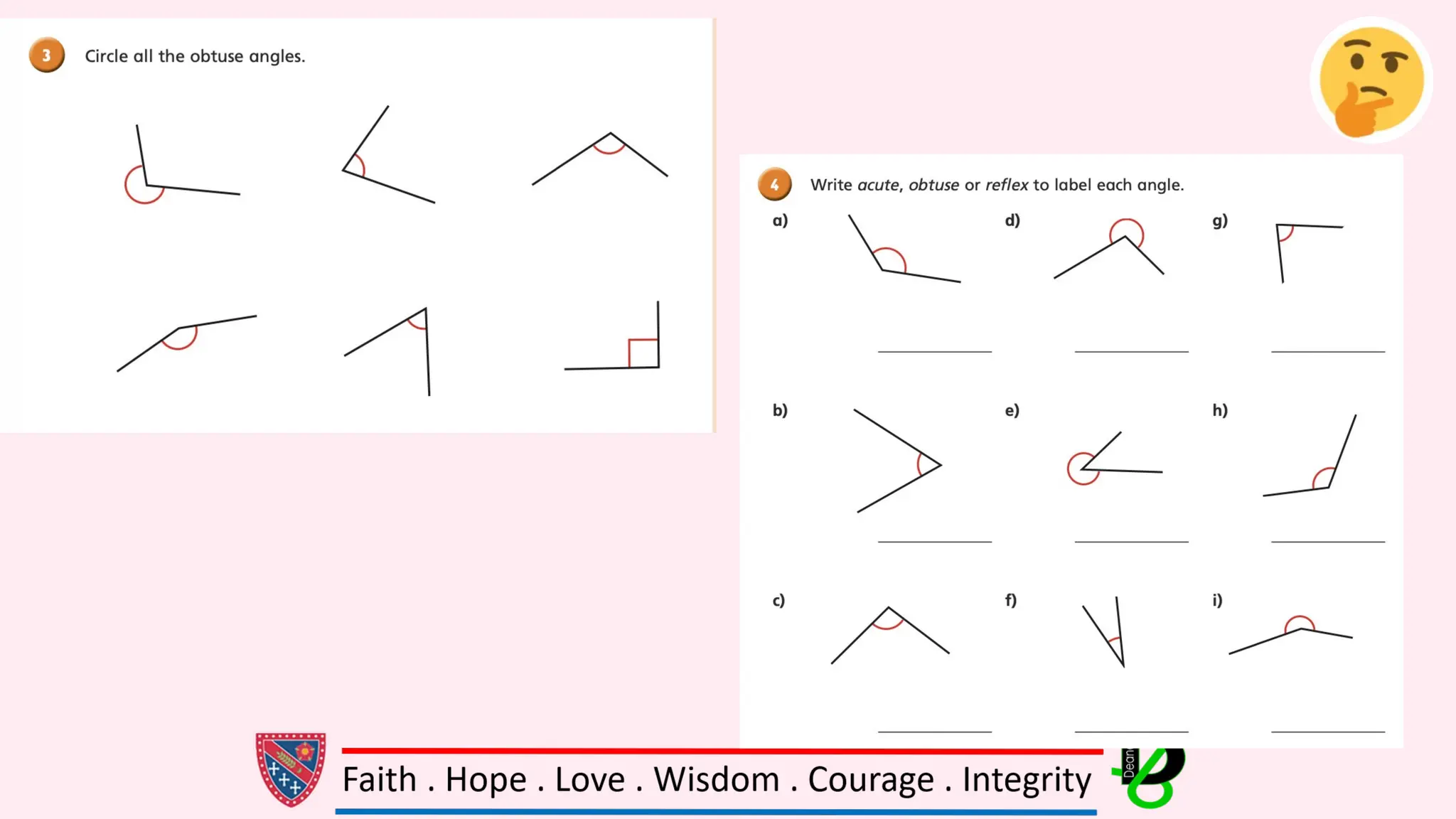
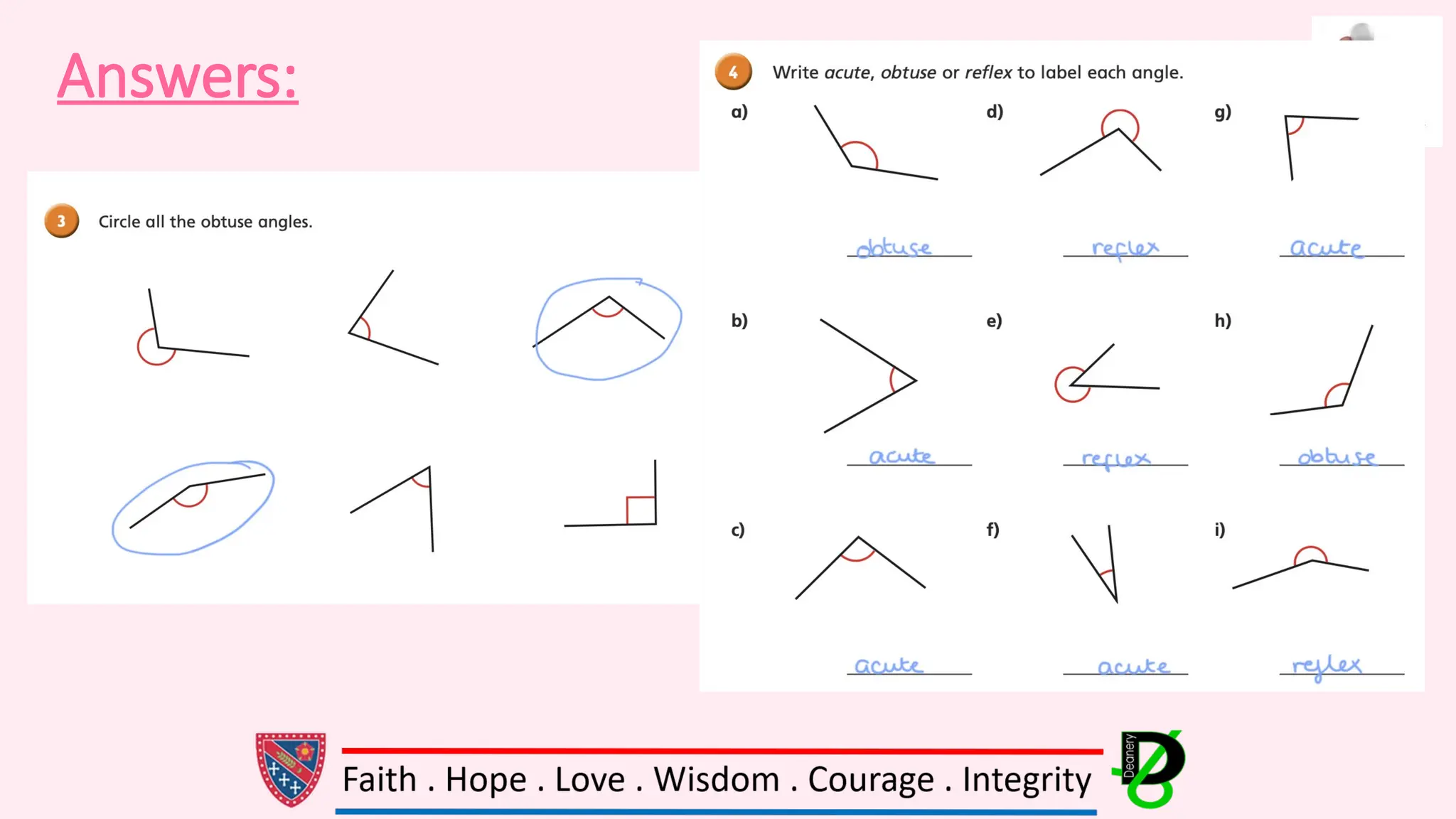
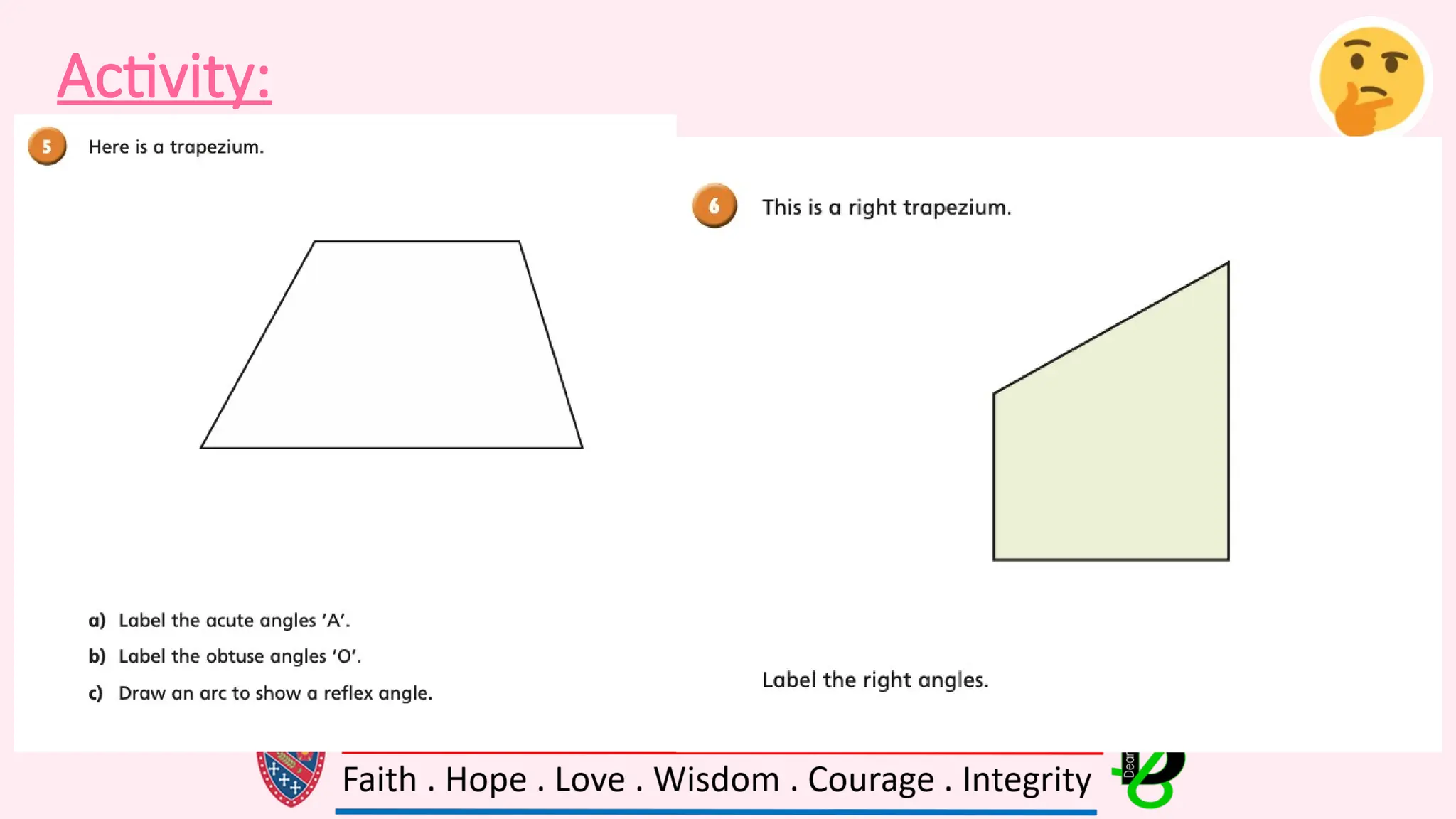
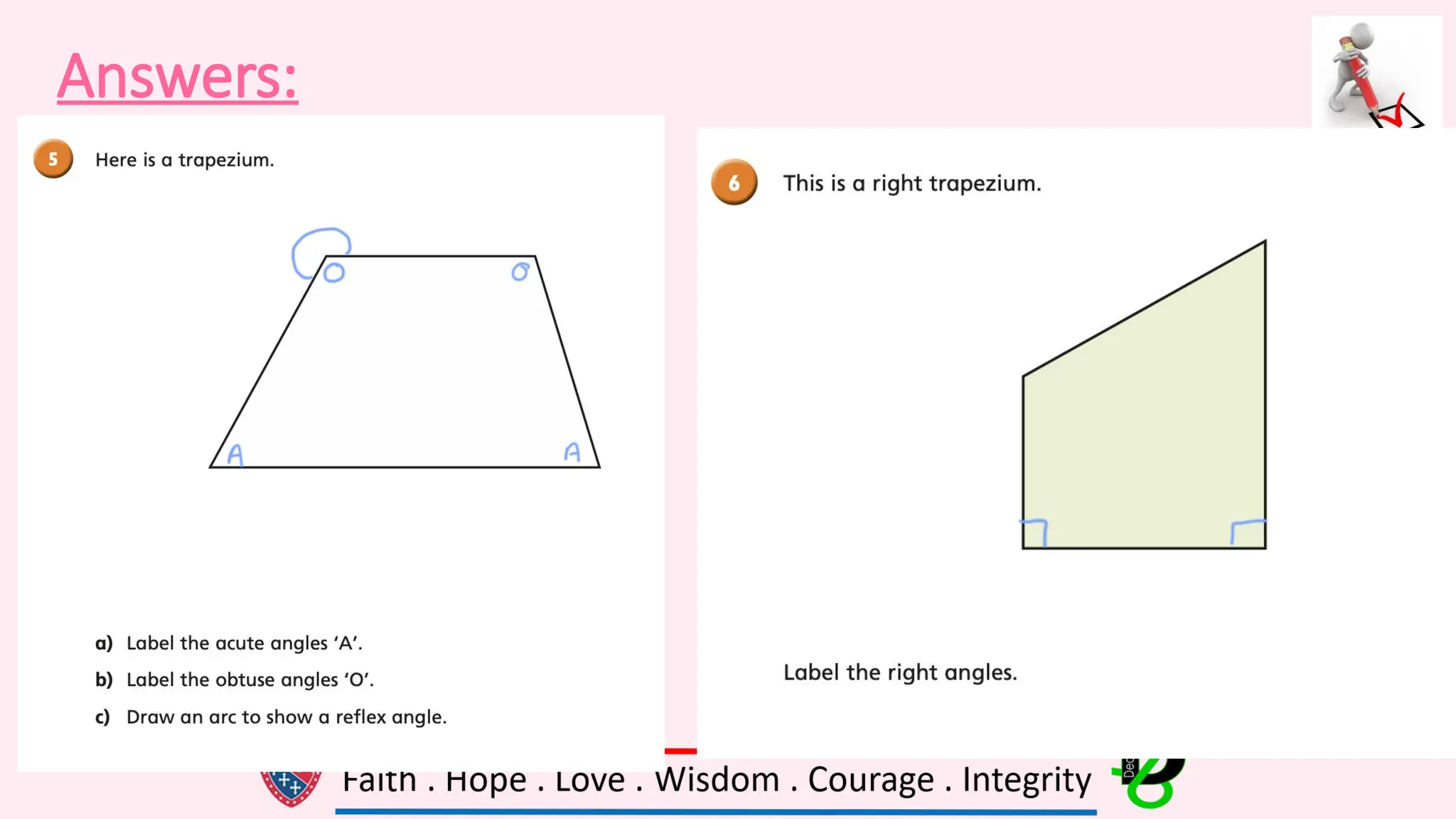
Acute angle
Right angle
Obtuse angle
Reflex angle
0 °<𝑥 <90 °
𝑥=90 °
90°<𝑥<180°
180°<𝑥<360°
Copy into your
books please
28.
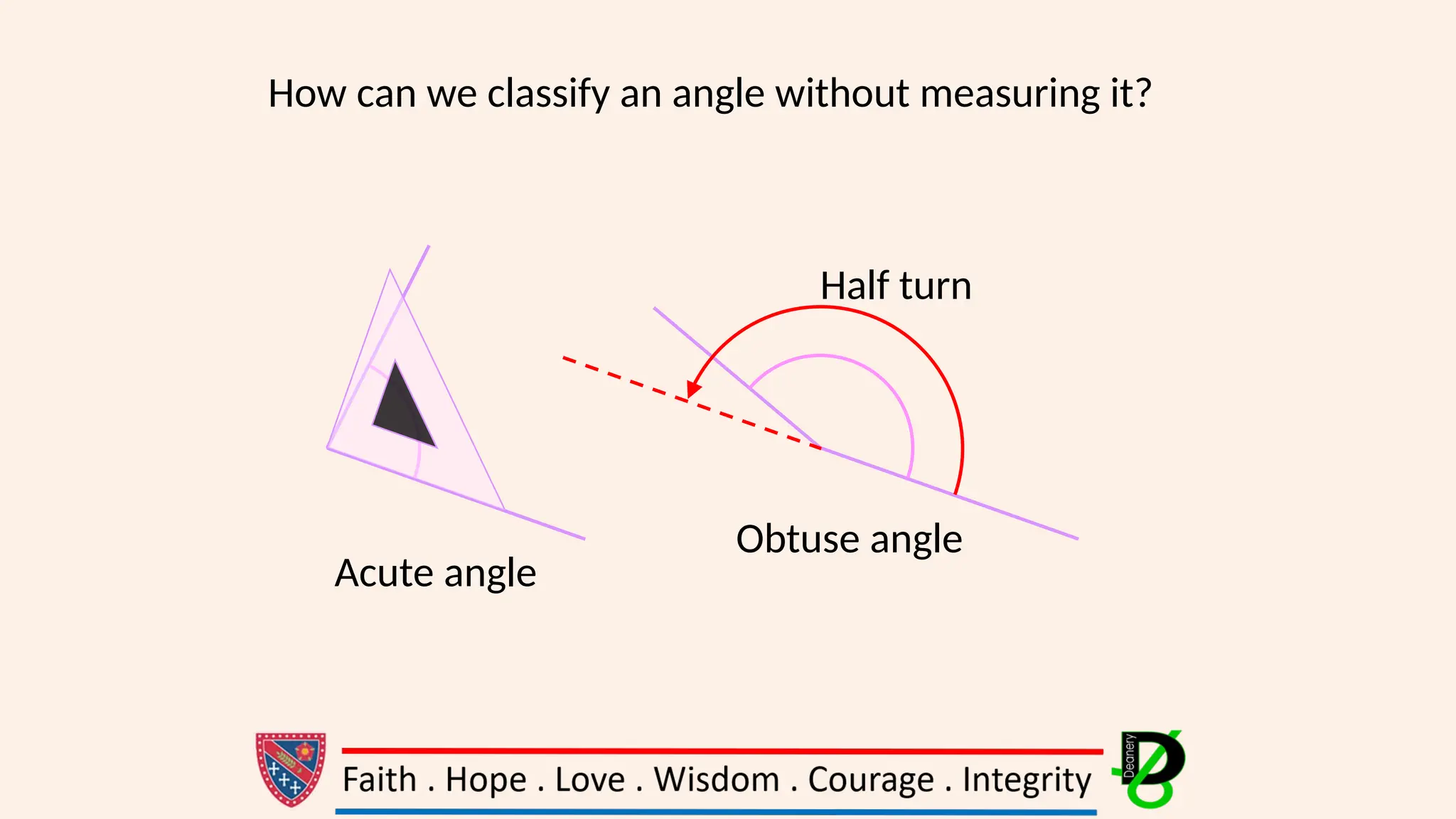
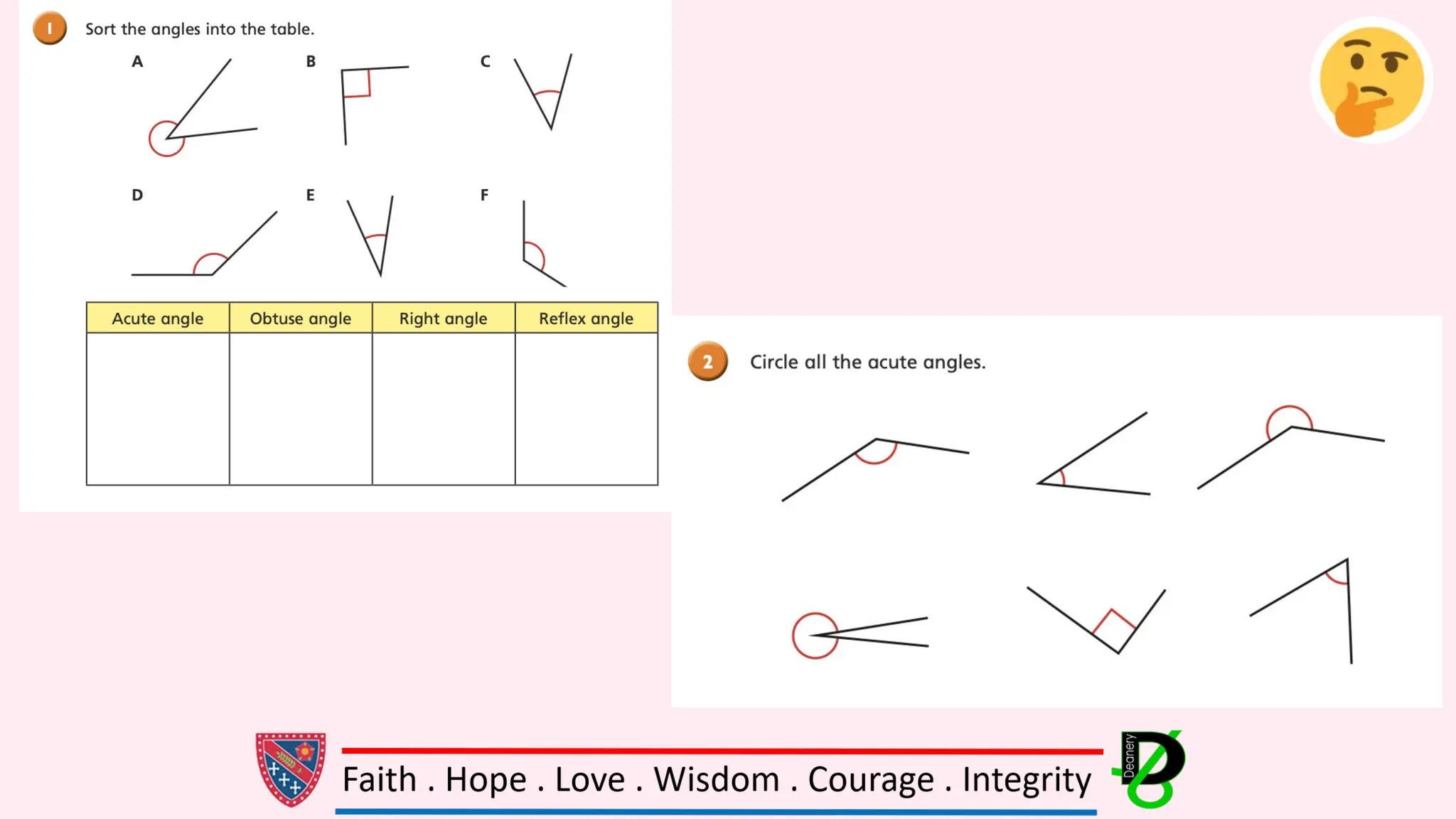
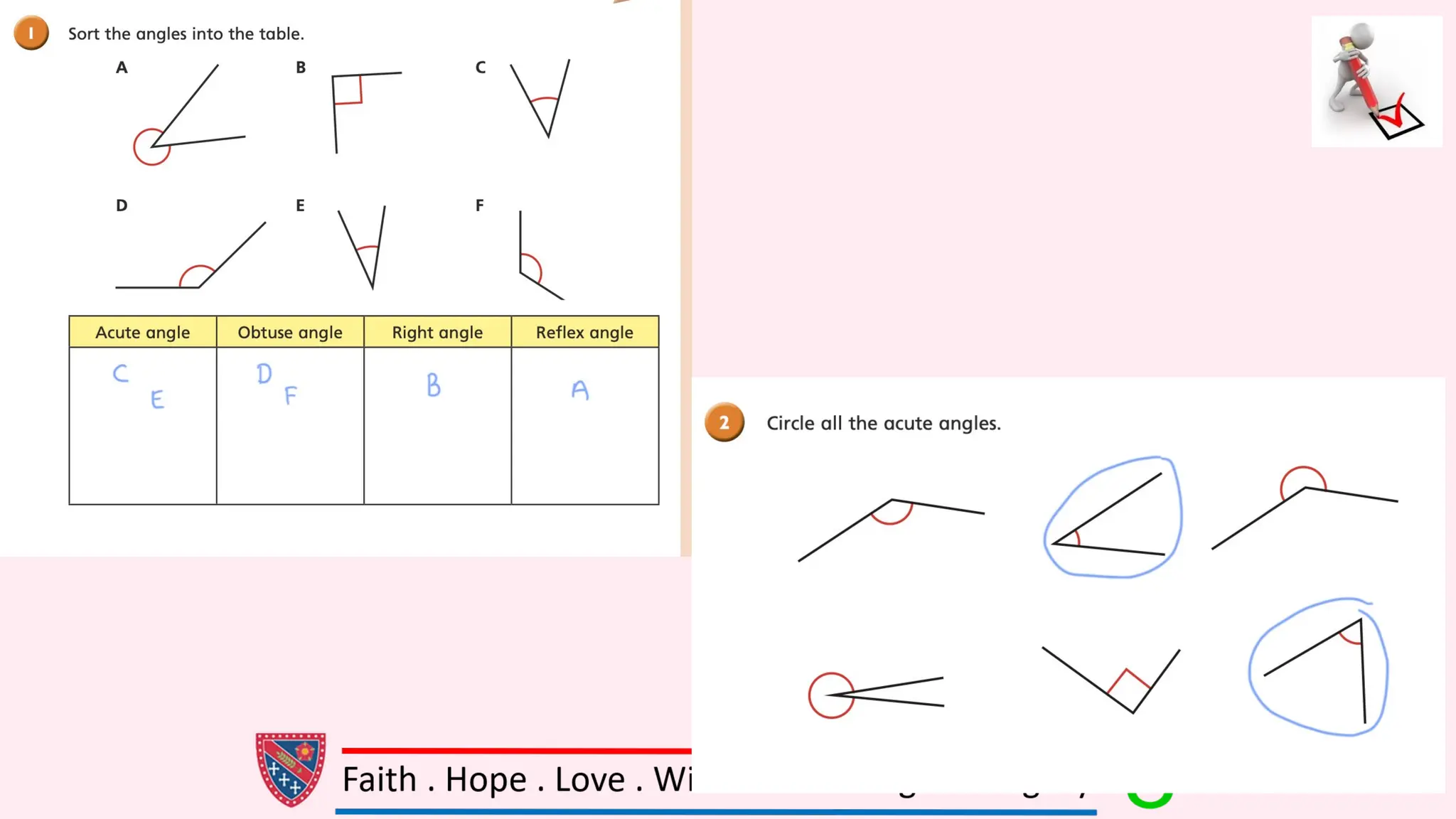
How can weclassify an angle without measuring it?
Half turn
Acute angle
Obtuse angle
29.
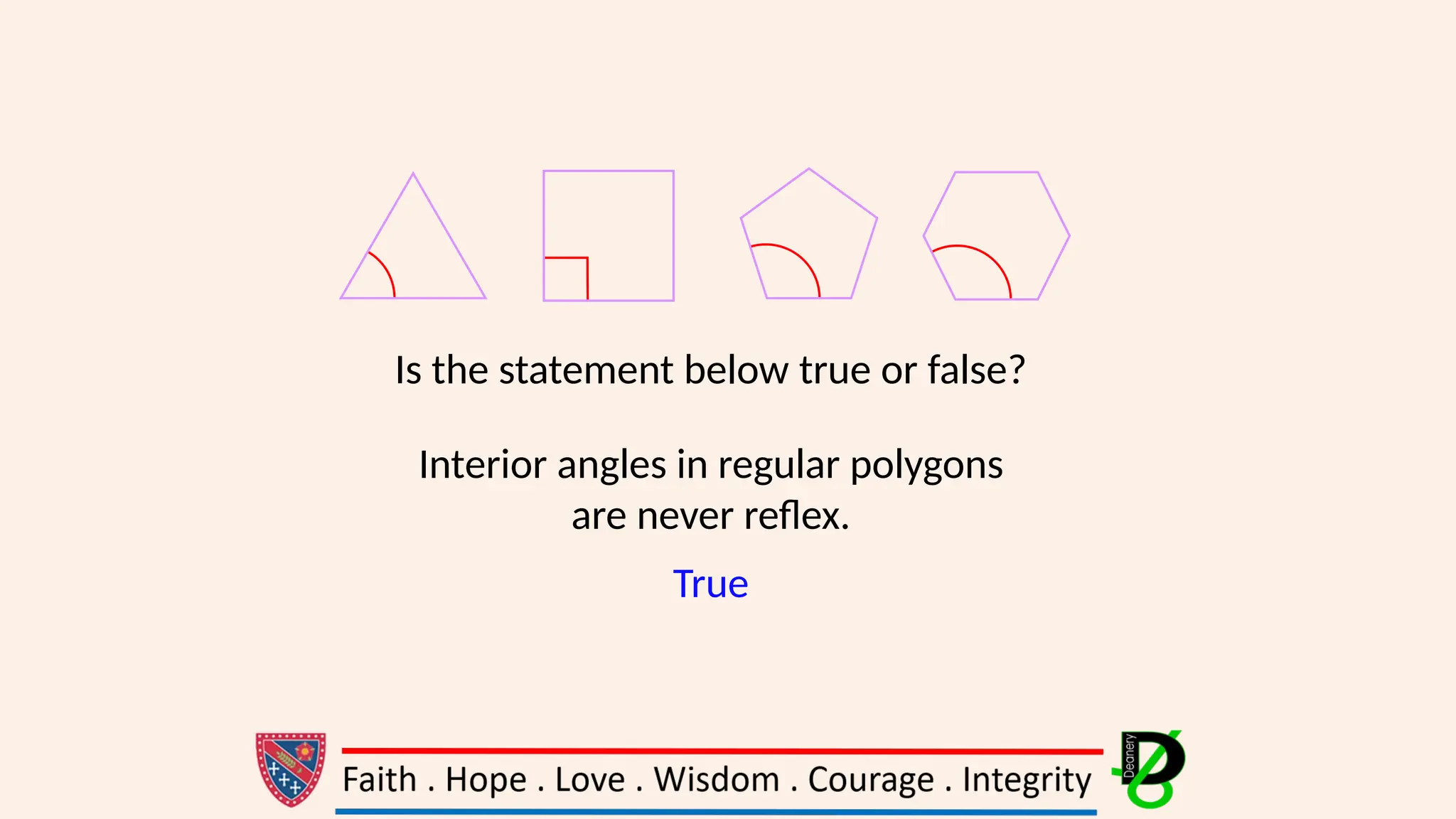
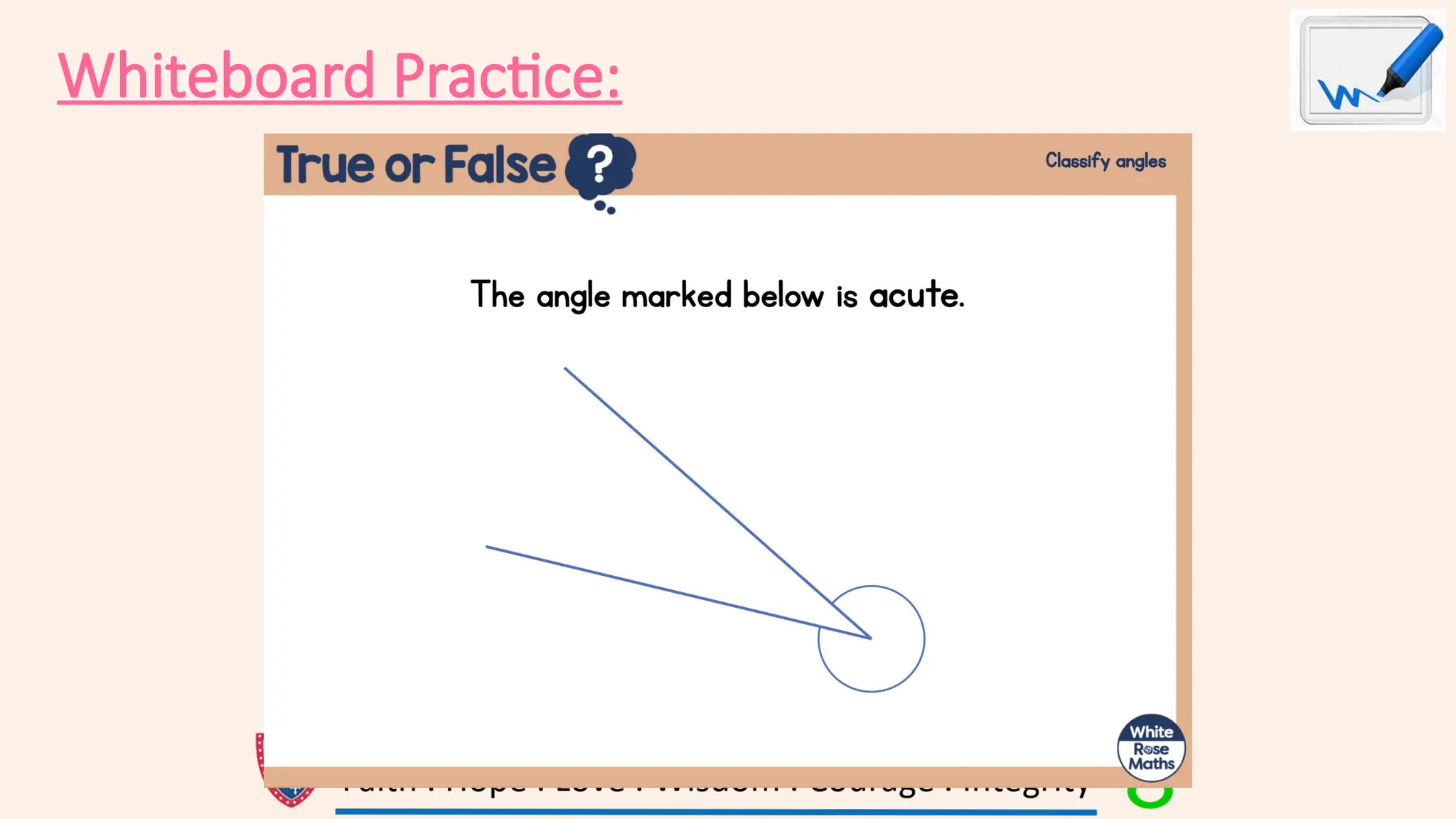
Is the statementbelow true or false?
Interior angles in regular polygons
are never reflex.
True
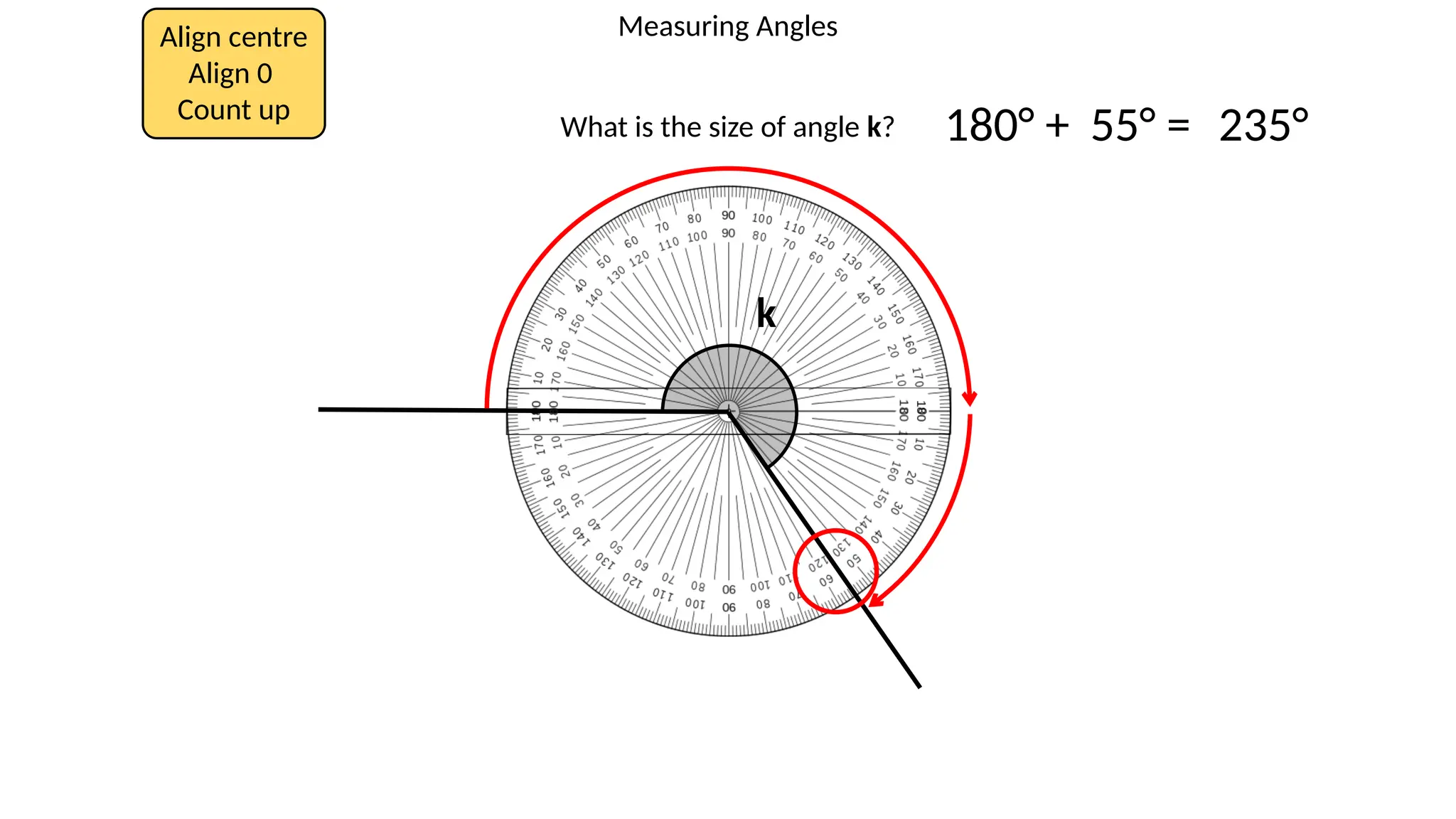
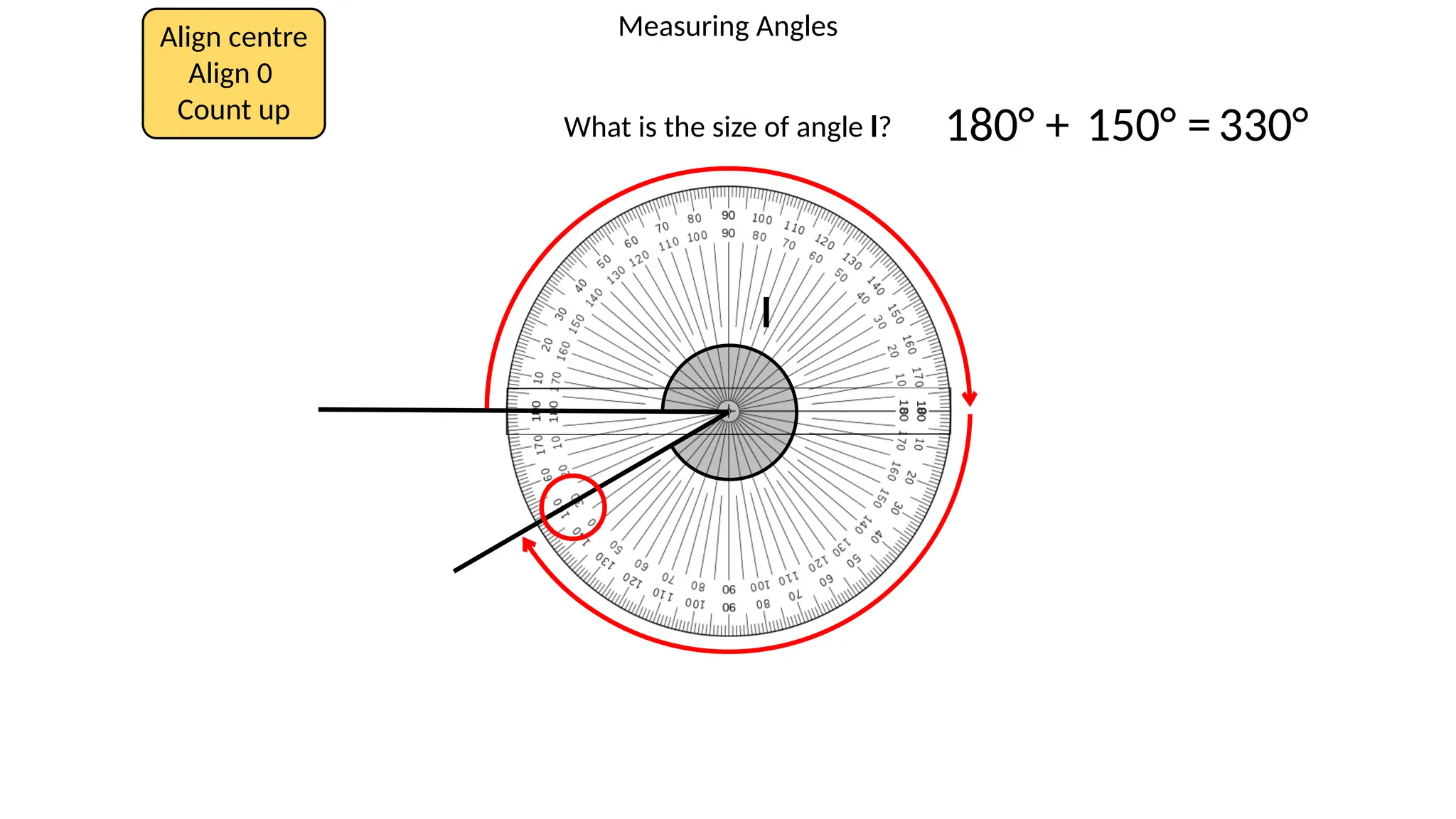
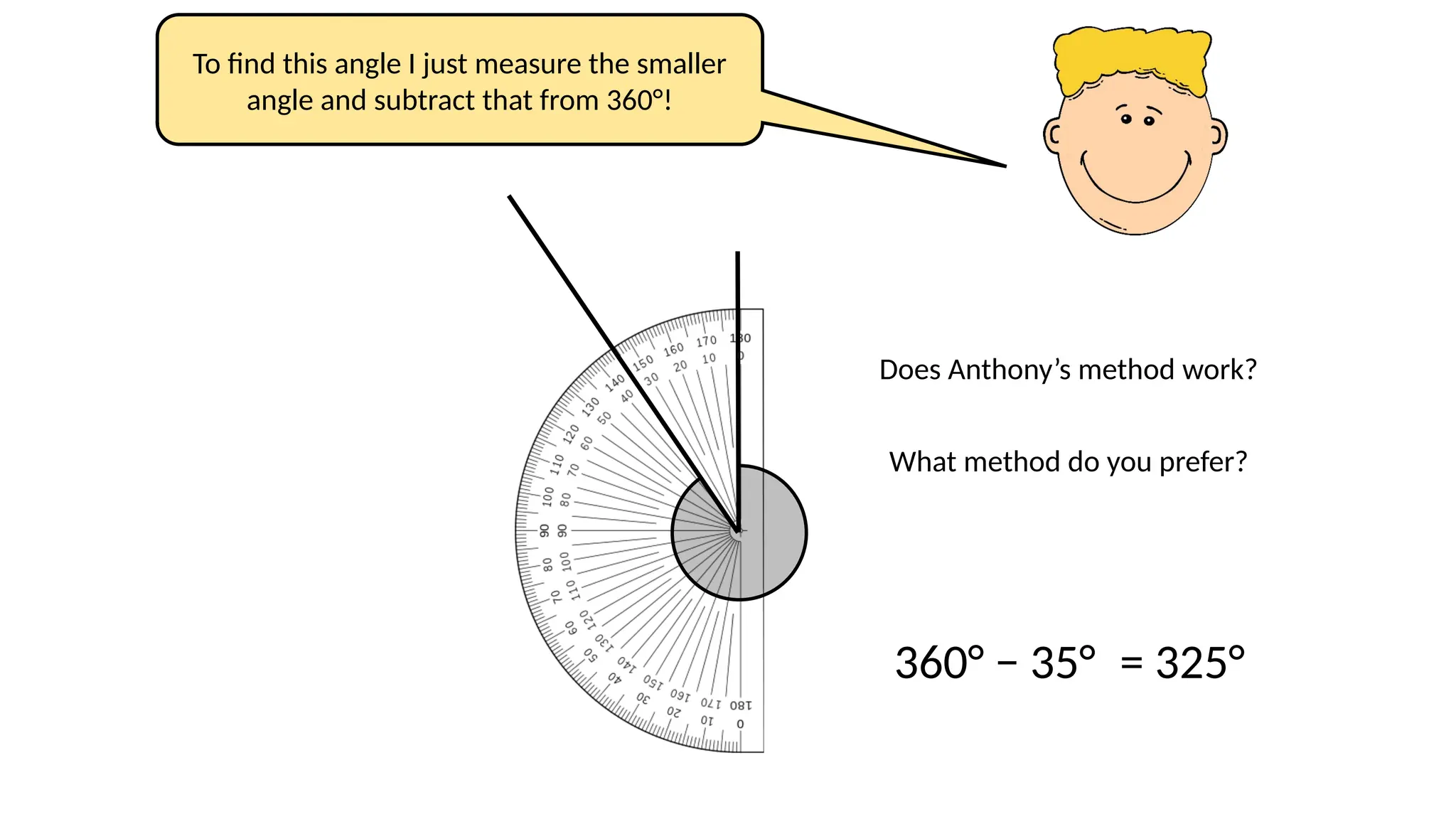
To find thisangle I just measure the smaller
angle and subtract that from 360°!
Does Anthony’s method work?
What method do you prefer?
360° − 35° = 325°
#2 Quick whole class check for understanding.
Particular points to highlight:
Order of letters will still give you the same line even though you’ve drawn it differently, e.g. “Draw line segment AE”, “Draw line segment EA”
Other letters might lie on the same line, e.g., “Draw line segment BC”
Possible extension questions: “What three line segments would give me a triangle?”, “What polygon would I get if I joined all the points together alphabetically?”, “Could I join every point to make a different polygon?”








![All about-angles [final] (1)](https://cdn.slidesharecdn.com/ss_thumbnails/all-about-anglesfinal1-140505050645-phpapp01-thumbnail.jpg?width=640&height=640&fit=bounds)


