HOME ECONOMICS 9
OBJECTIVES
AT THE END OF THE LESSON, YOU ARE EXPECTED TO:
1. IDENTIFY THE COMPONENTS OF SALAD, FACTORS TO CONSIDER IN SALAD PREPARATION AND
DIFFERENT KINDS OF SALAD DRESSING AND THEIR INGREDIENTS;
2. SELECT AND USE CORRECT EQUIPMENT IN PREPARING SALAD AND DRESSINGS;
3. PREPARE VARIETY OF SALAD AND SALAD DRESSING; AND
4. FOLLOW WORKPLACE SAFETY PROCEDURES
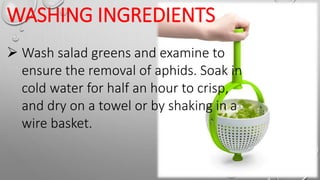
WASHING INGREDIENTS
 Wash salad greens and examine to
ensure the removal of aphids. Soak in
cold water for half an hour to crisp,
and dry on a towel or by shaking in a
wire basket.
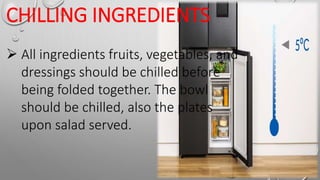
CHILLING INGREDIENTS
 All ingredients fruits, vegetables, and
dressings should be chilled before
being folded together. The bowl
should be chilled, also the plates
upon salad served.
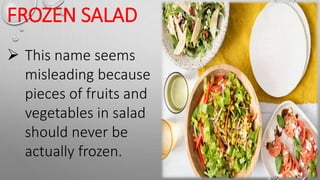
FROZEN SALAD
 This name seems
misleading because
pieces of fruits and
vegetables in salad
should never be
actually frozen.
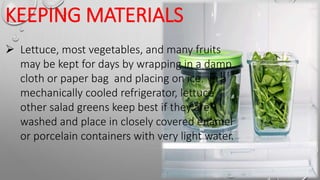
KEEPING MATERIALS
 Lettuce, most vegetables, and many fruits
may be kept for days by wrapping in a damp
cloth or paper bag and placing on ice. In a
mechanically cooled refrigerator, lettuce
other salad greens keep best if they are
washed and place in closely covered enamel
or porcelain containers with very light water.
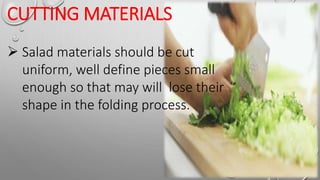
CUTTING MATERIALS
 Salad materials should be cut
uniform, well define pieces small
enough so that may will lose their
shape in the folding process.
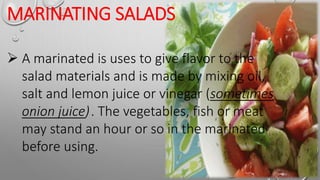
MARINATING SALADS
 A marinated is uses to give flavor to the
salad materials and is made by mixing oil,
salt and lemon juice or vinegar (sometimes
onion juice). The vegetables, fish or meat
may stand an hour or so in the marinated
before using.
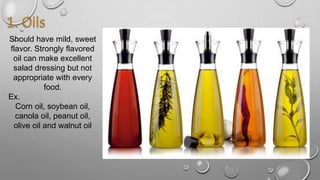
Should have mild, sweet
flavor. Strongly flavored
oil can make excellent
salad dressing but not
appropriate with every
food.
Ex.
Corn oil, soybean oil,
canola oil, peanut oil,
olive oil and walnut oil
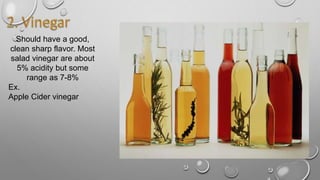
Should have a good,
clean sharp flavor. Most
salad vinegar are about
5% acidity but some
range as 7-8%
Ex.
Apple Cider vinegar
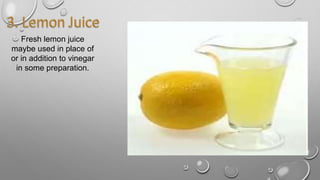
Fresh lemon juice
maybe used in place of
or in addition to vinegar
in some preparation.
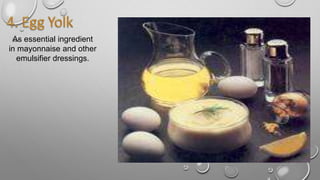
As essential ingredient
in mayonnaise and other
emulsifier dressings.
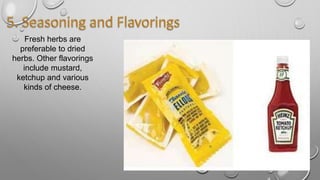
Fresh herbs are
preferable to dried
herbs. Other flavorings
include mustard,
ketchup and various
kinds of cheese.
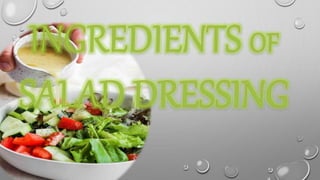
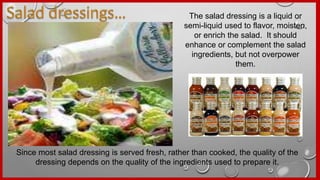
The salad dressing is a liquid or
semi-liquid used to flavor, moisten,
or enrich the salad. It should
enhance or complement the salad
ingredients, but not overpower
them.
Since most salad dressing is served fresh, rather than cooked, the quality of the
dressing depends on the quality of the ingredients used to prepare it.
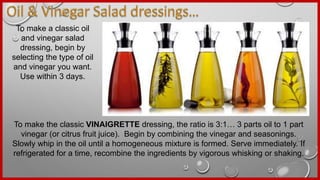
To make a classic oil
and vinegar salad
dressing, begin by
selecting the type of oil
and vinegar you want.
Use within 3 days.
To make the classic VINAIGRETTE dressing, the ratio is 3:1… 3 parts oil to 1 part
vinegar (or citrus fruit juice). Begin by combining the vinegar and seasonings.
Slowly whip in the oil until a homogeneous mixture is formed. Serve immediately. If
refrigerated for a time, recombine the ingredients by vigorous whisking or shaking.
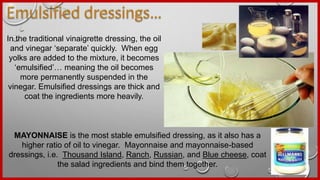
In the traditional vinaigrette dressing, the oil
and vinegar ‘separate’ quickly. When egg
yolks are added to the mixture, it becomes
‘emulsified’… meaning the oil becomes
more permanently suspended in the
vinegar. Emulsified dressings are thick and
coat the ingredients more heavily.
MAYONNAISE is the most stable emulsified dressing, as it also has a
higher ratio of oil to vinegar. Mayonnaise and mayonnaise-based
dressings, i.e. Thousand Island, Ranch, Russian, and Blue cheese, coat
the salad ingredients and bind them together.
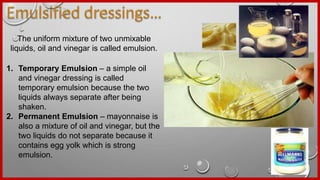
The uniform mixture of two unmixable
liquids, oil and vinegar is called emulsion.
1. Temporary Emulsion – a simple oil
and vinegar dressing is called
temporary emulsion because the two
liquids always separate after being
shaken.
2. Permanent Emulsion – mayonnaise is
also a mixture of oil and vinegar, but the
two liquids do not separate because it
contains egg yolk which is strong
emulsion.
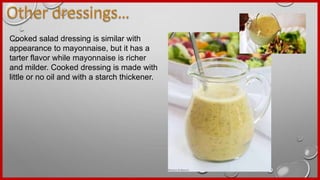
Cooked salad dressing is similar with
appearance to mayonnaise, but it has a
tarter flavor while mayonnaise is richer
and milder. Cooked dressing is made with
little or no oil and with a starch thickener.
ADDITION OF SALAD DRESSING
 The dressing should never be folded into the
salad until time for serving, except in the case
of a salad like potato salad, when it is
preferable for the dressing to soak in.
DIRECTION:
Identification. Identify the given items.
1-5. What are the five ingredients that we can used to make a
salad dressing?
6-7. What are the two types of salad dressing?
8. What is the best example of emulsified dressing?
9-10. What are the two types of emulsified dressing?
ANSWER:
Identification. Identify the given items.
1. Oil
2. Vinegar
3. Lemon Juice
4. Egg yolk
5. Seasoning and Flavoring
6. Oil and vinegar salad dressing
7. Emulsified dressing
8. Mayonnaise
9. Temporary Emulsion
10. Permanent emulsion

Lesson 2 Methods in Preparing Salad.pptx

  • 1.
  • 3.
    OBJECTIVES AT THE ENDOF THE LESSON, YOU ARE EXPECTED TO: 1. IDENTIFY THE COMPONENTS OF SALAD, FACTORS TO CONSIDER IN SALAD PREPARATION AND DIFFERENT KINDS OF SALAD DRESSING AND THEIR INGREDIENTS; 2. SELECT AND USE CORRECT EQUIPMENT IN PREPARING SALAD AND DRESSINGS; 3. PREPARE VARIETY OF SALAD AND SALAD DRESSING; AND 4. FOLLOW WORKPLACE SAFETY PROCEDURES
  • 5.
    WASHING INGREDIENTS  Washsalad greens and examine to ensure the removal of aphids. Soak in cold water for half an hour to crisp, and dry on a towel or by shaking in a wire basket.
  • 6.
    CHILLING INGREDIENTS  Allingredients fruits, vegetables, and dressings should be chilled before being folded together. The bowl should be chilled, also the plates upon salad served.
  • 7.
    FROZEN SALAD  Thisname seems misleading because pieces of fruits and vegetables in salad should never be actually frozen.
  • 8.
    KEEPING MATERIALS  Lettuce,most vegetables, and many fruits may be kept for days by wrapping in a damp cloth or paper bag and placing on ice. In a mechanically cooled refrigerator, lettuce other salad greens keep best if they are washed and place in closely covered enamel or porcelain containers with very light water.
  • 9.
    CUTTING MATERIALS  Saladmaterials should be cut uniform, well define pieces small enough so that may will lose their shape in the folding process.
  • 10.
    MARINATING SALADS  Amarinated is uses to give flavor to the salad materials and is made by mixing oil, salt and lemon juice or vinegar (sometimes onion juice). The vegetables, fish or meat may stand an hour or so in the marinated before using.
  • 12.
    Should have mild,sweet flavor. Strongly flavored oil can make excellent salad dressing but not appropriate with every food. Ex. Corn oil, soybean oil, canola oil, peanut oil, olive oil and walnut oil
  • 13.
    Should have agood, clean sharp flavor. Most salad vinegar are about 5% acidity but some range as 7-8% Ex. Apple Cider vinegar
  • 14.
    Fresh lemon juice maybeused in place of or in addition to vinegar in some preparation.
  • 15.
    As essential ingredient inmayonnaise and other emulsifier dressings.
  • 16.
    Fresh herbs are preferableto dried herbs. Other flavorings include mustard, ketchup and various kinds of cheese.
  • 18.
    The salad dressingis a liquid or semi-liquid used to flavor, moisten, or enrich the salad. It should enhance or complement the salad ingredients, but not overpower them. Since most salad dressing is served fresh, rather than cooked, the quality of the dressing depends on the quality of the ingredients used to prepare it.
  • 19.
    To make aclassic oil and vinegar salad dressing, begin by selecting the type of oil and vinegar you want. Use within 3 days. To make the classic VINAIGRETTE dressing, the ratio is 3:1… 3 parts oil to 1 part vinegar (or citrus fruit juice). Begin by combining the vinegar and seasonings. Slowly whip in the oil until a homogeneous mixture is formed. Serve immediately. If refrigerated for a time, recombine the ingredients by vigorous whisking or shaking.
  • 20.
    In the traditionalvinaigrette dressing, the oil and vinegar ‘separate’ quickly. When egg yolks are added to the mixture, it becomes ‘emulsified’… meaning the oil becomes more permanently suspended in the vinegar. Emulsified dressings are thick and coat the ingredients more heavily. MAYONNAISE is the most stable emulsified dressing, as it also has a higher ratio of oil to vinegar. Mayonnaise and mayonnaise-based dressings, i.e. Thousand Island, Ranch, Russian, and Blue cheese, coat the salad ingredients and bind them together.
  • 21.
    The uniform mixtureof two unmixable liquids, oil and vinegar is called emulsion. 1. Temporary Emulsion – a simple oil and vinegar dressing is called temporary emulsion because the two liquids always separate after being shaken. 2. Permanent Emulsion – mayonnaise is also a mixture of oil and vinegar, but the two liquids do not separate because it contains egg yolk which is strong emulsion.
  • 22.
    Cooked salad dressingis similar with appearance to mayonnaise, but it has a tarter flavor while mayonnaise is richer and milder. Cooked dressing is made with little or no oil and with a starch thickener.
  • 23.
    ADDITION OF SALADDRESSING  The dressing should never be folded into the salad until time for serving, except in the case of a salad like potato salad, when it is preferable for the dressing to soak in.
  • 25.
    DIRECTION: Identification. Identify thegiven items. 1-5. What are the five ingredients that we can used to make a salad dressing? 6-7. What are the two types of salad dressing? 8. What is the best example of emulsified dressing? 9-10. What are the two types of emulsified dressing?
  • 26.
    ANSWER: Identification. Identify thegiven items. 1. Oil 2. Vinegar 3. Lemon Juice 4. Egg yolk 5. Seasoning and Flavoring 6. Oil and vinegar salad dressing 7. Emulsified dressing 8. Mayonnaise 9. Temporary Emulsion 10. Permanent emulsion