SOCIAL
SCIENCE
&
PHILOSOPHY
Prepared by: Maribel Ungriano- Merana
LESSON 1:
AN INTRODUCTION
TO SOCIAL
SCIENCE
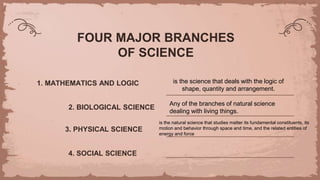
FOUR MAJOR BRANCHES
OF SCIENCE
1. MATHEMATICS AND LOGIC
3. PHYSICAL SCIENCE
2. BIOLOGICAL SCIENCE
4. SOCIAL SCIENCE
is the science that deals with the logic of
shape, quantity and arrangement.
Any of the branches of natural science
dealing with living things.
is the natural science that studies matter its fundamental constituents, its
motion and behavior through space and time, and the related entities of
energy and force
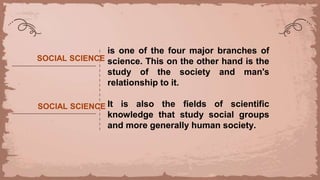
SOCIAL SCIENCE
is one of the four major branches of
science. This on the other hand is the
study of the society and man's
relationship to it.
It is also the fields of scientific
knowledge that study social groups
and more generally human society.
SOCIAL SCIENCE
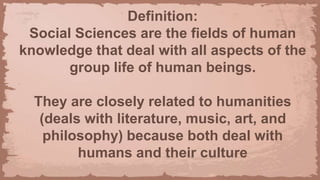
Definition:
Social Sciences are the fields of human
knowledge that deal with all aspects of the
group life of human beings.
They are closely related to humanities
(deals with literature, music, art, and
philosophy) because both deal with
humans and their culture
Social science –
is taught in diverse
ways.
● some courses take a
global perspective
● some an
anthropological
perspective
● some a psychological
perspective
● some a sociological
perspective,
● and some a historical
perspective
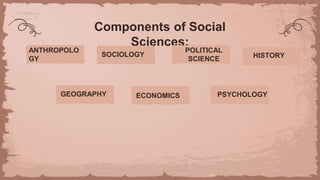
Components of Social
Sciences:
ANTHROPOLO
GY
SOCIOLOGY
POLITICAL
SCIENCE HISTORY
GEOGRAPHY ECONOMICS PSYCHOLOGY
 Greek words Anthropos
meaning “MAN
 Logos, meaning “STUDY
ANTHROPOLOGY
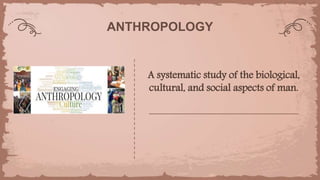
ANTHROPOLOGY
A systematic study of the biological,
cultural, and social aspects of man.
 SOCIAL ANTHROPOLOGY
 CULTURAL ANTHROPOLOGY
 LINGUISTIC ANTHROPOLOGY
 BIOLOGICAL OR PHYSICAL ANTHROPOLOGY
 ACHEOLOGY
AREAS OF ANTHROPOLOGY
 SOCIAL ANTHROPOLOGY
 CULTURAL ANTHROPOLOGY
 LINGUISTIC ANTHROPOLOGY
 BIOLOGICAL OR PHYSICAL ANTHROPOLOGY
 ACHEOLOGY
AREAS OF ANTHROPOLOGY
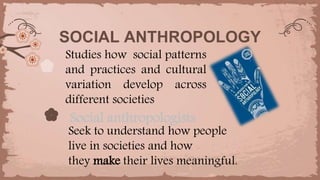
Studies how social patterns
and practices and cultural
variation develop across
different societies
Seek to understand how people
live in societies and how
they make their lives meaningful.
Social anthropologists
SOCIAL ANTHROPOLOGY
is the study of human cultures, beliefs, practices,
values, ideas, technologies, economies and other
domains of social and cognitive organization.
CULTURAL
ANTHROPOLOGY
Studies cultural variation across different
societies and examine the need to understand
each culture in its own context
LINGUISTIC
ANTHROPOLOGY
Studies language and discourse and
how they reflect and shape different
aspect of human society and culture.
BIOLOGICAL AND
PHYSICAL
ANTHROPOLOGY
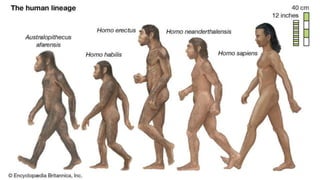
Studies the origins of humans and as
well as the interplay between social
factors and the processes of human
evolution, adaptation and variation
over time.
ARCHEOLOGY
Deals with the pre-historic societies by
studying their tools and environment.
 Human long time ago
ANTHROPOLO
GY
PHYSICAL ANTHROPOLOGY
CULTURAL ANTHROPLOGY
Cultural anthropology study
all aspects of human society,
including family units,
political and economic
systems, religious beliefs,
and even the ways in which
societies feed and clothe
themselves.
Physical anthropology, in
contrast, emphasizes the
biological development of
humans over time.
SOCIOLOGY
The study of human social life, groups,
and society.” – Anthony Giddens
Attempts to provide a deeper assessment
of individual and group behavior, as well
as social phenomena.
is a study of society, patterns
of social relationships, social
interaction and culture of
everyday life.”
SOCIOLOGY
is the systematic study of relationship
among people. Sociologists assume that
behavior is influenced by people’s social,
political, occupational and intellectual
groupings and by the particular settings in
which they find themselves atone time or
another.
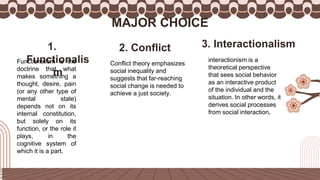
1.
Functionalis
m
2. Conflict 3. Interactionalism
MAJOR CHOICE
Functionalism is the
doctrine that what
makes something a
thought, desire, pain
(or any other type of
mental state)
depends not on its
internal constitution,
but solely on its
function, or the role it
plays, in the
cognitive system of
which it is a part.
Conflict theory emphasizes
social inequality and
suggests that far-reaching
social change is needed to
achieve a just society.
interactionism is a
theoretical perspective
that sees social behavior
as an interactive product
of the individual and the
situation. In other words, it
derives social processes
from social interaction,
Political Science
is the study of
social
arrangements to
maintain peace
and order within a
given society
. It deals with government,
and its interest are:
1. Politics
2. Laws
3. Administration
4.International Relations
5. Theory of the nature
and functions of the state
HISTORY
LESSON 1.pptx
LESSON 1.pptx
LESSON 1.pptx
LESSON 1.pptx
LESSON 1.pptx
LESSON 1.pptx
LESSON 1.pptx

LESSON 1.pptx

  • 1.
  • 2.
  • 3.
    FOUR MAJOR BRANCHES OFSCIENCE 1. MATHEMATICS AND LOGIC 3. PHYSICAL SCIENCE 2. BIOLOGICAL SCIENCE 4. SOCIAL SCIENCE is the science that deals with the logic of shape, quantity and arrangement. Any of the branches of natural science dealing with living things. is the natural science that studies matter its fundamental constituents, its motion and behavior through space and time, and the related entities of energy and force
  • 4.
    SOCIAL SCIENCE is oneof the four major branches of science. This on the other hand is the study of the society and man's relationship to it. It is also the fields of scientific knowledge that study social groups and more generally human society. SOCIAL SCIENCE
  • 5.
    Definition: Social Sciences arethe fields of human knowledge that deal with all aspects of the group life of human beings. They are closely related to humanities (deals with literature, music, art, and philosophy) because both deal with humans and their culture
  • 6.
    Social science – istaught in diverse ways. ● some courses take a global perspective ● some an anthropological perspective ● some a psychological perspective ● some a sociological perspective, ● and some a historical perspective
  • 7.
  • 8.
     Greek wordsAnthropos meaning “MAN  Logos, meaning “STUDY ANTHROPOLOGY
  • 9.
    ANTHROPOLOGY A systematic studyof the biological, cultural, and social aspects of man.
  • 10.
     SOCIAL ANTHROPOLOGY CULTURAL ANTHROPOLOGY  LINGUISTIC ANTHROPOLOGY  BIOLOGICAL OR PHYSICAL ANTHROPOLOGY  ACHEOLOGY AREAS OF ANTHROPOLOGY
  • 11.
     SOCIAL ANTHROPOLOGY CULTURAL ANTHROPOLOGY  LINGUISTIC ANTHROPOLOGY  BIOLOGICAL OR PHYSICAL ANTHROPOLOGY  ACHEOLOGY AREAS OF ANTHROPOLOGY
  • 12.
    Studies how socialpatterns and practices and cultural variation develop across different societies Seek to understand how people live in societies and how they make their lives meaningful. Social anthropologists SOCIAL ANTHROPOLOGY
  • 13.
    is the studyof human cultures, beliefs, practices, values, ideas, technologies, economies and other domains of social and cognitive organization. CULTURAL ANTHROPOLOGY Studies cultural variation across different societies and examine the need to understand each culture in its own context
  • 14.
    LINGUISTIC ANTHROPOLOGY Studies language anddiscourse and how they reflect and shape different aspect of human society and culture.
  • 15.
    BIOLOGICAL AND PHYSICAL ANTHROPOLOGY Studies theorigins of humans and as well as the interplay between social factors and the processes of human evolution, adaptation and variation over time.
  • 17.
    ARCHEOLOGY Deals with thepre-historic societies by studying their tools and environment.  Human long time ago
  • 18.
    ANTHROPOLO GY PHYSICAL ANTHROPOLOGY CULTURAL ANTHROPLOGY Culturalanthropology study all aspects of human society, including family units, political and economic systems, religious beliefs, and even the ways in which societies feed and clothe themselves. Physical anthropology, in contrast, emphasizes the biological development of humans over time.
  • 19.
    SOCIOLOGY The study ofhuman social life, groups, and society.” – Anthony Giddens Attempts to provide a deeper assessment of individual and group behavior, as well as social phenomena.
  • 20.
    is a studyof society, patterns of social relationships, social interaction and culture of everyday life.”
  • 21.
    SOCIOLOGY is the systematicstudy of relationship among people. Sociologists assume that behavior is influenced by people’s social, political, occupational and intellectual groupings and by the particular settings in which they find themselves atone time or another.
  • 22.
    1. Functionalis m 2. Conflict 3.Interactionalism MAJOR CHOICE Functionalism is the doctrine that what makes something a thought, desire, pain (or any other type of mental state) depends not on its internal constitution, but solely on its function, or the role it plays, in the cognitive system of which it is a part. Conflict theory emphasizes social inequality and suggests that far-reaching social change is needed to achieve a just society. interactionism is a theoretical perspective that sees social behavior as an interactive product of the individual and the situation. In other words, it derives social processes from social interaction,
  • 23.
    Political Science is thestudy of social arrangements to maintain peace and order within a given society . It deals with government, and its interest are: 1. Politics 2. Laws 3. Administration 4.International Relations 5. Theory of the nature and functions of the state
  • 25.