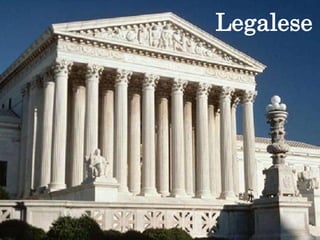
Legalese
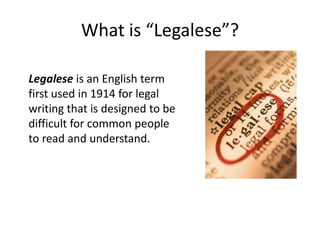
What is “Legalese”?

Legalese is an English term
first used in 1914 for legal
writing that is designed to be
difficult for common people
to read and understand.
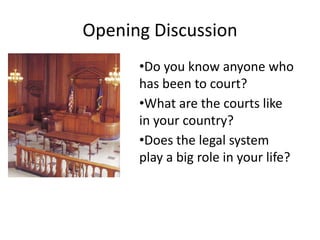
Opening Discussion
      •Do you know anyone who
      has been to court?
      •What are the courts like
      in your country?
      •Does the legal system
      play a big role in your life?
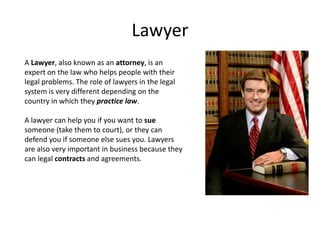
Lawyer
A Lawyer, also known as an attorney, is an
expert on the law who helps people with their
legal problems. The role of lawyers in the legal
system is very different depending on the
country in which they practice law.

A lawyer can help you if you want to sue
someone (take them to court), or they can
defend you if someone else sues you. Lawyers
are also very important in business because they
can legal contracts and agreements.
Judge
    A Judge is someone who is in charge of
    a courtroom. In many countries, a
    judge will try cases and give the
    verdict. In other places, Judges are in
    charge of court cases, but the verdict is
    decided by a jury.

    Sometimes a judge will also sentence
    criminals if they are convicted, even if a
    jury decided the verdict.

    In some countries there is only one
    judge in the courtroom, in others there
    might be several on the same trial.
Jury


A Jury is a group of people who sometimes decide the verdict of court cases.
Unlike Lawyers and Judges, Juries are composed of average people with no
special legal knowledge or training. The reason for this is that some people
believe that they should be judged by their peers –people just like themselves.
What do you think?
• Have you ever hired or worked with a lawyer?
• Do you know anyone who practices law?
• If you were on trial for murder, would you
  rather be tried by a judge or a jury?
• Do you trust lawyers? Do you think they are
  clever or dishonest?
Lawsuit
 “Lawsuit” is a noun for what happens when one
 person sues another person and takes them to
 court. The person who takes the other to court
 is the plaintiff, the person being sued is the
 defendant.

 People may go to court for many reasons. They
 might to try to get money back from someone
 who has cheated them or damaged their
 property. Another reason they might go to court
 is to solve a dispute or disagreement over
 business or employment issues. If the defendant
 loses the case, the Judge may award damages to
 the plaintiff –which means that the defendant
 will have to pay them money.
Trial
A criminal trial happens when the police
think that someone has broken the law.
After they are arrested the defendant is put
on trial. The lawyer who works to get the
defendant punished is the prosecutor.

When a jury decides the verdict of a case, it
is called a jury trial. When the verdict is
decided by a judge, it is called a bench trial.

If the judge or jury decides that the
prosecution has enough evidence, they may
convict the defendant. If the evidence is not
strong enough, the defendant may be
acquitted.
                                                  “Justice is blind.”
Hearing

      In some countries there is a
      hearing before the defendant is
      put on trial. During the hearing,
      the judge decides whether or
      not the prosecutor’s case is
      good enough to go through with
      a trial, otherwise the defendant
      is set free. Hearings are often
      much shorter than trials.
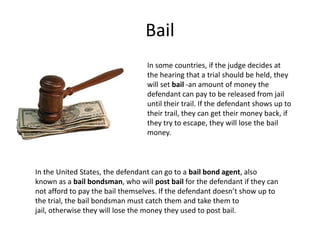
Bail
                                  In some countries, if the judge decides at
                                  the hearing that a trial should be held, they
                                  will set bail -an amount of money the
                                  defendant can pay to be released from jail
                                  until their trail. If the defendant shows up to
                                  their trail, they can get their money back, if
                                  they try to escape, they will lose the bail
                                  money.


In the United States, the defendant can go to a bail bond agent, also
known as a bail bondsman, who will post bail for the defendant if they can
not afford to pay the bail themselves. If the defendant doesn’t show up to
the trial, the bail bondsman must catch them and take them to
jail, otherwise they will lose the money they used to post bail.
Courtroom
Both criminal trials and lawsuits are
held in a courtroom at the
courthouse.

Besides the judge, jury and
lawyers, there will often be a bailiff –
a police officer who brings criminals
into court and protects everyone
from danger.

There is also often a court reporter
who records and writes down
everything that happens during the
trial. These records are often
published and sent to law libraries
so that judges and lawyers can study
them.
What do you think?
• What is the most famous criminal trial that
  you can think of?
• Should judges decide the verdict of cases
  based on cases that have happened in the
  past?
• Do you think that justice is blind? Are
  important people treated differently in court
  than other people?

Legalese

  • 1.
  • 2.
    What is “Legalese”? Legaleseis an English term first used in 1914 for legal writing that is designed to be difficult for common people to read and understand.
  • 3.
    Opening Discussion •Do you know anyone who has been to court? •What are the courts like in your country? •Does the legal system play a big role in your life?
  • 4.
    Lawyer A Lawyer, alsoknown as an attorney, is an expert on the law who helps people with their legal problems. The role of lawyers in the legal system is very different depending on the country in which they practice law. A lawyer can help you if you want to sue someone (take them to court), or they can defend you if someone else sues you. Lawyers are also very important in business because they can legal contracts and agreements.
  • 5.
    Judge A Judge is someone who is in charge of a courtroom. In many countries, a judge will try cases and give the verdict. In other places, Judges are in charge of court cases, but the verdict is decided by a jury. Sometimes a judge will also sentence criminals if they are convicted, even if a jury decided the verdict. In some countries there is only one judge in the courtroom, in others there might be several on the same trial.
  • 6.
    Jury A Jury isa group of people who sometimes decide the verdict of court cases. Unlike Lawyers and Judges, Juries are composed of average people with no special legal knowledge or training. The reason for this is that some people believe that they should be judged by their peers –people just like themselves.
  • 7.
    What do youthink? • Have you ever hired or worked with a lawyer? • Do you know anyone who practices law? • If you were on trial for murder, would you rather be tried by a judge or a jury? • Do you trust lawyers? Do you think they are clever or dishonest?
  • 8.
    Lawsuit “Lawsuit” isa noun for what happens when one person sues another person and takes them to court. The person who takes the other to court is the plaintiff, the person being sued is the defendant. People may go to court for many reasons. They might to try to get money back from someone who has cheated them or damaged their property. Another reason they might go to court is to solve a dispute or disagreement over business or employment issues. If the defendant loses the case, the Judge may award damages to the plaintiff –which means that the defendant will have to pay them money.
  • 9.
    Trial A criminal trialhappens when the police think that someone has broken the law. After they are arrested the defendant is put on trial. The lawyer who works to get the defendant punished is the prosecutor. When a jury decides the verdict of a case, it is called a jury trial. When the verdict is decided by a judge, it is called a bench trial. If the judge or jury decides that the prosecution has enough evidence, they may convict the defendant. If the evidence is not strong enough, the defendant may be acquitted. “Justice is blind.”
  • 10.
    Hearing In some countries there is a hearing before the defendant is put on trial. During the hearing, the judge decides whether or not the prosecutor’s case is good enough to go through with a trial, otherwise the defendant is set free. Hearings are often much shorter than trials.
  • 11.
    Bail In some countries, if the judge decides at the hearing that a trial should be held, they will set bail -an amount of money the defendant can pay to be released from jail until their trail. If the defendant shows up to their trail, they can get their money back, if they try to escape, they will lose the bail money. In the United States, the defendant can go to a bail bond agent, also known as a bail bondsman, who will post bail for the defendant if they can not afford to pay the bail themselves. If the defendant doesn’t show up to the trial, the bail bondsman must catch them and take them to jail, otherwise they will lose the money they used to post bail.
  • 12.
    Courtroom Both criminal trialsand lawsuits are held in a courtroom at the courthouse. Besides the judge, jury and lawyers, there will often be a bailiff – a police officer who brings criminals into court and protects everyone from danger. There is also often a court reporter who records and writes down everything that happens during the trial. These records are often published and sent to law libraries so that judges and lawyers can study them.
  • 13.
    What do youthink? • What is the most famous criminal trial that you can think of? • Should judges decide the verdict of cases based on cases that have happened in the past? • Do you think that justice is blind? Are important people treated differently in court than other people?