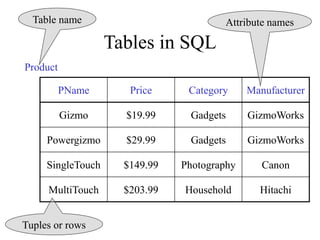
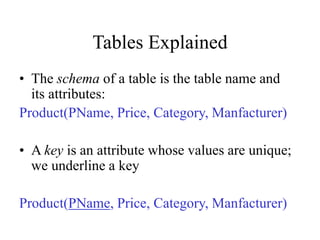
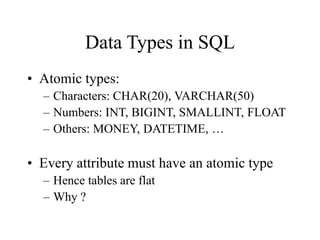
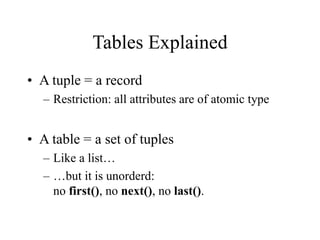
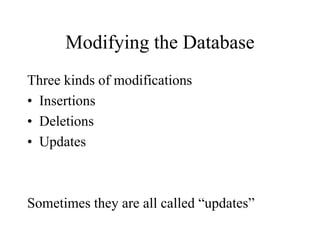
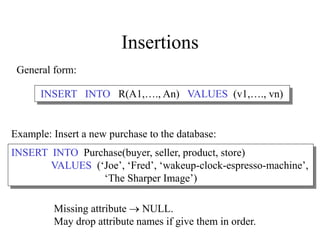
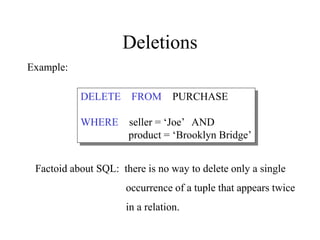
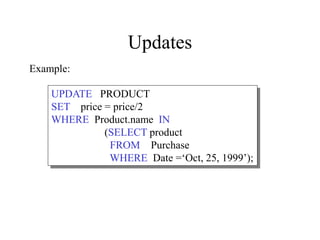
(1) SQL is a standard language for querying and manipulating relational data. It includes commands for data definition (DDL), data manipulation (DML), and data queries.
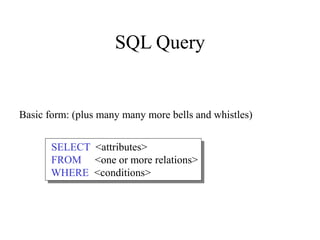
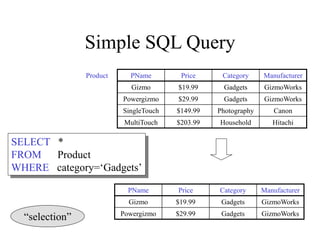
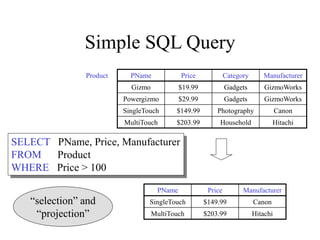
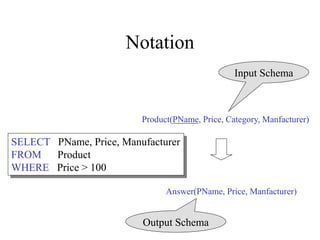
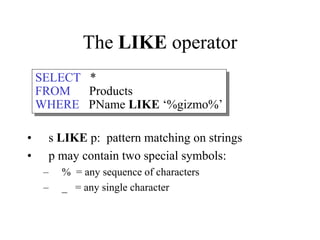
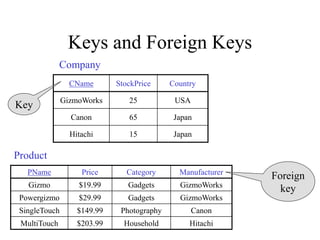
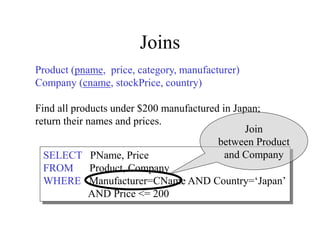
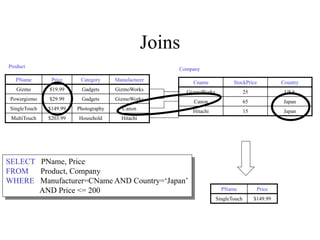
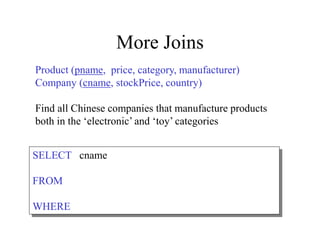
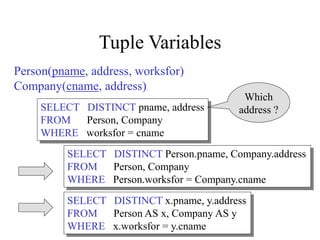
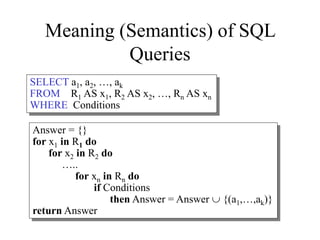
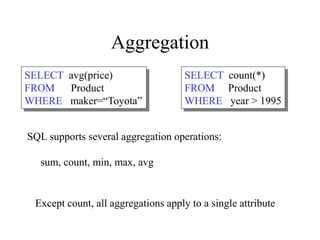
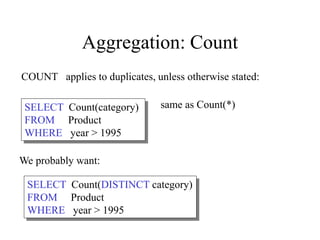
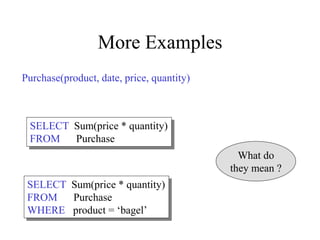
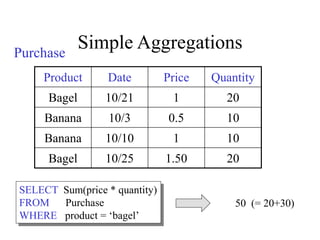
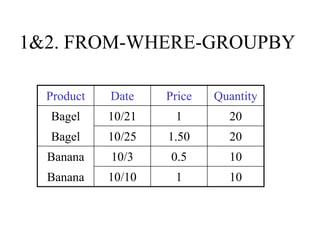
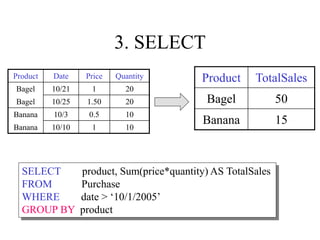
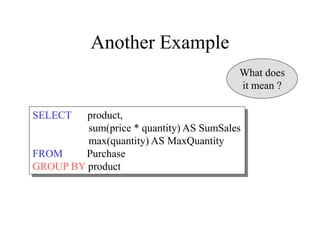
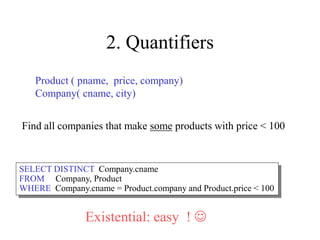
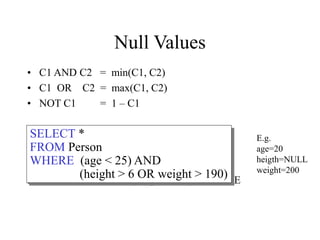
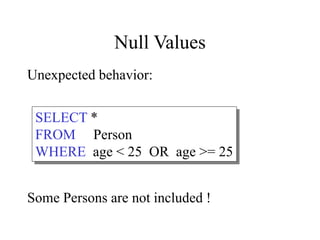
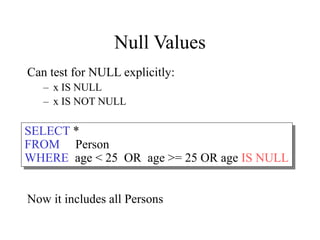
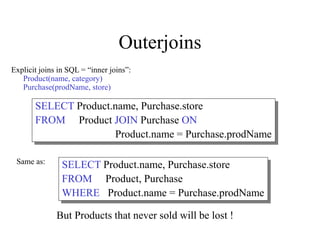
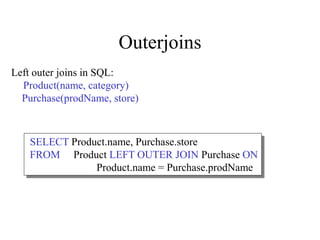
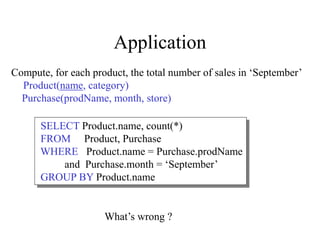
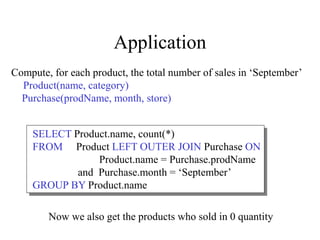
(2) Basic SQL queries use SELECT, FROM, and WHERE clauses to retrieve data from one or more tables that meet specified conditions. Joins allow querying across related tables. Aggregate functions like COUNT, SUM provide insights into data sets.
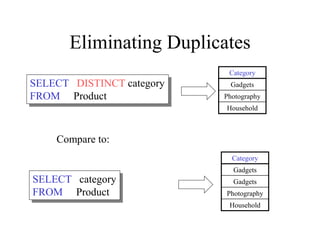
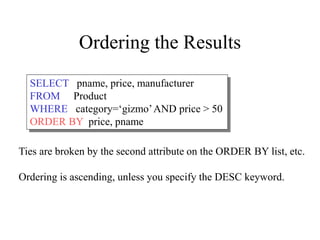
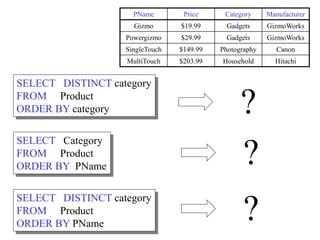
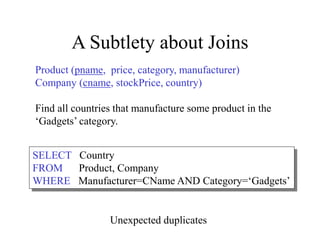
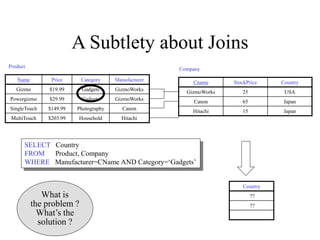
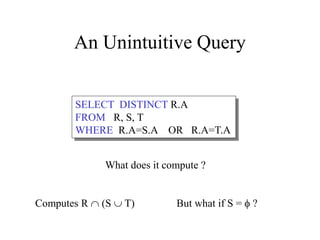
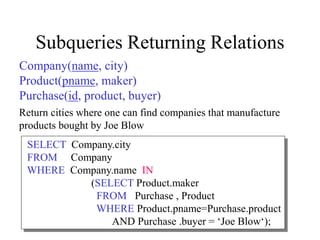
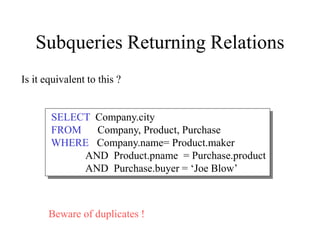
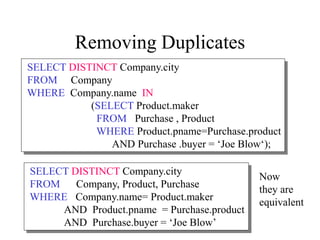
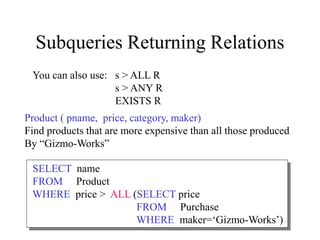
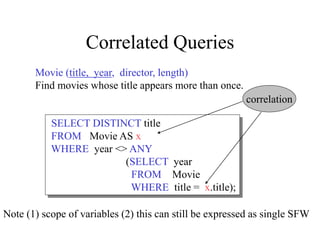
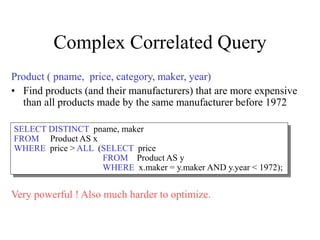
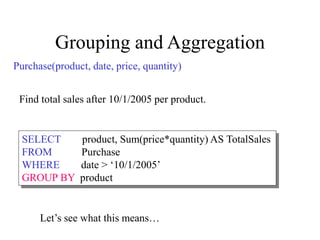
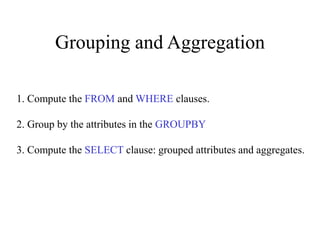
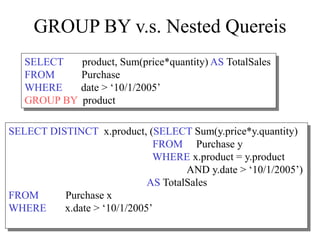
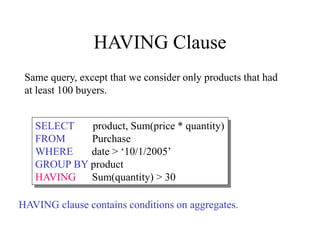
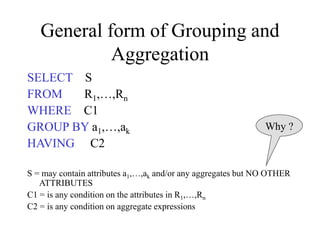
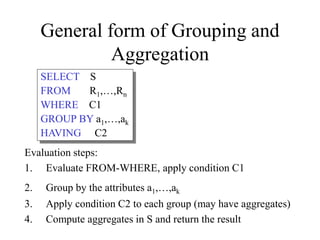
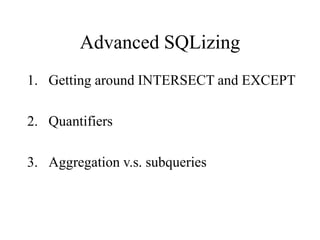
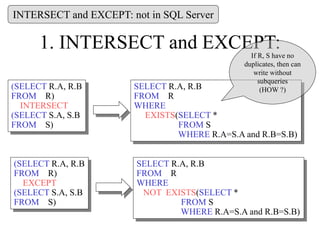
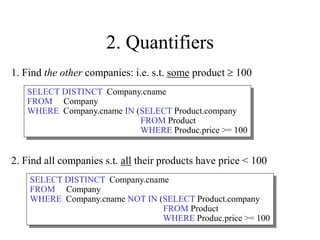
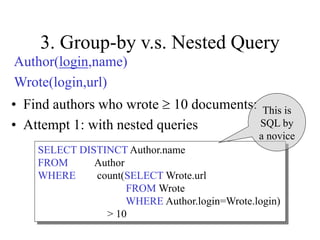
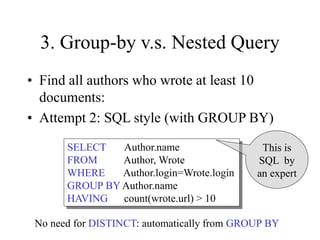
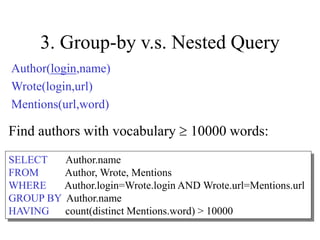
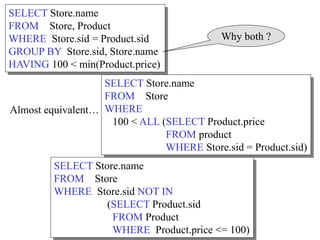
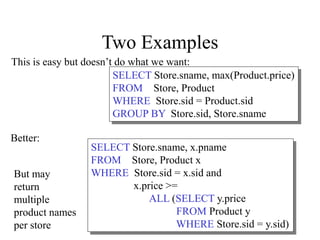
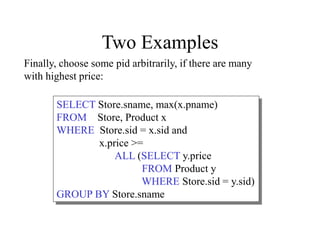
(3) Advanced SQL features include subqueries, grouping and aggregation using GROUP BY and HAVING, handling duplicates with DISTINCT, and ordering results with ORDER BY. SQL provides powerful and flexible ways to analyze relational data.