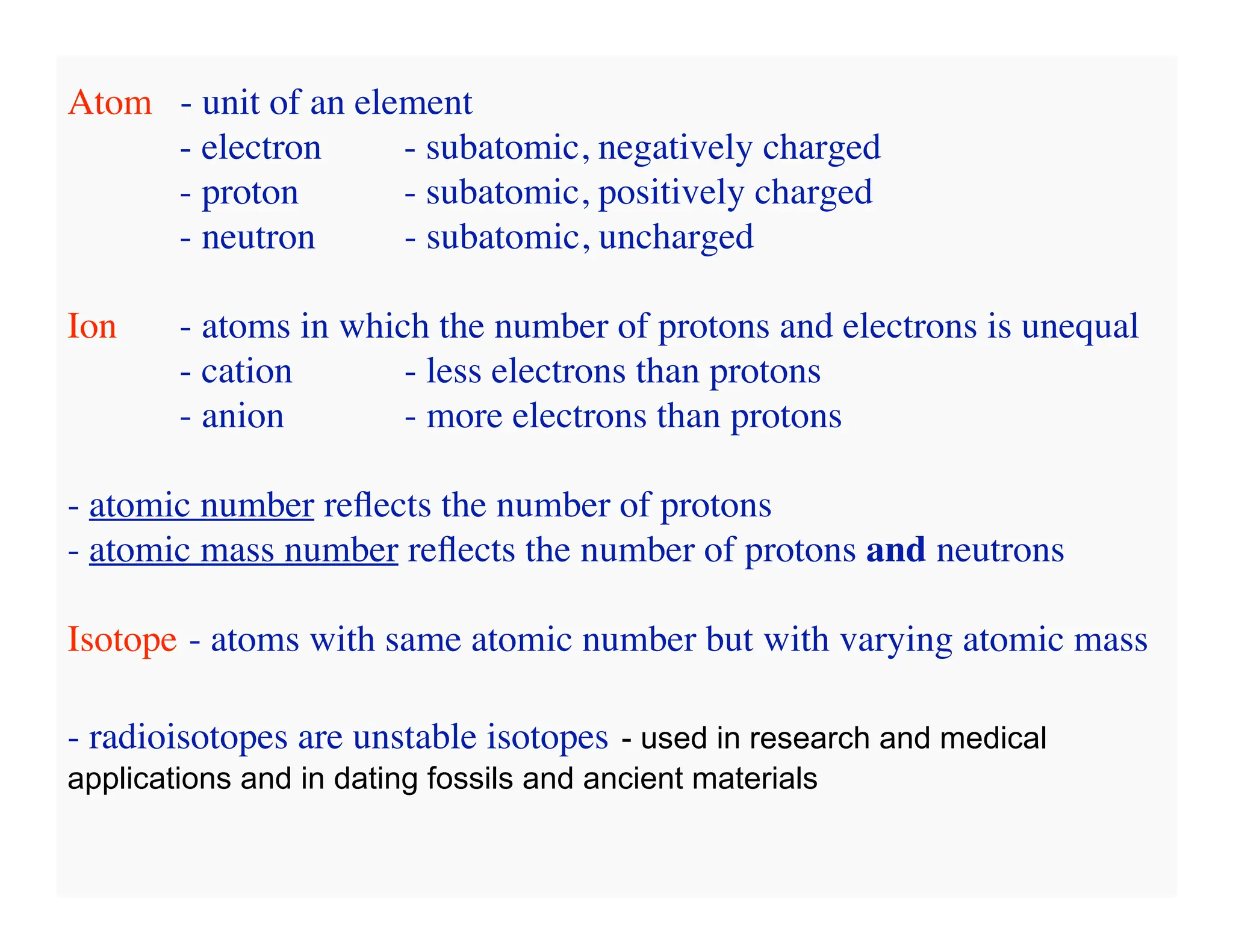
Atom - unitof an element
- electron - subatomic, negatively charged
- proton - subatomic, positively charged
- neutron - subatomic, uncharged
Ion - atoms in which the number of protons and electrons is unequal
- cation - less electrons than protons
- anion - more electrons than protons
- atomic number reflects the number of protons
- atomic mass number reflects the number of protons and neutrons
Isotope - atoms with same atomic number but with varying atomic mass
- radioisotopes are unstable isotopes - used in research and medical
applications and in dating fossils and ancient materials
4.
Pure chemical substancescomposed of atoms with
the same number of protons, are called
Chemical ELEMENTs
All chemical matter consists of elements.
New elements of higher atomic number are discovered
from time to time, usually as products of artificial
nuclear reactions.
5.
5
Different Types ofAtoms
Elements and Their Properties
• Changes in numbers of protons, neutrons, and
electrons in atoms create different elements
Example: radioisotopic decay (“nuclear fission”).
(this is NOT equal to “atoms interacting chemically with one another”)
• Each element has a characteristic atomic
structure and predictable chemical behavior
• Each assigned a distinctive name with an
abbreviated shorthand symbol
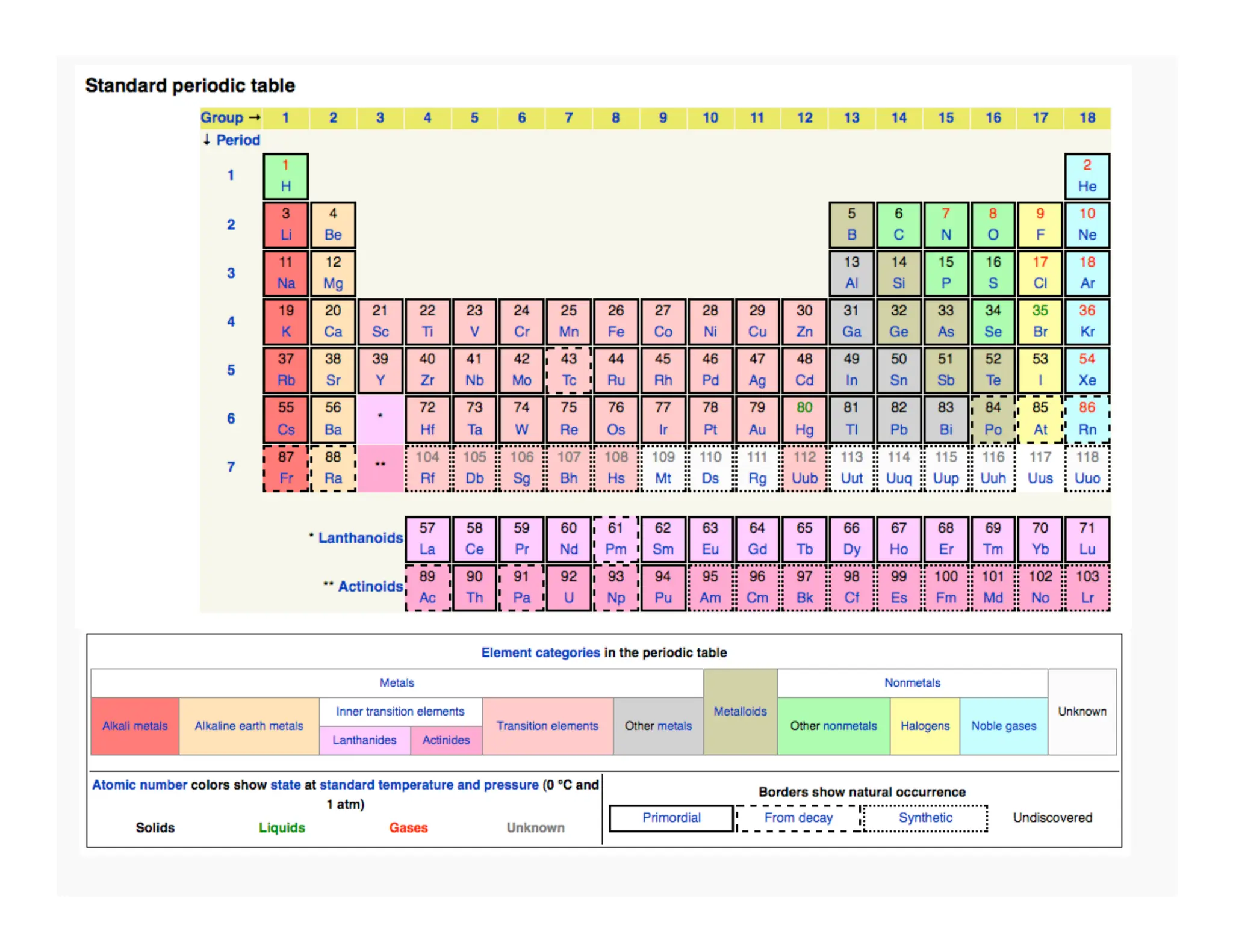
• All elements are organized in the periodic table
6.
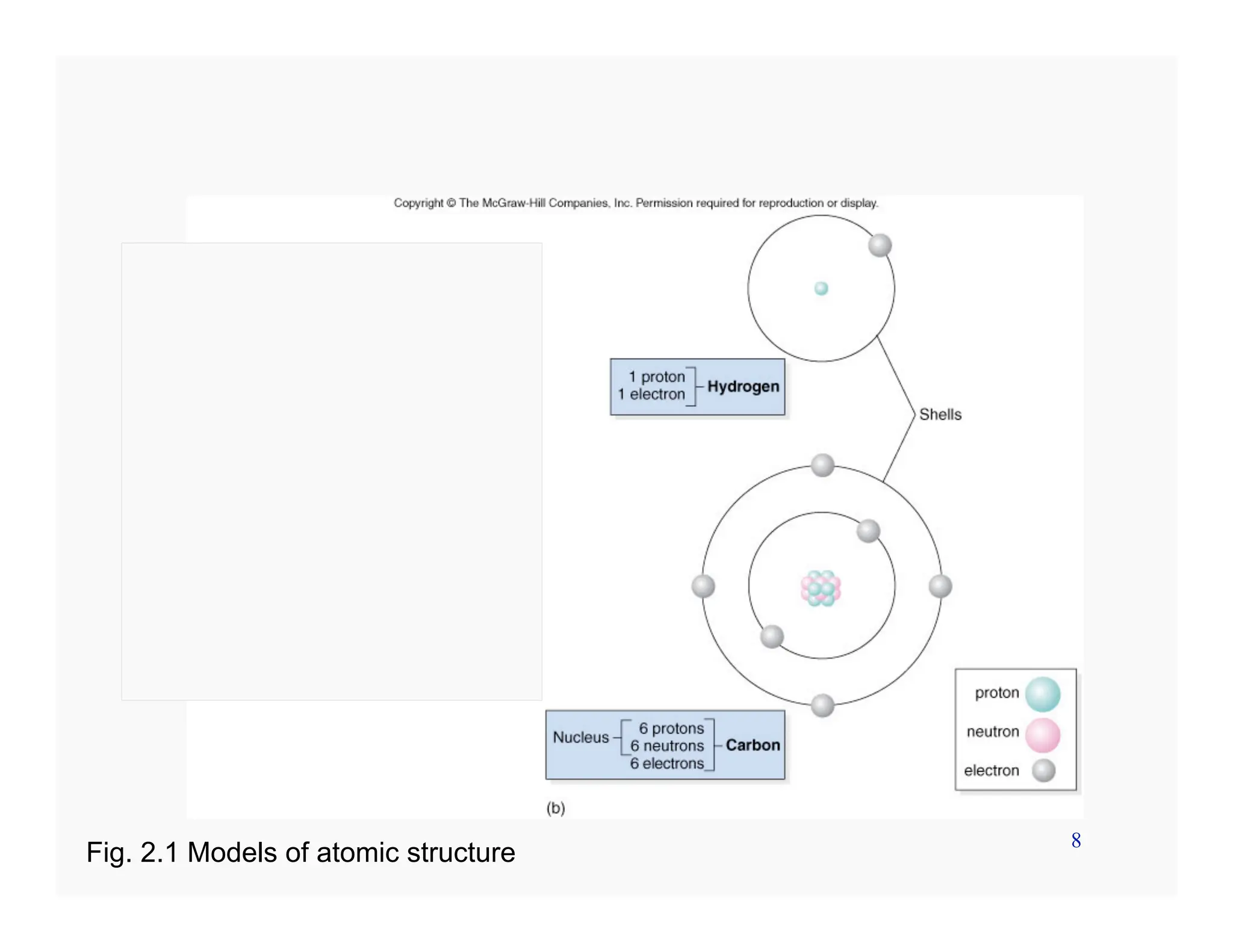
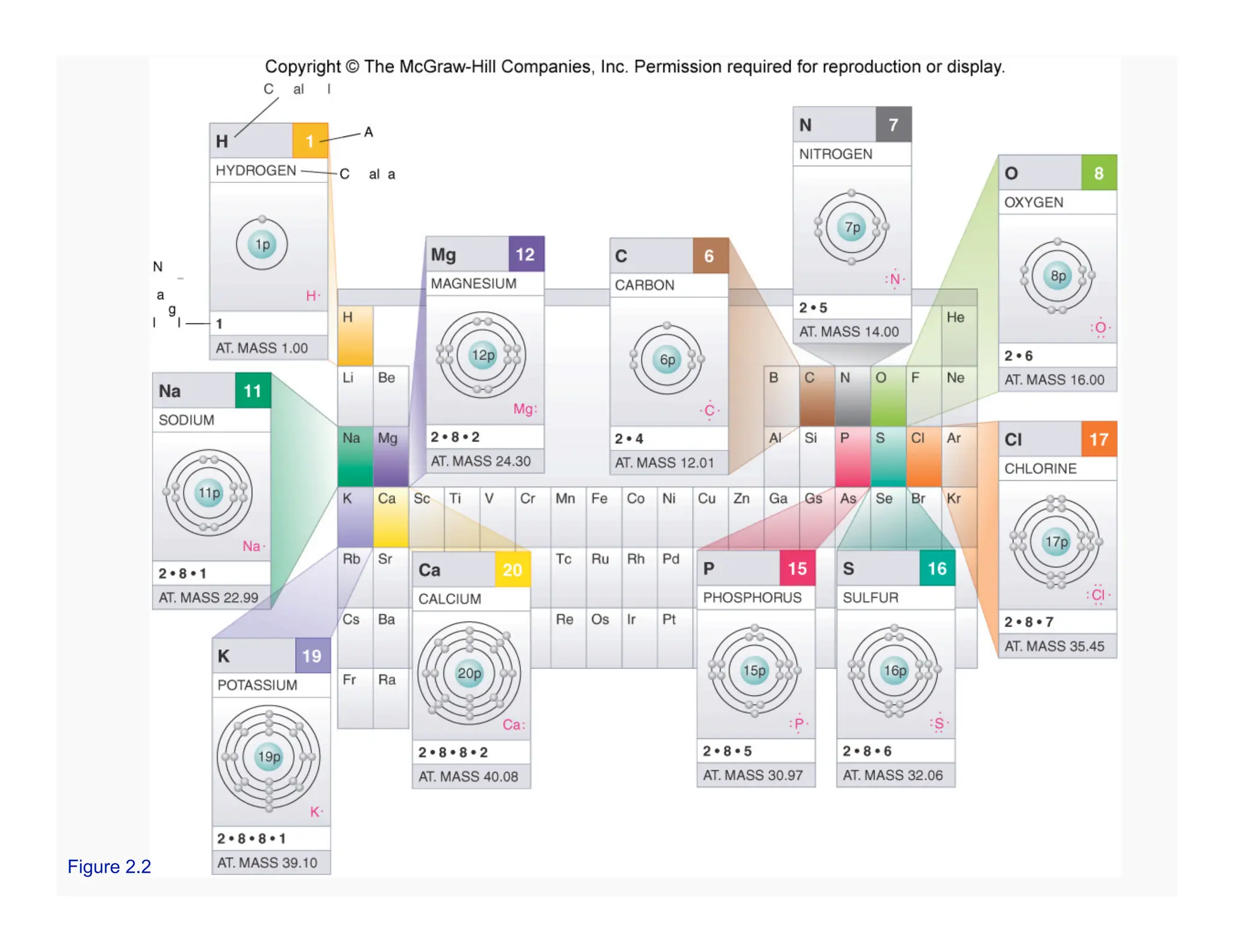
Atoms (elements) consistof protons and neutrons
(resident in a space called nucleus) and electrons
(resident in the shell).
- a shell reflects a period in the periodic system
- a valence shell is the most outer occupied one
(usually not complete)
- a group includes elements of the same valence
11
Electron Orbitals andShells
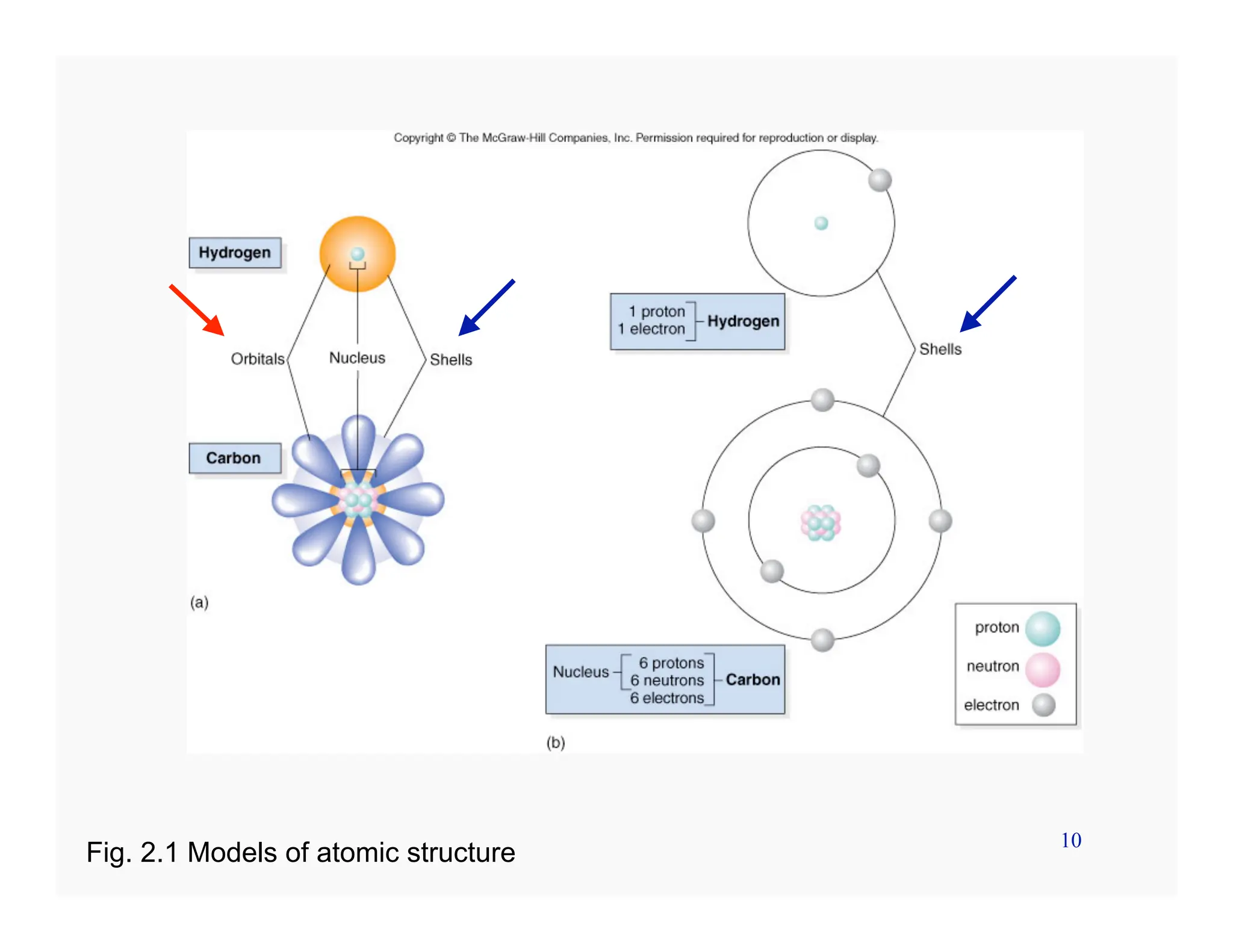
• An atom can be envisioned as a central nucleus
surrounded by a “cloud” of electrons
• Electrons rotate about the nucleus in pathways
(“preferred spaces”) called orbitals - volumes of space
in which an electron is likely to be found
• Electrons occupy energy shells, from lower-energy to
higher-energy as they move away from the nucleus
• Electrons fill the orbitals and shells in pairs starting with
the shell nearest the nucleus
• Each element, then, has a unique pattern of orbitals
and shells
12.
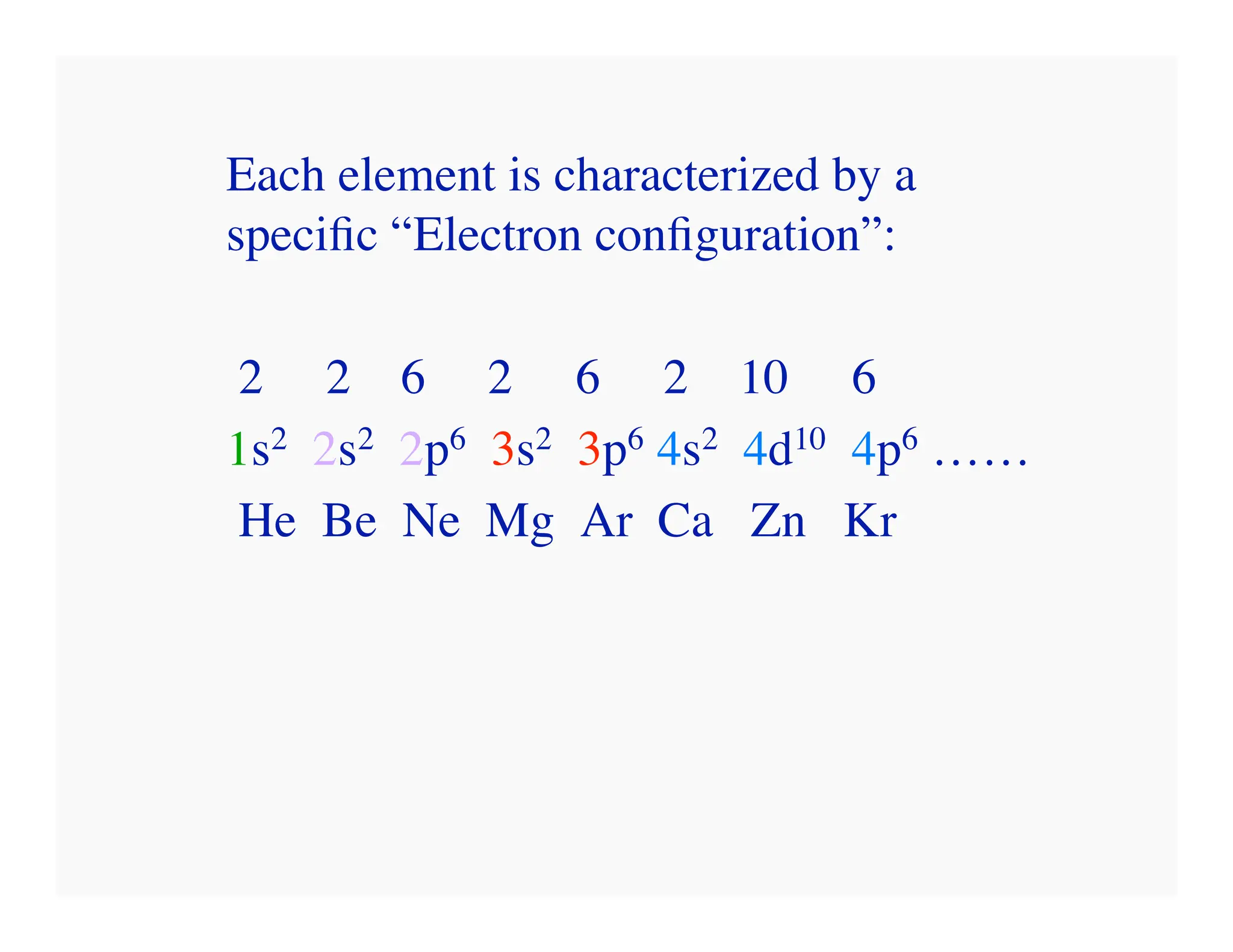
Each element ischaracterized by a
specific “Electron configuration”:
2 2 6 2 6 2 10 6
1s2 2s2 2p6 3s2 3p6 4s2 4d10 4p6 ……
He Be Ne Mg Ar Ca Zn Kr
14
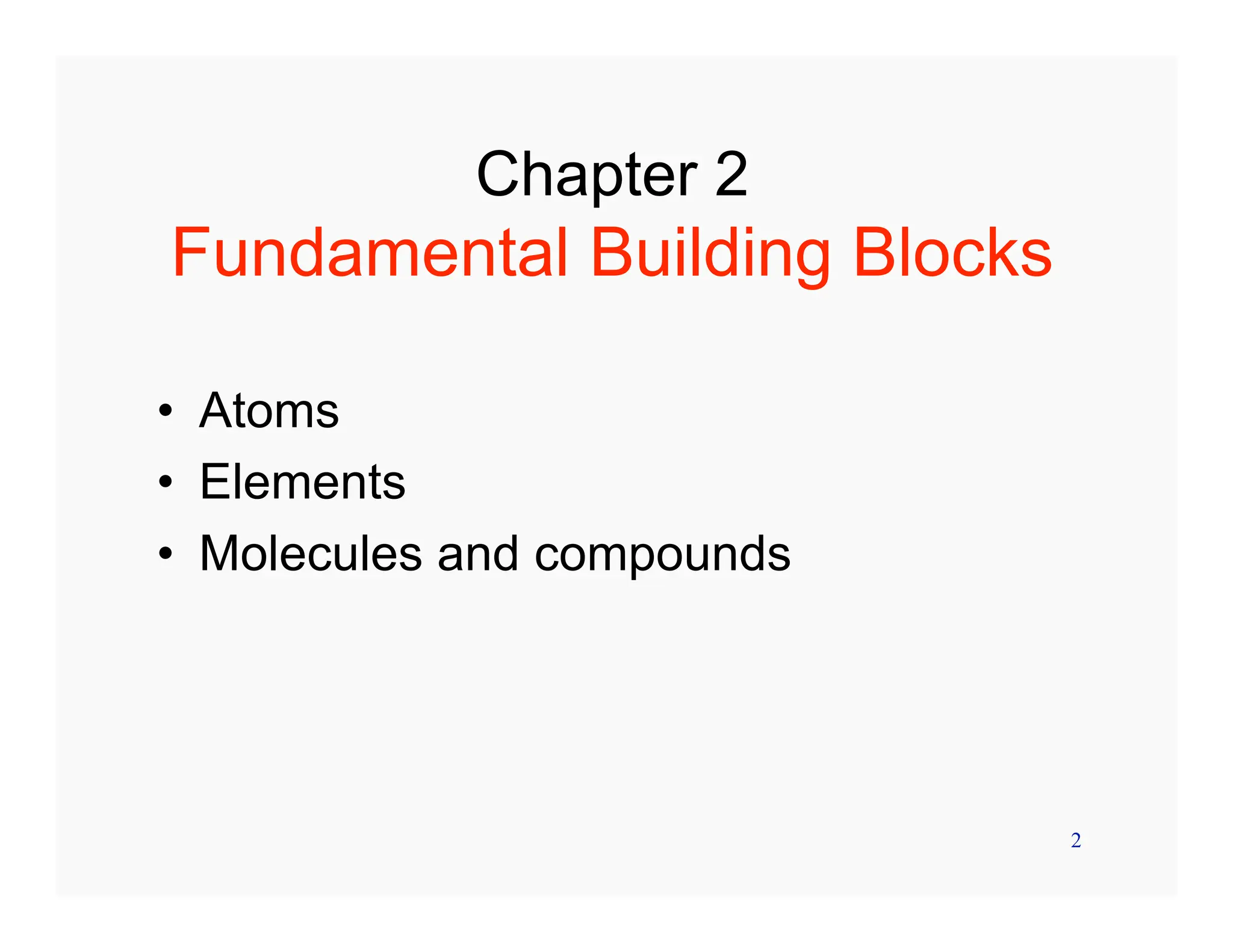
Bonds and Molecules
•Most elements do not exist naturally in pure form
• Molecule - a distinct chemical substance that results
from the combination of two or more atoms (can be two
of the same element, such as O2)
• Compounds - molecules that are combinations of two
or more different elements (such as CO2)
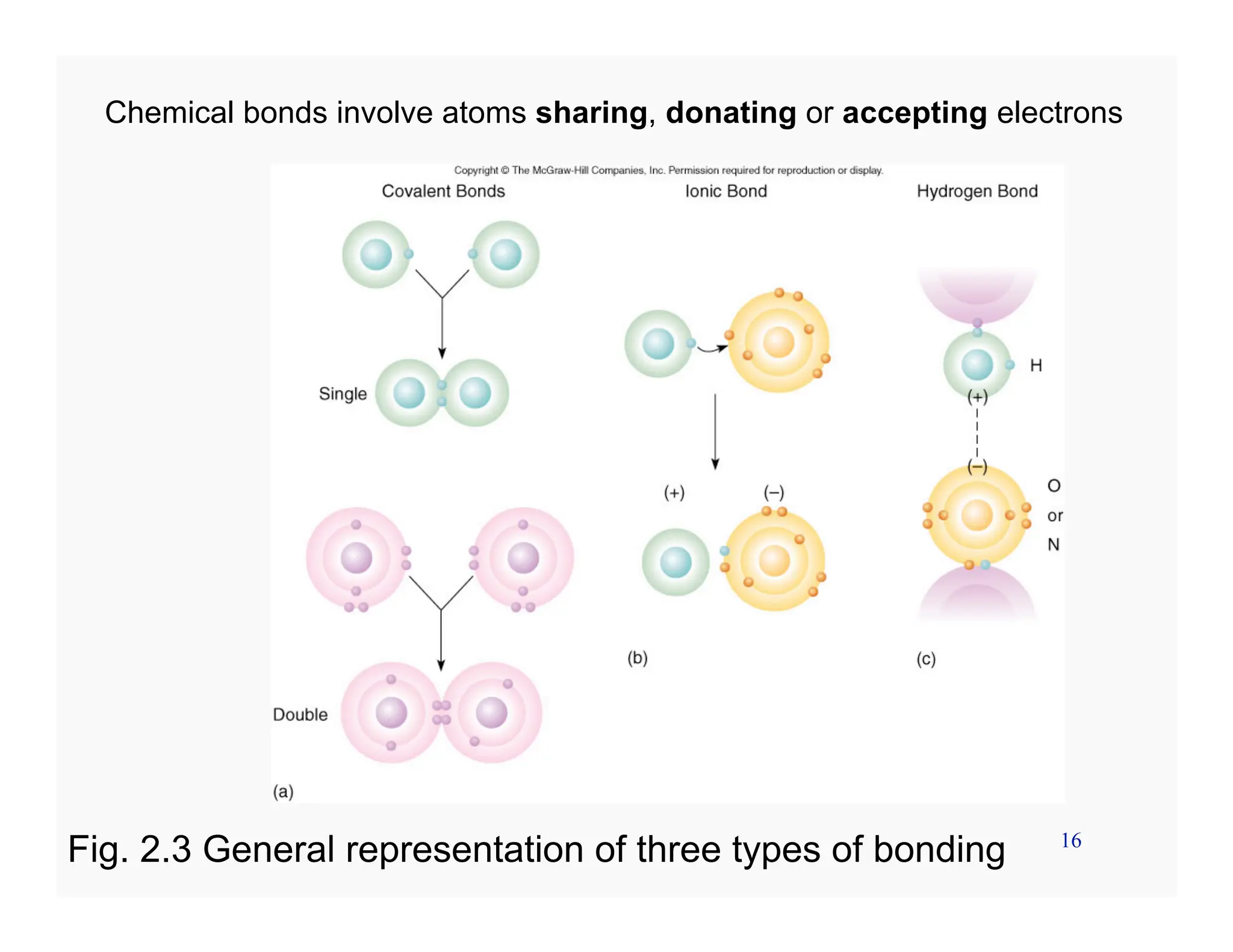
• Chemical Bonds - When two or more atoms share,
donate, or accept electrons
• Types of bonds formed and to which atoms and
element bonds are determined by the atom’s valence
16
Chemical bonds involveatoms sharing, donating or accepting electrons
Fig. 2.3 General representation of three types of bonding
17.
Covalent bonds: sharedelectron bond
Usually, the number free valences determines the number of
possible covalent bonds.
Carbon tends to form only covalent bonds thereby generating
an organic compound.
CH4, CO2, HCN
The sharing of electrons generates “noble gas electron
configurations” (valences are completely occupied); hence,
stable bonds.
18.
18
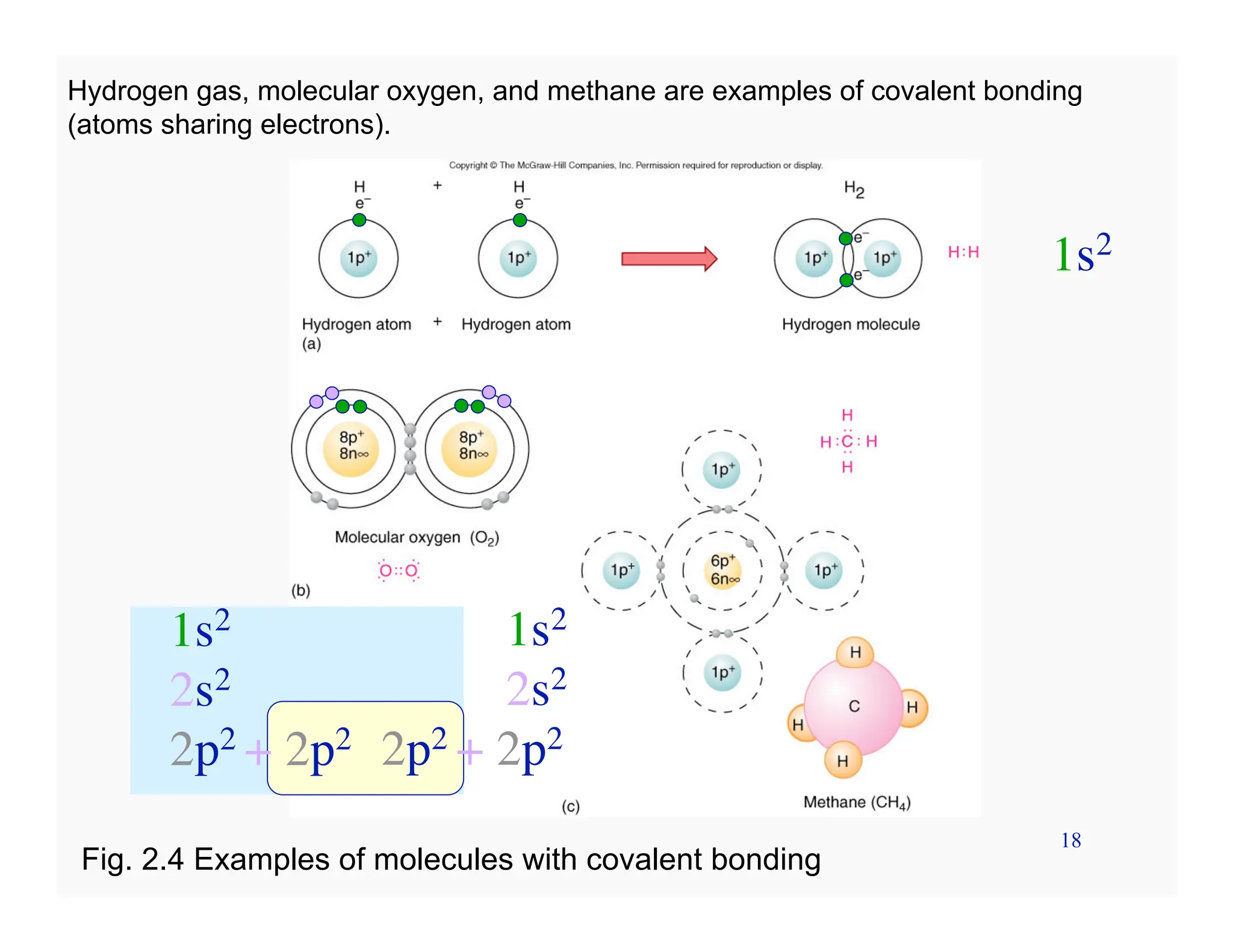
Hydrogen gas, molecularoxygen, and methane are examples of covalent bonding
(atoms sharing electrons).
Fig. 2.4 Examples of molecules with covalent bonding
1s2
1s2
2s2
2p2 + 2p2
1s2
2s2
2p2 + 2p2
19.
19
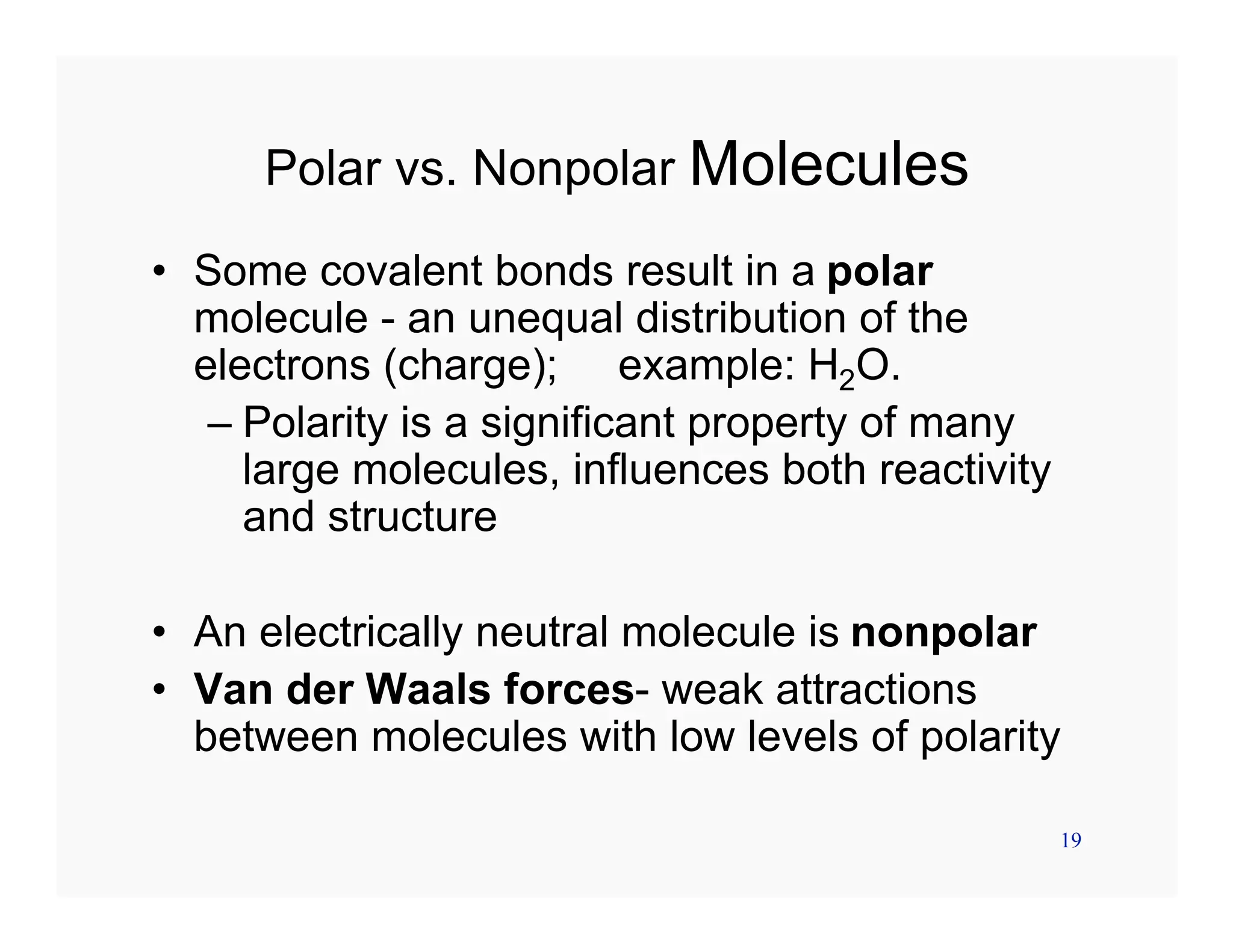
Polar vs. NonpolarMolecules
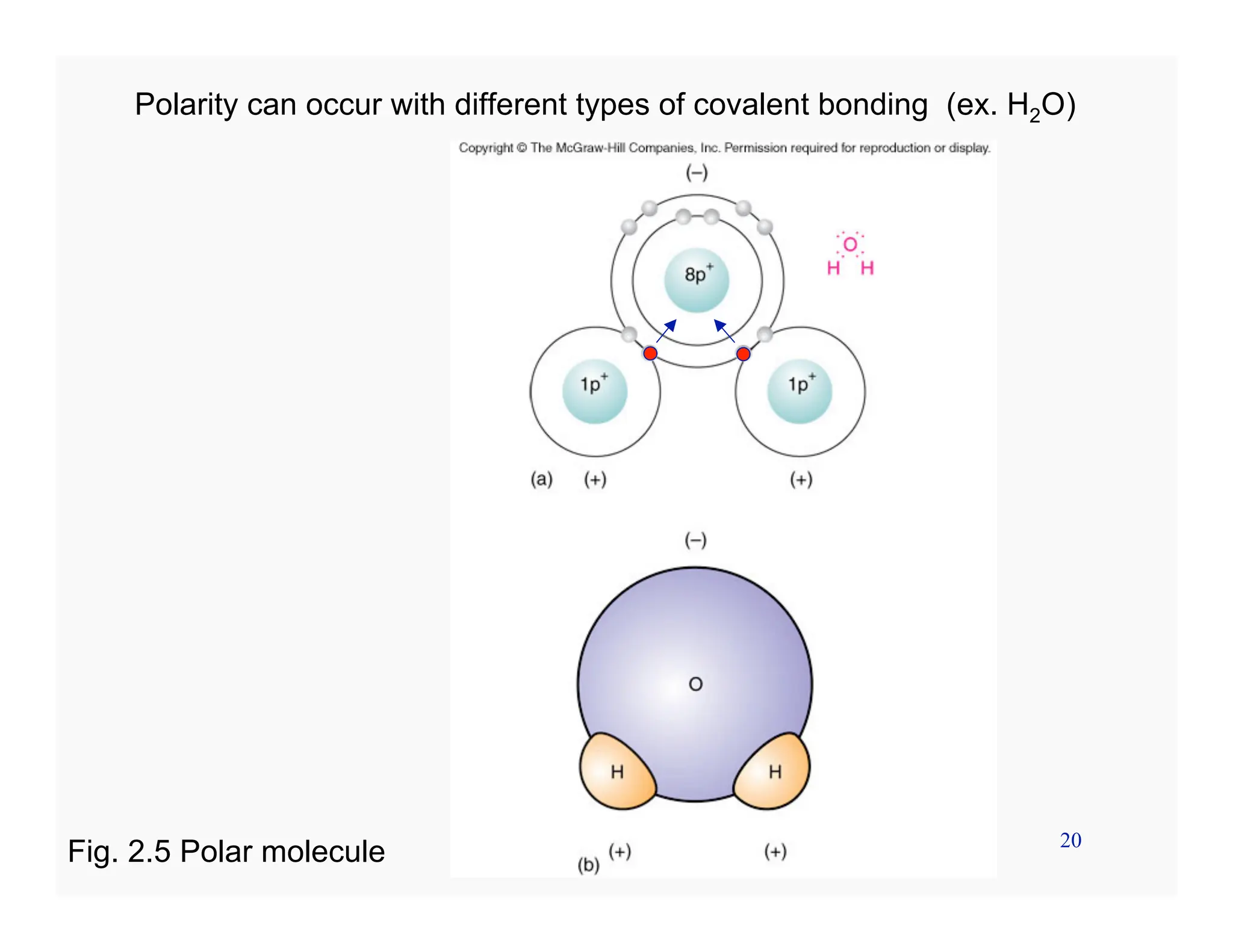
• Some covalent bonds result in a polar
molecule - an unequal distribution of the
electrons (charge); example: H2O.
– Polarity is a significant property of many
large molecules, influences both reactivity
and structure
• An electrically neutral molecule is nonpolar
• Van der Waals forces- weak attractions
between molecules with low levels of polarity
20.
20
Polarity can occurwith different types of covalent bonding (ex. H2O)
Fig. 2.5 Polar molecule
21.
21
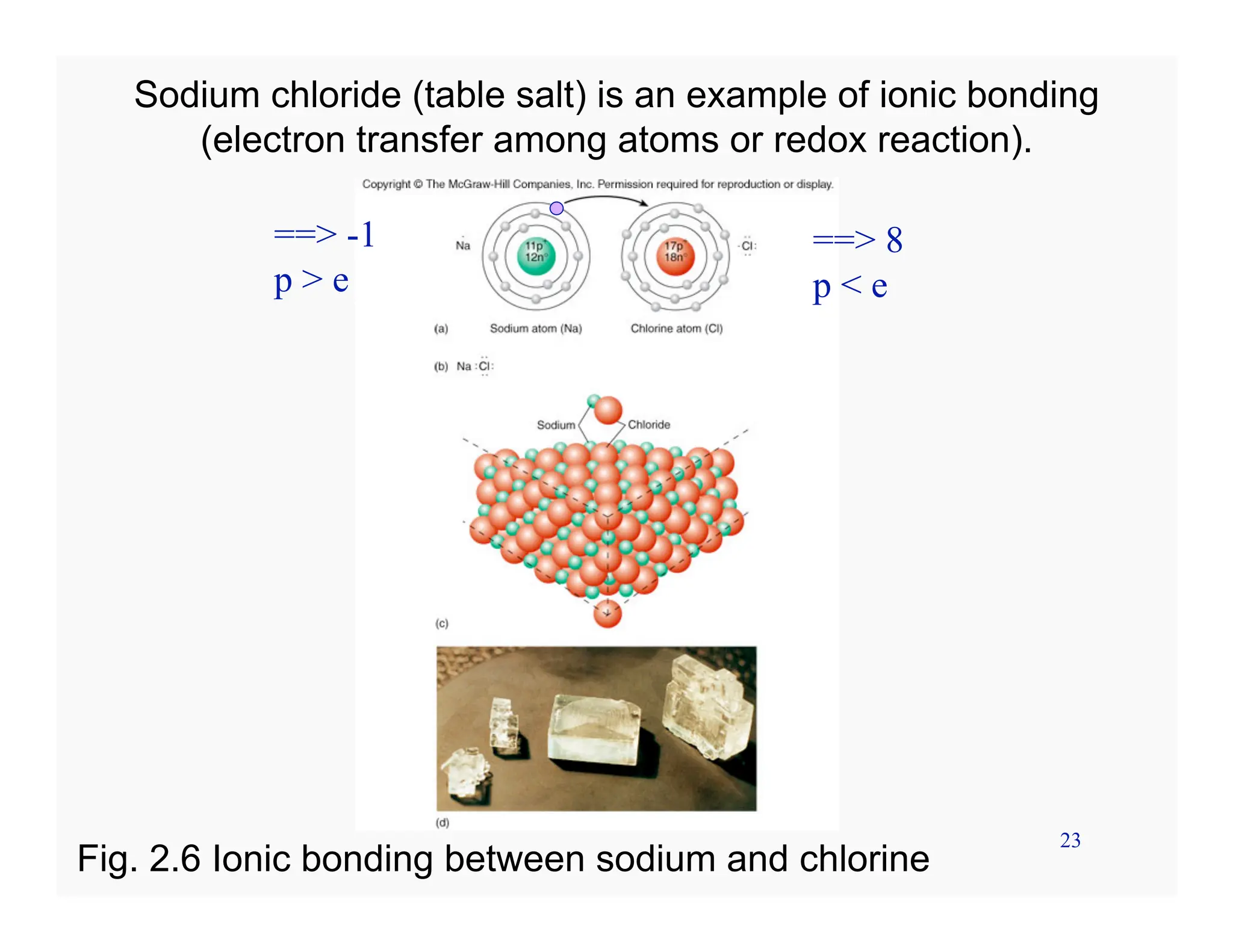
Ionic Bonds: ElectronTransfer Among Atoms
• Electrons transferred completely from one atom to
another, without sharing, results in an ionic bond
(ex. NaCl)
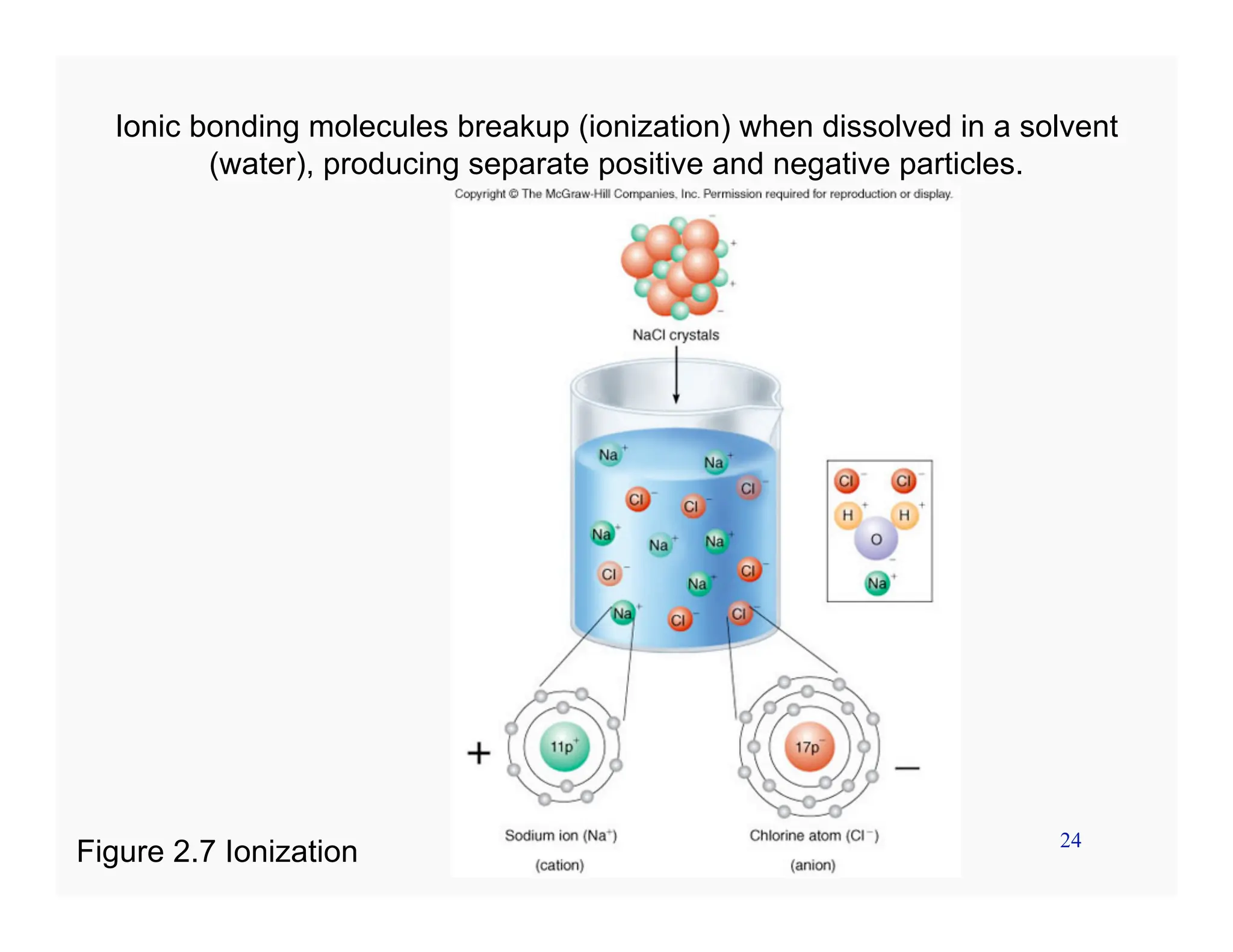
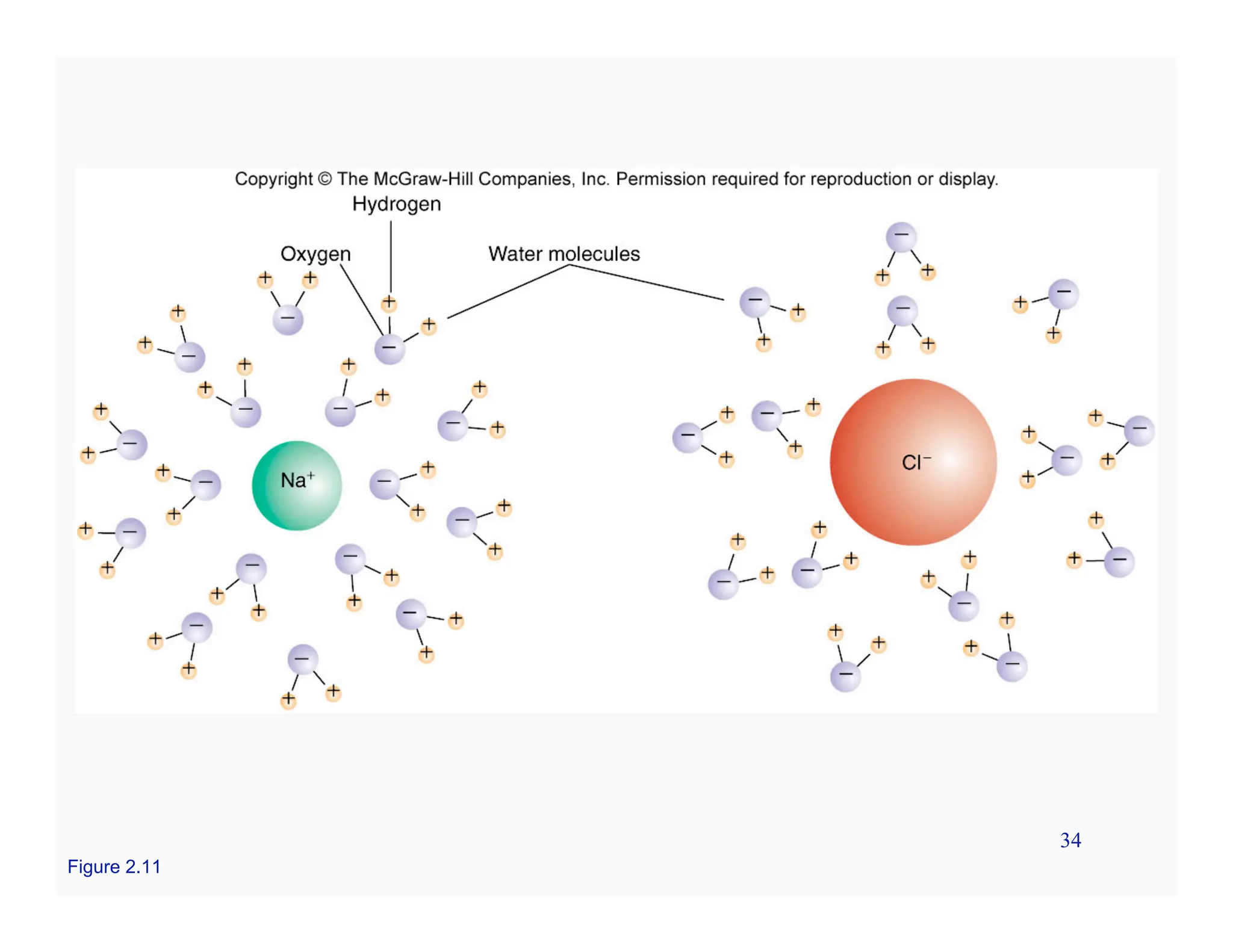
• Molecules with ionic bonds, when dissolved in a
solvent, can separate in to charged particles called
ions in a process called ionization
• Cations- positively charged ions
• Anions- negatively charged ions
• These ionic molecules that dissolve to form ions are
called electrolytes
22.
====>
Ionic bonds: electrostaticattraction
between oppositely charged ions.
Compounds with ionic bonds (ionic
compounds) are usually inorganic and
organized in a lattice.
23.
23
Sodium chloride (tablesalt) is an example of ionic bonding
(electron transfer among atoms or redox reaction).
Fig. 2.6 Ionic bonding between sodium and chlorine
==> 8
p < e
==> -1
p > e
24.
24
Ionic bonding moleculesbreakup (ionization) when dissolved in a solvent
(water), producing separate positive and negative particles.
Figure 2.7 Ionization
25.
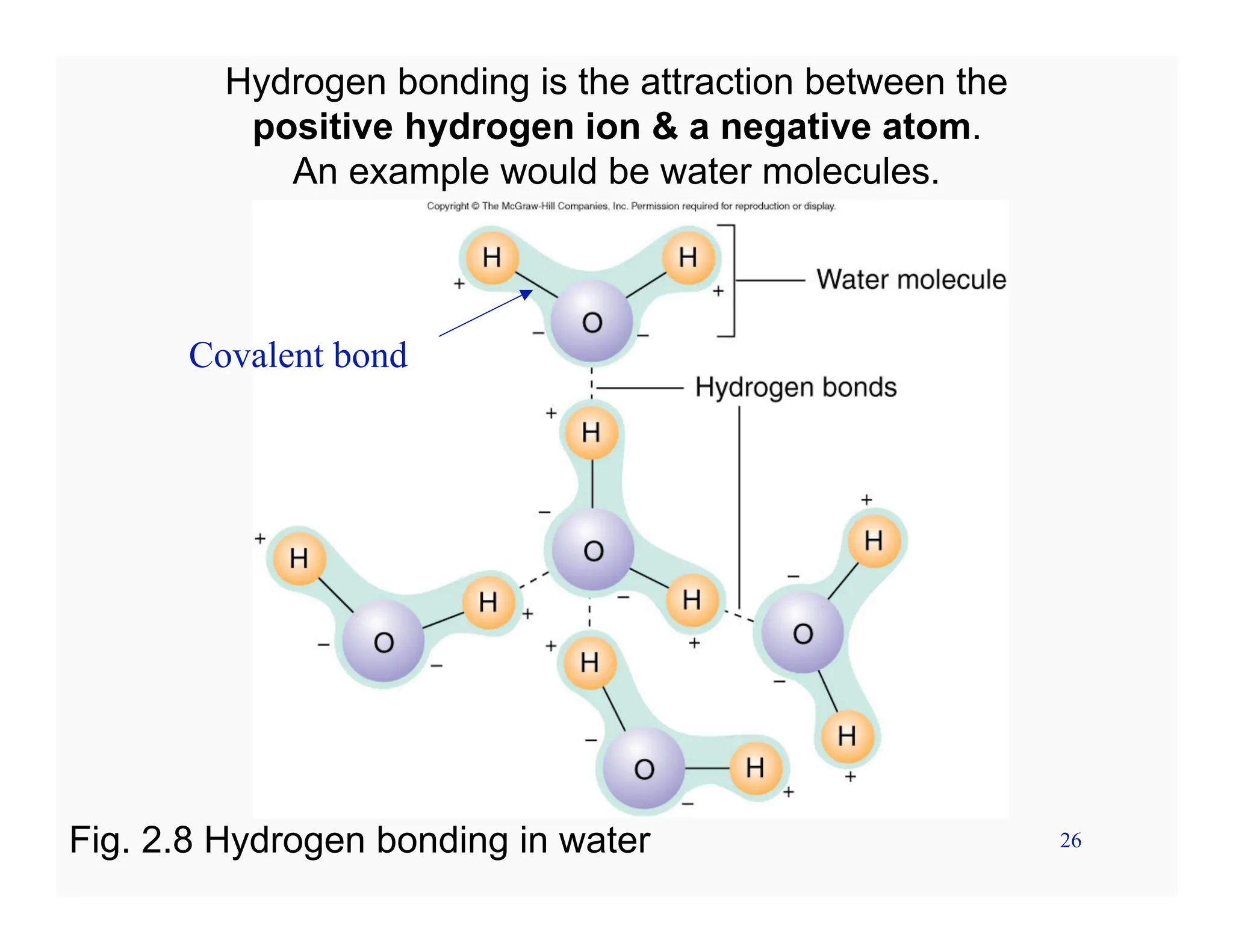
Hydrogen bonds: interactionof
hydrogen atoms (covalently bound to
oxygen or nitrogen) with weak
opposing electronic charges.
Polarity of the molecule leads to
interaction with other polar molecules
(water).
26.
26
Hydrogen bonding isthe attraction between the
positive hydrogen ion & a negative atom.
An example would be water molecules.
Fig. 2.8 Hydrogen bonding in water
Covalent bond
27.
27
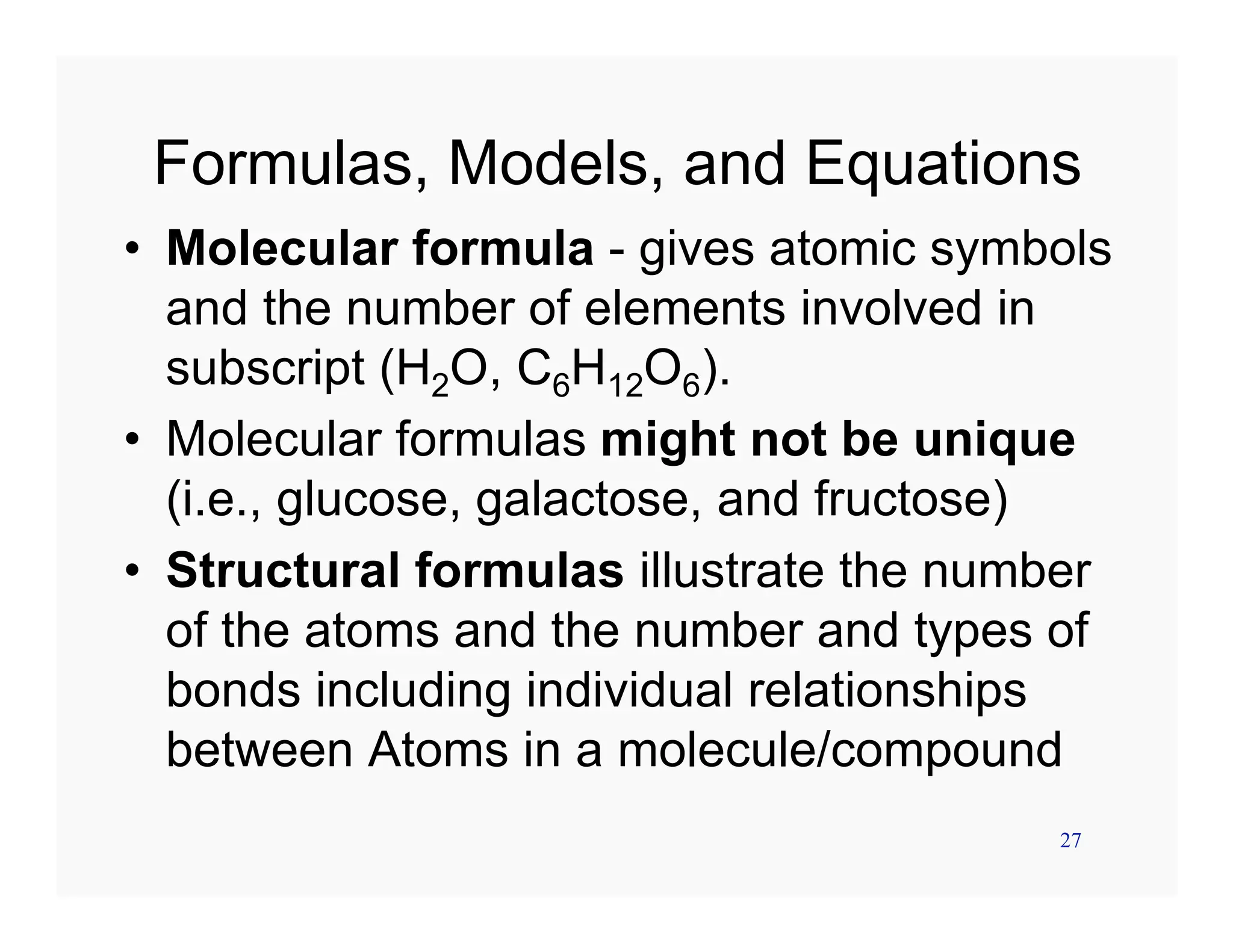
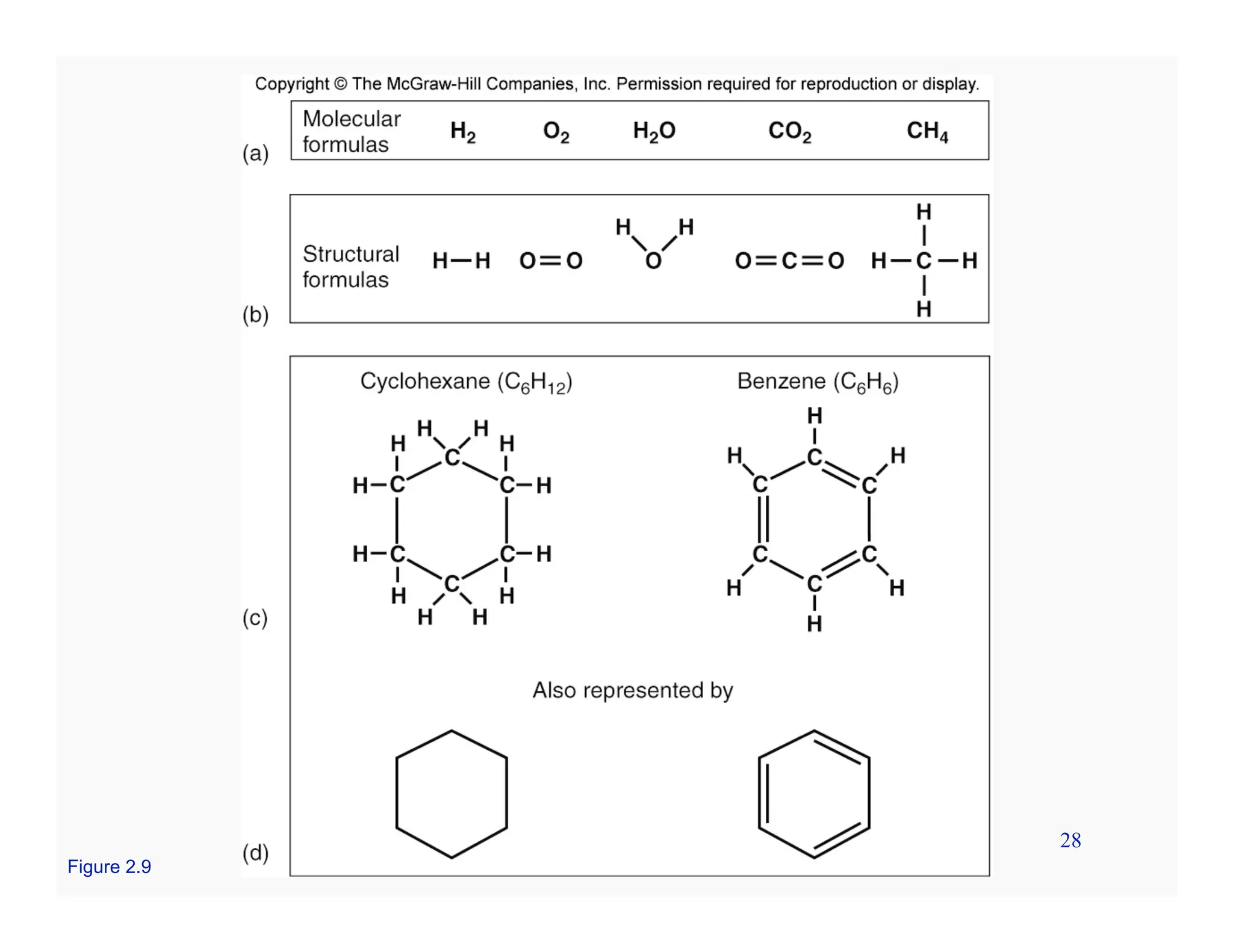
Formulas, Models, andEquations
• Molecular formula - gives atomic symbols
and the number of elements involved in
subscript (H2O, C6H12O6).
• Molecular formulas might not be unique
(i.e., glucose, galactose, and fructose)
• Structural formulas illustrate the number
of the atoms and the number and types of
bonds including individual relationships
between Atoms in a molecule/compound
29
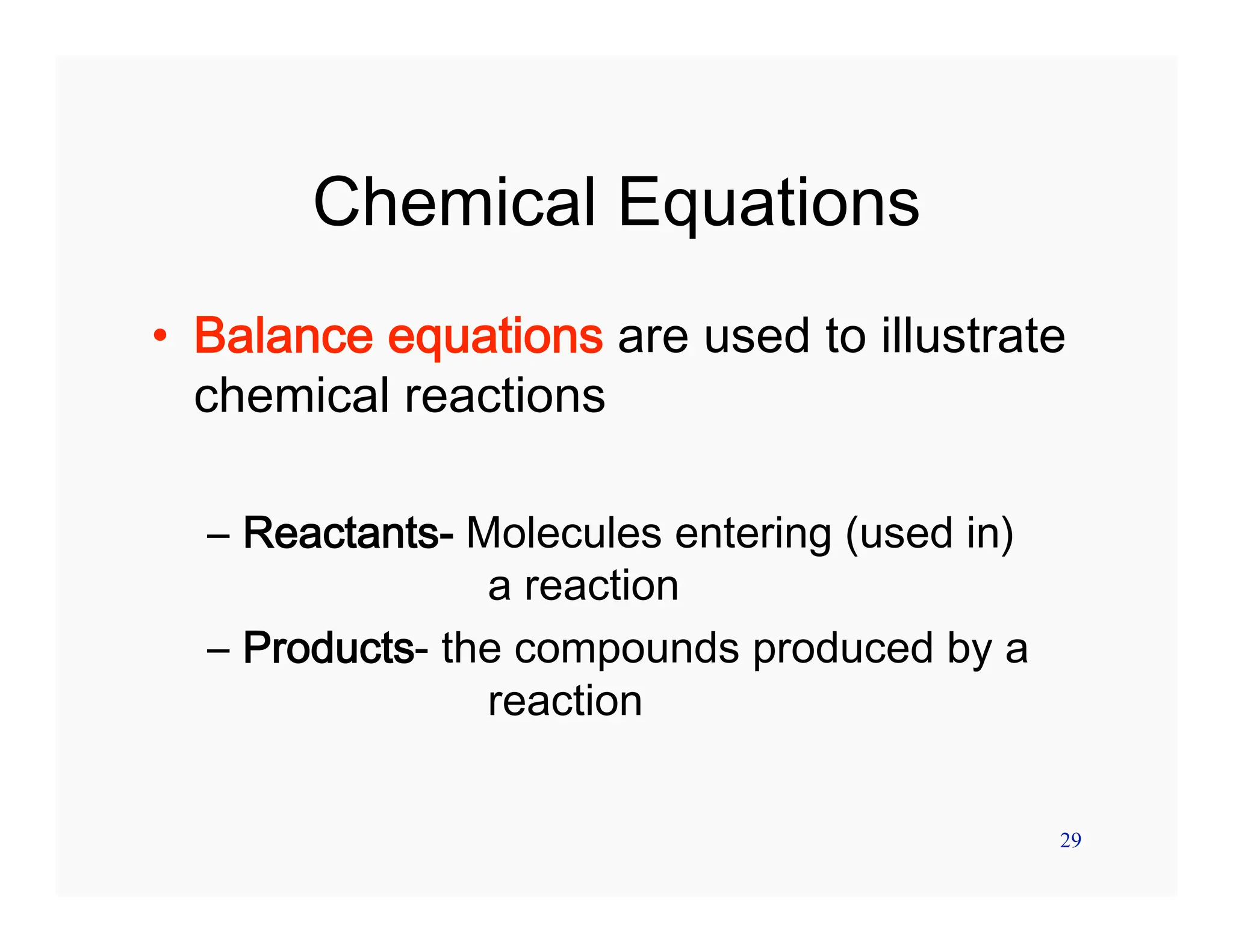
Chemical Equations
• Balanceequations are used to illustrate
chemical reactions
– Reactants- Molecules entering (used in)
a reaction
– Products- the compounds produced by a
reaction
30.
30
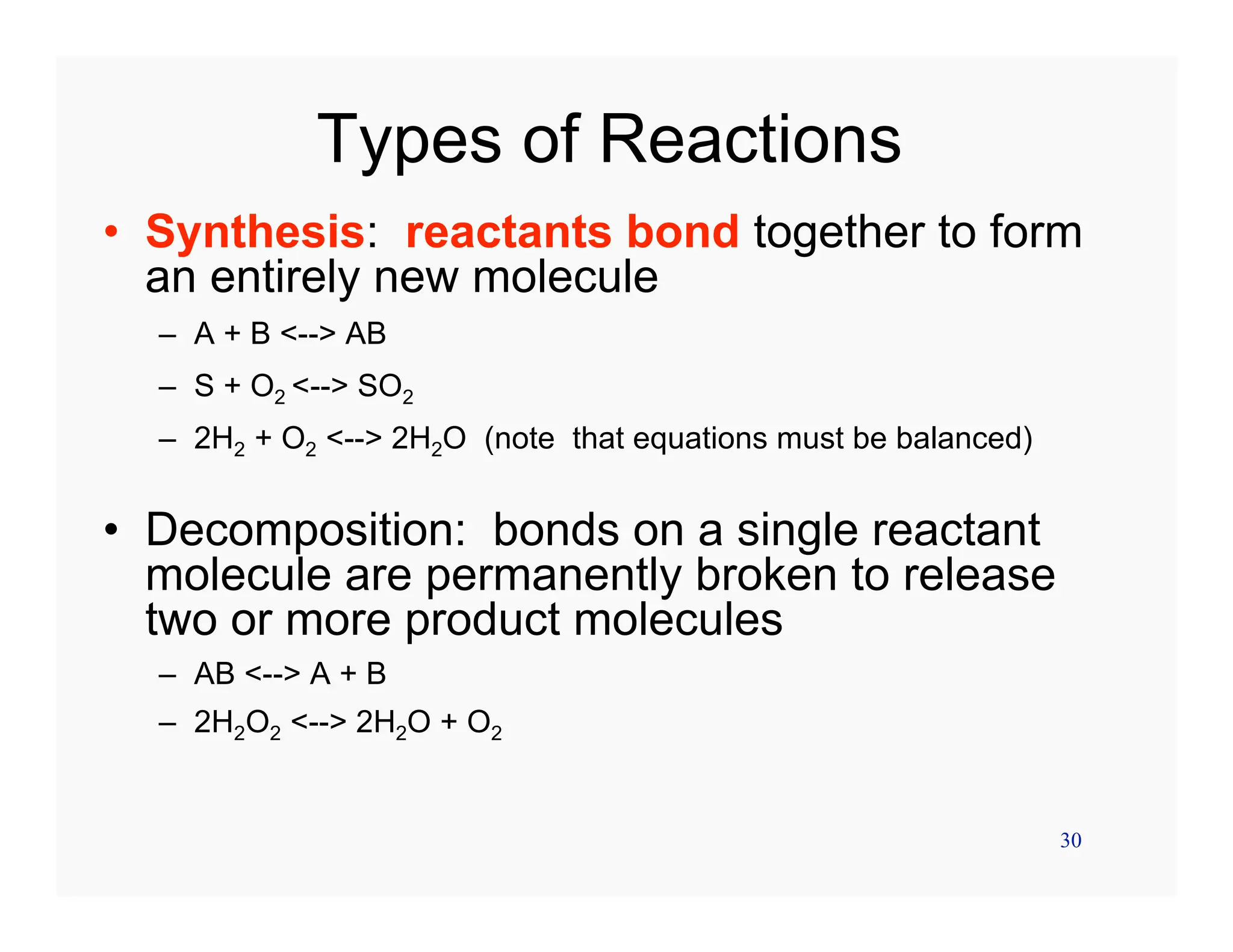
Types of Reactions
•Synthesis: reactants bond together to form
an entirely new molecule
– A + B <--> AB
– S + O2 <--> SO2
– 2H2 + O2 <--> 2H2O (note that equations must be balanced)
• Decomposition: bonds on a single reactant
molecule are permanently broken to release
two or more product molecules
– AB <--> A + B
– 2H2O2 <--> 2H2O + O2
31.
31
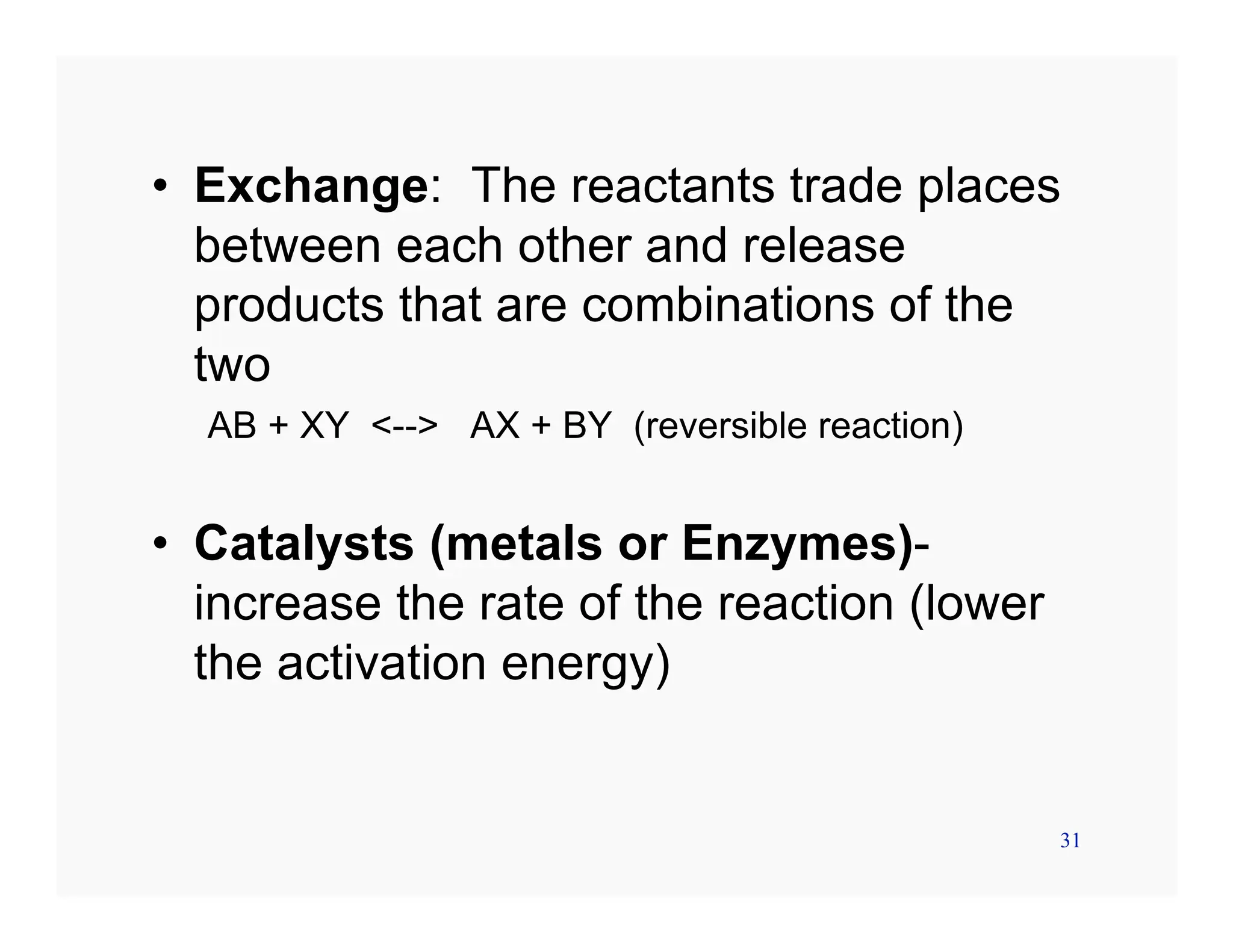
• Exchange: Thereactants trade places
between each other and release
products that are combinations of the
two
AB + XY <--> AX + BY (reversible reaction)
• Catalysts (metals or Enzymes)-
increase the rate of the reaction (lower
the activation energy)
32.
32
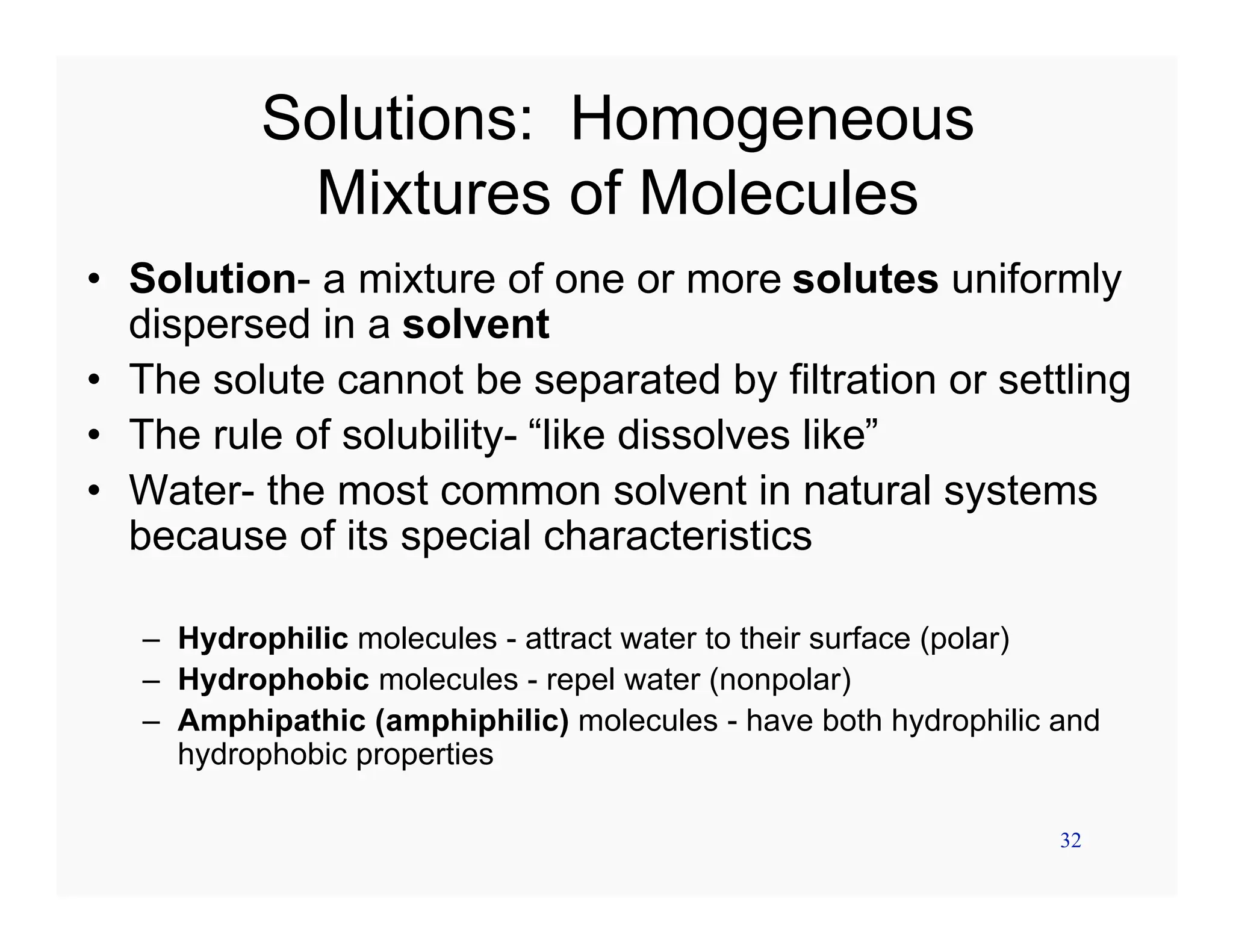
Solutions: Homogeneous
Mixtures ofMolecules
• Solution- a mixture of one or more solutes uniformly
dispersed in a solvent
• The solute cannot be separated by filtration or settling
• The rule of solubility- “like dissolves like”
• Water- the most common solvent in natural systems
because of its special characteristics
– Hydrophilic molecules - attract water to their surface (polar)
– Hydrophobic molecules - repel water (nonpolar)
– Amphipathic (amphiphilic) molecules - have both hydrophilic and
hydrophobic properties
33.
33
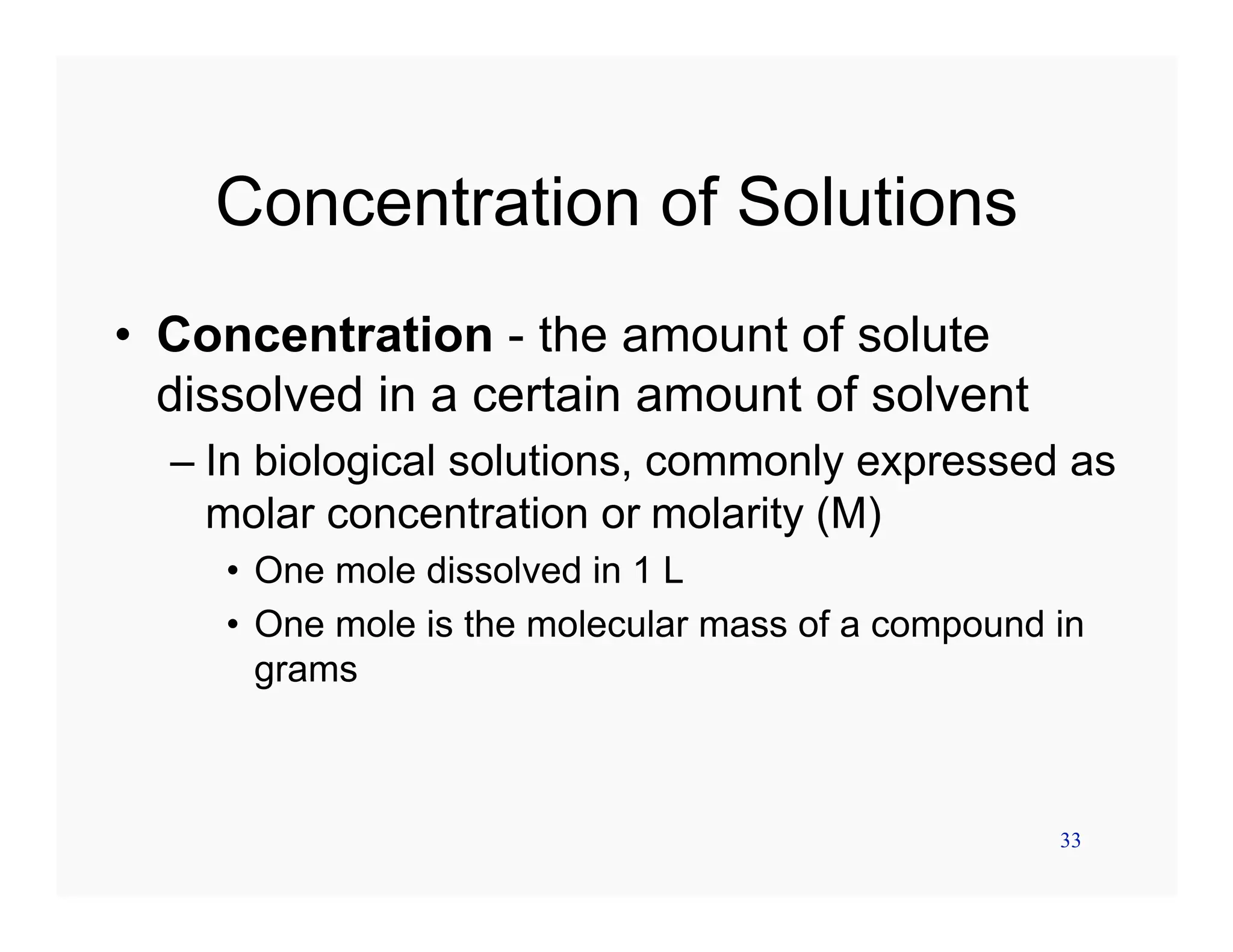
Concentration of Solutions
•Concentration - the amount of solute
dissolved in a certain amount of solvent
– In biological solutions, commonly expressed as
molar concentration or molarity (M)
• One mole dissolved in 1 L
• One mole is the molecular mass of a compound in
grams
35
Acidity, Alkalinity, andthe pH Scale
• Acidic solutions - when a compound
dissolved in water (acid) releases excess
hydrogen ions (H+)
• Basic solutions- when a compound
releases excess hydroxide ions (OH-)
36.
36
pH scale
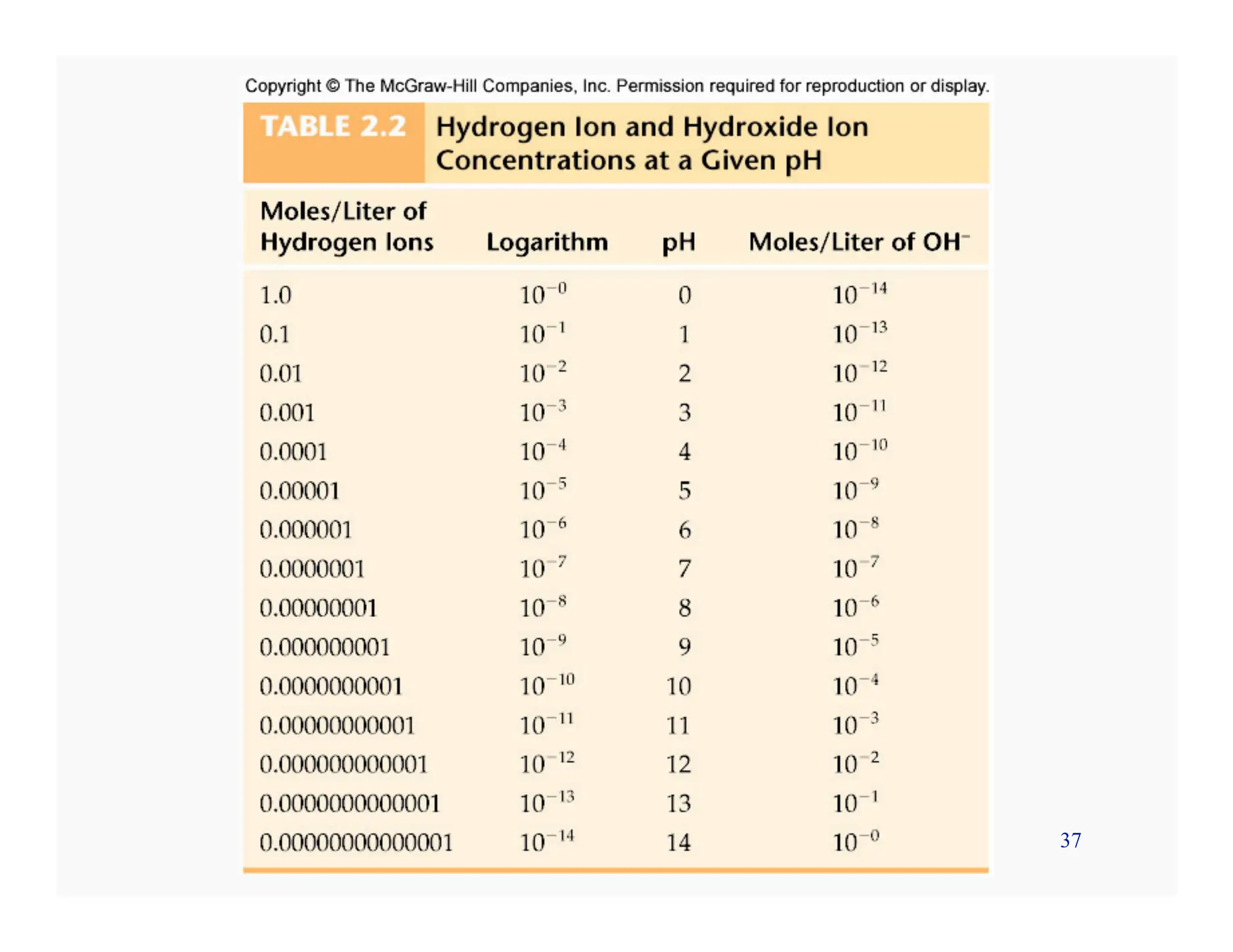
• pHscale- measures the acid and base
concentrations of solutions:
– Ranges from 0 (most acidic) to 14 (most basic); pH= 7
is neutral (i.e., [H+] = [OH-])
– pH = -log[H+]
38
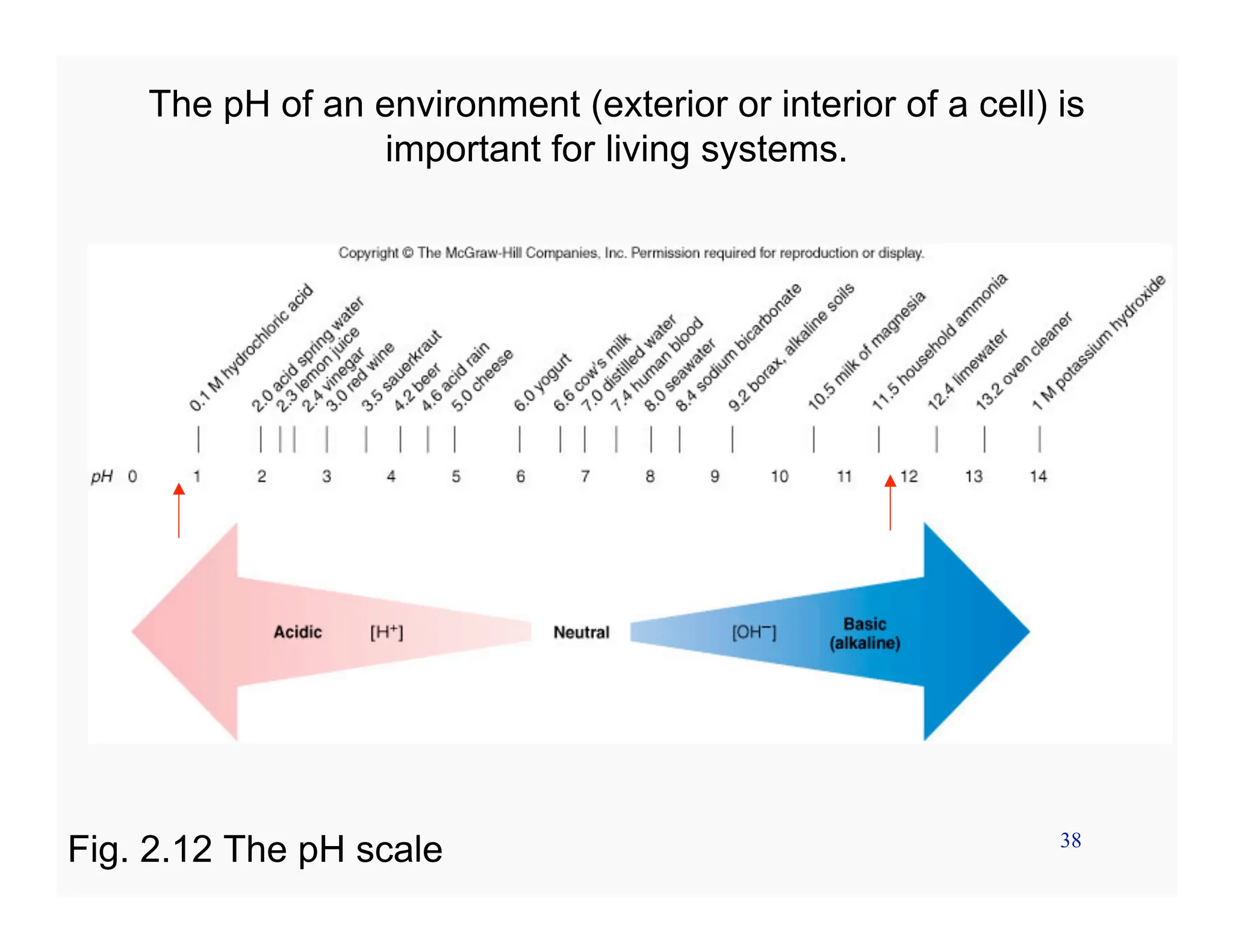
The pH ofan environment (exterior or interior of a cell) is
important for living systems.
Fig. 2.12 The pH scale
39.
39
Neutralization Reactions
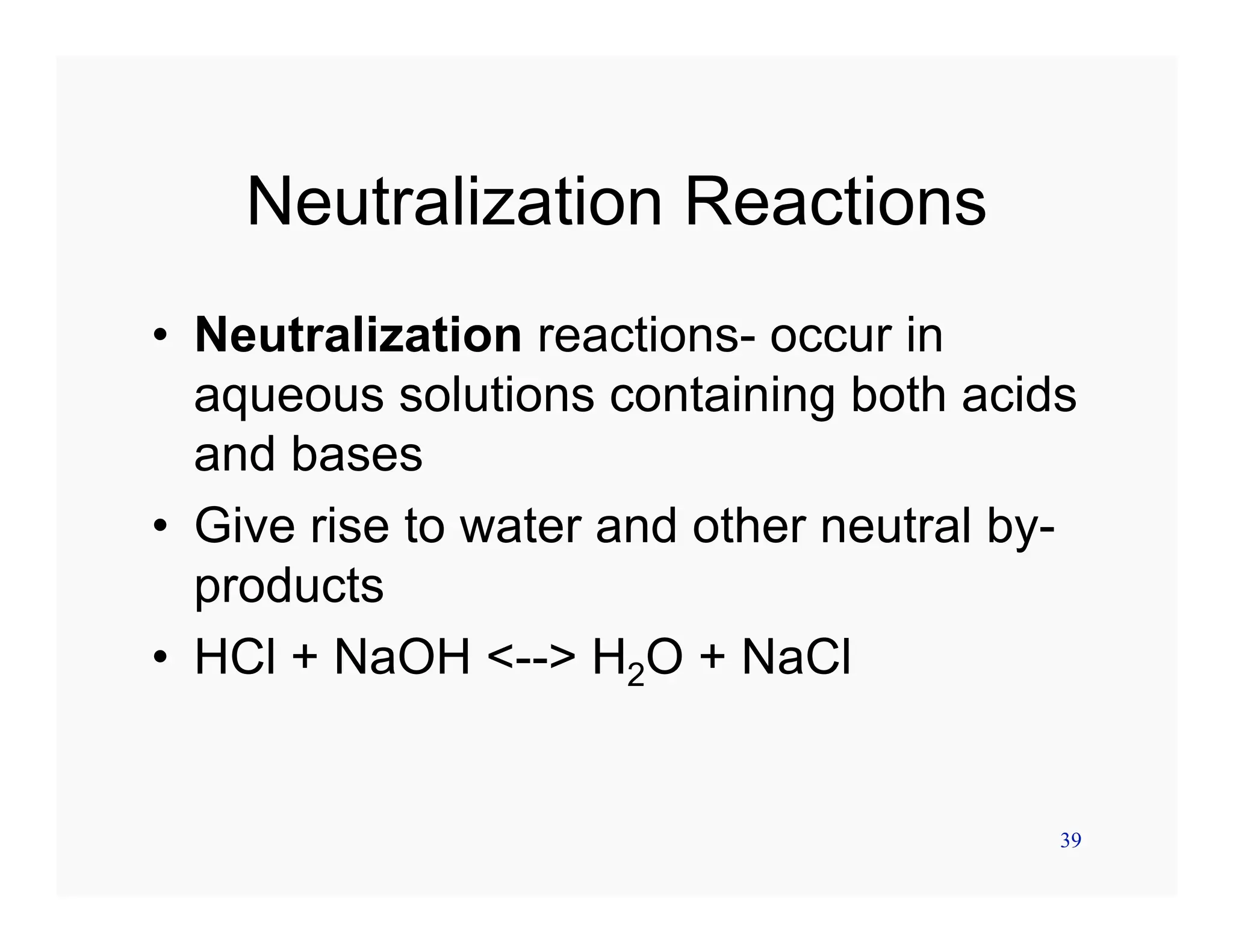
• Neutralizationreactions- occur in
aqueous solutions containing both acids
and bases
• Give rise to water and other neutral by-
products
• HCl + NaOH <--> H2O + NaCl
40.
40
Molecules
• Can beinorganic and organic molecules.
– Inorganic: C or H is present (ex. CO2, H2)
– Organic: C and H are present (ex. CH3OH)
• Molecules can form complex Compounds
41.
41
The Chemistry ofCarbon and
Organic Compounds
• Inorganic chemicals: usually do not contain
both C and H (ex. NaCl, CaCO3)
• Organic chemicals: Carbon compounds with
a basic framework of the element carbon
bonded to itself and other atoms
– Most of the chemical reactions and structures of
living things involve organic chemicals
42.
42
Carbon- the Fundamental
Elementof Life
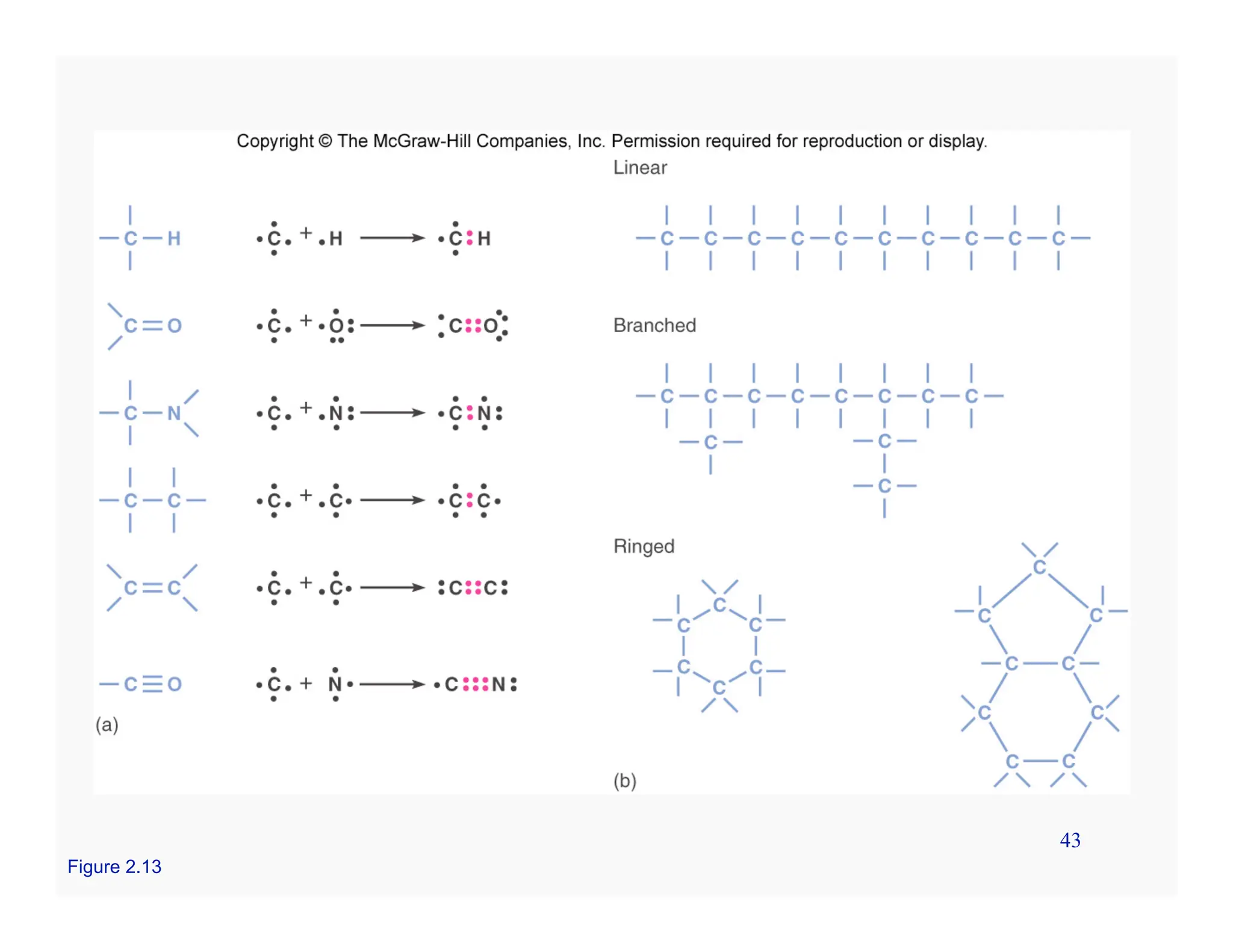
• Valence makes it an ideal atomic building block
• Forms stable chains containing thousands of C
atoms, with bonding sites available
• Can form linear, branched, or ringed molecules
• Can form single, double, or triple bonds
• Most often associates with H, O, N, S, and P
44
Functional Groups ofOrganic
Compounds
• Special molecular groups or accessory molecules that
covalently or hydrogen-bond to organic compounds are
called functional groups.
• FG help define the chemical class of certain groups of
organic compounds
• FG give organic compounds unique reactive properties
– Reactions of an organic compound can be predicted by
knowing the kind of functional group or groups it carries
45.
45
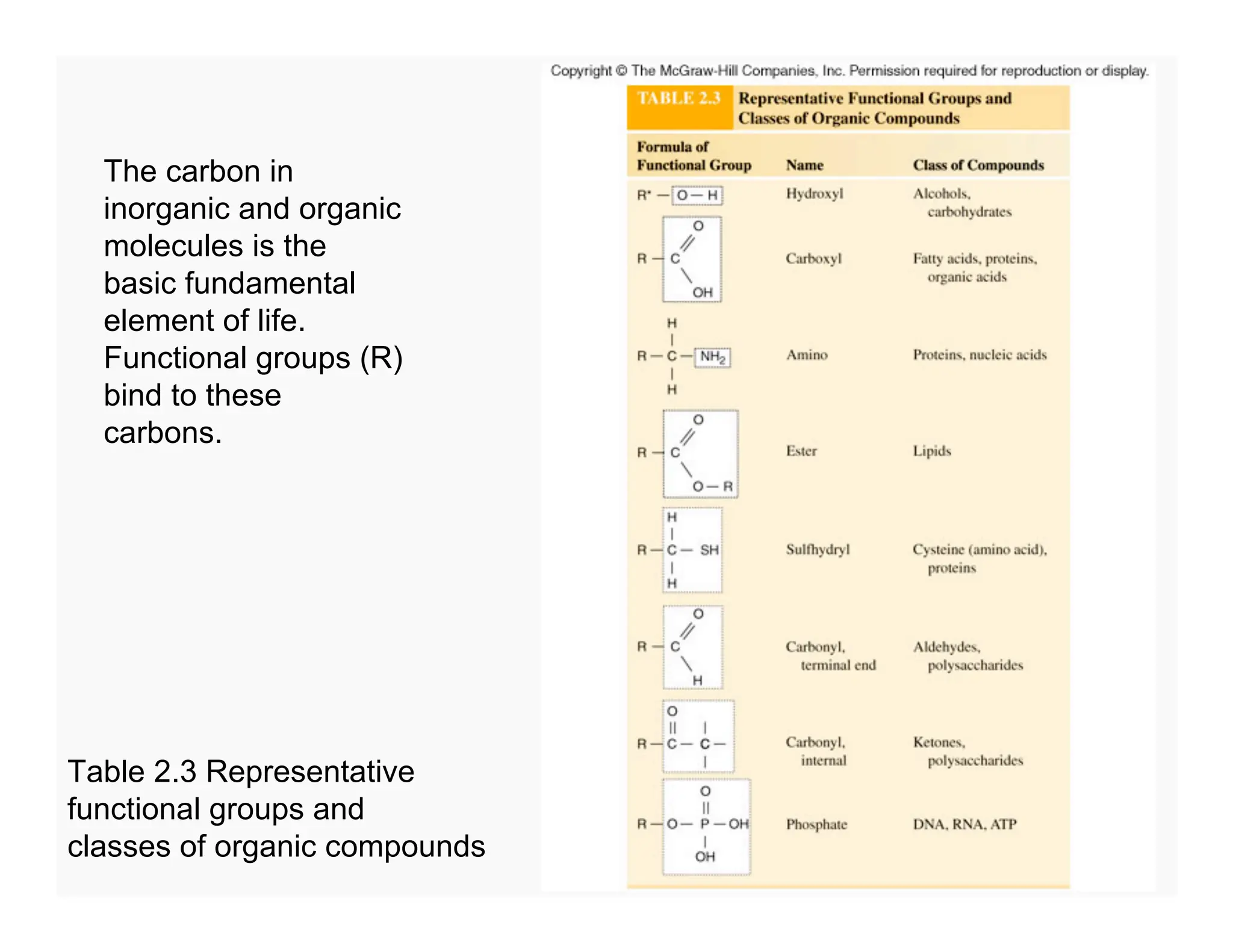
The carbon in
inorganicand organic
molecules is the
basic fundamental
element of life.
Functional groups (R)
bind to these
carbons.
Table 2.3 Representative
functional groups and
classes of organic compounds
46.
46
• Biochemistry: studyof the compounds of life,
their synthesis and degradation
• Biochemicals: organic compounds produced
by (or components of) living things
Biochemicals can be very large and thus called
more specifically: macromolecules.
47.
47
2.2 Macromolecules
• Polysaccharides(Carbohydrates)
• Lipids
• Proteins
• Nucleic acids
Macromolecules (polymers) are the product of condensation
(polymerization) reactions, in which monomers are
polymerized thereby forming water.
48.
48
Carbohydrates
Sugars and Polysaccharides
•Exist in a variety of configurations
– Sugar (saccharide): a simple carbohydrate with a sweet taste
– Monosaccharide usually contains 3-7 carbons
– Disaccharide contains two monosaccharides
– Polysaccharide contains five or more monosaccharides
• Monosaccharides and disaccharides are specified by combining a
prefix that describes a characteristic of the sugar with the suffix
–ose
– Hexoses- six carbons
– Pentoses- five carbons
– Fructose- for fruit
49.
49
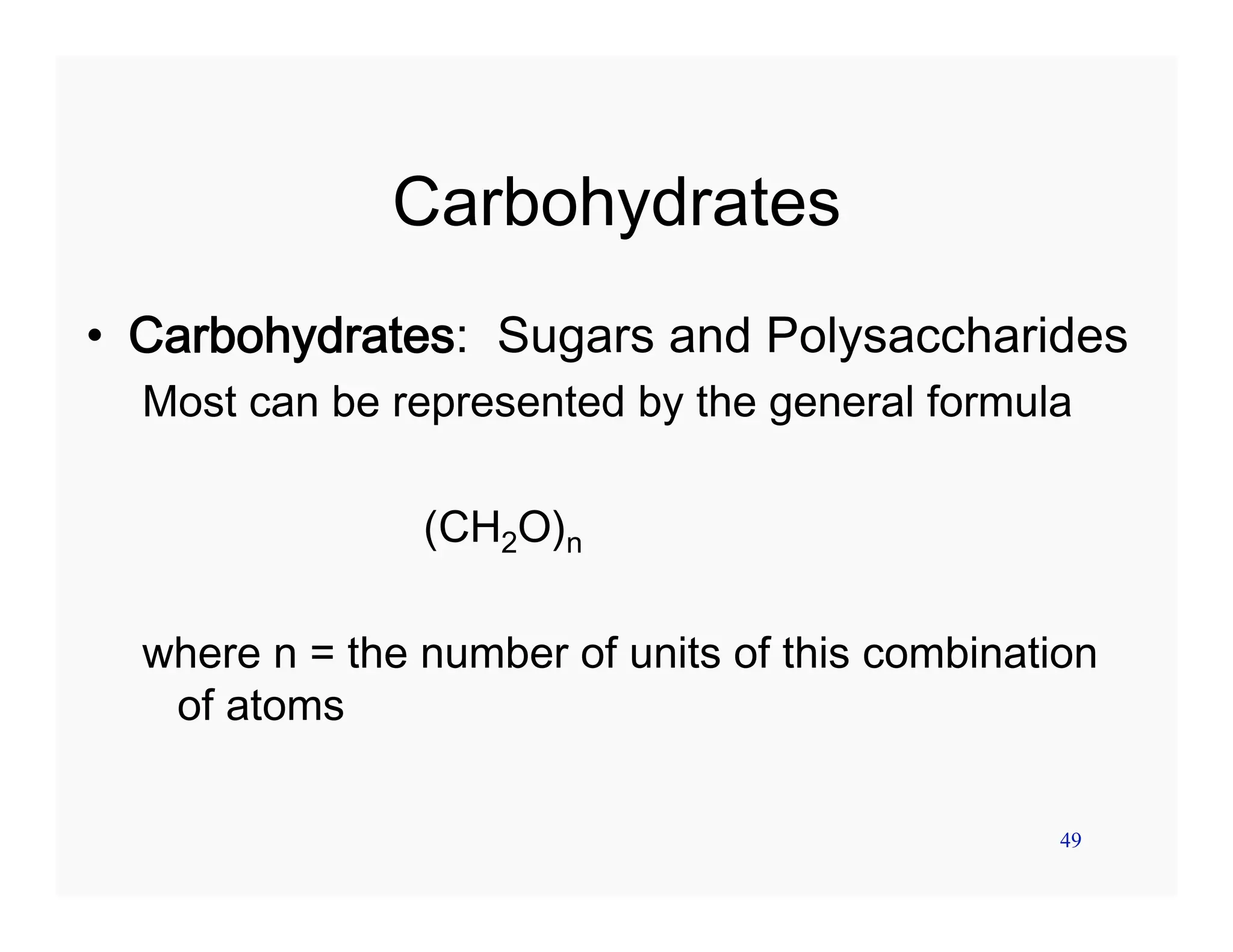
Carbohydrates
• Carbohydrates: Sugarsand Polysaccharides
Most can be represented by the general formula
(CH2O)n
where n = the number of units of this combination
of atoms
50.
50
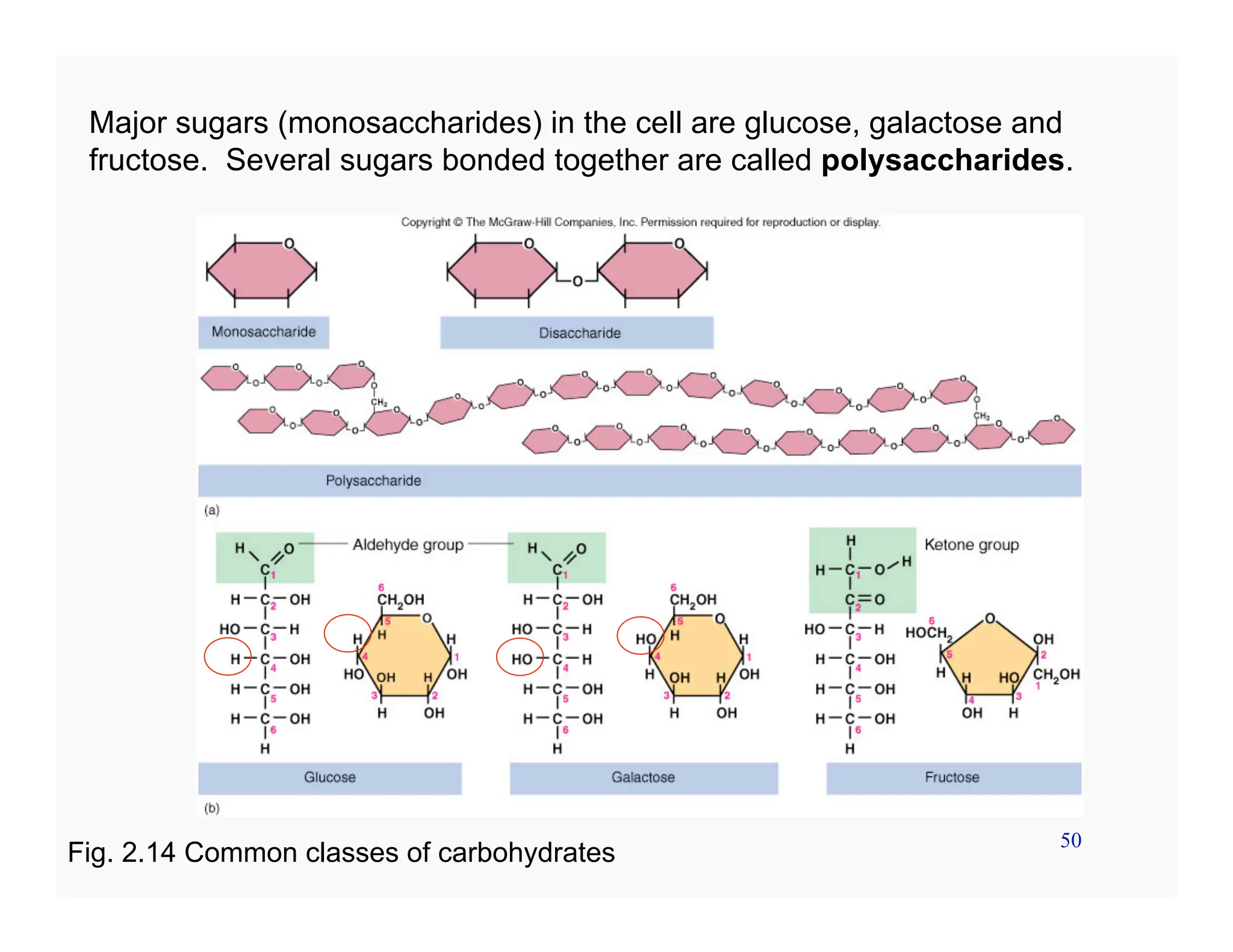
Major sugars (monosaccharides)in the cell are glucose, galactose and
fructose. Several sugars bonded together are called polysaccharides.
Fig. 2.14 Common classes of carbohydrates
51.
51
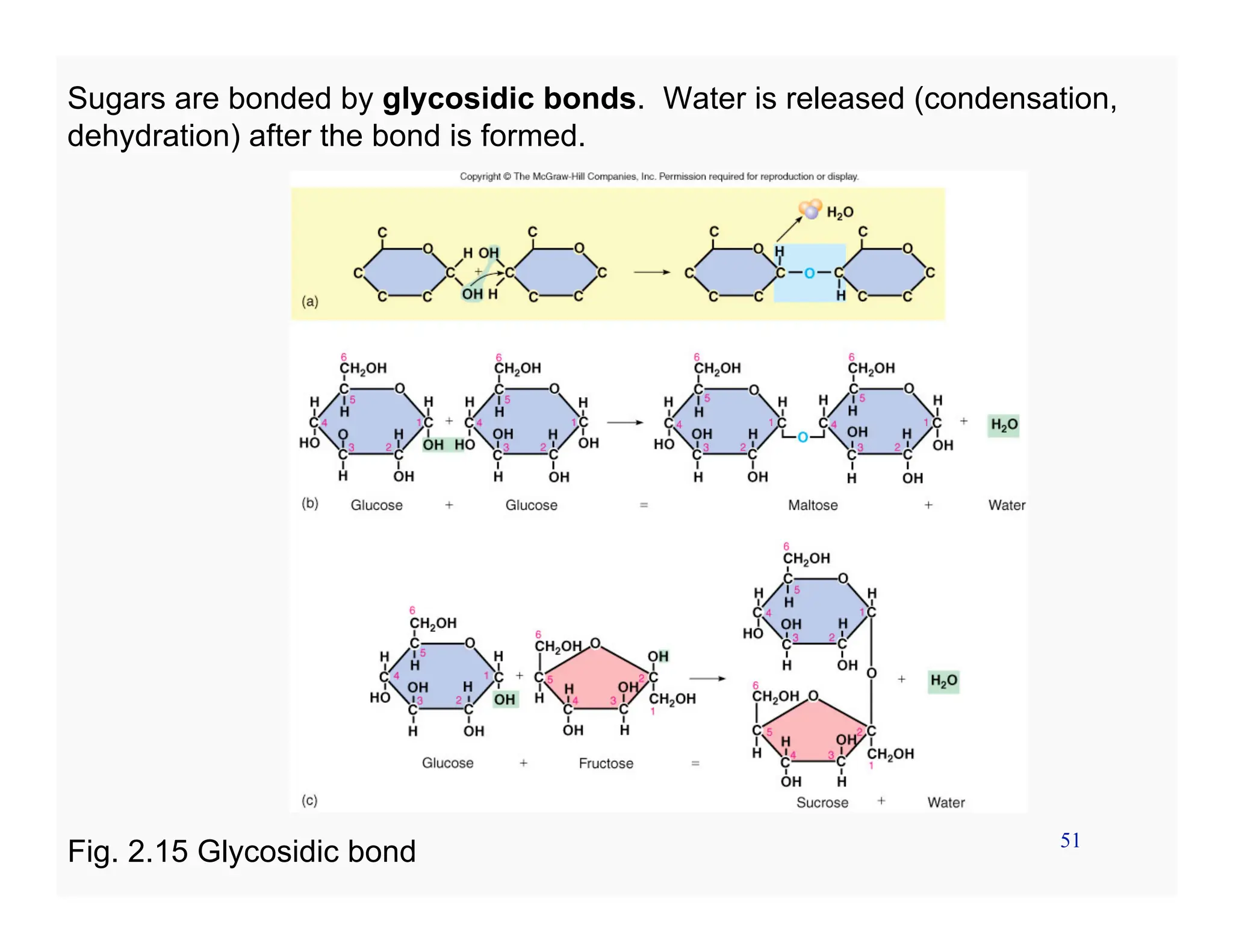
Sugars are bondedby glycosidic bonds. Water is released (condensation,
dehydration) after the bond is formed.
Fig. 2.15 Glycosidic bond
52.
52
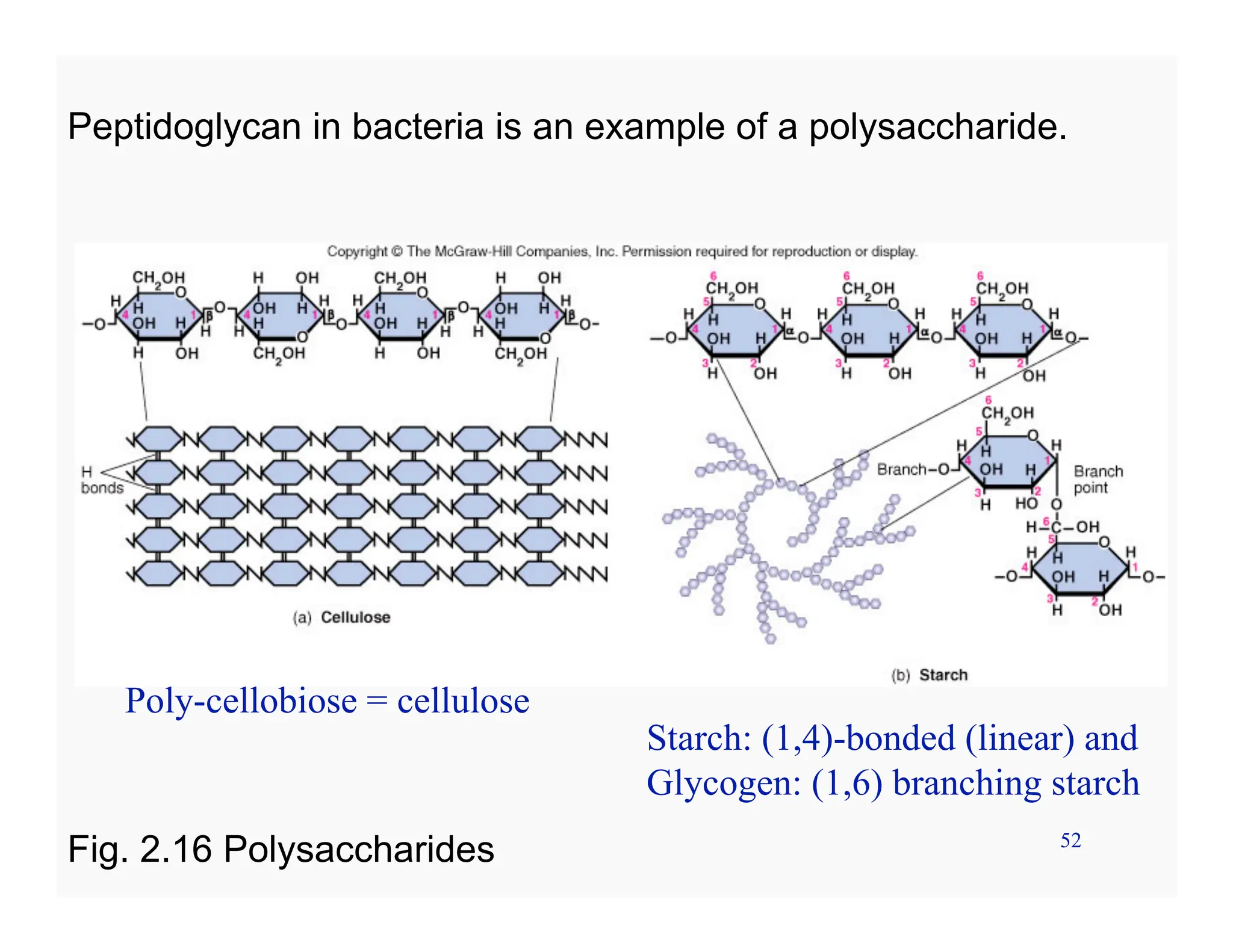
Peptidoglycan in bacteriais an example of a polysaccharide.
Fig. 2.16 Polysaccharides
Starch: (1,4)-bonded (linear) and
Glycogen: (1,6) branching starch
Poly-cellobiose = cellulose
53.
53
Lipids:
Fats & Oils,Phospholipids, and Waxes
• Lipids- a variety of substances that are not
soluble in polar solvents
• Building blocks: Alcohol and fatty acids
• Will dissolve in non-polar solvents
• Main groups of lipids:
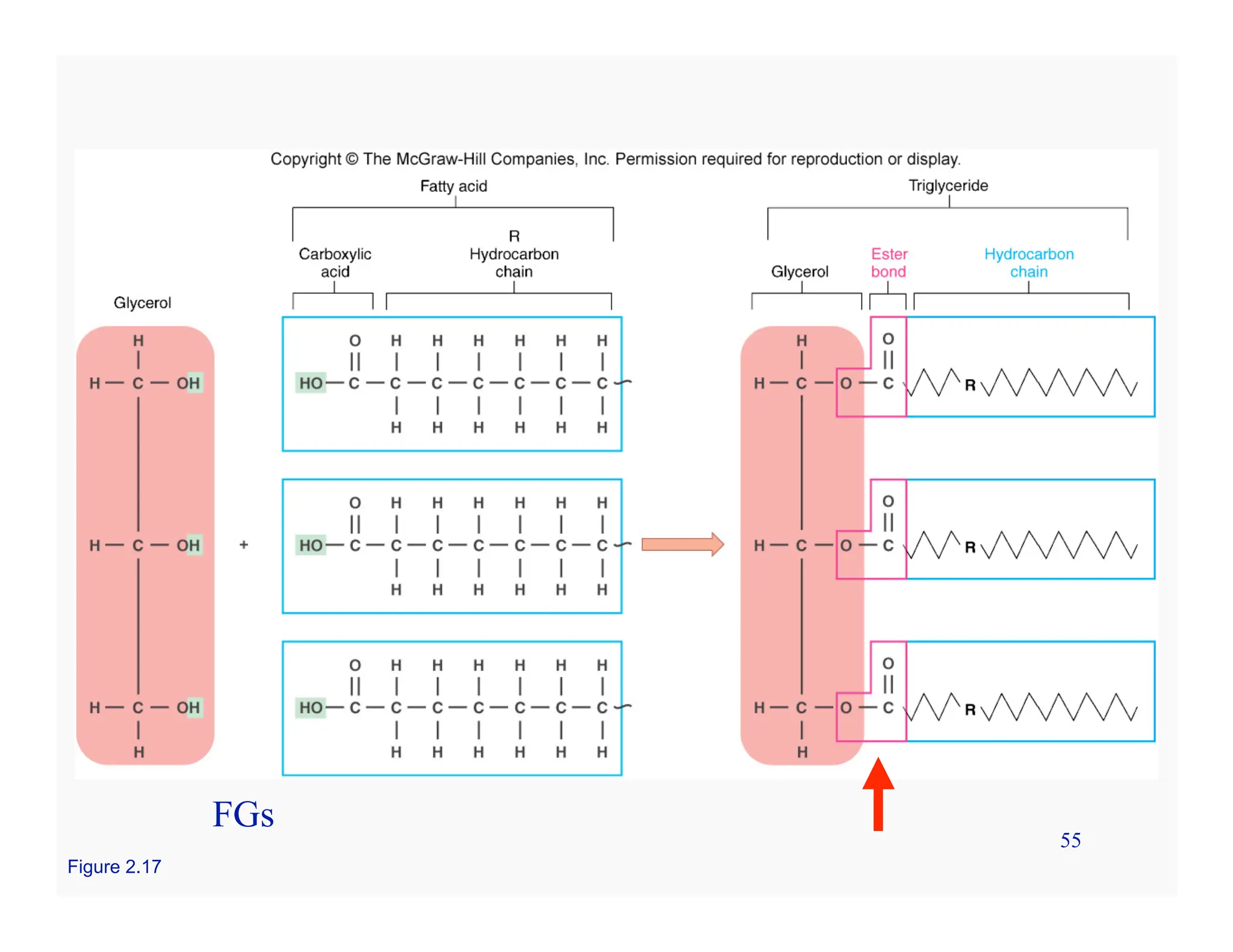
• Triglycerides (Fats & Oils)
• Phospholipids
• Miscellaneous lipids: Steroids & Waxes
56
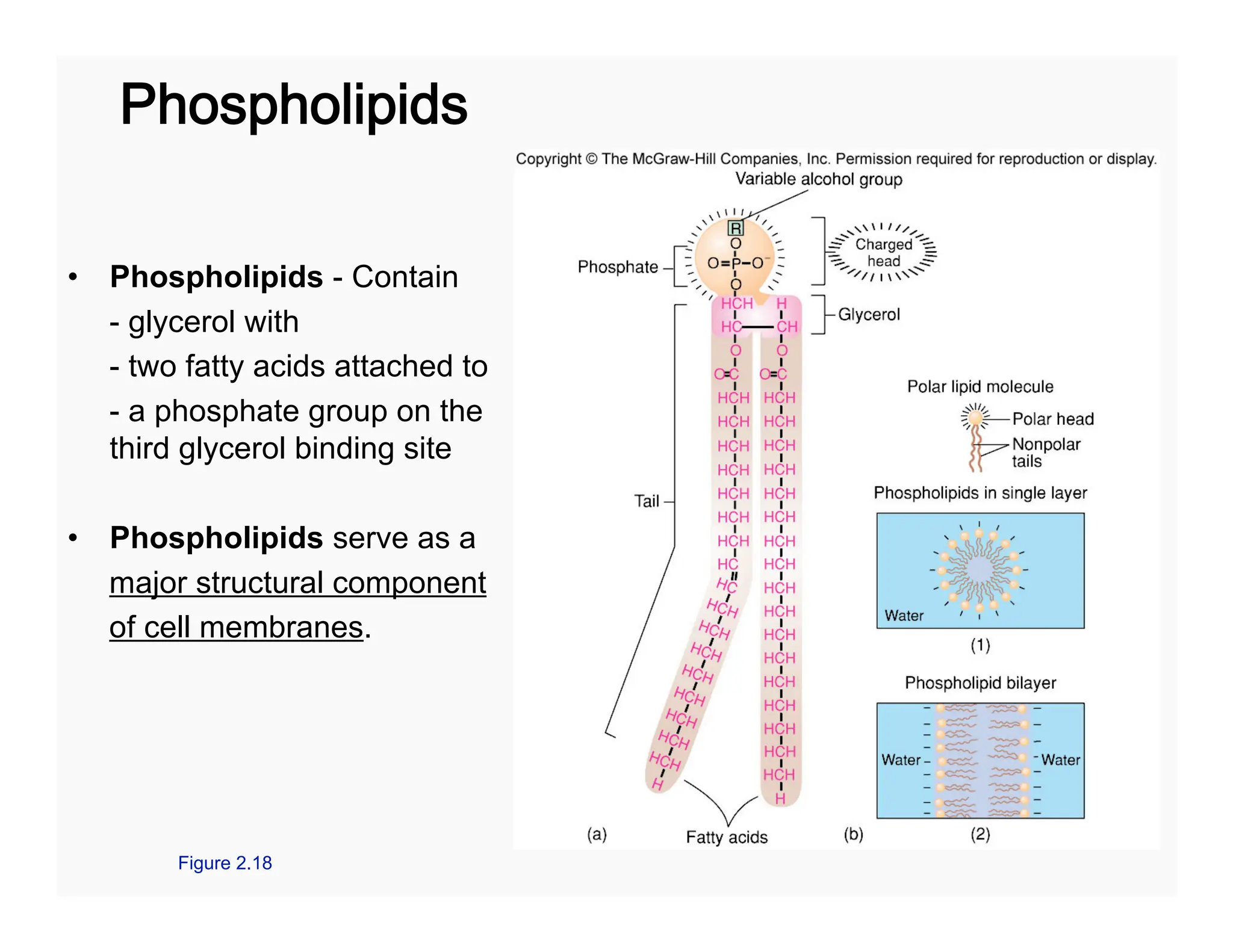
Phospholipids
• Phospholipids -Contain
- glycerol with
- two fatty acids attached to
- a phosphate group on the
third glycerol binding site
• Phospholipids serve as a
major structural component
of cell membranes.
Figure 2.18
57.
57
Miscellaneous Lipids
• Steroids:complex ringed compounds commonly
found in cell membranes and as animal hormones
– Best known: cholesterol
• Waxes: esters formed between a long-chain
alcohol and a saturated fatty acid
58.
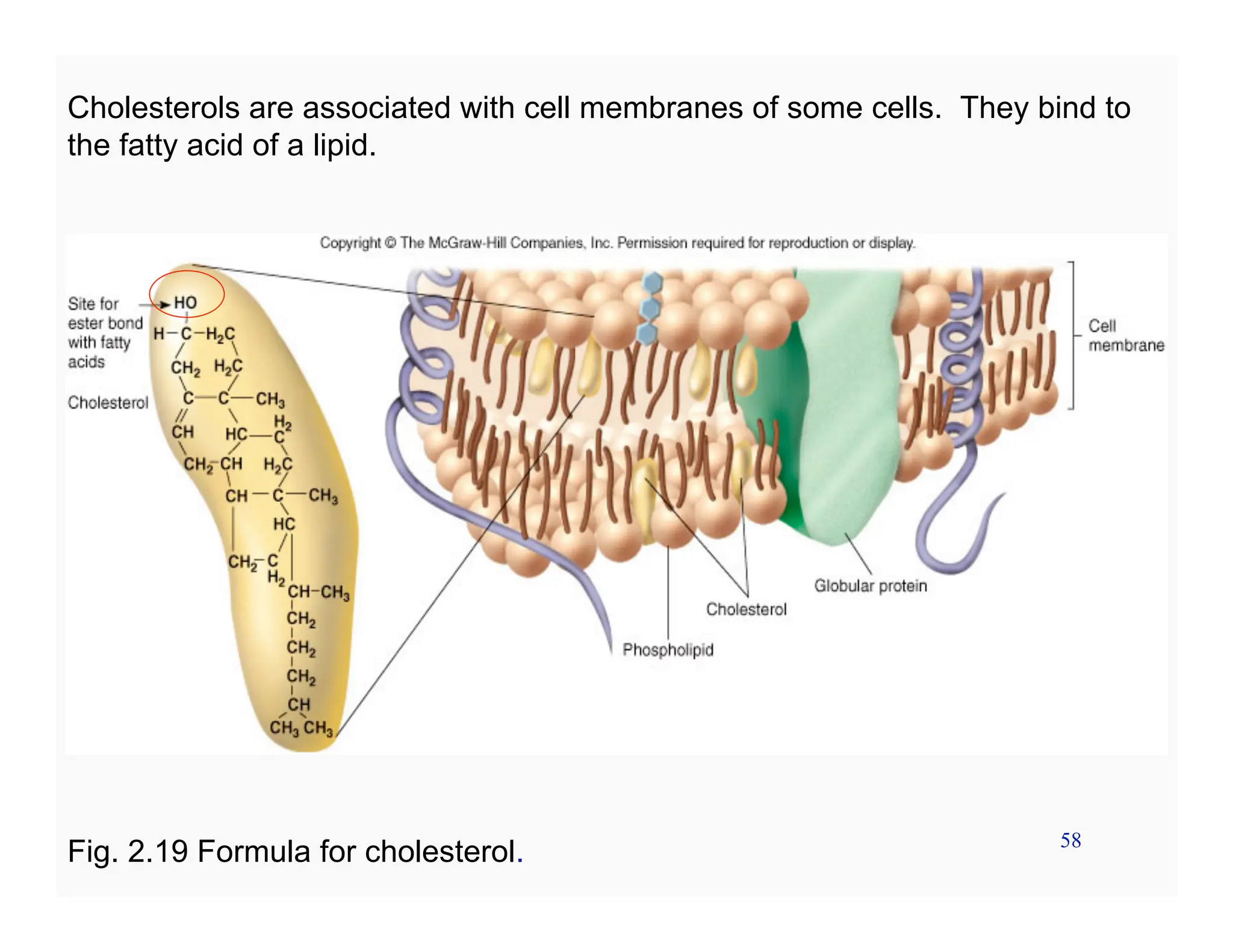
58
Cholesterols are associatedwith cell membranes of some cells. They bind to
the fatty acid of a lipid.
Fig. 2.19 Formula for cholesterol.
59.
59
Proteins
• Proteins arethe predominant organic
molecule in cells (58% of dry mass)
• Building blocks (monomers): amino acids
• Proteins consist of a series of amino acids
(ex. Peptides, polypeptides)
• Examples: enzymes, immunoglobulins, etc.
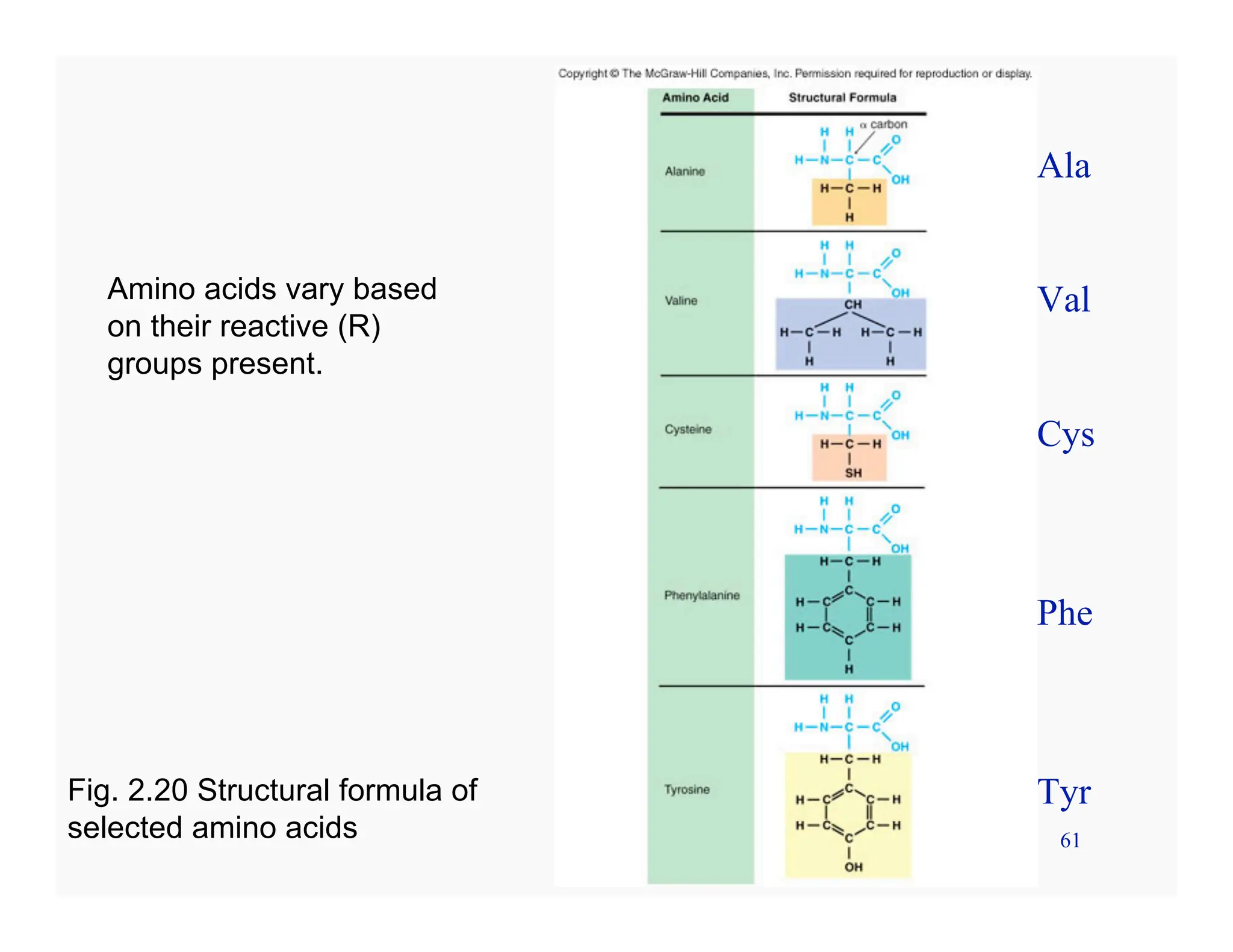
60.
60
Proteins: “Shapers ofLife”
• Building blocks- amino acids
– 20 different naturally occurring forms
– Basic skeleton- a carbon (the α carbon) linked to
an amino group (NH2), a carboxyl group (COOH),
a hydrogen atom (H), and a variable R group
61.
61
Amino acids varybased
on their reactive (R)
groups present.
Fig. 2.20 Structural formula of
selected amino acids
Ala
Val
Cys
Phe
Tyr
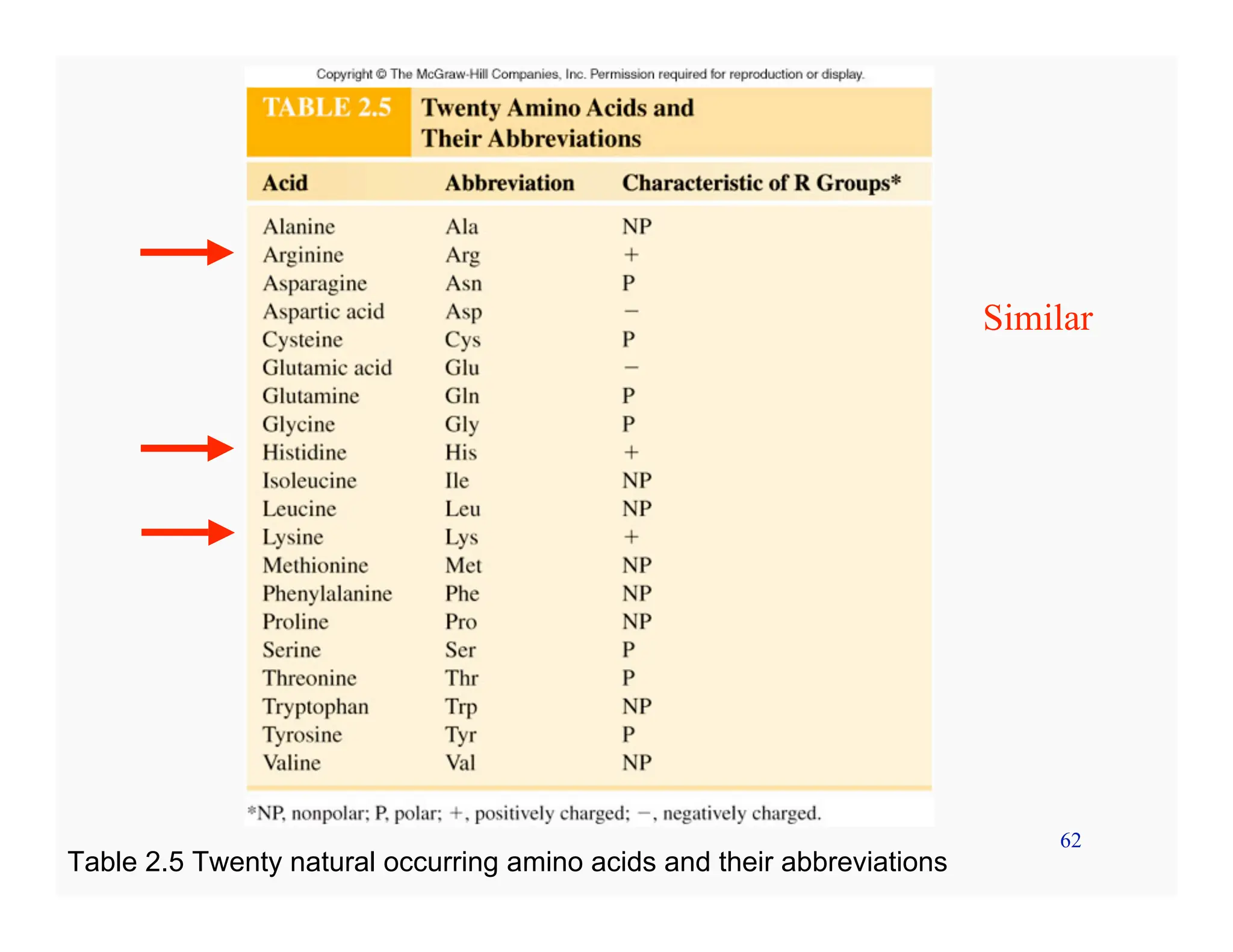
62.
62
Table 2.5 Twentynatural occurring amino acids and their abbreviations
Similar
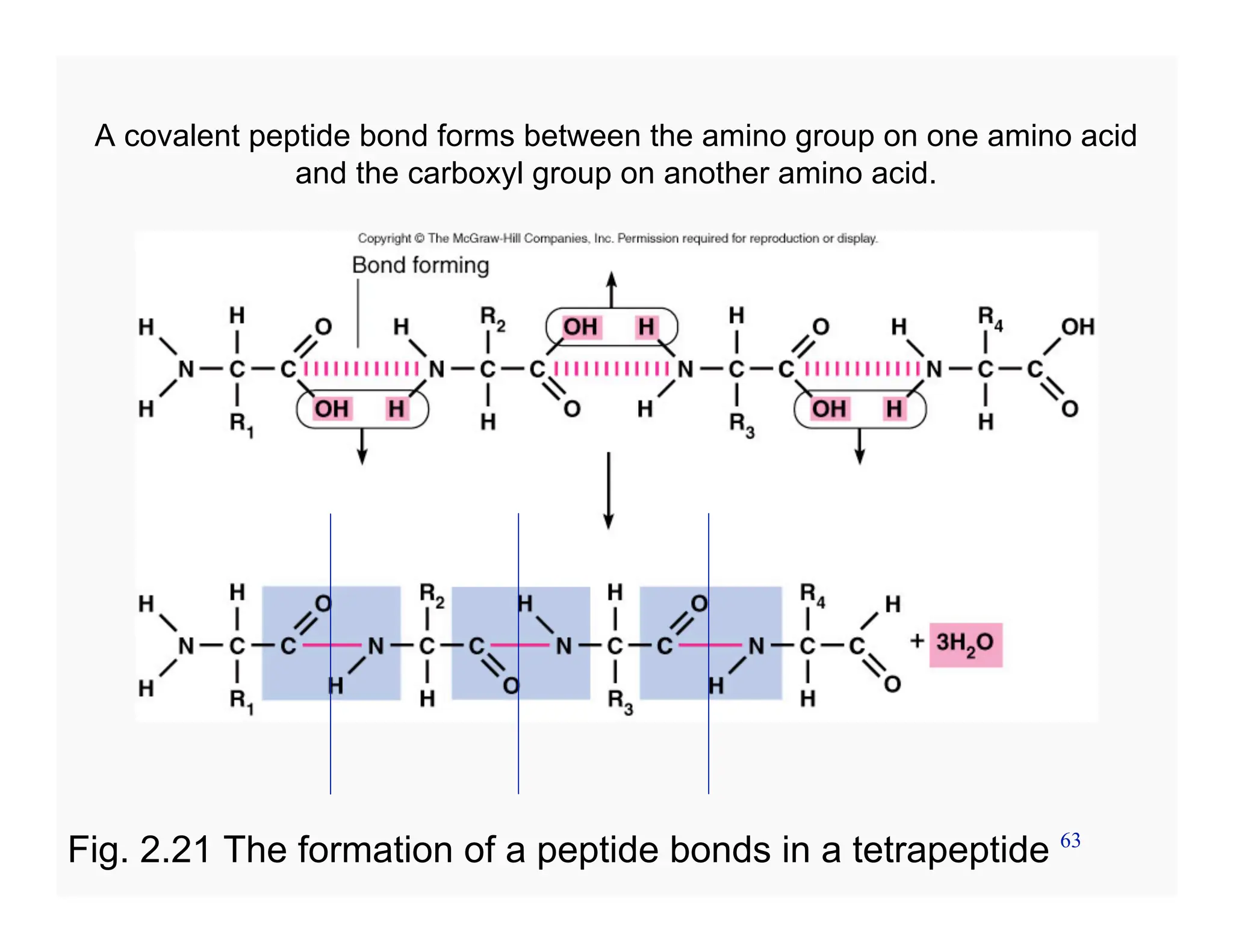
63.
63
A covalent peptidebond forms between the amino group on one amino acid
and the carboxyl group on another amino acid.
Fig. 2.21 The formation of a peptide bonds in a tetrapeptide
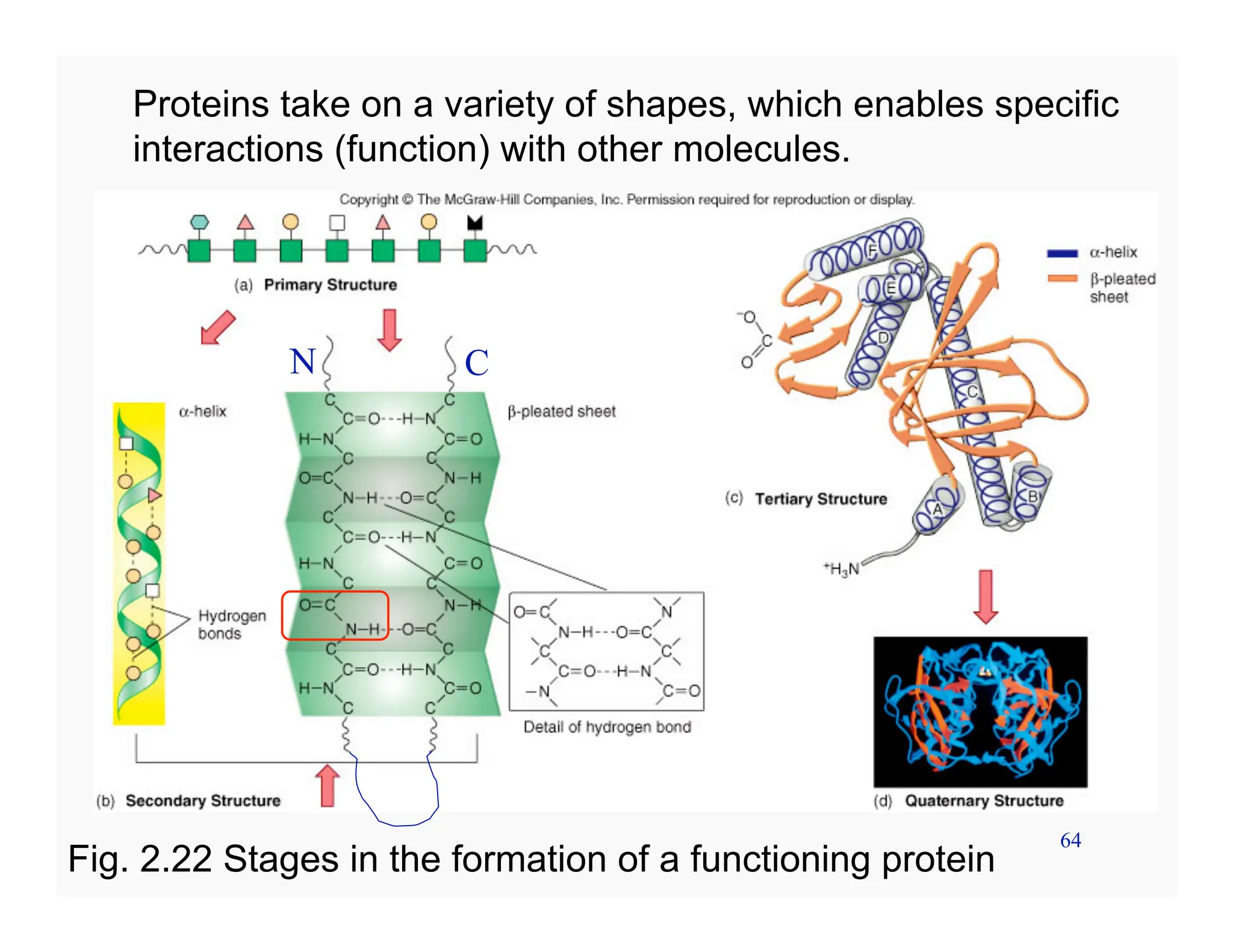
64.
64
Proteins take ona variety of shapes, which enables specific
interactions (function) with other molecules.
Fig. 2.22 Stages in the formation of a functioning protein
N C
65.
65
Nucleic acids
• Deoxy-ribonucleicacid (DNA)
• Ribonucleic acid (RNA)
• DNA contains genetic information which
is captured (transcribed) into RNA
• The information stored in RNA can be
translated into the primary sequence of
proteins
66.
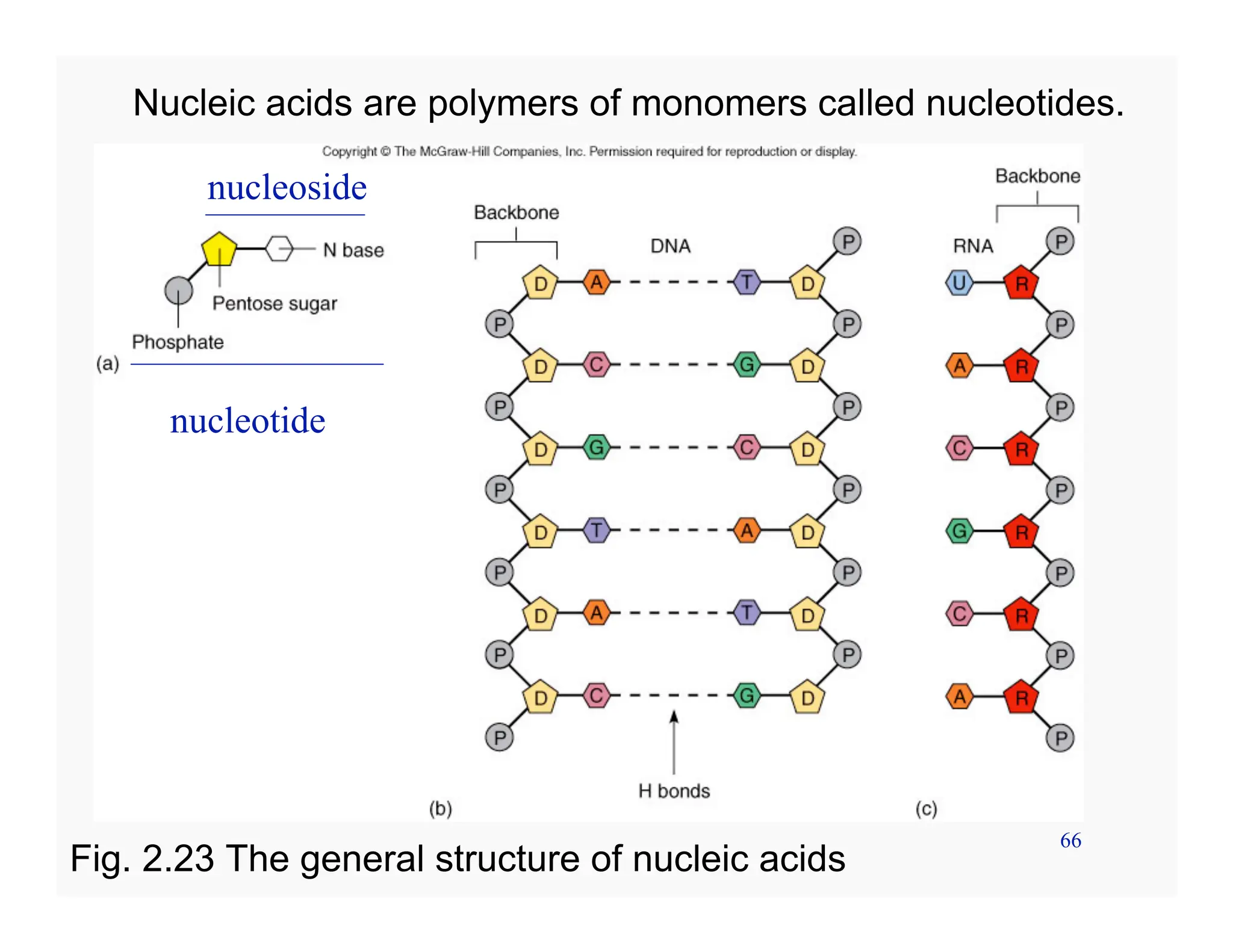
66
Nucleic acids arepolymers of monomers called nucleotides.
Fig. 2.23 The general structure of nucleic acids
nucleoside
nucleotide
67.
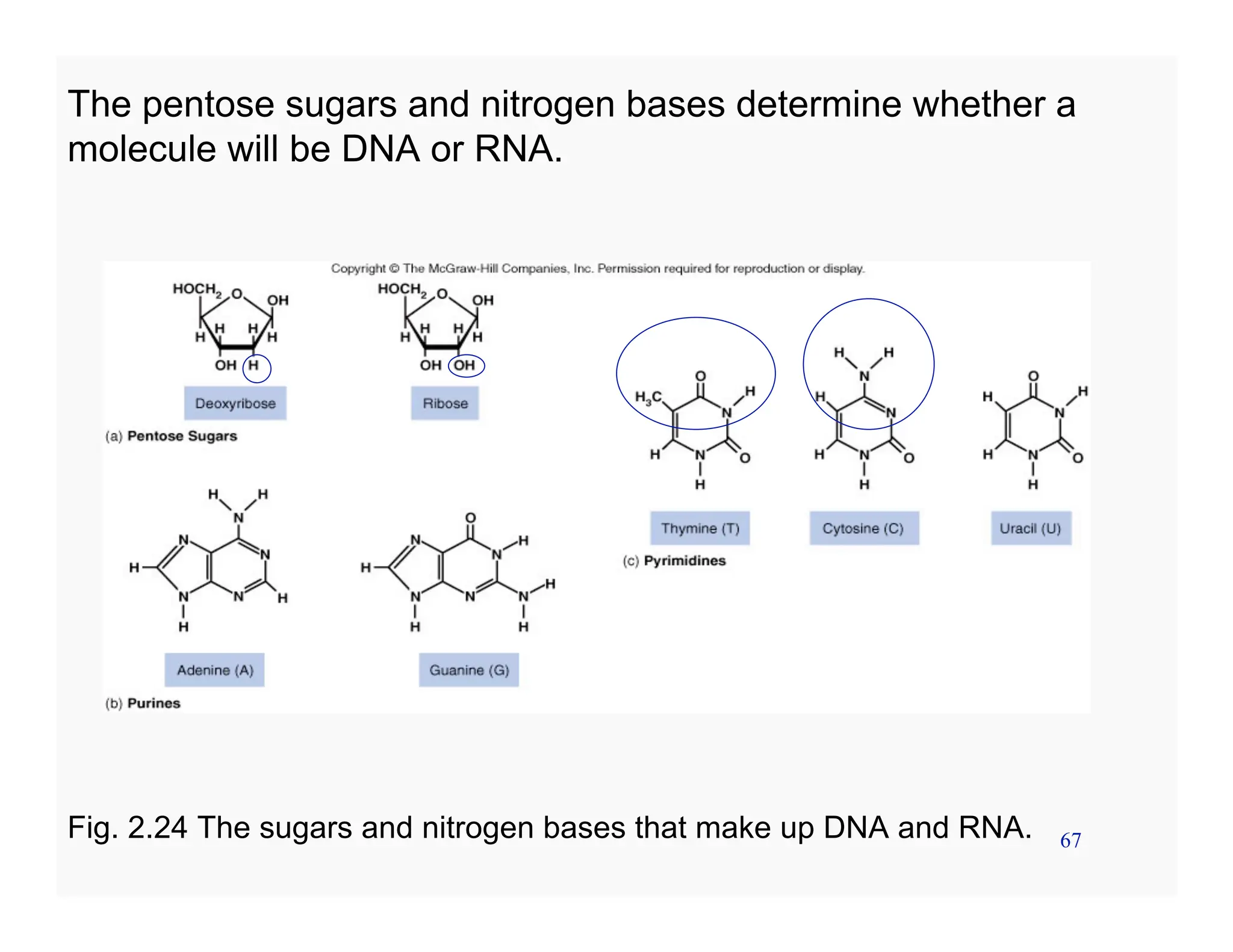
67
The pentose sugarsand nitrogen bases determine whether a
molecule will be DNA or RNA.
Fig. 2.24 The sugars and nitrogen bases that make up DNA and RNA.
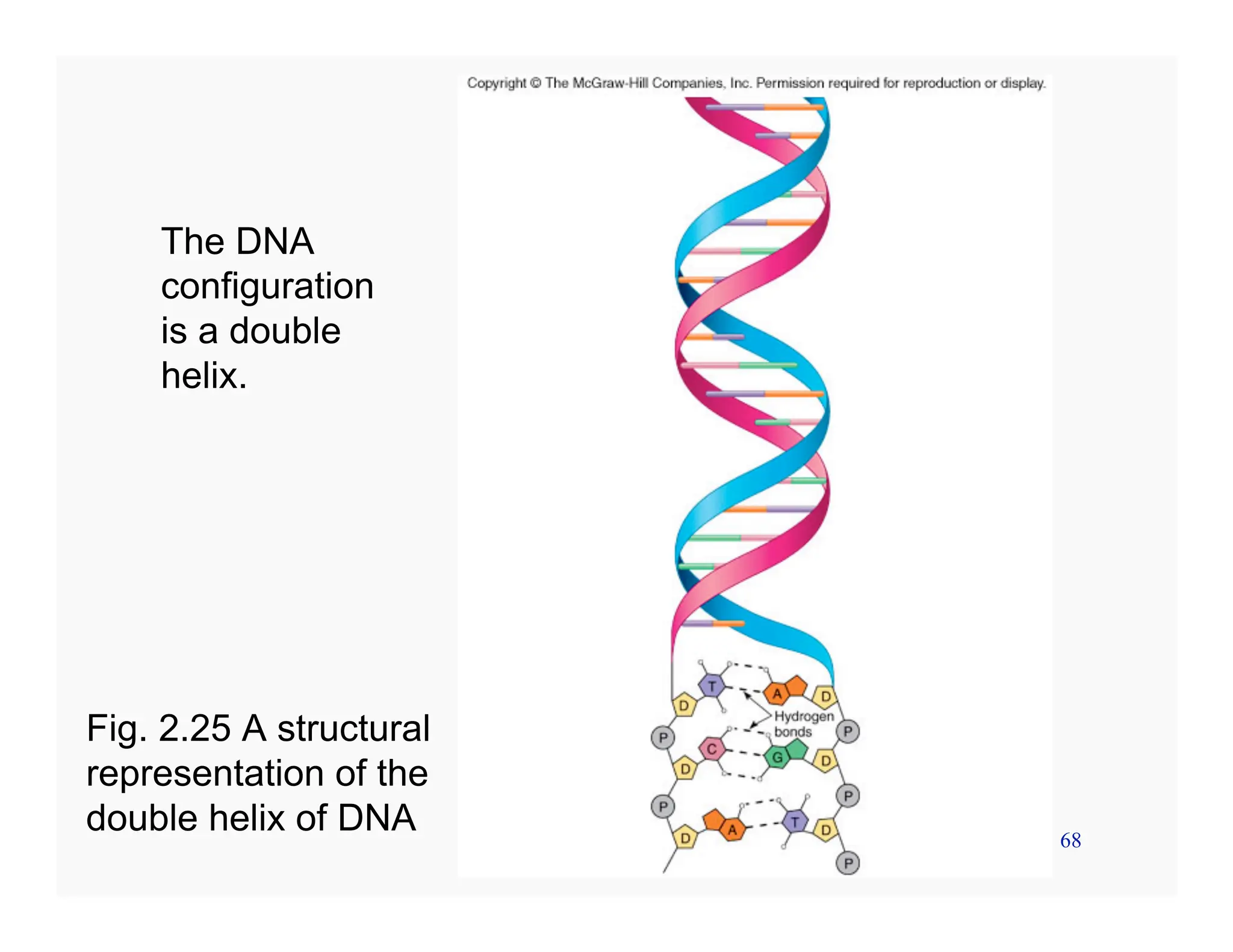
69
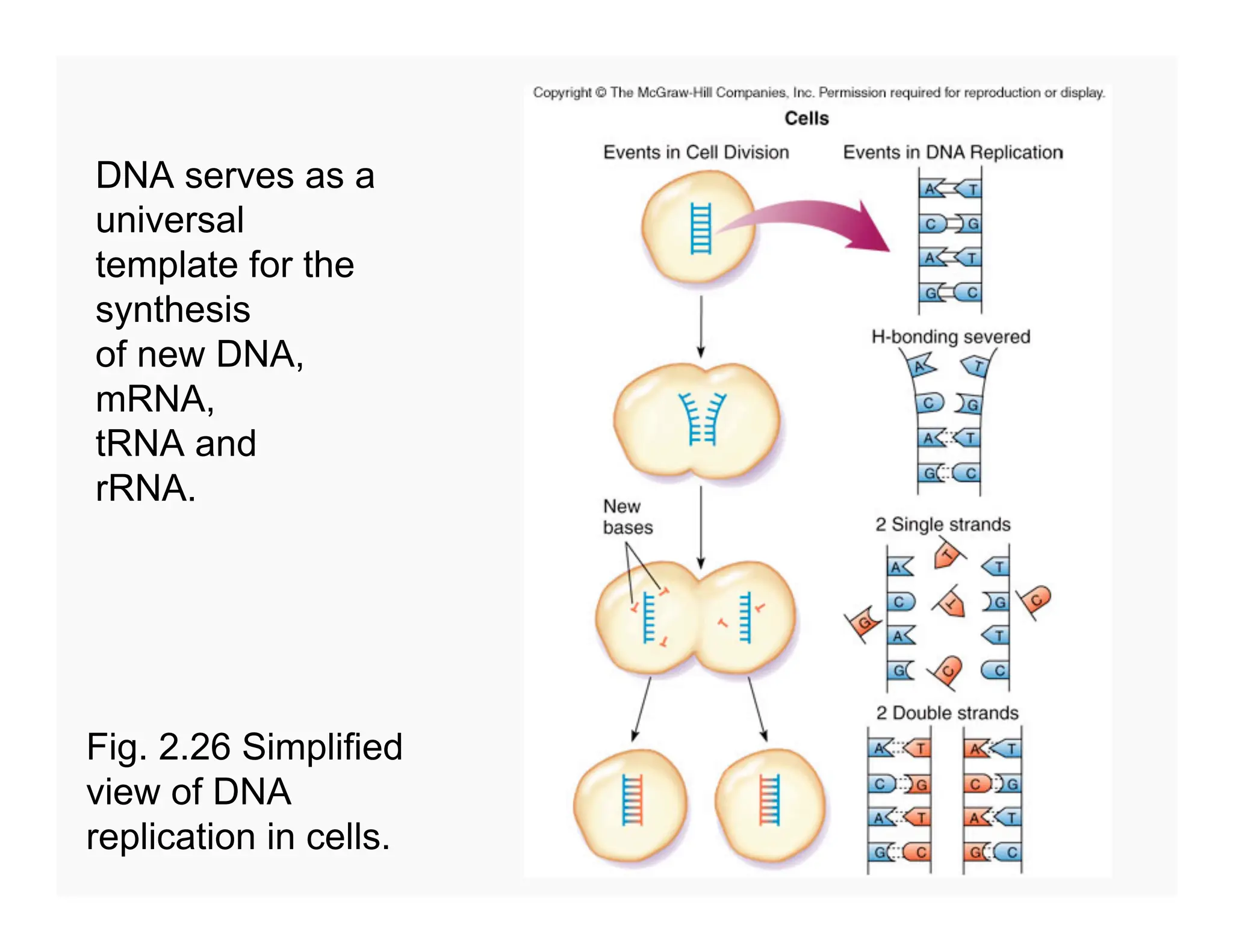
DNA serves asa
universal
template for the
synthesis
of new DNA,
mRNA,
tRNA and
rRNA.
Fig. 2.26 Simplified
view of DNA
replication in cells.
70.
70
The Cell
• Fundamentalcomponents:
– Genetic element
– Membrane
– Ribosome
• Fundamental characteristics
– Reproduction
– Metabolism
– Motility (Response to molecules)
– Protection and Storage (Cell wall or membrane)
– Nutrient transport
74
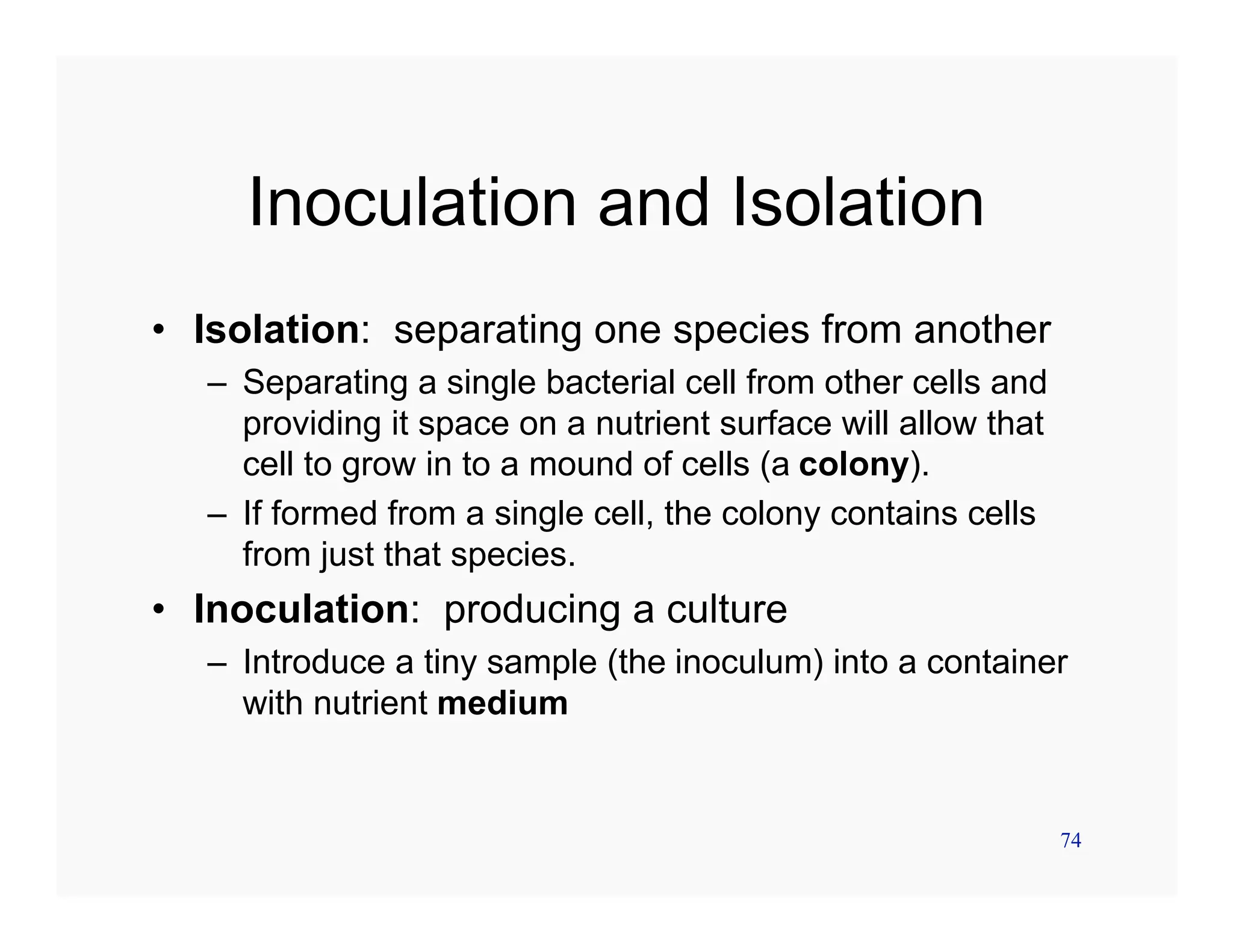
Inoculation and Isolation
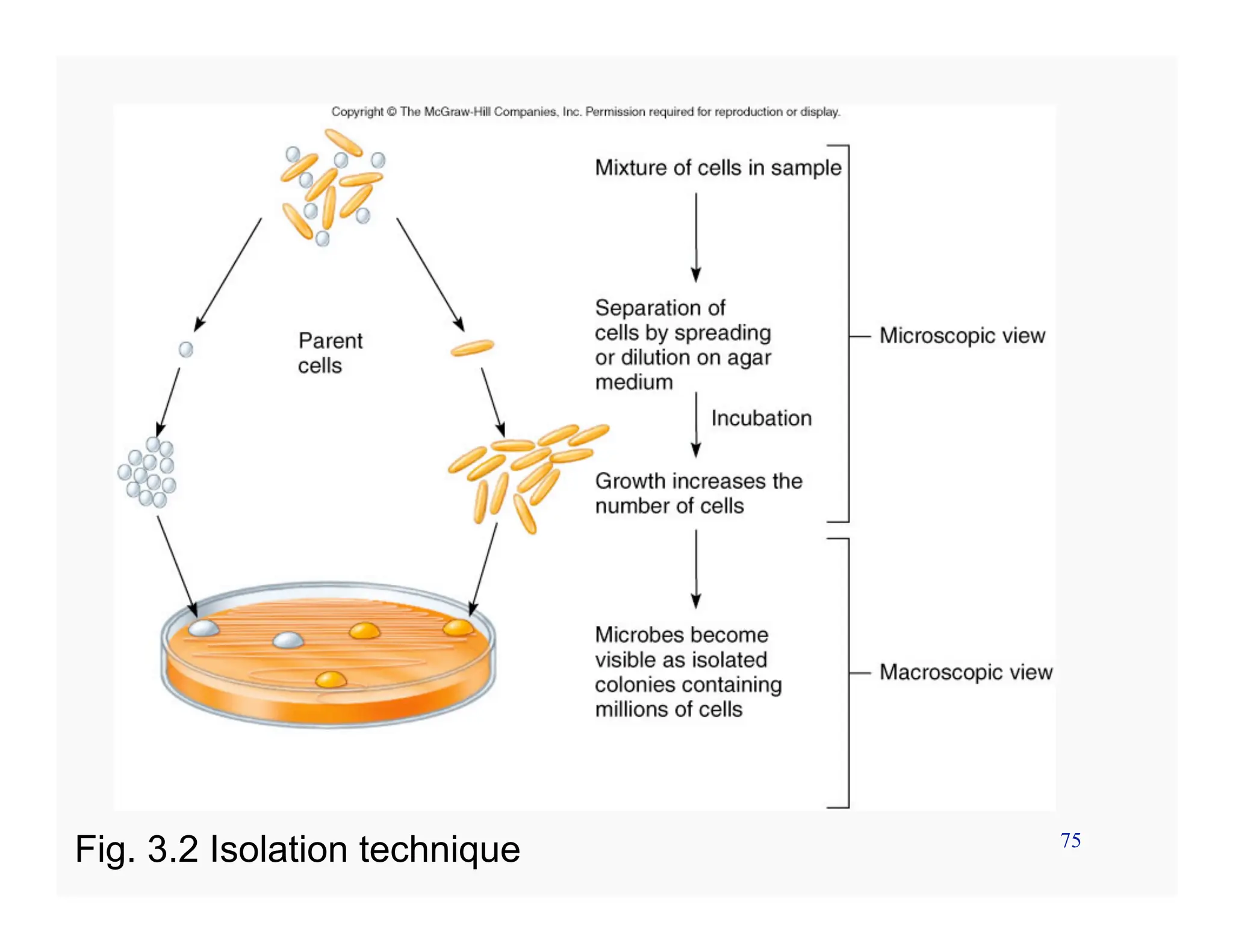
•Isolation: separating one species from another
– Separating a single bacterial cell from other cells and
providing it space on a nutrient surface will allow that
cell to grow in to a mound of cells (a colony).
– If formed from a single cell, the colony contains cells
from just that species.
• Inoculation: producing a culture
– Introduce a tiny sample (the inoculum) into a container
with nutrient medium
77
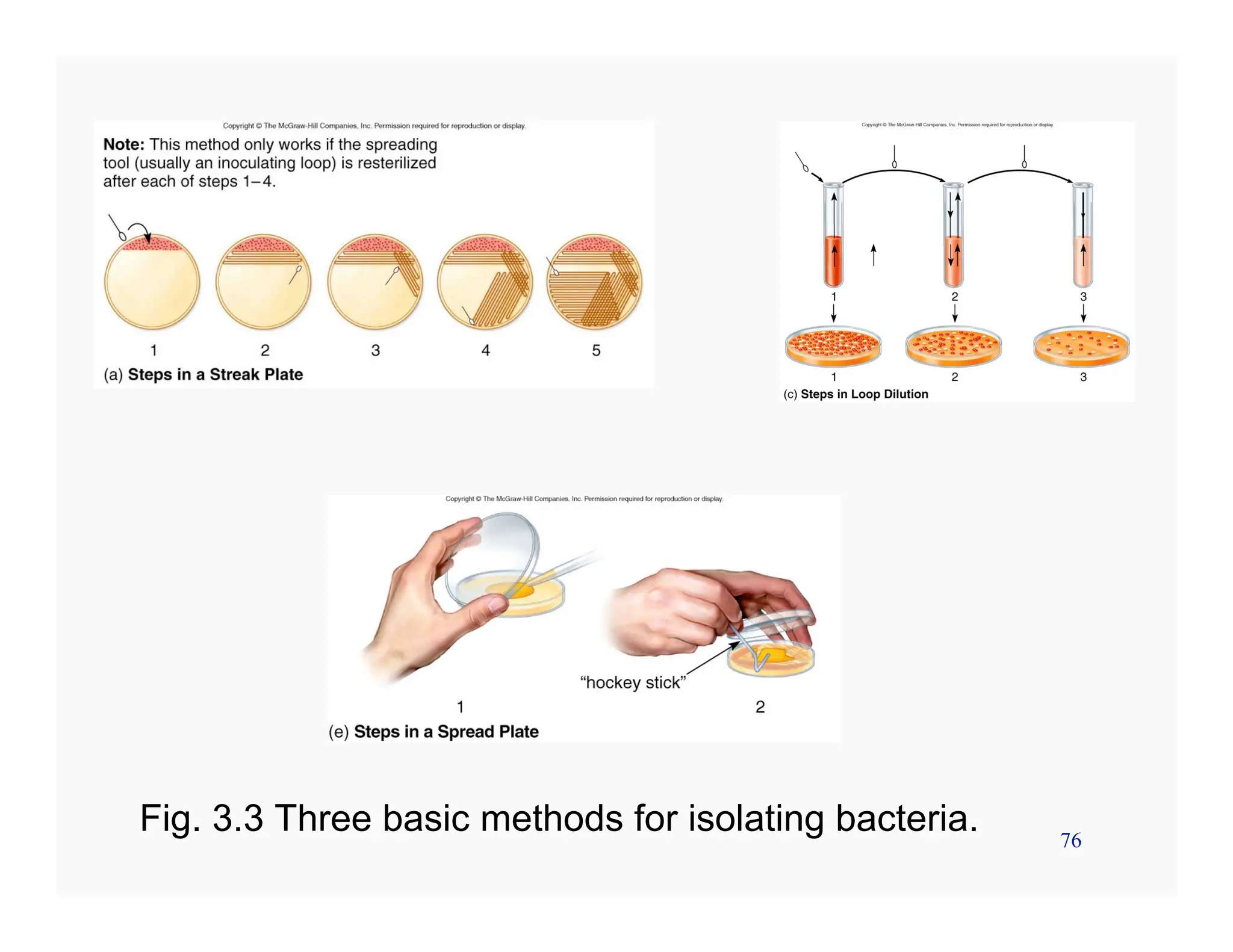
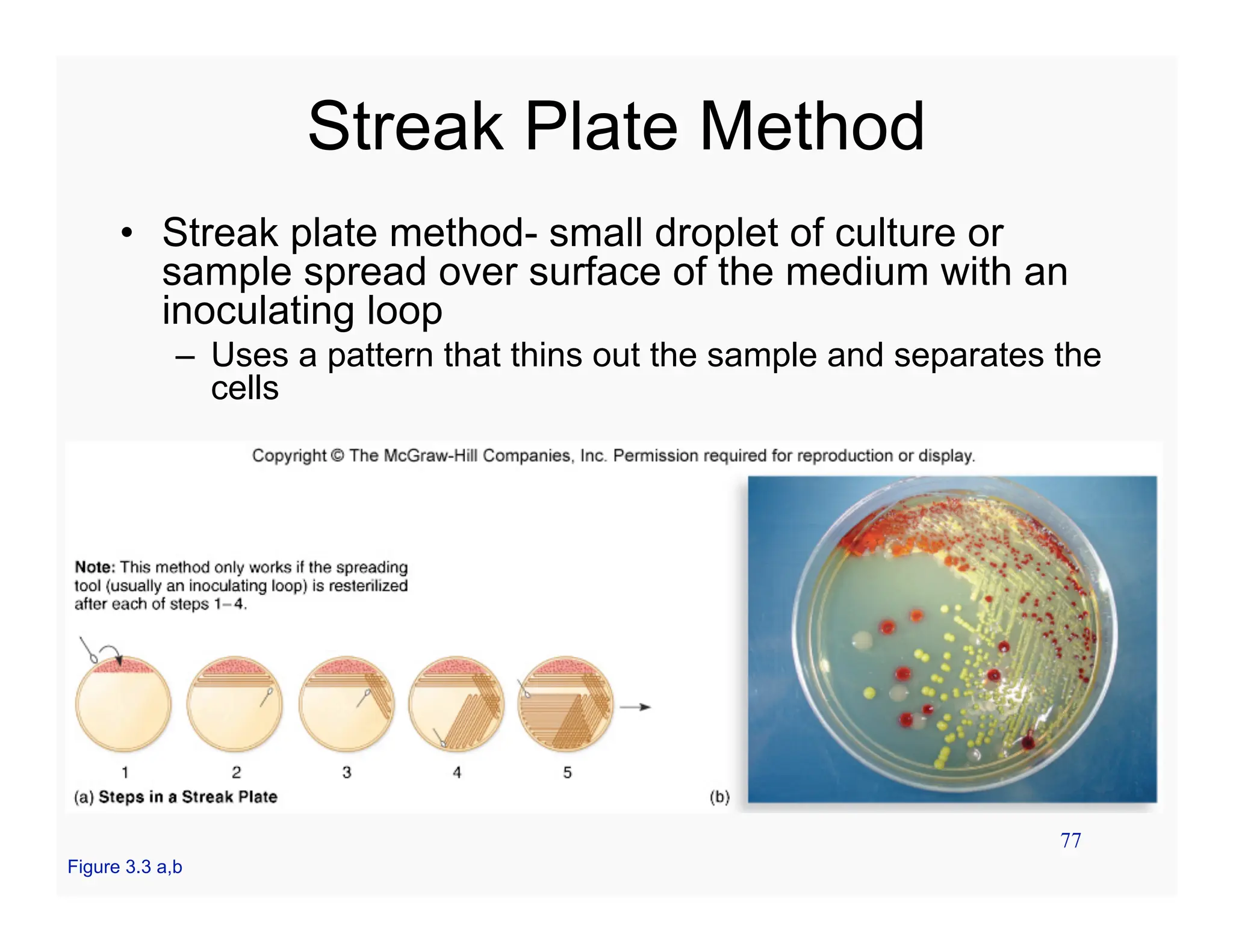
Streak Plate Method
•Streak plate method- small droplet of culture or
sample spread over surface of the medium with an
inoculating loop
– Uses a pattern that thins out the sample and separates the
cells
Figure 3.3 a,b
78.
78
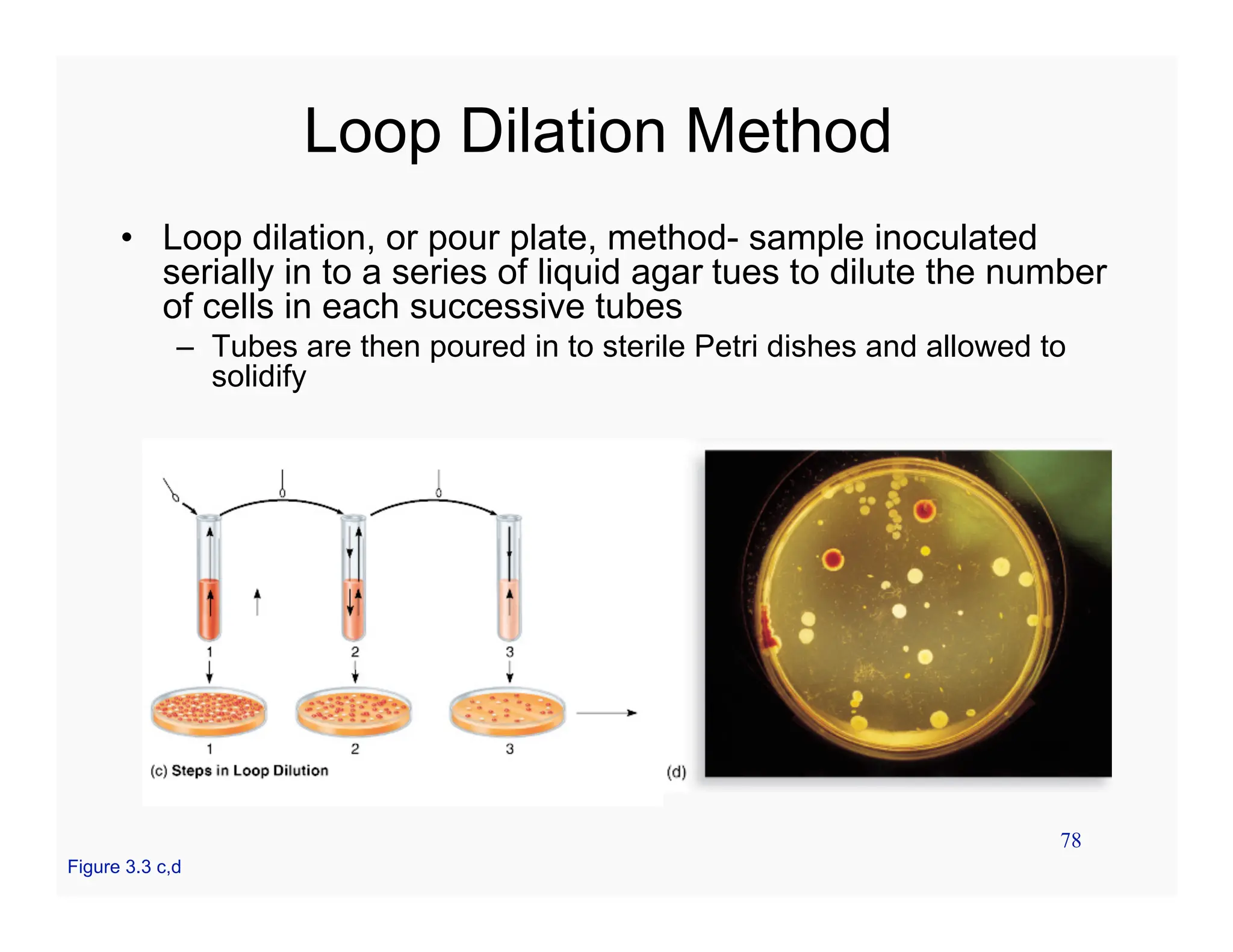
Loop Dilation Method
•Loop dilation, or pour plate, method- sample inoculated
serially in to a series of liquid agar tues to dilute the number
of cells in each successive tubes
– Tubes are then poured in to sterile Petri dishes and allowed to
solidify
Figure 3.3 c,d
79.
79
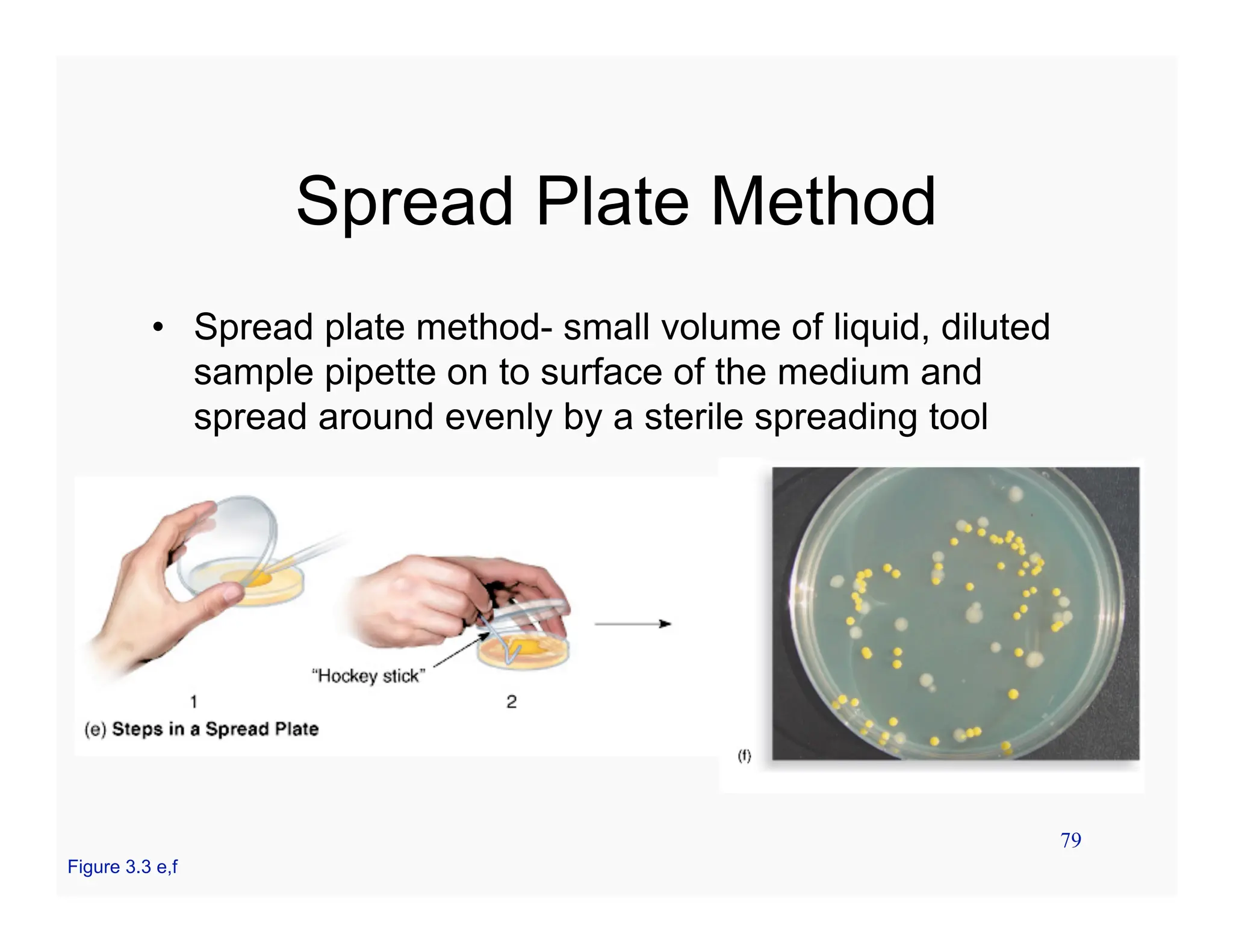
Spread Plate Method
•Spread plate method- small volume of liquid, diluted
sample pipette on to surface of the medium and
spread around evenly by a sterile spreading tool
Figure 3.3 e,f
80.
80
Media: Providing Nutrientsin the
Laboratory
• At least 500 different types
• Contained in test tubes, flasks, or Petri dishes
• Inoculated by loops, needles, pipettes, and swabs
• Aseptic technique necessary
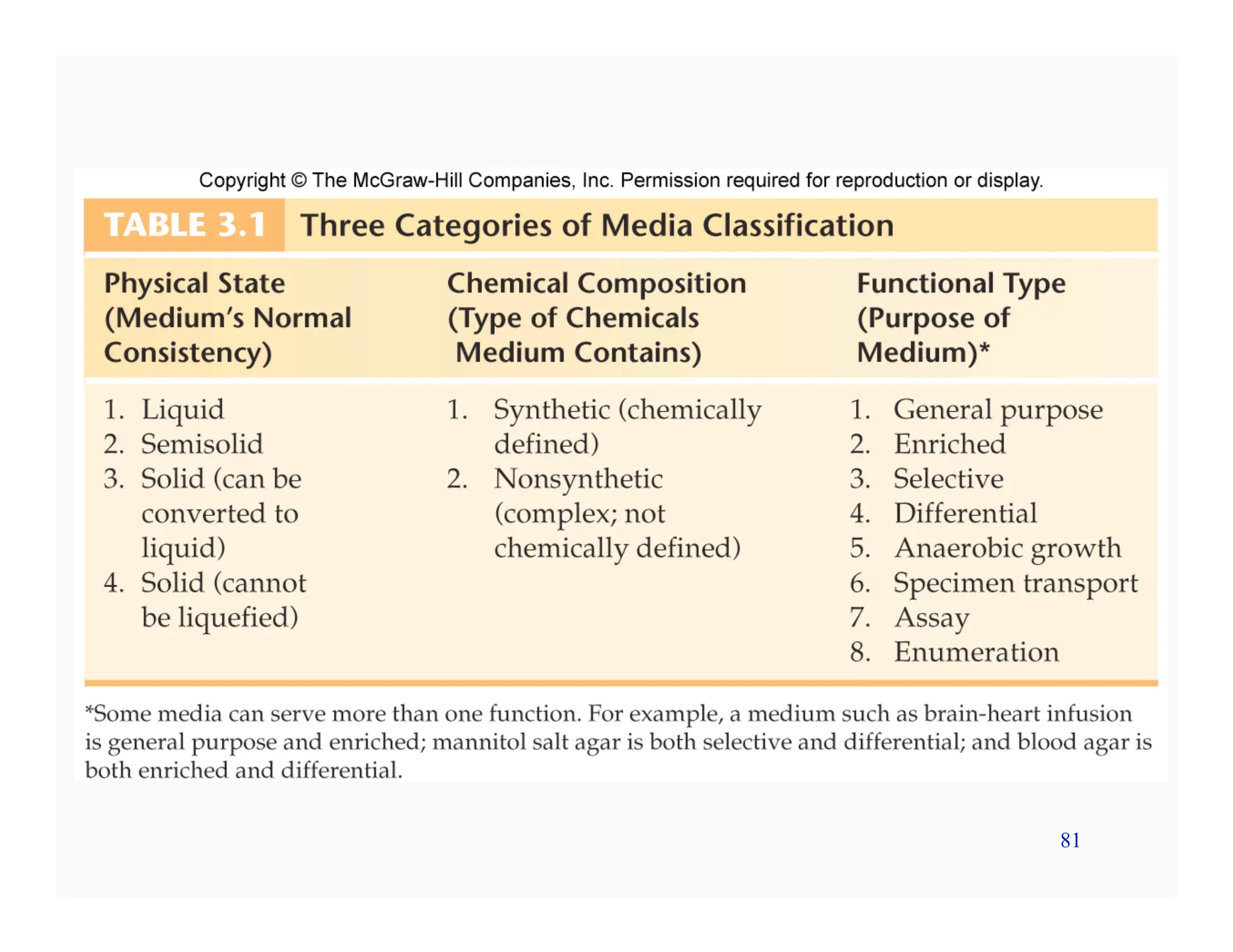
• Classification of media
– Physical state
– Chemical composition
– Functional type
82
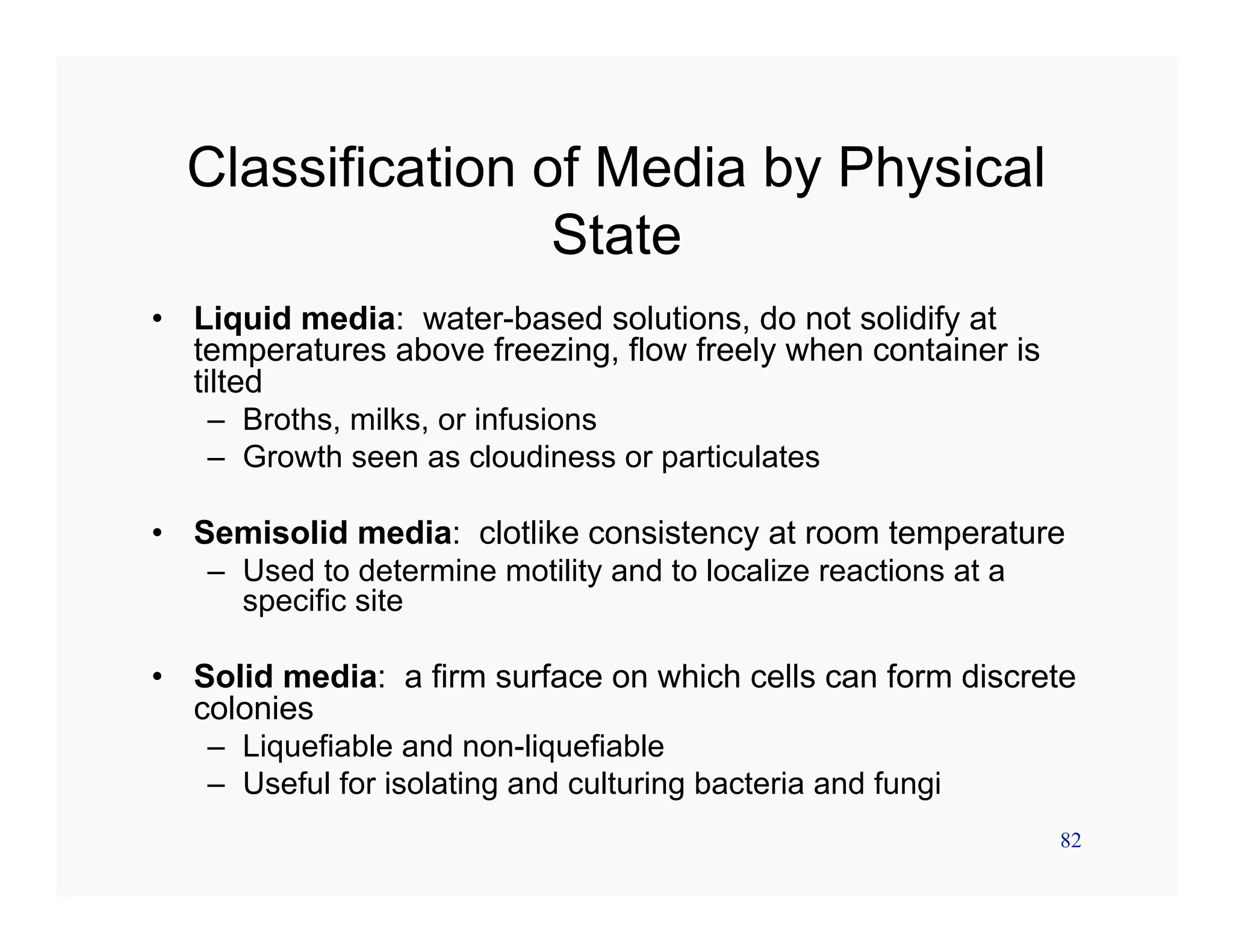
Classification of Mediaby Physical
State
• Liquid media: water-based solutions, do not solidify at
temperatures above freezing, flow freely when container is
tilted
– Broths, milks, or infusions
– Growth seen as cloudiness or particulates
• Semisolid media: clotlike consistency at room temperature
– Used to determine motility and to localize reactions at a
specific site
• Solid media: a firm surface on which cells can form discrete
colonies
– Liquefiable and non-liquefiable
– Useful for isolating and culturing bacteria and fungi
83.
83
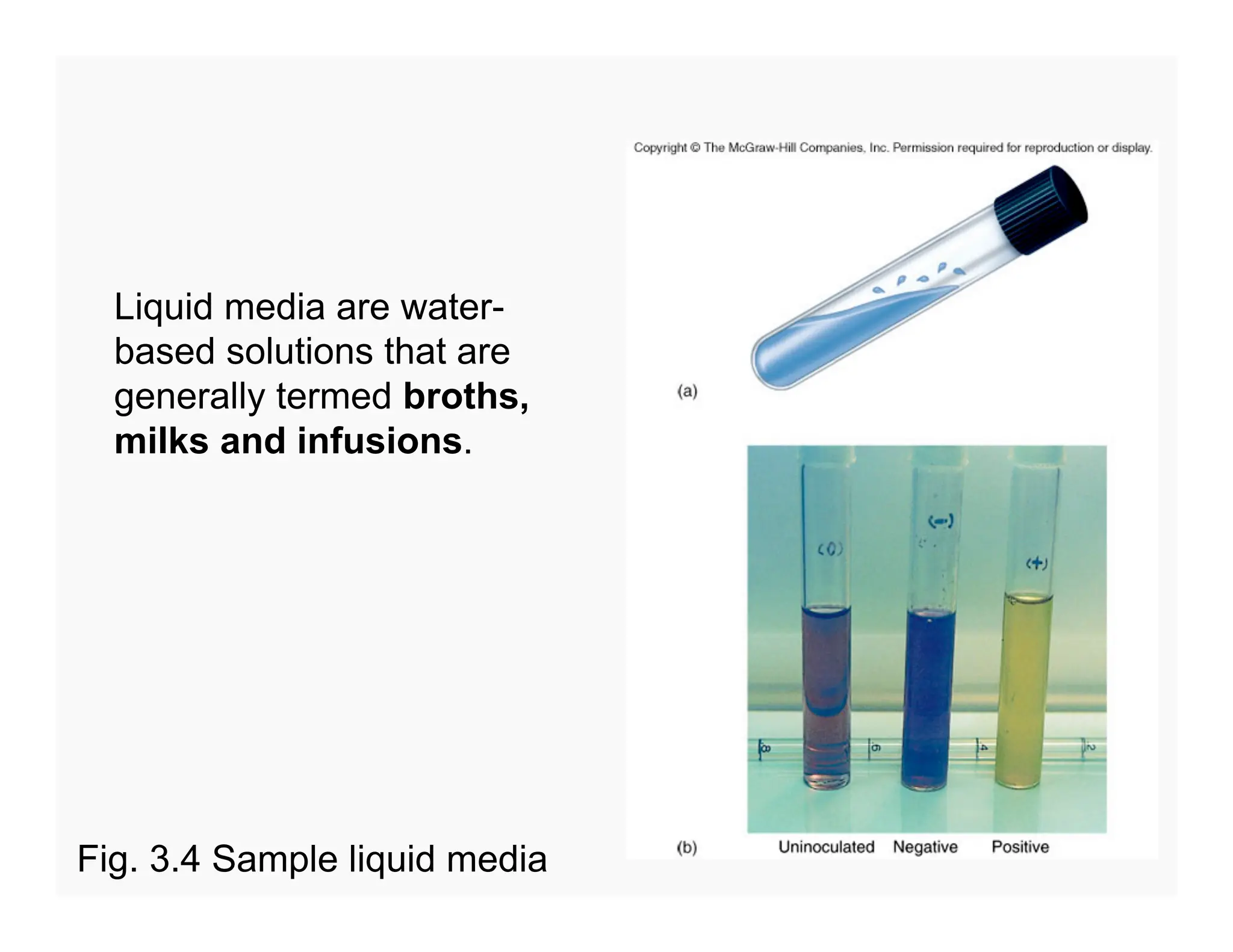
Liquid media arewater-
based solutions that are
generally termed broths,
milks and infusions.
Fig. 3.4 Sample liquid media
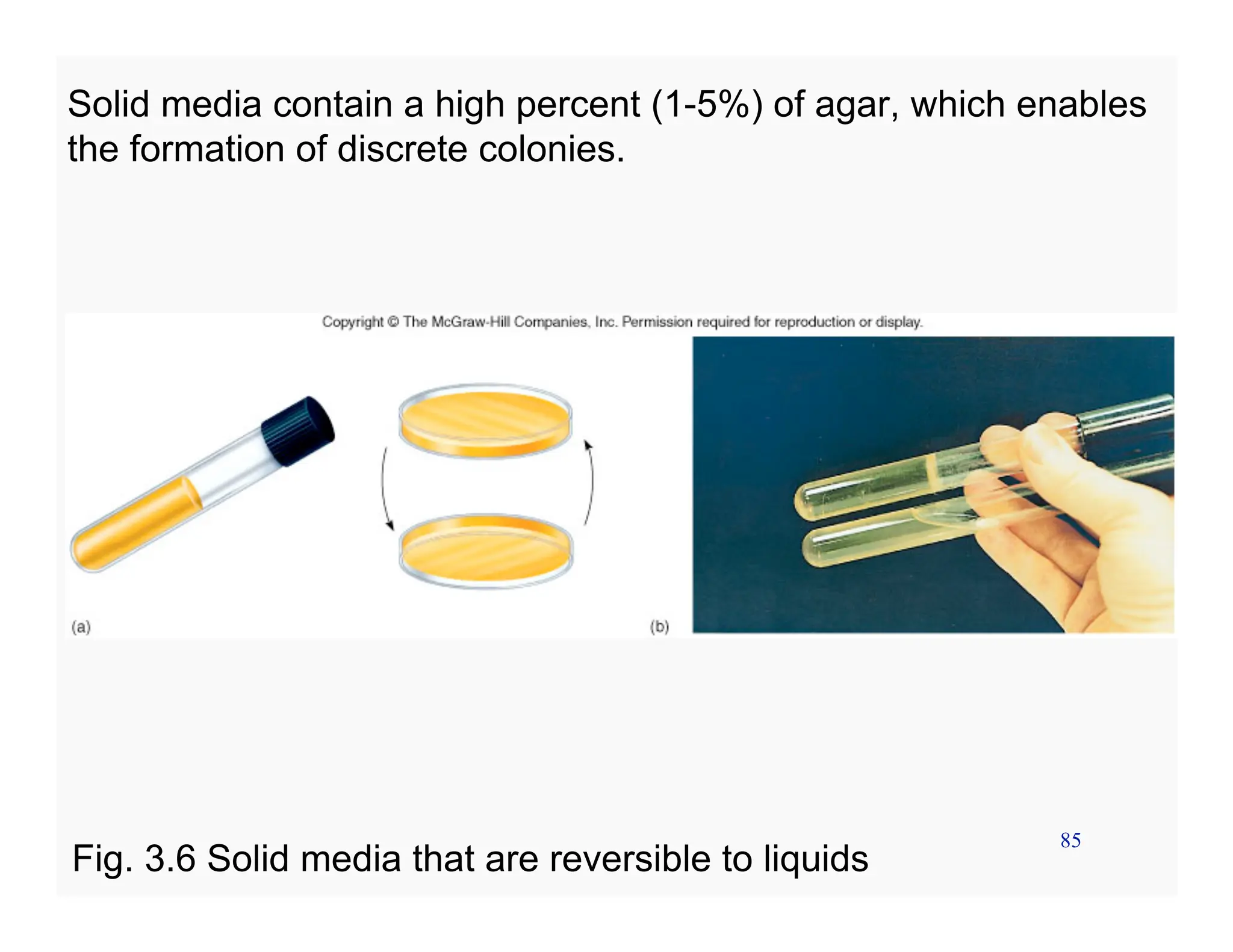
85
Solid media containa high percent (1-5%) of agar, which enables
the formation of discrete colonies.
Fig. 3.6 Solid media that are reversible to liquids
86.
86
Classification of Mediaby
Chemical Content
• Synthetic media- compositions are
precisely chemically defined
• Complex (nonsynthetic) media- if even
just one component is not chemically
definable
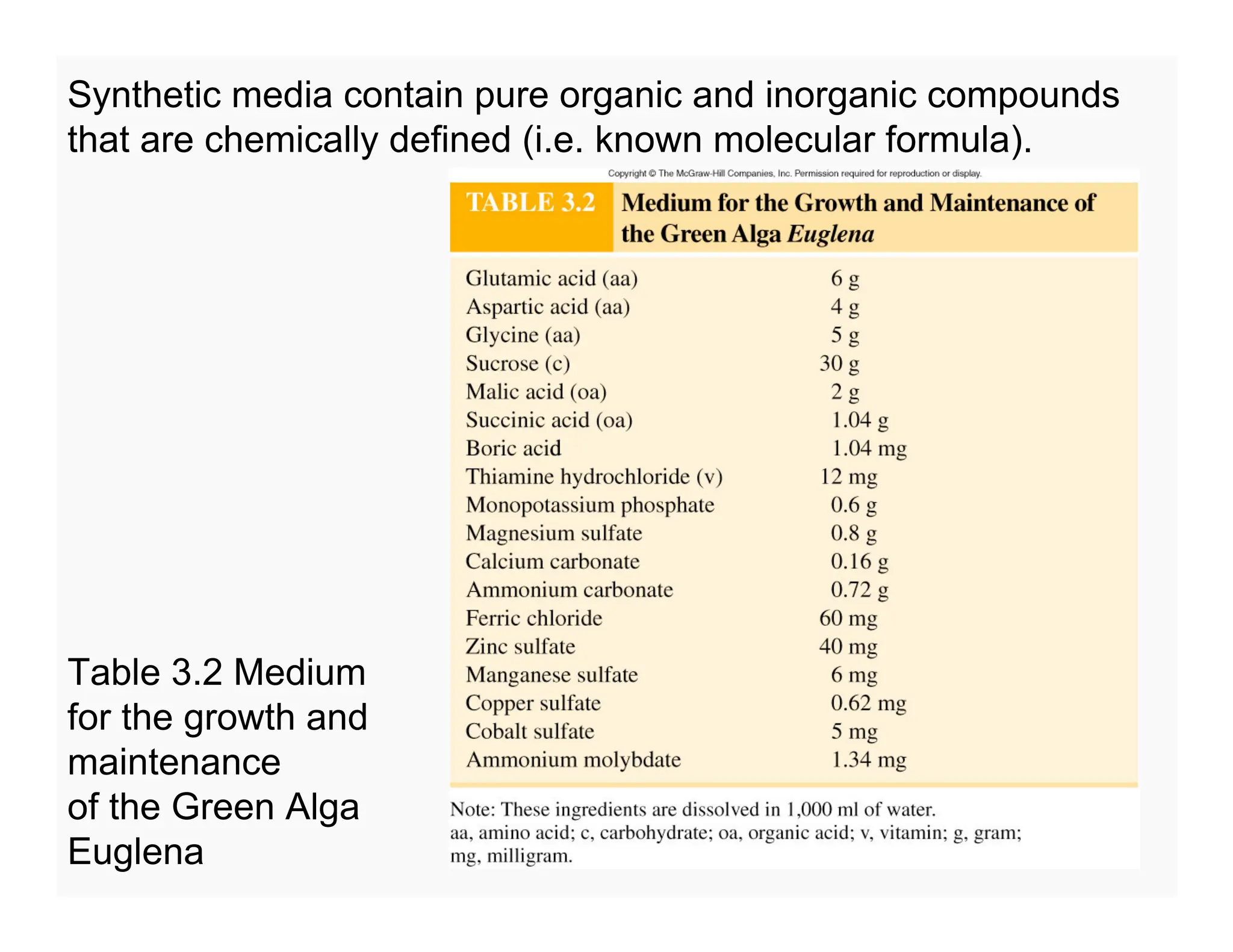
87.
87
Synthetic media containpure organic and inorganic compounds
that are chemically defined (i.e. known molecular formula).
Table 3.2 Medium
for the growth and
maintenance
of the Green Alga
Euglena
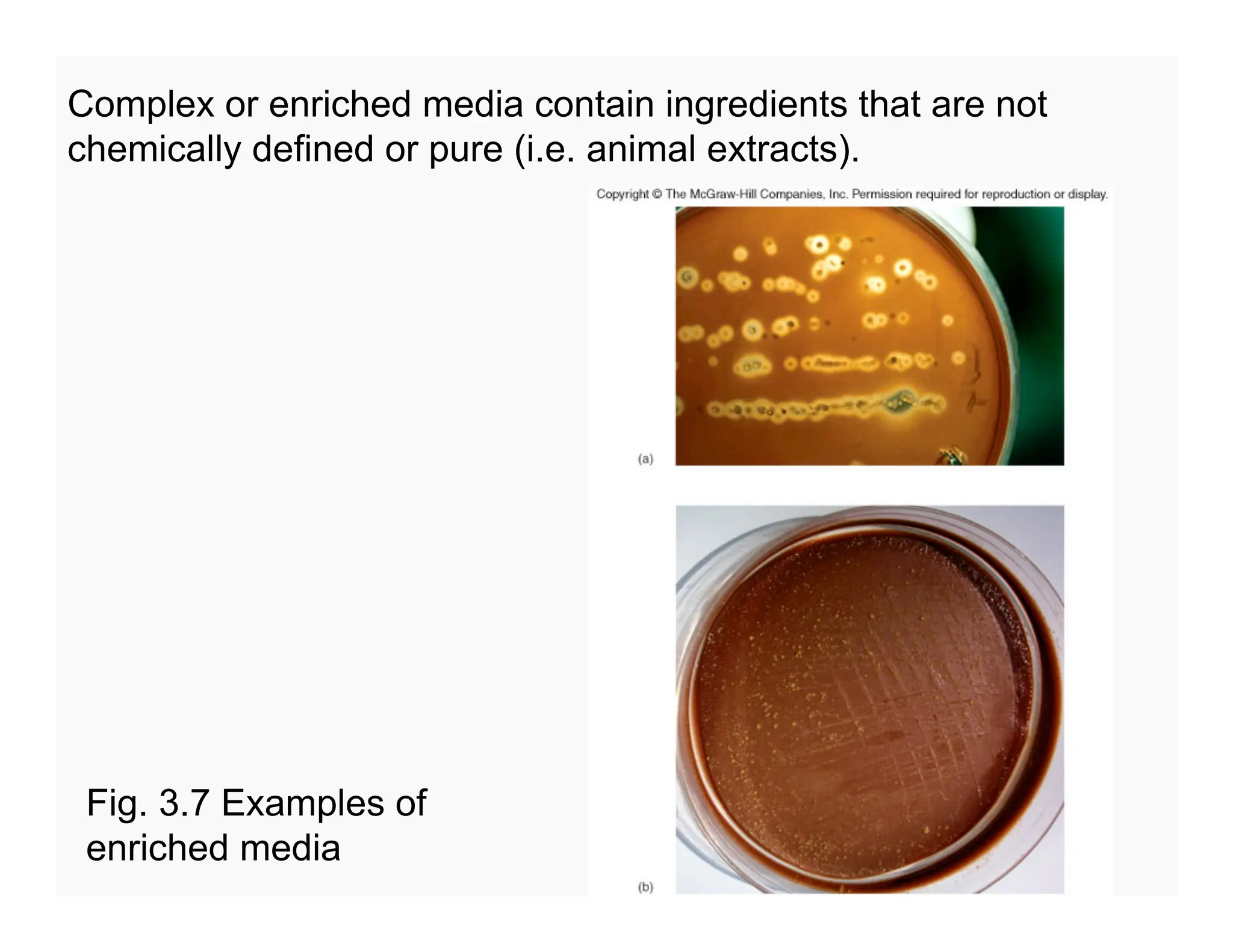
88.
88
Complex or enrichedmedia contain ingredients that are not
chemically defined or pure (i.e. animal extracts).
Fig. 3.7 Examples of
enriched media
89.
89
Classification of Mediaby
Function
• General purpose media: to grow as broad
a spectrum of microbes as possible
– Usually nonsynthetic
– Contain a mixture of nutrients to support a
variety of microbes
– Examples: nutrient agar and broth, brain-heart
infusion, trypticase soy agar (TSA).
90.
90
Functional types ofgrowth media
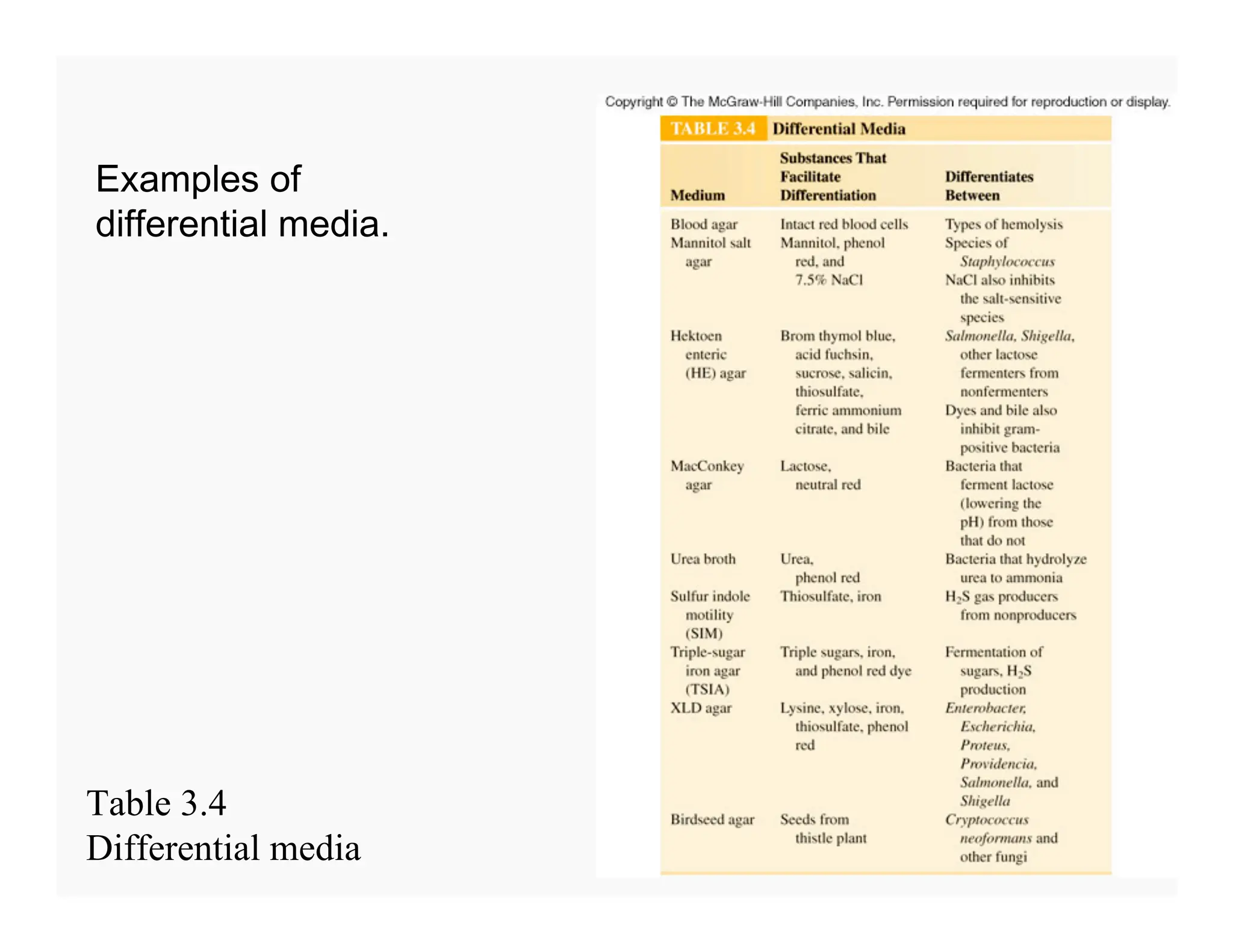
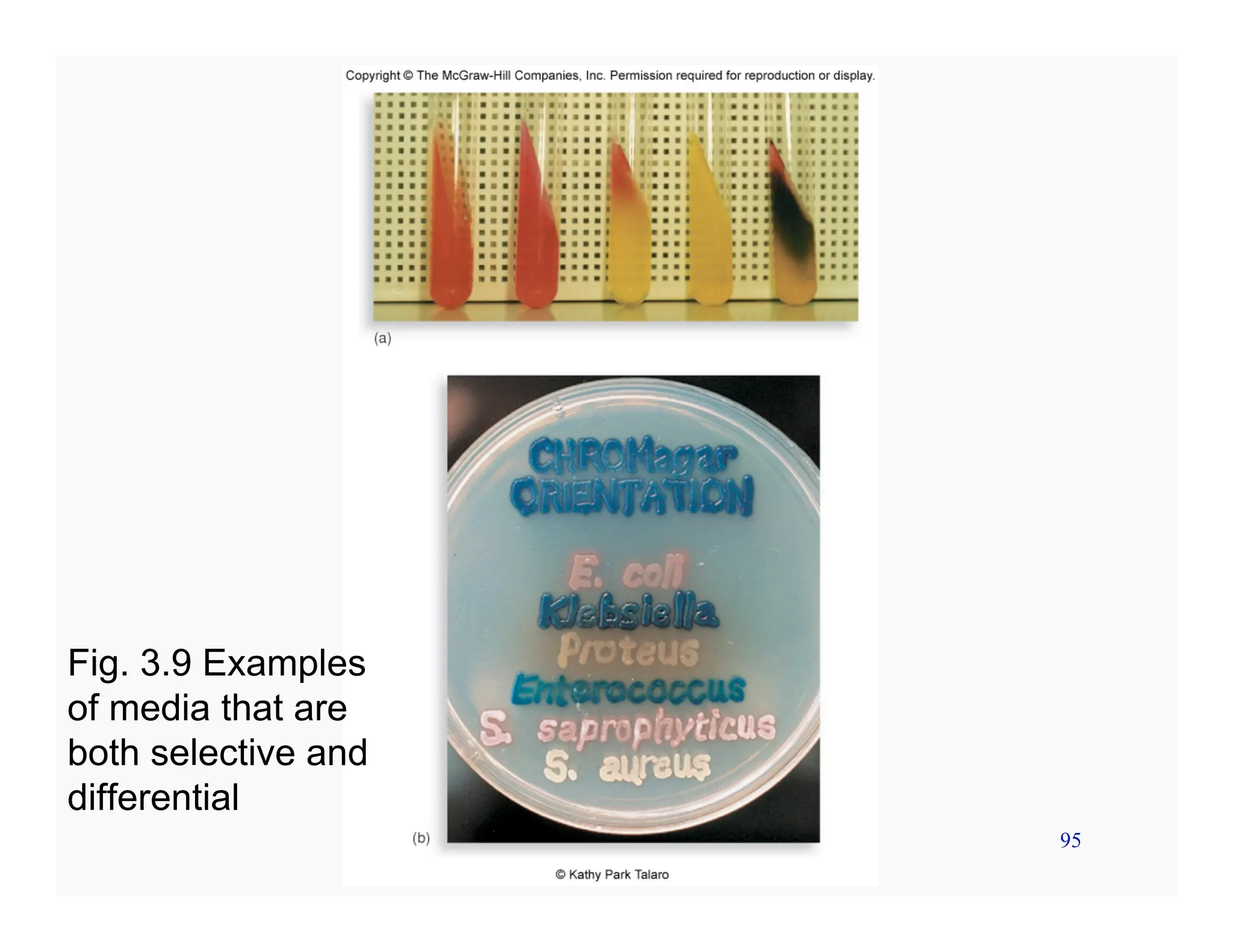
• Enriched media
• Selective media
• Differential media
91.
91
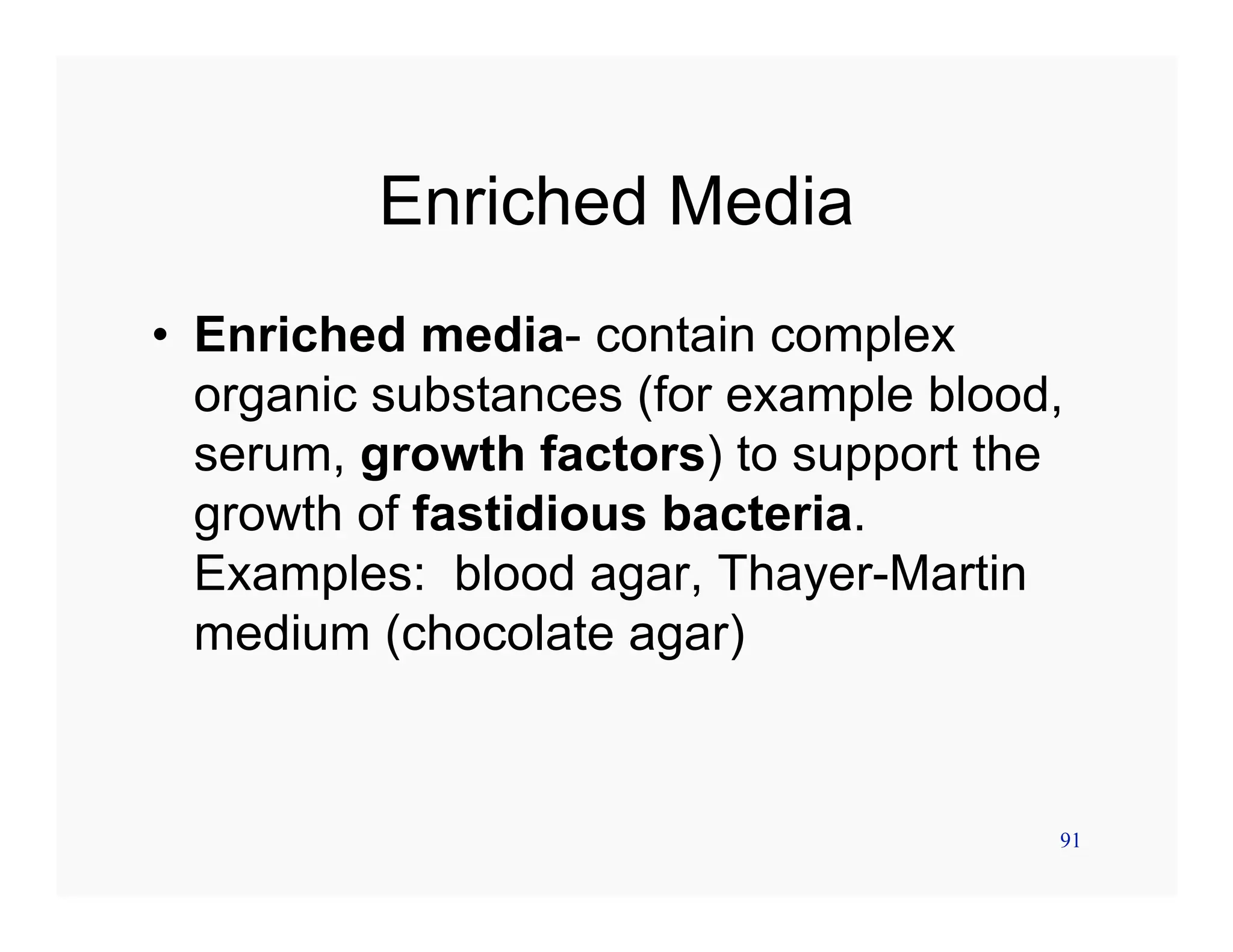
Enriched Media
• Enrichedmedia- contain complex
organic substances (for example blood,
serum, growth factors) to support the
growth of fastidious bacteria.
Examples: blood agar, Thayer-Martin
medium (chocolate agar)
92.
92
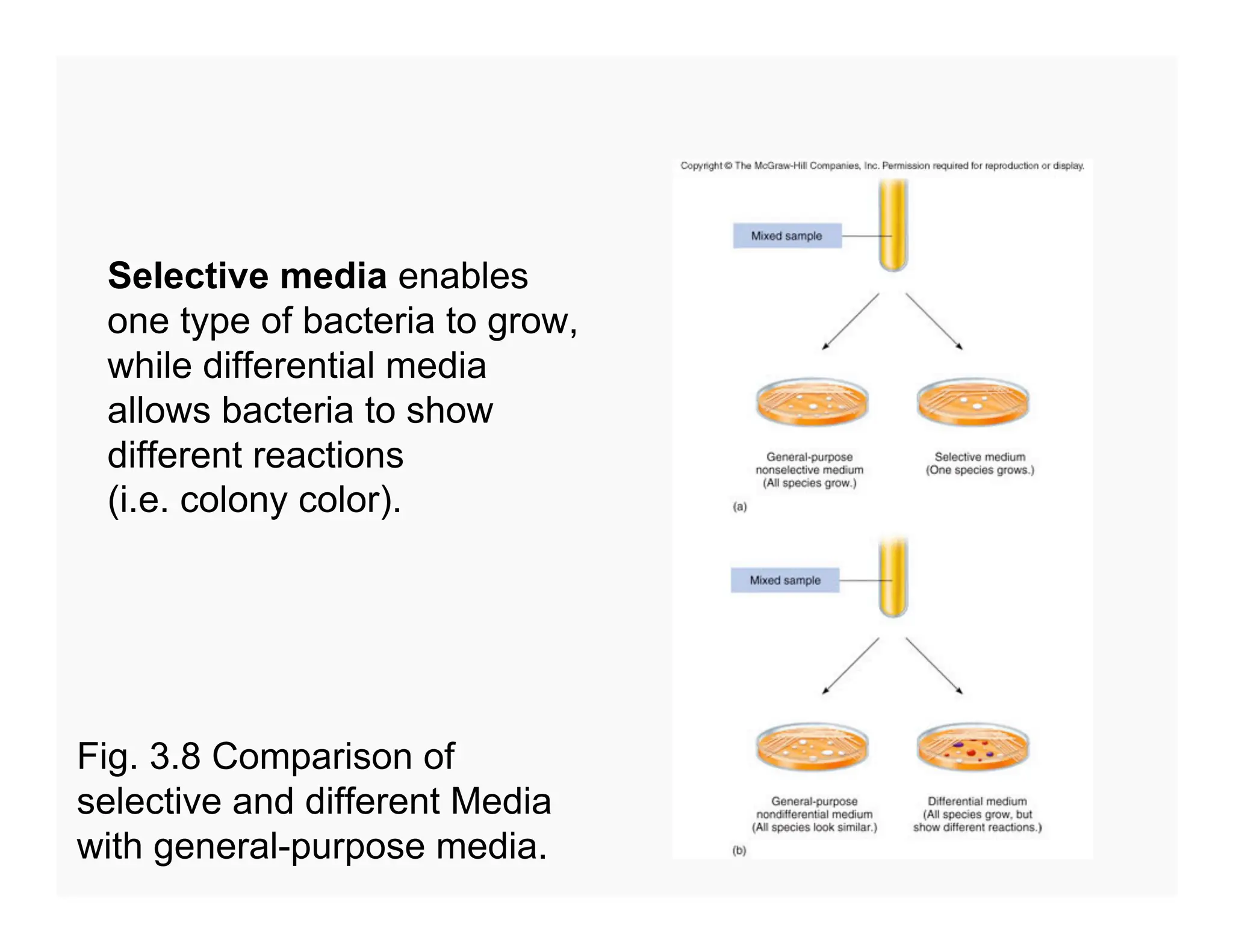
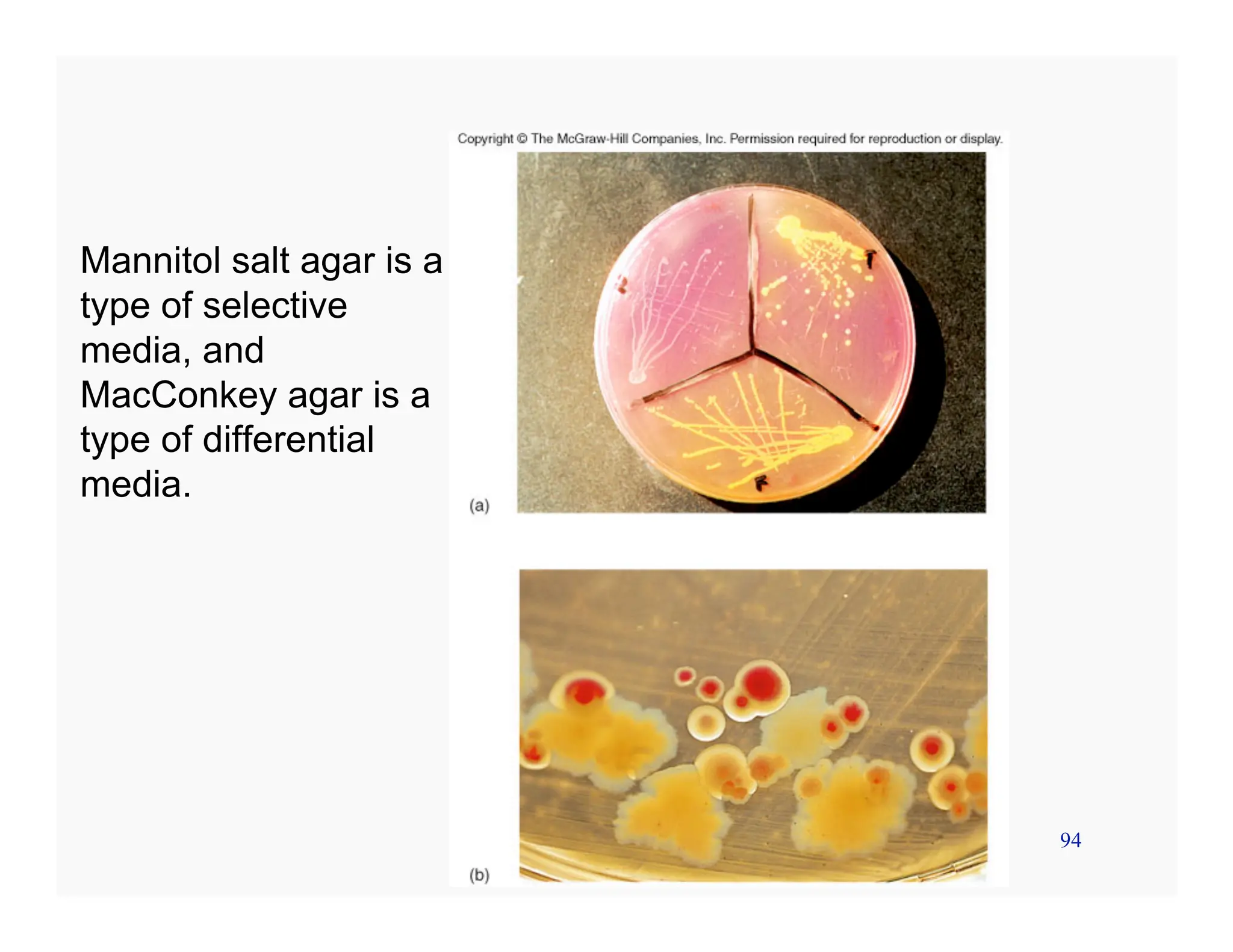
Selective media enables
onetype of bacteria to grow,
while differential media
allows bacteria to show
different reactions
(i.e. colony color).
Fig. 3.8 Comparison of
selective and different Media
with general-purpose media.
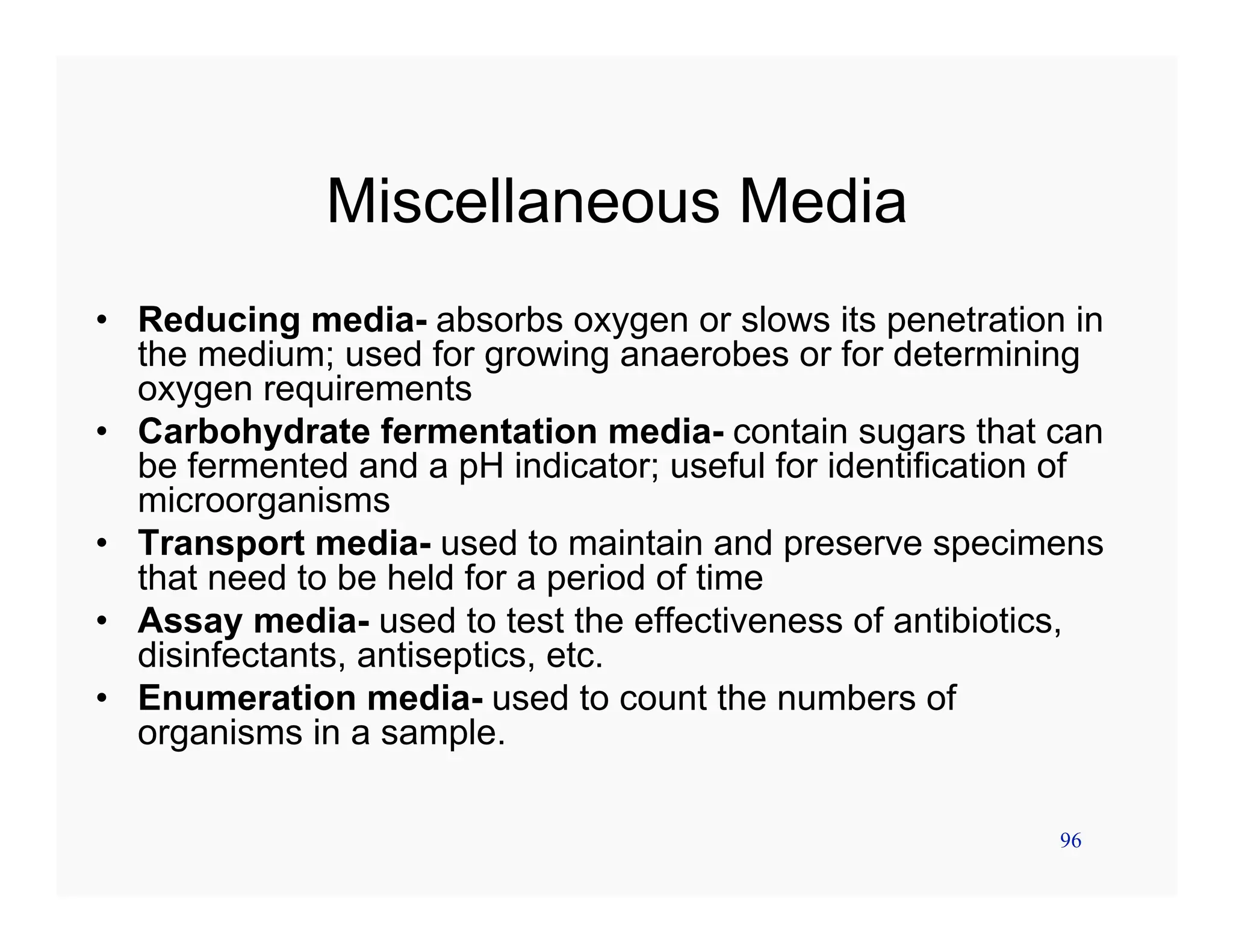
96
Miscellaneous Media
• Reducingmedia- absorbs oxygen or slows its penetration in
the medium; used for growing anaerobes or for determining
oxygen requirements
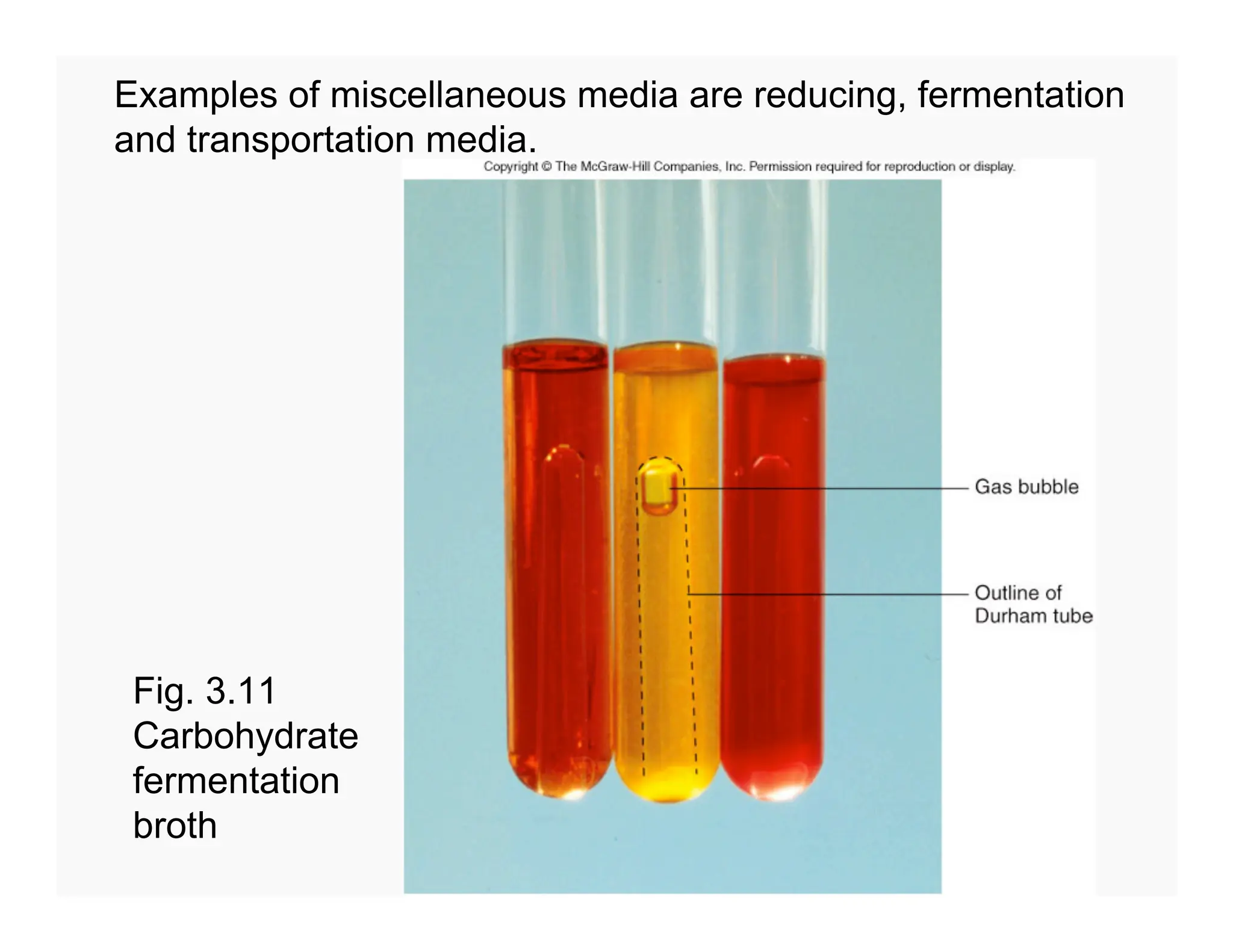
• Carbohydrate fermentation media- contain sugars that can
be fermented and a pH indicator; useful for identification of
microorganisms
• Transport media- used to maintain and preserve specimens
that need to be held for a period of time
• Assay media- used to test the effectiveness of antibiotics,
disinfectants, antiseptics, etc.
• Enumeration media- used to count the numbers of
organisms in a sample.
97.
97
Examples of miscellaneousmedia are reducing, fermentation
and transportation media.
Fig. 3.11
Carbohydrate
fermentation
broth
100
3.2 The Microscope:Window on an
Invisible Realm
• Two key characteristics of microscopes:
magnification and resolving power
101.
101
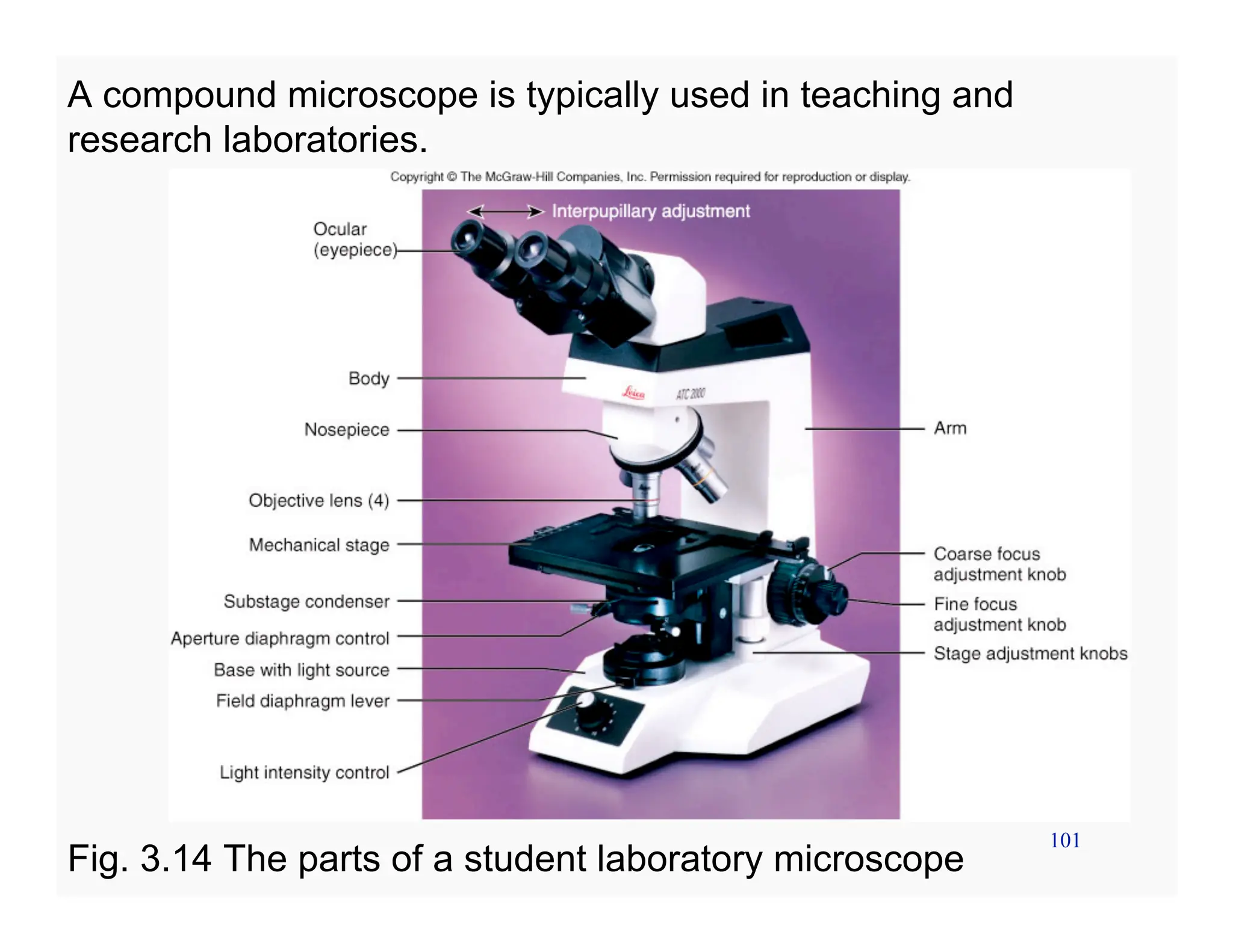
A compound microscopeis typically used in teaching and
research laboratories.
Fig. 3.14 The parts of a student laboratory microscope
102.
102
Principles of LightMicroscopy
• Magnification
– Results when visible light waves pass through a
curved lens
– The light experiences refraction
– An image is formed by the refracted light when an
object is placed a certain distance from the lens and
is illuminated with light
– The image is enlarged to a particular degree- the
power of magnification
• Magnification- occurs in two phases
– Objective lens- forms the real image
– Ocular lens- forms the virtual image
– Total power of magnification- the product of the
power of the objective and the power of the ocular
103.
103
Resolution
• Resolution- theability to distinguish two adjacent objects or
points from one another
• Also known as resolving power
– Resolving power (RP) = Wavelength of light in nm
2 x Numerical aperture of objective lens
– Shorter wavelengths provide a better resolution
– Numerical aperture- describes the relative efficiency of a lens in
bending light rays
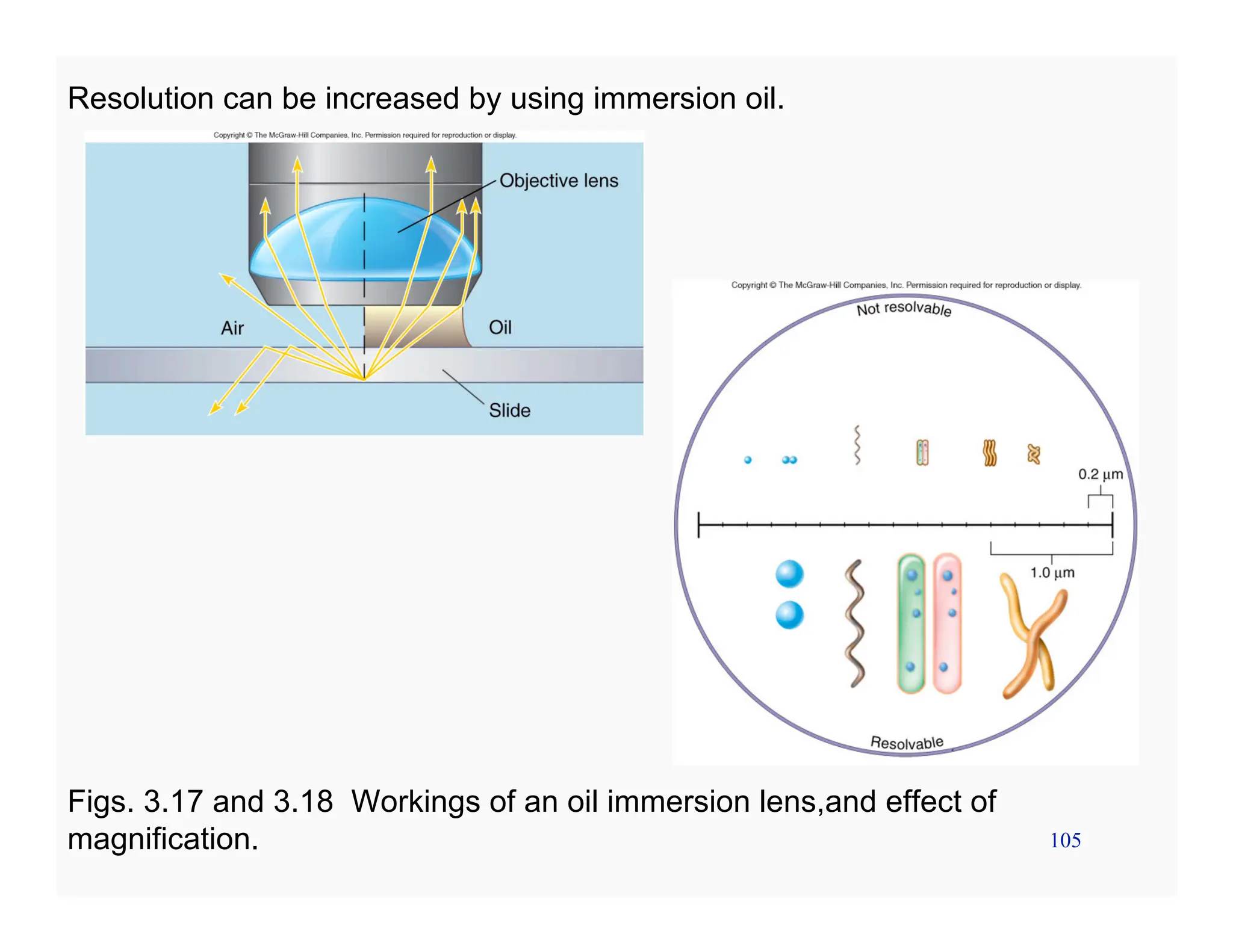
– Oil immersion lenses increase the numerical aperture
104.
104
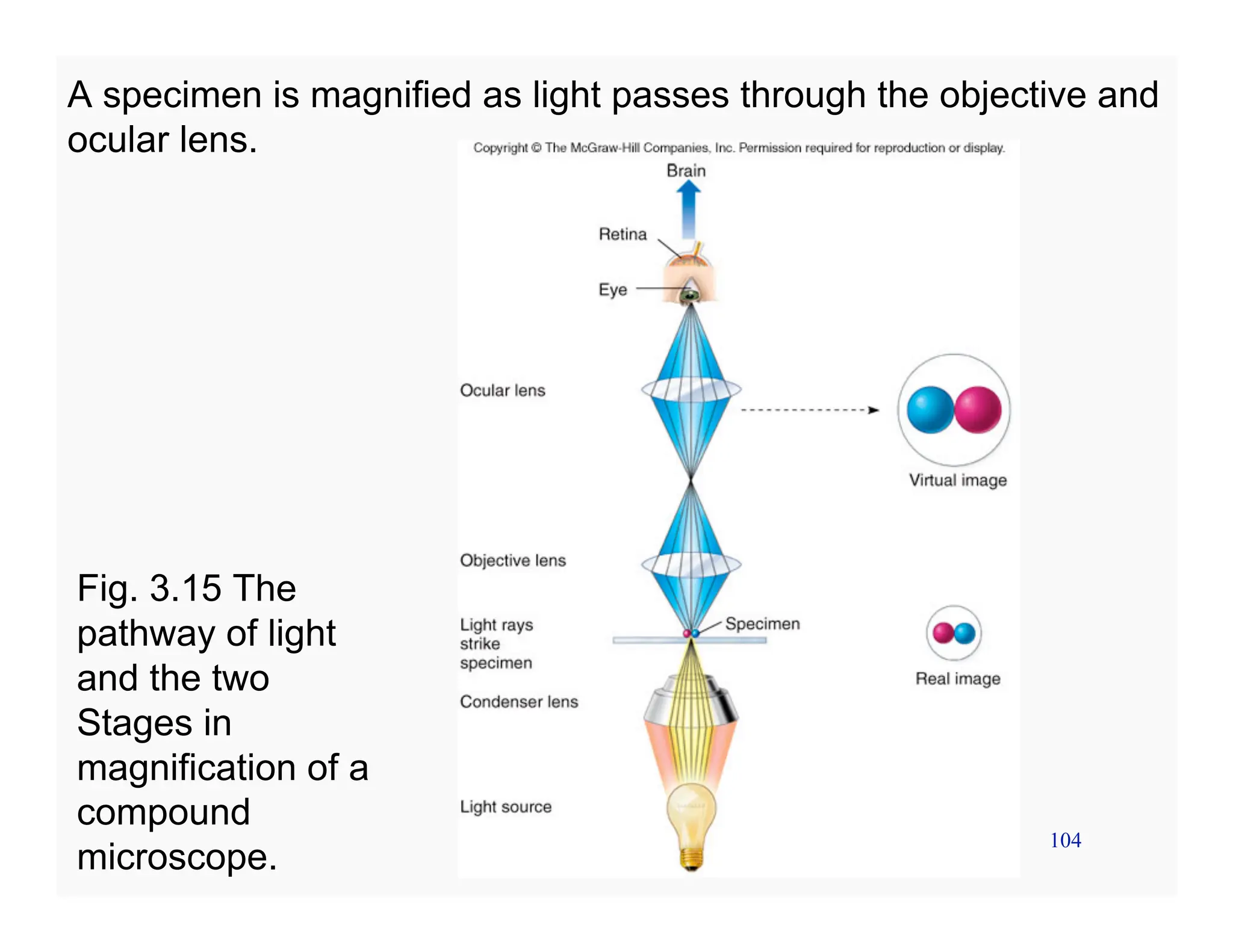
A specimen ismagnified as light passes through the objective and
ocular lens.
Fig. 3.15 The
pathway of light
and the two
Stages in
magnification of a
compound
microscope.
105.
105
Resolution can beincreased by using immersion oil.
Figs. 3.17 and 3.18 Workings of an oil immersion lens,and effect of
magnification.
106.
106
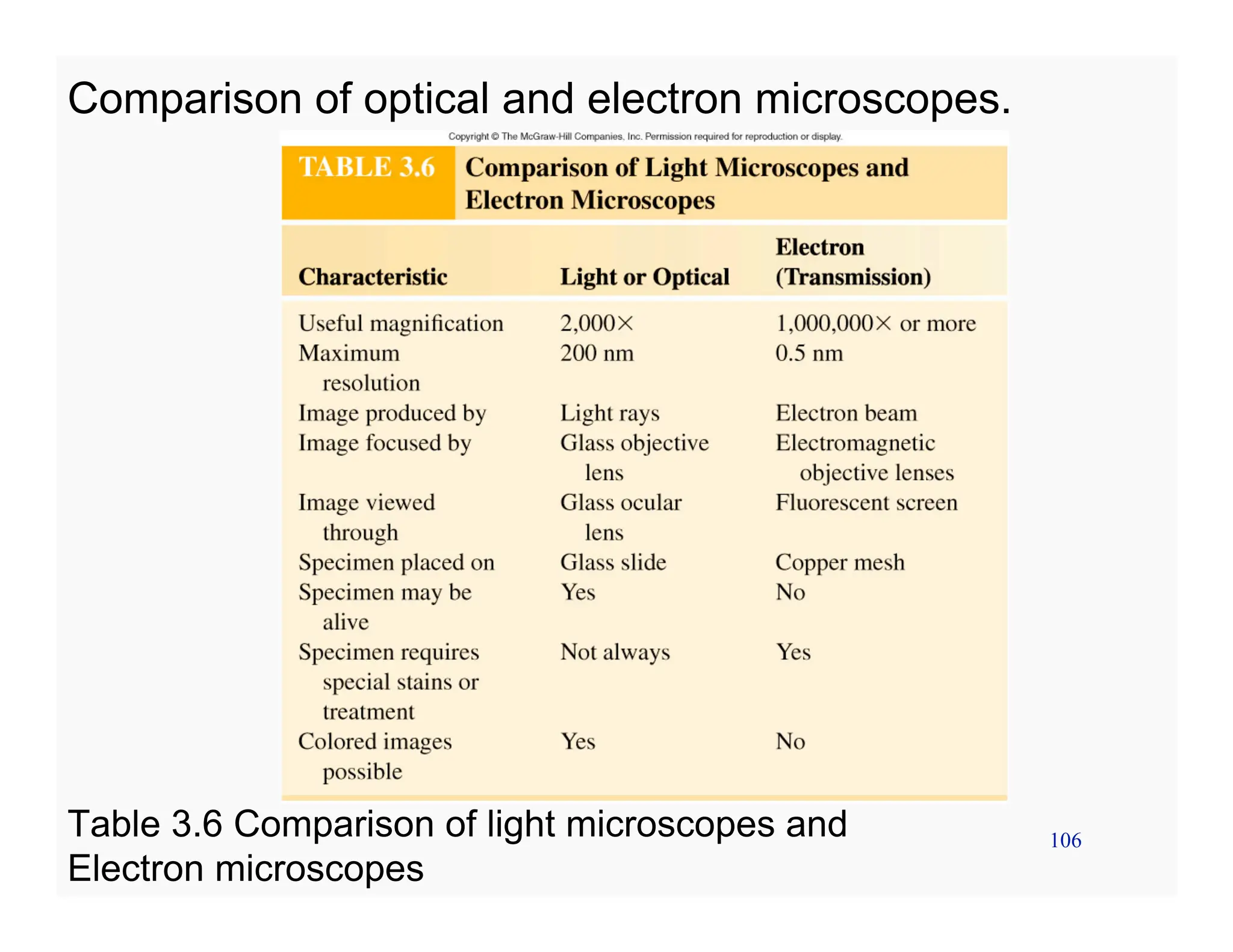
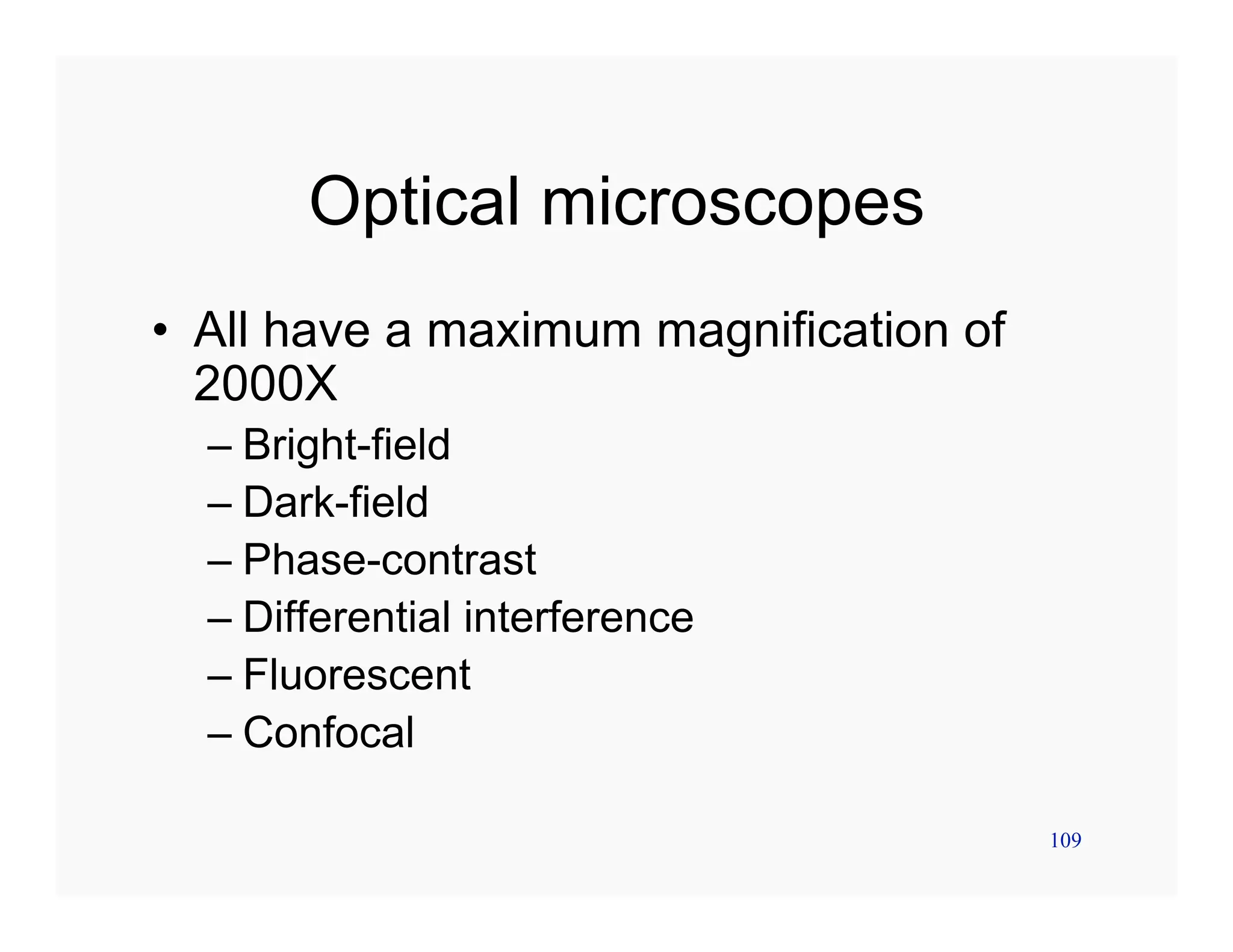
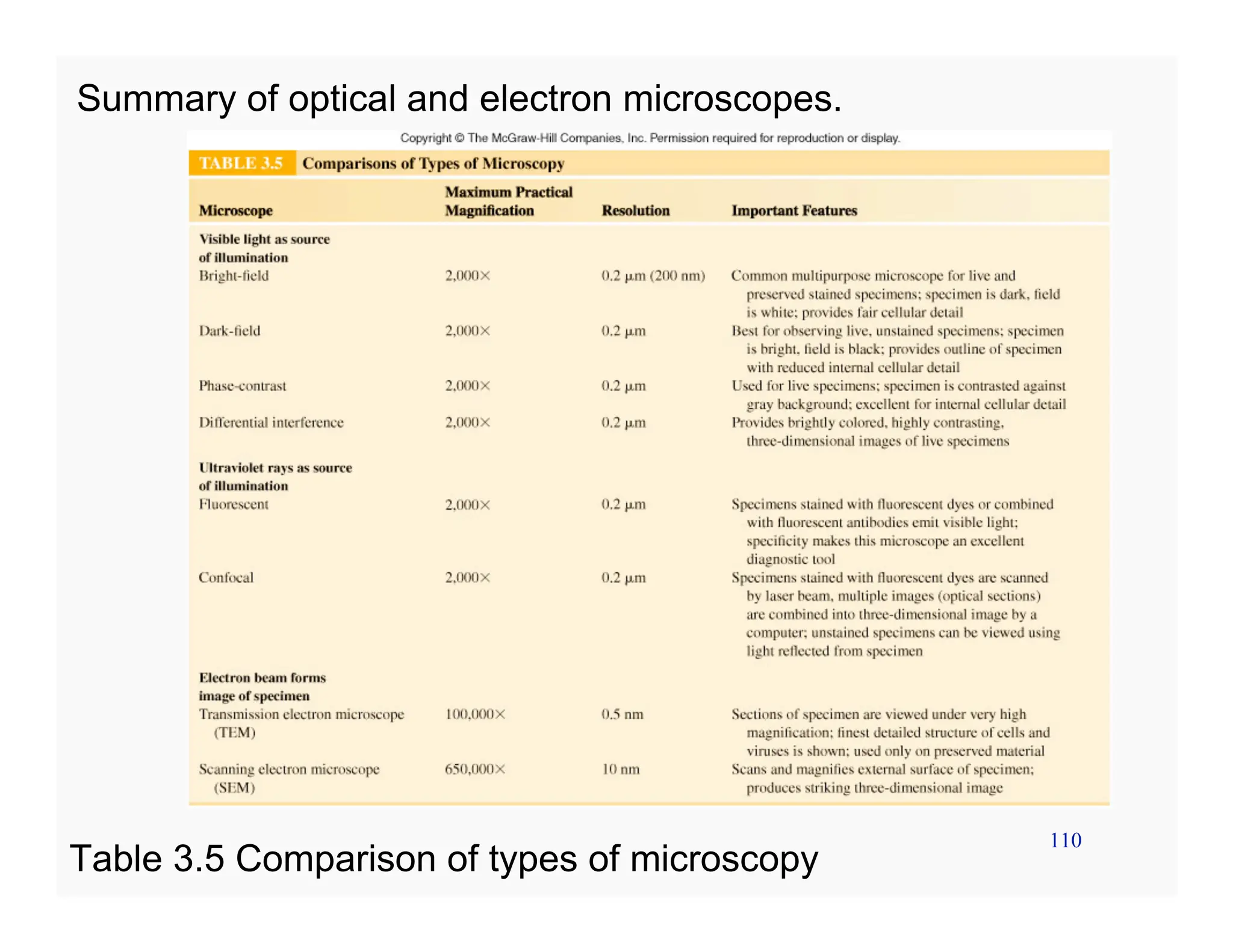
Comparison of opticaland electron microscopes.
Table 3.6 Comparison of light microscopes and
Electron microscopes
107.
107
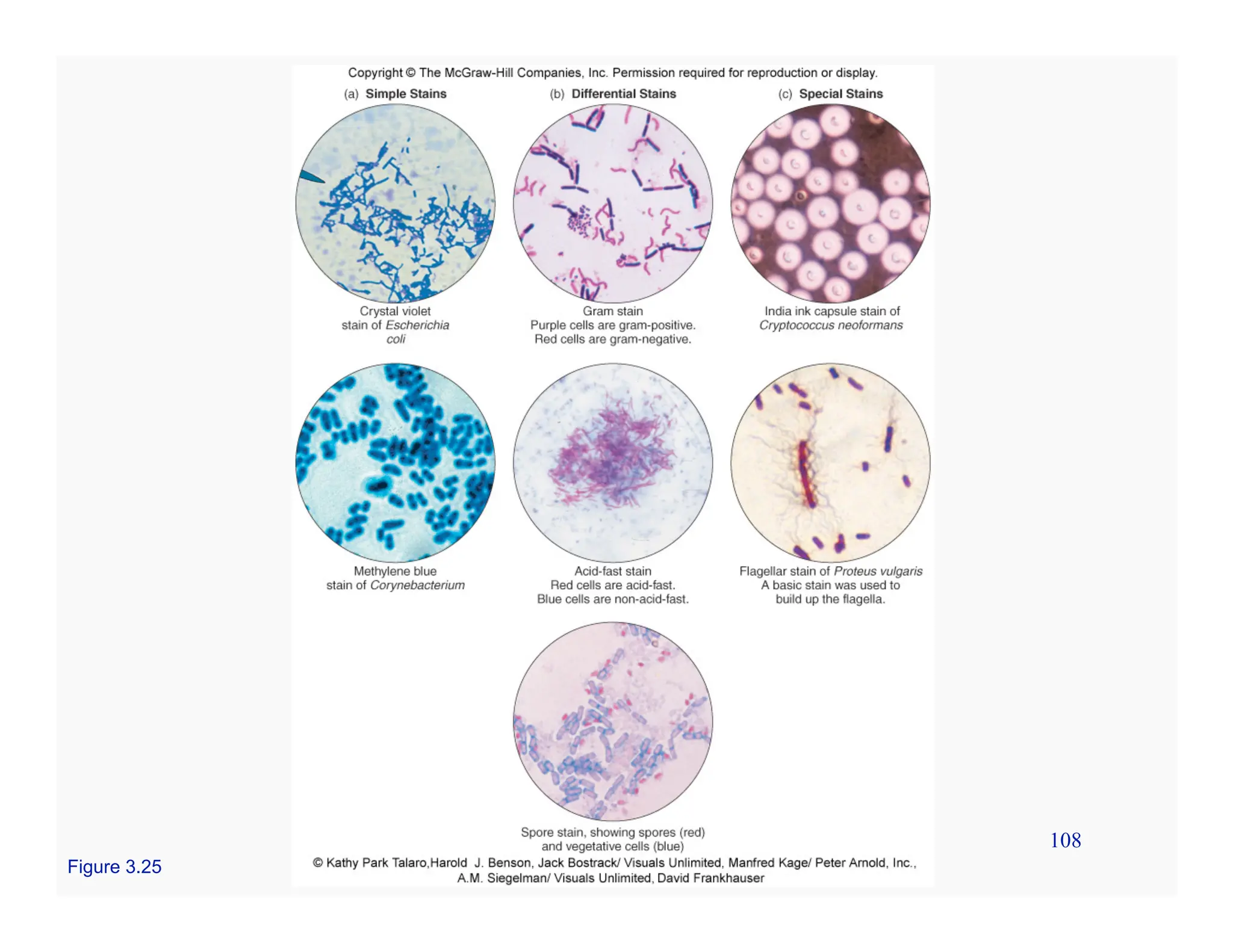
Stains
• Positive stains
–Dye binds to the specimen
• Negative stains
– Dye does not bind to the specimen, but
rather around the specimen.
![36
pH scale
• pH scale- measures the acid and base
concentrations of solutions:
– Ranges from 0 (most acidic) to 14 (most basic); pH= 7
is neutral (i.e., [H+] = [OH-])
– pH = -log[H+]](https://image.slidesharecdn.com/lecture2-250310195209-620f3369/75/Lecture2-pdf-Chemistry-and-Methods-in-Microbiology-36-2048.jpg)