Lecture 18
Dynamic Data Structures and Generics (II)
*
*
Class ArrayListObject of an ArrayList can be used to store an
unlimited number of objects.
*
Methods of ArrayList (I)
*
java.util.ArrayList
+ArrayList()
+add(o: Object) : void
+add(index: int, o: Object) : void
+clear(): void
+contains(o: Object): boolean
+get(index: int) : Object
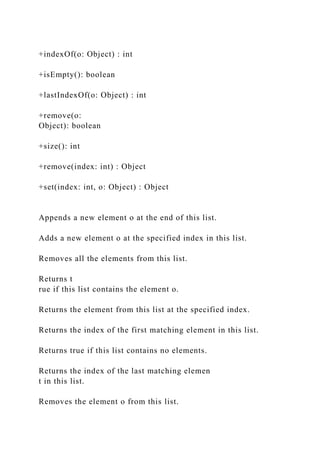
+indexOf(o: Object) : int
+isEmpty(): boolean
+lastIndexOf(o: Object) : int
+remove(o: Object): boolean
+size(): int
+remove(index: int) : Object
+set(index: int, o: Object) : Object
Appends a new element o at the end of this list.
Adds a new element o at the specified index in this list.
Removes all the elements from this list.
Returns true if this list contains the element o.
Returns the element from this list at the specified index.
Returns the index of the first matching element in this list.
Returns true if this list contains no elements.
Returns the index of the last matching element in this list.
Removes the element o from this list.
Returns the number of elements in this list.
Removes the element at the specified index.
Sets the element at the specified index.
Creates an empty list.
Methods of ArrayList (II) Array is used to implement the
methodsMethods get(int index) and set(int index, Object o) for
accessing and modifying an element through an index and the
add(Object o) for adding an element at the end of the list are
efficient. Why?Methods add(int index, Object o) and remove(int
index) are inefficient because it requires shifting potentially a
large number of elements.
*
Linked Data StructureTo improve efficiency for adding and
removing an element anywhere in a list.It containsCollection of
objectsEach object contains data and a reference to another
object in the collection
*
Linked ListA dynamic data structureA linked list consists of
nodes. Each node contains an elementa link: linked to its next
neighbor. Example: take notes in the class!
*
Linked List
*
ListNodes
ListNodes in Linked List
public class ListNode { // fill the comments
private String data; //
private ListNode link; //
/**
*/
public ListNode () {
link = null; //
data = null; //
}
/**
*/
public ListNode (String newData, ListNode linkValue) {
data = newData;
link = linkValue;
}
*
ListNodes in Linked List (cont’d)
/** */
public void setData (String newData) {
data = newData;
}
/** */
public String getData () {
return data;
}
*
ListNodes in Linked List (cont’d)
/** */
public void setLink (ListNode newLink) {
link = newLink;
}
/** */
public ListNode getLink () {
return link;
}
}
*
Linked List ClassA linked list class uses the ListNode classThe
variable head refers to the first node in the list.
*
Linked List of String
public class StringLinkedList { //write comments
private ListNode head;
/** */
public StringLinkedList () {
head = null; //
}
*
Linked List of String (cont’d)
/** */
public void showList () {
ListNode position = head; //
while (position != null) {
System.out.println (position.getData ());
position = position.getLink (); //
}
}
*
Linked List of String (cont’d)
/** */
public int length () {
int count = 0;
ListNode position = head; //
while (position != null) { //
count++; //
position = position.getLink (); //
}
return count;
}
*
Linked List of String (cont’d)
/** */
public void addANodeToStart (String addData) {
head = new ListNode (addData, head);
}
/** */
public void deleteHeadNode () {
if (head != null)
head = head.getLink (); //
else {
System.out.println ("Deleting from an empty list.");
System.exit (0);
}
}
*
Linked List of String (cont’d)
/* Returns a reference to the first node containing the target
data. If target is not on the list, returns null. */
private ListNode find (String target) {
boolean found = false; //
ListNode position = head;
while ((position != null) && !found) { //
String dataAtPosition = position.getData ();
if (dataAtPosition.equals (target))
found = true;
else
position = position.getLink (); //
}
return position;
}
}
*
Linked List of String (cont’d)
/** */
public boolean onList (String target) {
return find (target) != null;
}
*
Lab Exercises
Write a demo program that tests the discussed methods add the
courses you took into the linked list.Show all courses in the
linked listDelete the first course you addedcheck some courses
whether they are in the list or not.
*
java.util.ArrayList
+
ArrayList
()
+add(o: Object) : void
+add(index: int, o: Object) : void
+clear(): void
+contains(o: Object): boolean
+get(index: int) : Object
+indexOf(o: Object) : int
+isEmpty(): boolean
+lastIndexOf(o: Object) : int
+remove(o:
Object): boolean
+size(): int
+remove(index: int) : Object
+set(index: int, o: Object) : Object
Appends a new element o at the end of this list.
Adds a new element o at the specified index in this list.
Removes all the elements from this list.
Returns t
rue if this list contains the element o.
Returns the element from this list at the specified index.
Returns the index of the first matching element in this list.
Returns true if this list contains no elements.
Returns the index of the last matching elemen
t in this list.
Removes the element o from this list.
Returns the number of elements in this list.
Removes the element at the specified index.
Sets the element at the specified index.
Creates an empty list.

Lecture 18Dynamic Data Structures and Generics (II).docx

  • 1.
    Lecture 18 Dynamic DataStructures and Generics (II) * * Class ArrayListObject of an ArrayList can be used to store an unlimited number of objects. * Methods of ArrayList (I) * java.util.ArrayList +ArrayList() +add(o: Object) : void +add(index: int, o: Object) : void
  • 2.
    +clear(): void +contains(o: Object):boolean +get(index: int) : Object +indexOf(o: Object) : int +isEmpty(): boolean +lastIndexOf(o: Object) : int +remove(o: Object): boolean +size(): int +remove(index: int) : Object +set(index: int, o: Object) : Object Appends a new element o at the end of this list.
  • 3.
    Adds a newelement o at the specified index in this list. Removes all the elements from this list. Returns true if this list contains the element o. Returns the element from this list at the specified index. Returns the index of the first matching element in this list. Returns true if this list contains no elements. Returns the index of the last matching element in this list. Removes the element o from this list. Returns the number of elements in this list. Removes the element at the specified index. Sets the element at the specified index.
  • 4.
    Creates an emptylist. Methods of ArrayList (II) Array is used to implement the methodsMethods get(int index) and set(int index, Object o) for accessing and modifying an element through an index and the add(Object o) for adding an element at the end of the list are efficient. Why?Methods add(int index, Object o) and remove(int index) are inefficient because it requires shifting potentially a large number of elements. * Linked Data StructureTo improve efficiency for adding and removing an element anywhere in a list.It containsCollection of objectsEach object contains data and a reference to another object in the collection * Linked ListA dynamic data structureA linked list consists of nodes. Each node contains an elementa link: linked to its next neighbor. Example: take notes in the class!
  • 5.
    * Linked List * ListNodes ListNodes inLinked List public class ListNode { // fill the comments private String data; // private ListNode link; // /** */ public ListNode () { link = null; // data = null; // } /** */ public ListNode (String newData, ListNode linkValue) { data = newData; link = linkValue; } * ListNodes in Linked List (cont’d)
  • 6.
    /** */ public voidsetData (String newData) { data = newData; } /** */ public String getData () { return data; } * ListNodes in Linked List (cont’d) /** */ public void setLink (ListNode newLink) { link = newLink; } /** */ public ListNode getLink () { return link; } } * Linked List ClassA linked list class uses the ListNode classThe variable head refers to the first node in the list. * Linked List of String public class StringLinkedList { //write comments
  • 7.
    private ListNode head; /***/ public StringLinkedList () { head = null; // } * Linked List of String (cont’d) /** */ public void showList () { ListNode position = head; // while (position != null) { System.out.println (position.getData ()); position = position.getLink (); // } } * Linked List of String (cont’d) /** */ public int length () { int count = 0; ListNode position = head; // while (position != null) { // count++; // position = position.getLink (); // } return count; } *
  • 8.
    Linked List ofString (cont’d) /** */ public void addANodeToStart (String addData) { head = new ListNode (addData, head); } /** */ public void deleteHeadNode () { if (head != null) head = head.getLink (); // else { System.out.println ("Deleting from an empty list."); System.exit (0); } } * Linked List of String (cont’d) /* Returns a reference to the first node containing the target data. If target is not on the list, returns null. */ private ListNode find (String target) { boolean found = false; // ListNode position = head; while ((position != null) && !found) { // String dataAtPosition = position.getData (); if (dataAtPosition.equals (target)) found = true; else position = position.getLink (); // } return position; }
  • 9.
    } * Linked List ofString (cont’d) /** */ public boolean onList (String target) { return find (target) != null; } * Lab Exercises Write a demo program that tests the discussed methods add the courses you took into the linked list.Show all courses in the linked listDelete the first course you addedcheck some courses whether they are in the list or not. * java.util.ArrayList + ArrayList () +add(o: Object) : void +add(index: int, o: Object) : void +clear(): void +contains(o: Object): boolean +get(index: int) : Object
  • 10.
    +indexOf(o: Object) :int +isEmpty(): boolean +lastIndexOf(o: Object) : int +remove(o: Object): boolean +size(): int +remove(index: int) : Object +set(index: int, o: Object) : Object Appends a new element o at the end of this list. Adds a new element o at the specified index in this list. Removes all the elements from this list. Returns t rue if this list contains the element o. Returns the element from this list at the specified index. Returns the index of the first matching element in this list. Returns true if this list contains no elements. Returns the index of the last matching elemen t in this list. Removes the element o from this list.
  • 11.
    Returns the numberof elements in this list. Removes the element at the specified index. Sets the element at the specified index. Creates an empty list.