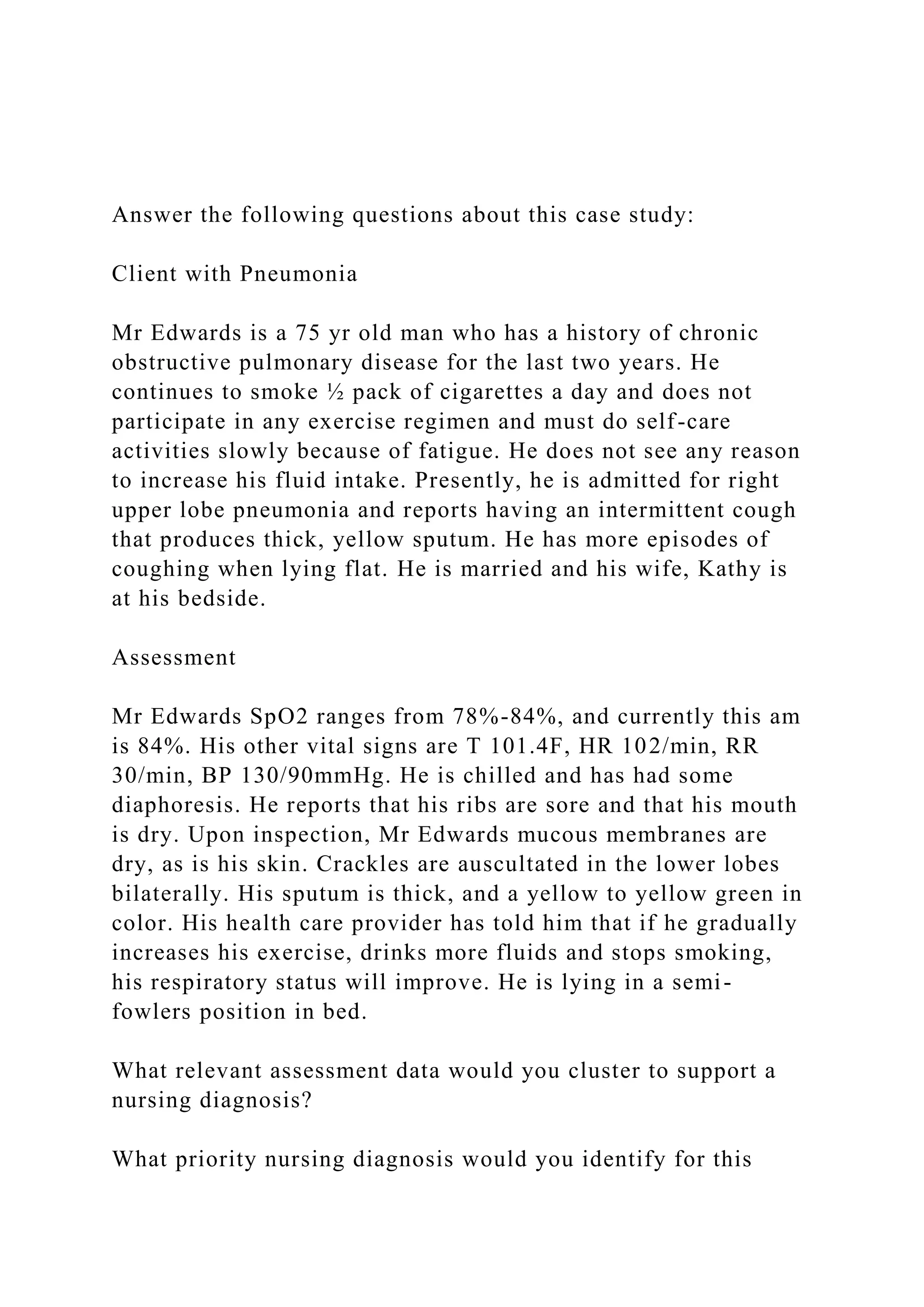
Answer the following questions about this case study:
Client with Pneumonia
Mr Edwards is a 75 yr old man who has a history of chronic
obstructive pulmonary disease for the last two years. He
continues to smoke ½ pack of cigarettes a day and does not
participate in any exercise regimen and must do self-care
activities slowly because of fatigue. He does not see any reason
to increase his fluid intake. Presently, he is admitted for right
upper lobe pneumonia and reports having an intermittent cough
that produces thick, yellow sputum. He has more episodes of
coughing when lying flat. He is married and his wife, Kathy is
at his bedside.
Assessment
Mr Edwards SpO2 ranges from 78%-84%, and currently this am
is 84%. His other vital signs are T 101.4F, HR 102/min, RR
30/min, BP 130/90mmHg. He is chilled and has had some
diaphoresis. He reports that his ribs are sore and that his mouth
is dry. Upon inspection, Mr Edwards mucous membranes are
dry, as is his skin. Crackles are auscultated in the lower lobes
bilaterally. His sputum is thick, and a yellow to yellow green in
color. His health care provider has told him that if he gradually
increases his exercise, drinks more fluids and stops smoking,
his respiratory status will improve. He is lying in a semi-
fowlers position in bed.
What relevant assessment data would you cluster to support a
nursing diagnosis?
What priority nursing diagnosis would you identify for this
patient? List five and give both Problem focused and Risk for
nursing diagnoses.
What short term goal would you identify for the priority nursing
diagnosis you identified? What long term goal would you
identify?
List all the nursing interventions that you would perform for
identified goals and nursing diagnosis. Give a rationale for
each.
If you implemented all of the identified interventions, how
would you evaluate that your interventions were successful and
that the goals were met?

Answer the following questions about this case studyClient .docx

  • 1.
    Answer the followingquestions about this case study: Client with Pneumonia Mr Edwards is a 75 yr old man who has a history of chronic obstructive pulmonary disease for the last two years. He continues to smoke ½ pack of cigarettes a day and does not participate in any exercise regimen and must do self-care activities slowly because of fatigue. He does not see any reason to increase his fluid intake. Presently, he is admitted for right upper lobe pneumonia and reports having an intermittent cough that produces thick, yellow sputum. He has more episodes of coughing when lying flat. He is married and his wife, Kathy is at his bedside. Assessment Mr Edwards SpO2 ranges from 78%-84%, and currently this am is 84%. His other vital signs are T 101.4F, HR 102/min, RR 30/min, BP 130/90mmHg. He is chilled and has had some diaphoresis. He reports that his ribs are sore and that his mouth is dry. Upon inspection, Mr Edwards mucous membranes are dry, as is his skin. Crackles are auscultated in the lower lobes bilaterally. His sputum is thick, and a yellow to yellow green in color. His health care provider has told him that if he gradually increases his exercise, drinks more fluids and stops smoking, his respiratory status will improve. He is lying in a semi- fowlers position in bed. What relevant assessment data would you cluster to support a nursing diagnosis? What priority nursing diagnosis would you identify for this
  • 2.
    patient? List fiveand give both Problem focused and Risk for nursing diagnoses. What short term goal would you identify for the priority nursing diagnosis you identified? What long term goal would you identify? List all the nursing interventions that you would perform for identified goals and nursing diagnosis. Give a rationale for each. If you implemented all of the identified interventions, how would you evaluate that your interventions were successful and that the goals were met?