Lesson 01
Operations Management
Operations Management: Basics
Dr. Inderdeep Singh
Department of Mechanical and Industrial Engineering
1
Source:https://us.123rf.com/450wm/garagestock/garagestock1605/garagestock16
0502572/57464235-gears-and-operations-management-mechanism.jpg
Operations Management (OM)
• What are operations?
– The part of a business organization that is responsible for
producing goods or services.
– A function or system that transforms inputs into outputs
of greater value.
Student Slides
Operations Management
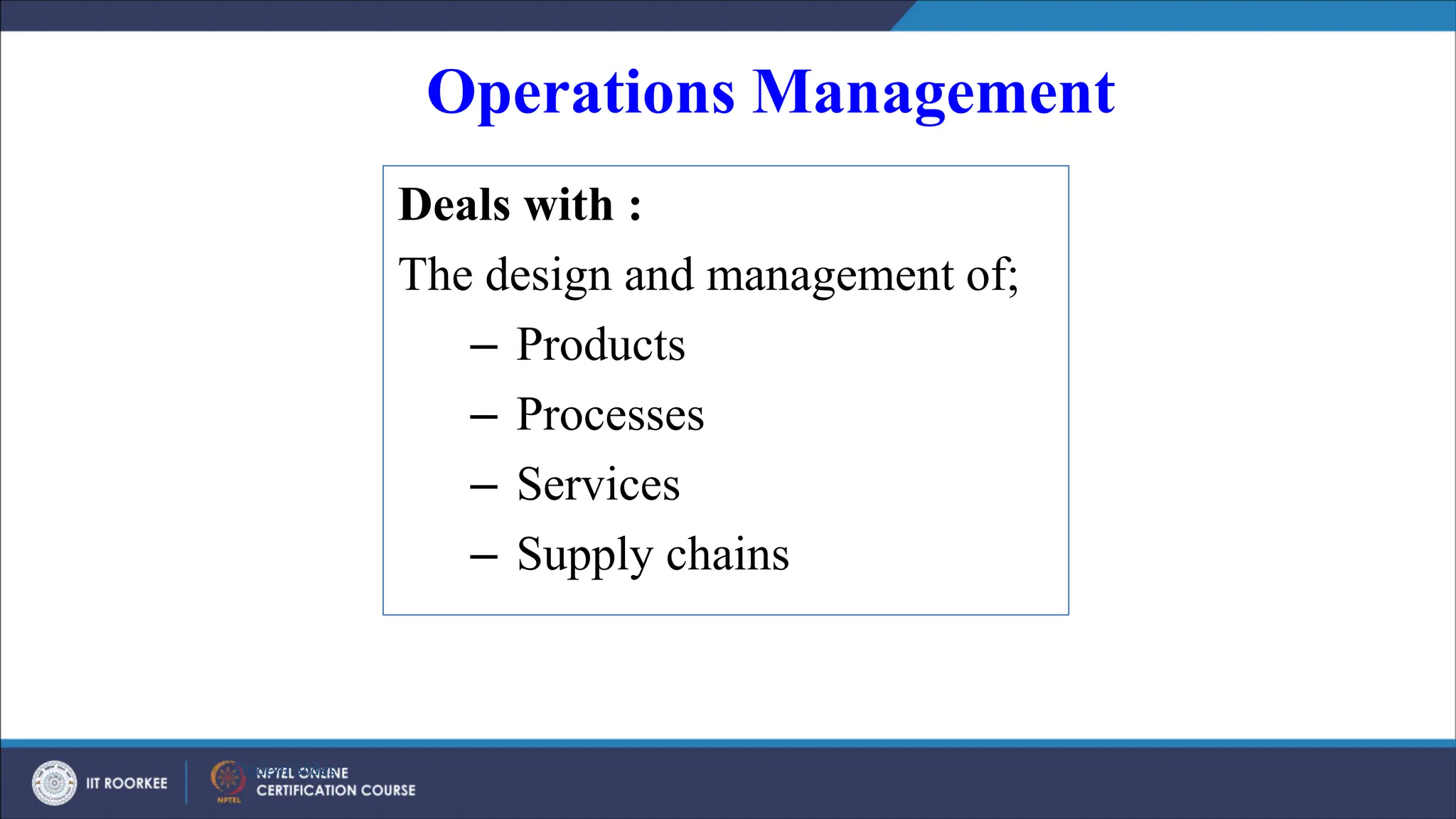
Deals with :
The design and management of;
– Products
– Processes
– Services
– Supply chains
Student Slides
What is Operations Management?
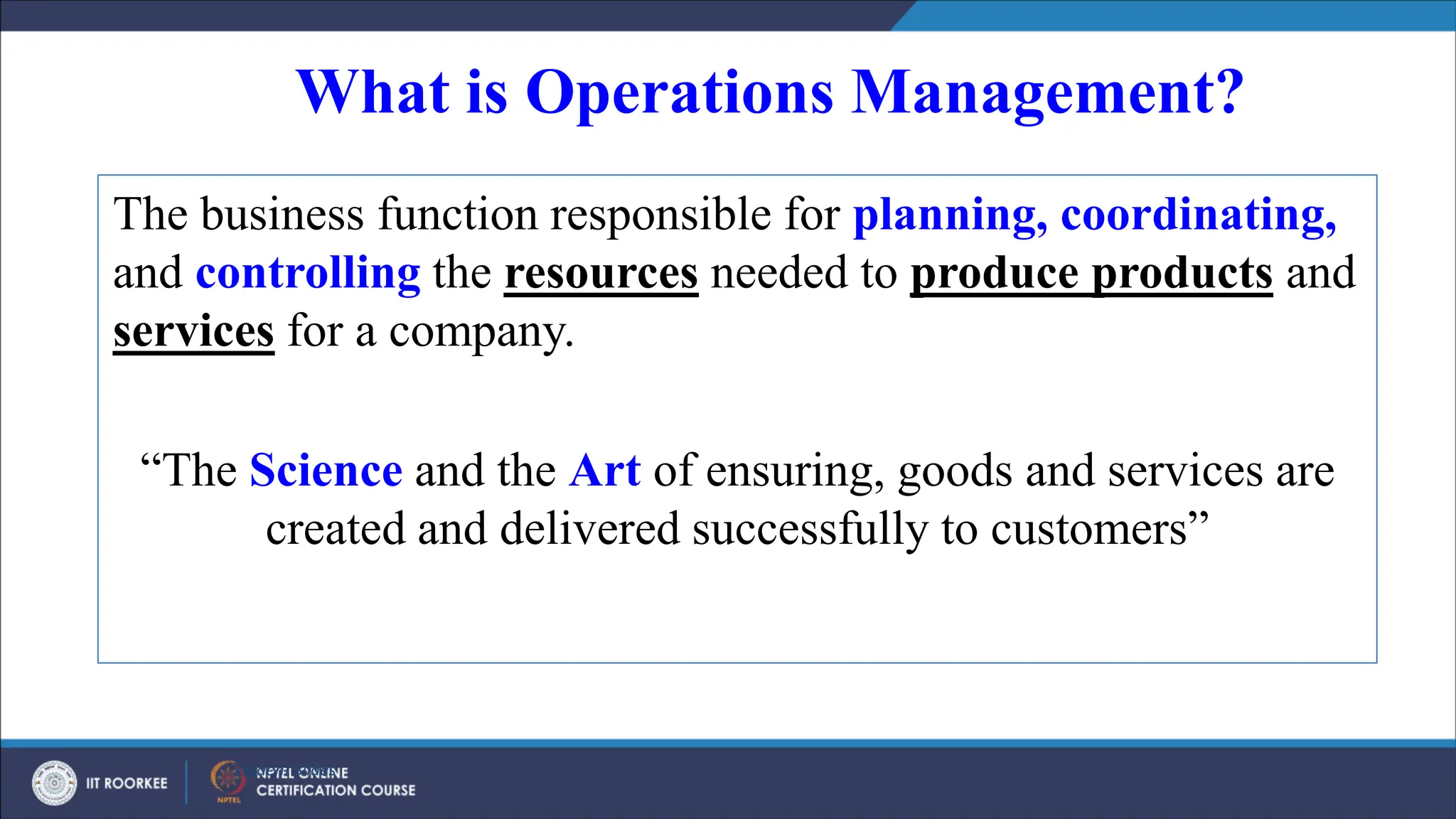
The business function responsible for planning, coordinating,
and controlling the resources needed to produce products and
services for a company.
“The Science and the Art of ensuring, goods and services are
created and delivered successfully to customers”
Student Slides
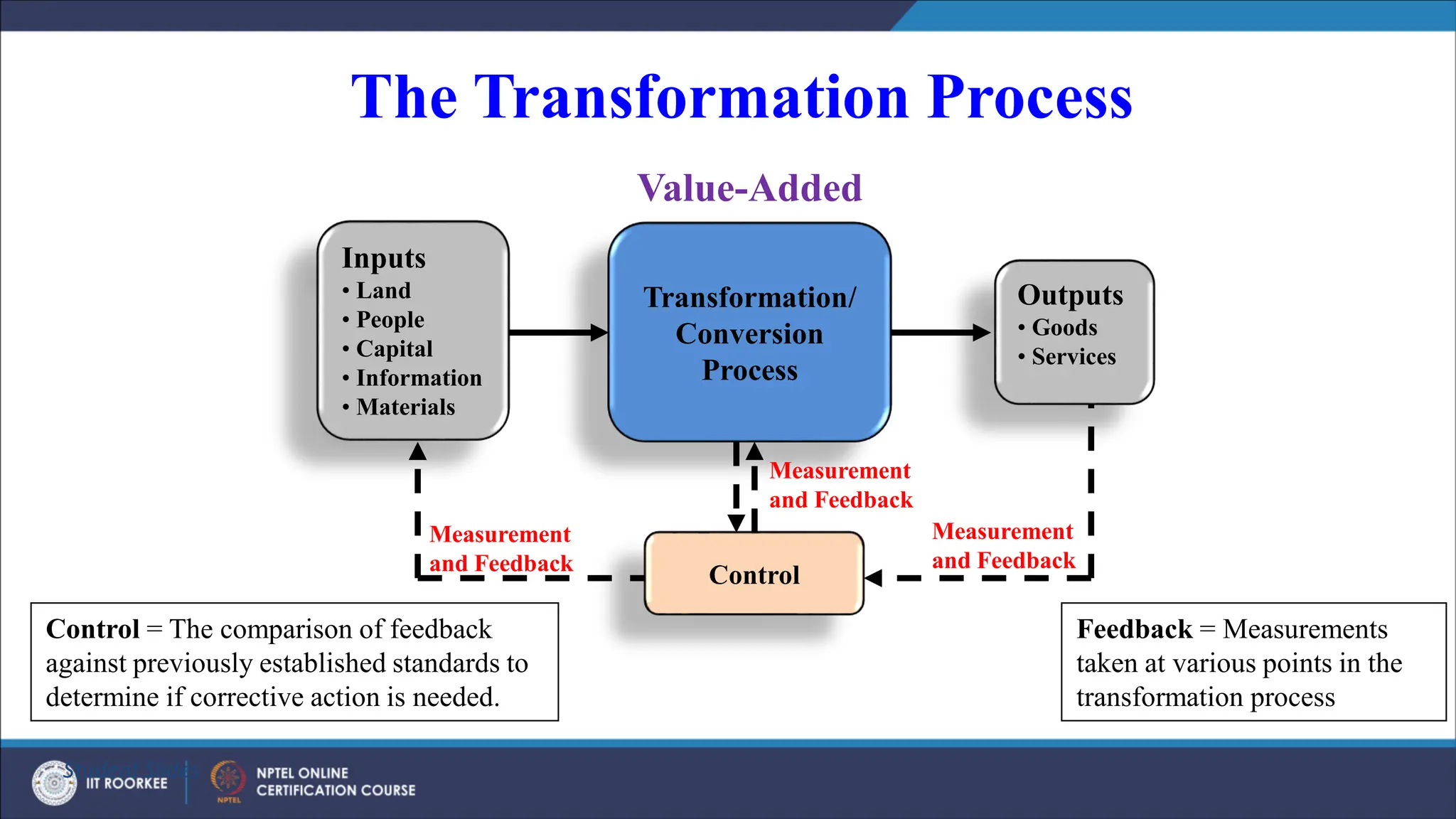
The Transformation Process
Student Slides
Inputs
• Land
• People
• Capital
• Information
• Materials
Outputs
• Goods
• Services
Transformation/
Conversion
Process
Control
Measurement
and Feedback
Measurement
and Feedback
Measurement
and Feedback
Value-Added
Feedback = Measurements
taken at various points in the
transformation process
Control = The comparison of feedback
against previously established standards to
determine if corrective action is needed.
Why Operations Management?
• OM is an integrative body of knowledge; whose skills are needed in
industries as diverse as health care, education, telecommunications,
lodging, food service, banking, consulting and manufacturing.
• OM is one of the three major functions of any organization, and its
integrally related to all the other business functions.
• To know how goods and services are produced.
• To understand what operations managers do.
Student Slides
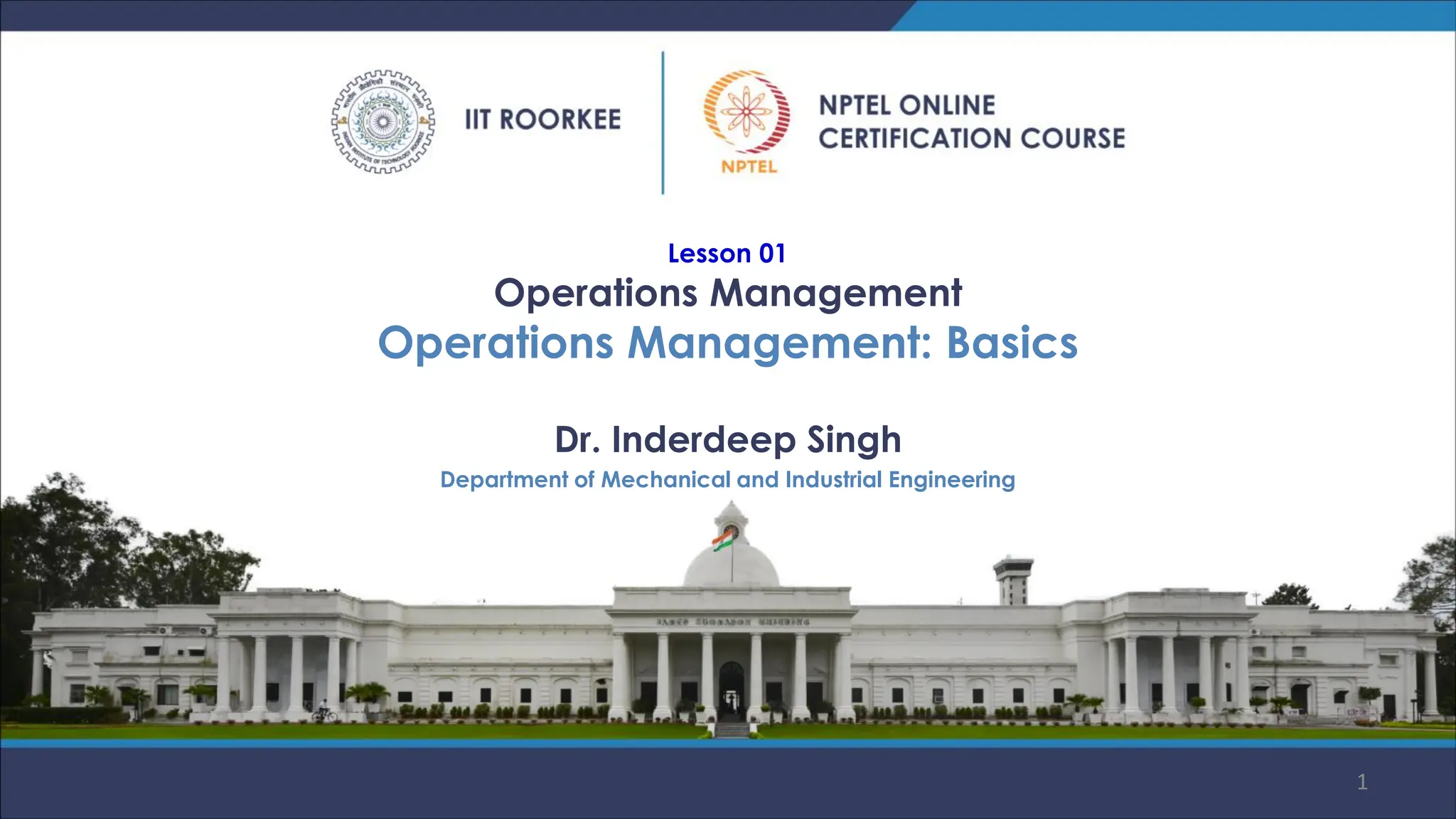
Operations
Management
Product
Design and
Development
Sales
Forecasting
Facility
Planning and
Plant Location
Facility
Layout and
Plant Layout
Production
Planning
Project
Scheduling
(CPM, PERT)
Production
Control
(Scheduling,
Sequencing)
Quality
(TQM, TPM,
SQC, Six
Sigma)
Materials
Management
(Inventory
Control, EQQ)
Production
Models
(JIT, Kanban,
MRP, ERP )

Lecture 01 Operations Management Basics.pdf

  • 1.
    Lesson 01 Operations Management OperationsManagement: Basics Dr. Inderdeep Singh Department of Mechanical and Industrial Engineering 1
  • 2.
  • 3.
    Operations Management (OM) •What are operations? – The part of a business organization that is responsible for producing goods or services. – A function or system that transforms inputs into outputs of greater value. Student Slides
  • 4.
    Operations Management Deals with: The design and management of; – Products – Processes – Services – Supply chains Student Slides
  • 5.
    What is OperationsManagement? The business function responsible for planning, coordinating, and controlling the resources needed to produce products and services for a company. “The Science and the Art of ensuring, goods and services are created and delivered successfully to customers” Student Slides
  • 6.
    The Transformation Process StudentSlides Inputs • Land • People • Capital • Information • Materials Outputs • Goods • Services Transformation/ Conversion Process Control Measurement and Feedback Measurement and Feedback Measurement and Feedback Value-Added Feedback = Measurements taken at various points in the transformation process Control = The comparison of feedback against previously established standards to determine if corrective action is needed.
  • 7.
    Why Operations Management? •OM is an integrative body of knowledge; whose skills are needed in industries as diverse as health care, education, telecommunications, lodging, food service, banking, consulting and manufacturing. • OM is one of the three major functions of any organization, and its integrally related to all the other business functions. • To know how goods and services are produced. • To understand what operations managers do. Student Slides
  • 8.
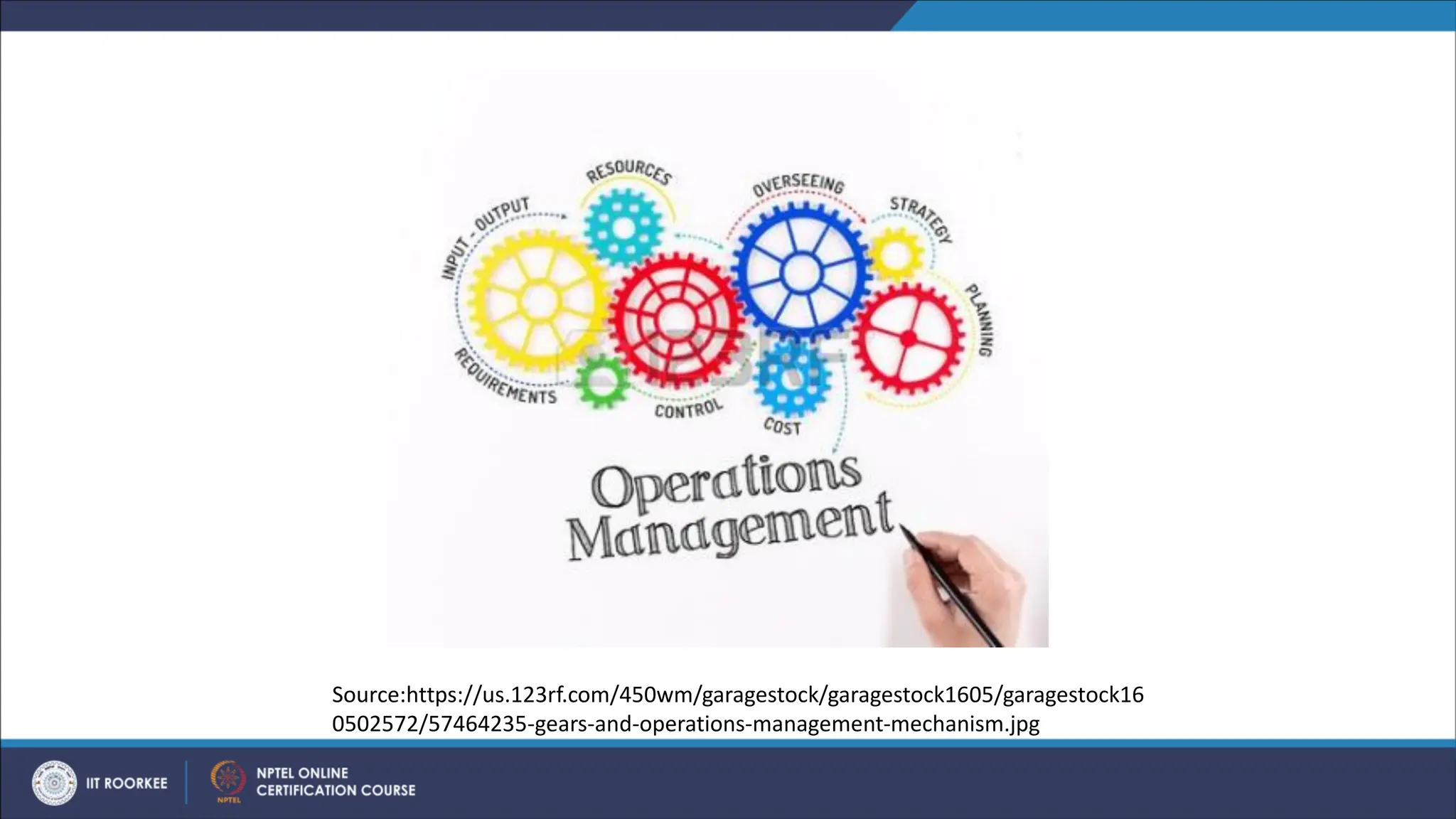
    Operations Management Product Design and Development Sales Forecasting Facility Planning and PlantLocation Facility Layout and Plant Layout Production Planning Project Scheduling (CPM, PERT) Production Control (Scheduling, Sequencing) Quality (TQM, TPM, SQC, Six Sigma) Materials Management (Inventory Control, EQQ) Production Models (JIT, Kanban, MRP, ERP )